On This Page
Description
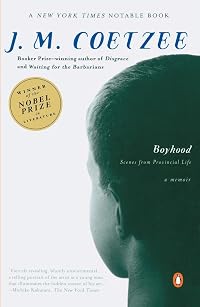
Coetzee grew up in a new development north of Cape Town, tormented by guilt and fear. With a father he despised, and a mother he both adored and resented, he led a double life – the brilliant and well-behaved student at school, the princely despot at home, always terrified of losing his mother's love. His first encounters with literature, the awakenings of sexual desire, and a growing awareness of apartheid left him with baffling questions, and only in his love of the high veld ('farms are show more places of freedom, of life') could he find a sense of belonging. Bold and telling, this masterly evocation of a young boy's life is the book Coetzee's many admirers have been waiting for, but never could have expected. show lessTags
Recommendations









Member Recommendations
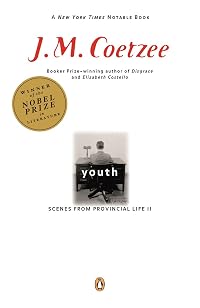
zasmine The next in the autobiographical series by Coetzee
Member Reviews
I read this after reading and loving Summertime, the third in the Scenes from Provincial Life series. At least on the surface, it's a much more conventional piece of work, a possibly fictionalised memoir of the author's childhood told in the third person. (We don't learn that the boy's name is John until about the halfway point.) Unlike the unreliable interviewees of Summertime, the narrator appears to be omniscient, though he reports the young John's understanding of things without signalling to the reader when the boy has got it wrong. This sometimes results in a straightforward irony, as in matters of reproductive physiology. Elsewhere, as the boy struggles to make sense of his relationships to his parents, of the English, the show more Afrikaans, the Coloureds and the Africans, of South African history, of religion and his own preadolescent stirrings, the narrator leaves us alone with the boy's painful sense of his own peculiarity. The effect, for me at least, rang very true to what childhood is like, stripped of the gloss of nostalgia and self-preserving sentiment. An unexpected bonus from having read the book out of order was the poignant discovery that the father for whom 'John' cares in Summertime was an object of his contempt and intense dislike in Boyhood. show less
Memoirs about childhood have a tendency to be overly precocious and self involved. Coetzee doesn’t completely dodge this tendency; but is saved by the beauty of his writing and the insightfulness of his observations. Coetzee shows himself as a child within a troubled family situation and a troubled country.
His family is quite dysfunctional, and Coetzee shows the dynamics from a child’s perspective. As a parent, it’s a good reminder about how children pick up on their parent’s inconsistencies and hypocrisies. His descriptions of racism in South Africa from the perspective of a white child are interesting. He is uncomfortable with racism, but doesn’t know how to deal with his discomfort.
In one event, he is eating pastries with show more friends in a sweets shop. Some colored children come by and are looking in the window. This spoils his appetite, and makes him angry and unhappy. He could shoo the children away—as a white he has that power---but even if he does so, his appetite will still be spoiled. show less
His family is quite dysfunctional, and Coetzee shows the dynamics from a child’s perspective. As a parent, it’s a good reminder about how children pick up on their parent’s inconsistencies and hypocrisies. His descriptions of racism in South Africa from the perspective of a white child are interesting. He is uncomfortable with racism, but doesn’t know how to deal with his discomfort.
In one event, he is eating pastries with show more friends in a sweets shop. Some colored children come by and are looking in the window. This spoils his appetite, and makes him angry and unhappy. He could shoo the children away—as a white he has that power---but even if he does so, his appetite will still be spoiled. show less
Talk about not doing yourself any favors; if young John could meet old John and read what he's said about him, he'd probably lash out in his imagination, go home, cry in his over-protective mothers' lap, then lash out at her for smothering him. Not much happens, which makes perfect sense, since as I remember childhood it isn't exactly filled with memorable events at all. Just a generalized mood with the occasional trauma and joy. This book captures that nicely, and might illuminate Coetzee's other books for you too. Be prepared to think if you read it, and be prepared to think despite the apparent simplicity of the style. The man can write beautifully and clearly, and thanks to that, young John Maxwell will contradict himself from page show more to page without your noticing it, unless you're really on point. I read this a few years ago and was sadly not on point. This time I thought it was great. show less
This was my first Coetzee book, and is the first book in his autobiographical trilogy. I was rather worried going into it, only really knowing him as the author of Disgrace, which does seem rather a challenging book from all accounts. But this ended up being a remarkably easy read, and I happily burled along through it.
Coetzee captured the emotions of childhood very well (and slightly painfully accurately at times, I winced occasionally with that "me too" grimace). It was fascinating revisiting (and remembering) this phase of life from the "other" side, now that I'm a parent. His life completely revolved around his parents, I'd forgotten how huge they are in your life at that age.
Not quite sure why I was so scared of Coetzee before show more (probably because he's a Nobel laureate), this was an immensely readable book and terribly *true*.
The only drag was his school lessons on South African history. All those names I know nothing about! It would have been nice (but not essential, it's hardly required for the plot) to have some background on who they all were. (Must at least Google the Boer War now.) show less
Coetzee captured the emotions of childhood very well (and slightly painfully accurately at times, I winced occasionally with that "me too" grimace). It was fascinating revisiting (and remembering) this phase of life from the "other" side, now that I'm a parent. His life completely revolved around his parents, I'd forgotten how huge they are in your life at that age.
Not quite sure why I was so scared of Coetzee before show more (probably because he's a Nobel laureate), this was an immensely readable book and terribly *true*.
The only drag was his school lessons on South African history. All those names I know nothing about! It would have been nice (but not essential, it's hardly required for the plot) to have some background on who they all were. (Must at least Google the Boer War now.) show less
My first exposure to Coetzee was the book ‘Youth’ - which I finished before understanding the biographical content. Absolutely enchanted with the style of writng, I moved to ‘Boyhood’. It describes Coetzee's childhood world in South Africa in the 1940s.
I don’t know if the work of Coetzee should be started here, with his autobiographical statements in ‘Boyhood’ and ‘Youth’, but there you are.
There is not a single patch of sentimentality and self-indulgence in his accounts. He has an almost chilly, third-person distancing between his writing self and the person he describes.
Coetzee has a deprecatory tone in 'Boyhood'. His attitude is stand-offish, unhappy, negative, almost hollow. He adores his mother, yet is repelled show more by her smothering love, describing it as "this cage in which he rushes back and forth, back and forth, like a poor bewildered baboon." He lives in a world ruled by adults, where fear dominates his motivation. He will not allow himself to be tested by being beaten by his teachers. He does well at school because he fears failure, and fears losing control
He finds his standing in the boyhood culture, recognizing his intellect and reflecting on his South African cultural roots. He cleverly comments on political and social events from the childhood perspective of naiveté and superficiality. He captures the mind of a child perfectly, while still pulling in the current issues of the day into the reader’s mind. When asked by his schoolmates whether he "likes" the US or the USSR, Coetzee chooses the Russians "because he likes the letter r, particularly the capital R, the strongest of all the letters.
The writing is short, abrupt and filled with shades of mood that a young, shy and bookish boy experiences as he moves into adolescence. The tone is elusive and by the end of the book, despite the beautiful prose and descriptive genius, I felt the person of Coetzee was still buried deep in the words.
This book is a gem. show less
I don’t know if the work of Coetzee should be started here, with his autobiographical statements in ‘Boyhood’ and ‘Youth’, but there you are.
There is not a single patch of sentimentality and self-indulgence in his accounts. He has an almost chilly, third-person distancing between his writing self and the person he describes.
Coetzee has a deprecatory tone in 'Boyhood'. His attitude is stand-offish, unhappy, negative, almost hollow. He adores his mother, yet is repelled show more by her smothering love, describing it as "this cage in which he rushes back and forth, back and forth, like a poor bewildered baboon." He lives in a world ruled by adults, where fear dominates his motivation. He will not allow himself to be tested by being beaten by his teachers. He does well at school because he fears failure, and fears losing control
He finds his standing in the boyhood culture, recognizing his intellect and reflecting on his South African cultural roots. He cleverly comments on political and social events from the childhood perspective of naiveté and superficiality. He captures the mind of a child perfectly, while still pulling in the current issues of the day into the reader’s mind. When asked by his schoolmates whether he "likes" the US or the USSR, Coetzee chooses the Russians "because he likes the letter r, particularly the capital R, the strongest of all the letters.
The writing is short, abrupt and filled with shades of mood that a young, shy and bookish boy experiences as he moves into adolescence. The tone is elusive and by the end of the book, despite the beautiful prose and descriptive genius, I felt the person of Coetzee was still buried deep in the words.
This book is a gem. show less
Make note to learn something about South African history and culture. It does the reader no favours to be as ignorant as I while reading this.
Underline note of some years ago to read Disgrace. Watched twice, but still not read. Boyhood has given me an idea as to how one might understand the odd scenario of that book, woman raped by black men and consequently pregnant, determines to become the 3rd wife of one of the rapists. Perhaps this will afford her some degree of safety and the possibility of staying in her home…though it will no longer be her home. We are given to believe that the woman is doing this as penance for being white. It is her necessary apology.
Here in Boyhood, there is much discussion of the difference between groups, show more including the Coloured people who are part of his life in a mysterious and uncomfortable way. Clearly Coetzee was a child disturbed by the racism that was part of his life. I wonder if, as an adult writer, he assuages his own guilt by this story. What can white men really give up, compared with white women? The total humiliation of the woman in Disgrace, perhaps that’s the sacrifice he can make. The author makes amends.
The more I read of fictionalised memoir, the more I come to the realisation that it is free to be truthful when factual memoir is not. Coetzee is ruthless in his descriptions of all in this account, including himself. Nobody is nice, his childhood is horrible but when I could imagine myself whining as I told such a story, he is merely dispassionately descriptive.
rest here: https://alittleteaalittlechat.wordpress.com/2017/09/01/boyhood-by-jm-coetzee/ show less
Underline note of some years ago to read Disgrace. Watched twice, but still not read. Boyhood has given me an idea as to how one might understand the odd scenario of that book, woman raped by black men and consequently pregnant, determines to become the 3rd wife of one of the rapists. Perhaps this will afford her some degree of safety and the possibility of staying in her home…though it will no longer be her home. We are given to believe that the woman is doing this as penance for being white. It is her necessary apology.
Here in Boyhood, there is much discussion of the difference between groups, show more including the Coloured people who are part of his life in a mysterious and uncomfortable way. Clearly Coetzee was a child disturbed by the racism that was part of his life. I wonder if, as an adult writer, he assuages his own guilt by this story. What can white men really give up, compared with white women? The total humiliation of the woman in Disgrace, perhaps that’s the sacrifice he can make. The author makes amends.
The more I read of fictionalised memoir, the more I come to the realisation that it is free to be truthful when factual memoir is not. Coetzee is ruthless in his descriptions of all in this account, including himself. Nobody is nice, his childhood is horrible but when I could imagine myself whining as I told such a story, he is merely dispassionately descriptive.
rest here: https://alittleteaalittlechat.wordpress.com/2017/09/01/boyhood-by-jm-coetzee/ show less
Make note to learn something about South African history and culture. It does the reader no favours to be as ignorant as I while reading this.
Underline note of some years ago to read Disgrace. Watched twice, but still not read. Boyhood has given me an idea as to how one might understand the odd scenario of that book, woman raped by black men and consequently pregnant, determines to become the 3rd wife of one of the rapists. Perhaps this will afford her some degree of safety and the possibility of staying in her home…though it will no longer be her home. We are given to believe that the woman is doing this as penance for being white. It is her necessary apology.
Here in Boyhood, there is much discussion of the difference between groups, show more including the Coloured people who are part of his life in a mysterious and uncomfortable way. Clearly Coetzee was a child disturbed by the racism that was part of his life. I wonder if, as an adult writer, he assuages his own guilt by this story. What can white men really give up, compared with white women? The total humiliation of the woman in Disgrace, perhaps that’s the sacrifice he can make. The author makes amends.
The more I read of fictionalised memoir, the more I come to the realisation that it is free to be truthful when factual memoir is not. Coetzee is ruthless in his descriptions of all in this account, including himself. Nobody is nice, his childhood is horrible but when I could imagine myself whining as I told such a story, he is merely dispassionately descriptive.
rest here: https://alittleteaalittlechat.wordpress.com/2017/09/01/boyhood-by-jm-coetzee/ show less
Underline note of some years ago to read Disgrace. Watched twice, but still not read. Boyhood has given me an idea as to how one might understand the odd scenario of that book, woman raped by black men and consequently pregnant, determines to become the 3rd wife of one of the rapists. Perhaps this will afford her some degree of safety and the possibility of staying in her home…though it will no longer be her home. We are given to believe that the woman is doing this as penance for being white. It is her necessary apology.
Here in Boyhood, there is much discussion of the difference between groups, show more including the Coloured people who are part of his life in a mysterious and uncomfortable way. Clearly Coetzee was a child disturbed by the racism that was part of his life. I wonder if, as an adult writer, he assuages his own guilt by this story. What can white men really give up, compared with white women? The total humiliation of the woman in Disgrace, perhaps that’s the sacrifice he can make. The author makes amends.
The more I read of fictionalised memoir, the more I come to the realisation that it is free to be truthful when factual memoir is not. Coetzee is ruthless in his descriptions of all in this account, including himself. Nobody is nice, his childhood is horrible but when I could imagine myself whining as I told such a story, he is merely dispassionately descriptive.
rest here: https://alittleteaalittlechat.wordpress.com/2017/09/01/boyhood-by-jm-coetzee/ show less
Members
- Recently Added By
Published Reviews
ThingScore 100
Obwohl Coetzee als Erzähltempus das Präsens bevorzugt, liegt über seiner lakonischen Erzählung die Melancholie einer vergangenen Epoche. Der herausragende Roman erhebt den Imperativ, der an den afrikanischen Jungen gestellt wird, zum ästhetischen Prinzip: "Laß sehen, woraus du gemacht bist."
added by Indy133
Lists

Best Autobiographies and Memoirs
370 works; 67 members

Childhood: Books for or about children in different cultures around the wor
345 works; 18 members

Allie's Wishlist
217 works; 2 members

Africa
109 works; 8 members

Vulture's 100 Best Books of the 21st Century (So Far)
98 works; 9 members

Best African Books
126 works; 46 members
Author Information

113+ Works 42,193 Members
J.M. Coetzee's full name is John Michael Coetzee. Born in Cape Town, South Africa, in 1940, Coetzee is a writer and critic who uses the political situation in his homeland as a backdrop for many of his novels. Coetzee published his first work of fiction, Dusklands, in 1974. Another book, Boyhood, loosely chronicles an unhappy time in Coetzee's show more childhood when his family moved from Cape Town to the more remote and unenlightened city of Worcester. Other Coetzee novels are In the Heart of the Country and Waiting for the Barbarians. Coetzee's critical works include White Writing and Giving Offense: Essays on Censorship. Coetzee is a two-time recipient of the Booker Prize and in 2003, he won the Nobel Literature Award. (Bowker Author Biography) J. M. Coetzee's books include "Boyhood", "Dusklands", "In the Heart of the Country", "Waiting for the Barbarians", "Life & Times of Michael K", "Foe", & "The Master of Petersburg". A professor of general literature at the University of Cape Town, Coetzee has won many literary awards, including the CNA Prize (South Africa's premier literary award), the Booker Prize (twice), the Prix Etranger Femina, the Jerusalem Prize, the Lannan Literary Award, & The Irish Times International Fiction Prize. (Publisher Provided) show less
Some Editions
Awards and Honors
Awards
Notable Lists
Series

Belongs to Publisher Series
Work Relationships
Common Knowledge
- Canonical title*
- Der Junge : eine afrikanische Kindheit
- Original title
- Boyhood: Scenes from Provincial Life
- Alternate titles
- Der Junge : eine afrikanische Kindheit
- Original publication date
- 1997
- People/Characters*
- J. M. Coetzee
- Important places
- South Africa
- First words*
- Ze wonen in een nieuwbouwwijk aan de rand van de stad Worcester, tussen de spoorlijn en het Nasionale Pad.
- Last words*
- (Click to show. Warning: May contain spoilers.)En als hij zich ze niet herinnert, wie dan wel?
- Original language
- English
*Some information comes from Common Knowledge in other languages. Click "Edit" for more information.
Classifications
Statistics
- Members
- 1,234
- Popularity
- 19,978
- Reviews
- 29
- Rating
- (3.88)
- Languages
- 18 — Catalan, Chinese, Czech, Danish, Dutch, English, Finnish, French, German, Galician, Hebrew, Icelandic, Italian, Norwegian (Bokmål), Polish, Spanish, Swedish, Portuguese (Portugal)
- Media
- Paper, Audiobook, Ebook
- ISBNs
- 52
- ASINs
- 7