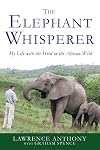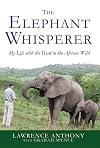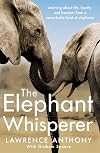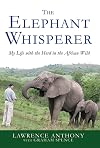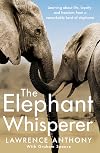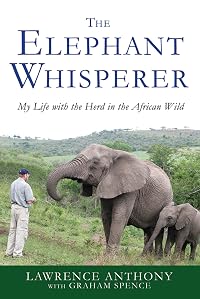
The Elephant Whisperer: My Life with the Herd in the African Wild
by Lawrence Anthony, Graham Spence
Elephant Whisperer (1)
On This Page
Description
Biography & Autobiography. Nature. Nonfiction. When South African conservationist Lawrence Anthony was asked to accept a herd of "rogue" wild elephants on his Thula Thula game reserve in Zululand, his common sense told him to refuse. But he was the herd's last chance of survival: they would be killed if he wouldn't take them. In order to save their lives, Anthony took them in. In the years that followed he became a part of their family. And as he battled to create a bond with the elephants, show more he came to realize that they had a great deal to teach him about life, loyalty, and freedom.The Elephant Whisperer is a heartwarming, exciting, funny, and sometimes sad account of Anthony's experiences with these huge yet sympathetic creatures. Set against the background of life on an African game reserve, with unforgettable characters and exotic wildlife, it is a delightful book that will appeal to animal lovers and adventurous souls everywhere. show lessTags
Recommendations
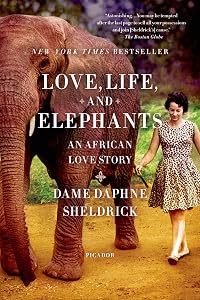
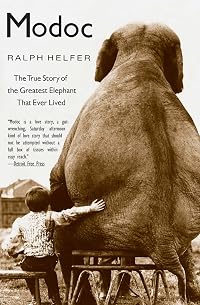


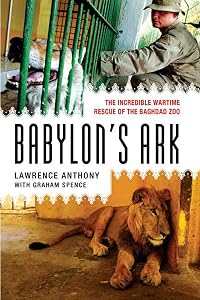
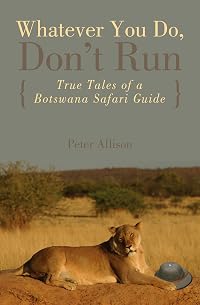

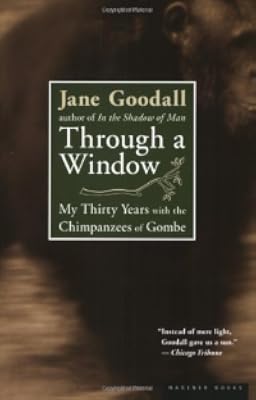
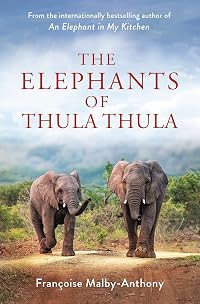
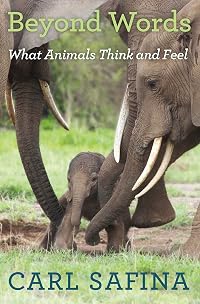
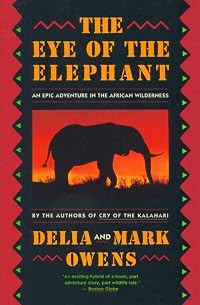

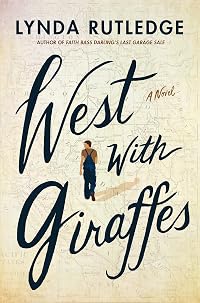
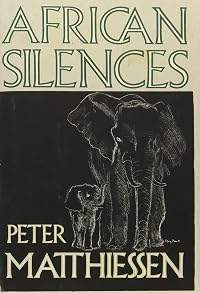
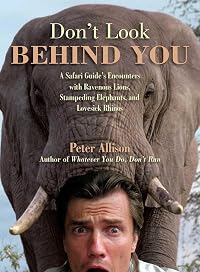
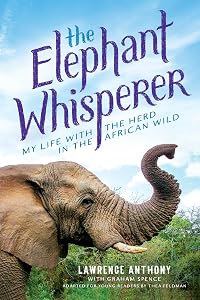





Member Recommendations
Member Reviews
South African Lawrence Anthony manages a nature preserve when he is contacted by an elephant rescue organization. They have information about a small herd that has caused so much destruction and danger that they are going to be killed if someone doesn’t take them away. Anthony steps up to the challenge, and his next several years are spent chasing down the elephants when they escape, gaining their trust, watching them destroy most of his stuff, welcoming babies, and making hard, life-or-death decisions. Anthony has a close relationship with the nearby Zulu tribes, as the land he works on is technically theirs and he sometimes needs their buy-in, as well as his work often affecting their communities (e.g. an escaped elephant, or being show more a draw for poachers).
I was skeptical of this book in the beginning, since Anthony made his money in real estate during Apartheid. He also does a lot of incredibly stupid things that would not fly in an institution with more oversight, like touching the animals and bringing his dog with him everywhere. Nice that it worked out for him but it very easily could not have. But his stories are charming and sometimes goofy and the book is very readable so it won me over. At the end, Anthony reminds the reader what conservation is really about - while he formed a bond of trust with these particular elephants for their own well-being, and enjoyed their time together and the stories it led to, he had no direct contact with their offspring, so they can learn to be wild and free. show less
I was skeptical of this book in the beginning, since Anthony made his money in real estate during Apartheid. He also does a lot of incredibly stupid things that would not fly in an institution with more oversight, like touching the animals and bringing his dog with him everywhere. Nice that it worked out for him but it very easily could not have. But his stories are charming and sometimes goofy and the book is very readable so it won me over. At the end, Anthony reminds the reader what conservation is really about - while he formed a bond of trust with these particular elephants for their own well-being, and enjoyed their time together and the stories it led to, he had no direct contact with their offspring, so they can learn to be wild and free. show less
Edited May 2015: I first read this book in May 2014 and just finished a re-read. The following review stands. I loved it just as much if not more than the first time I read it. Wonderful book!
This just won an Audie Award for best audio book in the bio/memoir category and in my opinion it was well-deserved. It will definitely be among my all-time favorites. I have a soft spot in my heart for elephants and this book reinforced those feelings. I ran the gamut of emotions as I read this book: I laughed, I cried, I was amazed, sometimes shocked, and ultimately, I fell in love with the elephants and their human rescuer.
Lawrence Anthony was asked to accept a herd of ‘rogue’ elephants on his Thula Thula game reserve in South Africa because show more he was known as being amazingly good with animals. The elephants would be killed if he wouldn't take them in, so he agreed. When the elephants arrived they were angry, scared, and distrustful of humans. What follows is a fascinating tale of how he not only saved the herd, but also developed an unusual bond with them. The story is interspersed with tales of Anthony's French wife, Francoise, their dogs, the staff, and the Zulu culture.
Sadly, Mr. Anthony passed away suddenly of a heart attack in 2012. By then, the herd had been released back into the wild and had not visited Mr. Anthony’s home in a year and a half. But on his death, the herd inexplicably trudged for miles in a solemn funereal procession to pay their respects at his house. They stayed for 2 days before moving back into the bush. What a beautiful story that teaches us so much about the capability of animals to show deep love and concern, and the bonds they can form with humans.
show less
“In 1999, I was asked to accept a herd of troubled wild elephants on my game reserve. I had no inkling of the escapades and adventures I was about to embark upon. I had no idea how challenging it would be or how much my life would be enriched. The adventure has been both physical and spiritual. Physical in the sense that it was action from the word go, as you will see in the following pages; spiritual because these giants of the planet took me deep into their world.” – Lawrence Anthony, The Elephant Whisperer
Fascinating memoir of the adventurous life of wildlife conservationist Lawrence Anthony, head of Thula Thula game reserve in Zululand, Kwa-Zulu Natal province, South Africa. In the early years of his custodianship of Thula show more Thula, he took in a herd of troubled elephants who were about to be destroyed. This is the story of how he developed a special relationship with these animals to help them get over their belligerent dealings with humans. He lived in the bush next to them as they adapted to life in the wilds of the reserve. It shows how humans and animals can form close bonds and how animals communicate in ways we do not always understand.
This book is so much more than a “book about elephants,” though they play a starring role. It covers interactions with a wide range of other wildlife, including the leopard, hyena, kudu, lion, rhino, cape buffalo, crocodile, and more. His pet dogs are featured, and human interactions are not neglected. It was particularly interesting to read of his dealings with poachers, rangers, officials, and Zulu leaders. In fact, it includes a great deal of history, culture, traditions, spiritual beliefs of the neighboring Zulu tribes, as well as the impact of the former apartheid policies.
This book contains story after story of wild adventures that take place over an undefined number of years, which are well-chosen for their level of significance, adventure, danger, or comedic effect. For example, there are stories of trying to herd a mfezi (Mozambican spitting cobra) out of his and his wife’s bedroom and an escaping cape buffalo that chases one of the reserve staff around a vehicle. The book flows in a “never-a-dull-moment” style, though the writing is choppy at times and the book is really more a series of short episodes rather than single a cohesive story. The elephants are the “characters,” and each has a distinct personality. The author employs humor but does not shy away from the gut-wrenching and sad parts of the life in the African wilderness.
I was so enthralled that I kept telling my friends and family about these anecdotes and was inspired to do further research. This book will appeal to anyone with a passion for animals, concern about wildlife conservation, or desire to find out what it is like to operate a game preserve in Africa.
“But perhaps the most important lesson I learned is that there are no walls between humans and the elephants except those we put up ourselves, and that until we allow not only elephants, but all living creatures their place in the sun, we can never be whole ourselves.” – Lawrence Anthony show less
Fascinating memoir of the adventurous life of wildlife conservationist Lawrence Anthony, head of Thula Thula game reserve in Zululand, Kwa-Zulu Natal province, South Africa. In the early years of his custodianship of Thula show more Thula, he took in a herd of troubled elephants who were about to be destroyed. This is the story of how he developed a special relationship with these animals to help them get over their belligerent dealings with humans. He lived in the bush next to them as they adapted to life in the wilds of the reserve. It shows how humans and animals can form close bonds and how animals communicate in ways we do not always understand.
This book is so much more than a “book about elephants,” though they play a starring role. It covers interactions with a wide range of other wildlife, including the leopard, hyena, kudu, lion, rhino, cape buffalo, crocodile, and more. His pet dogs are featured, and human interactions are not neglected. It was particularly interesting to read of his dealings with poachers, rangers, officials, and Zulu leaders. In fact, it includes a great deal of history, culture, traditions, spiritual beliefs of the neighboring Zulu tribes, as well as the impact of the former apartheid policies.
This book contains story after story of wild adventures that take place over an undefined number of years, which are well-chosen for their level of significance, adventure, danger, or comedic effect. For example, there are stories of trying to herd a mfezi (Mozambican spitting cobra) out of his and his wife’s bedroom and an escaping cape buffalo that chases one of the reserve staff around a vehicle. The book flows in a “never-a-dull-moment” style, though the writing is choppy at times and the book is really more a series of short episodes rather than single a cohesive story. The elephants are the “characters,” and each has a distinct personality. The author employs humor but does not shy away from the gut-wrenching and sad parts of the life in the African wilderness.
I was so enthralled that I kept telling my friends and family about these anecdotes and was inspired to do further research. This book will appeal to anyone with a passion for animals, concern about wildlife conservation, or desire to find out what it is like to operate a game preserve in Africa.
“But perhaps the most important lesson I learned is that there are no walls between humans and the elephants except those we put up ourselves, and that until we allow not only elephants, but all living creatures their place in the sun, we can never be whole ourselves.” – Lawrence Anthony show less
It’s really unfortunate that Anthony didn’t stick to stories about the wildlife on Thula Thula, which are enchanting. His pronouncements on his Zulu neighbors are cringe inducing, made worse by his obvious belief in his own enlightenment. For Anthony, “African” religion is singular and “often incomprehensible.” Even after having an intense experience mediated by Zulu spirituality, he is dismissive. Later we learn that “Zulus are natural actors who enjoy a show.” He gives more credit to the individual personalities of the elephants in his care than to the indigenous people whose land he occupies. He understands that the reserve cannot succeed without local support, so he has motivation to demonstrate respect, and show more certainly doesn’t seem to feel malevolence, but there is more than a whiff of White Savior Complex.
The work Anthony did with the Thula Thula elephant herd is remarkable and inspirational, and catnip to anyone who enjoys learning about how animals and humans can communicate. But the racial attitudes are far out of date for this 2022 Western reader and tend to spoil the whole. show less
The work Anthony did with the Thula Thula elephant herd is remarkable and inspirational, and catnip to anyone who enjoys learning about how animals and humans can communicate. But the racial attitudes are far out of date for this 2022 Western reader and tend to spoil the whole. show less
The Elephant Whisper by Lawrence Anthony
First off, understand that the title of this book is highly misleading. This story is actually a balance of wondrous and woeful perspective of the reality of physical life, especially in the latter chapters, depicted through fascinating experiences. There is a powerful, elemental message threaded through this writing about all life forms journeying together, connected, and dependent on each other for existence, which includes humans. If strong emotions aren't aroused, then I suspect the reader may be blinded by their human bubble and/or have a heart of stone.
"In our noisy cities we tend to forget the things our ancestors knew on a gut level: that the wilderness is alive, that its whispers are show more there for all to hear – and to respond to."
"Living rough in the wilderness is a salve for the soul. Ancient instincts awaken; forgotten skills are relearned, consciousness is sharpened and life thrums at a richer tempo."
"Under the microscope, living organisms are just a soup of chemicals and minerals. But what about what the microscope doesn’t see? That life force, the vital ingredient of existence – from an acacia to an elephant – can it be quantified?
"My herd showed me that it can. That understanding and generosity of spirit is alive and well in the pachyderm kingdom; that elephants are emotional, caring and extremely intelligent; and that they value good relations with humans.
"This is their story. They taught me that all life forms are important to each other in our common quest for happiness and survival. That there is more to life than just yourself, your own family, or your own kind."
The story can be seen in one vein as the age old struggle between the primal savagery of trigger happy men killing for the thrill of it, and wiser minds trying to protect wildlife, knowing humankind's future is at stake. It perplexes me how our blinkered cognitive processes exhibit such vagaries, even though knowing of the fickleness of evolution's trials and the influences of subjective experiences.
"It was something I simply couldn’t fathom … what type of person would shoot a terrified teenage elephant, and a female at that? For a tawdry fireside trophy? For the pleasure of the kill? And what kind of reserve owner would hawk a vulnerable young animal for such a reason?"
The message comes through loud and clear, that to truly protect any life form is to protect all by living in respectful coexistence with all life forms in the natural world model of life fueled by life. In such, death and the recycling of essential elements is a necessary precursor to new life in Earth's closed system of physical life.
"Death is an integral part of life. This is the dominant bush reality and I like it that way. It’s natural, uncluttered by materialism or artificial ethics and it helps me to maintain a wholesome perspective of my own existence and that of my friends and family."
Yet, in this book I was also amazed by the cognitive processes of the wildlife, especially the elephants. Whatever the explanations, it is beyond doubt that these creatures have senses far superior to ours, and more acute life forces. What have we lost in our human bubble?
"We also have to understand that there are things we cannot understand. Elephants possess qualities and abilities well beyond the means of science to decipher. Elephants cannot repair a computer, but they do have communication, physical and metaphysical, that would make Bill Gates’s mouth drop open. In some very important ways they are ahead of us."
Lest one get the wrong idea, reading this story is definitely not wading through didactical musings. It is for the most part presented as an engrossing adventure in an edge of the seat manner. Could you retain your cool with a charging bull elephant bearing down on you, or for that manner on finding yourself face to face with a black mamba, or even confront poachers that would happily shoot you? What is depicted are varying mesmerizing situations the author has experienced that the reader may glean the relevance of. The occasional opining is hardly noticed as such.
"Every wild thing is in tune with its surroundings, awake to its fate and in absolute harmony with the planet. Their attention is focused totally outwards. Humans, on the other hand, tend to focus introspectively on their own lives too often, brooding and magnifying problems that the animal kingdom would not waste a millisecond of energy upon. To most people, the magnificent order of the natural world where life and death actually mean something has become unrecognizable."
In closing I should note that in March of 2012 the author Lawrence Anthony passed away. As reported by the CBC on July 25, 2012, "After his death, although they were not alerted to the event, a group of wild elephants Anthony helped to rescue and rehabilitate travelled to his house in the South African province of KwaZulu-Natal. They stood around the house in an apparent vigil for two days, and then dispersed. Today, the elephants are 'completely wild and doing fine' according to Graham Spence, Anthony's brother-in-law and co-author of three books."
The imaginative concoctions of too much of storytelling these days don't elicit anyway near the real life emotional swings and metaphysical aspects inherent in this book.
“How vain it is to sit down to write when you have not stood up to live.” ― Henry David Thoreau show less
First off, understand that the title of this book is highly misleading. This story is actually a balance of wondrous and woeful perspective of the reality of physical life, especially in the latter chapters, depicted through fascinating experiences. There is a powerful, elemental message threaded through this writing about all life forms journeying together, connected, and dependent on each other for existence, which includes humans. If strong emotions aren't aroused, then I suspect the reader may be blinded by their human bubble and/or have a heart of stone.
"In our noisy cities we tend to forget the things our ancestors knew on a gut level: that the wilderness is alive, that its whispers are show more there for all to hear – and to respond to."
"Living rough in the wilderness is a salve for the soul. Ancient instincts awaken; forgotten skills are relearned, consciousness is sharpened and life thrums at a richer tempo."
"Under the microscope, living organisms are just a soup of chemicals and minerals. But what about what the microscope doesn’t see? That life force, the vital ingredient of existence – from an acacia to an elephant – can it be quantified?
"My herd showed me that it can. That understanding and generosity of spirit is alive and well in the pachyderm kingdom; that elephants are emotional, caring and extremely intelligent; and that they value good relations with humans.
"This is their story. They taught me that all life forms are important to each other in our common quest for happiness and survival. That there is more to life than just yourself, your own family, or your own kind."
The story can be seen in one vein as the age old struggle between the primal savagery of trigger happy men killing for the thrill of it, and wiser minds trying to protect wildlife, knowing humankind's future is at stake. It perplexes me how our blinkered cognitive processes exhibit such vagaries, even though knowing of the fickleness of evolution's trials and the influences of subjective experiences.
"It was something I simply couldn’t fathom … what type of person would shoot a terrified teenage elephant, and a female at that? For a tawdry fireside trophy? For the pleasure of the kill? And what kind of reserve owner would hawk a vulnerable young animal for such a reason?"
The message comes through loud and clear, that to truly protect any life form is to protect all by living in respectful coexistence with all life forms in the natural world model of life fueled by life. In such, death and the recycling of essential elements is a necessary precursor to new life in Earth's closed system of physical life.
"Death is an integral part of life. This is the dominant bush reality and I like it that way. It’s natural, uncluttered by materialism or artificial ethics and it helps me to maintain a wholesome perspective of my own existence and that of my friends and family."
Yet, in this book I was also amazed by the cognitive processes of the wildlife, especially the elephants. Whatever the explanations, it is beyond doubt that these creatures have senses far superior to ours, and more acute life forces. What have we lost in our human bubble?
"We also have to understand that there are things we cannot understand. Elephants possess qualities and abilities well beyond the means of science to decipher. Elephants cannot repair a computer, but they do have communication, physical and metaphysical, that would make Bill Gates’s mouth drop open. In some very important ways they are ahead of us."
Lest one get the wrong idea, reading this story is definitely not wading through didactical musings. It is for the most part presented as an engrossing adventure in an edge of the seat manner. Could you retain your cool with a charging bull elephant bearing down on you, or for that manner on finding yourself face to face with a black mamba, or even confront poachers that would happily shoot you? What is depicted are varying mesmerizing situations the author has experienced that the reader may glean the relevance of. The occasional opining is hardly noticed as such.
"Every wild thing is in tune with its surroundings, awake to its fate and in absolute harmony with the planet. Their attention is focused totally outwards. Humans, on the other hand, tend to focus introspectively on their own lives too often, brooding and magnifying problems that the animal kingdom would not waste a millisecond of energy upon. To most people, the magnificent order of the natural world where life and death actually mean something has become unrecognizable."
In closing I should note that in March of 2012 the author Lawrence Anthony passed away. As reported by the CBC on July 25, 2012, "After his death, although they were not alerted to the event, a group of wild elephants Anthony helped to rescue and rehabilitate travelled to his house in the South African province of KwaZulu-Natal. They stood around the house in an apparent vigil for two days, and then dispersed. Today, the elephants are 'completely wild and doing fine' according to Graham Spence, Anthony's brother-in-law and co-author of three books."
The imaginative concoctions of too much of storytelling these days don't elicit anyway near the real life emotional swings and metaphysical aspects inherent in this book.
“How vain it is to sit down to write when you have not stood up to live.” ― Henry David Thoreau show less
My initial expectations for The Elephant Whisperer didn't reach beyond a sentimental animal-lover-book (eg. "Marley and Me") super-sized to elephant scale, but it turned out to be much more. Anthony, a native-born (white) African, owns and runs a game reserve and lodge in South Africa. In the book he describes daily scenes and incidents filled with danger and excitement from poachers, restless local tribes, snakes, crocks, storms - and at the center his attempt to bond with a small herd of troubled wild elephants he took in who otherwise would have been shot because of their rogue nature. The "whispering" isn't mystical, Anthony describes how animals communicate through eyes and tone and other methods so it is possible to establish a show more rapport. His descriptions of Africa to the point I felt transported and became lost in the book, it left a strong impression. I loved the book and was saddened to learn Anthony died in 2012, but look forward to the films (of this book and others) that may be forthcoming. Lawrence Anthony is as rare as the animals he seeks to preserve, the world lost a brave conservationist. show less
A few years ago I hadn’t understood why everyone had been so obsessed with dolphins, then I read [b:The Day of the Dolphin|94499|The Day of the Dolphin|Robert Merle|https://i.gr-assets.com/images/S/compressed.photo.goodreads.com/books/1213184014l/94499._SY75_.jpg|91103]. By the time I had a chance to meet and touch a dolphin, I was deeply moved and humbled by the encounter.
This book was recommended to me by a few readers and has great ratings on Hungarian goodreads, but I was still a bit wary because I had my phase of animal mania in primary school and don’t consider myself an animal enthusiast now, though I do like them (the animals). This time, I didn’t understand why everyone was so obsessed with elephants. And then I have read show more The Elephant Whisperer. I honestly don’t remember the last time a book touched my heart so deeply. It is very well written, extremely exciting, powerful and emotional. A work of fiction couldn’t have been more engaging.
Read more (spoilers!): https://blueisthenewpink.wordpress.com/2016/11/01/lets-read-and-fall-in-love-wit...
-------------------------------------------------------------
Régebben nem értettem, miért van úgy oda mindenki a delfinekért, aztán elolvastam az Állati elméket Robert Merle-től. Most nem értettem, mi olyan nagy szám az elefántokban, aztán elolvastam ezt a könyvet. Előtte tartottam tőle, hogy csak igazi állatimádóknak való (simán kedvelőknek nem). Szerencsére nem így van. Nem is tudom, mikor érintett meg könyv ennyire. Közben hihetetlenül izgalmas is volt. Egyszerre adta vissza a hitem az emberekben, és fordította figyelmem a környezetemben élő mindenféle lények felé. Az ember- és állatszereplők is sokáig velem fognak még maradni, azt hiszem. show less
This book was recommended to me by a few readers and has great ratings on Hungarian goodreads, but I was still a bit wary because I had my phase of animal mania in primary school and don’t consider myself an animal enthusiast now, though I do like them (the animals). This time, I didn’t understand why everyone was so obsessed with elephants. And then I have read show more The Elephant Whisperer. I honestly don’t remember the last time a book touched my heart so deeply. It is very well written, extremely exciting, powerful and emotional. A work of fiction couldn’t have been more engaging.
Read more (spoilers!): https://blueisthenewpink.wordpress.com/2016/11/01/lets-read-and-fall-in-love-wit...
-------------------------------------------------------------
Régebben nem értettem, miért van úgy oda mindenki a delfinekért, aztán elolvastam az Állati elméket Robert Merle-től. Most nem értettem, mi olyan nagy szám az elefántokban, aztán elolvastam ezt a könyvet. Előtte tartottam tőle, hogy csak igazi állatimádóknak való (simán kedvelőknek nem). Szerencsére nem így van. Nem is tudom, mikor érintett meg könyv ennyire. Közben hihetetlenül izgalmas is volt. Egyszerre adta vissza a hitem az emberekben, és fordította figyelmem a környezetemben élő mindenféle lények felé. Az ember- és állatszereplők is sokáig velem fognak még maradni, azt hiszem. show less
Members
- Recently Added By
Lists

Recommended Nature Writing
346 works; 180 members

Elephants in Books
55 works; 5 members

Books about Animals
86 works; 4 members

Favorite Animal Non-Fiction
293 works; 144 members
Author Information

7+ Works 1,512 Members
6+ Works 1,512 Members
Some Editions
Awards and Honors
Series

Work Relationships
Has the adaptation
Common Knowledge
- Canonical title*
- Mannen som talade med elefanter : ett liv i frihet på den afrikanska savannen
- Original publication date
- 2009
- People/Characters
- Lawrence Anthony
- Important places
- South Africa; KwaZulu-Natal, South Africa
- Dedication
- To my beautiful, caring Francoise,
for allowing me to be who I am. - First words
- {Prologue} In 1999, I was asked to accept a herd of troubled wild elephants on my game reserve.
{Chapter One} In the distance, the percussive shot of a rifle sounded like a giant stick of firewood cracking. - Last words
- (Click to show. Warning: May contain spoilers.)To me, the only good cage is an empty cage.
- Disambiguation notice
- Do not combine with Thea Feldman's adaption version.
*Some information comes from Common Knowledge in other languages. Click "Edit" for more information.
Classifications
Statistics
- Members
- 969
- Popularity
- 27,229
- Reviews
- 47
- Rating
- (4.28)
- Languages
- 6 — English, French, German, Italian, Spanish, Swedish
- Media
- Paper, Audiobook, Ebook
- ISBNs
- 29
- ASINs
- 12