On This Page
Description
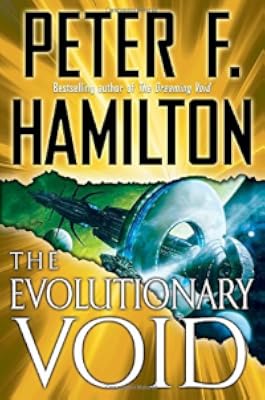
Araminta becomes the target of a galaxywide search by a government agent seeking to prevent the pilgrimage of a cult into the heart of the Void, while Edeard, the Waterwalker, finds himself faced with powerful new enemies.Tags
Recommendations








Member Reviews
The third and final installment in Hamilton’s Void trilogy. Thankfully, it has only very few and comparatively short Edeard chapters this time, and those even are on a somewhat comedic note (although I am not certain the author actually intended them to be that way) thanks to some Groundhog Day elements getting mixed into the Epic Fantasy. In retrospect (although I am quite certain that the author did not actually intend it that way), this might even be read as a self-parodistic commentary on all the Edeard chapters in the trilogy’s previous novels – I certainly often felt like Bill Murray’s character in Groundhog Day, bored to tears for having to re-tread already familar ground over and over and over again…
So, with Edeard show more mostly out of the way, The Evolutionary Void should have been an enjoyable Space Opera romp… except that it wasn’t and that as I kept reading on I found myself increasingly annoyed with the novel’s implied political message. Usually, I do not care if I disagree with an author’s politics unless they’re preachy or really blatant about it, and even then they sometimes can be instructive to read as they occasionally (and in most cases quite unintentionally) nail down what is wrong with the current state of things better than many a well-meaning, liberal-minded piece of writing does. So I am not sure why this novel rubbed me the completely wrong way - maybe I was just generally cranky after having waded through the awful dross that was the trilogy’s middle volume.
The central message of the Void trilogy is something along the lines of “We are only human as long as we have something to strive for.” (I think it is even stated in pretty much those words somewhere in The Evolutionary Void by one of the characters.) Which sounds innocuous enough, is in fact a staple theme of many Science Fiction stories and novels – but is not quite as banal and harmless as it appears once you take a somewhat closer look at it. (Some spoilers for the trilogy in what follows.)
In Hamilton’s Void trilogy, the reason why everyone is so keen on getting into the Void (which is kind of a pocket universe at the centre of the galaxy) is because in that place it is possible for an individual to literally turn back time, thus granting what is basically unlimited wish-fulfillment. I’m leaving aside all the logical problems inherent in this that Hamilton does not bother with (the most glaring of which would be how this is supposed to work with several people having that ability not just the single one the novels actually show us), what interests me here is what according to The Evolutionary Void happens once that becomes possible – namely, the human society that exists in the Void stagnates and eventually dies out. Again, common enough and pretty much the standard way this theme plays out in probably every work of Science Fiction to make use of it (there even are several episodes of the original Star Trek TV series along very much the same lines), but just consider a moment what is actually implied here – namely, that once everyone has what they want, there is no reason to live on anymore, or in other words: It is a Bad Thing if everyone is happy, because only people who are not happy want to develop onwards. I’d think the issue with that kind of argument should be quite obvious – on the one hand, it maintains that people should strive for something, on the other hand it tells them that what they strive for is ultimatively not worth having. Also note that it does not imply that everyone is unhappy but only that some people are, and that the people who are happy have a vested interested in making sure that people who are unhappy do stay that way. In other words, it essentially boils down to an apology for leaving things just the way they are, even as one pays lip-service to progress towards a better world - but a world that (according to this theory) cannot be better than the present one unless it is the same. In still other words, the central message Hamilton’s Void trilogy is set up to convey is a deeply reactionary one (as distinguished from conservativism which at least allows for some criticism of the way things are).
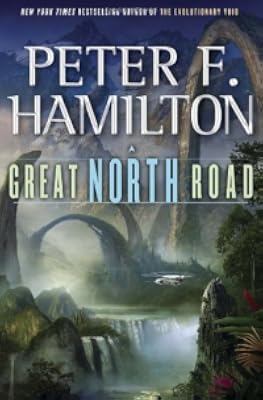
Just skimming over my posts will show you that I’m really easy to please reading-wise these days, but I have to say that the Void trilogy was rather a waste of time. I already got Hamilton’s latest, Great North Road, before reading this trilogy, so might eventually give that a shot, but unless it turns out to be unexpectedly brilliant it’s likely the last book of his I’ll have bought. show less
So, with Edeard show more mostly out of the way, The Evolutionary Void should have been an enjoyable Space Opera romp… except that it wasn’t and that as I kept reading on I found myself increasingly annoyed with the novel’s implied political message. Usually, I do not care if I disagree with an author’s politics unless they’re preachy or really blatant about it, and even then they sometimes can be instructive to read as they occasionally (and in most cases quite unintentionally) nail down what is wrong with the current state of things better than many a well-meaning, liberal-minded piece of writing does. So I am not sure why this novel rubbed me the completely wrong way - maybe I was just generally cranky after having waded through the awful dross that was the trilogy’s middle volume.
The central message of the Void trilogy is something along the lines of “We are only human as long as we have something to strive for.” (I think it is even stated in pretty much those words somewhere in The Evolutionary Void by one of the characters.) Which sounds innocuous enough, is in fact a staple theme of many Science Fiction stories and novels – but is not quite as banal and harmless as it appears once you take a somewhat closer look at it. (Some spoilers for the trilogy in what follows.)
In Hamilton’s Void trilogy, the reason why everyone is so keen on getting into the Void (which is kind of a pocket universe at the centre of the galaxy) is because in that place it is possible for an individual to literally turn back time, thus granting what is basically unlimited wish-fulfillment. I’m leaving aside all the logical problems inherent in this that Hamilton does not bother with (the most glaring of which would be how this is supposed to work with several people having that ability not just the single one the novels actually show us), what interests me here is what according to The Evolutionary Void happens once that becomes possible – namely, the human society that exists in the Void stagnates and eventually dies out. Again, common enough and pretty much the standard way this theme plays out in probably every work of Science Fiction to make use of it (there even are several episodes of the original Star Trek TV series along very much the same lines), but just consider a moment what is actually implied here – namely, that once everyone has what they want, there is no reason to live on anymore, or in other words: It is a Bad Thing if everyone is happy, because only people who are not happy want to develop onwards. I’d think the issue with that kind of argument should be quite obvious – on the one hand, it maintains that people should strive for something, on the other hand it tells them that what they strive for is ultimatively not worth having. Also note that it does not imply that everyone is unhappy but only that some people are, and that the people who are happy have a vested interested in making sure that people who are unhappy do stay that way. In other words, it essentially boils down to an apology for leaving things just the way they are, even as one pays lip-service to progress towards a better world - but a world that (according to this theory) cannot be better than the present one unless it is the same. In still other words, the central message Hamilton’s Void trilogy is set up to convey is a deeply reactionary one (as distinguished from conservativism which at least allows for some criticism of the way things are).
Just skimming over my posts will show you that I’m really easy to please reading-wise these days, but I have to say that the Void trilogy was rather a waste of time. I already got Hamilton’s latest, Great North Road, before reading this trilogy, so might eventually give that a shot, but unless it turns out to be unexpectedly brilliant it’s likely the last book of his I’ll have bought. show less
Having waited what feels like eternity to get a mass market paperback edition of this, the final volume in the Void trilogy, I went back and re-read the first two volumes in order to remind myself what was going on.
Those previous volumes did not withstand a second reading very well; their primary plus points were the new SF ideas and of course, they aren't new second time around. So...1400p to remind myself of the backstory, then onwards!
The final volume suffers problems similar to those of Hamilton's two previous multi-volume space opera sagas, namely; plot points seen hundreds of pages in advance, too many disparate characters leading me to always be thinking, what's going on with...whomever...and characters that are too similar to show more characters in other books (even the ones that don't actually appear in earlier books in the timeline.) There is also something of E.E. Doc. Smith threat/technology-inflation.
This series is set hundreds of years after the closure of Judas Unchained in which an inter-stellar scale war is fought with weapons that can destroy stars, create blackholes, turn humans into walking battle tanks etc. But now we're in the future and technology has to have moved on...where? Hamilton strains to make believable advances on people who are immortal except for accident or deliberate violence that can already make stars go nova. The threat, which was last time genocide of all of humanity is this time genocide of the whole galaxy...
All that said, these faults are not as severe as in the previous efforts; I couldn't foresee every major plot point well in advance (although I felt I should have guessed more) and there are some surprises at the denouement. Which leaves the ending(s): Books that bring disparate characters across a galaxy in to play in critical events can't just end. They have to ends multiple times over in order to close all of the characters. This usually detracts even when the denouement was great.
There is a short story at the end of this volume, promoting a forthcoming collection of such by Hamilton. It is less than 20p long and superior to the 2000 p saga preceding it. All of Hamilton's best works have been completely self-contained and the longest of them approximately the size of any one volume in this series. I don't think I'll be reading any more multi-volume space operas by Hamilton but I will pick up that short story collection and any stand-alone novel he might release in the future.
Post scriptum: Reading Dan's review reminded me of some things I forgot to say: This volume appears to have some (not very subtle) sub-text. For instance, Utopia is bad because boring, humans need to struggle in order to have fulfilling lives, cultural imperialism is bad. People need to be allowed to evolve in seperate ways as long as no coercion is involved. This is all positive stuff, in that any sort of subtext seems absent from most of Hamilton's novels. (Fallen Dragon is an exception.) Most of these ideas are in fact SF staples and unfortunately done better elsewhere. In particular, the ideas of humans physically as well as culturally evolving in muliple directions were dealt with much better in Dan Simmons' at least equally gigantic Hyperion Cantos. show less
Those previous volumes did not withstand a second reading very well; their primary plus points were the new SF ideas and of course, they aren't new second time around. So...1400p to remind myself of the backstory, then onwards!
The final volume suffers problems similar to those of Hamilton's two previous multi-volume space opera sagas, namely; plot points seen hundreds of pages in advance, too many disparate characters leading me to always be thinking, what's going on with...whomever...and characters that are too similar to show more characters in other books (even the ones that don't actually appear in earlier books in the timeline.) There is also something of E.E. Doc. Smith threat/technology-inflation.
This series is set hundreds of years after the closure of Judas Unchained in which an inter-stellar scale war is fought with weapons that can destroy stars, create blackholes, turn humans into walking battle tanks etc. But now we're in the future and technology has to have moved on...where? Hamilton strains to make believable advances on people who are immortal except for accident or deliberate violence that can already make stars go nova. The threat, which was last time genocide of all of humanity is this time genocide of the whole galaxy...
All that said, these faults are not as severe as in the previous efforts; I couldn't foresee every major plot point well in advance (although I felt I should have guessed more) and there are some surprises at the denouement. Which leaves the ending(s): Books that bring disparate characters across a galaxy in to play in critical events can't just end. They have to ends multiple times over in order to close all of the characters. This usually detracts even when the denouement was great.
There is a short story at the end of this volume, promoting a forthcoming collection of such by Hamilton. It is less than 20p long and superior to the 2000 p saga preceding it. All of Hamilton's best works have been completely self-contained and the longest of them approximately the size of any one volume in this series. I don't think I'll be reading any more multi-volume space operas by Hamilton but I will pick up that short story collection and any stand-alone novel he might release in the future.
Post scriptum: Reading Dan's review reminded me of some things I forgot to say: This volume appears to have some (not very subtle) sub-text. For instance, Utopia is bad because boring, humans need to struggle in order to have fulfilling lives, cultural imperialism is bad. People need to be allowed to evolve in seperate ways as long as no coercion is involved. This is all positive stuff, in that any sort of subtext seems absent from most of Hamilton's novels. (Fallen Dragon is an exception.) Most of these ideas are in fact SF staples and unfortunately done better elsewhere. In particular, the ideas of humans physically as well as culturally evolving in muliple directions were dealt with much better in Dan Simmons' at least equally gigantic Hyperion Cantos. show less
Amazing! Out of all of Peter F. Hamilton's works, this trilogy has got to be the absolute best! This particular novel pulls off a miracle.
Better than walking on water, better than a galaxy-eating Void, and better than all the sums of its parts. :) Be it Syvian alien-elves, post-human social structures, or a manufactured universe where psi powers are not only feasible, but where magic, time-manipulation, and god-like powers are just a part of a greater tale.
This is space opera on a scale I rarely see but what I always crave. And this particular trilogy slams it home with SO MUCH BETTER CRAFT than I usually see in this particular author. :) All the characters and the plot threads serve a fantastic purpose without the usual meandering I'm show more used to. He put SKILLZ into this one. :) Shorter? Yes, but all to the improvement of the story.
And what a story! A star-eating dream as Heaven with its own apostles versus several thousand years of super-technologically advanced humanity and aliens armed with deployable Dyson Spheres.
Holy shit, right? The ideas are freaking amazing and the execution is not only a pure delight, but all the characters are freaking memorable as hell. Talk about simple beginnings... where everyone winds up is mind-blowing. :)
This is some CLASSIC modern SF. Don't be afraid of the page count. It's worth ALL THE EFFORT in the world. :) show less
Better than walking on water, better than a galaxy-eating Void, and better than all the sums of its parts. :) Be it Syvian alien-elves, post-human social structures, or a manufactured universe where psi powers are not only feasible, but where magic, time-manipulation, and god-like powers are just a part of a greater tale.
This is space opera on a scale I rarely see but what I always crave. And this particular trilogy slams it home with SO MUCH BETTER CRAFT than I usually see in this particular author. :) All the characters and the plot threads serve a fantastic purpose without the usual meandering I'm show more used to. He put SKILLZ into this one. :) Shorter? Yes, but all to the improvement of the story.
And what a story! A star-eating dream as Heaven with its own apostles versus several thousand years of super-technologically advanced humanity and aliens armed with deployable Dyson Spheres.
Holy shit, right? The ideas are freaking amazing and the execution is not only a pure delight, but all the characters are freaking memorable as hell. Talk about simple beginnings... where everyone winds up is mind-blowing. :)
This is some CLASSIC modern SF. Don't be afraid of the page count. It's worth ALL THE EFFORT in the world. :) show less
It is not very easy to review the last book in a trilogy on its own - the review of the book itself is getting mixed with the whole trilogy and I am never sure where one finishes and the other begins. So some of the thoughts here will be about the book; some will be about the Void Trilogy.
The book opens exactly where the previous one finishes - with all the plots and subplots going on their way towards the inevitable clashing and merging (because it is Hamilton after all - things will connect at the end no matter how weird they are at any point). And if someone was missing any of the big players from the previous Commonwealth Saga, they also show up one by one and by the end of the novel, you realize that the Saga and the Trilogy are show more just one long story. Not that you cannot read the Void trilogy without reading the Commonwealth Saga but you will miss the small nods and reminders about it - if you never read the Saga, it will sound as pieces of backstory that you do not understand and do not seem to have a deep meaning; if you recognize them, you will remember what they mean and the deep meaning in them makes sense.
Back to the book. As much as the previous two volumes were about finding what the void was and what the dreams mean, the last novel opens with everyone knowing and understanding what is at stake. And starting the huge task of trying to stop the end of the universe. The mix of Edeard's life and the space opera in the real universe is a bit better balanced than the second book (where Edeard's life felt like the main story - it was needed to get us to a point where everyone knows is and why but....). Exploding ships, nova stars, the Cat (this thing is unkillable as it seems), Ozzy and closing stories started not just in the first two volumes but also in the Commonwealth Saga - which you thought were already finished but still had partial stories unsaid. And considering the time between the two sequences, it makes even more impressive.
And then Hamilton found a way to surprise once more at the end- revealing who the Lady was. And a lot of things did make sense. And makes such a nice circular reference which made the whole story full. And then kept piling it on - everyone getting what the needed - sometimes by doing the wrong thing in order to do the right one. And sometimes it is just a question of perspective - which story was the dream and which was the reality depend on where the reader is.
At the end of the day, I enjoyed the trilogy a lot but I am also happy it finished. It is not the kind of story that could be sustained in a longer story - but then Hamilton is good in finishing his stories. I strongly recommend the 5 novels to anyone that likes space opera. It does not get much better than this.
As for the narrator - John Lee is doing marvelous work with the whole series. show less
The book opens exactly where the previous one finishes - with all the plots and subplots going on their way towards the inevitable clashing and merging (because it is Hamilton after all - things will connect at the end no matter how weird they are at any point). And if someone was missing any of the big players from the previous Commonwealth Saga, they also show up one by one and by the end of the novel, you realize that the Saga and the Trilogy are show more just one long story. Not that you cannot read the Void trilogy without reading the Commonwealth Saga but you will miss the small nods and reminders about it - if you never read the Saga, it will sound as pieces of backstory that you do not understand and do not seem to have a deep meaning; if you recognize them, you will remember what they mean and the deep meaning in them makes sense.
Back to the book. As much as the previous two volumes were about finding what the void was and what the dreams mean, the last novel opens with everyone knowing and understanding what is at stake. And starting the huge task of trying to stop the end of the universe. The mix of Edeard's life and the space opera in the real universe is a bit better balanced than the second book (where Edeard's life felt like the main story - it was needed to get us to a point where everyone knows is and why but....). Exploding ships, nova stars, the Cat (this thing is unkillable as it seems), Ozzy and closing stories started not just in the first two volumes but also in the Commonwealth Saga - which you thought were already finished but still had partial stories unsaid. And considering the time between the two sequences, it makes even more impressive.
And then Hamilton found a way to surprise once more at the end- revealing who the Lady was. And a lot of things did make sense. And makes such a nice circular reference which made the whole story full. And then kept piling it on - everyone getting what the needed - sometimes by doing the wrong thing in order to do the right one. And sometimes it is just a question of perspective - which story was the dream and which was the reality depend on where the reader is.
At the end of the day, I enjoyed the trilogy a lot but I am also happy it finished. It is not the kind of story that could be sustained in a longer story - but then Hamilton is good in finishing his stories. I strongly recommend the 5 novels to anyone that likes space opera. It does not get much better than this.
As for the narrator - John Lee is doing marvelous work with the whole series. show less
I finally finished this book and series tonight! Woo Hoo! I started reading the first book in the trilogy on November 30th 2014 so it has almost been 6 months to the day. I did love the book but series fatigue was lingering around the corner. I have no idea how anyone can read those 10 book sets from various authors no matter how good they are.
I feel this last book provided a fitting end to the Void trilogy. Multiple story lines came together and reached mostly satisfactory conclusions. Now this is a Peter F. Hamilton book, the man does not know how to write a short novel. If you know that going in and can appreciate it (or at least go through phases when you can appreciate it) then you will enjoy the trilogy. This one had less of the show more fantasy elements than the second one which was a big plus for me. And man is this science fiction. We are talking galaxy spanning, massive spaceships, star destroying black hole hurling sci-fi with the multi-dimensional and complex characters that one can expect from a top notch book. Oh! And we do learn much more about the void and why so many want to go there, and we learn more about its' secrets too....
As a side note, these British authors are a blessing to folks like me who like rich and exciting science fiction. It seems that these days the American authors (scalzi for instance) write fairly shallow books that they attempt to imprint their weak politics in while using the same snarky and sarcastic character type over and over and over...
Anyway, I am glad to have found Hamilton, Reynolds etc and have really enjoyed the trip. show less
I feel this last book provided a fitting end to the Void trilogy. Multiple story lines came together and reached mostly satisfactory conclusions. Now this is a Peter F. Hamilton book, the man does not know how to write a short novel. If you know that going in and can appreciate it (or at least go through phases when you can appreciate it) then you will enjoy the trilogy. This one had less of the show more fantasy elements than the second one which was a big plus for me. And man is this science fiction. We are talking galaxy spanning, massive spaceships, star destroying black hole hurling sci-fi with the multi-dimensional and complex characters that one can expect from a top notch book. Oh! And we do learn much more about the void and why so many want to go there, and we learn more about its' secrets too....
As a side note, these British authors are a blessing to folks like me who like rich and exciting science fiction. It seems that these days the American authors (scalzi for instance) write fairly shallow books that they attempt to imprint their weak politics in while using the same snarky and sarcastic character type over and over and over...
Anyway, I am glad to have found Hamilton, Reynolds etc and have really enjoyed the trip. show less
Don't get me wrong, Hamilton's imagination is incredibly impressive. Whether it is the universe that he paints, the phenomenal technology, the weird and wonderful characters, whether alien or human, but:
And there are buts. This 3 volume series is 50% too long. Although his descriptive prose is incredibly vivid and rich, there is just too much of it, too much of it is superfluous. And whilst it seem bizarre saying it, it is all rather fantastical. Finally, the ending, the wrap-up is, in sharp contrast to what came before, hurried and lacking information. It almost seems as though he wasn't sure how to finish the series. To be frank it was rather disappointing.
All very impressive, but I spent too much time on this series. Sometimes less show more is more. show less
And there are buts. This 3 volume series is 50% too long. Although his descriptive prose is incredibly vivid and rich, there is just too much of it, too much of it is superfluous. And whilst it seem bizarre saying it, it is all rather fantastical. Finally, the ending, the wrap-up is, in sharp contrast to what came before, hurried and lacking information. It almost seems as though he wasn't sure how to finish the series. To be frank it was rather disappointing.
All very impressive, but I spent too much time on this series. Sometimes less show more is more. show less
Yes, if you've read the other books in this series, you will want to read this. (That would be, five, four, or two books depending on how you want to split them.) Yes, the Void series, if you haven't started it yet, is worth the time as a whole.
Hamilton delivers in fusing, thematically and plotwise, the worlds inside and outside the Void. All secrets from the earlier books (except, perhaps, the Cat's exact origins) are revealed including some mysteries brought up in this book.
Araminta continues her struggle with the Living Dream movement as its putative prophet. The demoralizing vision of Inigio's last dream is revealed. Gore and Delivery Man seek alien technology. Ozzie shows up with his weird girlfriend. Aaron's personality continues show more to deteriorate until we get a wonderful combat sequence told from the point of view of his emergency automatic personality. The rest of the characters continue their spying, sabotaging, fighting, law enforcing ways. New crises emerge. The fate of the galaxy is still at stake. And we get to meet a very old, very cunning survivor of our time.
Most importantly a prime theme of this series - should sentient species evolve by chance or deliberation (and, if so, by what sort of technology) and the spillover effects on those who don't approve of the chosen evolutionary methods or goals -- continues. And not just with the struggle of human factions but the Anomine, an alien race that faced a similar quandary.
But, at the end, the Void doesn't completely satisfy.
Hamilton, in other series, is a talented writer of exciting, technologically interesting, detailed combat sequences. Here, though, the many space combat sequences, with their talk of force fields and quantumbusters, really aren't very interesting, seem too much like a modern updating of E.E "Doc" Smith's blasters and force fields.
Hamilton has often had a supernatural or fantasy flavor to his work - the returned dead from the Night's Dawn trilogy or the dragon in Fallen Dragon. However, this series, with its religion based on dream revelation, Eduard's world of wish fulfillment, and a plot that features several versions of heaven and transcendence, isn't helped by its vague concluding descriptions of the Void and the purpose of its Heart - and the moral and psychological qualities necessary to talk to it.
Finally, this is a universe in which some of material of drama is inherently missing. Specifically, death has lost a lot of its sting through computer uploads, the resets possible in Eduard's world, and re-lifing. Hamilton's ending seems too pat, too devoid of any real tragedy or cost paid - particularly when Eduard is allowed to do something, to exploit a feature of the Void, we have been told is a reason to reject that alien menace. show less
Hamilton delivers in fusing, thematically and plotwise, the worlds inside and outside the Void. All secrets from the earlier books (except, perhaps, the Cat's exact origins) are revealed including some mysteries brought up in this book.
Araminta continues her struggle with the Living Dream movement as its putative prophet. The demoralizing vision of Inigio's last dream is revealed. Gore and Delivery Man seek alien technology. Ozzie shows up with his weird girlfriend. Aaron's personality continues show more to deteriorate until we get a wonderful combat sequence told from the point of view of his emergency automatic personality. The rest of the characters continue their spying, sabotaging, fighting, law enforcing ways. New crises emerge. The fate of the galaxy is still at stake. And we get to meet a very old, very cunning survivor of our time.
Most importantly a prime theme of this series - should sentient species evolve by chance or deliberation (and, if so, by what sort of technology) and the spillover effects on those who don't approve of the chosen evolutionary methods or goals -- continues. And not just with the struggle of human factions but the Anomine, an alien race that faced a similar quandary.
But, at the end, the Void doesn't completely satisfy.
Hamilton, in other series, is a talented writer of exciting, technologically interesting, detailed combat sequences. Here, though, the many space combat sequences, with their talk of force fields and quantumbusters, really aren't very interesting, seem too much like a modern updating of E.E "Doc" Smith's blasters and force fields.
Hamilton has often had a supernatural or fantasy flavor to his work - the returned dead from the Night's Dawn trilogy or the dragon in Fallen Dragon. However, this series, with its religion based on dream revelation, Eduard's world of wish fulfillment, and a plot that features several versions of heaven and transcendence, isn't helped by its vague concluding descriptions of the Void and the purpose of its Heart - and the moral and psychological qualities necessary to talk to it.
Finally, this is a universe in which some of material of drama is inherently missing. Specifically, death has lost a lot of its sting through computer uploads, the resets possible in Eduard's world, and re-lifing. Hamilton's ending seems too pat, too devoid of any real tragedy or cost paid - particularly when Eduard is allowed to do something, to exploit a feature of the Void, we have been told is a reason to reject that alien menace. show less
Members
- Recently Added By
Lists

Books Read in 2014
2,344 works; 89 members

Books Read in 2015
3,299 works; 129 members
Talk Discussions
Past Discussions
Sell me on Peter Hamilton's Void trilogy in Science Fiction Fans (October 2010)
Author Information

133+ Works 42,937 Members
Peter F. Hamilton was born in Rutland, England on March 2, 1960. He started writing in 1987 and sold his first short story to Fear magazine in 1988. His first novel, Mindstar Rising, was published in 1993. His other works include the Night's Dawn series; Fallen Dragon; and the Void series. (Bowker Author Biography)
Some Editions
Series


Belongs to Publisher Series
Work Relationships
Common Knowledge
- Canonical title*
- Vide en Evolution
- Original publication date
- 2010-08-24
- People/Characters*
- Nigel Sheldon; Paula Myo; Gore Burnelli; Justine Burnelli; Inigo; Edeard the Waterwalker
- Important places*
- Makkathran
- Dedication
- For Felix F. Hamilton,
who arrived at the start of the Void.
Don't worry, Daddy's world isn't really like this. - First words
- The starship had no name; it didn't have a serial number or even a marque.
My name is David Lanson, and I was with the Metropolitan Police for twenty-seven years. (If at First ...) - Quotations
- Welcome to the paranoia club; cheapest fees in the universe and membership lasts forever.
- Last words
- (Click to show. Warning: May contain spoilers.)"Always onward."
(Click to show. Warning: May contain spoilers.)And I couldn't even say for old times' sake. (If at First ...) - Original language
- English
*Some information comes from Common Knowledge in other languages. Click "Edit" for more information.
Classifications
Statistics
- Members
- 1,211
- Popularity
- 20,592
- Reviews
- 30
- Rating
- (4.04)
- Languages
- 7 — Czech, English, French, German, Polish, Spanish, Swedish
- Media
- Paper, Audiobook, Ebook
- ISBNs
- 30
- ASINs
- 15