Houri
by Mehrdad Balali
On This Page
Description
Houri is an autobiographical novel that looks at changes in Iran between the late 1960s and the early 1980s through the eyes of a twelve-year-old Iranian boy and the boy as a man some fourteen years later.Tags
Recommendations






























Member Recommendations
Member Reviews
Despite naming the book after the narrator's teenage crush, Houri is less about sexual longing and more an account of a horrible childhood living with a narcissistic and abusive father. Houri (the crush) shares a name with the women who cater to martyrs in the afterlife, so perhaps the author was making a poetic comparison between the empty promises of a religious afterlife and the sort of paradise and reward that can be found here on Earth through love, acceptance, and forgiveness.
As other reviewers have said, the final revelation of the narrator, Shahed, seems sudden and lacking substance. After hundreds of pages chronicling the horrendous wrongs perpetrated by his irresponsible father on Shahed personally as well as the extended show more family and indeed the entire neighborhood, realizing the old man was just doing his best smacks not of the narrator coming to discover a great universal truth, but rather yet another instance of the son's Stockholm Syndrome. The resulting redemption of Shahed, while a satisfying conclusion to a depressing book, seems a non sequitur when hung off of this unwarranted change of heart.
Where the book excels is describing and comparing the culture of Iran before and after the 1979 revolution. When the cast of unsympathetic characters are taken as personifications of differing political views, Shahed's tragic personal life seems a microcosm of the clash of philosophies within the country. show less
As other reviewers have said, the final revelation of the narrator, Shahed, seems sudden and lacking substance. After hundreds of pages chronicling the horrendous wrongs perpetrated by his irresponsible father on Shahed personally as well as the extended show more family and indeed the entire neighborhood, realizing the old man was just doing his best smacks not of the narrator coming to discover a great universal truth, but rather yet another instance of the son's Stockholm Syndrome. The resulting redemption of Shahed, while a satisfying conclusion to a depressing book, seems a non sequitur when hung off of this unwarranted change of heart.
Where the book excels is describing and comparing the culture of Iran before and after the 1979 revolution. When the cast of unsympathetic characters are taken as personifications of differing political views, Shahed's tragic personal life seems a microcosm of the clash of philosophies within the country. show less
 This review was written for LibraryThing Early Reviewers.
In the style of THE KITE RUNNER, HOURI is about a man's trip back to his homeland of Iran to confront his tormented childhood. I enjoyed the non-linear plot, taking the reader from present to past in short episodes, allowing the reader to better compare and understand how his horrible past shaped his hollow present. Balali gives a vivid view of life in Iran, both past and present.
This is definitely the best Early Reviewers book I've read; however, I thought that the conclusion could have been a bit stronger and given more closure. In addition, I don't understand why the novel is entitled HOURI, the protagonist's childhood love, when it really seems to focus on his relationship with his father. I also did not like how the narrator seems show more to fall into the pit of idealizing his father after his death: something he mocks his mother and other relatives for doing. I understand that he needed to get over his past to embrace his future; however, I think he could have just realized what a horrible person his father was and that it was not his fault -- instead of claiming that he simply enjoyed life.
With a little more thought and closure, this book could have been up to par with THE KITE RUNNER; it deserves 3.5 stars as it is now. show less
This is definitely the best Early Reviewers book I've read; however, I thought that the conclusion could have been a bit stronger and given more closure. In addition, I don't understand why the novel is entitled HOURI, the protagonist's childhood love, when it really seems to focus on his relationship with his father. I also did not like how the narrator seems show more to fall into the pit of idealizing his father after his death: something he mocks his mother and other relatives for doing. I understand that he needed to get over his past to embrace his future; however, I think he could have just realized what a horrible person his father was and that it was not his fault -- instead of claiming that he simply enjoyed life.
With a little more thought and closure, this book could have been up to par with THE KITE RUNNER; it deserves 3.5 stars as it is now. show less
This review was written for LibraryThing Early Reviewers.Houri
by Mehrdad Balali
The Permanent Press
December 2009
303 pp.
ISBN-10: 1579621775
ISBN-13: 978-1579621773
When you begin to read Houri, you are descending into Iranian airspace through the voice of Shahed, a man returning to his homeland on the third anniversary of his fathers death. His name means “witness” and through his eyes, Mehrdad Balali allows you to see his country juxtaposed in a time warp of culture. Shahed left Iran as a youth, running away to America. His father died in 1979, but this pilgrimage takes him back to a Post-Revolutionary Iran, a new world for Shahed. He steps out of the plane into a strikingly different climate upon his return. There is evidence of subjugation and authoritarian rule everywhere. The obvious, show more bearded men and veiled women. The more subtle changes would only be noticed by a “witness” from the past, missing landmarks, renamed streets, businesses that have vanished.
As a child, Shahed hated his father and often prayed for him to die. His father led a sybaritic life, always seeking pleasure and excitement at times while his family suffered. He chased money and women that led to bitter memories for Shahed. He believes his father’s death was timely for him as the “fun and joy were being clubbed to death in Iran.”
Shahed is returning now to seek closure, perhaps find the answer to his questions and come to understand his father. Shahed experiences the tyranny and oppression under Khomeini and his reaction is surprising as he yearns for his father. “Suddenly, I began to miss him, the man I’d so intently avoided when he was alive. ......The past looked happy, alive and romantic, and the present had the sour taste of a hangover.”
Houri is absorbing and offers a panoramic vision of a country not always defined with such clarity and perspective. With a keen sense of his audience the author creates the character of Shahed as his voice. This allows for his ability to travel back in time and across continents adding his personal experiences to enhance and add valuable details.
A reflective, emotional and ironic story that shouldn’t be missed. show less
by Mehrdad Balali
The Permanent Press
December 2009
303 pp.
ISBN-10: 1579621775
ISBN-13: 978-1579621773
When you begin to read Houri, you are descending into Iranian airspace through the voice of Shahed, a man returning to his homeland on the third anniversary of his fathers death. His name means “witness” and through his eyes, Mehrdad Balali allows you to see his country juxtaposed in a time warp of culture. Shahed left Iran as a youth, running away to America. His father died in 1979, but this pilgrimage takes him back to a Post-Revolutionary Iran, a new world for Shahed. He steps out of the plane into a strikingly different climate upon his return. There is evidence of subjugation and authoritarian rule everywhere. The obvious, show more bearded men and veiled women. The more subtle changes would only be noticed by a “witness” from the past, missing landmarks, renamed streets, businesses that have vanished.
As a child, Shahed hated his father and often prayed for him to die. His father led a sybaritic life, always seeking pleasure and excitement at times while his family suffered. He chased money and women that led to bitter memories for Shahed. He believes his father’s death was timely for him as the “fun and joy were being clubbed to death in Iran.”
Shahed is returning now to seek closure, perhaps find the answer to his questions and come to understand his father. Shahed experiences the tyranny and oppression under Khomeini and his reaction is surprising as he yearns for his father. “Suddenly, I began to miss him, the man I’d so intently avoided when he was alive. ......The past looked happy, alive and romantic, and the present had the sour taste of a hangover.”
Houri is absorbing and offers a panoramic vision of a country not always defined with such clarity and perspective. With a keen sense of his audience the author creates the character of Shahed as his voice. This allows for his ability to travel back in time and across continents adding his personal experiences to enhance and add valuable details.
A reflective, emotional and ironic story that shouldn’t be missed. show less
Shahed, the main character in this book, grew up in Tehran but now lives in California where he is unhappily employed as a gas station attendant. After the death of an on and off girlfriend in California, he returns to Tehran to confront the ghosts of his past, most particularly those concerning his father who died three years earlier.
Shahed's father was a gadfly who squandered any money that the family acquired on “friends” who conveniently appeared to enjoy his largesse and on his many girlfriends, leaving his family impoverished and leaving his wife to have to provide for the family with what little she could successfully keep from him. Houri is the object of Shahed's childish affections, a friend of his mothers who eventually show more becomes yet another one of his father's conquests. Eventually Shahed is able to realize his dream of leaving his father behind and moving to the United States. This is in the late 1960's when Iran is still a secular nation.
When Shahed returns to Tehran in the early 1980's, he returns to a much different city, one ruled by Islamic fundamentalists. The contrast from the Tehran of his youth to the Tehran under fundamentalist rule actually causes him to be sentimental for the father who tortured him so in his youth.
I found this book to be very well written. The account of being an immigrant to the United States of Iranian descent in the late sixties and early eighties is much grittier and more realistic than other similar books, from the unsatisfying choice of employment to the overt racism which Shahed encounters. In contrast, Shahed's former life in Iran is by no means idealized. From the poverty of his background, to the the account of his father's selfishness, to his encounters with cruel headmasters and his Opium addicted uncle E, this is a much earthier depiction of pre-revolution Iran than one usually encounters. Highly recommended. show less
Shahed's father was a gadfly who squandered any money that the family acquired on “friends” who conveniently appeared to enjoy his largesse and on his many girlfriends, leaving his family impoverished and leaving his wife to have to provide for the family with what little she could successfully keep from him. Houri is the object of Shahed's childish affections, a friend of his mothers who eventually show more becomes yet another one of his father's conquests. Eventually Shahed is able to realize his dream of leaving his father behind and moving to the United States. This is in the late 1960's when Iran is still a secular nation.
When Shahed returns to Tehran in the early 1980's, he returns to a much different city, one ruled by Islamic fundamentalists. The contrast from the Tehran of his youth to the Tehran under fundamentalist rule actually causes him to be sentimental for the father who tortured him so in his youth.
I found this book to be very well written. The account of being an immigrant to the United States of Iranian descent in the late sixties and early eighties is much grittier and more realistic than other similar books, from the unsatisfying choice of employment to the overt racism which Shahed encounters. In contrast, Shahed's former life in Iran is by no means idealized. From the poverty of his background, to the the account of his father's selfishness, to his encounters with cruel headmasters and his Opium addicted uncle E, this is a much earthier depiction of pre-revolution Iran than one usually encounters. Highly recommended. show less
This review was written for LibraryThing Early Reviewers.Houri charts the tale of Shahed, an Iranian-American whose tough childhood leads to an adult life of frustration and apathy. Intermingling scenes of Shahed the adult—working as a gas-station attendant in California—and Shahed the adolescent in Tehran, Balali conjures a man who has been cheated out of happiness. His father, the antagonist, robs his family of money for food, school, a circumcision, and other necessities to party with his friends and woo other women.
The woman who broke Shahed’s heart and—in his mind—ruined his childhood is the enchanting and westernized Houri. Once a close friend of Shahed’s mother, she betrays her trust by fooling around with Shahed’s father. Shahed finds out in a dramatic scene late in the show more book, and this, coupled with his conviction that his father stole the small fortune he originally stole from his grandfather, severs his relationship with his father irrevocably. Some years after refusing to attend his father’s funeral, a personal tragedy drives him back to Iran, where he realizes that his dull, colorless life in California could be a lot worse. Eventually, Shahed finds peace and forgives his father, although his reasons for doing so are not very convincing. The opening epigraph gives a taste of what’s to come, and the closing quotation, from Montaigne, hints at what Shahed has been through—it’s a good choice.
Balali’s best scenes are undoubtedly set in the Tehran of the Shah, a place full of eccentric life and color. The reader gets to see inside the head of young Shahed, a typical but engaging boy, and witness several momentous and sometimes poignant episodes in his family’s life. The details of Tehran’s seedier side are captivating, and the characters in Shahed’s family are well developed and intriguing. Stylistically, the only thing that drags down the narrative is the author’s overuse of ellipses in dialogue: dropping the pronoun so often eliminates the verisimilitude of the conversation and is very annoying after 300 pages. Still, Houri is a compelling read and a colorful window into the Iran of the Shah.
A Note on Production
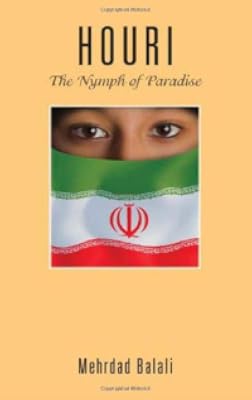
Because this is an uncorrected galley, these comments will be limited to design. The cover is quite striking: two dark eyes peer out in a penetrating gaze atop an Iranian flag, the image framed by a field of yellow. Moreover, the narrow sans serif typeface of the title suggests the slender, curvy temptress the reader meets inside the pages. The back cover is equally simple, with a large author photo that draws the eye. The paperback has French flaps, on which are printed a synopsis of the plot and a short author biography. Unfortunately, the book cannot lie flat when facing up because the front flap pops up; this is the only flaw in an otherwise outstanding cover presentation.
Inside, the text layout is simple but clear and easy to read; the only adornment is a folio at the bottom center of each page. Chapter titles are consistent with the cover and title page. The indentation at the start of new sections is inconsistent but not overly noticeable. The simple, plain interior matches the atmosphere of the novel well. show less
The woman who broke Shahed’s heart and—in his mind—ruined his childhood is the enchanting and westernized Houri. Once a close friend of Shahed’s mother, she betrays her trust by fooling around with Shahed’s father. Shahed finds out in a dramatic scene late in the show more book, and this, coupled with his conviction that his father stole the small fortune he originally stole from his grandfather, severs his relationship with his father irrevocably. Some years after refusing to attend his father’s funeral, a personal tragedy drives him back to Iran, where he realizes that his dull, colorless life in California could be a lot worse. Eventually, Shahed finds peace and forgives his father, although his reasons for doing so are not very convincing. The opening epigraph gives a taste of what’s to come, and the closing quotation, from Montaigne, hints at what Shahed has been through—it’s a good choice.
Balali’s best scenes are undoubtedly set in the Tehran of the Shah, a place full of eccentric life and color. The reader gets to see inside the head of young Shahed, a typical but engaging boy, and witness several momentous and sometimes poignant episodes in his family’s life. The details of Tehran’s seedier side are captivating, and the characters in Shahed’s family are well developed and intriguing. Stylistically, the only thing that drags down the narrative is the author’s overuse of ellipses in dialogue: dropping the pronoun so often eliminates the verisimilitude of the conversation and is very annoying after 300 pages. Still, Houri is a compelling read and a colorful window into the Iran of the Shah.
A Note on Production
Because this is an uncorrected galley, these comments will be limited to design. The cover is quite striking: two dark eyes peer out in a penetrating gaze atop an Iranian flag, the image framed by a field of yellow. Moreover, the narrow sans serif typeface of the title suggests the slender, curvy temptress the reader meets inside the pages. The back cover is equally simple, with a large author photo that draws the eye. The paperback has French flaps, on which are printed a synopsis of the plot and a short author biography. Unfortunately, the book cannot lie flat when facing up because the front flap pops up; this is the only flaw in an otherwise outstanding cover presentation.
Inside, the text layout is simple but clear and easy to read; the only adornment is a folio at the bottom center of each page. Chapter titles are consistent with the cover and title page. The indentation at the start of new sections is inconsistent but not overly noticeable. The simple, plain interior matches the atmosphere of the novel well. show less
This review was written for LibraryThing Early Reviewers.I love to read books about life in another culture and while Mehrdad Balali's story gives glimpses of life in Iran, the main story is of the character Shahed and the life of abuse he suffered as a child and his attempt to come to deal with it later in life. While somewhat engaging it was written a bit awkwardly and I found myself dragging through passages. I wish it had delivered more of what I was expecting but I wasn't totally disappointed. A solid three star read.
This review was written for LibraryThing Early Reviewers.I've put off writing a review about this book because I have very mixed feelings about it. On one hand it was a fascinating look at Iran during the Shah's reign. On the other, it was a book about a group of people that I found very unlikeable. The father, supposedly charming, was a wastrel who spent his money on other women, his car, and his own enjoyment yet at times abandoned his family and left them living a life of squalor. I found the the adult version of the narrator to be weak, whiny, and aimless. His life as a child was more interesting. However, even with these criticisms, this book has stayed with me long after I've read it.
This review was written for LibraryThing Early Reviewers.Members
- Recently Added By
Author Information
1 Work 32 Members
Common Knowledge
- Original publication date
- 2009-12
- People/Characters
- Shahed
- Important places
- Tehran, Iran
- Important events
- Iranian Revolution (1979); Iran-Iraq War (1980 | 1988)
Classifications
Statistics
- Members
- 32
- Popularity
- 882,264
- Reviews
- 18
- Rating
- (3.36)
- Languages
- English
- Media
- Paper
- ISBNs
- 1