Five Women
by Robert Musil
On This Page
Description
Extravagant, sensual, mystical, and autobiographical, these stories by a modernist master are, as Frank Kermode notes in his preface, "elaborate attempts to use fiction for its true purposes, the discovery and regeneration of the human world." Robert Musil, author of The Man Without Qualities, is a modernist writer of extremely profound literary influence and significance and these stories are an ideal entry into his world.Tags
Recommendations

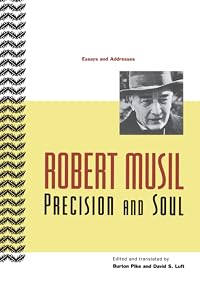






Member Reviews
This is a collection of stories that reminded me of Joyce's great collection, Dubliners. Musil's stories are grouped into two sections, "Three Women" and "Unions". All of the stories are linked by their erotic themes, the nature of love and its relation to knowledge. This is a foreshadowing of one of the themes of his magnum opus, The Man Without Qualities. In this collection the story "Quiet Veronica' explores bestial love, while in "The Perfecting of Love" it is profligate. "Grigia" and "Tonka" present variations on the seduction of a peasant girl, by a man of a higher social class and by a student, respectively. Musil uses these situations to explore deeper in the human consciousness with sex as the central ground of his exploration. show more
I was impressed with the authenticity of of the settings and the integration of peasant life with the themes of love and death.
"Love ran ahead like a herald, love was made ready everywhere like a bed freshly made up for the guest, and each living being more gifts of welcome in their eyes. The women could let that be freely seen, but sometimes as one passed a meadow there might be an old peasant there, waving his scythe like Death in person." (p 19)
The women in the stories experience love and guilt and the energetic ecstasy of turning points that shake their world. Musil draws fine distinctions like a scientist with a scalpel. The reactions of their lovers, the men with whom they interact are always finely drawn and sometimes deeply incisive.
"Volition, cognition, and perception were like a tangled skein. One noticed this only when one tried to find the end of the thread. But perhaps there was some other way of going through the world, other than following the thread of truth? At such moments, when a veneer of coldness separated him from everything, Tonka was more than a fairy-tale: she was almost a visitation.' (p 110)
All of the stories have obvious autobiographical elements, ties to the personal life of the author, but what stands out is his creative ability to both imagine these characters' lives and bring his intelligence to bear on their situation. The result provides the reader with a wealth of issues to digest, presented in a prose setting that brings the world of turn-of-the -century Austria alive. This is also an excellent introduction to the writing of one of the twentieth century's premiere novelist of ideas. show less
I was impressed with the authenticity of of the settings and the integration of peasant life with the themes of love and death.
"Love ran ahead like a herald, love was made ready everywhere like a bed freshly made up for the guest, and each living being more gifts of welcome in their eyes. The women could let that be freely seen, but sometimes as one passed a meadow there might be an old peasant there, waving his scythe like Death in person." (p 19)
The women in the stories experience love and guilt and the energetic ecstasy of turning points that shake their world. Musil draws fine distinctions like a scientist with a scalpel. The reactions of their lovers, the men with whom they interact are always finely drawn and sometimes deeply incisive.
"Volition, cognition, and perception were like a tangled skein. One noticed this only when one tried to find the end of the thread. But perhaps there was some other way of going through the world, other than following the thread of truth? At such moments, when a veneer of coldness separated him from everything, Tonka was more than a fairy-tale: she was almost a visitation.' (p 110)
All of the stories have obvious autobiographical elements, ties to the personal life of the author, but what stands out is his creative ability to both imagine these characters' lives and bring his intelligence to bear on their situation. The result provides the reader with a wealth of issues to digest, presented in a prose setting that brings the world of turn-of-the -century Austria alive. This is also an excellent introduction to the writing of one of the twentieth century's premiere novelist of ideas. show less
Call it a modern woman’s weltschmerz but I was wary of this volume of short stories, titled as it is Five Women, written by a man in the early 20th c. (Somewhat confusingly this collection presents Musil’s work out of order--Three Women [pub. 1924] came out long after The Perfecting of a Love and The Temptation of Quiet Veronica [pub 1911] ). I was prepared for schlock, for Flaubertian flights of fancy; I prepared to encounter, in other words under-drawn, trivial and disappointing women.
I had the wrong idea. Musil eschews frivolity altogether. He is impressively disturbing. His stories depict the cloven psyches of utterly serious women and men alike--drawing attention to the basic fact of human opacity: even those closest to us show more remain unknown and unconquerable entities, as indeed we are also so often unknown to ourselves. Musil provides a lens into the interior world of his characters, revealing them to be generally decent, and yet also profoundly schizotypal: their thoughts cannot stay fixed. Yoked as they are to the vicissitudes of life and relationships, they vacillate, hovering always on the painful (and occasionally erotic) edge of indecision. In Musil’s paranoic universe everyone seems to be trapped in their own heads, increasingly disconnected from “reality.” Interestingly, it is easy to see how Musil may well be the great-grandfather of what Antoine Volodine calls Post-Exoticism.
There is quiet but resistant strength in Musil’s various service women, all of whom seem to elude the prying eyes of the men who stand in authority over them. The women, knowing the score, hold themselves forever in reserve. Musil is smart to see that for a disenfranchised women this is a strategy of self-preservation, and is as much an expression of their vulnerability as it is of their power. The men in authority invariably become obsessed with the fragile simplicity of the peasant women, and long to contain them--an impossible task given the imbalance of power. Even when the women submit they do not, and this is what makes his work stand out as surprisingly insightful and proto-feminist. show less
I had the wrong idea. Musil eschews frivolity altogether. He is impressively disturbing. His stories depict the cloven psyches of utterly serious women and men alike--drawing attention to the basic fact of human opacity: even those closest to us show more remain unknown and unconquerable entities, as indeed we are also so often unknown to ourselves. Musil provides a lens into the interior world of his characters, revealing them to be generally decent, and yet also profoundly schizotypal: their thoughts cannot stay fixed. Yoked as they are to the vicissitudes of life and relationships, they vacillate, hovering always on the painful (and occasionally erotic) edge of indecision. In Musil’s paranoic universe everyone seems to be trapped in their own heads, increasingly disconnected from “reality.” Interestingly, it is easy to see how Musil may well be the great-grandfather of what Antoine Volodine calls Post-Exoticism.
There is quiet but resistant strength in Musil’s various service women, all of whom seem to elude the prying eyes of the men who stand in authority over them. The women, knowing the score, hold themselves forever in reserve. Musil is smart to see that for a disenfranchised women this is a strategy of self-preservation, and is as much an expression of their vulnerability as it is of their power. The men in authority invariably become obsessed with the fragile simplicity of the peasant women, and long to contain them--an impossible task given the imbalance of power. Even when the women submit they do not, and this is what makes his work stand out as surprisingly insightful and proto-feminist. show less
Ratings
Members
- Recently Added By
Lists

German Literature
518 works; 55 members

Best of World Literature
431 works; 51 members
Author Information

343+ Works 11,471 Members
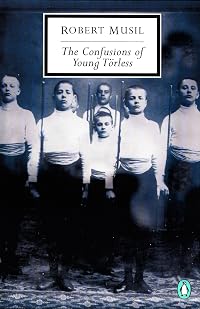
Robert Musil (November 6, 1880 - April 15, 1942) was an Austrian writer. Musil's Young Torless is a novel of troubled adolescence set in a military school, modeled on the one attended by both Musil and Rainer Maria Rilke. It was his first book and was immediately successful. He then abandoned his studies in engineering, logic, and experimental show more psychology and turned to writing. He was an officer in the Austrian army in World War I, lived in Berlin until the Nazis came to power, and finally settled in Geneva. He also wrote plays, essays, and short stories. The Man without Qualities, Musil's magnum opus, is a novel about the life and history of prewar Austria. It was unfinished when Musil died, though he had labored over the three-volume work for ten years. Encyclopedic in the manner of Proust and Dostoevsky, "it is a wonderful and prolonged fireworks display, a well-peopled comedy of ideas" (V. S. Pritchett)---and a critique of contemporary life. It made Musil's largely posthumous reputation. "Musil's whole scheme prophetically describes the bureaucratic condition of our world, and what can only be called the awful, deadly serious, and self-deceptive love affair of one committee for another" (Pritchett). (Bowker Author Biography) show less
Some Editions
Work Relationships
Contains
Common Knowledge
- Canonical title
- Five Women
- Alternate titles
- Tonka and Other Stories
- Original publication date
- 1911 (Vereinigungen) (Vereinigungen); 1924 (Drei Frauen) (Drei Frauen); 1965 (English: Wilkins and Kaiser) (English: Wilkins and Kaiser)
- Disambiguation notice
- Please don't combine Five women with Drei Frauen. Five is two more than drei.
Classifications
- Genres
- General Fiction, Fiction and Literature
- DDC/MDS
- 833.912 — Literature & rhetoric German & related literatures German fiction 1900- 1900-1990 1900-1945
- LCC
- PT2625 .U8 .D713 — Language and Literature German, Dutch and Scandinavian literatures German literature Individual authors or works 1860/70-1960
- BISAC
Statistics
- Members
- 293
- Popularity
- 109,382
- Reviews
- 2
- Rating
- (3.81)
- Languages
- English
- Media
- Paper
- ISBNs
- 7
- ASINs
- 5