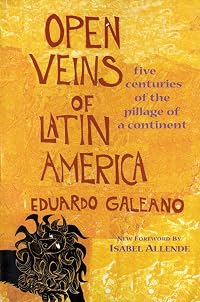
Open Veins of Latin America: Five Centuries of the Pillage of a Continent
by Eduardo Galeano
On This Page
Description
Since its U.S. debut a quarter-century ago, this brilliant text has set a new standard for historical scholarship of Latin America. It is also an outstanding political economy, a social and cultural narrative of the highest quality, and perhaps the finest description of primitive capital accumulation since Marx. Rather than chronology, geography, or political successions, Eduardo Galeano has organized the various facets of Latin American history according to the patterns of five centuries show more of exploitation. Thus he is concerned with gold and silver, cacao and cotton, rubber and coffee, fruit, hides and wool, petroleum, iron, nickel, manganese, copper, aluminum ore, nitrates, and tin. These are the veins which he traces through the body of the entire continent, up to the Rio Grande and throughout the Caribbean, and all the way to their open ends where they empty into the coffers of wealth in the United States and Europe. Weaving fact and imagery into a rich tapestry, Galeano fuses scientific analysis with the passions of a plundered and suffering people. An immense gathering of materials is framed with a vigorous style that never falters in its command of themes. All readers interested in great historical, economic, political, and social writing will find a singular analytical achievement, and an overwhelming narrative that makes history speak, unforgettably. This classic is now further honored by Isabel Allende's inspiring introduction. Universally recognized as one of the most important writers of our time, Allende once again contributes her talents to literature, to political principles, and to enlightenment. show lessTags
Recommendations


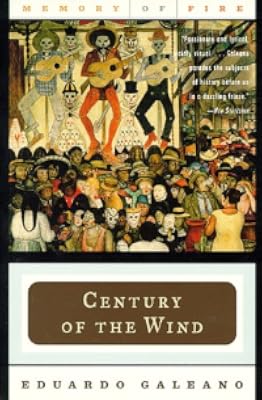
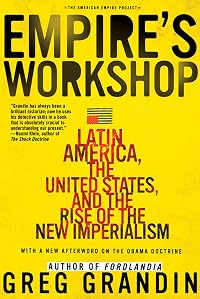

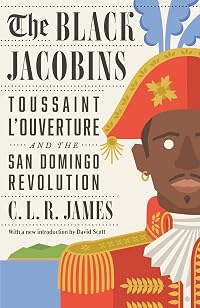
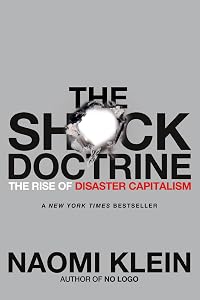


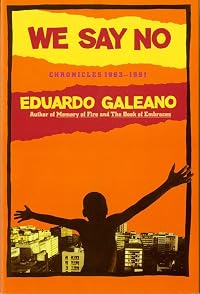
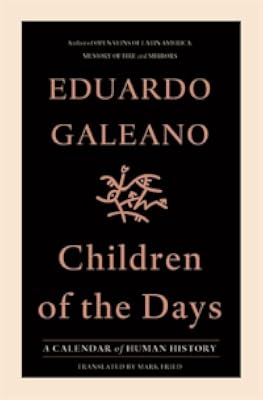


Member Recommendations
Member Reviews
Really great and highly readable and comprehensive look at the history of Latin America in terms of military and economic interventions (kind of a euphemistic term, really) from Europe and the USA. Really shows just how much Europe destroyed Latin America and how it continues to do so - gives a particularly good look at how imperialism works and its effects without being too tough to understand. Has lots of statistics and stories as evidence of just how bad things are that help make it convincing even for sceptics. Also talks about "home grown" problems but makes clear that they have often been promoted by capital to make conditions for profit better. Some parts are outdated - it's sad reading stuff about the possibilities of Allende - show more but the points are still as important now as then and the history is essential to understanding things today, as well as the process in other countries. A really great book I highly recommend if you're at all interested in imperialism, with applications to many things going on in the world today. show less
Written in 1970, Galeano seems to argue in Open Veins for a number of things that, (only) by being implemented all together, could raise employment and the standard of living of the broad population of Latin American better than dependency on counterproductive foreign aid and entrapping foreign loans:
- industrial policy/ national infant industry protection and subsidisation
- import-substition
- development of economies of scale and support for local specialisation through a Latin American common market
The problem is that he doesn't explicitly define or develop those ideas. In Open Veins itself, Galeano says that he deliberately leans more toward polemic(*) than theory:
"I know I can be accused of sacrilege in writing about political show more economy in the style of a novel about love or pirates. But I confess I get a pain from reading valuable works by certain sociologists, political experts, economists, and historians who write in code. Hermetic language isn't the invariable and inevitable price of profundity. In some cases it can simply conceal incapacity for communication raised to the category of intellectual virtue. I suspect that boredom can thus often serve to sanctify the established order, confirming that knowledge is a privilege of the elite."
It is hard to disagree with this intention, but one might easily argue he takes it too far. It is a pity that such an ambitious project that corralled so much research is hampered by the total absence of theory. The choice needn't be between theory and accessibility. With some effort, one might have been able to make theory accessible.
In fact, Galeano himself seemed to recognise this. “Open Veins tried to be a book of political economy, but I didn’t yet have the necessary training or preparation,” he said in 2014. “I wouldn’t be capable of reading this book again; I’d keel over. For me, this prose of the traditional left is extremely leaden, and my physique can’t tolerate it.”
Notwithstanding this critique, there is much usefulness in the historical perspective of the book and the way it combines stories of the development of capitalism, colonialism, the inquisition, and other phenomenon together. It still serves as a fantastic introduction to these themes.
(*) One of the interesting things about reading Galeano from 1970 after Ta-Nehesi Coates from 2015 is their common use of the word 'plunder' show less
- industrial policy/ national infant industry protection and subsidisation
- import-substition
- development of economies of scale and support for local specialisation through a Latin American common market
The problem is that he doesn't explicitly define or develop those ideas. In Open Veins itself, Galeano says that he deliberately leans more toward polemic(*) than theory:
"I know I can be accused of sacrilege in writing about political show more economy in the style of a novel about love or pirates. But I confess I get a pain from reading valuable works by certain sociologists, political experts, economists, and historians who write in code. Hermetic language isn't the invariable and inevitable price of profundity. In some cases it can simply conceal incapacity for communication raised to the category of intellectual virtue. I suspect that boredom can thus often serve to sanctify the established order, confirming that knowledge is a privilege of the elite."
It is hard to disagree with this intention, but one might easily argue he takes it too far. It is a pity that such an ambitious project that corralled so much research is hampered by the total absence of theory. The choice needn't be between theory and accessibility. With some effort, one might have been able to make theory accessible.
In fact, Galeano himself seemed to recognise this. “Open Veins tried to be a book of political economy, but I didn’t yet have the necessary training or preparation,” he said in 2014. “I wouldn’t be capable of reading this book again; I’d keel over. For me, this prose of the traditional left is extremely leaden, and my physique can’t tolerate it.”
Notwithstanding this critique, there is much usefulness in the historical perspective of the book and the way it combines stories of the development of capitalism, colonialism, the inquisition, and other phenomenon together. It still serves as a fantastic introduction to these themes.
(*) One of the interesting things about reading Galeano from 1970 after Ta-Nehesi Coates from 2015 is their common use of the word 'plunder' show less
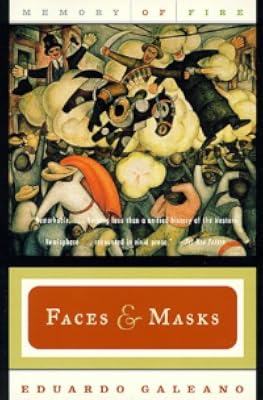
Galeano is one of only 2 Uruguayan authors I have read (the other is Onetti). His trilogy Memory of Fire is one of the few non-fiction works that I have regularly recommended. The trilogy is a more or less complete history of America and it is organised as the most humane of narratives possible on a history that is far removed from humanity. This work is an earlier and more overtly polemical history of 5 centuries of the bloodletting of the Latin American continent almost unto death.
Written in 1971 The Open Veins has become a classic among scholars of Latin American history and although it does not have the wonderful structure and narrative flow of the Memory of Fire trilogy it is an incredibly compelling read even for the show more non-historian. Galeano's gift has been honed over the years but his talent for engaging you with history shines even in this earlier work. Galeano has been compared favourably to Dos Passos and Marquez and that is not too high a praise.
If you want to discover how a mythically rich continent can be reduced to penury read this book. If you want an insight as to how the IMF can enslave not just nations but whole continents read this book, What the hell - READ THIS BOOK. show less
Written in 1971 The Open Veins has become a classic among scholars of Latin American history and although it does not have the wonderful structure and narrative flow of the Memory of Fire trilogy it is an incredibly compelling read even for the show more non-historian. Galeano's gift has been honed over the years but his talent for engaging you with history shines even in this earlier work. Galeano has been compared favourably to Dos Passos and Marquez and that is not too high a praise.
If you want to discover how a mythically rich continent can be reduced to penury read this book. If you want an insight as to how the IMF can enslave not just nations but whole continents read this book, What the hell - READ THIS BOOK. show less
A history which is organized around repetition instead of sequence. The same basic pattern of underdevelopment repeated in so many different variations over hundreds of years. The people of one country are robbed of gold; the people of another country are robbed of tin; the people of another country are robbed of meat. Artigas attempts to free Uruguay, but after he dies his people are murdered and looted. Vargas's reforms are blocked, and he is replaced with a government of looting and murder. In the 7 years between the first and second editions, Allende is overthrown and replaced with a government of looting and murder. All of this is done for the benefit of European or Anglo-American capital.
It's a good way to write a history, if you show more want to foreground the unending processes of exploitation rather than the particularity and drama of particular events. Sometimes I did wish for a more traditional history, one which really went in-depth on particular moments and societies. 400 years of a continent and a half's history is too much to really cover in any detail in a single book. I also wish I had more of a macroeconomics education; I kind of glazed over some of the analysis of international trade and investment. Definitely a book that makes me aware of how little background I have on some of the things I would like to know about. show less
It's a good way to write a history, if you show more want to foreground the unending processes of exploitation rather than the particularity and drama of particular events. Sometimes I did wish for a more traditional history, one which really went in-depth on particular moments and societies. 400 years of a continent and a half's history is too much to really cover in any detail in a single book. I also wish I had more of a macroeconomics education; I kind of glazed over some of the analysis of international trade and investment. Definitely a book that makes me aware of how little background I have on some of the things I would like to know about. show less
Astonishing. Chock full of details that are sometimes hard to slog through. But the overall message was worth the effort. Latin America has been screwed.
The book was published in 1971 so, in a sense, is outdated. But it's an excellent history of Latin America up to that time. The final chapter in the ebook brought the history up to the late 1970s and included a brief summary of the right-wing coups in Chile and Argentina. I remember when Allende was deposed in Chile in 1973, a tragic time I want to learn more about.
In the 90s, I asked a coworker from Chile, a fellow engineer, what he was doing in 1973. He was astonished at my question. During all his years in the U.S., no one had ever asked him. He and his family were likely deported show more by Pinochet, or fled. I wish I'd known him better and heard his story. But it was a quick conversation in an elevator and we didn't work on the same floor. Too bad.
The book is recommended to anyone with patience who is interested in the topic. show less
The book was published in 1971 so, in a sense, is outdated. But it's an excellent history of Latin America up to that time. The final chapter in the ebook brought the history up to the late 1970s and included a brief summary of the right-wing coups in Chile and Argentina. I remember when Allende was deposed in Chile in 1973, a tragic time I want to learn more about.
In the 90s, I asked a coworker from Chile, a fellow engineer, what he was doing in 1973. He was astonished at my question. During all his years in the U.S., no one had ever asked him. He and his family were likely deported show more by Pinochet, or fled. I wish I'd known him better and heard his story. But it was a quick conversation in an elevator and we didn't work on the same floor. Too bad.
The book is recommended to anyone with patience who is interested in the topic. show less
I have read Eduardo Galeano "Open Veings of Latin America" twice. I first read it many years ago for a class on colonial Latin America. I reread it recently.
The sweep of the book is vast. It covers the entire history of Latin America from the arrival of Europeans through part of the Cold War, with brief mentions of indigenous civilizations throughout. There bulk of the book's research - which is thorough and very well indexed - focuses on the transfer of wealth from America to Europe.
As the title suggests, the book is very dramatic. It rightly focuses on the atrocities committed by the colonizers on the Native American, African, and the peasant populations. Unfortunately, sprinkled throughout the text are numerous unnecessary show more metaphors that make the book more poetic than historical. There are good numbers and good statistics, but they are often obscured under blankets of anecdotes.
Perhaps one of the reasons the book is so highly regarded is that it was published at a time when the English-reading audience first started caring about Latin American literature. Galeano's writing does read a bit like some of the lyrical prose that became so popular in Europe and the United States. show less
The sweep of the book is vast. It covers the entire history of Latin America from the arrival of Europeans through part of the Cold War, with brief mentions of indigenous civilizations throughout. There bulk of the book's research - which is thorough and very well indexed - focuses on the transfer of wealth from America to Europe.
As the title suggests, the book is very dramatic. It rightly focuses on the atrocities committed by the colonizers on the Native American, African, and the peasant populations. Unfortunately, sprinkled throughout the text are numerous unnecessary show more metaphors that make the book more poetic than historical. There are good numbers and good statistics, but they are often obscured under blankets of anecdotes.
Perhaps one of the reasons the book is so highly regarded is that it was published at a time when the English-reading audience first started caring about Latin American literature. Galeano's writing does read a bit like some of the lyrical prose that became so popular in Europe and the United States. show less
No que sea la intención del libro ser un documento algo eterno, pero realmente se basa mucho desde los acontecimentos de la epoca en que se escribió para hacer sus valiosas comparaciones con el pasado. Dando ese descuento, y considerando que transmite una visón justificamente negativa de la naturaleza del ser humano, es un libro fantástico, que lo recomiendo. La fluidez con que el autor camina entre las distintas regiones de la america latina es bella, util, y enriquecedora.
Members
- Recently Added By
Lists

r/History Recommended Reading List
603 works; 12 members

Books Read in 2021
5,361 works; 114 members

World
18 works; 1 member
Author Information

101+ Works 10,765 Members
Eduardo Galeano was born on September 3, 1940 in Montevideo, Uruguay. At the age of 13, he began publishing cartoons for the Uruguayan socialist newspaper El Sol. He worked as a journalist, historian, and political activist. While in his early 30s, he was imprisoned during a right-wing military coup and later forced to flee from Uruguay to show more Argentina. Later, another coup and several death threats forced him to leave Argentina for Spain where he lived in exile until he was permitted to return to Uruguay in 1984. During his lifetime, he wrote numerous fiction and non-fiction works including Days and Nights of Love and War, Football in Sun and Shadow, Open Veins of Latin America: Five Centuries of the Pillage of a Continent, Guatemala: Occupied Country, The Book of Embraces, and Children of the Days. In 1989, he won the American Book Award for Memory of Fire. He died of cancer on April 13, 2015 at the age of 74. (Bowker Author Biography) show less
Some Editions
Awards and Honors
Series
Belongs to Publisher Series
Common Knowledge
- Canonical title*
- Les veines ouvertes de l'Amérique latine. Une contre-histoire
- Original title
- Las venas abiertas de América Latina
- Original publication date
- 1971
- People/Characters
- Augusto C. Sandino; Salvador Allende; Lyndon Baines Johnson; Richard M. Nixon; Augusto Pinochet; Francisco Pizarro (show all 8); Emiliano Zapata; Philip II, King of Spain
- Important places
- Latin America; Argentina; Bolivia; Central America; Cuba; Peru (show all 8); Potosí, Potosí, Bolivia; Uruguay
- Dedication*
- Este libro no hubiera sido posible sin la colaboración que prestaron, de una u otra manera, Sergio Bagú, Luis Carlos Benvenuto, Fernando Carmona, Adicea Castillo, Alberto Couriel, André Gunder Frank, Rogelio García Lupo, ... (show all)Miguel Labarca, Carlos Lessa, Samuel Lichtensztejn, Juan A. Oddone, Adolfo Perelman, Artur Poerner, Germán Rama, Darcy Ribeiro, Orlando Rojas, Julio Rosiello, Paulo Schilling, Karl-Heinz Stanzick, Vivián Trías y Daniel Vidart.
A ellos, y a los muchos amigos que me alentaron en la tarea de estos últimos años, dedico el resultado, del que son, claro está, inocentes.
Montevideo, fines de 1970. - First words*
- La división internacional del trabajo consiste en que unos países se especializan en ganar y otros en perder.
- Last words*
- (Click to show. Warning: May contain spoilers.)Y porque en la historia de los hombres cada acto de destrucción encuentra su respuesta, tarde o temprano, en un acto de creación.
- Publisher's editor*
- Malaurie, Jean (Directeur de collection)
- Original language*
- Espagnol (Uruguay) (Uruguay)
- Disambiguation notice*
- GALEANO, EDUARDO, Les Veines ouvertes de l’Amérique Latine. Une contre-histoire,
Traduit de l'espagnol par Claude Couffon, Introduction de l'auteur, Postface « Sept années ont passé », Plon, 1981.
Edition o... (show all)riginale en espagnol en 1971, Las venas abiertas de America Latina, Siglo Veintiuno Editores: México.
*Some information comes from Common Knowledge in other languages. Click "Edit" for more information.
Classifications
Statistics
- Members
- 3,228
- Popularity
- 5,345
- Reviews
- 44
- Rating
- (4.18)
- Languages
- 16 — Chinese, Danish, Dutch, English, French, German, Hungarian, Italian, Norwegian (Bokmål), Polish, Serbian, Slovenian, Spanish, Swedish, Turkish, Portuguese (Portugal)
- Media
- Paper, Audiobook, Ebook
- ISBNs
- 79
- ASINs
- 29