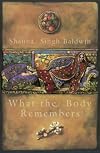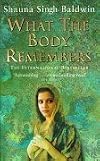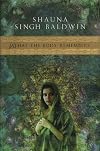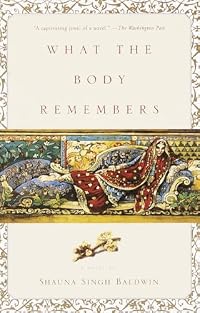
What the Body Remembers
by Shauna Singh Baldwin 
On This Page
Description
In 1947 Punjab, a Sikh landowner with a barren wife takes a second one so he can have children. The wives maneuver for influence, their effort complicated by the political situation--the man is distracted by India's independence and partition--but eventually the wife with the children wins out. A first novel.Tags
Recommendations
















Member Reviews
Satya, a strong willed women with the misfortune to be born as a woman in 1895 in India, opens the novel. She is forced to live with the intrusion of Roop, a second wife. She struggles with this constant reminder that no how good a partner she’s been to Sardarji, producing a son is the only thing women are for, and she’s failed at that. She wants to hate Sardarji but instead she hates Roop, a woman trapped like her. What is a women who won’t bend to do?
In contrast Roop, a young woman who is sold by her impoverished father to Sardarji, doesn’t hate anyone. She’s been listening to the lessons that Satya ignored, and she has tried to find her place as an obedient second wife. However the simplistic world of jewelry and esteem show more exchanged for producing children is shattered as Satya steals her children. Roop has done everything that was asked of her, why is the world still so unfair?
I have to say, the characters in this book were just fantastic. I felt a great deal of kinship with Satya, and so I bowed my head in solidarity with her during the prologue and epilogue. I was ashamed of a lot of the things she did, but I could understand why she did them. Roop was a little tougher for me to love, because her personality is really different from mine. However she grew immensely as the story progressed, and she learned some hard lessons and came through resilient.The only sticking point for me was Sardarji, even though Baldwin went to great lengths to show his own struggles with British Imperialism. I think even though this story purposefully told during a tumultuous time in Indian history, it pays to remember it’s story about women.
I found the style easy to read, with some beginner references to new cultural information. This book expects you to just understand a lot of vocab without footnotes or contextual clues, which can be overwhelming. For a casual read, I was a little frustrated that I either had to pull up wikipedia every couple of pages or just cruise through a lot of the terminology and religious references. On the other hand, Sikh cultural norms are detailed very well, and Baldwin made an effort to help newbies like myself understand what was going on.
Over all, this is a strongly feminist book with a historical context that was new to me and presented in a way that pulled me in because it didn’t assume I was incapable of understanding it. Satya and Roop, the main characters, were polar opposites, but I was completely supportive of the way both of them navigated the pitfalls of being a woman in India. If you also come to care for either woman, this book will be a tragedy, but you’ll owe it to both of these excellent women witness their lives. show less
In contrast Roop, a young woman who is sold by her impoverished father to Sardarji, doesn’t hate anyone. She’s been listening to the lessons that Satya ignored, and she has tried to find her place as an obedient second wife. However the simplistic world of jewelry and esteem show more exchanged for producing children is shattered as Satya steals her children. Roop has done everything that was asked of her, why is the world still so unfair?
I have to say, the characters in this book were just fantastic. I felt a great deal of kinship with Satya, and so I bowed my head in solidarity with her during the prologue and epilogue. I was ashamed of a lot of the things she did, but I could understand why she did them. Roop was a little tougher for me to love, because her personality is really different from mine. However she grew immensely as the story progressed, and she learned some hard lessons and came through resilient.The only sticking point for me was Sardarji, even though Baldwin went to great lengths to show his own struggles with British Imperialism. I think even though this story purposefully told during a tumultuous time in Indian history, it pays to remember it’s story about women.
I found the style easy to read, with some beginner references to new cultural information. This book expects you to just understand a lot of vocab without footnotes or contextual clues, which can be overwhelming. For a casual read, I was a little frustrated that I either had to pull up wikipedia every couple of pages or just cruise through a lot of the terminology and religious references. On the other hand, Sikh cultural norms are detailed very well, and Baldwin made an effort to help newbies like myself understand what was going on.
Over all, this is a strongly feminist book with a historical context that was new to me and presented in a way that pulled me in because it didn’t assume I was incapable of understanding it. Satya and Roop, the main characters, were polar opposites, but I was completely supportive of the way both of them navigated the pitfalls of being a woman in India. If you also come to care for either woman, this book will be a tragedy, but you’ll owe it to both of these excellent women witness their lives. show less
A lush, beautiful read. Her writing is steady, graceful and confident. The story is compelling while being subtle as it grasps the reader's attention and imagination. I found the depiction of the Partition of India from a Sikh perspective refreshing and engaging. And it is certainly one of the best (perhaps of 3-5 such stories) on this historic and horrifying event. I am convinced that Partition continues to have an impact today, including on us in the U.S. There are many lessons and insights, highlighted in the book, about the evils and arrogance of colonialism and racism (the two are not distinct concepts).
The book portrays the cultural, historical and the political in a seamless manner and unites such aspects in moving the story show more forward and to a resolution.
I enjoyed this book a great deal. It was a reading experience to be savored.
I noticed a few less favorable reviews here and I easily dismiss them. This book is for a more patient and discerning reader who can feel the gentle lift of the author's words. Wow. show less
The book portrays the cultural, historical and the political in a seamless manner and unites such aspects in moving the story show more forward and to a resolution.
I enjoyed this book a great deal. It was a reading experience to be savored.
I noticed a few less favorable reviews here and I easily dismiss them. This book is for a more patient and discerning reader who can feel the gentle lift of the author's words. Wow. show less
This book was my introduction to the history of partition in India and Pakistan. At the time, I was woefully ignorant of this historical moment and this book destroyed me. Not only was I horrified by my ignorance but the events of the novel brought the story of partition to light in a way that images from this novel still linger with me 6 years later.
It was a novel that changed my life and therefore can be nothing less than a 5 on my rating scale.
It was a novel that changed my life and therefore can be nothing less than a 5 on my rating scale.
5***** and a ❤
This is an extraordinary book. The novel deals with the struggles to form Pakistan, when Muslims fought Sikhs and Hindus, and with the traditional culture vs the modern expectations. It is also a tale of woman and her place in the world. Roop is just 16 when she becomes the second wife of Sandaji (needed because 1st wife Satya is still barren after 20 years). How Roop grows and matures, how Satya descends to madness with jealousy and hatred are themes that mirror the division of India and Pakistan.
Our book club had chosen it months in advance, but our discussion took place one week after Sept 11, 2001. Couldn't have been more timely.
UPDATE April 2005
I read it again for a different book club, and got even more out of it.
This is an extraordinary book. The novel deals with the struggles to form Pakistan, when Muslims fought Sikhs and Hindus, and with the traditional culture vs the modern expectations. It is also a tale of woman and her place in the world. Roop is just 16 when she becomes the second wife of Sandaji (needed because 1st wife Satya is still barren after 20 years). How Roop grows and matures, how Satya descends to madness with jealousy and hatred are themes that mirror the division of India and Pakistan.
Our book club had chosen it months in advance, but our discussion took place one week after Sept 11, 2001. Couldn't have been more timely.
UPDATE April 2005
I read it again for a different book club, and got even more out of it.
It is India in the years leading up to independence from England and Partition, when the country will be divided into India and Pakistan. Roop has no mother, but has a father who is poor. When she is 16, out of desperation, her father arranges a marriage to a 40 year old man for her. Unfortunately, she is to be the second wife to this man. Though Roop hopes to be like sisters with his first wife, Satya, Satya doesn't see things that way.
I thought it took a long time for the story to really get going. I wasn't all that interested in Roop's story as a child. I found myself skimming a lot of the book. It got to be a little more interesting after she got married, but the political parts of the book lost my interest, except near the end, show more the day before partition. Overall, I thought it was simply ok. show less
I thought it took a long time for the story to really get going. I wasn't all that interested in Roop's story as a child. I found myself skimming a lot of the book. It got to be a little more interesting after she got married, but the political parts of the book lost my interest, except near the end, show more the day before partition. Overall, I thought it was simply ok. show less
As a child, Roop is fiercely independent, which is unusual and not recommended for females in India in the 1930s. She is married to Sardarji as a young teen because his current wife, Satya, can't produce an heir. Roop clearly doesn't understand the implications of the arrangement, and agrees to this marriage because she'll get to live in a big house and wear fancy clothes. Scheming, jealous Satya tries to make Roop's life hell, and Roop learns that the advice she was given as a child to be obedient is best followed to make her life easier.
In addition to the lives of Roop, Satya and Sardarji, Singh Baldwin chronicles India's political struggles as Pakistan emerges in the 1940s. The historical story is just as important as the personal show more ones, though it is introduced slowly but later becomes key to the plot.
The characters in this novel are well developed, and Roop is particularly likable. This is the story of her independence, as well as Pakistan's, and her growing into the woman that she needs to become. show less
In addition to the lives of Roop, Satya and Sardarji, Singh Baldwin chronicles India's political struggles as Pakistan emerges in the 1940s. The historical story is just as important as the personal show more ones, though it is introduced slowly but later becomes key to the plot.
The characters in this novel are well developed, and Roop is particularly likable. This is the story of her independence, as well as Pakistan's, and her growing into the woman that she needs to become. show less
http://pixxiefishbooks.blogspot.com/2...
What the Body Remembers tells, put simply, the history of two women and the man they both love. The more complicated version is that it is the story of families, cultures, and religions struggling to survive against the backdrops of the 1930s, World War II, and ultimately, the partition of Pakistan and India after the Second World War.
Singh Baldwin's writing style is lyrical, yet clear. She knows her characters well; sometimes too well, in fact, as occasionally I wanted her to step back and explain why someone was acting in such a way, though I could tell their actions were based in cultural norms (but ones with which I am unfamiliar). She does better on the personal level than she does on the show more political level; but in a way, that is fitting, since the characters themselves, especially Roop, do not really comprehend what is happening in the world outside their small circle, at least not until near the very end of the tale (when India and Pakistan are undergoing their very chaotic, violent partition).
My only negative comment about this book, then, would stem from this: I wanted a bit more politics and a bit less story. However, in all fairness, I think that is telling of my current reading interests, rather than a real critique of any fault or shortcoming of this novel. show less
What the Body Remembers tells, put simply, the history of two women and the man they both love. The more complicated version is that it is the story of families, cultures, and religions struggling to survive against the backdrops of the 1930s, World War II, and ultimately, the partition of Pakistan and India after the Second World War.
Singh Baldwin's writing style is lyrical, yet clear. She knows her characters well; sometimes too well, in fact, as occasionally I wanted her to step back and explain why someone was acting in such a way, though I could tell their actions were based in cultural norms (but ones with which I am unfamiliar). She does better on the personal level than she does on the show more political level; but in a way, that is fitting, since the characters themselves, especially Roop, do not really comprehend what is happening in the world outside their small circle, at least not until near the very end of the tale (when India and Pakistan are undergoing their very chaotic, violent partition).
My only negative comment about this book, then, would stem from this: I wanted a bit more politics and a bit less story. However, in all fairness, I think that is telling of my current reading interests, rather than a real critique of any fault or shortcoming of this novel. show less
Members
- Recently Added By
Lists

CBC Books - Canada's 100 (+ bonus 10): Which have you read?
110 works; 23 members

Books With the Most Memorable Titles
478 works; 158 members
Author Information

7+ Works 852 Members
Shauna Singh Baldwin is a LibraryThing Author, an author who lists their personal library on LibraryThing.
Awards and Honors
Common Knowledge
- Canonical title
- What the Body Remembers
- Original publication date
- 1999-10-12
- People/Characters
- Roop; Sardarji; Satya
- Important places
- Pakistan; Lahore, Punjab, Pakistan; Rawalpindi, Pakistan; Delhi, India
- First words
- Satya's heart is black and dense as a stone within her.
prologue: I have grey eyes in this lifetime and they are wide open as I am
severed from my mother's womb. - Last words
- (Click to show. Warning: May contain spoilers.)I have come so far, I have borne so much pain and emptiness!
But men have not yet changed. - Blurbers
- Fitzgerald, Penelope; Chaudhuri, Amit
Classifications
- Genres
- General Fiction, Fiction and Literature, Historical Fiction
- DDC/MDS
- 813.54 — Literature & rhetoric American literature in English American fiction in English 1900-1999 1945-1999
- LCC
- PR9199.3 .B355 .W47 — Language and Literature English English Literature English literature: Provincial, local, etc.
- BISAC
Statistics
- Members
- 584
- Popularity
- 50,102
- Reviews
- 14
- Rating
- (3.84)
- Languages
- 7 — Catalan, Dutch, English, French, German, Italian, Spanish
- Media
- Paper, Audiobook, Ebook
- ISBNs
- 25
- ASINs
- 1