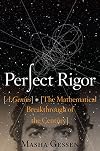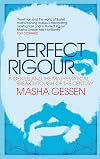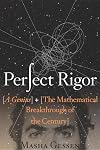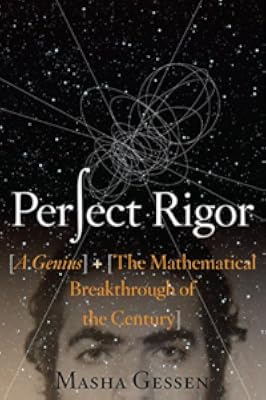
Perfect Rigor: A Genius and the Mathematical Breakthrough of the Century
by M. Gessen
On This Page
Description
In 2006, eccentric Russian mathematician Grigori Perelman solved one of the world's greatest intellectual puzzles. For this feat, Perelman will be awarded a prize of one million dollars, and he will likely decline it. Gessen investigates his gripping yet tragic story of genius.Tags
Recommendations

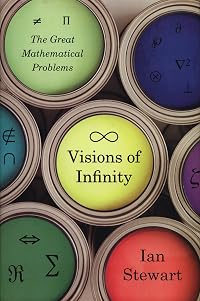
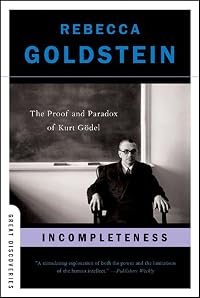
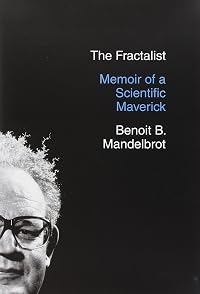
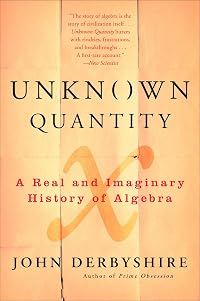

Member Recommendations
Member Reviews
In 2000, the Clay Institute announced the Millennium Problems: seven of the great mathematical mysteries. Anyone who solved one of these illustrious mysteries could lay claim to one of the greatest accomplishments in math history, as well as a prize of a million dollars. Two years later, a man named Grigory Perelman submitted what would later be established as the solution to the Poincare Conjecture – but rather than becoming an international superstar, Perelman rejected the fiscal prize and disappeared from the world of mathematics.
Intrigued by the man who solved one of the great math questions of the age but rejected the fame and money to go along with it, Masha Gessen interviewed friends, teachers, and colleagues to track the show more trajectory of Perelman’s solution and uncover the reasons behind his self-imposed seclusion.
While the back billed it more to be about the math, Perfect Rigor actually focuses more on Perelman himself. The first half of the book is largely about math culture in Soviet Russia, an interesting subject in and of itself – from the geniuses who built schools for the truly gifted and their constant fights and subterfuge with ideological politics to the prodigies who dedicated themselves to math in order to avoid being conscripted into the army.
Gessen’s writing is brusque at points, in that particular style endemic to journalists, but also somewhat confusing. Having grown up in Soviet Russia herself, she often seems to assume the reader will know what she’s talking about – and I’ll admit to having to stop and look things up more than once. Not that I mind doing that – that’s what Google is for, after all – but it did interrupt the flow of the book. Other times her sentences can be awkward or confusing. Take, for instance, a section early in the book: “What made the school different was that the students’ talents and intellectual achievements made them more popular and significant” (45). The achievements more significant? Or the schools?
Her writing can also be uncomfortable at points; she has not-very-flattering descriptions of some of the people she interviewed, she writes down one story from memory when it seemed rather obvious the person being interviewed didn’t want it shared, and at one point she states that one man she interviewed was flat-out wrong (based on her impressions gathered from others). While I appreciate the fact that journalists, particularly investigative ones, need to be aggressive, the lack of tact shown was enough to make me wince occasionally while reading it. Most authors who write these sorts of books, particularly books involving people still alive, write with a subtle grace that allows one to read between the lines; Gessen states what she believes with sometimes uncomfortable bluntness.
It is also hard to follow her footnoting. There are no footnotes within the text itself, so you have to flip to the back to figure out if a source is cited or not. While this may keep the flow going within the book itself, it makes trying to verify or read more about certain things an absolute nightmare. It would have been much preferred if the book had stuck to the common academic practice of including the full list of footnotes at the end of each chapter.
Still, the story she tells is an intriguing one, and a closer look at the culture, politics, and often eccentric characters in the world of math. She combines a narrative with personal anecdotes with a love for one of the great mathematical mysteries. Even non-math lovers will be fascinated by the book, the problem, and the man himself. show less
Intrigued by the man who solved one of the great math questions of the age but rejected the fame and money to go along with it, Masha Gessen interviewed friends, teachers, and colleagues to track the show more trajectory of Perelman’s solution and uncover the reasons behind his self-imposed seclusion.
While the back billed it more to be about the math, Perfect Rigor actually focuses more on Perelman himself. The first half of the book is largely about math culture in Soviet Russia, an interesting subject in and of itself – from the geniuses who built schools for the truly gifted and their constant fights and subterfuge with ideological politics to the prodigies who dedicated themselves to math in order to avoid being conscripted into the army.
Gessen’s writing is brusque at points, in that particular style endemic to journalists, but also somewhat confusing. Having grown up in Soviet Russia herself, she often seems to assume the reader will know what she’s talking about – and I’ll admit to having to stop and look things up more than once. Not that I mind doing that – that’s what Google is for, after all – but it did interrupt the flow of the book. Other times her sentences can be awkward or confusing. Take, for instance, a section early in the book: “What made the school different was that the students’ talents and intellectual achievements made them more popular and significant” (45). The achievements more significant? Or the schools?
Her writing can also be uncomfortable at points; she has not-very-flattering descriptions of some of the people she interviewed, she writes down one story from memory when it seemed rather obvious the person being interviewed didn’t want it shared, and at one point she states that one man she interviewed was flat-out wrong (based on her impressions gathered from others). While I appreciate the fact that journalists, particularly investigative ones, need to be aggressive, the lack of tact shown was enough to make me wince occasionally while reading it. Most authors who write these sorts of books, particularly books involving people still alive, write with a subtle grace that allows one to read between the lines; Gessen states what she believes with sometimes uncomfortable bluntness.
It is also hard to follow her footnoting. There are no footnotes within the text itself, so you have to flip to the back to figure out if a source is cited or not. While this may keep the flow going within the book itself, it makes trying to verify or read more about certain things an absolute nightmare. It would have been much preferred if the book had stuck to the common academic practice of including the full list of footnotes at the end of each chapter.
Still, the story she tells is an intriguing one, and a closer look at the culture, politics, and often eccentric characters in the world of math. She combines a narrative with personal anecdotes with a love for one of the great mathematical mysteries. Even non-math lovers will be fascinated by the book, the problem, and the man himself. show less
An excellent book on a very interesting topic. I enjoyed how Soviet math clubs were presented in the book, very eye opening. Perelman is unbelievable, definitely "made of different dough". He is a product of a system that promoted mathematical pursuit. Absolutely brilliant! In a society in which most can name NFL quarterbacks, how many even know Perelman or can appreciate his intellect? As he says (from his in Latin), "I will go on my own way and let others stick to theirs".
This book is a story of the early life of a Russian mathematician (Grigory Perelman) who became infamous with the publication of his proof of the Poincare Conjecture, one of the 'Millennium Problems' for which a proven solution earns $1,000,000 from the Clay Institute. The author's depiction of Perelman's early childhood and subsequent education experience reveals a great deal about the nature and environment of the '60s thru 80's of Russian politics relative to its people. Perelman was identified early on as a type of prodigy who has an almost single focus on mathematics. The author hints at a potential autistic diagnosis but leaves any conclusion to the reader. By his mother's insistence, young Perelman attends a math institute where show more the primary (really, only) focus is solving math problems in preparation for events where students compete to ... solve math problems. Perelman develops a self-governing moral that guides his life and causes, or at least somewhat explains, his single-minded approach to problems (math or otherwise). He has little need for interaction with others although does rely on several mentors to help him develop his natural mathematical skills. Perelman issued his solution to the Poincare Conjecture in an unconventional manner which did not demand the usual scrutiny by peers (maybe because he did not feel he had any peers relative to this subject) and subsequently isolated himself from the math community, refusing both the Fields Medal (roughly equivalent to the Nobel Prize for mathematics) and the $1.000.000 Clay Institute prize.
The book provides great insight into some aspects of Russian political system effects on the everyday life of its citizen (during the period of time in which it is set). I would like to have had heard more about the actual problems Perelman solved as a child and adult, and in particular, a better discussion of the Poincare.
Glimpses of Perelman can be seen on Youtube being accosted by cavalier reporters who have no understanding of the man, his wish to remain private, or any grasp of or interest in his accomplishments. Perelman essentially dropped out of the world of mathematics and lives a private life. I want to think he has taken on and is in the midst of solving another major mathematics problem but there is no evidence of this. The only evidence available is that he wants to be left alone. show less
The book provides great insight into some aspects of Russian political system effects on the everyday life of its citizen (during the period of time in which it is set). I would like to have had heard more about the actual problems Perelman solved as a child and adult, and in particular, a better discussion of the Poincare.
Glimpses of Perelman can be seen on Youtube being accosted by cavalier reporters who have no understanding of the man, his wish to remain private, or any grasp of or interest in his accomplishments. Perelman essentially dropped out of the world of mathematics and lives a private life. I want to think he has taken on and is in the midst of solving another major mathematics problem but there is no evidence of this. The only evidence available is that he wants to be left alone. show less
The story of Perelman is an interesting one, and this is a fast read. The author spends a lot of time discussing historical context: what the soviet union was like, who the greatest soviet mathematicians were, how all of the guys were connected. Yes, all of this is the pretext for who Perelman becomes. By contrast Perelman's professional mathematical accomplishments are dealt with in a very short manner. It might have been nice to see some additional detail or maybe some further commentary on his proofs by other contemporaries (how did his fellow Fields Medalists feel about Perelman's proof and subsequent refusal of the Fields Medal?) Utlimately, Masha Gessen does a nice job of collecting and retelling what little there is to tell about show more Perelman, but you're really left wishing there was more to tell. show less
This book really took me by surprise. Masha Gessen did a really good job with the small amount of information that she had to go off of. Still it was more information than the subject of the book, Grigory Perelman would have liked her to have. This book is the story of a Russian mathematician who solved this centuries greatest mathematical problem and refused to play by the rules. When forced to try to be rewarded for his efforts, Perelman closed himself off from the world; leaving the mathem...moreThis book really took me by surprise. Masha Gessen did a really good job with the small amount of information that she had to go off of. Still it was more information than the subject of the book, Grigory Perelman would have liked her to show more have. This book is the story of a Russian mathematician who solved this centuries greatest mathematical problem and refused to play by the rules. When forced to try to be rewarded for his efforts, Perelman closed himself off from the world; leaving the mathematics community for good. Though she was left to speculate what may have been going on in his head, Gessen pulls together an intriguing tale about the mind of a genius through interviews with some of the people who knew him well. She starts off with the fortunate timing of Perelman's entrance into the world of mathematics and gets into the politics that surrounds his solution in a once benign world of overachievers.
This book is a quick read, and well worth it! show less
This book is a quick read, and well worth it! show less
A great look at the man (Grigory Perelman), the math (yes!), and the nation (the USSR) that brought about the long-sought solution to a mathematical puzzle involving multiple dimensions, and the 'sphericality' of the universe.
Come si può scrivere un libro che racconti una scoperta matematica che ha impegnato la comunità per più di un secolo e la cui dimostrazione è così complicata da avere richiesto un anno e mezzo non per produrla, ma banalmente per verificarne la correttezza? Come si può scrivere una biografia su una persona che vive da recluso e si rifiuta di incontrare o anche solo parlare con nessuno? Non ci sono molte possibilità. Masha Gessen, in Perfect Rigor (appena tradotto per i tipi di Carbonio Editore) ha scelto una strada peculiare. Pur avendo una formazione matematica di base, ha infatti scelto di mettere in secondo piano l'aspetto scientifico vero e proprio, relegato in poche pagine verso il termine dell'opera, per porre l'accento show more sull'ambiente accademico matematico e sulla discriminazione degli studenti ebrei nell'Unione Sovietica. Grigorij "Griša" Perel'man è in un certo senso lo specchio attraverso il quale si snodano vicende molto più generali.
Il titolo del libro deriva da una frase del grande matematico francese Henri Poincaré nel suo libro di filosofia della scienza La scienza e l'ipotesi: "Se l'oggetto di studio rimane confinato all'immaginazione, da dove proviene il perfetto rigore che nessuno penserebbe mai di porre in dubbio?" Poincaré si sta riferendo a una secolare diatriba: se cioè tutta la matematica, con le sue cristalline dimostrazioni formali, non sia semplicemente un modo per dire A = A oppure c'è qualcosa in più, e gli oggetti matematici non sono solo frutto dell'immaginazione dei matematici oppure hanno una connessione con il mondo reale. In un certo senso, la congettura di Poincaré dimostrata da Perel'man rientra in questa seconda categoria: con una cruda approssimazione, possiamo dire che il nostro mondo tridimensionale non può avere una forma "strana" se visto all'interno di uno spazio quadridimensionale, ma è proprio come ce lo aspettiamo intuitivamente. Ma il vero rigore è quello della vita di Perel'man. Gessen tratteggia il matematico come una specie di Forrest Gump, con la differenza che Griša solo estremamente intelligente: la sua ipotesi è che il suo comportamento sociale indichi che sia affetto dalla sindrome di Asperger, che come noto a differenza di altre varianti dell'autismo è spesso associato a un quoziente intellettivo molto alto.
Perel'man è una macchina per risolvere problemi, forse spinto in questo dall'ambizione di sua madre che aveva scelto di non proseguire la carriera matematica per metter su famiglia o magari perché il mondo della matematica ha un suo insieme di regole ben precise che non ammettono eccezioni e sono pertanto relativamente semplici da mettere in pratica: potremmo dire che tali regole hanno una rappresentazione molto compatta che richiede pertanto meno spazio di memoria per gestirle. In tutto questo Perel'man pare non accorgersi affatto dei problemi che la sua condizione di ebreo dal cognome inconfondibile gli pone nell'ambiente sovietico. Formalmente non esisteva alcuna discriminazione, ma all'atto pratico gli ebrei erano tenuti il più possibile lontano dalle università più importanti come quelle di Mosca e Leningrado, nelle quali la politica di ammissione - anche in una facoltà come quella di matematica che non sembrava proprio dare chissà quali problemi di fedeltà alla linea ufficiale comunista - si riassumeva in "potranno essere ammessi solo due studenti ebrei l'anno". La matematica Tanya Khovanova ha raccontato di come esistesse una lista di "problemi speciali", che erano praticamente impossibili da risolvere senza conoscere il trucco che li avrebbe resi banali - pronti per tarpare sul nascere le speranze degli studenti dal cognome sbagliato: se li trovavano di fronte e fallivano miseramente. Perel'man ebbe però la fortuna e la bravura di seguire la scuola di matematica di Sergej Rukšin (anch'egli di origine ebraica, tra l'altro) e vincere le Olimpiadi internazionali di matematica, il che permetteva di essere automaticamente ammesso a un'università di propria scelta, riuscendo così a evitare questo destino.
Gessen calca molto la mano sulle regole che Perel'man si dava per affrontare i problemi di matematica e il mondo intorno a lui. Non è chiaro quanto tali regole esistano veramente nella sua mente: leggendo quanto ha fatto negli anni della sua formazione come matematico, la mia sensazione è che lui abbia semplicemente scelto una strada che poi gli sia sfuggita di mano. Indubbiamente la sua mente è in grado di cogliere in un colpo solo tutti gli aspetti di un problema; ma la scelta di dedicarsi alla geometria sembrerebbe più legata al minor numero di colleghi con cui aveva a che fare, e il progressivo allontanarsi anche da quelli con cui aveva punti di contatto si direbbe legata a un concetto utilitarista, perché nessuno di loro poteva essergli più di aiuto. Resta il mistero del perché Perel'man si sia allontanato dalla matematica: non è comunque il primo, poiché Alexander Grothendieck l'aveva preceduto in un isolamento totale. Tra l'altro anche Grothendieck era di origine russa ed ebraica, il suo campo di studi era la geometria, e aveva vinto la medaglia Fields... magari sono tutte coincidenze. Ma è anche opportuno seguire l'altro tema portato avanti da Gessen, vale a dire la descrizione degli ambienti accademici russo e americano, diversissimi tra loro ma entrambi alieni per chi vuole fare solo matematica e non sottostare a regole forse ancora più bizzarre di quelle che Griša sceglieva per sé. È vero che parecchi matematici hanno perso mesi della loro carriera per rimpolpare le dimostrazioni di Perel'man e assicurarsi della loro correttezza, il tutto senza alcun tornaconto se non l'avanzamento della matematica. Però stiamo sempre parlando di esseri umani, con tutti i loro difetti; l'invidia e il tentativo di prendersi meriti non propri sono sempre possibili. Spesso si pensa che i matematici siano esenti da tali difetti: ci induce in errore la visione dei risultati, anche solo quelli che vediamo a scuola, che sono sempre precisi e senza macchie. Non è così, e il testo ce lo mostra molto chiaramente.
In definitiva, questo libro dà una visione per così dire umanista della matematica, cosa di cui abbiamo tantissimo bisogno; non ci renderà certo esperti della materia, ma d'altra parte non ce ne faremmo molto. Se leggiamo un libro di viaggio non siamo interessati alle tariffe autostradali, no? Sono utili se volessimo fare quel viaggio, ma non ci darebbero alcuna sensazione. Perfect rigor racconta un viaggio, non un teorema. Un appunto sulla traduzione di Olimpia Ellero: è scorrevole, ma in un paio di punti farà sobbalzare chi ha conoscenze di matematica. show less
Il titolo del libro deriva da una frase del grande matematico francese Henri Poincaré nel suo libro di filosofia della scienza La scienza e l'ipotesi: "Se l'oggetto di studio rimane confinato all'immaginazione, da dove proviene il perfetto rigore che nessuno penserebbe mai di porre in dubbio?" Poincaré si sta riferendo a una secolare diatriba: se cioè tutta la matematica, con le sue cristalline dimostrazioni formali, non sia semplicemente un modo per dire A = A oppure c'è qualcosa in più, e gli oggetti matematici non sono solo frutto dell'immaginazione dei matematici oppure hanno una connessione con il mondo reale. In un certo senso, la congettura di Poincaré dimostrata da Perel'man rientra in questa seconda categoria: con una cruda approssimazione, possiamo dire che il nostro mondo tridimensionale non può avere una forma "strana" se visto all'interno di uno spazio quadridimensionale, ma è proprio come ce lo aspettiamo intuitivamente. Ma il vero rigore è quello della vita di Perel'man. Gessen tratteggia il matematico come una specie di Forrest Gump, con la differenza che Griša solo estremamente intelligente: la sua ipotesi è che il suo comportamento sociale indichi che sia affetto dalla sindrome di Asperger, che come noto a differenza di altre varianti dell'autismo è spesso associato a un quoziente intellettivo molto alto.
Perel'man è una macchina per risolvere problemi, forse spinto in questo dall'ambizione di sua madre che aveva scelto di non proseguire la carriera matematica per metter su famiglia o magari perché il mondo della matematica ha un suo insieme di regole ben precise che non ammettono eccezioni e sono pertanto relativamente semplici da mettere in pratica: potremmo dire che tali regole hanno una rappresentazione molto compatta che richiede pertanto meno spazio di memoria per gestirle. In tutto questo Perel'man pare non accorgersi affatto dei problemi che la sua condizione di ebreo dal cognome inconfondibile gli pone nell'ambiente sovietico. Formalmente non esisteva alcuna discriminazione, ma all'atto pratico gli ebrei erano tenuti il più possibile lontano dalle università più importanti come quelle di Mosca e Leningrado, nelle quali la politica di ammissione - anche in una facoltà come quella di matematica che non sembrava proprio dare chissà quali problemi di fedeltà alla linea ufficiale comunista - si riassumeva in "potranno essere ammessi solo due studenti ebrei l'anno". La matematica Tanya Khovanova ha raccontato di come esistesse una lista di "problemi speciali", che erano praticamente impossibili da risolvere senza conoscere il trucco che li avrebbe resi banali - pronti per tarpare sul nascere le speranze degli studenti dal cognome sbagliato: se li trovavano di fronte e fallivano miseramente. Perel'man ebbe però la fortuna e la bravura di seguire la scuola di matematica di Sergej Rukšin (anch'egli di origine ebraica, tra l'altro) e vincere le Olimpiadi internazionali di matematica, il che permetteva di essere automaticamente ammesso a un'università di propria scelta, riuscendo così a evitare questo destino.
Gessen calca molto la mano sulle regole che Perel'man si dava per affrontare i problemi di matematica e il mondo intorno a lui. Non è chiaro quanto tali regole esistano veramente nella sua mente: leggendo quanto ha fatto negli anni della sua formazione come matematico, la mia sensazione è che lui abbia semplicemente scelto una strada che poi gli sia sfuggita di mano. Indubbiamente la sua mente è in grado di cogliere in un colpo solo tutti gli aspetti di un problema; ma la scelta di dedicarsi alla geometria sembrerebbe più legata al minor numero di colleghi con cui aveva a che fare, e il progressivo allontanarsi anche da quelli con cui aveva punti di contatto si direbbe legata a un concetto utilitarista, perché nessuno di loro poteva essergli più di aiuto. Resta il mistero del perché Perel'man si sia allontanato dalla matematica: non è comunque il primo, poiché Alexander Grothendieck l'aveva preceduto in un isolamento totale. Tra l'altro anche Grothendieck era di origine russa ed ebraica, il suo campo di studi era la geometria, e aveva vinto la medaglia Fields... magari sono tutte coincidenze. Ma è anche opportuno seguire l'altro tema portato avanti da Gessen, vale a dire la descrizione degli ambienti accademici russo e americano, diversissimi tra loro ma entrambi alieni per chi vuole fare solo matematica e non sottostare a regole forse ancora più bizzarre di quelle che Griša sceglieva per sé. È vero che parecchi matematici hanno perso mesi della loro carriera per rimpolpare le dimostrazioni di Perel'man e assicurarsi della loro correttezza, il tutto senza alcun tornaconto se non l'avanzamento della matematica. Però stiamo sempre parlando di esseri umani, con tutti i loro difetti; l'invidia e il tentativo di prendersi meriti non propri sono sempre possibili. Spesso si pensa che i matematici siano esenti da tali difetti: ci induce in errore la visione dei risultati, anche solo quelli che vediamo a scuola, che sono sempre precisi e senza macchie. Non è così, e il testo ce lo mostra molto chiaramente.
In definitiva, questo libro dà una visione per così dire umanista della matematica, cosa di cui abbiamo tantissimo bisogno; non ci renderà certo esperti della materia, ma d'altra parte non ce ne faremmo molto. Se leggiamo un libro di viaggio non siamo interessati alle tariffe autostradali, no? Sono utili se volessimo fare quel viaggio, ma non ci darebbero alcuna sensazione. Perfect rigor racconta un viaggio, non un teorema. Un appunto sulla traduzione di Olimpia Ellero: è scorrevole, ma in un paio di punti farà sobbalzare chi ha conoscenze di matematica. show less
Jan 13, 2019Italian
Members
- Recently Added By
Author Information

32+ Works 3,947 Members
Masha Gessen is a Russian American journalist. She has written several books including The Man Without a Face: The Unlikely Rise of Vladimir Putin, Words Will Break Cement: The Passion of Pussy Riot, and The Brothers: The Road to an American Tragedy. The Future Is History: How Totalitarianism Reclaimed Russia won the National Book Award for show more Nonfiction in 2017. (Bowker Author Biography) show less
Some Editions
Awards and Honors
Awards
Common Knowledge
- Canonical title*
- Совершенная строгость. Григорий Перельман. Гений и задача тысячелетия
- Original publication date
- 2009
- People/Characters
- Alexander Abramov; Alexander Danilovich Alexandrov; Michael Anderson; Jeff Cheeger; Alexander Golovanov; Mikhail Gromov (show all 16); Richard Hamilton; Bruce Kleiner; Andrei Kolmogranov; John Morgan (mathematician); Grigory Perelman; Lubov Perelman; Henri Poincaré; Sergei Rukshin; Tian Gang; Viktor Zalgaller
- Important events
- Poincare Conjecture proved (2006)
- First words
- Prologue: A Problem for a Million Dollars -- Numbers cast a magic spell over all of us, but mathematicians are especially skilled at imbuing figures with meaning.
As anyone who has attended grade school knows, mathematics is unlike anything else in the universe.
*Some information comes from Common Knowledge in other languages. Click "Edit" for more information.
Classifications
Statistics
- Members
- 317
- Popularity
- 100,832
- Reviews
- 7
- Rating
- (3.54)
- Languages
- 6 — English, French, German, Italian, Japanese, Russian
- Media
- Paper, Ebook
- ISBNs
- 14
- ASINs
- 6