
Committed: A Skeptic Makes Peace with Marriage
by Elizabeth Gilbert
On This Page
Description
The #1 New York Times bestselling follow-up to Eat Pray Love—an intimate and erudite celebration of love from the author of Big Magic and City of Girls.At the end of her bestselling memoir Eat, Pray, Love, Elizabeth Gilbert fell in love with Felipe, a Brazilian-born man of Australian citizenship who'd been living in Indonesia when they met. Resettling in America, the couple swore eternal fidelity to each other, but also swore to never, ever, under any circumstances get legally show more married. (Both were survivors of previous bad divorces. Enough said.) But providence intervened one day in the form of the United States government, which-after unexpectedly detaining Felipe at an American border crossing-gave the couple a choice: they could either get married, or Felipe would never be allowed to enter the country again. Having been effectively sentenced to wed, Gilbert tackled her fears of marriage by delving into this topic completely, trying with all her might to discover through historical research, interviews, and much personal reflection what this stubbornly enduring old institution actually is. Told with Gilbert's trademark wit, intelligence and compassion, Committed attempts to "turn on all the lights" when it comes to matrimony, frankly examining questions of compatibility, infatuation, fidelity, family tradition, social expectations, divorce risks and humbling responsibilities. Gilbert's memoir is ultimately a clear-eyed celebration of love with all the complexity and consequence that real love, in the real world, actually entails. show less
Tags
Recommendations

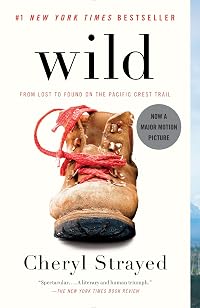
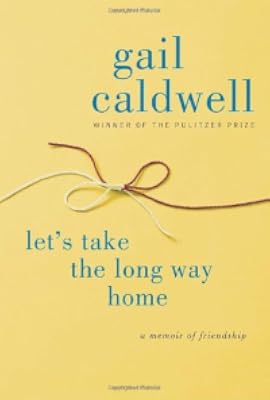
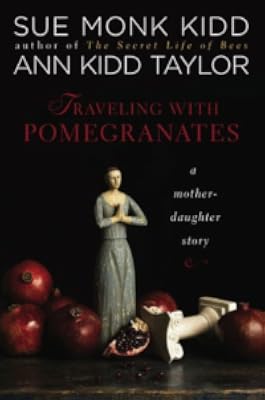
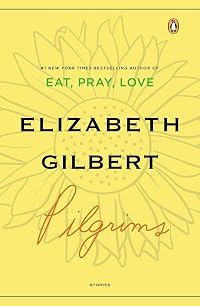
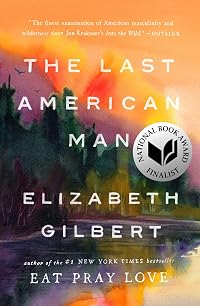
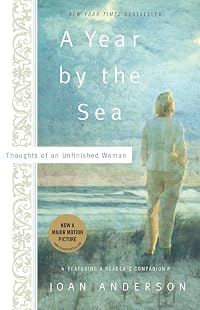
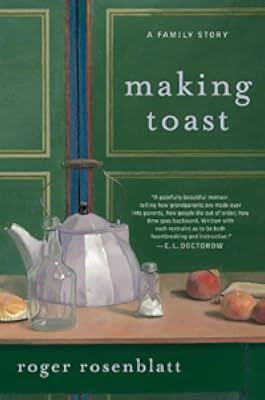
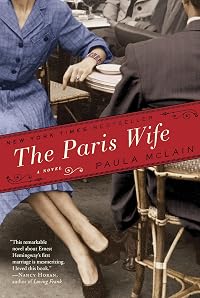
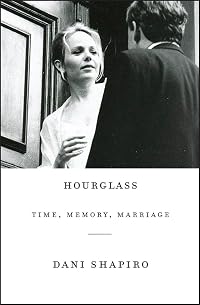


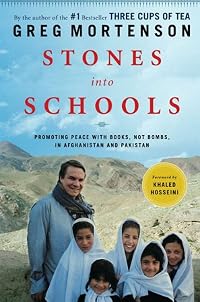
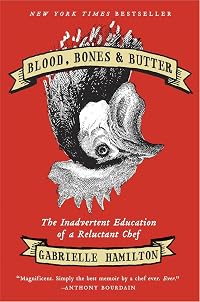
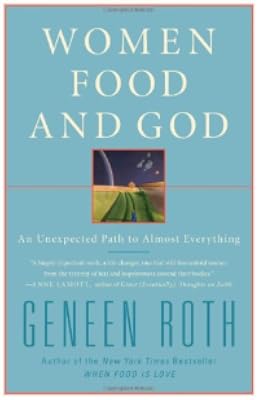
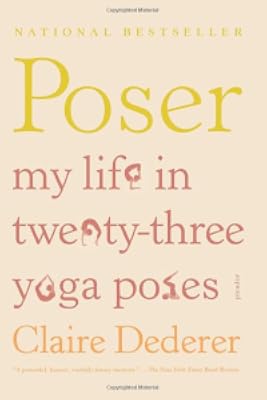

Member Recommendations
Member Reviews
When I read Eat, Pray, Love a couple of years ago, I remember thinking to myself: "Elizabeth Gilbert is hilarious and sweet and very, very interesting, but I sure would not want to be married to her." Because, you know, she sounds kind of needy. And kind of over-dramatizing, and maybe just slightly nuts. As it turns out, Ms. Gilbert herself feels pretty much the same way. Not only did she not want to be married to someone like her, she did not want to be married at all - and most certainly did not want to inflict her slightly-nuts self on someone else.
But then her handsome Brazilian lover Felipe, souvenir of her trip to Bali, is escorted out of the country by Homeland Security for taking too-frequent advantage of the 90-day-visa so that show more he could be with Liz. And the only way for them to live together (in the US) is for Liz and Felipe to marry. So while they are waiting for their case to wander thru the federal court system, Liz takes the opportunity to read everything she can about marriage in the hopes of befriending the alien concept before she plunges headlong into its scary, bottomless depths.
Okay, my confession: I was not scared of marriage when I got married, and I am still extremely fond of the institution. So sometimes I found Gilbert's fears sort of extreme and wanted to tell her to try the decaf for a while. But one of the reasons that I do actually love Gilbert's writing is that she pinpoints certain ideas that kind of fascinate me, too. Like infidelity: As she points out, people always say, "I didn't plan for this. IT JUST HAPPENED," like it was a lightning strike on a sunny day. But it isn't, folks! Gilbert has done the research, and as it turns out, you DID plan it. Sort of. With your foolish ways of making too-close friends and telling them too damned much about your life with your spouse. I find that stuff interesting. Another part I liked QUITE a lot was her debunking of the "sacred matrimony" concept about which I have heard WAY too much from social conservatives. (Again, nope. Marriage is what it has always been: a way of managing purely secular concerns of wealth management, taxes, personal safety and child-rearing. Sacredness is just an occasional add-on by certain cultural groups.)(Don't get me wrong: I belong to one of those groups. It's pretty darn sacred to me, but that doesn't mean it has to be for everyone.)
So, moments of slight hysteria here and there; a bit of tedium when the research gets kind of dry; but many fascinating bits and lucky for the reader, Elizabeth Gilbert writing the whole thing with her clever, funny ways. I liked it quite a lot. show less
But then her handsome Brazilian lover Felipe, souvenir of her trip to Bali, is escorted out of the country by Homeland Security for taking too-frequent advantage of the 90-day-visa so that show more he could be with Liz. And the only way for them to live together (in the US) is for Liz and Felipe to marry. So while they are waiting for their case to wander thru the federal court system, Liz takes the opportunity to read everything she can about marriage in the hopes of befriending the alien concept before she plunges headlong into its scary, bottomless depths.
Okay, my confession: I was not scared of marriage when I got married, and I am still extremely fond of the institution. So sometimes I found Gilbert's fears sort of extreme and wanted to tell her to try the decaf for a while. But one of the reasons that I do actually love Gilbert's writing is that she pinpoints certain ideas that kind of fascinate me, too. Like infidelity: As she points out, people always say, "I didn't plan for this. IT JUST HAPPENED," like it was a lightning strike on a sunny day. But it isn't, folks! Gilbert has done the research, and as it turns out, you DID plan it. Sort of. With your foolish ways of making too-close friends and telling them too damned much about your life with your spouse. I find that stuff interesting. Another part I liked QUITE a lot was her debunking of the "sacred matrimony" concept about which I have heard WAY too much from social conservatives. (Again, nope. Marriage is what it has always been: a way of managing purely secular concerns of wealth management, taxes, personal safety and child-rearing. Sacredness is just an occasional add-on by certain cultural groups.)(Don't get me wrong: I belong to one of those groups. It's pretty darn sacred to me, but that doesn't mean it has to be for everyone.)
So, moments of slight hysteria here and there; a bit of tedium when the research gets kind of dry; but many fascinating bits and lucky for the reader, Elizabeth Gilbert writing the whole thing with her clever, funny ways. I liked it quite a lot. show less
At the end of her memoir Eat, Pray, Love, Elizabeth Gilbert met and fell in love with a man she calls "Felipe" in her books. For a couple of years, she and Felipe cohabitate in different locales around the world. When they want to settle in Philadelphia though, Brazilian-born, Australian citizen Felipe is denied access by the Department of Homeland Security. Despite their wishes to remain single but together (after both having been divorced in the past), they decide they must get married in order to live together in the U.S. Committed is Gilbert’s attempt to wrap her head around the institution of marriage before taking the plunge a second time.
Therefore, Gilbert spends a lot of time talking about the history of marriage in different show more times and places. This is all interspersed with her personal stories, stories of friends family or neighbors, and stories of people she meets while traveling in Asia (waiting for marriage and immigration papers to go through back in the U.S.). These cultural differences stories are fascinating and remind me of my favorite parts of Eat, Pray, Love. She also throws in some research statistics about marriage, which add another layer of interesting facts to the mix.
I must admit that the statistics and stories of how much women have to sacrifice (equality, pay, health, jobs, etc.) when they marry is both enlightening and disheartening. It certainly doesn't help this skeptic want to "make peace with marriage" any time soon.
With the audio book read by the author as with Eat, Pray, Love, it instantly felt like coming back to an old friend. Once again, she is brutally honest about herself, flaws and all. This adds to the sense of sitting down to an engaging conversation with a friend, rather than reading about someone distant.
Overall, I liked this book as much as – if not more – than Gilbert’s best-selling Eat, Pray, Love. show less
Therefore, Gilbert spends a lot of time talking about the history of marriage in different show more times and places. This is all interspersed with her personal stories, stories of friends family or neighbors, and stories of people she meets while traveling in Asia (waiting for marriage and immigration papers to go through back in the U.S.). These cultural differences stories are fascinating and remind me of my favorite parts of Eat, Pray, Love. She also throws in some research statistics about marriage, which add another layer of interesting facts to the mix.
I must admit that the statistics and stories of how much women have to sacrifice (equality, pay, health, jobs, etc.) when they marry is both enlightening and disheartening. It certainly doesn't help this skeptic want to "make peace with marriage" any time soon.
With the audio book read by the author as with Eat, Pray, Love, it instantly felt like coming back to an old friend. Once again, she is brutally honest about herself, flaws and all. This adds to the sense of sitting down to an engaging conversation with a friend, rather than reading about someone distant.
Overall, I liked this book as much as – if not more – than Gilbert’s best-selling Eat, Pray, Love. show less
My gawd. I wish I were the type of person to stop reading a book, because I could have saved myself a couple of hours on this one. I read “Eat, Pray, Love,” and I wasn't a fan of the author's extreme self-centeredness, so I should have steered clear of the second installment... big mistake on my part. “Committed” continues where EPL left off with the "Love" segment. Liz meets Felipe. She falls madly in love with him, but neither one has any interest in marriage due to painful divorces. That is, until immigration issues require them to marry if they intend to live together in America. The author spends the year of turmoil researching the idea of marriage in one of the most self-indulgent, whiny pieces of crap research that I've show more ever read. The author is needy, condescending, and childish, and her constant refrain is "what do *I* get out of the deal?" Well, last I checked, marriage is a partnership. One that involves giving AND receiving right? She begins many of her rants by stating that she doesn't wish to "insult" so-and-so (her grandmother, for example), but then she goes on to criticize the tough choices that were made based on unconditional love for another (in the grandmother example, she cut up her only beautiful dress to make an outfit for her child… oh the horror! Puhleeze.). Someone really needs to let Elizabeth know that it is impossible to "have it all." In making ANY choice, we essentially give up something else. Such is the case with major career decisions, marriage, whether or not to have children, what to eat for dinner, and on and on. That’s just life. Ugh. I can't handle another second of this woman's annoying, self-imposed drama. No more Elizabeth Gilbert books for me. I feel sorry for Felipe - it looks like he's stuck with her! The only redeeming aspect of this book are the humorous and often heartwarming travel anecdotes, so for those, I’m awarding “Committed” a generous 2 stars. show less
Gilbert’s loose follow-up to her memoir Eat, Pray, Love is an heartfelt exploration of the tradition of marriage in the Western world and its implication in her own personal life as she approaches matrimony. Charmingly sloppy and honest, Committed casually dissects marriage through historical survey, interviews with women across the world, and analysis of her own ancestry. Considering most in-depth the disparities between women’s roles in society and marriage with a look at how these have changed, and continue to change, over time. While not an exhaustive or meticulous survey by any means, Gilbert combines memoir and cultural study in a manner that is unabashedly candid and thoughtful.
I picked up "Committed" because I LOVED "Eat, Pray, Love" and expected this book to be a continuation of the famous bestseller. Well, it is a continuation in a sense that the author picks up where the first book ended. However, "Committed" is more like an entertaining research rather than a memoir or a novel.
This book was nothing what I expected, but I am glad I got my hands on it. Before reading this book, I was not particularly interested in the subject (marriage, that is). However, Gilbert's witty writing style can make any subject seem entertaining. Not surprisingly, I became interested in matrimony, or at least its theoretical side.
Do not expect, however, a comprehensive and objective research on matrimony. Due to her unique need show more to "make peace" with marriage, Gilbert explores the subject from a very unique angle. Yes, "Committed" is full of subjectivity and feminism; however, you do not need to share the author's point of view to enjoy this book. No matter where you stand, this book will likely make you think about marriage in the ways you never thought before (or at least I didn't).
Overall, "Committed" is a well-written, though-provoking book. However, it is not as light and entertaining as "Eat, Pray, Love" and because of that appeals to a smaller audience. show less
This book was nothing what I expected, but I am glad I got my hands on it. Before reading this book, I was not particularly interested in the subject (marriage, that is). However, Gilbert's witty writing style can make any subject seem entertaining. Not surprisingly, I became interested in matrimony, or at least its theoretical side.
Do not expect, however, a comprehensive and objective research on matrimony. Due to her unique need show more to "make peace" with marriage, Gilbert explores the subject from a very unique angle. Yes, "Committed" is full of subjectivity and feminism; however, you do not need to share the author's point of view to enjoy this book. No matter where you stand, this book will likely make you think about marriage in the ways you never thought before (or at least I didn't).
Overall, "Committed" is a well-written, though-provoking book. However, it is not as light and entertaining as "Eat, Pray, Love" and because of that appeals to a smaller audience. show less
The author of "Eat, Pray, Love" comes up with a sort of a follow up about her coming to terms with the institution of marriage. Her research on history of matrimony is deep and interesting, her ruminations are engaging, her style of writing is as appealing as in the previous book - which is so unlike, I must say, from the the other fiction of hers, the "men" fiction she wrote before she got famous for "Eat, Pray, Love" (I remember picking up one of them, anticipating a great read and being totally disappointed, which, on the second thought, was probably natural, as it was written with the view of a different reader circle...). But in "Committed" she came out again as a very appealing writer. It's not always that a non-fiction book reads show more this well. Even though I am nothing, by nature, like the author, I found myself relating to her on so many levels. And though nothing can probably match the compelling nature of her previous book (it was a true gem), this one is not far behind, as far as I am concerned. show less
Faced with the possible deportation of her love, Filipe, Gilbert has come to the conclusion that she must again get married. This is something that neither she nor Felipe thought they would do again. Having gone through an awful divorce (as witnessed in Eat, Pray, Love) Gilbert is very skeptical of the institution of marriage.
I think this is the reason I love her. I can relate to her. Although I am married and haven’t personally gone thorough a divorce, I was definitely jaded by my parents divorce and decided early on it is much better to be happily divorced than unhappily married. Yes, I am married, but I made sure that nowhere in our vows did it say anything about “till death do us part” because I just don’t believe it. My show more husband is fully aware of my “issues” (both with marriage and otherwise). I have to admit part of me hoped that Committed would bring me some reassurance, and it kind of did. Gilbert seemed to jump into her research with a clear plan to “figure it all out.” One of my favorite lines is after she is talking to her mother about things given up for marriage as opposed to things gained.
“Therefore, the tidy ultimate conclusion is…???
It was slowly becoming clear to me that perhaps there was never going to be any tidy ultimate conclusion here. My mother herself had probably given up long ago trying to draw tidy ultimate conclusions about her existence, having abandoned (as so many of us must do, after a certain age) the luxuriously innocent fantasy that one is entitled to have mixed feelings about one’s own life.”
In Committed, Gilbert bounces back and forth between her stories—including conversations with people she met while waiting for Felipe to be allowed back in the United States and her extensive research on the subject of marriage. I found it fascinating to learn about the various histories and different rituals in other cultures. Gilbert has an incredible talent for recreating her conversations and adventures and I enjoyed every minute of it. show less
I think this is the reason I love her. I can relate to her. Although I am married and haven’t personally gone thorough a divorce, I was definitely jaded by my parents divorce and decided early on it is much better to be happily divorced than unhappily married. Yes, I am married, but I made sure that nowhere in our vows did it say anything about “till death do us part” because I just don’t believe it. My show more husband is fully aware of my “issues” (both with marriage and otherwise). I have to admit part of me hoped that Committed would bring me some reassurance, and it kind of did. Gilbert seemed to jump into her research with a clear plan to “figure it all out.” One of my favorite lines is after she is talking to her mother about things given up for marriage as opposed to things gained.
“Therefore, the tidy ultimate conclusion is…???
It was slowly becoming clear to me that perhaps there was never going to be any tidy ultimate conclusion here. My mother herself had probably given up long ago trying to draw tidy ultimate conclusions about her existence, having abandoned (as so many of us must do, after a certain age) the luxuriously innocent fantasy that one is entitled to have mixed feelings about one’s own life.”
In Committed, Gilbert bounces back and forth between her stories—including conversations with people she met while waiting for Felipe to be allowed back in the United States and her extensive research on the subject of marriage. I found it fascinating to learn about the various histories and different rituals in other cultures. Gilbert has an incredible talent for recreating her conversations and adventures and I enjoyed every minute of it. show less
Members
- Recently Added By
Published Reviews
ThingScore 38
Lists

Authors from the United States
245 works; 3 members

How to date men when you hate men
12 works; 1 member
Author Information

19+ Works 39,160 Members
Elizabeth Gilbert was born in Waterbury, Connecticut on July 18, 1969. She received an undergraduate degree in political science from New York University. After college, she spent several years traveling around the country, working odd jobs and writing short stories. Early in her career, she also worked as a journalist for such publications as show more Spin, GQ and The New York Times Magazine. An article she wrote in GQ about her experiences bartending on the Lower East Side eventually became the basis for the movie Coyote Ugly. She writes both fiction and nonfiction and her books include the short story collection Pilgrims, Stern Men, The Last American Man, Committed, Big Magic: Creative Living Beyond Fear, and The Signature of All Things. Her memoir Eat, Pray, Love, was adapted into a movie starring Julia Roberts. She will be featured at the Sydney Writers Festival in March 2016. (Bowker Author Biography) show less
Some Editions
Awards and Honors
Distinctions
Work Relationships
Is contained in
Common Knowledge
- Canonical title*
- Das Ja-Wort: Wie ich meinen Frieden mit der Ehe machte
- Original title
- Committed : a love story
- Original publication date
- 2010
- People/Characters
- Elizabeth Gilbert; Felipe
- Important places
- Vietnam; Cambodia; Philadelphia, Pennsylvania, USA
- Epigraph
- There is no greater risk than matrimony. But there is nothing happier than a happy marriage.
Benjamin Disraeli, 1870, in a letter to Queen Victoria's daughter Louise, congratulating her on her engagement. - Dedication
- Para J. L. N. — o meu coroa
- First words
- Late one afternoon in the summer of 2006, I found myself in a small village in northern Vietnam, sitting around a sooty kitchen fire with a number of local women whose language I did not speak, trying to ask them questions ab... (show all)out marriage.
- Quotations
- Maybe divorce is the tax we collectively pay as a culture for daring to believe in love -83
If you think it's difficult to talk about money when you're blissfully in love, try talking about it later, when you are disco... (show all)nsolate and angry and your love has died. -116
Leaving a blighted marriage is not necessarily a moral failure, then, but can sometimes represent the opposite of quitting: the beginning of hope. -132
another single friend replied, "Wanting to get married, for me, is all about a desire to feel chosen....that will unequivocally prove to everyone, especially to myself, that I am precious enough to have been selected by somebody forever." -169
Even within my own community, I can see where I have been vital sometimes as a member of the Auntie Brigade. My job is not merely to spoil and indulge my niece and nephew (though I do take that assignment to heart) but also t... (show all)o be a roving auntie to the world — an ambassador auntie — who is on hand wherever help is needed, in anybody's family whatsoever. There are people I've been able to help, sometimes fully supporting them for years, because I am not obliged, as a mother would be obliged, to put all my energies and resources into the full-time rearing of a child. There are a whole bunch of Little League uniforms and orthodontist's bills and college educations that I will never have to pay for, thereby freeing up resources to spread more widely across the community. In this way, I, too, foster life. There are many, many ways to foster life. And believe me, every single one of them is essential. - Last words
- (Click to show. Warning: May contain spoilers.)And Felipe and I were left alone together at last, to clean up the lunch dishes and begin unpacking our home.
- Disambiguation notice
- This was tentatively titled Weddings and Evictions but was never published under this title.
*Some information comes from Common Knowledge in other languages. Click "Edit" for more information.
Classifications
- Genres
- Biography & Memoir, Nonfiction, General Nonfiction
- DDC/MDS
- 306.81 — Society, government, & culture Social sciences, sociology & anthropology Social Behavior - Dating, Marriage, Divorce Marriage, partnerships, unions; family Marriage and marital status
- LCC
- HQ834 .G48 — Social sciences The family. Marriage, Women and Sexuality The Family. Marriage. Women The family. Marriage. Home Divorce
- BISAC
Statistics
- Members
- 2,428
- Popularity
- 8,030
- Reviews
- 102
- Rating
- (3.48)
- Languages
- 19 — Czech, Dutch, English, Estonian, Finnish, French, German, Hungarian, Italian, Korean, Latvian, Norwegian (Bokmål), Polish, Portuguese, Romani, Russian, Spanish, Swedish, Turkish
- Media
- Paper, Audiobook, Ebook
- ISBNs
- 64
- ASINs
- 30