The Golovlyov Family
by Mikhail Saltykov-Shchedrin
On This Page
Description
Arina Petrovna rules the Golovlev family with an iron hand. Around her swarm her family; her alcoholic sons, dissipated grandchildren and degenerate husband. But in his darkened study, her son Porfiry schemes for an overthrow of power. In this powerful novel, the great Russian satirist presents a stark portrait of the Russian gentry sapped by generations of idleness and social irrelevance.Tags
Recommendations













Member Reviews
The most bleak Russian novel I have read by a very long shot. Every character in the book dies, mostly by suicide and alcohol poisoning. In many cases these deaths are abetted or encouraged by the character's mother or father. Most of them come back to the Golovlyov estate to die, but one commits suicide by the side of the road while her sister watches and another die on the road to Siberia, where they have been de facto exiled by his father. Oh, and did I mention, all of them dislike each other, cheat each other, and are indifferent to each other's suffering. To say that betrayal runs in the family Golovlyov would be inaccurate -- the predicate of betrayal is trust.
It is also a very odd "novel." Each of the seven or so chapters show more features only two or three characters, not counting servants/serfs. At first you think that Anna Petrovna, the matriarch, is the main character. But then she's cheated out of the estate she cheated others out of by her son, Porphyry (also known as little Judas, bloodsucker and candid boy), and goes off to die. Then he becomes the main character for the rest of the book.
Porphyry is a very odd character. At times he seems like a hypocrite in the mold of Tartuffe, but he has none of his humor and he believes his own religious praddle, to the point where he can sincerely berate a servant he impregnated for her sin while forgetting entirely his part in it. (Oh, and if you're wondering, he sends the child off to an anonymous orphanage after he is born.) One of the more interesting discussions in the book is one where Saltykov-Shchedrin explains the differences between Porphyry and a miser/hypocrite in the tradition of Moliere.
I didn't particularly love reading this book. But after finishing it I read James Wood's excellent introduction which made me appreciate it much more -- and at least retrospectively glad I read it. show less
It is also a very odd "novel." Each of the seven or so chapters show more features only two or three characters, not counting servants/serfs. At first you think that Anna Petrovna, the matriarch, is the main character. But then she's cheated out of the estate she cheated others out of by her son, Porphyry (also known as little Judas, bloodsucker and candid boy), and goes off to die. Then he becomes the main character for the rest of the book.
Porphyry is a very odd character. At times he seems like a hypocrite in the mold of Tartuffe, but he has none of his humor and he believes his own religious praddle, to the point where he can sincerely berate a servant he impregnated for her sin while forgetting entirely his part in it. (Oh, and if you're wondering, he sends the child off to an anonymous orphanage after he is born.) One of the more interesting discussions in the book is one where Saltykov-Shchedrin explains the differences between Porphyry and a miser/hypocrite in the tradition of Moliere.
I didn't particularly love reading this book. But after finishing it I read James Wood's excellent introduction which made me appreciate it much more -- and at least retrospectively glad I read it. show less
The introduction to my edition ascribes this quote to a contemporaneous critic named Dobrolyubov (surely a pseudonym):
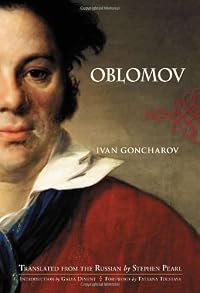
Add a drop of venom to Oblomovism, and you get Golovlyovism.
I can't say it better than that. If you know Oblomov then you know the questions of nihilism and idiocy and tragedy in the state of 19th century Russia. The Golovlyov Family, more nihilistic, more tragic, is perhaps one of the gloomiest novels I've read. (Even for Russia.) What is the point of life for the landed gentry? Nothing. The satire here is to give each character an exaggeration of a common Russian trait then twist the knife.
Many readers will find this to be too much, and perhaps instead turn to Goncharov for commentary or Gogol for satire. While show more understandable, that choice won't satisfy the literary Russophile. It's a hard read but I'm utterly glad I did it. Saltykov and Dostoyevsky considered themselves literary and political enemies, so we should all know Saltykov just for that.
Translation note: I loved the Cioran translation. He truly captured/differentiated the characters' voices. show less
Add a drop of venom to Oblomovism, and you get Golovlyovism.
I can't say it better than that. If you know Oblomov then you know the questions of nihilism and idiocy and tragedy in the state of 19th century Russia. The Golovlyov Family, more nihilistic, more tragic, is perhaps one of the gloomiest novels I've read. (Even for Russia.) What is the point of life for the landed gentry? Nothing. The satire here is to give each character an exaggeration of a common Russian trait then twist the knife.
Many readers will find this to be too much, and perhaps instead turn to Goncharov for commentary or Gogol for satire. While show more understandable, that choice won't satisfy the literary Russophile. It's a hard read but I'm utterly glad I did it. Saltykov and Dostoyevsky considered themselves literary and political enemies, so we should all know Saltykov just for that.
Translation note: I loved the Cioran translation. He truly captured/differentiated the characters' voices. show less
I have been reading the blurbs that publishers put on their books’ covers long enough to remember when they were reasonably honest instead of just one more cog in the great grinding gears of the book industry. But I believe that this is the first time I have ever seen a blurb on a novel from one V. I. Lenin. Yes. Him. Of course, he wasn’t tossing off a compliment in order to help the author sell this book. Still, the great thinker had this to say: “It’s too bad that Saltykov didn’t live to see the great Russian revolution. He would probably have added a new chapter to The Golovlyov Family.” With all due respect to Comrade Lenin, I doubt it. And if Saltykov had done so, it would probably have taken me at least another week to show more finish this, possibly the most depressing book I have ever read. (I should note that the back cover also features kind words from one Ivan Turgenev and one Thedore Dreiser.) The novel takes as its subject the decline and fall of a provincial family of the decidedly minor gentry. Indeed, the introduction (by a professor of Russian literature) is exactly correct: “The Golovlyov Family is one of world literature’s most depressing books. Of course, Russian prose is not fabled for its levity, but Saltykov’s grim world is something special even among Russia’s chronicles of provincial rot.” Exactly. It does not help that my translation (by another professor of Russian literature, Samuel Cioran) is stilted and awkward. (I find it of great interest that between 1910 and 1988 the book was translated into English no fewer than eight times.) Saltykov’s treatment of the family and its destruction is so unrelenting that I suspect no one could make this an easy book to read. Family member after family member—each drawn with enormous insight–sickens and dies. Three generations of parents and children. It is no accident that the central figure is nicknamed Little Judas. Some go quickly. Some go slowly (allowing Saltykov to dwell on their astonishing and depressing lack of character). This is not a sad novel; few readers will have much sympathy for anyone here. But it is a brilliant portrayal of corruption, deterioration, decay, and death. Two hundred and fifty pages of it; page after page after page. It is no surprise to learn that it is a classic of Russian literature. show less
This book is described as a family saga set on the ancestral estate of the Golovlyov family about the time the country was in flux as the serfs were being freed.. I expected something Tolstoyan and idyllic. Instead, this is one of the darkest and bleakest of the Russian novels I have read.
As the novel opens, the matriarch, Arina Petrovna, rules the family estate with an iron hand. She is a stingy miser, and holds everyone in contempt, including her husband and children. Into this setting, her son Porphyry returns from the city, penniless after he has lost the property his mother had bestowed upon him to manage. She gives him a room in an outbuilding, and provides him with starvation-level food. He weasels the occasional odd coin from a show more serf to buy alcohol. Other family members are another son and a daughter, both of whom have married, and initially live similar unhappy lives on other family estates. Arina is also the guardian of two granddaughters.
Over the years, Prophyry manages to manipulate matters to turn the tables on his mother. He becomes the owner of the estate and of all of Arina's property. He is in a position to deny her needs and wants (as well as those of his own children), and he exercises this power liberally. All the characters in this novel are unlikeable, even evil, but the most hateful is Prophyry. His character is masterfully developed, and the depiction of his pious hypocrisy is stunning. He is able to justify his every despicable deed with a religious motive, event to the extent of his complicity in the death of his son.
Excellent book. show less
As the novel opens, the matriarch, Arina Petrovna, rules the family estate with an iron hand. She is a stingy miser, and holds everyone in contempt, including her husband and children. Into this setting, her son Porphyry returns from the city, penniless after he has lost the property his mother had bestowed upon him to manage. She gives him a room in an outbuilding, and provides him with starvation-level food. He weasels the occasional odd coin from a show more serf to buy alcohol. Other family members are another son and a daughter, both of whom have married, and initially live similar unhappy lives on other family estates. Arina is also the guardian of two granddaughters.
Over the years, Prophyry manages to manipulate matters to turn the tables on his mother. He becomes the owner of the estate and of all of Arina's property. He is in a position to deny her needs and wants (as well as those of his own children), and he exercises this power liberally. All the characters in this novel are unlikeable, even evil, but the most hateful is Prophyry. His character is masterfully developed, and the depiction of his pious hypocrisy is stunning. He is able to justify his every despicable deed with a religious motive, event to the extent of his complicity in the death of his son.
Excellent book. show less
One of the grimmest books I've ever read. There is no letup from the unhappy, dispiriting events in the novel, the author's wicked satire on a landed gentry family during pre- and post serfdom years in 19th century Russia and the eventual failures of its members. The matriarch of the family, Arina Petrovna, rules with an iron hand, but is finally displaced by her son and heir, Porfyry Vladimiritch, the perfect archetype of a hypocrite, especially religious hypocrisy, that gives him the excuse for his greed, laziness, and cruelty towards all, particularly family members. One by one each dies, most either by suicide or by succumbing to drink, leaving Porfyry alone in his fantasy world, but for a niece. This "bloodsucker" and manipulator show more gets his comeuppance on Good Friday in the night. Good touch of the author, that. Not an enjoyable book, but one I'm glad to have read. show less
The most bleak Russian novel I have read by a very long shot. Every character in the book dies, mostly by suicide and alcohol poisoning. In many cases these deaths are abetted or encouraged by the character's mother or father. Most of them come back to the Golovlyov estate to die, but one commits suicide by the side of the road while her sister watches and another die on the road to Siberia, where they have been de facto exiled by his father. Oh, and did I mention, all of them dislike each other, cheat each other, and are indifferent to each other's suffering. To say that betrayal runs in the family Golovlyov would be inaccurate -- the predicate of betrayal is trust.
It is also a very odd "novel." Each of the seven or so chapters show more features only two or three characters, not counting servants/serfs. At first you think that Anna Petrovna, the matriarch, is the main character. But then she's cheated out of the estate she cheated others out of by her son, Porphyry (also known as little Judas, bloodsucker and candid boy), and goes off to die. Then he becomes the main character for the rest of the book.
Porphyry is a very odd character. At times he seems like a hypocrite in the mold of Tartuffe, but he has none of his humor and he believes his own religious praddle, to the point where he can sincerely berate a servant he impregnated for her sin while forgetting entirely his part in it. (Oh, and if you're wondering, he sends the child off to an anonymous orphanage after he is born.) One of the more interesting discussions in the book is one where Saltykov-Shchedrin explains the differences between Porphyry and a miser/hypocrite in the tradition of Moliere.
I didn't particularly love reading this book. But after finishing it I read James Wood's excellent introduction which made me appreciate it much more -- and at least retrospectively glad I read it. show less
It is also a very odd "novel." Each of the seven or so chapters show more features only two or three characters, not counting servants/serfs. At first you think that Anna Petrovna, the matriarch, is the main character. But then she's cheated out of the estate she cheated others out of by her son, Porphyry (also known as little Judas, bloodsucker and candid boy), and goes off to die. Then he becomes the main character for the rest of the book.
Porphyry is a very odd character. At times he seems like a hypocrite in the mold of Tartuffe, but he has none of his humor and he believes his own religious praddle, to the point where he can sincerely berate a servant he impregnated for her sin while forgetting entirely his part in it. (Oh, and if you're wondering, he sends the child off to an anonymous orphanage after he is born.) One of the more interesting discussions in the book is one where Saltykov-Shchedrin explains the differences between Porphyry and a miser/hypocrite in the tradition of Moliere.
I didn't particularly love reading this book. But after finishing it I read James Wood's excellent introduction which made me appreciate it much more -- and at least retrospectively glad I read it. show less
I came across this author and book in a footnote in Svetlana Alexievich's 'Second Hand Time'. Her book is one of almost verbatim records of conversations with Russians from all over the country in the period following the break up of the Soviet Union. She makes almost no commentary herself and so inserts footnotes from time to time to explain Russian cultural references for non Russian speakers.
The footnote explained that Mr Saltykov and 'The Golovlyov Family' is well known in Russia. So well known that the characters are used as representatives of cultural traits. Similar to the way that Dickens characters are used in English to characterise common traits in Britain. The book itself is the generational story of a minor rural show more aristocratic family in the late imperial times. Mr Saltykov was a well known writer in his day. A contemporary and friend of Turgenev and in fact buried in the plot next to him. The Golovlyov Family is a savage satire of contemporary Russian life. It's characters are exaggerated. They range from alcoholics to extreme penny pinching matriarch's, to hypocritically pious landlords to free spirited but naive young women. Not one of them has a redeeming feature. Everyone comes to a bad end.
Mr Saltykov was a radical writer at a time when the fading imperial system was repressively trying to keep a grip on society. Serfs had been freed but other liberalising influence from Europe were being resisted. Although no a prolific writer of novels he was a frequent contributor and founder of radical magazines and journals. To such an extent that he was eventually forced out of his senior civil service post.
Something that surprised me was that though Mr Saltykov is well known and remains popular in Russia the short footnote in Second Hand Time was the first time I had come across him. In the English speaking world at least he is by no means as well remembered as other contemporary figures of Russian literature. Why would that be so I wonder? The setting and intergenerational device of the book in a minor aristocratic rural situation is familiar enough from other writers. Some of the key characteristics are also familiar. The extreme boredom of rural life. The devotional but confrontational relationship with the church. The dependence on but suspicion of a whole host of servants and labourers. But possibly the satire is aimed mainly at an audience more familiar with Russian culture of the time. The individuals portrayed evoke little or no sympathy. Their doom is largely well deserved. So whereas Dickens often contrived a happy ending Mr Saltykov did the opposite as he condemned the Golovlyov Family to a desperate conclusion. show less
The footnote explained that Mr Saltykov and 'The Golovlyov Family' is well known in Russia. So well known that the characters are used as representatives of cultural traits. Similar to the way that Dickens characters are used in English to characterise common traits in Britain. The book itself is the generational story of a minor rural show more aristocratic family in the late imperial times. Mr Saltykov was a well known writer in his day. A contemporary and friend of Turgenev and in fact buried in the plot next to him. The Golovlyov Family is a savage satire of contemporary Russian life. It's characters are exaggerated. They range from alcoholics to extreme penny pinching matriarch's, to hypocritically pious landlords to free spirited but naive young women. Not one of them has a redeeming feature. Everyone comes to a bad end.
Mr Saltykov was a radical writer at a time when the fading imperial system was repressively trying to keep a grip on society. Serfs had been freed but other liberalising influence from Europe were being resisted. Although no a prolific writer of novels he was a frequent contributor and founder of radical magazines and journals. To such an extent that he was eventually forced out of his senior civil service post.
Something that surprised me was that though Mr Saltykov is well known and remains popular in Russia the short footnote in Second Hand Time was the first time I had come across him. In the English speaking world at least he is by no means as well remembered as other contemporary figures of Russian literature. Why would that be so I wonder? The setting and intergenerational device of the book in a minor aristocratic rural situation is familiar enough from other writers. Some of the key characteristics are also familiar. The extreme boredom of rural life. The devotional but confrontational relationship with the church. The dependence on but suspicion of a whole host of servants and labourers. But possibly the satire is aimed mainly at an audience more familiar with Russian culture of the time. The individuals portrayed evoke little or no sympathy. Their doom is largely well deserved. So whereas Dickens often contrived a happy ending Mr Saltykov did the opposite as he condemned the Golovlyov Family to a desperate conclusion. show less
Members
- Recently Added By
Lists

Russian Literature
184 works; 35 members

Philip Ward's Lifetime Reading Plan
592 works; 22 members

Top Five Books of 2018
802 works; 265 members
Lamont's Hundred Best Novels (1947)
100 works; 4 members

Undiscovered Classics to Read
70 works; 15 members

Read These Too
458 works; 9 members

Tonikat reading completed on Librarything journals
329 works; 2 members
Author Information

69+ Works 1,031 Members
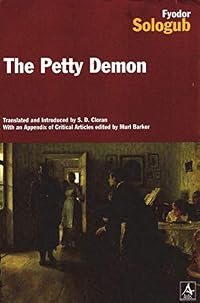
M. E. Saltykov (1826-1889) was a major Russian satirist of the nineteenth century. He wrote mostly satirical journalism, though his only novel, The Golovlyov Family, is considered his masterpiece and was proclaimed by D.D. Mirsky to be the gloomiest book in all of Russian literature. S. D. Cioran is Professor Emeritus of Russian literature at show more McMaster University. His other translations include Sologub's The Petty Demon and Dostoevsky's The Crocodile, both available from Ardis. show less
Some Editions
Awards and Honors
Series
Belongs to Publisher Series
Work Relationships
Common Knowledge
- Canonical title
- The Golovlyov Family
- Original title
- Господа Головлевы; Сказки
- Alternate titles
- A Family of Noblemen
- Original publication date
- 1876
Classifications
- Genres
- General Fiction, Fiction and Literature
- DDC/MDS
- 891.733 — Literature & rhetoric Literatures of other languages East Indo-European and Celtic literatures Russian and East Slavic languages Russian fiction 1800–1917
- LCC
- PG3361 .S3 .G613 — Language and Literature Slavic languages and literatures. Baltic languages. Albanian language Slavic. Baltic. Albanian Russian literature Individual authors and works 1800-1870
- BISAC
Statistics
- Members
- 699
- Popularity
- 40,556
- Reviews
- 14
- Rating
- (3.74)
- Languages
- 16 — Catalan, Czech, Dutch, English, Estonian, Finnish, French, German, Hebrew, Hungarian, Italian, Norwegian (Bokmål), Portuguese, Russian, Serbian, Spanish
- Media
- Paper, Audiobook, Ebook
- ISBNs
- 46
- ASINs
- 20