On This Page
Description
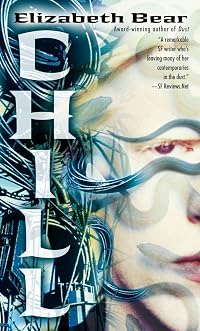
The generation ship Jacob's Ladder has barely survived cataclysms from without and within. Now, riding the shock wave of a nova blast toward an uncertain destiny, the damaged ship remains a war zone. Even as Perceval, the new captain, struggles to come to terms with the traumas of her recent past, the remnants of rebellion aboard the ship threaten the crew's survival.Tags
Recommendations



















Member Recommendations
AlanPoulter Both are very baroque, dark, novels set in generation starships
Member Reviews
This novel takes no prisoners. Like the characters, the reader is continually searching for explanations and meaning. Something bad has happened to the generation starship the story takes place in. It was launched from Earth ages ago and was designed to spur the evolution and adaptation of its crew and ecosystems during its journey out. It uses an eclectic mix of technologies, both digital and biological. But where is the starship going and why?
The original ship crew were frozen after the cataclysmic events in its precursor Dust and in this book are restored in new bodies. The ship restoration is not complete as there are blind areas, that the new captain, Perceval, and her Angel Nova (an artificial intelligence) cannot penetrate. Even show more more worrying, the dark areas start to spread.
Perceval is a Conn, a member of the family that run things. The ex-head of the family, Alasdair Conn, instilled into his family a brutal disregard for anything except remaining in power. The fratricidal strife that drove the plot in Dust resurfaces in this novel. Tristen Conn is awakened to become the new First Mate. Along with Mallory the mage and his faithful, sentient power tool, Gavin, he is sent into the dark areas, where is it feared a secretly awakened Arianrhod Conn and her Angel Asrafil are en route to find a secret weapon hidden by the dead sorceress Cynric Conn. Benedick Conn, the father of Perceval and Tristen's brother, along with Chelsea Conn, are also awakened, as a second team questing after Arianrhod, as backup in case the first fails.
The Conns are not the only people on the ship: there are Means who acts as servants for the Conns, and small colonies of Go Backs, people who want off of the starship. But the fueding Conns are the focus and the main source of emotional trauma, plot twists and exotic locations visited in their two quests. My favourite location was an abandoned departure lounge used by a race of mobile carnivorous plants to learn about humanity by watching ancient television programmes that recycle every few years.
All in all, this novel is a really individual take on space opera, laced with the sort of characters and plots that are normally rooted in fantasy quests. It is a demanding read but worth it. show less
The original ship crew were frozen after the cataclysmic events in its precursor Dust and in this book are restored in new bodies. The ship restoration is not complete as there are blind areas, that the new captain, Perceval, and her Angel Nova (an artificial intelligence) cannot penetrate. Even show more more worrying, the dark areas start to spread.
Perceval is a Conn, a member of the family that run things. The ex-head of the family, Alasdair Conn, instilled into his family a brutal disregard for anything except remaining in power. The fratricidal strife that drove the plot in Dust resurfaces in this novel. Tristen Conn is awakened to become the new First Mate. Along with Mallory the mage and his faithful, sentient power tool, Gavin, he is sent into the dark areas, where is it feared a secretly awakened Arianrhod Conn and her Angel Asrafil are en route to find a secret weapon hidden by the dead sorceress Cynric Conn. Benedick Conn, the father of Perceval and Tristen's brother, along with Chelsea Conn, are also awakened, as a second team questing after Arianrhod, as backup in case the first fails.
The Conns are not the only people on the ship: there are Means who acts as servants for the Conns, and small colonies of Go Backs, people who want off of the starship. But the fueding Conns are the focus and the main source of emotional trauma, plot twists and exotic locations visited in their two quests. My favourite location was an abandoned departure lounge used by a race of mobile carnivorous plants to learn about humanity by watching ancient television programmes that recycle every few years.
All in all, this novel is a really individual take on space opera, laced with the sort of characters and plots that are normally rooted in fantasy quests. It is a demanding read but worth it. show less
My Rating
Overall Satisfaction: ★★★★
Intellectual Satisfaction: ★★★1/2
Emotional Satisfaction: ★★★★1/2
Read this for: The characters
Don't read this for: The ideas
Bechdel Test: Fail
Johnson Test: Fail
Books I was reminded of: Alastair Reynolds' Revelation Space trilogy; The Tempering of Men, by Elizabeth Bear
Will I read more by this author? Of course!
My Review
WARNING: No spoilers for Chill, but plenty of spoilers for Dust.
Chill picks up almost directly after Dust ended, when the ship is reeling from the nova blast and the crew is reeling from all of the deaths, particularly Rien's sacrifice to bring the new angel -- an A.I. integrating all of the splinter A.I.s that developed when the ship broke down centuries before -- show more into existence. Perceval is now captain, but she is barely functional as she deals with her grief, and there is an enormous power vacuum that the remaining Exalts of Rule and Engine -- both those for and against Perceval's captaincy -- are scrambling to fill. And while the A.I.s have all been integrated into the new angel, it is bothered by enormous black spaces in its awareness of the ship, due either to damage or enemy machinations.
And then a very dangerous prisoner escapes, so two teams -- one led by Tristen, the other by Benedick -- are sent in pursuit.
The plot is made up entirely by that pursuit, and I found that choice disappointing. The entire plot of Dust was Perceval and Rien fleeing through the fascinating landscape of the half-ruined ship; to have the entire plot of this one be another chase through a now-much-more-familiar landscape just seemed repetitive. There are a couple new and exciting set-pieces -- particularly a scene involving massive intelligent fungi doing something deliciously unexpected -- but ultimately I felt a bit let down by Bear's imagination. What stood out most about Dust for me was how gloriously imaginative the world-building was; with that thrill behind me this was just another SF action novel.
Or would have been, were it not for the characters.
If there was one flaw in Dust, it was that all of the characters were ciphers to me for 2/3 of the novel. Not so here. Dust and Chill ended up being mirror images of each other: the first all ideas and no character development; the second few (new) ideas but wonderful, complex characters with long histories and complicated relationships. The chase plot is really just window-dressing for internal, character-driven action, as the characters left standing after Dust figure out who they want to be in this new world.
Unfortunately, window-dressing or not the chase plot was still there, and it required a resolution, and that resolution was something of a deus-ex-machina. It also left a pretty significant plot thread dangling, as this is the middle book of a trilogy. But for these characters I would forgive a great deal more than that. show less
Overall Satisfaction: ★★★★
Intellectual Satisfaction: ★★★1/2
Emotional Satisfaction: ★★★★1/2
Read this for: The characters
Don't read this for: The ideas
Bechdel Test: Fail
Johnson Test: Fail
Books I was reminded of: Alastair Reynolds' Revelation Space trilogy; The Tempering of Men, by Elizabeth Bear
Will I read more by this author? Of course!
My Review
WARNING: No spoilers for Chill, but plenty of spoilers for Dust.
Chill picks up almost directly after Dust ended, when the ship is reeling from the nova blast and the crew is reeling from all of the deaths, particularly Rien's sacrifice to bring the new angel -- an A.I. integrating all of the splinter A.I.s that developed when the ship broke down centuries before -- show more into existence. Perceval is now captain, but she is barely functional as she deals with her grief, and there is an enormous power vacuum that the remaining Exalts of Rule and Engine -- both those for and against Perceval's captaincy -- are scrambling to fill. And while the A.I.s have all been integrated into the new angel, it is bothered by enormous black spaces in its awareness of the ship, due either to damage or enemy machinations.
And then a very dangerous prisoner escapes, so two teams -- one led by Tristen, the other by Benedick -- are sent in pursuit.
The plot is made up entirely by that pursuit, and I found that choice disappointing. The entire plot of Dust was Perceval and Rien fleeing through the fascinating landscape of the half-ruined ship; to have the entire plot of this one be another chase through a now-much-more-familiar landscape just seemed repetitive. There are a couple new and exciting set-pieces -- particularly a scene involving massive intelligent fungi doing something deliciously unexpected -- but ultimately I felt a bit let down by Bear's imagination. What stood out most about Dust for me was how gloriously imaginative the world-building was; with that thrill behind me this was just another SF action novel.
Or would have been, were it not for the characters.
If there was one flaw in Dust, it was that all of the characters were ciphers to me for 2/3 of the novel. Not so here. Dust and Chill ended up being mirror images of each other: the first all ideas and no character development; the second few (new) ideas but wonderful, complex characters with long histories and complicated relationships. The chase plot is really just window-dressing for internal, character-driven action, as the characters left standing after Dust figure out who they want to be in this new world.
Unfortunately, window-dressing or not the chase plot was still there, and it required a resolution, and that resolution was something of a deus-ex-machina. It also left a pretty significant plot thread dangling, as this is the middle book of a trilogy. But for these characters I would forgive a great deal more than that. show less
Ordinarily, a passage such as the one below (from page 88 of Chill) would lead me to abandon a book with great prejudice and eye-rolling:
"Sie turned to him, eyes big, and he wondered -- not for the first time -- how he could be both things to hir: Tristen, whose wedding sie had catered; and Prince Tristen, lord of the House of Rule."
But such is Bear's talent for writing that, by God, she makes it work. Her prose is strong and fun to read, and a wry sense of humor keeps the story from becoming top-heavy with Serious Business.
Between the talking animal familiars and the convoluted dynastic drama, this wasn't really my preferred style of SF, but I will definitely pick up some of Bear's other books.
"Sie turned to him, eyes big, and he wondered -- not for the first time -- how he could be both things to hir: Tristen, whose wedding sie had catered; and Prince Tristen, lord of the House of Rule."
But such is Bear's talent for writing that, by God, she makes it work. Her prose is strong and fun to read, and a wry sense of humor keeps the story from becoming top-heavy with Serious Business.
Between the talking animal familiars and the convoluted dynastic drama, this wasn't really my preferred style of SF, but I will definitely pick up some of Bear's other books.
middle of the Jacob's Ladder trilogy, and i like this series a lot. this time round, more quest than action, which doesn't necessarily make for a very exciting narrative (a lot more happened in the first book, a lot more is learned in this one), but there are such fertile ideas playing out, and Bear's getting better at keeping track of her various themes and bringing them all together so dropped stitches don't let the knitting unravel. but hey, big ideas, always a plus, and it's well-written. this series is set on a far future shipworld with a failed mission, in which the principals are immortal but stranded, and the infighting is deadly, with a family of siblings and cousins descended from the founders, messing with alien DNA of show more various kinds (there's a basilisk, AI, electronic angels, arguably a dragon, along with legendary altered swords, considerable wizardry, armour for space, and suchlike). the basic conceit is basically late Arthurian, with spaced archetypes arising from that in play; and the family setup more than hints of the Chronicles of Amber too. ergo, the quest, the need for purpose, the christian underpinnings of the original migration echoing across the ethics and the mechanics of the quest, the issues of evolution and revolution in unpinned technological advances taking its toll across time in a deadly environment. and all the imagery arising from all this is grand and imaginative - the whole thing would make a great TV series. show less
This is almost a 4 star book - but an ending that seems to easy plus some dense language dropped it down to a 3.5 star rating.
I read the first book years ago - and don't remember much of it - but this book picks up right where the other book left off - and it doesn't stop for a reader to figure out what is happening. Is the first book essential to read? Not really. But, it is hard to figure out each of the characters relationships and a reader gets lost in who is who.
As for the story itself. The writing is tight. The science in this book is so advanced, it feels magical (although it clearly isn't magic). The plot - I actually enjoyed the story up to the end, where the conclusion has "Deus ex Machina" feel to it. The characters were show more interesting and well created. The ship itself was unique in that it felt like a ship and a world, all at the same time. At times, the language was too dense and required a reader to be paying attention at all times.
Highly recommended. show less
I read the first book years ago - and don't remember much of it - but this book picks up right where the other book left off - and it doesn't stop for a reader to figure out what is happening. Is the first book essential to read? Not really. But, it is hard to figure out each of the characters relationships and a reader gets lost in who is who.
As for the story itself. The writing is tight. The science in this book is so advanced, it feels magical (although it clearly isn't magic). The plot - I actually enjoyed the story up to the end, where the conclusion has "Deus ex Machina" feel to it. The characters were show more interesting and well created. The ship itself was unique in that it felt like a ship and a world, all at the same time. At times, the language was too dense and required a reader to be paying attention at all times.
Highly recommended. show less
I'm afraid that I won't be able to review this book as seriously as I originally intended. I wanted to read it as an adventure and a novel of chase, because that's how it felt, but I got sidetracked by alienish and outright aliens being bred in the bowels of the generation ship. I wanted to get waylaid by Tristan, the toolbox, the necromancer, and the fragment of our big bad angel from Dust, but I'm afraid I was distracted.
It could be because the novel was a departure from the excellent setup from the first in the trilogy, and perhaps it is because the main actors from Dust were forced into more cerebral and sendentary roles. Perhaps I wanted a smarter overmind, incorporating the pizazz of the angels from before.
Unfortunately, the novel show more felt like it was suffering from the same problem as the ship. It was outrunning a supernova, but it had no idea where it wanted to go. I know, it sounds rather damning, but that's my take, and the characters within go and hunt for a reason, or an engineer, to take them by the hand and just go astrogate.
We do get it, by the end, with the help of leviathan, but it felt more like a whimper than a bang. The first novel was much better.
Fortunately, I'm still riding the supernova of the first novel, so I haven't given up on the trilogy. I'll take on Grail right away and pray it picks up again.
In the spirit of full disclosure, I do have to let everyone know that this novel is going to suffer, in my mind, because I devoured a singularly fantastic book during the reading of this one. The problem is simple. I've suddenly had to rearrange my favorite top 3 books of all time to make room for Raphael Carter's Fortunate Fall. This out of print book was a complete unknown to me, but it STILL has an iron grip on my mind and makes me look at EVERYTHING else in a poorer light. It's not fair to the books that come after or, in this case, during, because it's become almost impossible to be objective.
This is also the best reason I can give for continuing on to the third book in good faith. show less
It could be because the novel was a departure from the excellent setup from the first in the trilogy, and perhaps it is because the main actors from Dust were forced into more cerebral and sendentary roles. Perhaps I wanted a smarter overmind, incorporating the pizazz of the angels from before.
Unfortunately, the novel show more felt like it was suffering from the same problem as the ship. It was outrunning a supernova, but it had no idea where it wanted to go. I know, it sounds rather damning, but that's my take, and the characters within go and hunt for a reason, or an engineer, to take them by the hand and just go astrogate.
We do get it, by the end, with the help of leviathan, but it felt more like a whimper than a bang. The first novel was much better.
Fortunately, I'm still riding the supernova of the first novel, so I haven't given up on the trilogy. I'll take on Grail right away and pray it picks up again.
In the spirit of full disclosure, I do have to let everyone know that this novel is going to suffer, in my mind, because I devoured a singularly fantastic book during the reading of this one. The problem is simple. I've suddenly had to rearrange my favorite top 3 books of all time to make room for Raphael Carter's Fortunate Fall. This out of print book was a complete unknown to me, but it STILL has an iron grip on my mind and makes me look at EVERYTHING else in a poorer light. It's not fair to the books that come after or, in this case, during, because it's become almost impossible to be objective.
This is also the best reason I can give for continuing on to the third book in good faith. show less
If you haven't yet read Dust, then Chill isn't going to make much sense. It's still doable, but it's better to read Dust first. The second in a trilogy - Jacob's Ladder trilogy- Chill takes off right where Dust ended. The aftermath of a great battle... but you need back ground. Too bad you're not going to get a lot of back ground from me -- you really need to read the book to get the most out that you can. See, I'm not sure I got everything out of the book that I could. But here's a start...
The generation ship - Jacob's Ladder, has been recently saved from hundreds of years of orbiting a dying star. Using a dangerous combination of events, the newest captain has managed to begin a journey to find a planet for the inhabitants of this show more ship to colonize. this is something that was planned long ago, though the plans to colonize seem to have been delayed. The original ship dwellers are mostly all gone - there are some who have been around for a few hundred years, but even they don't know all there is to know of the beginnings of the flight; they don't know the complete story to how the ship ended up stranded and orbiting in a dying system for hundreds of years. Unfortunately, though the ship is now traveling, it's also continuing to fail at an even faster rate.
The inhabitants: this is where I believe the SciFi merges with some fantasy elements - whether the author planned this or not, it's how I see it. There are some strong SciFi elements; bio-engineering, computer programs merging with humans; computer programs turned into artificial intelligence turned into "angels"; elite family members with special gifts such as wings, the ability to sense things and converse telepathically with the AI. The background of this book is rich with details of all types.
The support staff of the ship are divided according to the systems they work in - here is where I show how much I don't remember terms, so I'll just describe. The engineering section is one family, the kitchen/life sustenance is another. there is life support, and the ruling class - the Conn's who are not the nicest people in the world. And the ship itself - it's vast. Vast enough to contain seasons, fields and holdings resembling fiefdoms of yesteryear. I cannot do this book and all the details justice.
So, I skip to the storyline. In Dust (Jacob's Ladder #1), we meet Perceval, Rien, Mallory, Gavin, Tristen and Benedict - among a few others. In Chill, Perceval is now Captain of the ship. Two of the enemy angels have warred - with one clear winner. Each ship system had its own Angel, and one Angel was ambitious enough to take over and absorb the other angels, trying to effect a change that would save the ship. Because of this, Perceval's new found love - Rien, is now part of the computer system/angel. Perceval is angry, and trying to adjust.
And even though the war is "over" it's not really over. The ship is losing valuable resources almost faster than damaged areas can be fixed. Tristen (one of the uncles) and Benedict (one of the other uncles) have gone on separate and parallel quests to find out what's going on, and to try to fix the problems. Unfortunately one of the Aunts - Arianne, seemingly captured, has escaped and has some plan she's been putting into action. Mallory - a necromancer who looks like a man and a woman, but who claims to be a woman - is helping. Mallory has the memories of hundreds, if not thousands of previously living people in his ....memory banks. His sidekick is a metal bird, called Gavin who seems to have the memories of one of the other Aunts. This aunt was a sorceress - (you see where I get the fantasy along with the SciFi?)
It sounds confusing as hell, but when you're reading it, you just fall into the story, and the details unfold as you read along. The details as well as the rich surroundings, and the fantastical mix of science and fantasy, computer programs and magic. It's a hell of a mix, ending in a hell of a story.
Another merging of factions is the female vs male, hetero vs homo sexual - only it really isn't a versus type of thing, it's more of a mixture. Sexuality, and even male/female presence is more of an afterthought, or even better - a blending of ideals. For example, as an exalt (the elite members of the family) one can choose to be sexual or asexual. Perceval had chosen to be asexual until she fell in love with Rien, and even then though she really wanted to marry this woman, she wasn't concerned with a sex life, more of a merging and spending a life with her loved one. Mallory - not quite male or female, is with either sex. It's as if an ideal future for the sexes was being described here - a world where people are allowed to love as they will, with no judgement or spotlight. The sexual preferences just ... Are.
Good story, with the promise of more with the third of the series - Grail. I enjoyed the dialogue, the inner thoughts and the lush descriptions of everything from the ship's different sections to the animals and fauna within the ship, and all the different people. It all combines into one hell of a story. show less
The generation ship - Jacob's Ladder, has been recently saved from hundreds of years of orbiting a dying star. Using a dangerous combination of events, the newest captain has managed to begin a journey to find a planet for the inhabitants of this show more ship to colonize. this is something that was planned long ago, though the plans to colonize seem to have been delayed. The original ship dwellers are mostly all gone - there are some who have been around for a few hundred years, but even they don't know all there is to know of the beginnings of the flight; they don't know the complete story to how the ship ended up stranded and orbiting in a dying system for hundreds of years. Unfortunately, though the ship is now traveling, it's also continuing to fail at an even faster rate.
The inhabitants: this is where I believe the SciFi merges with some fantasy elements - whether the author planned this or not, it's how I see it. There are some strong SciFi elements; bio-engineering, computer programs merging with humans; computer programs turned into artificial intelligence turned into "angels"; elite family members with special gifts such as wings, the ability to sense things and converse telepathically with the AI. The background of this book is rich with details of all types.
The support staff of the ship are divided according to the systems they work in - here is where I show how much I don't remember terms, so I'll just describe. The engineering section is one family, the kitchen/life sustenance is another. there is life support, and the ruling class - the Conn's who are not the nicest people in the world. And the ship itself - it's vast. Vast enough to contain seasons, fields and holdings resembling fiefdoms of yesteryear. I cannot do this book and all the details justice.
So, I skip to the storyline. In Dust (Jacob's Ladder #1), we meet Perceval, Rien, Mallory, Gavin, Tristen and Benedict - among a few others. In Chill, Perceval is now Captain of the ship. Two of the enemy angels have warred - with one clear winner. Each ship system had its own Angel, and one Angel was ambitious enough to take over and absorb the other angels, trying to effect a change that would save the ship. Because of this, Perceval's new found love - Rien, is now part of the computer system/angel. Perceval is angry, and trying to adjust.
And even though the war is "over" it's not really over. The ship is losing valuable resources almost faster than damaged areas can be fixed. Tristen (one of the uncles) and Benedict (one of the other uncles) have gone on separate and parallel quests to find out what's going on, and to try to fix the problems. Unfortunately one of the Aunts - Arianne, seemingly captured, has escaped and has some plan she's been putting into action. Mallory - a necromancer who looks like a man and a woman, but who claims to be a woman - is helping. Mallory has the memories of hundreds, if not thousands of previously living people in his ....memory banks. His sidekick is a metal bird, called Gavin who seems to have the memories of one of the other Aunts. This aunt was a sorceress - (you see where I get the fantasy along with the SciFi?)
It sounds confusing as hell, but when you're reading it, you just fall into the story, and the details unfold as you read along. The details as well as the rich surroundings, and the fantastical mix of science and fantasy, computer programs and magic. It's a hell of a mix, ending in a hell of a story.
Another merging of factions is the female vs male, hetero vs homo sexual - only it really isn't a versus type of thing, it's more of a mixture. Sexuality, and even male/female presence is more of an afterthought, or even better - a blending of ideals. For example, as an exalt (the elite members of the family) one can choose to be sexual or asexual. Perceval had chosen to be asexual until she fell in love with Rien, and even then though she really wanted to marry this woman, she wasn't concerned with a sex life, more of a merging and spending a life with her loved one. Mallory - not quite male or female, is with either sex. It's as if an ideal future for the sexes was being described here - a world where people are allowed to love as they will, with no judgement or spotlight. The sexual preferences just ... Are.
Good story, with the promise of more with the third of the series - Grail. I enjoyed the dialogue, the inner thoughts and the lush descriptions of everything from the ship's different sections to the animals and fauna within the ship, and all the different people. It all combines into one hell of a story. show less
Members
- Recently Added By
Lists

Best Science Fiction Novels
816 works; 430 members

Sword & Planet / Futuristic Fantasy
16 works; 5 members

sandstone78's AI Reading List
34 works; 4 members
Author Information

176+ Works 16,458 Members

Elizabeth Bear is a LibraryThing Author, an author who lists their personal library on LibraryThing.
Awards and Honors
Awards
Distinctions
Series

Common Knowledge
- Original title
- Chill
- Alternate titles
- Sanction
- Original publication date
- 2010-02-20
- People/Characters
- Perceval Conn; Tristan Conn; Caitlin Conn; Chelsea Conn; Benedick Conn; Arianrhod Conn (show all 9); Mallory; Gavin; Nova
- Epigraph
- Glendower: I can call spirits from the vasty deep.
Hotspur: Why, so can I, or so can any man;
But will they come when you do call for them?
—William Shakespeare, Henry IV, Part I, Act 3, Scene 1 - Dedication
- For Thomas Ladegard
- First words
- The first hint of returning consciousness was the icy tickle of fluid dropping across his lids, lashes, nostrils.
- Quotations
- "What good is an apocalypse without snacks?" (Chapter 6)
- Last words
- (Click to show. Warning: May contain spoilers.)"Wherever the hell it is, we know how to get there, now."
- Disambiguation notice
- Original title Chill; reissued title Sanction
Classifications
Statistics
- Members
- 350
- Popularity
- 90,004
- Reviews
- 14
- Rating
- (3.79)
- Languages
- English
- Media
- Paper, Audiobook, Ebook
- ISBNs
- 7
- ASINs
- 5