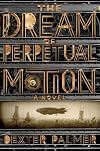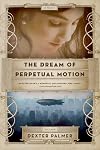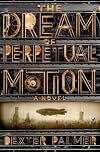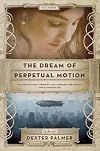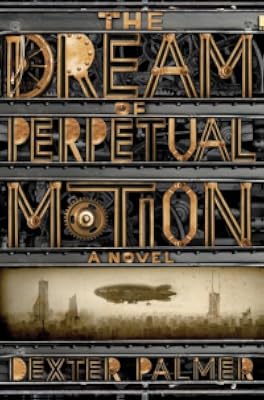
The Dream of Perpetual Motion
by Dexter Palmer 
On This Page
Description
Imprisoned for life aboard a zeppelin that floats high above a fantastic metropolis, the greeting-card writer Harold Winslow pens his memoirs. His only companions are the disembodied voice of Miranda Taligent, the only woman he has ever loved, and the cryogenically frozen body of her father Prospero, the genius and industrial magnate who drove her insane.Tags
Recommendations





























Member Recommendations
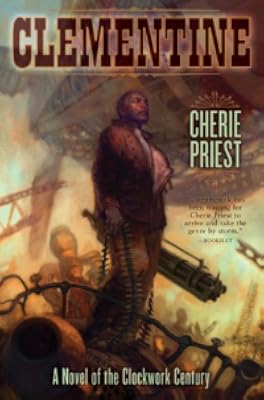
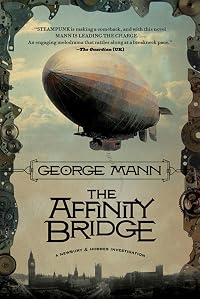
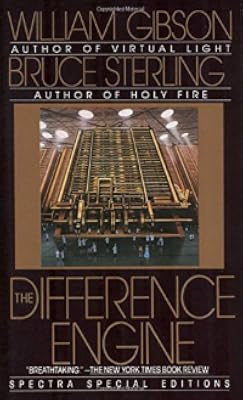
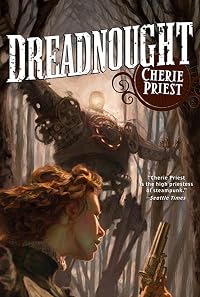
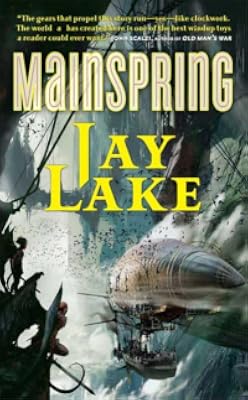
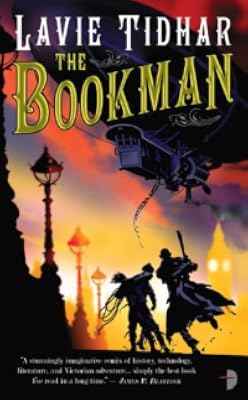
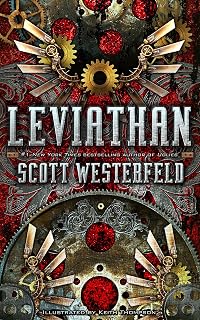
sturlington The Dream of Perpetual Motion is a steampunk retelling of The Tempest
Member Reviews
In which greeting-card poet Harry is imprisoned in a perpetually airborne zeppelin by mad scientist-cum-magician Prospero and his children Miranda and Caliban--and if that's not enough Shakespearean namechecks for you, yes, there are plenty of Ferdinands and Ophelias in the supporting cast as well. This is an imaginative book by a talented author who has the gift of telling you fascinating insights about yourself and the way you view the world in phrases far more creative than you could think up yourself. He makes clear that the magical world he builds is set in the twentieth-century, but it's a different twentieth-century, one in which Flash Gordon-era technology took off and created a world run by mechanical men (never "robots") with show more funnel-shaped heads and steam coming out their ears who operate from their helicopters, zeppelins, and flying cars. It's a world redolent of that masterful novelist Steven Millhauser, a world of involuted, layered reality.
Now the bad news: the book is too long by half, and although I appreciated it throughout, I didn't always enjoy the ride and it eventually became a joyless slog. There are plenty of episodes devoted entirely to ego trips such as ridiculing litcrit jargon, and pointless post-modernist exercises such as the author introducing himself as a character. A background annoyance is the publisher's relentless insistence in promoting this as 'steampunk', a word which has attained escape velocity into total meaninglessness. show less
Now the bad news: the book is too long by half, and although I appreciated it throughout, I didn't always enjoy the ride and it eventually became a joyless slog. There are plenty of episodes devoted entirely to ego trips such as ridiculing litcrit jargon, and pointless post-modernist exercises such as the author introducing himself as a character. A background annoyance is the publisher's relentless insistence in promoting this as 'steampunk', a word which has attained escape velocity into total meaninglessness. show less
Locked in an airship slowly descending to Earth, our narrator Harold Winslow tells us a story - his first despite years of writing verse for the "sentiment development division of the Xeroville Greeting-card Works". And quite a tale it is, an explanation of why his lifelong love Miranda is also aboard , never to be seen or touched by him, and why her adopted father, the mad genius Prospero Taligent, builder of the airship, is also aboard in suspended animation. It seems the dream of perpetual motion in the sky, tended by mechanical men, is not to be.
It's a story full of literary concerns with language and sounds and storytelling. Several characters quite deliberately set out to shape the narratives of their lives and others. And, of show more course, there are the frequent allusions to Shakespeare's Tempest. The plotting is definitely along the literary genre lines. In the crucial finale of the novel, we have to stop to hear not one but four characters' stories.
Science fiction and steampunk fans should not expect something truly novel. Genre images and icons are appropriated, but there is not a great deal of speculative rigor here, the working out of an idea's implications no matter how inherently absurd that idea is. We have a dash of cyberpunk in a world run by corporations and with no nation states though we never go beyond the confines of Xeroville or hear of any other cities. This is an alternate history of the vaguest sort. We only know this world diverged from our timeline sometime after Shakespeare. It is only in the last two parts of the novel that we are introduced to anything approaching an inherently interesting speculation and that involves the nature of Prospero's imprisoned son Caliban. There are mechanical men and steampowered "demons" and other interesting machines, but they are mostly there for drama and color and not deeply pondered as technology. Despite Prospero's aestheticism, we don't revel in their beauty with long descriptions.
And yet it works. I'm not a fan of the modern literary novel, but I liked this amalgam. Palmer welds the literary clockwork assembly to the chassis of steampunk and retro science fiction imagery. The solder he uses is interesting dialogue and humor. I think I detected Philip K. Dick's influence on some of Prospero's wackier machines - particularly the shrinkcab. Prospero's frequently appearing henchmen Gideon and Martin are funny and sinister. There is a literal wielder of acid. And the section involving Harold's suicidally creative sister Astrid and the spouting of a great deal of litcrit jargon was funny and seemed to be Palmer's poke at a modern aesthetic that values discomfort over beauty. show less
It's a story full of literary concerns with language and sounds and storytelling. Several characters quite deliberately set out to shape the narratives of their lives and others. And, of show more course, there are the frequent allusions to Shakespeare's Tempest. The plotting is definitely along the literary genre lines. In the crucial finale of the novel, we have to stop to hear not one but four characters' stories.
Science fiction and steampunk fans should not expect something truly novel. Genre images and icons are appropriated, but there is not a great deal of speculative rigor here, the working out of an idea's implications no matter how inherently absurd that idea is. We have a dash of cyberpunk in a world run by corporations and with no nation states though we never go beyond the confines of Xeroville or hear of any other cities. This is an alternate history of the vaguest sort. We only know this world diverged from our timeline sometime after Shakespeare. It is only in the last two parts of the novel that we are introduced to anything approaching an inherently interesting speculation and that involves the nature of Prospero's imprisoned son Caliban. There are mechanical men and steampowered "demons" and other interesting machines, but they are mostly there for drama and color and not deeply pondered as technology. Despite Prospero's aestheticism, we don't revel in their beauty with long descriptions.
And yet it works. I'm not a fan of the modern literary novel, but I liked this amalgam. Palmer welds the literary clockwork assembly to the chassis of steampunk and retro science fiction imagery. The solder he uses is interesting dialogue and humor. I think I detected Philip K. Dick's influence on some of Prospero's wackier machines - particularly the shrinkcab. Prospero's frequently appearing henchmen Gideon and Martin are funny and sinister. There is a literal wielder of acid. And the section involving Harold's suicidally creative sister Astrid and the spouting of a great deal of litcrit jargon was funny and seemed to be Palmer's poke at a modern aesthetic that values discomfort over beauty. show less
Harold Wilson recounts his earlier life as a second child, an anti-romantic greeting-card writer, a self-proclaimed coward, a character played with by fate to remain, always, mediocre. "The Dream of Perpetual Motion" was a satisfying read with plenty of surprises. The world building of this alternate reality formed at a pleasant pace and was thorough and immersible.
To enjoy this book it's possible that one needs to have strong empathy with Harold Wilson, for his character is the only character fully developed in the novel, and is not your usual hero or lover or friend.
The darkness and technology and skulduggery usually inherent in the steampunk genre, was in this book put on a low burner and gradually turned up to reach a scalding boil. show more I professed midway through to friends that it was a refreshing twist that gore and horror and torture were notably subdued, only to find that as the story fully unravels the author is supremely true to steampunk.
Through (relatively) minor characters, the author indulges in some philosophy of art, and some philosophy of feminism, which was interesting; I like that Palmer's world contains technological zealots and third-wave feminists and had not seen that in other works.
Howard is such a complex yet unsuccessful person that it is likely impossible to identify with him fully. Bullies will not like this book.
I give this book at least four stars for I was able to identify with Harold on several levels, the writing was good and courageous, and everywhere were wonderful, creative gadgets (and dolls). show less
To enjoy this book it's possible that one needs to have strong empathy with Harold Wilson, for his character is the only character fully developed in the novel, and is not your usual hero or lover or friend.
The darkness and technology and skulduggery usually inherent in the steampunk genre, was in this book put on a low burner and gradually turned up to reach a scalding boil. show more I professed midway through to friends that it was a refreshing twist that gore and horror and torture were notably subdued, only to find that as the story fully unravels the author is supremely true to steampunk.
Through (relatively) minor characters, the author indulges in some philosophy of art, and some philosophy of feminism, which was interesting; I like that Palmer's world contains technological zealots and third-wave feminists and had not seen that in other works.
Howard is such a complex yet unsuccessful person that it is likely impossible to identify with him fully. Bullies will not like this book.
I give this book at least four stars for I was able to identify with Harold on several levels, the writing was good and courageous, and everywhere were wonderful, creative gadgets (and dolls). show less
 This review was written for LibraryThing Early Reviewers.
For fans of the literary fantastic, I can't recommend this book highly enough. Just beware: it is both VERY literary and VERY fantastical. By that, I mean the writing and structure of the story is subtle and complex, sometimes with a dreamy feeling and bits that the reader has to think about to fully figure out. And the story is a full-on explosion of strange landscapes, odd technologies and futuristic social customs that fully immerse the reader in a world that is most definitely not our own. Palmer uses Shakespeare's Tempest as the jumping off point and backbone for the characters and structure, but spins this inspiration off into something wholly original. The last book I found so unique, strange & thrilling was China Mieville's The show more City And The City. Fans of Mieville or Margaret Atwood's Scifi stuff should dig on this. show less
For fans of the literary fantastic, I can't recommend this book highly enough. Just beware: it is both VERY literary and VERY fantastical. By that, I mean the writing and structure of the story is subtle and complex, sometimes with a dreamy feeling and bits that the reader has to think about to fully figure out. And the story is a full-on explosion of strange landscapes, odd technologies and futuristic social customs that fully immerse the reader in a world that is most definitely not our own. Palmer uses Shakespeare's Tempest as the jumping off point and backbone for the characters and structure, but spins this inspiration off into something wholly original. The last book I found so unique, strange & thrilling was China Mieville's The show more City And The City. Fans of Mieville or Margaret Atwood's Scifi stuff should dig on this. show less
It's hard to label Dexter Palmer's debut novel The Dream of Perpetual Motion. There are definitely elements of steampunk, but, at the same time, it's not exactly what I think of when I hear the word steampunk. You could just group it in the sci-fi genre--it's an alternative history where robots essentially infest the earth--but that doesn't seem the right place for it either. Inspired by The Tempest, this novel is equally Willy Wonka as it is Shakespeare. Classifying it is hard to do, which leaves the doors of criticism and interpretation wide open.
Fans of quality literature should not be scared however. Yes, there's a little steampunk and a lot of sci-fi. But there also is a wide spread of wonderful writing--vibrant language both show more formal and witty, moving scenes filled with a poeticism missing in too much literature. The Dream of Perpetual Motion is a thoughtful and gripping work.
My greatest critique of the book is that it loses it's magic half way through. Now, this is fitting given the subject--a world where everything magical has been explained away and duplicated with technology. The world where we first meet our hero, Harold Winslow, is seen through the eyes of a child. And it is a gorgeous, fascinating landscape. It is easy to become swept up in little Harold's dreams and fantasies. It's fun and it's terrifying, but mostly, it's magical.
As Harold grows, however, he begins to see how little magic there really is in the world. So it's only appropriate that the text reflect his. And Palmer does a magnificent job presenting this transition seamlessly. Whatever tiny elements of magic still exists at the end of the novel are explained away by the most tedious monologues. It's appropriate, but that doesn't mean it is as fun. Without the magic, the story begins to move with the mechanical motion of its army of robots. show less
Fans of quality literature should not be scared however. Yes, there's a little steampunk and a lot of sci-fi. But there also is a wide spread of wonderful writing--vibrant language both show more formal and witty, moving scenes filled with a poeticism missing in too much literature. The Dream of Perpetual Motion is a thoughtful and gripping work.
My greatest critique of the book is that it loses it's magic half way through. Now, this is fitting given the subject--a world where everything magical has been explained away and duplicated with technology. The world where we first meet our hero, Harold Winslow, is seen through the eyes of a child. And it is a gorgeous, fascinating landscape. It is easy to become swept up in little Harold's dreams and fantasies. It's fun and it's terrifying, but mostly, it's magical.
As Harold grows, however, he begins to see how little magic there really is in the world. So it's only appropriate that the text reflect his. And Palmer does a magnificent job presenting this transition seamlessly. Whatever tiny elements of magic still exists at the end of the novel are explained away by the most tedious monologues. It's appropriate, but that doesn't mean it is as fun. Without the magic, the story begins to move with the mechanical motion of its army of robots. show less
A steam-punk Tempest, a meditation on technology and love and the power of words, with a grand dollop of metaphysics thrown in. This is a unique book from a writer of enormous imagination and wit. At times I laughed out loud -- the Critic-o-matic, for example -- at others the prose just took my breath away. The riff on sounds contained within a particularly lethal symphony is worth the price of the book. So original! What a mind, what a mind, what a mind!!
Members
- Recently Added By
Lists

Best Alternate History
111 works; 60 members

Slipstream or Interstitial Fiction
160 works; 19 members

Stories Inspired by Other Fiction
127 works; 24 members

BingoDOG - Scientists in Fiction
111 works; 17 members

Books Read in 2010
631 works; 11 members

SHOULD Read Books!
354 works; 9 members

Best Science Fiction Novels
816 works; 426 members
Author Information

3+ Works 1,569 Members
Dexter Palmer is a science fiction author. His novels include The Dream of Perpetual Motion and Version Control. (Bowker Author Biography)
Dexter Palmer is a LibraryThing Author, an author who lists their personal library on LibraryThing.
Awards and Honors
Work Relationships
Was inspired by
Common Knowledge
- Canonical title
- The Dream of Perpetual Motion
- Original publication date
- 2010
- People/Characters
- Harold Winslow; Miranda Taligent; Prospero Taligent; Ophelia Flavin; Marlon Giddings; Allan Winslow (show all 15); Astrid Winslow; Caliban Taligent; Charmaine Saint Claire; Dexter Palmer; Talus; Artegall; Jason Fenman; Martin; Gideon
- Epigraph
- Prospero. -- Dost thou hear?
Miranda. Your tale, sir, would cure deafness.
-- William Shakespeare, The Tempest
Here opened another totally new education, which promised by far to be the most hazardous of all. The knife edge along which he must crawl, like Sir Lancelot in the twelfth century, divided two kingdoms of force which had not... (show all)hing in common but attraction. They were as different as a magnet is from gravitation, supposing one knew what a magnet was, or gravitation, or love. -- Henry Adams, The Education of Henry Adams - First words
- sssss
sp
spiraling
spiraling down
Into. The. Sea?
spiraling slowly down and crashing in to the open sea? - Quotations
- I’m going to try to tell a story now, and though I’ve made a life out of writing words, this is the first time I have told a story. There are no new stories in the world anymore, and no more storytellers.
- Blurbers
- Galchen, Rivka; Smith, Scott; Morrow, James; Groff, Lauren; Brockmeier, Kevin
Classifications
Statistics
- Members
- 627
- Popularity
- 46,630
- Reviews
- 43
- Rating
- (3.37)
- Languages
- English, French
- Media
- Paper, Audiobook, Ebook
- ISBNs
- 9
- ASINs
- 10