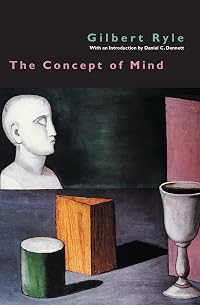
The Concept of Mind
by Gilbert Ryle
On This Page
Description
First published in 1949, Gilbert Ryle's The Concept of Mind is one of the classics of twentieth-century philosophy. Described by Ryle as a 'sustained piece of analytical hatchet-work' on Cartesian dualism, The Concept of Mind is a radical and controversial attempt to jettison once and for all what Ryle called 'the ghost in the machine': Descartes' argument that mind and body are two separate entities. This sixtieth anniversary edition includes a substantial commentary by Julia Tanney and is show more essential reading for new readers interested not only in the history of analytic philosophy but in its power to challenge major currents in philosophy of mind and language today. show lessTags
Recommendations












Member Recommendations
by anonymous user

by anonymous user

galacticus It is believed Ryle read Schopenhauer early and recycled many of Schopenhauer's ideas in this work after having forgotten his early study experiences.
Member Reviews
Um livro wittgensteiniano para combater erros filosóficos envolvendo o conceito de mente: a ideia de dois mundos, um físico e outro não; a tentação a postular explicações causais sobre fenômenos mentais e do eu, em que não-entidades e entidades de sombra são evocadas, ou ações duplicadas em uma ação de fazer e outra de pensar, esta última misteriosa; a criação de mistérios por emprego filosófico equivocado de certas palavras, não obedecendo a gramática (ao uso específico de certas expressões), ou supondo uma unidade conceitual inexistente na linguagem. Para tudo isso Ryle habilmente introduz considerações pragmáticas, e roga que olhemos para os comportamentos, ações e normas envolvidas em atividades ditas show more mentais, e paremos de pressupor uma mente oculta que os explicaria ou os comandaria.
Um excelente livro, focado em filosofia da linguagem, que ajuda a evidenciar equívocos filosóficos diversos e mesmo quando discordamos com argumentos, a formular com mais cuidado o conhecimento sobre o que é dito mental. Dois poréns: a imagem do fantasma na máquina é bastante legal, mas a concepção de cartesiano de Ryle monta um espantalho da visão mais complexa e nuançada do próprio Descartes. Também, filosofias da mente informadas pela neurociência e pela psicologia atuais reintroduzem abordagens e considerações que seriam descartadas por esse livro, por apoiarem-se fora da linguagem e da filosofia, para depois construirem seu arcabouço teórico. Mesmo assim, acredito (sem muito aprofundamento, entretanto) que a construção da importância da normatividade de Ryle sobrevive, a evitar excessivo reducionismo científico. show less
Um excelente livro, focado em filosofia da linguagem, que ajuda a evidenciar equívocos filosóficos diversos e mesmo quando discordamos com argumentos, a formular com mais cuidado o conhecimento sobre o que é dito mental. Dois poréns: a imagem do fantasma na máquina é bastante legal, mas a concepção de cartesiano de Ryle monta um espantalho da visão mais complexa e nuançada do próprio Descartes. Também, filosofias da mente informadas pela neurociência e pela psicologia atuais reintroduzem abordagens e considerações que seriam descartadas por esse livro, por apoiarem-se fora da linguagem e da filosofia, para depois construirem seu arcabouço teórico. Mesmo assim, acredito (sem muito aprofundamento, entretanto) que a construção da importância da normatividade de Ryle sobrevive, a evitar excessivo reducionismo científico. show less
Reasoning that comes off as cloying and pedantic, frequent seeming misrepresentations of the position Ryle argues against (although it's very hard to tell, since he doesn't give explicit references to books he thinks get things wrong), terminological distinctions which don't match up with my everyday understandings of words (which explicitly clashes with Ryle's supposed plain English style), a literary style which comes off as someone who loves Wittgenstein but isn't nearly as clever... Doesn't matter how many of his conclusions I agree with or feel kinship with, this book is a flop stylistically.
The Concept of Mind by Gilbert Ryle (1949)
Ratings
Members
- Recently Added By
Lists

Filosofía - Clásicos
217 works; 1 member

Art of Reading
188 works; 5 members

In Our Time books
4,934 works; 2 members
Author Information

20+ Works 1,445 Members
Gilbert Ryle exerted an influence over academic philosophers in the English-speaking world almost without equal at midcentury. As Waynefleet Professor of Philosophy at Oxford University and as G. E. Moore's successor to the editorship of Mind, the most prestigious philosophical journal in Great Britain, Ryle shaped the orientation of philosophical show more discussion for more than a decade. Independently of Ludwig Wittgenstein, he invented a philosophical method of linguistic analysis, maintaining indeed that systematic confusions in theory stemmed from misleading grammatical expressions. Ryle's most remarkable contribution to philosophy, however, was in the area of philosophy of mind. His crowning achievement was The Concept of Mind (1949). Utilizing his method of linguistic analysis on a discourse about mind and the mental, he maintained that the radical distinction between mind and body, Cartesian dualism, stemmed from category mistakes. A felicitous writer with a distinctively colloquial style free of jargon, Ryle invented phrases---such as "the ghost in the machine" to indicate supposed Cartesian mental substance---that still reverberate in the literature of philosophy and psychology. (Bowker Author Biography) show less
Some Editions
Awards and Honors
Series
Belongs to Publisher Series
Work Relationships
Is abridged in
Common Knowledge
- Canonical title*
- Il concetto di mente
- Original title
- The Concept of Mind
- Alternate titles*
- Lo spirito come comportamento
- Original publication date
- 1949
- People/Characters
- Descartes, René, 1596-1650
- First words
- There is a doctrine about the nature and place of minds which is so prevalent among theorists and even among laymen that it deserves to be described as the official theory.
- Last words
- (Click to show. Warning: May contain spoilers.)The Cartesian myth does indeed repair the defects of the Hobbist myth only by duplicating it. But even doctrinal homeopathy involves the recognition of disorders.
- Blurbers
- Overstreet, Harry A.
- Original language
- English
*Some information comes from Common Knowledge in other languages. Click "Edit" for more information.
Classifications
Statistics
- Members
- 1,104
- Popularity
- 22,999
- Reviews
- 4
- Rating
- (3.79)
- Languages
- 10 — Chinese, Dutch, English, Estonian, French, German, Hungarian, Italian, Spanish, Turkish
- Media
- Paper, Audiobook, Ebook
- ISBNs
- 37
- ASINs
- 23