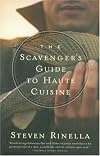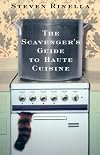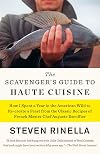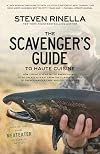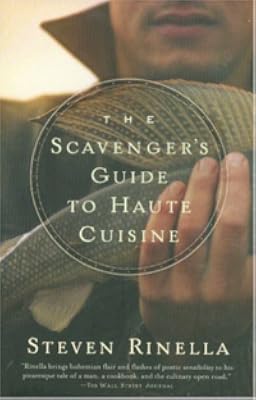
The Scavenger's Guide to Haute Cuisine
by Steven Rinella
On This Page
Description
When a friend gave Steven Rinella a copy of Escoffier's Le Guide Culinaire, a 1500+ recipe collection made in 1903, he made it his personal culinary bible. In an attempt to bring his own eating habits closer to nature, he devoted a year of his life to capturing the bizarre and often impossible to locate ingredients in Escoffier's recipes - rabbit's blood, the bladder of a wild duck, crayfish innards, sparrows - so that he could create such culinary delights as truffled pig's feet and venison show more sweetbread. show lessTags
Recommendations








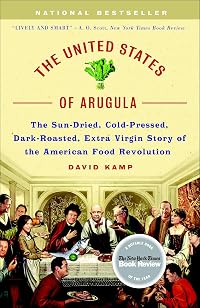
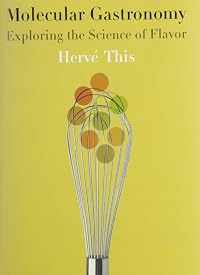
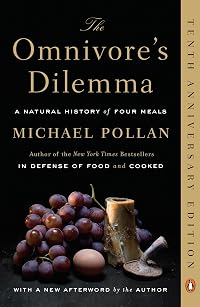
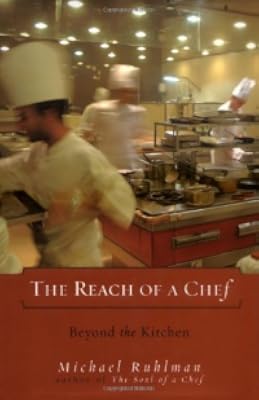

Member Recommendations
Member Reviews
The Scavenger’s Guide to Haute Cuisine opens with Steven Rinella standing in his Miles City, Montana, kitchen trying to stuff a duck inside an antelope bladder. Ideally, he should be using a pig’s bladder, but when Rinella killed a wild boar in California the previous summer, he accidentally nicked the organ with his skinning knife and now he’s in a panic because the antelope bladder is too small for the wild duck.
Thus the stage is set for Rinella’s account of his year-long quest to build a perfect wild game feast for a dozen of his friends. Part food memoir, part hairy-chest hunting adventure, The Scavenger’s Guide to Haute Cuisine turns out to be one of the most unlikely enjoyments of the literary season.
Rinella’s story show more begins when a friend gives him a hundred-year-old cookbook, Le Guide Culinaire by Auguste Escoffier, who was once known as the King of Chefs and the Chef of Kings; his list of royal clients included Kaiser Wilhelm II, the shah of Persia and Queen Victoria.
Rinella writes that he initially found Le Guide Culinaire to be “a pretty weird cookbook.âÂ? As he read through the century-old pages, he realized Escoffier wasnâÂÂt advocating a quick trip to the supermarket to pick up the necessary ingredients. A precise and fussy restaurateur, his meal-gathering methods went a bit deeper than that.
This was the only cookbook IâÂÂd ever read that assumed the cook would kill his own turtle. And I could see that this Escoffier fellow didnâÂÂt mince words. He first advises that the turtle be âÂÂvery fleshy and full of life.âÂ? Then he gets into the chore at hand. He doesnâÂÂt seem to be concerned about any squeamishness or sensitivity that a cook may have about performing such unsavory duties.
Squeamish readers (and vegetarians) be warned: Rinella also spares no sensitivity when he writes about patiently stalking, killing and eviscerating his ingredients. For instance, if you think pigeons are cute little cooing creatures or if you get teary-eyed when you pass a road-killed deer, you wonâÂÂt have an easy time of it when you approach passages describing how Rinella raises pigeon squabs for the sole purpose of baking them in a simmering lemon-butter broth.
Leafing through the pages of EscoffierâÂÂs recipes, Rinella comes up with the idea of treating his friends to a multi-course feast the following Thanksgiving. He imposes a couple of restrictions on himself: he gives himself one year to gather the necessary ingredients for the feast and, because traveling to other countries to hunt and fish would be logistically and financially impossible, he limits his scavenging to the United States.
And so we follow him from Florida (stingrays) to Alaska (mountain goats) to upstate New York (river eels) and several other points of the compass in between. We watch him try to make birdâÂÂs nest soup out of cliff swallowsâ dwellings (âÂÂI took the mud home and boiled it in a pot. I was left with nothing but hot muddy water and a dead floating bugâÂ?) and a sauce out of fish semen (âÂÂIt looked and smelled suspiciously like, well, semenâÂ?). We meet characters like Floyd Van Ert who traps English sparrows âÂÂas a service to the United States,âÂ? a high school biology teacher named Drost who worries about being seen lurking around a Michigan swamp spearing frogs, and Ray Turner (aka the Eel Man) who annually traps and smokes about a ton of eels.
The ScavengerâÂÂs Guide to Haute Cuisine is as much about Rinella re-discovering his inner hunter as it is a guide to preparing a mouth-watering banquet of wild game. Society has grown lazy and timidâÂÂwe prefer to snare our food in the supermarket aisle rather than hike seven miles through MontanaâÂÂs grizzly country in search of skittish elk.
The book could have been improved if Rinella had ramped up the humor in places or pushed the sentimentality a little harder (especially in scenes involving his father who is dying from lung cancer during the year of scavenging), but to his credit, he keeps the narrative tumbling along at a quick pace, always coming back to Le Guide Culinaire as a touchstone.
Rinella admires the way EscoffierâÂÂs recipes âÂÂdemonstrated a frontier sense of thrift and economyâÂ? and calls the cookbook âÂÂthe Kama Sutra of food.âÂ? Indeed, there is sensual delight to be found throughout The ScavengerâÂÂs Guide to Haute Cuisine and the final feast is nothing short of a three-day orgy full of moans and sighs and much licking of fingers.
IâÂÂd advise not reading the final chapters on an empty stomach. RinellaâÂÂs descriptions of food preparation are so vivid, you might just end up eating the pages. For instance, his duck consommé:
The flavor was rich and layered, like a mild, buttery beef broth at first, but that taste quickly faded and was replaced with a deep roast duck flavor that hung on for several seconds. IâÂÂd eaten scores of ducks over the years, but I suddenly thought of a mallard in a completely different light. It was like learning that your girlfriend, whom you loved anyway, just won a million dollars on a slot machine.
Eventually, he comes up with about 45 dishesâÂÂwhich include mousse froide dâÂÂecrevisses (crayfish mousse), fritot de raie (marinated and fried stingray), dindonneau en daube (a rolled galantine of young wild turkey, venison sausage and pistachios) and mauviettes a la piemontaise (sparrows baked inside a polenta and risotto cake).
Most of the dishes succeed (mountain goat sweetmeats in a puff pastry), some donâÂÂt (elk and antelope kidney pudding), but in the end, as we learn from Rinella, itâÂÂs the journey that matters more than the destination. show less
Thus the stage is set for Rinella’s account of his year-long quest to build a perfect wild game feast for a dozen of his friends. Part food memoir, part hairy-chest hunting adventure, The Scavenger’s Guide to Haute Cuisine turns out to be one of the most unlikely enjoyments of the literary season.
Rinella’s story show more begins when a friend gives him a hundred-year-old cookbook, Le Guide Culinaire by Auguste Escoffier, who was once known as the King of Chefs and the Chef of Kings; his list of royal clients included Kaiser Wilhelm II, the shah of Persia and Queen Victoria.
Rinella writes that he initially found Le Guide Culinaire to be “a pretty weird cookbook.âÂ? As he read through the century-old pages, he realized Escoffier wasnâÂÂt advocating a quick trip to the supermarket to pick up the necessary ingredients. A precise and fussy restaurateur, his meal-gathering methods went a bit deeper than that.
This was the only cookbook IâÂÂd ever read that assumed the cook would kill his own turtle. And I could see that this Escoffier fellow didnâÂÂt mince words. He first advises that the turtle be âÂÂvery fleshy and full of life.âÂ? Then he gets into the chore at hand. He doesnâÂÂt seem to be concerned about any squeamishness or sensitivity that a cook may have about performing such unsavory duties.
Squeamish readers (and vegetarians) be warned: Rinella also spares no sensitivity when he writes about patiently stalking, killing and eviscerating his ingredients. For instance, if you think pigeons are cute little cooing creatures or if you get teary-eyed when you pass a road-killed deer, you wonâÂÂt have an easy time of it when you approach passages describing how Rinella raises pigeon squabs for the sole purpose of baking them in a simmering lemon-butter broth.
Leafing through the pages of EscoffierâÂÂs recipes, Rinella comes up with the idea of treating his friends to a multi-course feast the following Thanksgiving. He imposes a couple of restrictions on himself: he gives himself one year to gather the necessary ingredients for the feast and, because traveling to other countries to hunt and fish would be logistically and financially impossible, he limits his scavenging to the United States.
And so we follow him from Florida (stingrays) to Alaska (mountain goats) to upstate New York (river eels) and several other points of the compass in between. We watch him try to make birdâÂÂs nest soup out of cliff swallowsâ dwellings (âÂÂI took the mud home and boiled it in a pot. I was left with nothing but hot muddy water and a dead floating bugâÂ?) and a sauce out of fish semen (âÂÂIt looked and smelled suspiciously like, well, semenâÂ?). We meet characters like Floyd Van Ert who traps English sparrows âÂÂas a service to the United States,âÂ? a high school biology teacher named Drost who worries about being seen lurking around a Michigan swamp spearing frogs, and Ray Turner (aka the Eel Man) who annually traps and smokes about a ton of eels.
The ScavengerâÂÂs Guide to Haute Cuisine is as much about Rinella re-discovering his inner hunter as it is a guide to preparing a mouth-watering banquet of wild game. Society has grown lazy and timidâÂÂwe prefer to snare our food in the supermarket aisle rather than hike seven miles through MontanaâÂÂs grizzly country in search of skittish elk.
The book could have been improved if Rinella had ramped up the humor in places or pushed the sentimentality a little harder (especially in scenes involving his father who is dying from lung cancer during the year of scavenging), but to his credit, he keeps the narrative tumbling along at a quick pace, always coming back to Le Guide Culinaire as a touchstone.
Rinella admires the way EscoffierâÂÂs recipes âÂÂdemonstrated a frontier sense of thrift and economyâÂ? and calls the cookbook âÂÂthe Kama Sutra of food.âÂ? Indeed, there is sensual delight to be found throughout The ScavengerâÂÂs Guide to Haute Cuisine and the final feast is nothing short of a three-day orgy full of moans and sighs and much licking of fingers.
IâÂÂd advise not reading the final chapters on an empty stomach. RinellaâÂÂs descriptions of food preparation are so vivid, you might just end up eating the pages. For instance, his duck consommé:
The flavor was rich and layered, like a mild, buttery beef broth at first, but that taste quickly faded and was replaced with a deep roast duck flavor that hung on for several seconds. IâÂÂd eaten scores of ducks over the years, but I suddenly thought of a mallard in a completely different light. It was like learning that your girlfriend, whom you loved anyway, just won a million dollars on a slot machine.
Eventually, he comes up with about 45 dishesâÂÂwhich include mousse froide dâÂÂecrevisses (crayfish mousse), fritot de raie (marinated and fried stingray), dindonneau en daube (a rolled galantine of young wild turkey, venison sausage and pistachios) and mauviettes a la piemontaise (sparrows baked inside a polenta and risotto cake).
Most of the dishes succeed (mountain goat sweetmeats in a puff pastry), some donâÂÂt (elk and antelope kidney pudding), but in the end, as we learn from Rinella, itâÂÂs the journey that matters more than the destination. show less
It's not often that I read books about cooking. It's even rarer that I read "manly" books about going out into the wilds and hunting elk and bear. Yet this somehow managed to be both of these things and quite wonderful.
The premise is simple: man who likes to hunt and forage (but disdains showily macho hunter culture and is just a tad hippy) discovers a vintage French cookbook that is Wagnerian in its ambition and Biblical in its influence, and decides to put on a 3-day feast with a total of 21 recipes from the book. Much of the story hinges on gathering the ingredients, which range from game he hunts himself and mushrooms he forages for through absurd misadventures in fowl-rearing to simply tracking down suppliers of things that have show more gone out of fashion as food. Many of the interesting characters are the food suppliers, and the book is filled with stories of where things came from and how delightfully obsessive the people involved are.
This book's a perfect companion to the Michael Pollan narratives that have become so very popular over the past few years, but it takes a much less lecturing tone. Simply by the example it sets out, it reminded me of all the reasons food is simply more appealing when it hasn't been mass-produced. show less
The premise is simple: man who likes to hunt and forage (but disdains showily macho hunter culture and is just a tad hippy) discovers a vintage French cookbook that is Wagnerian in its ambition and Biblical in its influence, and decides to put on a 3-day feast with a total of 21 recipes from the book. Much of the story hinges on gathering the ingredients, which range from game he hunts himself and mushrooms he forages for through absurd misadventures in fowl-rearing to simply tracking down suppliers of things that have show more gone out of fashion as food. Many of the interesting characters are the food suppliers, and the book is filled with stories of where things came from and how delightfully obsessive the people involved are.
This book's a perfect companion to the Michael Pollan narratives that have become so very popular over the past few years, but it takes a much less lecturing tone. Simply by the example it sets out, it reminded me of all the reasons food is simply more appealing when it hasn't been mass-produced. show less
Rinella, a writer for Outside magazine and a devoted hunter and environmentalist(yes, you can be both), chronicles his year-long mission to cook a forty-five course meal from a hundred-year-old cookbook called Le Guide Culinare, which details such ignored delicacies as pigeon, stingray, sparrow, goat, snapping turtle, and other critters normally not labeled for common human consumption.This is, firstly, an odd book for a vegetarian like me to be reading. It is also, in spite of an initial glance at the subject matter, a book about conservation. Rinella goes into detail on a number of subjects not related to dining, and connects issues that normally would be polarized, such as killing and eating your own food and the struggle to maintain show more populations of both animals and humans. Rinella obviously loves nature and animals, but also enjoys hunting. It's hard to read this book and not come away thinking that these activities are more gray than black and white. show less
When Steven Rinella ran out of money in college, hunting and fishing quickly shifted from a hobby to an indispensable survival tool. The experience transformed his life, endowing him with a profound closeness to nature and a lifelong drive to hunt for subsistence. Years later, after receiving Le Guide Culinaire, a legendary turn-of-the-century French cookbook, Steven's passions for hunting and cooking fused into a year-long quest to create a three day, 45 course French feast. The ingedients for Le Guide's esoteric recipes, like squab roasted in a pig's bladder and marinated stingray, are not available in grocery stores, so Steven travels from Alaska to Florida to find the materials for his meal.
Although the subject matter is very show more different, this book reminded me strongly of Anthony Bourdain's Kitchen Confidential. Like Bourdain, Rinella is imbued with an almost superhuman drive to taste strange foods -- and an unusual talent for making them appealing even to the pickiest of eaters. And, like Bourdain, he is gifted with a writing style that seems to perfectly convey who he is. But, while Bourdain is tough and gritty, Rinella is warm, open and friendly, a man's man who doesn't hesitate to drop the f-bomb but still makes you feel included in his fraternity. Some readers might be disappointed that the book focuses more on gatheringthe food than actually eating it, but for me, that's part of what made this book such a pleasant surprise. Rinella transforms hunting from the occupation of backwoods Bubba's into a natural, understandable way of life. I was reluctant to reach the final page, but when I did, I left with a greater appreciation for food, nature and the value of trying new things. show less
Although the subject matter is very show more different, this book reminded me strongly of Anthony Bourdain's Kitchen Confidential. Like Bourdain, Rinella is imbued with an almost superhuman drive to taste strange foods -- and an unusual talent for making them appealing even to the pickiest of eaters. And, like Bourdain, he is gifted with a writing style that seems to perfectly convey who he is. But, while Bourdain is tough and gritty, Rinella is warm, open and friendly, a man's man who doesn't hesitate to drop the f-bomb but still makes you feel included in his fraternity. Some readers might be disappointed that the book focuses more on gatheringthe food than actually eating it, but for me, that's part of what made this book such a pleasant surprise. Rinella transforms hunting from the occupation of backwoods Bubba's into a natural, understandable way of life. I was reluctant to reach the final page, but when I did, I left with a greater appreciation for food, nature and the value of trying new things. show less
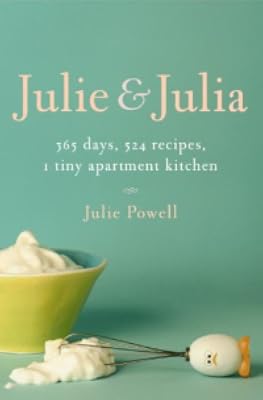
I loved this book. This is one of the top three books I've read this year (2008). Rinella is a remarkable writer. The book is full of humor and occasional sadness/melancholy. But it is always compelling. I am not a hunter nor do I really support hunting. After reading this book I will have to rethink my strict liberal perspective about hunting. Although it does graphically discuss killing it was never gratuitous and surprisingly didn't ever upset or repulse me. The book is also remarkable in the historical perspectives that Rinella brings to both haute cuisine, wild game hunting, and the various locales that he visits. Although the story occurs over a one year period and the author's scavenging is restricted to the US, Rinella weaves in show more his other global travels. I thoroughly enjoyed Julie & Julia by Julie Powell which had a very similar "mission" (Julie Powell sets out in one-year to cook all of the recipes in Julia Childs' Mastering the Art of French Cooking). Rinella commits himself to spending one-year gathering the ingredients he needs to cook 45-50 recipes from Auguste Escoffier's Le Guide Culinaire for a three-day event. The interesting thing about Rinella's book is that most of the recipes require main ingredients that you can't buy. The author is a hunter and fisherman who has spent most of his life cooking and eating only food that he has "scavenged" from Mother Nature. But Escoffier's ingredients frequently challenge Rinella's expert gathering skills (as in squab, which is a baby pigeon). I suspect some people will object to this book for political correctness, but I hope they aren't so narrow-minded that they cannot give this book a try. The author is such a talented writer and story-teller and everyone should benefit from this profoundly great book. show less
Rinella spent a year gathering ingredients to prepare a feast as described by Escoffier in "Le Guide Culinaire." The difference being that he went hunting throughout America for all of the exotic meats described. Wild boar in California, shellfish and deep ocean fish in Alaska, frogs in the midwest and stingray in Florida. His biggest challenge was in getting squab; pigeons under one year old which have never flown. Along the way he tells about his efforts to convert his vegetarian girlfriend into a carnivore.
That was more offensive to me than any of the hunting and killing. His opinion that the only right-minded people were people who thought as he did. A small redemption at the end of the book was that he discovered it was wrong of show more him to be forcing his own preferences onto his girlfriend, and I believe he repented of it somewhat. As for the rest of the story; it was interesting to see where and how he gathered the ingredients, and I enjoyed the description of preparing the meal very much. He was honest about what was delicious and what didn't work. show less
That was more offensive to me than any of the hunting and killing. His opinion that the only right-minded people were people who thought as he did. A small redemption at the end of the book was that he discovered it was wrong of show more him to be forcing his own preferences onto his girlfriend, and I believe he repented of it somewhat. As for the rest of the story; it was interesting to see where and how he gathered the ingredients, and I enjoyed the description of preparing the meal very much. He was honest about what was delicious and what didn't work. show less
This is a great book about food and how people today are divorced from the source of the meat that they eat.
Members
- Recently Added By
Author Information

21+ Works 1,605 Members
Steven Rinella is an outdoorsman, writer, wild-foods enthusiast, and television and podcast host who is a passionate advocate for conservation and the protection of public lands. The host of the MeatEater podcast and Netflix original series, he is also the author of The MeatEater Fish and Game Cookbook: Recipes and Techniques for Every Hunter and show more Angler; two volumes of The Complete Guide to Hunting, Butchering, and Cooking Wild Game; Meat Eater: Adventures from the Life of an American Hunter; American Buffalo: In Search of a Lost Icon; and The Scavenger's Guide to Haute Cuisine. show less
Classifications
- Genres
- Hunting and Fishing, Sports and Leisure, Nonfiction, Food & Cooking, General Nonfiction, Biography & Memoir
- DDC/MDS
- 641.5 — Applied science & technology Home economics & family management Food, Cooking & Recipes / Meals, Picnics Cooking; cookbooks
- LCC
- TX651 .R55 — Technology Home economics Home economics Cooking
- BISAC
Statistics
- Members
- 180
- Popularity
- 180,299
- Reviews
- 7
- Rating
- (4.03)
- Languages
- English
- Media
- Paper, Ebook
- ISBNs
- 4
- ASINs
- 6