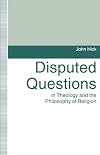
Disputed Questions in Theology and the Philosophy of Religion
by John Hick
On This Page
Description
When medieval theologians wrote their Quaestiones Disputatae, the disputed questions concerned relatively peripheral topics, for Christians agreed on all of the most basic matters. But today even the most central issues in Christianity are controversial, and Christian discourse itself is part of the wider dialogue that includes all the great religious and philosophical traditions of the world. In this book a leading philosopher of religion offers fresh insights into some of the disputed show more religious questions of our time.John Hick begins by addressing the most fundamental questions: whether religion is a wish-fulfilling projection or a human response to the Transcendent, and whether religious experience constitutes authentic awareness of a divine Reality. He then considers specifically Christian beliefs, such as the deity of Jesus and the problems encountered by attributing to Jesus both all divine and all human properties, and he suggests an alternative image of Jesus as a man extraordinarily open to and inspired by the divine spirit. Hick gives a personal account of how he has come to accept religious pluralism—that the major world faiths are different but equally valid responses to ultimate Reality. He considers how much Christians have to learn from Buddhism, discusses the ongoing dialogue among Jews, Christians, and Muslims, and outlines a philosophy of religions—a conception of the relationship between world religions and between them and the ultimately Real. Finally he turns to the mystery of death and, using the resources of the world religions and of parapsychology, suggests a possible conception of life after death. show lessTags
Recommendations





Member Reviews
I am intimidated by writers who can express so much so succinctly. Hick is such a man, so was John A.T. Robinson, so was Paul Tillich (when he wanted to be).
Hick has been called, "a man who knows how to poke a bear with a stick." This is quite right, his ideas are provocative. One cannot simply read them, nod, and move on. Virtually every paragraph of this book incites a vast array of thoughts in a vast number of directions. This is not the sort of book one cannot gallop through in an afternoon, despite its length. This is one of those pondering, ponderous reads. This was the first piece of Hick's that I ever read and he quickly jumped to the top of my short list of thinkers. Many people would no doubt find this book threatening, show more beyond this possibility I have no criticisms of the text except a general evaluation of Hick's point of view.
Religious pluralism (Hick's position) has a tendency to assume Christian-type values and motives of religious groups who may have no such commonality with Christianity. Pluralists are fond of saying, "many paths to the mountaintop." While this statement might be insightful within the Abrahamic tradition, it tends to force everyone onto the same mountain, whether they want to be or not. While this position of Hick's does not really come up in this book, it is enough in the background of Hick's thought that readers should be aware of this feature. show less
Hick has been called, "a man who knows how to poke a bear with a stick." This is quite right, his ideas are provocative. One cannot simply read them, nod, and move on. Virtually every paragraph of this book incites a vast array of thoughts in a vast number of directions. This is not the sort of book one cannot gallop through in an afternoon, despite its length. This is one of those pondering, ponderous reads. This was the first piece of Hick's that I ever read and he quickly jumped to the top of my short list of thinkers. Many people would no doubt find this book threatening, show more beyond this possibility I have no criticisms of the text except a general evaluation of Hick's point of view.
Religious pluralism (Hick's position) has a tendency to assume Christian-type values and motives of religious groups who may have no such commonality with Christianity. Pluralists are fond of saying, "many paths to the mountaintop." While this statement might be insightful within the Abrahamic tradition, it tends to force everyone onto the same mountain, whether they want to be or not. While this position of Hick's does not really come up in this book, it is enough in the background of Hick's thought that readers should be aware of this feature. show less
Ratings
Members
- Recently Added By
Author Information

45+ Works 3,861 Members
Born in Scarborough, England, Hick received his D. Phil. from Oxford University. For several years he served as a Presbyterian minister in Northumberland, England, but soon moved to the United States, where he took a position teaching philosophy at Cornell University. He served as Stuart Professor of Christian Philosophy at Princeton Theological show more Seminary from 1959 to 1964. Since then he has held a variety of teaching positions in the United States and England. Throughout Hick's career, his main focus has remained on problems in the philosophy of religion. His numerous books, particularly those concerned with the epistemology of religious belief, are marked with a consistently clear and easily accessible style. For this reason, his writings have always been popular among professional philosophers and theologians, as well as among those who are more casually interested in the nature of religious belief or the place of religion in contemporary culture. In more recent years, Hick became more single-minded in his concern with the problem of religious pluralism. Convinced that Western philosophical and religious thought have been too narrowly shaped by preoccupation with the Judeo-Christian tradition, he argues for a broader, more ecumenical spirit. (Bowker Author Biography) show less
Classifications
Statistics
- Members
- 38
- Popularity
- 766,235
- Reviews
- 1
- Rating
- (3.83)
- Languages
- English
- Media
- Paper, Ebook
- ISBNs
- 7