On This Page
Description
As she and her husband adjust to their arranged marriage, Amir strives to find her role as she settles into a new life and a new home in a society quick to define that role for her.Tags
Recommendations
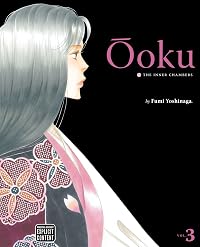
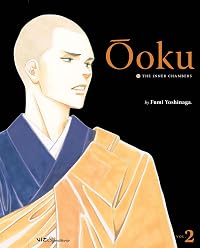
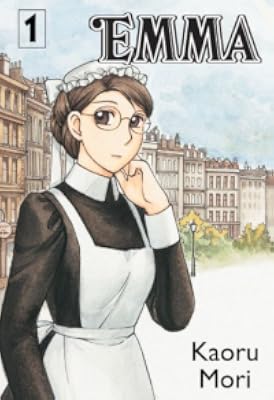
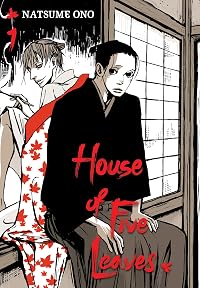

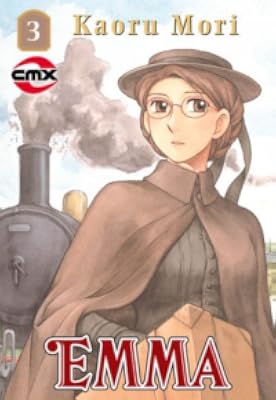
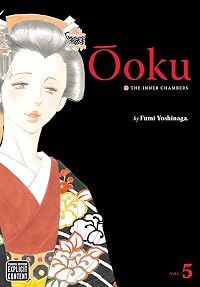
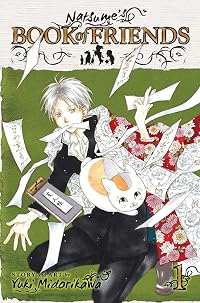
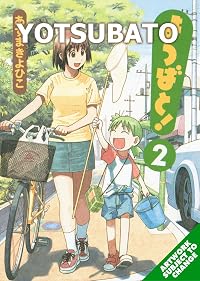


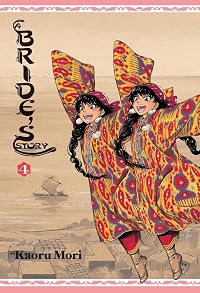
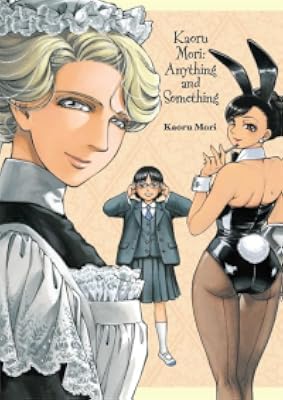
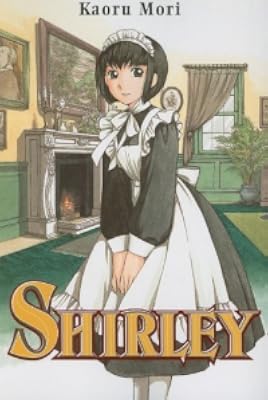
Member Recommendations
electronicmemory Beautifully drawn and charmingly written historical fiction.

Member Reviews
This is only the first volume, but I'm already pretty sure I'm going to love this series as much as I loved Emma.
I'm willing to admit that this series might not be for everyone (although the thought brings me pain). Those looking for fast-paced action may find themselves bored by this volume. Amir's hunting skills add a little action, but a larger portion of the story is devoted to things like a child's fascination with an elderly woodworker's creations, Amir and Karluk looking for signs of Karluk's uncle, and Amir worrying about a sick Karluk.
If you're like me, though, and have a fondness for slice-of-life stories and lots and lots of character interaction that is as much about the characters' expressions, body language, and actions as show more it is about what they're saying, all of it made even better by gorgeous art...well, you'll probably love this.
When I first heard about this series, I was sold on it the instant I saw the name "Kaoru Mori." If this had been created by someone else, I probably would have at least read some reviews before ordering it, just to find out how the "12-year-old husband, 20-year-old bride" aspect would be handled - fortunately, Mori can be trusted not to turn that set-up into something icky. For now, at least, Amir is more like a big sister, although there are already some hints that their relationship will eventually become more.
It's clear that Amir and Karluk get along pretty well, and there are some very cute scenes involving the two of them, my favorite being the one in which a very serious, slightly drunk Karluk tells Amir that he never once wished she were younger. This was after an evening spent talking with Karluk's uncle's family, who clearly did not approve of Amir's age but never came right out and said so to her or Karluk's faces. So far, Amir seems to be taking all of this fairly well. I'll be interested to see if her age becomes even more of an issue in future volumes - from the look of things, everyone, even people from her old tribe, thinks she married at far too old an age. I wonder why she didn't marry at the usual age (15 or 16, according to Mori's afterword)?
I can't wait for the next volume, which I'm guessing will feature more scenes with Amir's family. I'm really looking forward to getting to see more of Amir's older brother - not so surprising, considering my usual tastes in characters. Right now, I think I'm mostly drawn to him for his slight resemblance to Rayek from Wendy and Richard Pini's Elfquest (it's the eyes and attitude). I hope future volumes don't reveal him to be a completely terrible person that I need to hate. I'm a little worried that he and the two cousins are going to attack the Eihon family and take Amir by force.
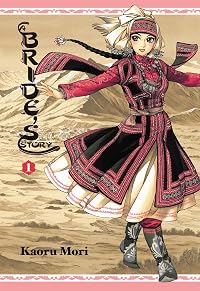
Overall, this volume is excellent, although it may be a little too slow-paced for some. Yen Press chose to release this in hardcover format, which means that it costs more than most paperback manga but will hold up to multiple rereads better (public and academic libraries, buy this please!). I'm pretty sure this is the first time I've ever read a right-to-left manga volume in hardcover - my hands kept wanting to hold it the way I would a hardcover read left-to-right, although I adjusted pretty quickly. The book jacket is lovely, although the spine art is so narrow that the slightest mistake in how the jacket was folded will cause misalignment - I, personally, don't mind this, since my bookshelves are too crammed to properly display anything anyway. The full-color jacket art is so pretty that it almost makes me wish the entire volume were in color, except that I think the sensory overload probably would have been too much for me.
Extras:
There's a 3 page manga afterword by Kaoru Mori, in which she explains how she came up with A Bride's Story. She also includes a chart that explains characters and their relationships to one another - usually, I find this sort of thing to be redundant, but, in this case, some of the relationship details aren't always very obvious, so the chart is actually pretty helpful.
(Original review, with read-alikes and watch-alikes, posted on A Library Girl's Familiar Diversions.) show less
I'm willing to admit that this series might not be for everyone (although the thought brings me pain). Those looking for fast-paced action may find themselves bored by this volume. Amir's hunting skills add a little action, but a larger portion of the story is devoted to things like a child's fascination with an elderly woodworker's creations, Amir and Karluk looking for signs of Karluk's uncle, and Amir worrying about a sick Karluk.
If you're like me, though, and have a fondness for slice-of-life stories and lots and lots of character interaction that is as much about the characters' expressions, body language, and actions as show more it is about what they're saying, all of it made even better by gorgeous art...well, you'll probably love this.
When I first heard about this series, I was sold on it the instant I saw the name "Kaoru Mori." If this had been created by someone else, I probably would have at least read some reviews before ordering it, just to find out how the "12-year-old husband, 20-year-old bride" aspect would be handled - fortunately, Mori can be trusted not to turn that set-up into something icky. For now, at least, Amir is more like a big sister, although there are already some hints that their relationship will eventually become more.
It's clear that Amir and Karluk get along pretty well, and there are some very cute scenes involving the two of them, my favorite being the one in which a very serious, slightly drunk Karluk tells Amir that he never once wished she were younger. This was after an evening spent talking with Karluk's uncle's family, who clearly did not approve of Amir's age but never came right out and said so to her or Karluk's faces. So far, Amir seems to be taking all of this fairly well. I'll be interested to see if her age becomes even more of an issue in future volumes - from the look of things, everyone, even people from her old tribe, thinks she married at far too old an age. I wonder why she didn't marry at the usual age (15 or 16, according to Mori's afterword)?
I can't wait for the next volume, which I'm guessing will feature more scenes with Amir's family. I'm really looking forward to getting to see more of Amir's older brother - not so surprising, considering my usual tastes in characters. Right now, I think I'm mostly drawn to him for his slight resemblance to Rayek from Wendy and Richard Pini's Elfquest (it's the eyes and attitude). I hope future volumes don't reveal him to be a completely terrible person that I need to hate. I'm a little worried that he and the two cousins are going to attack the Eihon family and take Amir by force.
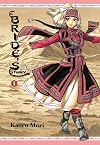
Overall, this volume is excellent, although it may be a little too slow-paced for some. Yen Press chose to release this in hardcover format, which means that it costs more than most paperback manga but will hold up to multiple rereads better (public and academic libraries, buy this please!). I'm pretty sure this is the first time I've ever read a right-to-left manga volume in hardcover - my hands kept wanting to hold it the way I would a hardcover read left-to-right, although I adjusted pretty quickly. The book jacket is lovely, although the spine art is so narrow that the slightest mistake in how the jacket was folded will cause misalignment - I, personally, don't mind this, since my bookshelves are too crammed to properly display anything anyway. The full-color jacket art is so pretty that it almost makes me wish the entire volume were in color, except that I think the sensory overload probably would have been too much for me.
Extras:
There's a 3 page manga afterword by Kaoru Mori, in which she explains how she came up with A Bride's Story. She also includes a chart that explains characters and their relationships to one another - usually, I find this sort of thing to be redundant, but, in this case, some of the relationship details aren't always very obvious, so the chart is actually pretty helpful.
(Original review, with read-alikes and watch-alikes, posted on A Library Girl's Familiar Diversions.) show less
Prelim Review: Kaoru Mori is a favorite manga-ka. Her artwork is gorgeous, her stories are engaging without being flashy and her historical attention to detail is stunning. Emma (Victorian Romance Emma) was a treat for my eyes and mind with Mori's rendering of Victorian England. She uses small things to convey so much emotion.
This all said, her series aren't for everyone. There are very few 'action' scenes throughout her works. There are a few more in this volume, with Amir hunting rabbits or later Karluk's grandmother standing up to Amir's family, but overall one shouldn't go into Mori's work expecting thrilling action sequences that keep the blood moving.
Full review to be posted at Poisoned Rationality
This all said, her series aren't for everyone. There are very few 'action' scenes throughout her works. There are a few more in this volume, with Amir hunting rabbits or later Karluk's grandmother standing up to Amir's family, but overall one shouldn't go into Mori's work expecting thrilling action sequences that keep the blood moving.
Full review to be posted at Poisoned Rationality
When people ask for my top manga of all time, this is the series that pops in my head. Mori is an amazing artist, and her characters are varied and have wonderful depth to them. She's done quite a bit of research which shows itself in all the tiny details.
That being said, this series (and everything by Mori, honestly) is mostly about the lives and growth of the people. It's not super action-packed (though later volumes do have some cool action scenes). But if you're looking for an amazing historical fiction, this is number 1.
That being said, this series (and everything by Mori, honestly) is mostly about the lives and growth of the people. It's not super action-packed (though later volumes do have some cool action scenes). But if you're looking for an amazing historical fiction, this is number 1.
This extended manga tale opens with the arranged marriage of Amir and Karluk in 19th-century central Asia. Amir is twenty. Karluk is twelve. In this first volume, Amir becomes acquainted not only with her new husband but also with her new extended family and community, to which she brings considerable bravery and self-confidence, as well as a few surprises. Her native family, however, is having second thoughts about the arrangement.
I'm so curious to see how this saga unfolds, as I sense some interesting subplot tendrils spiraling off from the main narrative. I've already learned a great deal about the local culture, which is almost a whole vibrant character in itself. I've never read a lengthy manga series, but I think I'll stick with show more this one. show less
I'm so curious to see how this saga unfolds, as I sense some interesting subplot tendrils spiraling off from the main narrative. I've already learned a great deal about the local culture, which is almost a whole vibrant character in itself. I've never read a lengthy manga series, but I think I'll stick with show more this one. show less
Brilliant! Kaoru Mori's masterful Bride's Story is a magnum opus of a manga. Her richly textured Central Asian clothing parallel a story rich with fascinating characters. The protagonist Amir is so kind-hearted and true it almost doesn't feel real (she could easily pass for Belldandy), but her compassion and fear and love are always brimming to the surface as well. Karluk, her prepubescent husband is the picture of responsibility and the reader feels his wonder right along side him at his wife's astounding hunting and sewing skills. The slow plot points and realistic sense of distance and time in volume one are reminiscent of many good Asian stories. Additionally, it's lighthearted and fun tales mixed with emotional upheaval would fit show more well into women's lit. Bride's Story will make you feel young at heart and wish you could meet Mori's characters in real life. show less
As expected from a Mori Kaoru manga, this is one beautiful book. Everything, from the sheer amount of detail put into each picture, to the composition of a page, just invites you to stare at each individual page forever. To go with that, the story's pacing is also slow in a very pleasant way; I was never once bored and want to dive right back in, soaking up more of the atmosphere.
What I love almost as much is Amir (or Amira, depending on the translation), our heroine, and the refreshing lack of conflict. From the set-up, one might remember how pretty much every other story does it and expect her to be uncomfortable with her arranged marriage and embarrassed around her young husband, but she isn't. Neither does she have to face the tired show more old "the new family won't accept her and she has to prove herself to be a ~good wife~ first", possibly with a dash of "she's not feminine enough for them". Nope. Her new family loves and values her and her skills, just as she loves and values them and the things she can learn from them.
It is refreshing to see strong female friendships & family bonds instead of the ~bickering women rivalries~ that so many media seem to be so intent on portraying.
Karluk, the husband, wins every Most Adorable price ever, the grandmother Balkirush is equally amazing and... really, everybody is great, pretty much. :D
(The German translation is a pleasure to read too, but I am side-eying the fact that in the blurb, they chose to describe the story as a "fairy tale", when they (rightly) called Mori's other work Emma, which takes place in England in a similar time period, a "historical romance".) show less
What I love almost as much is Amir (or Amira, depending on the translation), our heroine, and the refreshing lack of conflict. From the set-up, one might remember how pretty much every other story does it and expect her to be uncomfortable with her arranged marriage and embarrassed around her young husband, but she isn't. Neither does she have to face the tired show more old "the new family won't accept her and she has to prove herself to be a ~good wife~ first", possibly with a dash of "she's not feminine enough for them". Nope. Her new family loves and values her and her skills, just as she loves and values them and the things she can learn from them.
It is refreshing to see strong female friendships & family bonds instead of the ~bickering women rivalries~ that so many media seem to be so intent on portraying.
Karluk, the husband, wins every Most Adorable price ever, the grandmother Balkirush is equally amazing and... really, everybody is great, pretty much. :D
(The German translation is a pleasure to read too, but I am side-eying the fact that in the blurb, they chose to describe the story as a "fairy tale", when they (rightly) called Mori's other work Emma, which takes place in England in a similar time period, a "historical romance".) show less
I’ve been keeping up with this series since it started serialization in Japan back in 2008. For those of you into the manga/anime genres, you’ll know the author’s previous work (“Emma”), which takes place in Victorian England. This new historical slice-of-life story takes place several centuries earlier in central Asia, in what’s hinted near Mongolia. Her talent for storytelling of worlds past has only grown since then. Yen Press brings it to us with perfection (not to mention excellent packaging) for all to see.
I think what I love about Mori’s style the most is that she does things slowly. It’s frustrating when you want to read the next chapter of the story (it’s a monthly serialization in Japan), and so collected show more volumes come out once or twice a year, if at that. When it’s not on hiatus, that is. Anyway, you can feel the slowness of how things were back then in her stories, how life progressed from minute to minute, day to day instead of how it is now with constant connection and digitalization (not that that’s a bad thing, but I think you understand what I mean). You can practically taste the food cooked by the characters, the cloth woven by its women, the smoke from the pipes of the men. You can’t do that with a lot of author/illustrator combinations right now in the manga market, precisely because they would rather rush (or their publishers would).
Yen Press really did Mori a solid here and put the first printing of this volume into a lovely, glossy hardback edition for North America. Seriously. I liked them before, and now I love them for doing this. Very high-quality ink and pages used, nothing scrimped or cheapened for Mori’s work. And to be honest, as this work definitely tops “Emma” in its broadness within a tiny piece of history/land, it really deserves everything Yen Press did to market this first volume. It makes the original Japanese paperback version look crappy.
Amira’s story is told in a seemingly traditional fashion, with her being the arranged bride of a young man from another tribe. However, knowing that arranged marriages (even in Japan) really aren’t as popular as they used to be, she used it to show how a couple meets and starts to fall for each other – even if the age difference is as big as it is here. You have the traditional suspicious family members on the groom’s side, but Amira’s honesty and vivacity (along with respect for her elders) quickly charms them into complacency. So complacent that when her father and brothers come back for her, her new family defends her as if she’d been born as one of their own.
Mori obviously did research on the area and the time that she used in this story – you can tell with each pen scratch, ink stroke, and expression with the characters. Not to mention the scenery, which feels like looking at an old black-and-white panoramic picture, an old film. Her work is that beautiful, and refreshing just because of all of these qualities that the manga market in Japan has started to lose within the last ten years or so. She sticks to her guns, knowing that the tortoise will win the race over the rabbit and would rather quality in her story over releasing five or more volumes a year. And I admire her for that.
If you’re looking for a relatable, warm historical slice-of-life without too much suffocating romance, choose “A Bride’s Story”. The next volume should be due out in North America in October or November, though no word on whether or not it too will get the hardback treatment. Let’s hope it does.
(posted to librarything, shelfari, goodreads, and witchoftheatregoing.wordpress.com) show less
I think what I love about Mori’s style the most is that she does things slowly. It’s frustrating when you want to read the next chapter of the story (it’s a monthly serialization in Japan), and so collected show more volumes come out once or twice a year, if at that. When it’s not on hiatus, that is. Anyway, you can feel the slowness of how things were back then in her stories, how life progressed from minute to minute, day to day instead of how it is now with constant connection and digitalization (not that that’s a bad thing, but I think you understand what I mean). You can practically taste the food cooked by the characters, the cloth woven by its women, the smoke from the pipes of the men. You can’t do that with a lot of author/illustrator combinations right now in the manga market, precisely because they would rather rush (or their publishers would).
Yen Press really did Mori a solid here and put the first printing of this volume into a lovely, glossy hardback edition for North America. Seriously. I liked them before, and now I love them for doing this. Very high-quality ink and pages used, nothing scrimped or cheapened for Mori’s work. And to be honest, as this work definitely tops “Emma” in its broadness within a tiny piece of history/land, it really deserves everything Yen Press did to market this first volume. It makes the original Japanese paperback version look crappy.
Amira’s story is told in a seemingly traditional fashion, with her being the arranged bride of a young man from another tribe. However, knowing that arranged marriages (even in Japan) really aren’t as popular as they used to be, she used it to show how a couple meets and starts to fall for each other – even if the age difference is as big as it is here. You have the traditional suspicious family members on the groom’s side, but Amira’s honesty and vivacity (along with respect for her elders) quickly charms them into complacency. So complacent that when her father and brothers come back for her, her new family defends her as if she’d been born as one of their own.
Mori obviously did research on the area and the time that she used in this story – you can tell with each pen scratch, ink stroke, and expression with the characters. Not to mention the scenery, which feels like looking at an old black-and-white panoramic picture, an old film. Her work is that beautiful, and refreshing just because of all of these qualities that the manga market in Japan has started to lose within the last ten years or so. She sticks to her guns, knowing that the tortoise will win the race over the rabbit and would rather quality in her story over releasing five or more volumes a year. And I admire her for that.
If you’re looking for a relatable, warm historical slice-of-life without too much suffocating romance, choose “A Bride’s Story”. The next volume should be due out in North America in October or November, though no word on whether or not it too will get the hardback treatment. Let’s hope it does.
(posted to librarything, shelfari, goodreads, and witchoftheatregoing.wordpress.com) show less
Members
- Recently Added By
Published Reviews
ThingScore 75
Fresque sociale et historique haute en couleur, Bride Stories est transcendé par les dessins magnifiques de Kaoru Mori.
added by miniwark
Lists

Recommended Comics / Graphic Novels
595 works; 122 members

Books Read in 2014
2,344 works; 89 members

Top Five Books of 2017
757 works; 230 members

Favorite Books in Translation
320 works; 133 members

Books We Discovered On LibraryThing
530 works; 130 members
Author Information

66+ Works 6,199 Members
Some Editions
Awards and Honors
Distinctions
Notable Lists
Series

Belongs to Publisher Series
Common Knowledge
- Canonical title
- A Bride's Story, Volume 1
- Original title
- 乙嫁語り 1
- Alternate titles
- Young Bride's Story, Volume 1; 乙嫁語り 1巻; Otoyomegatari, Vol. 1; Otomegatari, Vol. 1
- Original publication date
- 2009-10-15
- People/Characters
- Amir Halgal; Karluk Eihon; Henry Smith [A Bride's Story]
- Important places
- Silk Road; Central Asia
- First words
- "Oh my!"
- Last words
- (Click to show. Warning: May contain spoilers.)"I can't lift my leg."
- Original language
- Japanese
- Disambiguation notice
- Some of the records have this as a series (i.e., one record for all volumes), but most seem to be for each volume separately.
Classifications
- Genres
- Graphic Novels & Comics, Teen
- DDC/MDS
- 741.5 — Arts & recreation Drawing & decorative arts Drawing Comic books, graphic novels, fotonovelas, cartoons, caricatures, comic strips
- LCC
- PN6790 .J34 .O86613 — Language and Literature Literature (General) Literature (General) Collections of general literature Comic books, strips, etc.
- BISAC
Statistics
- Members
- 686
- Popularity
- 41,803
- Reviews
- 40
- Rating
- (4.32)
- Languages
- 9 — Chinese, English, Finnish, French, German, Italian, Japanese, Polish, Spanish
- Media
- Paper, Ebook
- ISBNs
- 14
- ASINs
- 1