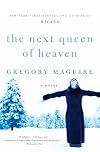
The Next Queen of Heaven
by Gregory Maguire
On This Page
Description
"As the new millennium approaches, the eccentric town of Thebes grows even stranger. Clocked by a Catholic statuette, Mrs. Leontina Scales begins speaking in tongues. Her daughter, Tabitha Scales, and her sons scheme to save their mother or surrender her to Jesus--whatever comes first. Meanwhile, choir director Jeremy Carr, caught between lust and ambition, fumbles his way toward Y2K. Only a modern master like Gregory Maguire can spin a tale this frantic, funny, and farcical. The ancient show more Sisters of the Sorrowful Mysteries join with a gay singing group. The Radical Radiants battle the Catholics. A Christmas pageant goes horribly awry. And a child is born. THE NEXT QUEEN OF HEAVEN is Maguire's most imaginative story yet"-- show lessTags
Recommendations











Member Recommendations
Member Reviews
Leontina Scales is a thrice-married (and divorced) mother of 3 sullen teenagers. She is a devout member of the Radical Radiant Pentecostals, who share a parking lot with the Roman Catholic church next door. One morning, having forgotten to bring milk for the after-services coffee, she sneaks over to the basement of the Catholic church to borrow some, and is conked on the head by a falling statue of the Virgin Mary. When she wakes up, her behavior and speech have changed dramatically, but since the clinic can find nothing particularly wrong with her, they release her to the care of her children.
Jeremy Carr is the gay music director for the Catholic church, trying to get over the love of his life, to care for Sean, a friend with AIDS, and show more to find a rehearsal spot with a piano so he can win a competition in New York. Sister Alice offers him the use of the music room in the Motherhouse of the Sisters of the Sorrowful Mysteries, currently used as a retirement home for the nuns.
And the story begins. This is a wild ride, and I alternately laughed hysterically and cried like a baby. It is a small town, and everyone's lives cross back and forth between each other. The Catholics feel responsible, the Pentecostal Pastor worries that they are trying to convert Mrs. Scales while he tries to seduce her 15 year old daughter Tabitha, who goes from being the town brat/slut to having to care for her mother (in spite of her own worries), and there is an absolutely fabulous conversation between the musicians and the retired nuns, comparing the gay life to the cloistered life.
Gregory Maguire is one of those authors that you can't pinpoint, because all of his books are different. This one is great. Each person and each institution is equally lauded and denigrated, and I just came away from it feeling like we all have our own demons to fight, so let's just get along. Highly recommended (although there is some "bad language" if that's offensive to you). show less
Jeremy Carr is the gay music director for the Catholic church, trying to get over the love of his life, to care for Sean, a friend with AIDS, and show more to find a rehearsal spot with a piano so he can win a competition in New York. Sister Alice offers him the use of the music room in the Motherhouse of the Sisters of the Sorrowful Mysteries, currently used as a retirement home for the nuns.
And the story begins. This is a wild ride, and I alternately laughed hysterically and cried like a baby. It is a small town, and everyone's lives cross back and forth between each other. The Catholics feel responsible, the Pentecostal Pastor worries that they are trying to convert Mrs. Scales while he tries to seduce her 15 year old daughter Tabitha, who goes from being the town brat/slut to having to care for her mother (in spite of her own worries), and there is an absolutely fabulous conversation between the musicians and the retired nuns, comparing the gay life to the cloistered life.
Gregory Maguire is one of those authors that you can't pinpoint, because all of his books are different. This one is great. Each person and each institution is equally lauded and denigrated, and I just came away from it feeling like we all have our own demons to fight, so let's just get along. Highly recommended (although there is some "bad language" if that's offensive to you). show less
Gregory Maguire is a favorite author of mine partly because you never know exactly what you're going to get from one of his many youth, YA or adult novels. The Next Queen of Heaven takes that to a new level because this one has nothing to do with fantasy or fairy tales or even really imagination. It's starkly real and painful and tragic with only the human spirit shining through.
First, let me tell you something that the summary on the back keeps secret for some reason -- one of the two narratives in this book is about a gay man and his friends. I'm not sure why this is masked but I really wasn't expecting it at all. Anyway, this novel alternates between two stories that happen simultaneously in the small New England town of Thebes. show more Tabitha Scales is a slightly dim-witted but beautiful delinquent teen who is forced to grow up after her born-again mother becomes incapacitated by a falling statue of the Virgin Mary in the basement of the local Catholic church. Jeremy Carr is the gay choir director of that Catholic church. He is nursing a years old broken heart and dealing with a close friend's terminal AIDS struggle. The reader is dragged through these messy and mostly unrelated narratives that depict a few short months of heartbreak and transformation, all against the backdrop of religion and sexuality.
With a bit of humor and loads more humanity, Maguire brings us into the lives of these seemingly average small-town residents. The most fascinating characters (and certainly the most lovable) are the unexpected Sisters of the Sorrowful Mysteries -- a group of lonely, elderly nuns in a local convent. In fact, there is so much of the unexpected in this novel that I don't want to say any more about the plot or characters. The strength of this story is in the way that it unfolds and develops. It is quite irreverent and sometimes profane and most of the characters are only mildly likable at best. And yet it is a compelling story that sucked me in, educated me and left me exhausted but thoughtful at the end.
http://webereading.com/2010/11/new-release-next-queen-of-heaven.html show less
First, let me tell you something that the summary on the back keeps secret for some reason -- one of the two narratives in this book is about a gay man and his friends. I'm not sure why this is masked but I really wasn't expecting it at all. Anyway, this novel alternates between two stories that happen simultaneously in the small New England town of Thebes. show more Tabitha Scales is a slightly dim-witted but beautiful delinquent teen who is forced to grow up after her born-again mother becomes incapacitated by a falling statue of the Virgin Mary in the basement of the local Catholic church. Jeremy Carr is the gay choir director of that Catholic church. He is nursing a years old broken heart and dealing with a close friend's terminal AIDS struggle. The reader is dragged through these messy and mostly unrelated narratives that depict a few short months of heartbreak and transformation, all against the backdrop of religion and sexuality.
With a bit of humor and loads more humanity, Maguire brings us into the lives of these seemingly average small-town residents. The most fascinating characters (and certainly the most lovable) are the unexpected Sisters of the Sorrowful Mysteries -- a group of lonely, elderly nuns in a local convent. In fact, there is so much of the unexpected in this novel that I don't want to say any more about the plot or characters. The strength of this story is in the way that it unfolds and develops. It is quite irreverent and sometimes profane and most of the characters are only mildly likable at best. And yet it is a compelling story that sucked me in, educated me and left me exhausted but thoughtful at the end.
http://webereading.com/2010/11/new-release-next-queen-of-heaven.html show less
 This review was written for LibraryThing Early Reviewers.
Summary: A few days before Halloween of 1999, Mrs. Leotina Scales sneaks into the basement of the Catholic church of Thebes, New York (to steal milk for the coffee of the Radical Radiant Pentecostals, next door). While down there, she gets bonked in the head by a statue of the virgin Mary, and begins speaking in tongues. This is too much for her foul-mouthed, dropout, troublemaker daughter Tabitha to deal with, especially since she's got her own problems to deal with: useless brothers, absent fathers, and a boyfriend who's avoiding her and who town gossip says is engaged to someone else. But things are not much brighter for the Catholics of Thebes... Jeremy Carr, the choir director of the church, is desperately trying to get his side show more project - a gay men's chorus - into shape for an audition in New York City that might represent his last hope of breaking out of the orbit of his only ex-boyfriend (who is now happily married with kids). But the singing isn't going so well either, since one of the members is HIV-positive and is deteriorating quickly, plus their options for rehearsal space have been reduced to the convent of the aging Sisters of the Sorrowful Mysteries. Christmas is coming, as is Y2K, but it's unclear whether the citizens of Thebes are in for Yuletide miracles or millennial disasters.
Review: For starters, I'd like to give credit where credit's due: bravo for Gregory Maguire for stretching his wings a bit. The Next Queen of Heaven is *very* different from his other books - no retold fairy tales or historical fiction settings here. I imagine that so radical of a departure from an author who is so well established in his own particular sub-genre can't be easy, and I appreciate that Maguire was willing to take that leap.
I had a bit of a hard time telling whether or not he hit the mark, however. I'm not sure whether the fault was mine, the book's marketing, or the novel itself (or some combination thereof, most likely), but I spent most of my time reading this book with a severe case of cognitive dissonance. The wacky small-town characters in mildly contrived situations, the religious elements, the just-before-Christmas setting, and the book-jacket blurb describing it as "frantic, funny, and farcical" were all making me expect Christopher Moore's The Stupidest Angel. Only, when I would sit down to read, what I got was more like The Stupidest Angel with all of the funny bits removed and replaced with sadness and depressive ennui. I kept waiting for the farcical part to start, and instead, I got a pastor with inappropriate lustful feelings towards a teen girl, and a gay man dying of AIDS. Whee.
I would write this all off as a case of mismatched expectations, but it seems like the book itself thinks it's funnier than it is. There are some genuinely funny lines, and some scenes (particularly the ending) that actually feel like effective farce. The problem is, the book seems like it has to work too hard to achieve these bright bits, and they don't do enough to dispel the bleakness that clings to the rest of the story. Which is not to say that the book is bad just because it's bleak - not at all; I like a good bleak book now and again - but don't sell yourself as a farce if that's not really your strong suit, y'know?
And the thing is, The Next Queen of Heaven does a lot of things right. The parts where Maguire drops the farce angle and gives himself unabashedly to the pathos of the situation felt true and moving. The plot's a little rambling and somewhat haphazard, but he makes the disparate pieces work together well, and even come together in the end. The character building was impressive - while I didn't really like any of the characters much, they still felt like multidimensional individuals. Maguire's setting is equally well-done; I've lived in upstate New York, and he captured it perfectly. The writing style is light but substantial, and is the one thing that identifies this book as Maguire's work. Finally, I thought he did a very nice job writing a book that deals so intimately with matters of religion - of multiple religions - without veering too much into either proselytizing or bashing.
So, in sum, this book had a number of good things about it, and the potential for even better things, but I felt like it couldn't decide whether to be a comedy or a drama, tried to be both, and got stuck at an uncomfortable point in the middle. 3 out of 5 stars.
Recommendation: If you like Gregory Maguire's style, or serious books wrapped in wacky dressings, and can ignore the promises made by the cover copy, then you've got a pretty good shot of liking The Next Queen of Heaven more than I did. show less
Review: For starters, I'd like to give credit where credit's due: bravo for Gregory Maguire for stretching his wings a bit. The Next Queen of Heaven is *very* different from his other books - no retold fairy tales or historical fiction settings here. I imagine that so radical of a departure from an author who is so well established in his own particular sub-genre can't be easy, and I appreciate that Maguire was willing to take that leap.
I had a bit of a hard time telling whether or not he hit the mark, however. I'm not sure whether the fault was mine, the book's marketing, or the novel itself (or some combination thereof, most likely), but I spent most of my time reading this book with a severe case of cognitive dissonance. The wacky small-town characters in mildly contrived situations, the religious elements, the just-before-Christmas setting, and the book-jacket blurb describing it as "frantic, funny, and farcical" were all making me expect Christopher Moore's The Stupidest Angel. Only, when I would sit down to read, what I got was more like The Stupidest Angel with all of the funny bits removed and replaced with sadness and depressive ennui. I kept waiting for the farcical part to start, and instead, I got a pastor with inappropriate lustful feelings towards a teen girl, and a gay man dying of AIDS. Whee.
I would write this all off as a case of mismatched expectations, but it seems like the book itself thinks it's funnier than it is. There are some genuinely funny lines, and some scenes (particularly the ending) that actually feel like effective farce. The problem is, the book seems like it has to work too hard to achieve these bright bits, and they don't do enough to dispel the bleakness that clings to the rest of the story. Which is not to say that the book is bad just because it's bleak - not at all; I like a good bleak book now and again - but don't sell yourself as a farce if that's not really your strong suit, y'know?
And the thing is, The Next Queen of Heaven does a lot of things right. The parts where Maguire drops the farce angle and gives himself unabashedly to the pathos of the situation felt true and moving. The plot's a little rambling and somewhat haphazard, but he makes the disparate pieces work together well, and even come together in the end. The character building was impressive - while I didn't really like any of the characters much, they still felt like multidimensional individuals. Maguire's setting is equally well-done; I've lived in upstate New York, and he captured it perfectly. The writing style is light but substantial, and is the one thing that identifies this book as Maguire's work. Finally, I thought he did a very nice job writing a book that deals so intimately with matters of religion - of multiple religions - without veering too much into either proselytizing or bashing.
So, in sum, this book had a number of good things about it, and the potential for even better things, but I felt like it couldn't decide whether to be a comedy or a drama, tried to be both, and got stuck at an uncomfortable point in the middle. 3 out of 5 stars.
Recommendation: If you like Gregory Maguire's style, or serious books wrapped in wacky dressings, and can ignore the promises made by the cover copy, then you've got a pretty good shot of liking The Next Queen of Heaven more than I did. show less
The Next Queen of Heaven is definitely not Gregory Maguire's typical fair. What brought me to read Maguire in the first place was how he used fairy tales to explore real human emotion, tragedy, suffering, family dynamics, and love. Gone is the twisted fairy tale, replaced by a story that is deeply human (and still kind of twisted) and full of Maguire's wit and creativity.
What's really interesting about The Next Queen of Heaven is that all of those things are still there under the microscope, but this time it's the human experiences that are used to explore the "fairy tale" of faith*. I mean, who would expect to be reading about a trio of gay men rehearsing for an AIDS benefit (one of them is dying from AIDS) and suddenly have a more show more complete understanding of nuns?
I really enjoyed this story. I probably would have given it 5 stars had the ending not been so abrupt. I highly recommend it!
*By "fairy tale of faith" I don't mean to insinuate that faith or religion aren't real. I simply refer to the larger than life feeling of Christianity and all it's attendant stories and traditions. show less
What's really interesting about The Next Queen of Heaven is that all of those things are still there under the microscope, but this time it's the human experiences that are used to explore the "fairy tale" of faith*. I mean, who would expect to be reading about a trio of gay men rehearsing for an AIDS benefit (one of them is dying from AIDS) and suddenly have a more show more complete understanding of nuns?
I really enjoyed this story. I probably would have given it 5 stars had the ending not been so abrupt. I highly recommend it!
*By "fairy tale of faith" I don't mean to insinuate that faith or religion aren't real. I simply refer to the larger than life feeling of Christianity and all it's attendant stories and traditions. show less
This review was written for LibraryThing Early Reviewers.Why: Wicked is one of my top twenty favorite books ever, probably, and so I read Maguire every so often.
Away from his usual territory Maguire is. No fairy tales or Oz. Just regular people, in regular ol' America, the tiny town of Thebes, NY, upstate, to be precise. I have really mixed feelings about this book. I found it quite funny, the characters, the dialogue, the scenarios Maguire set up. He is jointly satirizing religion and exploring themes of faith, which can be compelling. You know, but it's not. It's just not. He split the view between two characters: fiesty teen slut, Tabitha, and wimpy gay Catholic church music director, Jeremy. Tabitha has all the fun, and all the fun scenes, and nutty, unpredictable thoughts. Jeremy has a show more friend dying of AIDS, gets no respect, and endures regular emotional torture from the now-married-to-a-woman love of his life. What a drip. Well, I guess the reasons for the mixed feelings are apparent. I can't recommend this book, and I can't not recommend it. I mean, the guy gives great prose. If only he'd used it to send Jeremy flying over a cliff. show less
Away from his usual territory Maguire is. No fairy tales or Oz. Just regular people, in regular ol' America, the tiny town of Thebes, NY, upstate, to be precise. I have really mixed feelings about this book. I found it quite funny, the characters, the dialogue, the scenarios Maguire set up. He is jointly satirizing religion and exploring themes of faith, which can be compelling. You know, but it's not. It's just not. He split the view between two characters: fiesty teen slut, Tabitha, and wimpy gay Catholic church music director, Jeremy. Tabitha has all the fun, and all the fun scenes, and nutty, unpredictable thoughts. Jeremy has a show more friend dying of AIDS, gets no respect, and endures regular emotional torture from the now-married-to-a-woman love of his life. What a drip. Well, I guess the reasons for the mixed feelings are apparent. I can't recommend this book, and I can't not recommend it. I mean, the guy gives great prose. If only he'd used it to send Jeremy flying over a cliff. show less
Sad and hilarious. Ignorant and intelligent. A true look in the mirror for today's myth believers and skeptics alike. Successfully, Gregory Maguire has managed to write of the flip side(s), the less acknowledged side, of a common story - the lives of individual people. Instead of focusing on the alternative view of a fairy tale, Maguire peers into the world of the living, telling 'human tales', detailing the variable impacts one of the modern world's most prevalent tales has on its characters and their emotional interaction, or lack thereof, with one another.
This story is different from Maguire's previous novels, and yet still very much the same.
This story is different from Maguire's previous novels, and yet still very much the same.
This review was written for LibraryThing Early Reviewers.It's 1999 in Thebes, New York. When Leontina Scales is knocked on the head by a falling statue of the Virgin Mary while pilfering from the refrigerator of the Catholic church, things get a little out of control. For Leontina, a single mother who is raising three wayward teenagers, the bump on the noggin is just enough to throw her over the edge. Soon she begins to act very strange indeed, speaking in tongues and reverting back to a simpler time in her life. Meanwhile, Jeremy, the parish choir director, is trying to assemble a group of friends for a shot at the musical big time, but is finding obstacles creeping up along the way. Jeremy is a Catholic of a very different variety, and along with his friends is trying to keep a lid on his show more often misunderstood lifestyle. Added into the mix is an ancient group of nuns that Jeremy and his singing group befriend and one very antagonistic and foul-mouthed teenage girl, making the little town of Thebes, New York on the cusp of Y2K a very strange place indeed.
I've read quite a few of Magiure's books and was eager to get the chance to read this one as well. I thought that Wicked was pretty darn incredible, and though I liked it's sequels a little less ferociously, I think Maguire has a really interesting talent for taking fairy tales and twisting them into thrilling and novel new permutations. So when I started this book, I was a tad confused. This book was really a departure for Maguire, as not only was it a different genre, the inclusion of so much humor was also different for him. While it took me some time to adjust, I ended up really enjoying this book despite my preconceived notions about it.
This book was really thought-provoking in the ways it examined the fragile bonds that hold a community together. There was a small town feel to the story and as the book progressed, there was a great feeling of peeking into the microcosm of small town America. Part of the story was about two opposing churches, and while I wouldn't call it a rivalry exactly, there were some definite undercurrents of us versus them that were gradually hurdled as the narrative moved forward. Both church leaders had strong ties to the community, albeit in very different ways, and both of them found themselves coming to Leontina's aid in some pretty surprising ways. One of the things I found most interesting was the tentative relationship that began to develop between Jeremy's group and the nuns. They were as different as different could be but they seemed to find common ground to put aside the bonds of convention and be supportive of one another in a few unexpected and touching demonstrations of unity.
I liked that Maguire found the humor in religion and its trappings without becoming derisive and mocking. Yes, the churches had their problems, and yes, there was a lot to poke fun at, but Maguire handled his subjects with a great deal of respect. A lot of the religious stereotypes were represented in relief but there wasn't a feeling of moral judgement hanging over the story like a pall. There was a certain amount of reverence attached to these things and Maguire's attitude towards it all was mildly surprising and pleasing. In my opinion, it's hard to write about religion and spirituality without becoming either too fawning or too dismissive, but Maguire seems to hit the right note, making his characters lovable but flawed.
Though this was a rather comedic book, there were a lot of more somber and reflective aspects to the story, particularly the sections dealing with spiritual confusion and the plight of gay individuals afflicted with disease. The way Maguire mixed these mediums was done with a grace and compassion that I haven't seen in his other writing. These sections weren't depressing or maudlin but rather more matter-of-fact and thoughtful. I'm always surprised when a favorite author manages to tread sensitive new ground with aplomb and was glad to see that Maguire didn't try to cheapen the emotion of his story by becoming flippant and trite. A few revelations had me a little misty eyed at times, and though the emotion could run high, there wasn't a sense of over dramatization in the more somber reflections of his characters.
This book was populated by a lot of unusual characters, which is something I always enjoy when it's done well. From the morally conflicted pastor to the wizened and sarcastic nuns to the very strange Leontina Scales herself, Maguire did a wonderful job of making this cast of characters colorful and surprisingly fresh. The characters were not at all what I had been expecting and it added another whole level of unpredictability to this story. Not all of these characters were likable; some were a little off-putting or even repugnant, but like those that were better loved, they were drawn with complexity and dimension that made them easy to relate to and understand.
As I mentioned before, this book is a departure for Maguire, but although it was different than what I had been expecting, I found it to be a really involving read. Readers that appreciate a good dose of humor inside a dramatic framework would really love this book and those who don't mind reading about the lighter side of spirituality would probably also have fun with it. After seeing what Maguire can do when he steps out of his box, I'm eager to see what he has in store for his readers. This book was unexpectedly successful with me, as I think it would be for a lot of others, so I think it might be something to take a chance on. show less
I've read quite a few of Magiure's books and was eager to get the chance to read this one as well. I thought that Wicked was pretty darn incredible, and though I liked it's sequels a little less ferociously, I think Maguire has a really interesting talent for taking fairy tales and twisting them into thrilling and novel new permutations. So when I started this book, I was a tad confused. This book was really a departure for Maguire, as not only was it a different genre, the inclusion of so much humor was also different for him. While it took me some time to adjust, I ended up really enjoying this book despite my preconceived notions about it.
This book was really thought-provoking in the ways it examined the fragile bonds that hold a community together. There was a small town feel to the story and as the book progressed, there was a great feeling of peeking into the microcosm of small town America. Part of the story was about two opposing churches, and while I wouldn't call it a rivalry exactly, there were some definite undercurrents of us versus them that were gradually hurdled as the narrative moved forward. Both church leaders had strong ties to the community, albeit in very different ways, and both of them found themselves coming to Leontina's aid in some pretty surprising ways. One of the things I found most interesting was the tentative relationship that began to develop between Jeremy's group and the nuns. They were as different as different could be but they seemed to find common ground to put aside the bonds of convention and be supportive of one another in a few unexpected and touching demonstrations of unity.
I liked that Maguire found the humor in religion and its trappings without becoming derisive and mocking. Yes, the churches had their problems, and yes, there was a lot to poke fun at, but Maguire handled his subjects with a great deal of respect. A lot of the religious stereotypes were represented in relief but there wasn't a feeling of moral judgement hanging over the story like a pall. There was a certain amount of reverence attached to these things and Maguire's attitude towards it all was mildly surprising and pleasing. In my opinion, it's hard to write about religion and spirituality without becoming either too fawning or too dismissive, but Maguire seems to hit the right note, making his characters lovable but flawed.
Though this was a rather comedic book, there were a lot of more somber and reflective aspects to the story, particularly the sections dealing with spiritual confusion and the plight of gay individuals afflicted with disease. The way Maguire mixed these mediums was done with a grace and compassion that I haven't seen in his other writing. These sections weren't depressing or maudlin but rather more matter-of-fact and thoughtful. I'm always surprised when a favorite author manages to tread sensitive new ground with aplomb and was glad to see that Maguire didn't try to cheapen the emotion of his story by becoming flippant and trite. A few revelations had me a little misty eyed at times, and though the emotion could run high, there wasn't a sense of over dramatization in the more somber reflections of his characters.
This book was populated by a lot of unusual characters, which is something I always enjoy when it's done well. From the morally conflicted pastor to the wizened and sarcastic nuns to the very strange Leontina Scales herself, Maguire did a wonderful job of making this cast of characters colorful and surprisingly fresh. The characters were not at all what I had been expecting and it added another whole level of unpredictability to this story. Not all of these characters were likable; some were a little off-putting or even repugnant, but like those that were better loved, they were drawn with complexity and dimension that made them easy to relate to and understand.
As I mentioned before, this book is a departure for Maguire, but although it was different than what I had been expecting, I found it to be a really involving read. Readers that appreciate a good dose of humor inside a dramatic framework would really love this book and those who don't mind reading about the lighter side of spirituality would probably also have fun with it. After seeing what Maguire can do when he steps out of his box, I'm eager to see what he has in store for his readers. This book was unexpectedly successful with me, as I think it would be for a lot of others, so I think it might be something to take a chance on. show less
Members
- Recently Added By
Lists

Books featuring monks and/or nuns
166 works; 33 members

Top Five Books of 2014
1,064 works; 397 members

Small Town Fiction
66 works; 13 members

Summer Reads 2014
207 works; 69 members

Religious Fiction
58 works; 13 members

Best LGBT Fiction
144 works; 25 members

Five star books
1,755 works; 107 members
Books Set in Small Towns and Villages
278 works; 16 members

Good LGBT fiction for LGBT folk and friends
537 works; 54 members

Halloween Stories
31 works; 5 members
Author Information

68+ Works 80,100 Members
Gregory Maguire was born June 9, 1954 in Albany, New York. He received a B.A. from the State University of New York at Albany and a Ph.D. in English and American literature from Tufts University. He is a founder and co-director of Children's Literature New England, Incorporated, a non-profit educational charity established in 1987. He writes for show more both adults and children. His first book, The Lighting Time, was published in 1978. His adult works include Wicked, Confessions of and Ugly Stepsister, Lost, Mirror Mirror, Son of a Witch, and A Lion Among Men. The Broadway play Wicked is based on his book of the same title. His children's books include the picture book Crabby Cratchitt, the novel The Good Liar, and the Hamlet Chronicles series. (Bowker Author Biography) show less
Work Relationships
Is contained in
Common Knowledge
- Canonical title
- The Next Queen of Heaven
- Original title
- The Next Queen of Heaven
- Original publication date
- 2009; 2010-10-05 (USA) (USA)
- People/Characters
- Leontina Scales; Tabitha Scales; Jeremy Carr
- Important places
- Thebes, New York, USA; New York, USA
- Dedication
- For those who keep singing and those who keep silent.
- First words
- To Tabitha's remark that the town's first speed-trap camera was totally unfair and kind of kinky, Mrs. Scales replied, after a prayerful silence, "Why don't you think of it as the Eye of God?"
- Last words
- (Click to show. Warning: May contain spoilers.)The car filled with a profound, even a great silence.
- Publisher's editor
- Fitch, Ann
- Blurbers
- Patchett, Ann
Classifications
Statistics
- Members
- 485
- Popularity
- 62,210
- Reviews
- 42
- Rating
- (3.20)
- Languages
- English
- Media
- Paper, Audiobook, Ebook
- ISBNs
- 10
- ASINs
- 9