On This Page
Description
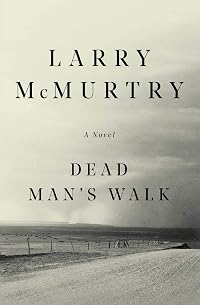
Dead Man's Walk is a powerful prequel to best-selling author Larry McMurty's Pulitzer Prize-winning Lonesome Dove. Gus McRae and Woodrow Call are still teenagers when they enlist as Texas Rangers. Soon they are roaming the untamed West, coming of age while they cheat death. Under the command of a former pirate, the young men ride for Santa Fe, where the mission is to forcibly take the city out of Mexican hands.Tags
Recommendations


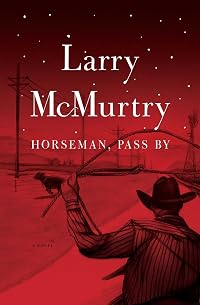

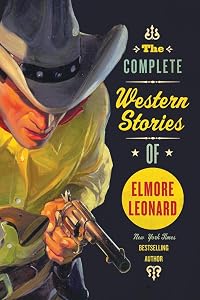

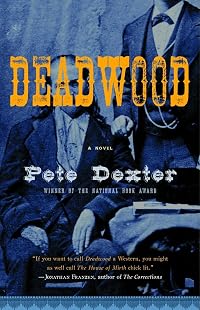

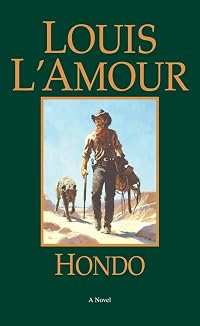


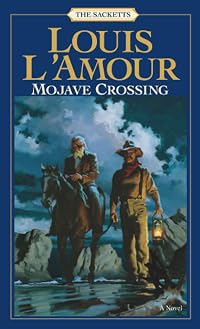
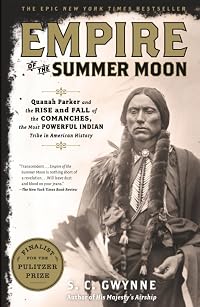
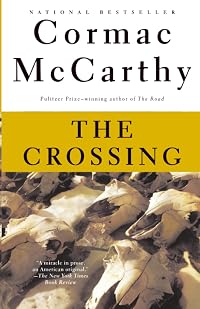
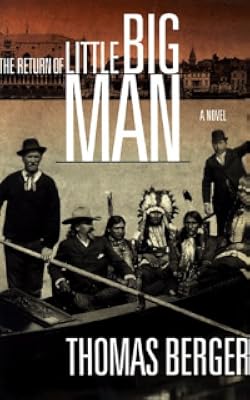
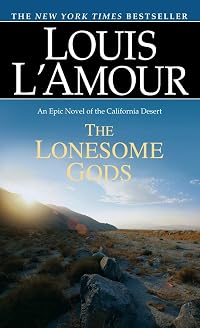





Member Recommendations
Member Reviews
The return of Augustus McCrae, a man who "believed he had been put on earth to enjoy himself" (pg. 35), is entirely welcome in this prequel to Lonesome Dove. However, neither Gus nor the reader ever has time to enjoy themselves in this third book of the series, which is so different in spirit and texture to its magical predecessor. Dead Man's Walk is an aimless procession of walking through deserts and prairies and mountain wildernesses, scavenging for food and starving and freezing and getting scalped. Just as our band finishes one such journey, they embark upon another one with all the same features, and then again, and again.
Unlike the two previous books, there are no alternate point-of-views or grandly interweaving storylines; show more instead, we only follow a young Gus and Woodrow Call (lacking the assurance they have in Lonesome Dove, and consequently a lot of their charm) on this interminable, aimless, featureless quest. It is a pointless adventure: repetitive, relentless and wearying, and it ends with silliness (a white mule prophecy?). Though the storytelling ability is still there, Larry McMurtry has had a complete creative failure in terms of reproducing – let alone building on – anything that was great about Lonesome Dove. show less
Unlike the two previous books, there are no alternate point-of-views or grandly interweaving storylines; show more instead, we only follow a young Gus and Woodrow Call (lacking the assurance they have in Lonesome Dove, and consequently a lot of their charm) on this interminable, aimless, featureless quest. It is a pointless adventure: repetitive, relentless and wearying, and it ends with silliness (a white mule prophecy?). Though the storytelling ability is still there, Larry McMurtry has had a complete creative failure in terms of reproducing – let alone building on – anything that was great about Lonesome Dove. show less
A worthy prequel to Lonesome Dove, although this was written by McMurtry ten years later, and it shows in the bleakness of the story. (Woodrow) Call and Gus (Augustus McCrae) are again the main characters, and the book tells the story of their early experiences together:
• Their first joining the Texas Rangers and heading from San Antonio to explore a stage route to El Paso, before being attacked by Comanches including Buffalo Hump. They return to San Antonio, reduced in number and more properly aware of the Indians’ superiority in the wilderness.
• Their second journey with the Rangers from Austin towards Santa Fe, except that they divert to track Buffalo Hump and a small band of Comanches.
• Their forced journey across the desert show more known as Dead Man’s Walk (providing the book’s title).
• Their return journey. Unfortunately this section felt rushed, in trying to bring the various storylines to a close, although providing an unforgettable scene.
I have missed more precise descriptions to avoid spoilers in the above summary.
This is a grim tale, and although episodic, I revelled in the imaginative storytelling, especially the haunting ending. show less
• Their first joining the Texas Rangers and heading from San Antonio to explore a stage route to El Paso, before being attacked by Comanches including Buffalo Hump. They return to San Antonio, reduced in number and more properly aware of the Indians’ superiority in the wilderness.
• Their second journey with the Rangers from Austin towards Santa Fe, except that they divert to track Buffalo Hump and a small band of Comanches.
• Their forced journey across the desert show more known as Dead Man’s Walk (providing the book’s title).
• Their return journey. Unfortunately this section felt rushed, in trying to bring the various storylines to a close, although providing an unforgettable scene.
I have missed more precise descriptions to avoid spoilers in the above summary.
This is a grim tale, and although episodic, I revelled in the imaginative storytelling, especially the haunting ending. show less
Like a discount Blood Meridian, except our heroes get soundly thrashed for 2/3rds of the book. Nothing really wrong with it, some good western bleakness, but nothing really special either. Also suffers from being a prequel which takes a lot of the tension out of the life or death struggle when you know who's got a date with destiny in an earlier (later) book.
As a prequel to Lonesome Dove, this is the reader's first introduction to Call and Gus and their budding friendship. Together they join an expedition from Texas to New Mexico. They, along with 200 other men, cross a landscape fraught with danger at every turn. Apache and Comanche natives that could steal a captain's horse or thirty without a sound; slit your throat without disturbing a single sleeping comrade. Mexican armies trying to defend "their land" from the Texans. Hunger and thirst at every mile. There are so many ways to die: falling over a cliff, drowning in a river, bleeding to death as a result of a scalping or throat cutting, arrow or lance through the heart, hanging, burning, whipping, suicide, starvation, freezing, show more exhaustion, thirst, firing squad, crushed by a horse, snake bite, spider bite, suicide, being run down by a buffalo, or gored by a bear. Things turn from bad to worse when the Rangers are captured and forced into a dead man's walk across the desert in leg irons. Be forewarned - only a few will survive.
Please keep in mind, Dead Man's Walk was published in 1995 and takes place years before one needed to be politically correct. In the spirit of authenticity of the era, one will have to endure racism and sexism on multiple levels. In contrast, McMurtry several times acknowledges native ownership of the land Call and Gus travel.
The opening line of Dead Man's Walk reminded me of a line from Josh Ritter's song "Myrna Loy" for she had a wolf pup at her heels and a snow white rabbit huddled in her arms. It wasn't a 200lb prostitute carrying a snapping turtle by the tail...but close. show less
Please keep in mind, Dead Man's Walk was published in 1995 and takes place years before one needed to be politically correct. In the spirit of authenticity of the era, one will have to endure racism and sexism on multiple levels. In contrast, McMurtry several times acknowledges native ownership of the land Call and Gus travel.
The opening line of Dead Man's Walk reminded me of a line from Josh Ritter's song "Myrna Loy" for she had a wolf pup at her heels and a snow white rabbit huddled in her arms. It wasn't a 200lb prostitute carrying a snapping turtle by the tail...but close. show less
Not quite Lonesome Dove, but still, it's Larry McMurtry! Lonesome Dove is one of my top ten books of all time, and I have finally been catching up reading the other books in this series. Dead Man's Walk is the 3rd book written, but is actually chronologically the 1st in this series. In it we see a young Augustus McCrae and a young Woodrow Call as they were in the mid 1800's. The time line for this book is approximately 1850 and Gus and Call are young Texas Rangers trying to make their way in the very wild west of Texas and Mexico. As with all McMurtry's books, the characters are key to the story. The big whore Matilda Roberts, the frightening Comanche chief Buffalo Hump and the famous Apache killer Gomez, along with many other show more unforgettable characters. The boys face all kinds of dangers on their trek to Santa Fe where there are rumours that there is gold to be picked up from the streets. They face dangers and extremely bad weather the whole way and are finally captured by a contingent from the Mexican army. This ragtag bunch of Rangers are forced to walk 200 miles through the most forbidding environment in the world with tornados, snow storms, no food or water and nasty Indians tailing them the whole way.This is the Old West like you've never read about. The best thing about this book is that it brought the backstory of Gus and Call to life for me. As if these characters aren't already like real life people in my imagination. Call and Gus are engraved on my brain. My only disappointment is that I have only one book left to read in this tetralogy and that is Comanche Moon. I am reading them in the order that they were written. I listened to this on audiobook, read by Jack Garrett, who does a remarkable job of bringing these characters to life. show less
Written in 1995, ten years after McMurtry’s huge success with Lonesome Dove, Dead Man’s Walk was billed as a prequel to that masterpiece. The timing was good. Hardcore fans of Lonesome Dove were already intimately familiar with the 1989 television movie of the same name, and they were probably watching episodes of the new miniseries by that name that ran in 1994 and 1995. So, most fans would find it hard to resist a new book that featured teenaged versions of Augustus McCrae and W.F. Call, two of the most beloved characters in the Western genre.
Gus and Call are literally two “young pups” when it comes to the ways of the world, although Gus is already showing his delight in keeping company with the nighttime ladies who so show more willingly offer him a good time – as long as he has the cash to pay for it. When the two young men, trying to survive Texas on their own, randomly meet, they quickly form a bond that will last them for the remainder of their lives.
At loose ends, and hoping for a little adventure, the two join up with a raggedy bunch of Texas Rangers on two different missions, both of which the boys will be lucky to survive. It is the second trek into the Texas desert, during which the Rangers must cross the “Dead Man’s Walk” from west Texas to New Mexico that gives the book its title. But, before the boys and their fellow survivors begin what seems like a certain death march, they must survive the attentions of the Comanche, Buffalo Hump, and the Apache, Gomez, two men who will haunt Gus and Call for rest of their lives.
Dead Man’s Walk pulls no punches when it comes to the raunchy lifestyle of the nineteenth century Texas Rangers or the torture-focused warfare the Apache and Comanche tribes waged against the white settlers encroaching upon their hunting grounds. To say that the book is not for the fainthearted reader is an understatement. What makes Dead Man’s Walk so intriguing, and atypical of the popular western genre, is that McMurtry does not take sides in the conflict between the settlers and the Indians. He presents the good and bad elements of both groups and leaves it up to the reader to decide the “rightness” or “wrongness” of the conflict.
In addition to meeting Gus, Call, Buffalo Hump and Gomez, the reader will delight in spotting the young Clara, as well. That she was “love at first sight for Gus” is certain; what was on flirtatious Clara’s mind remains to be determined.
Dead Man’s Walk is a great western adventure but, as usual with a McMurtry novel, character development does not take a back seat to plot. The book is filled with memorable secondary characters, good guys and villains alike, and its ending (although it might seem farfetched to some) works perfectly for those that grew up on old-fashioned television and movie Westerns.
This is good stuff.
Rated at: 5.0 show less
Gus and Call are literally two “young pups” when it comes to the ways of the world, although Gus is already showing his delight in keeping company with the nighttime ladies who so show more willingly offer him a good time – as long as he has the cash to pay for it. When the two young men, trying to survive Texas on their own, randomly meet, they quickly form a bond that will last them for the remainder of their lives.
At loose ends, and hoping for a little adventure, the two join up with a raggedy bunch of Texas Rangers on two different missions, both of which the boys will be lucky to survive. It is the second trek into the Texas desert, during which the Rangers must cross the “Dead Man’s Walk” from west Texas to New Mexico that gives the book its title. But, before the boys and their fellow survivors begin what seems like a certain death march, they must survive the attentions of the Comanche, Buffalo Hump, and the Apache, Gomez, two men who will haunt Gus and Call for rest of their lives.
Dead Man’s Walk pulls no punches when it comes to the raunchy lifestyle of the nineteenth century Texas Rangers or the torture-focused warfare the Apache and Comanche tribes waged against the white settlers encroaching upon their hunting grounds. To say that the book is not for the fainthearted reader is an understatement. What makes Dead Man’s Walk so intriguing, and atypical of the popular western genre, is that McMurtry does not take sides in the conflict between the settlers and the Indians. He presents the good and bad elements of both groups and leaves it up to the reader to decide the “rightness” or “wrongness” of the conflict.
In addition to meeting Gus, Call, Buffalo Hump and Gomez, the reader will delight in spotting the young Clara, as well. That she was “love at first sight for Gus” is certain; what was on flirtatious Clara’s mind remains to be determined.
Dead Man’s Walk is a great western adventure but, as usual with a McMurtry novel, character development does not take a back seat to plot. The book is filled with memorable secondary characters, good guys and villains alike, and its ending (although it might seem farfetched to some) works perfectly for those that grew up on old-fashioned television and movie Westerns.
This is good stuff.
Rated at: 5.0 show less
'Matilda Jane Roberts was naked as the air. Known throughout south Texas as the Great Western, she came walking up from the muddy Rio Grande holding a big snapping turtle by the tail.'
What great imagery to start off a novel with! After being less than thrilled with The Sisters Brothers, I was hungry for a more classic (in style and content, not age) western. Lonesome Dove has been on my TBR list for a while, so I decided to start off with the chronological first book in the series.
Gus McCrae and Woodrow Call fancy themselves rangers in 1840s Texas. Unfortunately for them, it’s a very dangerous time in that part of the country. Comanche Indians roam the land, and the troops are not at all equipped to handle their speed, stealth, and show more cunning. One in particular, Buffalo Hump, seems to have his eye on Gus and Call, and would like nothing more than to add their scalps to his belt.
The Rangers’ expeditions, particularly the one to Santa Fe where they plan to defeat the Mexicans, are (obviously to the reader) inept, ill-equipped, and led by men who have no idea what they are walking (usually literally) in to. Things go from bad to worse, and you start to wonder how the heck they are going to get out of the desert and back to safety.
McMurtry’s characters are colorful and varied, and you feel their fright, misery, and hopelessness. This book is generally believed to be not as good as Lonesome Dove, and if that’s the case, I know I have something really great to look forward to. show less
What great imagery to start off a novel with! After being less than thrilled with The Sisters Brothers, I was hungry for a more classic (in style and content, not age) western. Lonesome Dove has been on my TBR list for a while, so I decided to start off with the chronological first book in the series.
Gus McCrae and Woodrow Call fancy themselves rangers in 1840s Texas. Unfortunately for them, it’s a very dangerous time in that part of the country. Comanche Indians roam the land, and the troops are not at all equipped to handle their speed, stealth, and show more cunning. One in particular, Buffalo Hump, seems to have his eye on Gus and Call, and would like nothing more than to add their scalps to his belt.
The Rangers’ expeditions, particularly the one to Santa Fe where they plan to defeat the Mexicans, are (obviously to the reader) inept, ill-equipped, and led by men who have no idea what they are walking (usually literally) in to. Things go from bad to worse, and you start to wonder how the heck they are going to get out of the desert and back to safety.
McMurtry’s characters are colorful and varied, and you feel their fright, misery, and hopelessness. This book is generally believed to be not as good as Lonesome Dove, and if that’s the case, I know I have something really great to look forward to. show less
Members
- Recently Added By
Lists

Best Westerns
20 works; 6 members

Books Read in 2016
4,666 works; 199 members

Stephen King's 'On Writing' reading list
95 works; 4 members

2024. Nuestro año literario (Miguel Fuentes [Cosecha Roja])
10 works; 1 member

Top Five Books of 2025
954 works; 303 members
Author Information

96+ Works 43,441 Members
Larry McMurtry, winner of the Pulitzer Prize for Fiction, among other awards, is the author of twenty-four novels, two collections of essays, two memoirs, more than thirty screenplays, & an anthology of modern Western fiction. He lives in Archer City, Texas. (Publisher Provided) Novelist Larry McMurtry was born June 3, 1936 in Wichita Falls, show more Texas. He received a B.A. from North Texas State University in 1958, an M.A. from Rice University in 1960, and attended Stanford University. He married Josephine Ballard in 1959, divorced in 1966, and had one son, folksinger James McMurtry. Until the age of 22, McMurtry worked on his father's cattle ranch. When he was 25, he published his first novel, "Horseman, Pass By" (1961), which was turned into the Academy Award-winning movie Hud in 1962. "The Last Picture Show" (1966) was made into a screenplay with Peter Bogdanovich, and the 1971 movie was nominated for eight Oscars, including one for best screenplay adaptation. "Terms of Endearment" (1975) received little attention until the movie version won five Oscars, including Best Picture, in 1983. McMurtry's novel "Lonesome Dove" (1985) won the Pulitzer Prize in 1986 and the Spur Award and was followed by two popular TV miniseries. The other titles in the Lonesome Dove Series are "Streets of Laredo" (1993), "Dead Man's Walk" (1995), and "Comanche Moon" (1997). The other books in his Last Picture Show Trilogy are "Texasville" (1987) and "Duane's Depressed" (1999). McMurtry suffered a heart attack in 1991 and had quadruple-bypass surgery. Following that, he suffered from severe depression and it was during this time he wrote "Streets of Laredo," a dark sequel to "Lonesome Dove." His companion Diana Ossana, helping to pull him out of his depression, collaborated with him on "Pretty Boy Floyd" (1994) and "Zeke and Ned" (1997). He co-won the Best Screenplay Golden Globe and the Academy Award for Best Adapted Screenplay for Brokeback Mountain in 2006. He made The New York Times Best Seller List with his title's Custer and The Last Kind Words Saloon. McMurtry is considered one of the country's leading antiquarian book dealers. (Bowker Author Biography) show less
Some Editions
Awards and Honors
Awards
Distinctions
Series

Belongs to Publisher Series
Gallmeister, Totem (83)
Work Relationships
Common Knowledge
- Canonical title*
- La marche du mort
- Original title
- Dead man's walk
- Alternate titles*
- Lonesome dove. 1, Les origines : La marche du mort
- Original publication date
- 1995 (1e édition originale américaine) (1e édition originale américaine); 2016-06-02 (1e traduction et édition française, Gallmeister) (1e traduction et édition française, Gallmeister); 2017-06-01 (Réédition française, Totem, Gallmeister) (Réédition française, Totem, Gallmeister)
- People/Characters
- Woodrow Call; Augustus McCrae; Buffalo Hump; Zeke Moody; Matilda Jane Roberts; Colonel Caleb Cobb (show all 19); Clara Forsythe; Long Bill Coleman; Johnny Carthage; Bigfoot Wallace; Shadrach; Captain Salazar; Major Laroche; Kicking Wolf; Lady Lucinda Carey; Maggie Tilton; Major Randall Chevallie; James Kirker; John Glanton
- Important places
- Texas, USA
- Epigraph*
- /
- Dedication*
- Pour Sara Ossana
très belle
très claire
très fidèle - First words
- Matilda Jane Roberts was naked as the air.
- Last words
- (Click to show. Warning: May contain spoilers.)"So I can see if that girl in the general store still wants to marry me," Gus said.
- Original language*
- Anglais (Etats-Unis) (Etats-Unis)
*Some information comes from Common Knowledge in other languages. Click "Edit" for more information.
Classifications
Statistics
- Members
- 2,287
- Popularity
- 8,727
- Reviews
- 43
- Rating
- (3.74)
- Languages
- English, French, Spanish
- Media
- Paper, Audiobook, Ebook
- ISBNs
- 47
- UPCs
- 5
- ASINs
- 23