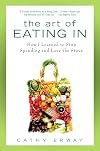
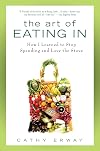
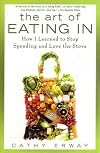
The Art of Eating In: How I Learned to Stop Spending and Love the Stove
by Cathy Erway
On This Page
Description
In the city where dining is a sport, a gourmand swears off restaurants (even takeout) for two years, rediscovering the economical, gastronomical joy of home cooking. Includes thirty original recipes.Tags
Recommendations










Member Recommendations
Member Reviews
I really enjoyed this book and wasn't sure what type of format it was going to take. Part memoir, part food diary, part cookbook, this book explored a two year span of not eating out without getting boring at all. I liked the parts about the supper clubs and dinner parties with hipsters, and some of the "characters" reminded me of people from Worcester. Ultimately, I can really relate to Cathy Erway. While I haven't gone on a complete restaurant fast, I decided to start home cooking almost predominantly at the beginning of 2009 and have come to enjoy the taste of home cooked meals almost more than restaurant cooked meals, on top of things like saving tons of money.
A young woman in NYC decides to conduct an experiment and doesn't eat out at restaurants for 2 years, with some minor exceptions. It is a fascinating read, even though sometimes she gives too much attention to her daily routine (do I really care about the boyfriend? Not sure). She didn't inspire me to stop spending so much money on eating out, though, and I have been trying to pay better attention to the quality of food I eat.
An enjoyable cooking memoir/narrative nonfiction mix. The author, a 25-year-old living in NYC, decides to quit eating out at restaurants and to blog about the effort. Her blog, www.noteatingoutinny.com, is evidently quite popular. She already knows how to cook quite well, so instead of a "I learned to cook" book, it's more a discourse on the social issues & history involved in eating out at restaurants, and then an exploration of the food movements current among twenty-somethings (and older), such as freeganism, foraging, supper clubs, and cook-offs. She also cooks for her boyfriend and a cadre of friends and narrates her bold improvisational cooking techniques, her new recipe inspirations, and her social experiences centered around show more food. There's an authentic international flavor to her recipes, too, influenced by her half Chinese heritage. An interesting book! I'll have to follow her blog now. show less
The title is a little open to misinterpretation. The author already enjoyed cooking and already knew how. A primary way she was able to avoid restaurants was by finding other ways to get out of the house for dinner -- ways that aren't available to people outside of major metro areas. It's an interesting look at what foodies in New York are up to, but for most of us it is all vicarious rather than ideas to try at home. Also, you get a lot of someone in their 20s figuring out life and I've read enough reviews of similar books to know that not everyone can tolerate reading that for very long. So you're warned.
She starts out with some great points on gender balances in cooking (the fact women spend less time in the kitchen does not give men show more an excuse to starve, especially when you consider the % of food network programming devoted to them) and maybe a few too many caveats about acknowledging her privilege. Some great turns of phrase, like scuttling her feet with joy while reading a good review. And she picked just the right quote to finally make me want to read Pollan's Omnivore's Dilemma. As the book goes on, however, the need for an editor grows. By the last chapter, we're getting entirely unnecessary, cloggy phrases like "It was past one o'clock in the morning, according to the numbers at the bottom right-hand corner of my computer screen..." And I expect (hope?) her to eventually regret how consistently harsh she was when discussing her dates.
The recipes could also have used some third party review. Many miss steps or are vague. There's no recipe index in the back and a disappointing number of tasty-sounding dishes don't get a recipe at all. (Still wondering about her father's pepperoni meatloaf. And her award-winning chocolate pain.)
An amazing number of cooking anecdotes -- especially once she's involved in supper clubs and competitions -- seem to be building to a disaster but then apparently everything's fine. It gets a little frustrating. I have no interest in schadenfreude; it's great that this stuff tended to go well, especially with such expensive ingredients. It's the implying otherwise that gets to be a cheat. And repetitive. There are other ways to make the tales interesting.
There's not a lot of research behind this, but it was a hobby project rather than a full-time job, so go figure. I was surprised she got through the chapter on frugalistas without mentioning Judith Levine, and I still have trouble believing all New York bakeries just throw away their bread each day, despite all the publicity of groups like Second Harvest.
I think you get enough food for thought to make it worthwhile, if occasionally frustrating. Like with any of these projects, even when you disagree with the directions she takes (I don't think convenience store food is less of a cheat than pre-fab pizza by the slice), you're still stopping to consider the issues and how they should effect your own behavior. The discussion of all the packaging waste involved with takeout and with processed foods is useful to anyone anywhere, for example. It's not just about the money spent. Little attention is given to the health angle of eating out vs eating in but that's one area so thoroughly covered elsewhere these days.
As a bonus, there are adorable illustrations that reminded me a lot of the ones Hilary Knight did for Peg Bracken's books. show less
She starts out with some great points on gender balances in cooking (the fact women spend less time in the kitchen does not give men show more an excuse to starve, especially when you consider the % of food network programming devoted to them) and maybe a few too many caveats about acknowledging her privilege. Some great turns of phrase, like scuttling her feet with joy while reading a good review. And she picked just the right quote to finally make me want to read Pollan's Omnivore's Dilemma. As the book goes on, however, the need for an editor grows. By the last chapter, we're getting entirely unnecessary, cloggy phrases like "It was past one o'clock in the morning, according to the numbers at the bottom right-hand corner of my computer screen..." And I expect (hope?) her to eventually regret how consistently harsh she was when discussing her dates.
The recipes could also have used some third party review. Many miss steps or are vague. There's no recipe index in the back and a disappointing number of tasty-sounding dishes don't get a recipe at all. (Still wondering about her father's pepperoni meatloaf. And her award-winning chocolate pain.)
An amazing number of cooking anecdotes -- especially once she's involved in supper clubs and competitions -- seem to be building to a disaster but then apparently everything's fine. It gets a little frustrating. I have no interest in schadenfreude; it's great that this stuff tended to go well, especially with such expensive ingredients. It's the implying otherwise that gets to be a cheat. And repetitive. There are other ways to make the tales interesting.
There's not a lot of research behind this, but it was a hobby project rather than a full-time job, so go figure. I was surprised she got through the chapter on frugalistas without mentioning Judith Levine, and I still have trouble believing all New York bakeries just throw away their bread each day, despite all the publicity of groups like Second Harvest.
I think you get enough food for thought to make it worthwhile, if occasionally frustrating. Like with any of these projects, even when you disagree with the directions she takes (I don't think convenience store food is less of a cheat than pre-fab pizza by the slice), you're still stopping to consider the issues and how they should effect your own behavior. The discussion of all the packaging waste involved with takeout and with processed foods is useful to anyone anywhere, for example. It's not just about the money spent. Little attention is given to the health angle of eating out vs eating in but that's one area so thoroughly covered elsewhere these days.
As a bonus, there are adorable illustrations that reminded me a lot of the ones Hilary Knight did for Peg Bracken's books. show less
Most people in New York eat out all the time. I mean ALL THE TIME....this woman decides to not eat out for a year. Breakfast, lunch, dinner. If she gets a taste for something, she makes it. But it's not just cooking for herself, this is no Julie and Julia...she experiences supper clubs and freeganism. Cooking galore.
I really enjoyed this book.
I really enjoyed this book.
Quite enjoyable. For me, it was about 50 pages too long, and could have used another edit - there were so many characters who were introduced one time and never followed up on, that it got a little confusing. Overall, though, really interesting.
In the end, I read the entire thing, but the whole time, I was kicking myself. I found Cathy, as a narrator, to be a little unlikeable; her experiences "not eating out" are so far from most of our lives, it makes it hard to connect. Most of us can't just throw something together for dinner at 10pm -- we have families, or need recipes, or can't run out to a fantastic NYC grocery. We also don't have friends who run supper clubs, or can get us into trendy cook-offs...
I did save a couple of recipes.
I did save a couple of recipes.
Members
- Recently Added By
Lists

Piglet Tournament of Cookbooks
160 works; 1 member

Penguin Random House
458 works; 4 members
Author Information

4 Works 317 Members
Common Knowledge
- Original publication date
- 2010
- Epigraph
- "A great deal has been written about the amenities of dining, but few writers have seen fit to comment on the very important modern problem of eating in a public place."
- M.F.K. Fisher, "D is for Dining Out," An Alpha... (show all)bet for Gourmands - Dedication
- To my parents, for teaching me to cook. And to my brother, Chris, for helping me do literally everything else.
- First words
- I first became aware of Cathy Erway two years ago.
- Last words
- (Click to show. Warning: May contain spoilers.)Thanks so much for reading.
- Blurbers
- Powell, Julie; Melucci, Giulia; Lauer, Heather; Quinn, Lucinda Scala
Classifications
- Genres
- Nonfiction, Food & Cooking, General Nonfiction, Biography & Memoir
- DDC/MDS
- 641.5973 — Applied science & technology Home economics & family management Food, Cooking & Recipes / Meals, Picnics Cooking; cookbooks Ethnic Cookbooks North America United States
- LCC
- TX715 .E7155 — Technology Home economics Home economics Cooking
- BISAC
Statistics
- Members
- 215
- Popularity
- 152,002
- Reviews
- 9
- Rating
- (3.38)
- Languages
- English, French
- Media
- Paper, Ebook
- ISBNs
- 5
- ASINs
- 3