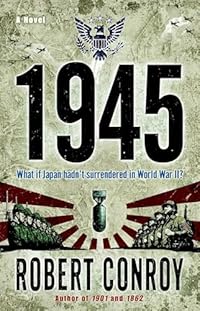
1945
by Robert Conroy
On This Page
Description
Fiction. Literature. Thriller. Historical Fiction. HTML:America has dropped atomic bombs on Hiroshima and Nagasaki.But Japan has only begun to fight. . . .
In 1945, history has reached a turning point. A terrible new weapon has been unleashed. Japan has no choice but to surrender. But instead, the unthinkable occurs. With their nation burned and shattered, Japanese fanatics set in motion a horrifying endgame–their aim: to take America down with them.
In Robert Conroy’s brilliantly show more imagined epic tale of World War II, Emperor Hirohito’s capitulation is hijacked by extremists and a weary United States is forced to invade Japan as a last step in a war that has already cost so many lives. As the Japanese lash out with tactics that no one has ever faced before–from POWs used as human shields to a rain of kamikaze attacks that take out the highest-value target in the Pacific command–the invasion’s success is suddenly in doubt. As America’s streets erupt in rioting, history will turn on the acts of a few key players from the fiery front lines to the halls of Washington to the shadowy realm of espionage, while a mortally wounded enemy becomes the greatest danger of all.
Praise for Robert Conroy’s 1901
“Likely to please both military history and alternative history buffs . . . The writing . . . keeps us turning the pages.”
–Booklist
“Fascinating . . . skillfully crafted.”
–Oakland Press
“Packed with action.”
–Detroit News. show less
Tags
Recommendations
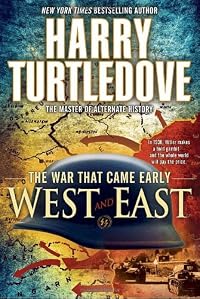
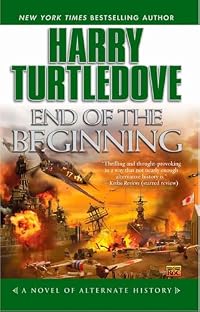
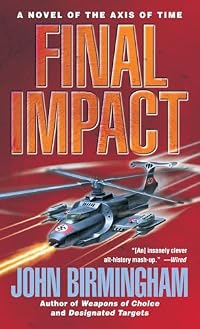
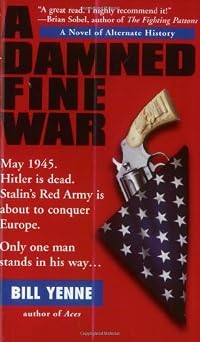
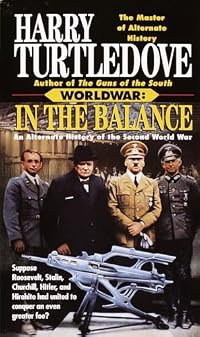

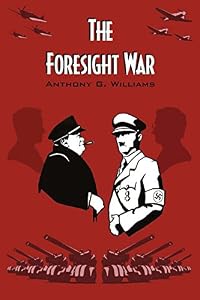
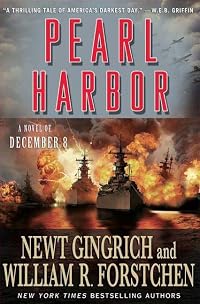
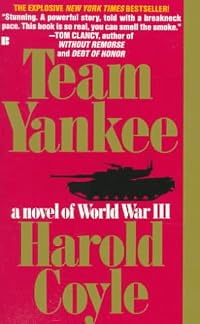

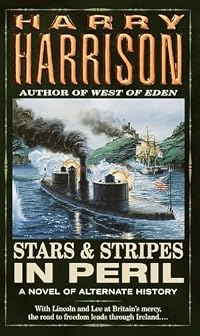
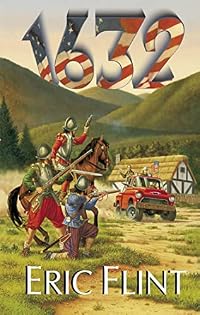
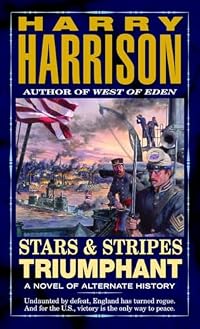
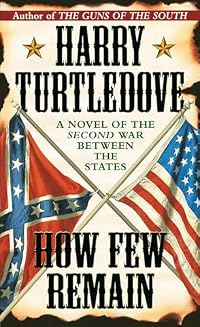


Member Reviews
Robert Conroy premises his most recent alternate history novel, about an American invasion of Japan during World War II, on the success of a real-life group of hard-core militarists who attempted to thwart Japan’s surrender in the Second World War. With the emperor now in custody and the impending surrender suddenly called off, American forces now have little option but to carry out Operation Downfall, the invasion of the southern Japanese island of Kyushu. As is typical of many alternate history novels, Conroy’s narrative unfolds through the experiences of a mixture of historical and devised characters, and it is through their eyes that we witness the consequences of the prolonged scenario.
Conroy’s scenario benefits from a degree show more of verisimilitude lacking from the similarly premised but much inferior novel [b:MacArthur's War: A Novel of the Invasion of Japan|582588|MacArthur's War A Novel of the Invasion of Japan|Douglas Niles|https://images.gr-assets.com/books/1400013411s/582588.jpg|569458]. His writing is also much improved from his imaginatively-plotted but poorly characterized first novel [b:1901|661944|1901|Robert Conroy|https://images.gr-assets.com/books/1320406022s/661944.jpg|648014], as his characters and their attitudes seem more plausible for their historical setting than they did in his earlier work. While not as evocative as David Westheimer’s classic [b:Death is Lighter than a Feather|278753|Death is Lighter than a Feather|David Westheimer|https://images.gr-assets.com/books/1386923848s/278753.jpg|270367], it is nonetheless an enjoyable novel of the genre, one that entertains its readers with an engaging picture of “what might have been.” show less
Conroy’s scenario benefits from a degree show more of verisimilitude lacking from the similarly premised but much inferior novel [b:MacArthur's War: A Novel of the Invasion of Japan|582588|MacArthur's War A Novel of the Invasion of Japan|Douglas Niles|https://images.gr-assets.com/books/1400013411s/582588.jpg|569458]. His writing is also much improved from his imaginatively-plotted but poorly characterized first novel [b:1901|661944|1901|Robert Conroy|https://images.gr-assets.com/books/1320406022s/661944.jpg|648014], as his characters and their attitudes seem more plausible for their historical setting than they did in his earlier work. While not as evocative as David Westheimer’s classic [b:Death is Lighter than a Feather|278753|Death is Lighter than a Feather|David Westheimer|https://images.gr-assets.com/books/1386923848s/278753.jpg|270367], it is nonetheless an enjoyable novel of the genre, one that entertains its readers with an engaging picture of “what might have been.” show less
Excellent alternate history novel! Robert Conroy created a (IMO) very plausible story of what events might have been if the Japanese had not surrendered after the dropping of the atomic bombs. I also like the fact that he uses major players like Truman and Marshall, etc. as characters in his story. I'm off to read 1901 and 1862 in the very near future.
A little bogged down. Not bad. Tho, not so interested in the War in the Pacific.
Ratings
Members
- Recently Added By
Published Reviews
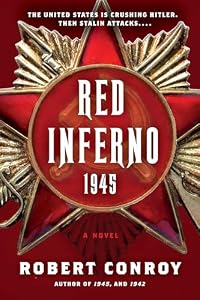
Conroy’s latest novel is substantially his best. It supposes that in 1945, President Truman decided to send American troops across the Elbe to claim the American share of Berlin. That catches Stalin in a paranoiac mood, and the Red Army attacks the force headed to Berlin. Despite a Soviet leak, the Americans are surprised and destroyed, except for a small force besieged in Potsdam on the show more outskirts of Berlin. Matters go from bad to worse as Stalin decides to take the opportunity to cross the Elbe and head west. The Western Allies are forced into a separate peace and later an alliance with a semi-rehabilitated Germany but eventually escalate the conflict by striking at Russia’s strained fuel resources. Add the prospective disintegration of the Western Alliance over the prolongation of the war (Britain has a strong and violent peace movement, De Gaulle plays hardball) and J. Edgar Hoover displaying a paranoia that rivals Stalin’s, and every aspect of the scenario becomes engrossing and grimly plausible. Even the book’s two well-realized romances add interest to the proceedings, and the suspense holds up literally to the last page. If Conroy’s enthusiasm for alternate history leads to a sequel to this one, it will continue a story comparable to the best by the subgenre’s masters. show less
added by cmwilson101
WWII alternate historian Conroy (1945) sets this tale largely in Berlin as it prepares for division among the four Allied powers in accordance with the Yalta agreements. President Truman doesn't trust Stalin and makes the controversial decision to move his troops across the Elbe River toward Berlin in an attempt to lessen Stalin's growing influence in Europe. The move ignites smoldering show more tensions between Russia and the States, and Stalin's enormous Red Army attacks its former allies, extending the war and threatening the world. An ensemble cast of fictional characters (an American soldier, a German refugee, a professor of Russian history turned secret agent, etc.) and historical figures powers the meticulously researched story line with diverse accounts of the horrors of war, making this an appealing read for fans of history and alternate history alike. show less
added by cmwilson101
Author Information

19+ Works 1,682 Members
Some Editions
Awards and Honors
Awards
Common Knowledge
- Canonical title
- 1945
- Original publication date
- 2007
- First words
- By the summer of 1945, the Japanese were thoroughly and utterly defeated. Their cities were rubble, their navy nonexistent, their economy destroyed, and their people near starvation. By all rights, they should have surrendere... (show all)d. -Introduction
The Son of Heaven sat cross-legged and stoic on a simple bamboo mat that covered the stark concrete floor of the shelter. -Prologue
The muffled sounds of the nearby explosions cut through his sleep-fog and Lt. Paul Morrell leaped from his cot. -Chapter 1, Germany - Canonical DDC/MDS
- 813.54
- Canonical LCC
- PS3553
- Disambiguation notice
- Despite both books including 1945 in their titles, the book Red Inferno: 1945 and the book ... (show all)" rel="nofollow" target="_new">1945 are not the same books/stories/works.
1945 involves an alternative history book that focuses on the Japanese, and
Red Inferno: 1945 involves an alternative history book that focuses on the Germans.
Classifications
- Genres
- Fiction and Literature, General Fiction, Science Fiction, Historical Fiction
- DDC/MDS
- 813.54 — Literature & rhetoric American literature in English American fiction in English 1900-1999 1945-1999
- LCC
- PS3553 — Language and Literature American literature American literature Individual authors 1961-
- BISAC
Statistics
- Members
- 241
- Popularity
- 134,271
- Reviews
- 3
- Rating
- (3.61)
- Languages
- English
- Media
- Paper, Audiobook, Ebook
- ISBNs
- 4
- ASINs
- 2