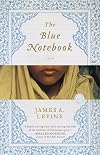
The Blue Notebook
by James Levine M.D.
On This Page
Description
A haunting yet astonishingly hopeful story of a young Indian prostitute who uses writing and imagination to transcend her reality. An unforgettable, deeply affecting tribute to the powers of imagination and the resilience of childhood, THE BLUE NOTEBOOK tells the story of Batuk, a precocious 15-year-old girl from rural India who was sold into sexual slavery by her father when she was nine.Tags
Recommendations







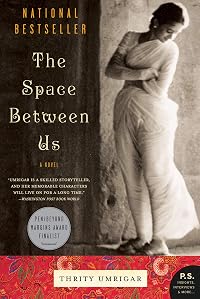



















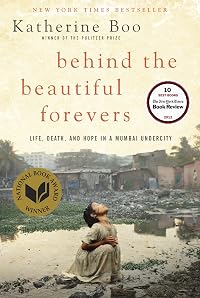
















Member Recommendations

labfs39 Although The Blue Notebook is set in the streets of Mumbai and Lovely Green Eyes is set in a Nazi brothel, the horror of child prostitution is unflinchingly portrayed without compromising the beauty and yet-enduring innocence of the children.
thekoolaidmom Similar subject matter, pov and the idea that education is the path to freedom
Member Reviews
Despite a lifetime of reading, a book has never had the power to keep me from falling asleep, but last night, a novel kept me awake all night. I was reading an advance copy of The Blue Notebook by James Levine, M.D. and literally couldn't put the book down until I finished it around 3:00 a.m. Even at that hour I didn't dare to go to sleep until I'd read a few pages in a "quieter, gentler" novel so that I wouldn't dream about The Blue Notebook.
The reality of child prostitution in Mumbai which is the basis for this compelling, eloquent novel, is worse than any nightmare; however, the story develops with a balance of frankness and artistic imagination which makes it possible to stick with the characters in spite of a sickening feeling in show more the pit of one's stomach.
How can childlike innocence coexist with the spiritual and physical pollution of child prostitution? How can we accept the literary conceit that a fifteen-year-old female Indian prostitute can write and keep a hidden diary? How can her voice sustain and support the entire novel? Usually, in works of this type, there will be a major collapse somewhere in the composition which tests our patience too much. In my opinion, this did not occur in The Blue Notebook, making this the most extraordinary novel I've read in many years.
According to his publisher, author James A. Levine, a professor of medicine at the Mayo Clinic, was doing research, "interviewing homeless kids on a famous street of prostitution in Mumbai known as the Street of Cages. A young woman writing in a notebook outside of her cage caught his attention, and he interviewed her at length. The powerful image of a young prostitute engaged in the act of writing haunted him," and this novel is the result.
Filled with skepticism, I began reading, but already by page three I was gripped by the story and enchanted by the voice of little "Batuk." By page six I had developed strong feelings about Batuk's best friend, Puneet (the only boy in the prostitution house) and their "keeper" (Mamaki). Throughout the book, skillful flashbacks, plot movement, and even minor characters converged to make me care very much about what would happen next and how Batuk would fare. Descriptions of physical cruelty, perhaps because they are written by a medical professional, are not sensationalized, which builds confidence in the accuracy which informs the entire novel.
One of the most engaging aspects of the prose is Batuk's description of her world in "her own words", capturing glimpses of nature's beauty (sunrise, dusk, water), odors, animistic spirits of such things as trees. There is her own story-within-a-story ("The Grain of Rice") and her father's story to her about "the silver-eyed leopard," plus some striking poetry, which convey something of the cultural and literary surroundings of Mumbai. The possibility of beauty makes Batuk's horrible reality all the more poignant.
These literary enhancements are so well integrated that they do not slow down the story. Their timing also gives one a chance to draw a deep breath after reading tensely through the ordeals of Batuk—sold to an 'uncle' by the father whom she believes (and continues to believe) adores her, raped by another 'uncle', broken by a cruel gang in an orphanage, enslaved in the brothel…these events are just the beginning, and I won't spoil the story by adding more to the list.
Obviously, this is not a novel for the faint-of-heart or for young children, but it is an important work to be explored by thinking adults. I believe that Dr. Levine wrote the book to raise awareness and a sense of responsibility among readers who would take a serious look at the efforts of the International Center for Missing and Exploited Children (www.icmec.org) and the National Center for Missing and Exploited Children (www.missingkids.com). Furthermore, all of the author's U.S. royalties will be donated to these organizations. Here's one book you can buy without guilt.
The Blue Notebook illustrates the depths of human cruelty, but the spirit of its heroine offers a glimmer of hope. Mumbai is a complex, multi-cultural, multi-faceted city of extremes from which much interesting writing has emerged recently for western readers. Some recommendable books that help round out this fascinating place include Bombay Time by Thrity Umrigar, Maximum City: Bombay Lost and Found by Suketu Mehta, Q & A (or Slumdog Millionaire) by Vikas Swarup, Love and Longing in Bombay by Vikram Chandra, and Shantaram by Gregory David Roberts, to name but a few.
Thank you, LT Early Reviewers and Spiegel and Grau, Publishers, for this opportunity to read and review this exceptional novel. show less
The reality of child prostitution in Mumbai which is the basis for this compelling, eloquent novel, is worse than any nightmare; however, the story develops with a balance of frankness and artistic imagination which makes it possible to stick with the characters in spite of a sickening feeling in show more the pit of one's stomach.
How can childlike innocence coexist with the spiritual and physical pollution of child prostitution? How can we accept the literary conceit that a fifteen-year-old female Indian prostitute can write and keep a hidden diary? How can her voice sustain and support the entire novel? Usually, in works of this type, there will be a major collapse somewhere in the composition which tests our patience too much. In my opinion, this did not occur in The Blue Notebook, making this the most extraordinary novel I've read in many years.
According to his publisher, author James A. Levine, a professor of medicine at the Mayo Clinic, was doing research, "interviewing homeless kids on a famous street of prostitution in Mumbai known as the Street of Cages. A young woman writing in a notebook outside of her cage caught his attention, and he interviewed her at length. The powerful image of a young prostitute engaged in the act of writing haunted him," and this novel is the result.
Filled with skepticism, I began reading, but already by page three I was gripped by the story and enchanted by the voice of little "Batuk." By page six I had developed strong feelings about Batuk's best friend, Puneet (the only boy in the prostitution house) and their "keeper" (Mamaki). Throughout the book, skillful flashbacks, plot movement, and even minor characters converged to make me care very much about what would happen next and how Batuk would fare. Descriptions of physical cruelty, perhaps because they are written by a medical professional, are not sensationalized, which builds confidence in the accuracy which informs the entire novel.
One of the most engaging aspects of the prose is Batuk's description of her world in "her own words", capturing glimpses of nature's beauty (sunrise, dusk, water), odors, animistic spirits of such things as trees. There is her own story-within-a-story ("The Grain of Rice") and her father's story to her about "the silver-eyed leopard," plus some striking poetry, which convey something of the cultural and literary surroundings of Mumbai. The possibility of beauty makes Batuk's horrible reality all the more poignant.
These literary enhancements are so well integrated that they do not slow down the story. Their timing also gives one a chance to draw a deep breath after reading tensely through the ordeals of Batuk—sold to an 'uncle' by the father whom she believes (and continues to believe) adores her, raped by another 'uncle', broken by a cruel gang in an orphanage, enslaved in the brothel…these events are just the beginning, and I won't spoil the story by adding more to the list.
Obviously, this is not a novel for the faint-of-heart or for young children, but it is an important work to be explored by thinking adults. I believe that Dr. Levine wrote the book to raise awareness and a sense of responsibility among readers who would take a serious look at the efforts of the International Center for Missing and Exploited Children (www.icmec.org) and the National Center for Missing and Exploited Children (www.missingkids.com). Furthermore, all of the author's U.S. royalties will be donated to these organizations. Here's one book you can buy without guilt.
The Blue Notebook illustrates the depths of human cruelty, but the spirit of its heroine offers a glimmer of hope. Mumbai is a complex, multi-cultural, multi-faceted city of extremes from which much interesting writing has emerged recently for western readers. Some recommendable books that help round out this fascinating place include Bombay Time by Thrity Umrigar, Maximum City: Bombay Lost and Found by Suketu Mehta, Q & A (or Slumdog Millionaire) by Vikas Swarup, Love and Longing in Bombay by Vikram Chandra, and Shantaram by Gregory David Roberts, to name but a few.
Thank you, LT Early Reviewers and Spiegel and Grau, Publishers, for this opportunity to read and review this exceptional novel. show less
 This review was written for LibraryThing Early Reviewers.
This book does exactly what the author must have intended: it alerts its audience to a shocking world that we generally know little of, the world of child prostitution. The novel is purportedly "written" by 15-year old Batuk, who was sold into prostitution by her father at the age of nine. The one delight in her life is her ability to read and write, which she learned as a TB patient at a missionary hospital. Batuk records the memories of her life back home in an Indian farming village as well as the horrific details of her life over the past six years. Levine's story is the story of many children with whom he has come in contact in the course of his work, and it is particularly affecting because we see what promise this child, in a show more different environment, might have fulfilled. The voice he creates for Batuk is believable, never self-pitying, always pragmatic. And that makes the novel all the more hauntingly sad. I found myself unable to put this one down and unable to forget it once I had finished it. show less
This review was written for LibraryThing Early Reviewers.The Blue Notebook was one of the most disturbing books I've ever read. Written by Dr. James A. Levine, this book follows the experiences of a young nine year old girl over a period of six years, during which time she is a sexual slave, serving up to ten men per day in the red light district of Mumbai. The underbelly of the rich, the poor, and those who serve them is brought to light through Batuk's interactions with a slew of disreputable individuals.
Author James A. Levine somehow manages very well to give a voice to the central character, Batuk, as she deals with her thoughts and one traumatic experience after another. Her innocence is stolen in one frightening moment, and from that point on her resilience to the world hardens. She show more likens herself to a clay bowl that can be anything, but once hardened becomes more fragile and can break.
This book leaves more questions than answers, but questions worth exploring. I'm left wondering if her father understood what he was doing when he sold her to Mr. Gahil. What precisely put her father in the position of needing to sell his daughter? Our only indication is that he says he is sorry and that he has lost everything as he parts with Batuk. Apparently they did not lose "everything" since he still had cash to bring her to Mumbai from his rural farming community and throw her a feast before her departure. There are so many more questions that remain unanswered but would be excellent to discuss in a book club.
The quality of the writing is as near flawless as I've read in a long time. The scenery is brought to life through rich but simple details. Batuk's state of mind is easily understood and explained as she tells her story in her journal.
Many people who otherwise would be too sickened to finish this book might be able to handle this short two hundred page book. Scenes of child rape occur frequently along with an even possibly more gruesome scene near the end. Wrapping up the story, Batuk writes a beautiful story of the Silver-eyed Leopard, taking up approximately ten pages. Even though the story is sad, it was the one bright spot in the book because it was a fairy tale told to her by her father.
As the problems that face the poor in India continue to swell, I can't imagine the issue of child sexual slavery and human trafficking getting better anytime soon. However, the author is donating 100% of the US proceeds from this novel to the International and National Centers for Missing and Exploited Children (http://www.icmec.org). My hope is that more children can be saved from this life.
Do I recommend this book? Yes, if you feel you can handle the material. The purchase goes for a good cause and your awareness of this ongoing situation will be heightened. The fact is, if every time you hear gruesome words like "child rape" you close your eyes and your ears, how can you possibly know what is going on? Dr. James A. Levine has made it easy for us by interviewing and writing about a real live child sexual slave in Mumbai, whom this story is loosely based upon. He's written the story for us and he giving the profits away to help alleviate this problem. As the world shines more light on this issue, the rats who rule this underworld will find less places to hide. Hopefully, with time, they will become extinct. show less
Author James A. Levine somehow manages very well to give a voice to the central character, Batuk, as she deals with her thoughts and one traumatic experience after another. Her innocence is stolen in one frightening moment, and from that point on her resilience to the world hardens. She show more likens herself to a clay bowl that can be anything, but once hardened becomes more fragile and can break.
This book leaves more questions than answers, but questions worth exploring. I'm left wondering if her father understood what he was doing when he sold her to Mr. Gahil. What precisely put her father in the position of needing to sell his daughter? Our only indication is that he says he is sorry and that he has lost everything as he parts with Batuk. Apparently they did not lose "everything" since he still had cash to bring her to Mumbai from his rural farming community and throw her a feast before her departure. There are so many more questions that remain unanswered but would be excellent to discuss in a book club.
The quality of the writing is as near flawless as I've read in a long time. The scenery is brought to life through rich but simple details. Batuk's state of mind is easily understood and explained as she tells her story in her journal.
Many people who otherwise would be too sickened to finish this book might be able to handle this short two hundred page book. Scenes of child rape occur frequently along with an even possibly more gruesome scene near the end. Wrapping up the story, Batuk writes a beautiful story of the Silver-eyed Leopard, taking up approximately ten pages. Even though the story is sad, it was the one bright spot in the book because it was a fairy tale told to her by her father.
As the problems that face the poor in India continue to swell, I can't imagine the issue of child sexual slavery and human trafficking getting better anytime soon. However, the author is donating 100% of the US proceeds from this novel to the International and National Centers for Missing and Exploited Children (http://www.icmec.org). My hope is that more children can be saved from this life.
Do I recommend this book? Yes, if you feel you can handle the material. The purchase goes for a good cause and your awareness of this ongoing situation will be heightened. The fact is, if every time you hear gruesome words like "child rape" you close your eyes and your ears, how can you possibly know what is going on? Dr. James A. Levine has made it easy for us by interviewing and writing about a real live child sexual slave in Mumbai, whom this story is loosely based upon. He's written the story for us and he giving the profits away to help alleviate this problem. As the world shines more light on this issue, the rats who rule this underworld will find less places to hide. Hopefully, with time, they will become extinct. show less
The Blue Notebook is not a gentle or even satisfying read, this book will disgust, horrify and leave you feeling sad and haunted. Yet, this is a book that many should read. In the back of my mind I know about the cheapness of life in many countries around the world, but to be drawn into the story of one small girl sold by her father into prostitution at age 9, repeatedly raped and treated as something less than human was still very shocking to read. The blue notebook of the title is the diary of this young girl, Batuk, and as she writes of her experiences and thoughts we are drawn into a world that no child should experience. The fact that the author is actually a middle aged American man is astounding as he captures the spirit of this show more 15 year old Indian female prostitute fully.
What is different about Batuk is that she had been gifted with the ability to read and write, her blue notebook is her escape, her place of refuge, and she learns how to hide her writing from prying eyes. It is through her writing that she eventually finds peace. Knowing that the author is exposing a reality that exists, I knew better than to expect a happy ending as this is a life that once children are thrown into, is near impossible to get out of.
Child exploitation is a global issue and it takes books like this one to shine a light into the darkness. One more observation, the author, James Levine has donated all his U.S. proceeds from this book to a child help organization. He was inspired to write the story after interviewing homeless children in Mumbai and saw one young prostitute writing in a notebook as she sat outside her cage waiting for the next customer. show less
What is different about Batuk is that she had been gifted with the ability to read and write, her blue notebook is her escape, her place of refuge, and she learns how to hide her writing from prying eyes. It is through her writing that she eventually finds peace. Knowing that the author is exposing a reality that exists, I knew better than to expect a happy ending as this is a life that once children are thrown into, is near impossible to get out of.
Child exploitation is a global issue and it takes books like this one to shine a light into the darkness. One more observation, the author, James Levine has donated all his U.S. proceeds from this book to a child help organization. He was inspired to write the story after interviewing homeless children in Mumbai and saw one young prostitute writing in a notebook as she sat outside her cage waiting for the next customer. show less
James Levine's first novel is a study in contrasts, beginning with the author himself. A doctor and professor at the Mayo Clinic with more than a hundred scientific articles to his name, Levine has written a novel that is filled with snippets of poetry, childlike descriptions of life, and philosophical asides. A middle-aged man, Levine's book is written from the perspective of a fifteen-year-old girl: a daunting task for any novelist. And to challenge himself further, that girl is not a British ex-pat or Minnesota resident like himself, but a child prostitute living in a cage on the streets of Mumbai. How, one might ask, did he do it, and why? Part of the answer lies in his work with homeless children, part with his decision to donate show more all his profits from US sales of the book to the International and National Centers for Missing and Exploited Children.
The book itself is also full of contradictions and oppositions: youth and the world's oldest profession; a cage and a moving river of humanity; innocence and violence; beauty and the annihilation of life. Symbolic of these dichotomies is the majestic old tree that is rooted beside a bus stop, waiting for a bus it can never ride. All this was created for you, the tree tells the girl, and yet, in the end, it is she who is the creator. The only one with the power of words, words that transmute her existence, she is powerful, and perhaps, through us, her words have the power to change the reality of child prostitution. show less
The book itself is also full of contradictions and oppositions: youth and the world's oldest profession; a cage and a moving river of humanity; innocence and violence; beauty and the annihilation of life. Symbolic of these dichotomies is the majestic old tree that is rooted beside a bus stop, waiting for a bus it can never ride. All this was created for you, the tree tells the girl, and yet, in the end, it is she who is the creator. The only one with the power of words, words that transmute her existence, she is powerful, and perhaps, through us, her words have the power to change the reality of child prostitution. show less
This review was written for LibraryThing Early Reviewers.After I'd read about 50 pages of The Blue Notebook I found myself avoiding reading, which is something that rarely happens to me. The subject matter is just very unsettling, especially for a parent with children in their teens. However, the lovely prose drew me back, and, eventually, my affection for Batuk kept me engaged right to the bitter end. In fact, I stayed up late to reach the end last night. This book is not for everyone, obviously. The subject matter of child prostitution is horrendous. The graphic details of Batuk's professional encounters are less erotic and more nauseating than one might expect.
I applaud the author for tackling such an unpleasant subject with such eloquence and hauntingly beautiful prose. I look forward to show more more from Dr. Levine, and I hope he finds enough free time from his day job at the Mayo Clinic to continue his writing career. show less
I applaud the author for tackling such an unpleasant subject with such eloquence and hauntingly beautiful prose. I look forward to show more more from Dr. Levine, and I hope he finds enough free time from his day job at the Mayo Clinic to continue his writing career. show less
This review was written for LibraryThing Early Reviewers.Sometimes you find a book that you know tackles an important, scary, or terrible issue but it's hard to make yourself face reading it because you know it's going to rip your heart out and make you face the evil of the world. James Levine's The Blue Notebook is one of those books. Tackling the horrific topic of child prostitution and abuse in India, this novel is difficult to read, graphic, and unfortunately more real than not.
Narrator Batuk is take from her small village to Mumbai and sold into prostitution by her father when she is just nine years old. She lives in a tiny "nest" on the street and she must solicit business from here, retreating behind a curtain to service her customers, or as she calls it "making sweet-cake," in order show more to ensure the continued happiness and wealth of her keepers, a large woman named Mamaki Briila and the more distant Master Gahil. Batuk details her story and experiences in a small blue notebook she keeps hidden and with a stub of a pencil inadvertantly dropped one day by Mamaki Briila. She tells of her early life at home as the apple of her father's eye and how unexpected it was for her, seemingly secure in her father's love, to be so callously sold into prostitution. She talks about her unspoiled beauty and the sale of her virginity to the highest bidder. She writes of her experiences in various underground places designed to make her compliant, sexually skilled, and appreciative of the tiny nest she calls her own when the novel opens. She captures her fellow sex workers, especially her best friend Puneet, a beautiful boy who is eventually castrated to preserve his youthful beauty. And she writes of learning to be exceptional at her job as a way to minimize how much she must do: the better she performs sexual acts, the sooner the men who visit her will be satisfied, pay, and leave.
There is a detached resignation to the writing here with Batuk telling her tale matter of factly and from a remove, even as she lives with the horror daily. And while the distance might be necessary so as not to overwhelm the reader, it also serves to minimize the emotional impact of the story, making the tale less visceral and less immediate. Batuk's life is in fact horrific and given that she was sold by her own father at such a young age, she has had less than no input into her own fate and prospects. She is completely owned by others and will be deemed disposable once she can no longer attract paying clients. Her voice here is not particularly true to her experience. The mix of maturity and naivete works but her eloquence and educated language are completely unbelievable no matter how smart she is given her upbringing and exposure thus far in her life. There are many graphic acts of violence and sex detailed and reading them is not for the faint of heart, especially as the depravity escalates. In the end, while this novel shines a light on the exploitation and abuse of innocents, it offers no hope for the future of those trapped in a hell not of their own making. show less
Narrator Batuk is take from her small village to Mumbai and sold into prostitution by her father when she is just nine years old. She lives in a tiny "nest" on the street and she must solicit business from here, retreating behind a curtain to service her customers, or as she calls it "making sweet-cake," in order show more to ensure the continued happiness and wealth of her keepers, a large woman named Mamaki Briila and the more distant Master Gahil. Batuk details her story and experiences in a small blue notebook she keeps hidden and with a stub of a pencil inadvertantly dropped one day by Mamaki Briila. She tells of her early life at home as the apple of her father's eye and how unexpected it was for her, seemingly secure in her father's love, to be so callously sold into prostitution. She talks about her unspoiled beauty and the sale of her virginity to the highest bidder. She writes of her experiences in various underground places designed to make her compliant, sexually skilled, and appreciative of the tiny nest she calls her own when the novel opens. She captures her fellow sex workers, especially her best friend Puneet, a beautiful boy who is eventually castrated to preserve his youthful beauty. And she writes of learning to be exceptional at her job as a way to minimize how much she must do: the better she performs sexual acts, the sooner the men who visit her will be satisfied, pay, and leave.
There is a detached resignation to the writing here with Batuk telling her tale matter of factly and from a remove, even as she lives with the horror daily. And while the distance might be necessary so as not to overwhelm the reader, it also serves to minimize the emotional impact of the story, making the tale less visceral and less immediate. Batuk's life is in fact horrific and given that she was sold by her own father at such a young age, she has had less than no input into her own fate and prospects. She is completely owned by others and will be deemed disposable once she can no longer attract paying clients. Her voice here is not particularly true to her experience. The mix of maturity and naivete works but her eloquence and educated language are completely unbelievable no matter how smart she is given her upbringing and exposure thus far in her life. There are many graphic acts of violence and sex detailed and reading them is not for the faint of heart, especially as the depravity escalates. In the end, while this novel shines a light on the exploitation and abuse of innocents, it offers no hope for the future of those trapped in a hell not of their own making. show less
Members
- Recently Added By
Lists

A Rainbow of Books: Colors in the Title
570 works; 24 members
Author Information
1 Work 542 Members
Common Knowledge
- Canonical title
- The Blue Notebook
- Original publication date
- 2009-07-07
- People/Characters
- Batuk; Puneet; Iftikhar; Mr. Vas; Bubba
- Important places
- Mumbai, India
- Dedication
- To the girl in the pink sari
with the rainbow trim.
She stood in front of
the bright blue cage. - First words
- I have a break now.
- Last words
- (Click to show. Warning: May contain spoilers.)And your judgment, truth.
Classifications
Statistics
- Members
- 542
- Popularity
- 54,857
- Reviews
- 96
- Rating
- (3.83)
- Languages
- 7 — Dutch, English, French, Italian, Norwegian (Bokmål), Portuguese, Swedish
- Media
- Paper, Audiobook, Ebook
- ISBNs
- 19
- ASINs
- 3