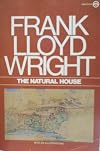
The Natural House
by Frank Lloyd Wright
On This Page
Description
When Frank Lloyd Wright turns his attention to one of the most important personal problems now facing practically everyone in our society - it is a time for rejoicing. The world's greatest architect here meets the urgent problem of suitable shelter for The Family in a democracy, in a magnificent and - as was to be expected - challenging book. Here, presented at last in full detail, is the natural house. The moderate cost houses described in this book and profusely illustrated with 116 show more photographs, plans and drawings, are houses - of infinite variety for people of limited means - in which living has become for their owners a purposeful new adventure in freedom and dignity. Mr. Wright tells the story of the world famous "Usonian" houses, so that we now see, in text and illustrations, how they have evolved from original conception to final execution. He has also written a step-by-step description of the "Usonion Automatic," explaining just how that remarkable house is built - a simplified method of construction so devised that the owners themselves can build it with great economy and beauty. For this purpose, there are, in addition to Mr. Wright's text, special photographs and drawings of the method and materials, showing clearly how the Usonion Automatic is built show lessTags
Recommendations

























Member Reviews
Frank Lloyd Wright was definitely a man of strong opinions, as indicated in this 1954 publication that came out a few years before his death.
One such opinion is indicated by this apparently sarcastic comment about some of his clients:
"...he then thinks, because of his 'success', then he can tell you, or anybody else, all about things of which he really knows nothing at all -- a house in particular. His success as a maker of money makes him an universal expert".
Additionally, some of his opinions would not fly very well today, such as this: "a garage is no longer necessary as cars are made. A carport will do, with liberal over-head shelter and walls on two sides. Detroit still has the livery-stable mind. It believes that the car is a show more horse and must be stabled".
But, it is a time capsule of FLW's thoughts on architecture. He also felt that we should build and live as far away from the city as possible, because cars make urban life unnecessary.
This is an out-of-print edition with small black-and-white photos included -- it may be worthwhile for those who are serious fans of either FLW and/or architecture. show less
One such opinion is indicated by this apparently sarcastic comment about some of his clients:
"...he then thinks, because of his 'success', then he can tell you, or anybody else, all about things of which he really knows nothing at all -- a house in particular. His success as a maker of money makes him an universal expert".
Additionally, some of his opinions would not fly very well today, such as this: "a garage is no longer necessary as cars are made. A carport will do, with liberal over-head shelter and walls on two sides. Detroit still has the livery-stable mind. It believes that the car is a show more horse and must be stabled".
But, it is a time capsule of FLW's thoughts on architecture. He also felt that we should build and live as far away from the city as possible, because cars make urban life unnecessary.
This is an out-of-print edition with small black-and-white photos included -- it may be worthwhile for those who are serious fans of either FLW and/or architecture. show less
Ratings
Members
- Recently Added By
Author Information

223+ Works 4,383 Members
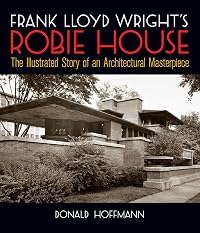
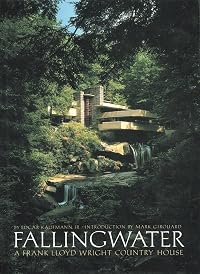
Wright is widely considered the greatest American architect and certainly one of the most influential. Throughout a career of nearly 70 years, he produced masterpiece after masterpiece, each different and boldly new and yet each with the unmistakable touch of Wright's genius in the treatment of material, the detailing, and the overall concept. show more Born in Wisconsin of Welsh ancestry, Wright studied civil engineering at the University of Wisconsin and began his career in Chicago as chief assistant to Louis Henry Sullivan, who influenced his early thinking on the American architect as harbinger of democracy and on the organic nature of the true architecture. Out of these ideas, Wright developed the so-called prairie house, of which the Robie House in Chicago and the Avery Coonley House in Riverdale, Illinois, are outstanding examples. In the "prairie-style," Wright used terraces and porches to allow the inside to flow easily outside. Movement within such houses is also open and free-floating from room to room and from layer to layer. Public buildings followed: the Larkin Administration Building in Buffalo (destroyed) and the Unity Temple in Oak Park, Illinois, the former probably the most original and seminal office building up to that time (1905). The Midway Gardens in Chicago and the Imperial Hotel in Tokyo (both gone) came next, winning Wright still greater acclaim. Personal tragedy, misunderstanding, and neglect dogged Wright's middle years, but he prevailed, and in his later life gathered enormous success and fame. The masterworks of his mature years are the Johnson Wax Building in Racine, Wisconsin, and Fallingwater, Bear Run, Pennsylvania---with its bold cantilevered balconies over a running stream, probably the most admired and pictured private house in American architecture; then, toward the end of his life, the spiral design of the Guggenheim Museum in New York City. Wright's own houses, to which he joined architectural studios, are also noteworthy: Taliesin West was a true Shangri-la in the Arizona desert, to which he turned in order to escape the severe winters in Wisconsin, where he had built his extraordinary Taliesin East. Wright was a prolific and highly outspoken writer, ever polemical, ever ready to propagate his ideas and himself. All of his books reflect a passionate dedication to his beliefs---in organic architecture, democracy, and creativity. (Bowker Author Biography) show less
Series
Belongs to Publisher Series
Mentor Books (MT469)
Work Relationships
Classifications
- Genres
- Art & Design, Nonfiction, General Nonfiction, Home & Garden
- DDC/MDS
- 728.081 — Arts & recreation Architecture Residential and related buildings
- LCC
- NA7208 .W68 — Fine Arts 2599.5-2599.9 Architectural criticism Architecture Special classes of buildings Classed by use Domestic architecture. Houses. Dwellings
- BISAC
Statistics
- Members
- 359
- Popularity
- 88,147
- Reviews
- 1
- Rating
- (3.58)
- Languages
- English
- Media
- Paper
- ISBNs
- 11
- UPCs
- 1
- ASINs
- 16