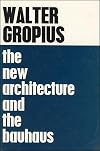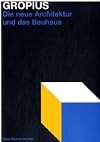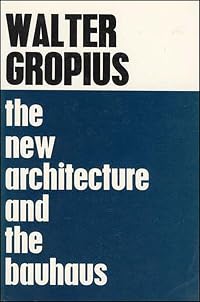
The New Architecture and The Bauhaus
by Walter Gropius
On This Page
Description
One of the most important books on the modern movement in architecture, The New Architecture and the Bauhaus poses some of the fundamental problems presented by the relations of art and industry and considers their possible, practical solution. Gropius traces the rise of the New Architecture and the work of the now famous Bauhaus and, with splendid clarity, calls for a new artist and architect educated to new materials and techniques and directly confronting the requirements of the age. -- show more Book cover. show lessTags
Recommendations







































Member Reviews
One of the most important books on the modern movement in architecture, The New Architecture and The Bauhaus poses some of the fundamental problems presented by the relations of art and industry and considers their possible, practical solution. Gropius traces the rise of the New Architecture and the work of the now famous Bauhaus and, with splendid clarity, calls for a new artist and architect educated to new materials and techniques and directly confronting the requirements of the age.
Monograph Library - shelved at: B10
Ratings
Members
- Recently Added By
Author Information

21+ Works 573 Members
Walter Gropius, as leader of the famous Bauhaus, as teacher, and as designer, was a dominant figure in twentieth-century architecture. Born in Berlin to a family with a great architectural tradition (his father was an architect), he strove---in the years after World War I---to bring architecture into harmony with the new industrial age and with show more the social needs of the times. Gropius was one of the founders of the Deutsche Werkbund (1907), whose aim was the modern design of everyday objects. In 1919 he became director of the Weimar School of Design, which he reorganized and renamed the Bauhaus; its goal was to educate designers who would create functional, rational, and socially responsive architecture and objects of art for daily use. In 1925 the Bauhaus moved to Dessau, where, for its new quarters, Gropius designed buildings in a clean, functional, highly innovative style. In 1937 he came to the United States, where he headed the highly influential department of architecture at Harvard University until 1952. A firm and articulate believer in teamwork, Gropius founded the Architects Collaborative, which designed a number of buildings, including the U.S. Embassy in Athens and the Pan American Building (now the MetLife Building) in New York City. Working with a team of young architects, Gropius designed the Harvard Graduate Center. He also wrote several books, among them The Scope of Total Architecture (1952). As a teacher, lecturer, and writer, as well as an architect, Gropius had an enormous influence on a whole generation of American architects. (Bowker Author Biography) show less
Some Editions
Series
Belongs to Publisher Series
MIT paperback series (21)
Common Knowledge
- Original publication date
- 1935
- Important places*
- Dessau-Roßlau, Saksen-Anhalt, Duitsland; Saksen-Anhalt, Duitsland
- First words
- Dr. Gropius has asked me to write an introduction to this essay. [Introduction]
Can the real nature and significance of the New Architecture be conveyed in words? - Quotations
- The ethical necessity of the New Architecture can no longer be called in doubt. And the proof of this – if proof were still needed – is that in all countries Youth has been fired with its inspiration.
- Original language
- German
*Some information comes from Common Knowledge in other languages. Click "Edit" for more information.
Classifications
Statistics
- Members
- 219
- Popularity
- 148,926
- Reviews
- 2
- Rating
- (3.90)
- Languages
- 5 — English, German, Italian, Portuguese, Spanish
- Media
- Paper
- ISBNs
- 7
- ASINs
- 5