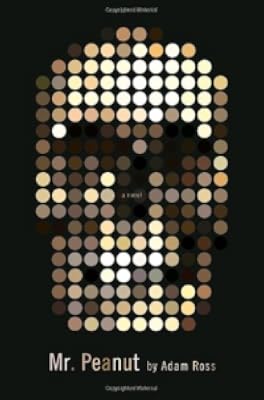
Mr. Peanut
by Adam Ross
On This Page
Description
A police procedural of the soul, a poignant investigation of the relentlessly mysterious human heart. After thirteen years of marriage, David can't imagine a happy life without Alice-- yet he obsessively contemplates her demise. When she dies, David is both deeply distraught and the prime suspect.Tags
Recommendations








Member Reviews
Can marriage save your life, or is it just the beginning of a long double homicide?
David Pepin has fantasized about killing his wife for some time, long enough to even have written a manuscript about it. Then she is found dead and it's unclear whether she committed suicide or was murdered, and David is naturally the prime suspect. The two investigating detectives have marital problems of their own. Hastroll's wife has retired to her bed and refused to explain why and the other detective is Sam Sheppard, the man The Fugitive is loosely based on, who served time for the murder of his pregnant wife, but who later had his conviction overturned.
This book felt misogynistic to me, with every female character consumed with a silent show more dissatisfaction they are unwilling to articulate to their increasingly desperate and concerned husbands. Marilyn Sheppard is the only woman whose point of view we get to see and she is entirely consumed by her husband's untidiness and infidelity. She doesn't have agency outside of reacting to his activities. (I now understand why so many reviewers fell over themselves to praise Jonathan Franzen's ability to "write women". After this book, I'm inclined to do the same.)
That said, there was much that was interesting about this book. Ross takes many scenes and repeats them from different points of view, and even from the same character's point of view. In a less able writer's hands, this might be boring, but I found these scenes to form the most interesting parts of Mr. Peanut. And the long section detailing the days leading up to Marilyn Sheppard's murder was fascinating, especially the scenes told from both spouses' points of view. In them, Ross vividly demonstrates how one person can be happy in a relationship and convinced it has never been stronger, while the other person is inarticulate with despair. This is the author's first full length novel and it shows quite a bit of promise, if he can get a handle on writing women as people, rather than adjuncts and impediments. show less
David Pepin has fantasized about killing his wife for some time, long enough to even have written a manuscript about it. Then she is found dead and it's unclear whether she committed suicide or was murdered, and David is naturally the prime suspect. The two investigating detectives have marital problems of their own. Hastroll's wife has retired to her bed and refused to explain why and the other detective is Sam Sheppard, the man The Fugitive is loosely based on, who served time for the murder of his pregnant wife, but who later had his conviction overturned.
This book felt misogynistic to me, with every female character consumed with a silent show more dissatisfaction they are unwilling to articulate to their increasingly desperate and concerned husbands. Marilyn Sheppard is the only woman whose point of view we get to see and she is entirely consumed by her husband's untidiness and infidelity. She doesn't have agency outside of reacting to his activities. (I now understand why so many reviewers fell over themselves to praise Jonathan Franzen's ability to "write women". After this book, I'm inclined to do the same.)
That said, there was much that was interesting about this book. Ross takes many scenes and repeats them from different points of view, and even from the same character's point of view. In a less able writer's hands, this might be boring, but I found these scenes to form the most interesting parts of Mr. Peanut. And the long section detailing the days leading up to Marilyn Sheppard's murder was fascinating, especially the scenes told from both spouses' points of view. In them, Ross vividly demonstrates how one person can be happy in a relationship and convinced it has never been stronger, while the other person is inarticulate with despair. This is the author's first full length novel and it shows quite a bit of promise, if he can get a handle on writing women as people, rather than adjuncts and impediments. show less
First of all, do you know what a Mobius strip is? Thought not. You will need a dictionary and access to Wikipedia before you start Adam Ross’ debut novel, Mr. Peanut, and even then you may scratch your head a number of times before you get to the last page. But please do persevere, for this is one cracker jack of a novel that is oh so entertaining. Filled with puzzles, dreams that cry for interpretation, quirky characters (one named, cleverly enough, Mr. Mobius) it’s a psychological mystery that reaches into the past and thrusts you forward into the future before dropping you, gasping for air, on the doorstep of the conclusion. Solve the puzzle and you will breathe a sigh of complete satisfaction. Not for the faint- hearted or the show more easily offended, the book includes a novel within a novel, passages filled with sex-fueled antics, an exploration of the hidden meanings in Alfred Hitchcock films, a case for the plight of the obese, an investigation of a murder that took place over sixty years ago and, most importantly, asks the question that faces many married couples, “Can marriage save your life, or is it just the beginning of a long double homicide?” (Page 309)
Within the first ten pages of the novel, Alice Pepin’s obesity, insecurity and depression have culminated with her death from anaphylactic shock from the ingestion of a peanut at her kitchen table. Her husband, David, is the prime suspect in her murder. From here on, this brainteaser on steroids drags you through the maze of possibilities, moving forward, then backtracking, then looking behind door number two, then trying to twist the Rubric’s cube another way, well, you get the idea. But as the book progresses, you realize that the novel is a book about three marriages and the predominant theme is, ‘Can a married couple change?’ The struggles that the three married couples confront force you to compare, contrast and define what your personal picture of marriage is. But it’s all done with smoke and mirrors, and with abundant metaphors and symbolism and dark, dark humor.
This book will not be for everyone, but if you choose to climb aboard the rollercoaster, you’re in for quite a ride. Rated R. Highly recommended. show less
Within the first ten pages of the novel, Alice Pepin’s obesity, insecurity and depression have culminated with her death from anaphylactic shock from the ingestion of a peanut at her kitchen table. Her husband, David, is the prime suspect in her murder. From here on, this brainteaser on steroids drags you through the maze of possibilities, moving forward, then backtracking, then looking behind door number two, then trying to twist the Rubric’s cube another way, well, you get the idea. But as the book progresses, you realize that the novel is a book about three marriages and the predominant theme is, ‘Can a married couple change?’ The struggles that the three married couples confront force you to compare, contrast and define what your personal picture of marriage is. But it’s all done with smoke and mirrors, and with abundant metaphors and symbolism and dark, dark humor.
This book will not be for everyone, but if you choose to climb aboard the rollercoaster, you’re in for quite a ride. Rated R. Highly recommended. show less
“When David Pepin first dreamed of killing his wife, he didn't kill her himself. He dreamed convenient acts of God.”
Yes, marriage is no picnic, there are going to be dark times, right along with the happy ones, but the picture this author paints, is pretty damn bleak. The book opens, with David Pepin being investigated for killing his wife. It also focuses on the detectives and their unhappy marriages and running parallel to this, is a fictionalized account of the infamous Sam Shepard case, from the 50s, where a doctor was convicted of murdering his “perfect” wife. Not many sunny moments here.
Ross is a talented writer, his prose is crisp and strong, his characters are well-crafted, which completely frustrates me, that the story show more doesn’t pull together in a more satisfying way. Some readers found this book incredible, I’m just not one of them. show less
Yes, marriage is no picnic, there are going to be dark times, right along with the happy ones, but the picture this author paints, is pretty damn bleak. The book opens, with David Pepin being investigated for killing his wife. It also focuses on the detectives and their unhappy marriages and running parallel to this, is a fictionalized account of the infamous Sam Shepard case, from the 50s, where a doctor was convicted of murdering his “perfect” wife. Not many sunny moments here.
Ross is a talented writer, his prose is crisp and strong, his characters are well-crafted, which completely frustrates me, that the story show more doesn’t pull together in a more satisfying way. Some readers found this book incredible, I’m just not one of them. show less
The Short of It:
Amusingly dark and witty.
The Rest of It:
Mr. Peanut is a story within a couple of other stories. The story that takes place in present day New York, is that of David Pepin’s. David is a computer game designer and his wife Alice teaches troubled children. They’ve got plenty of money but they are unable to have children of their own and they are as unhappy as a couple can be. Unhappy, times ten. She is obese, obsessed with dieting even though David seems to like her fat, and deathly allergic to peanuts. The two are so at odds with each other, that David spends hours fantasizing about her death. Killing her himself, to be more specific. So when Alice ingests peanuts and dies from anaphylactic shock, is it an accident? show more Did David have something to do with her death?
The second and third story, revolve around the two detectives investigating Alice’s death. One detective, Ward Hastroll, has his own marital issues. His wife Hannah has been bedridden for six months for no apparent reason. When he is not investigating the case, he is home with her, tempting her and trying to lure her out of bed. The other detective is Sam Sheppard who bears the name of a philandering osteopath from the 195o’s that murdered his pregnant wife, Marilyn. Much of the book is spent telling the story of the Sheppard from the 1950′s and at times, I found this story line to be more interesting than David’s, but how it plays out and why it’s even mentioned is totally bizarre to me.
As you can tell, this book is not your typical police procedural. In fact, it was difficult to tell what was going on at any given point in time since David’s profession as a game designer, often leads you to believe that he is fantasizing about something or dreaming up subplots in his head. In addition to the game designing gig, he is also writing a novel so when you read Mr. Peanut, you’re not sure if Ross the author is telling the story, or if David has somehow come to life, hijacked the story and run away with it.
This might seem like a total cluster-F of a story and in a lot of ways, it is but I enjoyed it immensely. It’s entertaining to read about screwed-up people and these folks have issues. Their hatred for one another has no boundaries and you end up not liking any of them, but somehow I was okay with that. Their daily interaction mimics (precisely, I might add) what a long married couple experiences daily. The numerous annoyances that make you bristle practically leap off the page, but most people don’t take it to the next level and fantasize about killing their significant other. Do they? That’s what makes this one so rich.
BUT, and there is a little BUT. If you expect this to be a cut and dry police procedural you are barking up the wrong tree. You won’t find that here. You will find yourself completely absorbed with the problems of one couple, only to be rudely shifted to the problems of a different couple. The jerking back and forth is both welcome and jarring. Almost the entire story is told by the males involved, which gives it a lopsided feel and the investigation is all over the place. From the start, you have little confidence that these two detectives will figure it out and in the end, there are numerous alternate endings that leave the true ending up to the reader.
If you appreciate a unique story, written in a non-traditional way, that may or may not be poking fun at the sanctity of marriage, then you will enjoy this book. When reading it, I didn’t want to stop and when I HAD to stop, all I wanted to do was pick it up again. It’s a book to be read in the moment, without picking it apart to figure out the whys. Just read it.
For more reviews, visit my blog: Book Chatter. show less
Amusingly dark and witty.
The Rest of It:
Mr. Peanut is a story within a couple of other stories. The story that takes place in present day New York, is that of David Pepin’s. David is a computer game designer and his wife Alice teaches troubled children. They’ve got plenty of money but they are unable to have children of their own and they are as unhappy as a couple can be. Unhappy, times ten. She is obese, obsessed with dieting even though David seems to like her fat, and deathly allergic to peanuts. The two are so at odds with each other, that David spends hours fantasizing about her death. Killing her himself, to be more specific. So when Alice ingests peanuts and dies from anaphylactic shock, is it an accident? show more Did David have something to do with her death?
The second and third story, revolve around the two detectives investigating Alice’s death. One detective, Ward Hastroll, has his own marital issues. His wife Hannah has been bedridden for six months for no apparent reason. When he is not investigating the case, he is home with her, tempting her and trying to lure her out of bed. The other detective is Sam Sheppard who bears the name of a philandering osteopath from the 195o’s that murdered his pregnant wife, Marilyn. Much of the book is spent telling the story of the Sheppard from the 1950′s and at times, I found this story line to be more interesting than David’s, but how it plays out and why it’s even mentioned is totally bizarre to me.
As you can tell, this book is not your typical police procedural. In fact, it was difficult to tell what was going on at any given point in time since David’s profession as a game designer, often leads you to believe that he is fantasizing about something or dreaming up subplots in his head. In addition to the game designing gig, he is also writing a novel so when you read Mr. Peanut, you’re not sure if Ross the author is telling the story, or if David has somehow come to life, hijacked the story and run away with it.
This might seem like a total cluster-F of a story and in a lot of ways, it is but I enjoyed it immensely. It’s entertaining to read about screwed-up people and these folks have issues. Their hatred for one another has no boundaries and you end up not liking any of them, but somehow I was okay with that. Their daily interaction mimics (precisely, I might add) what a long married couple experiences daily. The numerous annoyances that make you bristle practically leap off the page, but most people don’t take it to the next level and fantasize about killing their significant other. Do they? That’s what makes this one so rich.
BUT, and there is a little BUT. If you expect this to be a cut and dry police procedural you are barking up the wrong tree. You won’t find that here. You will find yourself completely absorbed with the problems of one couple, only to be rudely shifted to the problems of a different couple. The jerking back and forth is both welcome and jarring. Almost the entire story is told by the males involved, which gives it a lopsided feel and the investigation is all over the place. From the start, you have little confidence that these two detectives will figure it out and in the end, there are numerous alternate endings that leave the true ending up to the reader.
If you appreciate a unique story, written in a non-traditional way, that may or may not be poking fun at the sanctity of marriage, then you will enjoy this book. When reading it, I didn’t want to stop and when I HAD to stop, all I wanted to do was pick it up again. It’s a book to be read in the moment, without picking it apart to figure out the whys. Just read it.
For more reviews, visit my blog: Book Chatter. show less
I don't know how to rate this book. I both admired and hated it. The misogyny oozed from almost every page, and the characters seemed to get great pleasure from the violence, actual or imagined, against the women they claimed to love.
I suspect that the fractured narrative structure, which I thought was very well done, simply obscured a story I would not have finished reading if it had been told chronologically. But, on the other hand, there was something fascinating about the story.... We're going to be discussing this book at the Odyssey Bookshop later this spring. Hopefully the discussion will help me figure out more about my conflicting reactions to the novel.
I suspect that the fractured narrative structure, which I thought was very well done, simply obscured a story I would not have finished reading if it had been told chronologically. But, on the other hand, there was something fascinating about the story.... We're going to be discussing this book at the Odyssey Bookshop later this spring. Hopefully the discussion will help me figure out more about my conflicting reactions to the novel.
In this psychological puzzle of a novel, we meet three men with three very different marriages, though oddly, they share many similarities. David Pepin is a video game designer who is married to Alice, a morbidly obese woman whose weight and moods fluctuate wildly. When Alice commits suicide by stuffing herself with peanuts, leading to extreme anaphylactic shock, the investigators working the case believe that David may actually have murdered her. Though grief stricken, David also suffers from strange emotions after his wife's death due to the fact that he had been writing a novel about killing Alice. In a complex way, David loved his wife while also hating her; longing to be married to her while at the same time longing to be free. show more When the two lead detectives, Hastroll and Sheppard, begin to delve into the Pepin case, the secrets of their marriages also come into focus. It seems that Hastroll also has problems with his wife. For some strange reason, she hasn't left her bed in five months, a situation that frustrates and confuses her husband. When Hastroll begins going to extraordinary lengths to get her out of bed, their relationship takes a turn for the worse. Sheppard also has a turbulent history with marriage. Many years ago, after a party, his wife was found murdered in their home. Though the police could never prove his guilt, neither could they confirm his innocence, and Sheppard spent a decade in jail. Now free, he is partnered with Hastroll in their efforts to find the truth about Alice's death. Winding together the stories of three very bizarre marriages, Mr. Peanut deftly exposes and tackles the fundamental aspects of singularity and coupledom, desire and detestability, and blurs the lines between reality and fantasy.
This book was a wild ride from start to finish. Having heard how twisting and strange the story was definitely was an enticement to read the book, but the execution and sheer inventiveness is the reason I stayed so happily stuck within its pages. It was a clever maze of a read where nothing is what it seems and though it could be a tad confusing at times, there was a quality of the story bending backwards and constantly morphing on itself that didn't fail to put me through my paces as a reader.
One of the things I think it's important to mention about this story is that it's not all gimmick. Though there were times that the book read more like a puzzle, there were also times it became a very literary read, full of recurring symbolism and deep themes and issues, and adept language. Ross didn't have a hard time incorporating all of these aspects into the plot and I think that's one of the things that stood out to me most. Even the genre was fluid in this book, being mostly a dramatic noir read but also with elements of mystery, a trio of love stories and a novel of dark comedy. The book was not afraid to tackle inflammatory issues as well, and in a very articulate manner manages to speak clearly and coherently about the social and personal ramifications of obesity, infidelity, infertility and most especially mental illness. Though all these things were discussed at great length, this never became a preachy "message" book but instead deftly integrated all these aspects into its complex labyrinth of a plot.
There are really three parts to this book. Three portrayals of marriage, each focusing on different areas and issues. Though I felt that some stories were more interesting and engaging, I did end up getting caught up in all of them. As I was reading, I came across some similar themes among the three relationships. Mainly, all three men felt strangely dominated by their wives' emotions and attempted to find ways to escape. In each case the escape was different, and in some cases this escape was only dreamed of and never put into action. Even more strangely, all three main characters admit to themselves alone that their lives might be better if their wives were no longer alive. The thought that their freedom could only come by the death of their wives was horrifying, yet I think Ross does a great deal to explain his characters motives and desires. These men could be repugnant at times, overly selfish and thoughtless, but in fact, they were all very human. Ross explores some very dark themes in this book, and in addition to being interesting, it also makes you think. It made me wonder just how permeable the boundaries were between subconscious desire and the full realization of desperate acts.
I think one of the most interesting things about this book was its characters. I couldn't help but hate these men with their insecurity and selfishness, but I also couldn't help but be enthralled with them as well. They were almost like children at times, throwing temper tantrums when life felt unfair and the next minute crying in their perceived abandonment. I was exasperated with them but also curious about where they would end up. I think I felt the most affinity and repugnance for David Pepin. As more and more about his life and internal thought process was revealed, I became more drawn to him. He was a really frightening man, overcome by need and desire, and petty and jealous. He put on a facade of loving and supporting his wife, but in reality, loving her was an act of self preservation and at times pity. Yet there was something so hang-dog about him. He was grossly unappreciated by his wife, but I began to ask myself, did David really deserve any appreciation, what with all that ugliness hiding in his heart? I think this book forced me to ask some tough questions about marriage and partnership, and the answers that presented themselves weren't always pretty.
There is a crazy amount of detail and cohesion in this book, which is one of the things that made it such a satisfying read for me. Though the middle of the book dragged a little at times, I think the mix of the three plots mostly went off without a hitch, and when the end was finally revealed I was at once awed, satisfied, and I admit, a little confused. I think that there are a lot of loose ends in this story and it was very cool to see the way Ross tied them all up in knots and bows. I couldn't help but feel both disgusted and impressed with this story, and for all the implausibility in it, there was also a lot of realism. All through this book, I kept asking myself just what kind of relationship Ross has with his wife. Not a very literary question, but one that was on my mind nonetheless!
Overall I thought this was an excellent read. Engaging from the start, it pulls you along through all its crazy twists and deposits you blinking and shocked on the other side. This is a more meaty read and it does require a bit of patience and perseverance, but in the end, the reader is so richly rewarded that it seems like a small price to pay. I will definitely be paying attention to Ross in the future. He has some interesting ideas and a very complex way of stringing together a story. A very clever and enticing read. Highly recommended. show less
This book was a wild ride from start to finish. Having heard how twisting and strange the story was definitely was an enticement to read the book, but the execution and sheer inventiveness is the reason I stayed so happily stuck within its pages. It was a clever maze of a read where nothing is what it seems and though it could be a tad confusing at times, there was a quality of the story bending backwards and constantly morphing on itself that didn't fail to put me through my paces as a reader.
One of the things I think it's important to mention about this story is that it's not all gimmick. Though there were times that the book read more like a puzzle, there were also times it became a very literary read, full of recurring symbolism and deep themes and issues, and adept language. Ross didn't have a hard time incorporating all of these aspects into the plot and I think that's one of the things that stood out to me most. Even the genre was fluid in this book, being mostly a dramatic noir read but also with elements of mystery, a trio of love stories and a novel of dark comedy. The book was not afraid to tackle inflammatory issues as well, and in a very articulate manner manages to speak clearly and coherently about the social and personal ramifications of obesity, infidelity, infertility and most especially mental illness. Though all these things were discussed at great length, this never became a preachy "message" book but instead deftly integrated all these aspects into its complex labyrinth of a plot.
There are really three parts to this book. Three portrayals of marriage, each focusing on different areas and issues. Though I felt that some stories were more interesting and engaging, I did end up getting caught up in all of them. As I was reading, I came across some similar themes among the three relationships. Mainly, all three men felt strangely dominated by their wives' emotions and attempted to find ways to escape. In each case the escape was different, and in some cases this escape was only dreamed of and never put into action. Even more strangely, all three main characters admit to themselves alone that their lives might be better if their wives were no longer alive. The thought that their freedom could only come by the death of their wives was horrifying, yet I think Ross does a great deal to explain his characters motives and desires. These men could be repugnant at times, overly selfish and thoughtless, but in fact, they were all very human. Ross explores some very dark themes in this book, and in addition to being interesting, it also makes you think. It made me wonder just how permeable the boundaries were between subconscious desire and the full realization of desperate acts.
I think one of the most interesting things about this book was its characters. I couldn't help but hate these men with their insecurity and selfishness, but I also couldn't help but be enthralled with them as well. They were almost like children at times, throwing temper tantrums when life felt unfair and the next minute crying in their perceived abandonment. I was exasperated with them but also curious about where they would end up. I think I felt the most affinity and repugnance for David Pepin. As more and more about his life and internal thought process was revealed, I became more drawn to him. He was a really frightening man, overcome by need and desire, and petty and jealous. He put on a facade of loving and supporting his wife, but in reality, loving her was an act of self preservation and at times pity. Yet there was something so hang-dog about him. He was grossly unappreciated by his wife, but I began to ask myself, did David really deserve any appreciation, what with all that ugliness hiding in his heart? I think this book forced me to ask some tough questions about marriage and partnership, and the answers that presented themselves weren't always pretty.
There is a crazy amount of detail and cohesion in this book, which is one of the things that made it such a satisfying read for me. Though the middle of the book dragged a little at times, I think the mix of the three plots mostly went off without a hitch, and when the end was finally revealed I was at once awed, satisfied, and I admit, a little confused. I think that there are a lot of loose ends in this story and it was very cool to see the way Ross tied them all up in knots and bows. I couldn't help but feel both disgusted and impressed with this story, and for all the implausibility in it, there was also a lot of realism. All through this book, I kept asking myself just what kind of relationship Ross has with his wife. Not a very literary question, but one that was on my mind nonetheless!
Overall I thought this was an excellent read. Engaging from the start, it pulls you along through all its crazy twists and deposits you blinking and shocked on the other side. This is a more meaty read and it does require a bit of patience and perseverance, but in the end, the reader is so richly rewarded that it seems like a small price to pay. I will definitely be paying attention to Ross in the future. He has some interesting ideas and a very complex way of stringing together a story. A very clever and enticing read. Highly recommended. show less
This is hands-down one of the strangest novels about marriage I have ever read. David Pepin’s wife is dead after an allergic reaction to peanuts, and he is accused of murdering her. Two detectives, Ward Hastroll and Sam Sheppard, investigate the case and reveal their own marital trauma as well.
This novel shifts in both space and time. As the book progresses, the story jumps from the present investigation to Pepin’s past and back again while alternating between Pepin’s and Hastroll’s respective stories of marital strife.
Halstroll and Sheppard track down Mobius, a man they believe helped David murder his wife. The insertion of this character pushes the structure of the novel even further as Mobius demands to hear the story of show more the murder of Sheppard’s wife before he will reveal the method of Alice’s murder. The infamous former Dr. Sam Sheppard relates the story of his wife’s murder to Mobius while also questioning him about Alice’s murder, and again the story jumps back and forth in space and time.
There is a great deal of symbolism throughout the novel relating to weight loss and weight gain, freedom and commitment, love and hate. The over-arching theme is the cyclical. Cycles and the lack of true beginnings and endings are found everywhere, most notably in the method of Ross’s storytelling. He is profoundly talented at drawing the reader into the story and then pushing the reader back out. We are taken on the journey with the characters and are as lost in the tumble as they are. This was a remarkable debut. show less
This novel shifts in both space and time. As the book progresses, the story jumps from the present investigation to Pepin’s past and back again while alternating between Pepin’s and Hastroll’s respective stories of marital strife.
Halstroll and Sheppard track down Mobius, a man they believe helped David murder his wife. The insertion of this character pushes the structure of the novel even further as Mobius demands to hear the story of show more the murder of Sheppard’s wife before he will reveal the method of Alice’s murder. The infamous former Dr. Sam Sheppard relates the story of his wife’s murder to Mobius while also questioning him about Alice’s murder, and again the story jumps back and forth in space and time.
There is a great deal of symbolism throughout the novel relating to weight loss and weight gain, freedom and commitment, love and hate. The over-arching theme is the cyclical. Cycles and the lack of true beginnings and endings are found everywhere, most notably in the method of Ross’s storytelling. He is profoundly talented at drawing the reader into the story and then pushing the reader back out. We are taken on the journey with the characters and are as lost in the tumble as they are. This was a remarkable debut. show less
Members
- Recently Added By
Lists

Overdue Podcast
806 works; 9 members
Author Information

Some Editions
Awards and Honors
Common Knowledge
- Canonical title
- Mr. Peanut
- Original title
- Mister Peanut
- Original publication date
- 2010-06-22
- People/Characters
- David Pepin; Alice Pepin; Sam Sheppard; Marilyn Sheppard; Detective Ward Hastroll; Hannah Hastroll (show all 7); Mobius
- Important events
- Marilyn Sheppard Murder ( 1954-07-04)
- Related movies
- The Fugitive
- Epigraph
- Where am I in the web of jealousy that trembles at every human movement? What detectives we have to be.
-Harold Brodkey
I went back upstairs and looked at my wife and felt and checked her pulse on her neck and dete... (show all)rmined or thought that she was gone. I became or thought that I was disoriented and the victim of a bizarre dream.
- Dr. Sam Sheppard - Dedication
- For Beth
- First words
- When David Pepin first thought of killing his wife, he didn't kill her himself.
- Last words
- (Click to show. Warning: May contain spoilers.)He reached as far as he could, which wasn't far enough, trying to touch her where she'd touched him, trying desperately to reach back to a time when they were happy, when they didn't know then what they knew now-all the way to her heart.
- Blurbers
- King, Stephen; Russo, Richard; Smith, Scott
Classifications
Statistics
- Members
- 822
- Popularity
- 33,541
- Reviews
- 66
- Rating
- (3.20)
- Languages
- 9 — Czech, Dutch, English, French, German, Greek, Italian, Portuguese, Romanian
- Media
- Paper, Audiobook, Ebook
- ISBNs
- 22
- ASINs
- 4