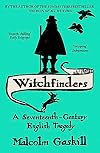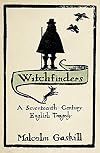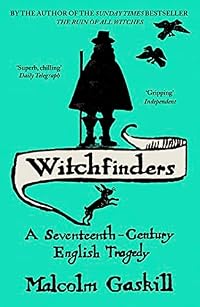
Witchfinders: A Seventeenth-Century English Tragedy
by Malcolm Gaskill
On This Page
Description
"By spring 1645, two years of civil war had exacted a dreadful toll upon England. People lived in terror as disease and poverty spread, and the nation grew ever more politically divided. In a remote corner of Essex, two obscure gentlemen, Matthew Hopkins and John Stearne, exploited the anxiety and lawlessness of the time and initiated a brutal campaign to drive out the presumed evil in their midst ... Malcolm Gaskill retells the story of the most savage witch-hunt in English history ... show more Though their campaign was never legally sanctioned, they garnered the popular support of local gentry, clergy, and villagers ... [This story] serves as a reminder of the power of fear and fanaticism to fuel ordinary people's willingness to demonize others"--Jacket. show lessTags
Recommendations












Member Reviews
A great deal of scholarship as a result not the most thrilling read. However it does a good job of describing some of the misery of life for the extremely poor in rural England around the time of the English civil war. The epilogue notes that there are still witch hunts in parts of India and various African and ends as follows:
All of which prompts the question: How different are we from our 17th century ancestors? A question that becomes more taxing if 17th century ancestors is replaced with "fellow human beings in Africe and India". The truth that many find unpalatable is that in ideas, instincts and emotions we are not very different at all. Without peace and prosperity, liberty and welfare and the political and economic atability show more that those things depend on the thinking of the next generation in the West might swerve off in an altogether more mystical and malevolent direction. The bloodletting in the developing World is too startlingly similar to that which occurred in England during the civil war for this not to be so. Then, as now, witch-hunts involved not just savage persecutors tormenting innocent scapegoats, but ordinary neighbours with a close affinity to one another who also happened to believe in witchcraft powerfully enough to act out their most violent fantasies. This was as true of people who believed themselves to
witches as it was of those who pointed the finger. As a consequence the seventeenth-century tragedy of the witchfinders is only partialy that of Matthew Hopkins, the flawed protagonist, and of the harrowing deaths of his victims. It is at least as much a tale about feeling anxious and vulnerable in an indifferent world - a sensation of
humanity?
I am rather more hopeful than the author was here since the author notes than within a generation Hopkins was being mocked and while fear of witches continued trials and executions disappeared almost entirely. show less
All of which prompts the question: How different are we from our 17th century ancestors? A question that becomes more taxing if 17th century ancestors is replaced with "fellow human beings in Africe and India". The truth that many find unpalatable is that in ideas, instincts and emotions we are not very different at all. Without peace and prosperity, liberty and welfare and the political and economic atability show more that those things depend on the thinking of the next generation in the West might swerve off in an altogether more mystical and malevolent direction. The bloodletting in the developing World is too startlingly similar to that which occurred in England during the civil war for this not to be so. Then, as now, witch-hunts involved not just savage persecutors tormenting innocent scapegoats, but ordinary neighbours with a close affinity to one another who also happened to believe in witchcraft powerfully enough to act out their most violent fantasies. This was as true of people who believed themselves to
witches as it was of those who pointed the finger. As a consequence the seventeenth-century tragedy of the witchfinders is only partialy that of Matthew Hopkins, the flawed protagonist, and of the harrowing deaths of his victims. It is at least as much a tale about feeling anxious and vulnerable in an indifferent world - a sensation of
humanity?
I am rather more hopeful than the author was here since the author notes than within a generation Hopkins was being mocked and while fear of witches continued trials and executions disappeared almost entirely. show less
In Witchfinders: A Seventeenth-Century English Tragedy (Harvard University Press, 2005), historian Malcolm Gaskill chronicles the largest single witch hunt in English history, which infected the East Anglia region from 1645 through the fall of 1647. Matthew Hopkins and John Stearne, who served as "witchfinders" during much of the outbreak, serve as Gaskill's focal points, although he is forced to depart from them often when they disappear from the archival record.
Given its subject matter, and the intensity of the witchcraft scare, I didn't think it possible that this book could be unabsorbing. But Gaskill has forced so much detail into the narrative that I had a hard time slogging through it (at least 250 people were accused of show more witchery, and I think Gaskill must mention just about all of them by name, rank, and background). While Witchfinders will surely become the authoritative text on the subject, and there is no question that anyone researching the East Anglia outbreak should examine it closely, as a text for the general reader it is perhaps a bit much.
The most interesting sections of the book were those where Gaskill examined the cultural background in which the witchcraft craze occurred - ongoing military, political, religious and social conflict throughout the period unsettled the towns and cities which saw witchcraft accusations, and local/hyper-local rivalries played the same role here that other scholars have documented at Salem and in other witchcraft outbreaks throughout history. Gaskill's treatment of the witchfinders' interrogation techniques and tactics (which in some sense brought about the end of the whole mess after a while) is also quite interesting.
The final chapters, about the ultimate downfall of the witchfinders' reputations and the long-term development of their reputations in historical and cultural memory, were riveting, and make the book worth reading in and of themselves. And Gaskill has documented his meticulous research in fifty pages of notes, which anyone interested in yet more detail could certainly plumb to great effect.
Well designed and well illustrated, this is on the whole a great feat of scholarship covering a lamentable period of human history.
http://philobiblos.blogspot.com/2009/05/book-review-witchfinders.html show less
Given its subject matter, and the intensity of the witchcraft scare, I didn't think it possible that this book could be unabsorbing. But Gaskill has forced so much detail into the narrative that I had a hard time slogging through it (at least 250 people were accused of show more witchery, and I think Gaskill must mention just about all of them by name, rank, and background). While Witchfinders will surely become the authoritative text on the subject, and there is no question that anyone researching the East Anglia outbreak should examine it closely, as a text for the general reader it is perhaps a bit much.
The most interesting sections of the book were those where Gaskill examined the cultural background in which the witchcraft craze occurred - ongoing military, political, religious and social conflict throughout the period unsettled the towns and cities which saw witchcraft accusations, and local/hyper-local rivalries played the same role here that other scholars have documented at Salem and in other witchcraft outbreaks throughout history. Gaskill's treatment of the witchfinders' interrogation techniques and tactics (which in some sense brought about the end of the whole mess after a while) is also quite interesting.
The final chapters, about the ultimate downfall of the witchfinders' reputations and the long-term development of their reputations in historical and cultural memory, were riveting, and make the book worth reading in and of themselves. And Gaskill has documented his meticulous research in fifty pages of notes, which anyone interested in yet more detail could certainly plumb to great effect.
Well designed and well illustrated, this is on the whole a great feat of scholarship covering a lamentable period of human history.
http://philobiblos.blogspot.com/2009/05/book-review-witchfinders.html show less
A very interesting premise and certainly one that has not been attempted in recent years. The Witch hunts and persecutions of the 1640s under MAtthew Hopkins have entered local lore in East Anglia and due to the full extend of these (well revealed in this book) it is not hard to see why. The text is exhaustative and therefore likely to be used a reference material for this event for years to come. The down side is that it is hard to read in places because of this, despite Gaskill's occasional flare for an attempt at historical re enactment. Nice use of primary sources though and a good text for those with an interest, but probably not accessible enough for those, like me, who were merely curious
An interesting and informative read that dispels many of the myths surrounding Matthew Hopkins and the East Anglian witch-hunts.
Ratings
Members
- Recently Added By
Author Information

9 Works 1,249 Members
Malcolm Gaskill is a Fellow of Churchill College, Cambridge, where he is Director of Studies in History
Common Knowledge
- Canonical title
- Witchfinders: A Seventeenth-Century English Tragedy
- Original publication date
- 2005-04-25
- People/Characters
- Matthew Hopkins; John Stearne
- Important places
- England, UK
- Important events
- English Civil War
- Epigraph
- Bear in mind that man is but a devil weakly fettered by some generous beliefs and impositions. Robert Louis Stevenson
Every tragedy falls into two parts: complication and unravelling...By the complication I mean all th... (show all)at extends from the beginning of the action to the part which marks the turning-point to good or bad fortune. The unravelling is that which extends from the beginning of the change to the end. Aristotle - Dedication
- In memory of Stephen Williams, 1967 - 1993, who understood well the strangeness of the past.
- Blurbers
- Blythe, Ronald; Adamson, John; Hutton, Ronald; Mantel, Hilary; O'Grady, Selina; Holmes, Clive (show all 10); Brown, Craig; Brace, Marianne; Kerrigan, Michael; Hughes, Kathryn
Classifications
- Genres
- History, Nonfiction, Religion & Spirituality, General Nonfiction
- DDC/MDS
- 133.4 — Philosophy and Psychology Parapsychology & occultism Specific topics in parapsychology and occultism Demonology and witchcraft
- LCC
- BF1581 .G38 — Philosophy, Psychology and Religion Psychology Occult sciences Witchcraft
- BISAC
Statistics
- Members
- 369
- Popularity
- 84,946
- Reviews
- 5
- Rating
- (3.47)
- Languages
- English
- Media
- Paper, Ebook
- ISBNs
- 8
- ASINs
- 5