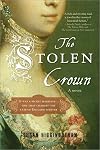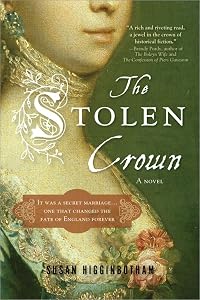
The Stolen Crown: The Secret Marriage that Forever Changed the Fate of England
by Susan Higginbotham 
On This Page
Description
Award-winning author Susan Higginbotham's The Stolen Crown is a compelling tale of one marriage that changed the fate of England foreverOn May Day, 1464, six-year-old Katherine Woodville, daughter of a duchess who has married a knight of modest means, awakes to find her gorgeous older sister, Elizabeth, in the midst of a secret marriage to King Edward IV. It changes everything — for Kate and for England.
Then King Edward dies unexpectedly. Richard III, Duke of Gloucester, is named show more protector of Edward and Elizabeth's two young princes, but Richard's own ambitions for the crown interfere with his duties...
Lancastrians against Yorkists: greed, power, murder, and war. As the story unfolds through the unique perspective of Kate Woodville, it soon becomes apparent that not everyone is wholly good or evil.
"A sweeping tale of danger, treachery, and love, The Stolen Crown is impossible to put down!" —Michelle Moran, bestselling author of Cleopatra's Daughter
. show less
Tags
Recommendations
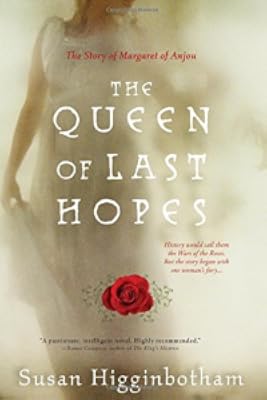
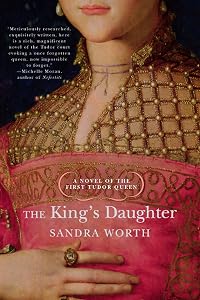
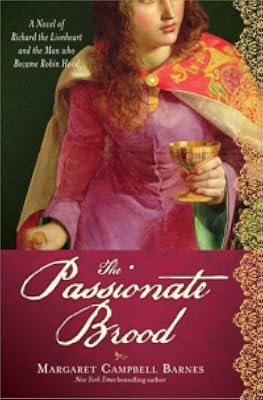
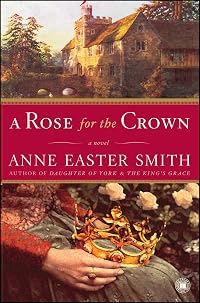
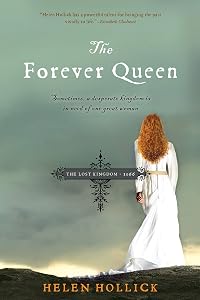







Member Recommendations
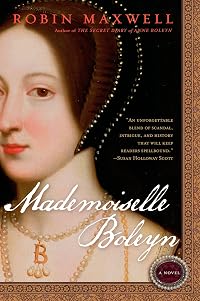
Caramellunacy Both are about the Wars of the Roses with different (partially overlapping) focus. Stolen Crown is about Katherine Woodville & Edward IV's reign. The Tudor Rose focuses largely on Henry VII coming into power.
20
Member Reviews
Once again, Susan Higginbotham delivers just the right balance of history and fiction by creating a seamless blend of her characters' private lives, motives and passions, and political events and historical background.
The book follows the live of Katherine Woodville, youngest sister of Elizabeth, Edward IV's wife. I liked this take on the Woodville family, for once not the grasping powerhungry pack of opportunists, but a family who where suddenly punching above their league amongst the old aristocratic houses of England, and who all dealt with it in different ways. The characters were wonderfully well developed and very believable, their actions plausible. Of course, there can be differing opinions on the role of Richard III (there show more always are!), but this version suits the story and is well thought out.
Like all of Higginbotham's work, this is a well researched book and contains excellent historical detail. As always, the she provides a detailed author's note, separating what is fact, what is opinion and what is fiction. This book is all that historical fiction should be: informative, entertaining and an inspiration to learn more. show less
The book follows the live of Katherine Woodville, youngest sister of Elizabeth, Edward IV's wife. I liked this take on the Woodville family, for once not the grasping powerhungry pack of opportunists, but a family who where suddenly punching above their league amongst the old aristocratic houses of England, and who all dealt with it in different ways. The characters were wonderfully well developed and very believable, their actions plausible. Of course, there can be differing opinions on the role of Richard III (there show more always are!), but this version suits the story and is well thought out.
Like all of Higginbotham's work, this is a well researched book and contains excellent historical detail. As always, the she provides a detailed author's note, separating what is fact, what is opinion and what is fiction. This book is all that historical fiction should be: informative, entertaining and an inspiration to learn more. show less
Set at the end of the Wars of the Roses and spanning the reigns of Kings Edward IV and Richard III, The Stolen Crown brings to life a tumultuous period in English history from the perspectives of two of the people who witnessed many of its defining moments first hand - Katherine Woodville, younger sister of Elizabeth Woodville, Edward IV's Queen, and Harry Stafford, Duke of Buckingham, one of England's preeminent noblemen. When her sister marries the king, Kate goes from being the mere daughter of a knight to the sister-in-law of the king, a situation that greatly improves her marital prospects. As a result, it is not long before Kate is married to the young Duke of Buckingham, a ward of the Queen's whose family has ties to the show more Lancasters. Although married very young, Kate and Harry's union is a successful and, despite a somewhat rocky start, loving one. When Edward IV suddenly dies, leaving a young son as his heir, Richard, Duke of Gloucester, takes the governing of England into his own hands and names himself king. When Harry, who has idolized the Richard since childhood, joins Richard's cause, it tears his relationship with Kate apart. In the end, Kate must fight not only to save her marriage, but also to help bring down the man who stole the crown from her nephew.
Higginbotham's attention to historical detail is one of the greatest strengths of The Stolen Crown. As a result, the reader is immersed in a novel that gives a great sense of both time and place, two elements very important to the success of a work of historical fiction. Higginbotham's attention to historical detail is complemented by her well-drawn characters. I particularly enjoyed the development of both Kate and Harry, not only as individuals but also as a couple. Elizabeth Woodville, who is often vilified in fiction, comes across in a positive light and I liked how Higginbotham chose to portray her. I also enjoyed her characterization of the formidable Margaret Beaufort, whose appearances in the novel are brief but memorable. The only issue I have with The Stolen Crown lies with Higginbotham's depiction of Richard III. While there is much debate over Richard's character, his rise to the throne and the fate of the princes in the tower (Edward IV's sons), my views of the much maligned monarch do not mesh with how he is characterized in this novel. As such, I was a little put off by his portrayal, at least in the second half of the book, as nothing but a power hungry tyrant willing to do whatever it takes to achieve his own ends. Although I take issue with Higginbotham's portrayal of Richard III, this fact did not diminish my enjoyment of the novel. Higginbotham's excellent Author's Note presents the case for her portrayal of all the characters featured in the book.
Overall, The Stolen Crown is a great novel and is highly recommended to fans of historical fiction, especially those set in England. show less
Higginbotham's attention to historical detail is one of the greatest strengths of The Stolen Crown. As a result, the reader is immersed in a novel that gives a great sense of both time and place, two elements very important to the success of a work of historical fiction. Higginbotham's attention to historical detail is complemented by her well-drawn characters. I particularly enjoyed the development of both Kate and Harry, not only as individuals but also as a couple. Elizabeth Woodville, who is often vilified in fiction, comes across in a positive light and I liked how Higginbotham chose to portray her. I also enjoyed her characterization of the formidable Margaret Beaufort, whose appearances in the novel are brief but memorable. The only issue I have with The Stolen Crown lies with Higginbotham's depiction of Richard III. While there is much debate over Richard's character, his rise to the throne and the fate of the princes in the tower (Edward IV's sons), my views of the much maligned monarch do not mesh with how he is characterized in this novel. As such, I was a little put off by his portrayal, at least in the second half of the book, as nothing but a power hungry tyrant willing to do whatever it takes to achieve his own ends. Although I take issue with Higginbotham's portrayal of Richard III, this fact did not diminish my enjoyment of the novel. Higginbotham's excellent Author's Note presents the case for her portrayal of all the characters featured in the book.
Overall, The Stolen Crown is a great novel and is highly recommended to fans of historical fiction, especially those set in England. show less
Kate Woodville was only a young girl when the Yorkist King Edward IV married her sister Elizabeth in secret. But that marriage, and her own to the Lancastrian Harry Stafford, Duke of Buckingham will eventually plunge Kate into the middle of the struggles of the Wars of the Roses, especially given Harry's close friendship with Richard, Duke of Gloucester.
Susan Higginbotham does an excellent job at portraying the conflicting loyalties of the Wars of the Roses, and despite my relative unfamiliarity with the conflict, I was never completely lost. That said, I did often find it difficult to keep all the Margarets, Edwards, and Henrys apart, not to mention to remember whom they were related to and why it all mattered. This is, to an extent, show more inevitable given the complicated history involved, and Higginbotham generally included explanations in dialogue or inner monologue to help the reader figure things out. Especially the main strands of the story surrounding Harry and Kate are quite clear - but if you feel the need to understand the reason behind the various executions and battles, you should make sure you have some background material to hand.
While I'm generally not a huge fan of first-person narratives outside of a diary/epistolary format, I didn't find the POV distracting in The Stolen Crown. Higginbotham also made sure that the perspective wasn't as limited by including two point of view characters - Kate and Harry. Given how much of the history of the Wars of the Roses takes place on battlefields, I thought this was a strong move.
To be honest, I wasn't terribly fond of Harry. I thought he was a largely realistic character complete with flaws, frustrations and divided loyalties, and I enjoyed the blossoming love between Kate and Harry in the early days of their marriage. But once Harry has grown into a man, he still seems naive and too easily led. There are a few moments in Harry's story that suggest a strong love for Richard - which could explain his wilful blindness regarding the Princes in the Tower and make his subsequent decisions more heart-wrenching, but I'm not sure that I believed in the depth of his emotion.
One of the hazards of first-person narratives is that it's much more difficult to pull off subtle/suppressed emotions. If I was to believe that Harry was in love with Richard, I needed more evidence since we were given so much insight into his head. I see the argument that Harry was in denial and was repressing his feelings and confused - given his deep affection for Kate. But again, I think to play with such subtlety, a third-person narration would have been more effective.
This, of course, leads us to the ever-fascinating (and ever-controversial) character of Richard of Gloucester. Higginbotham's Richard is unceasingly political - he's always manipulating people and twisting facts to shape events to his liking. He's ruthless towards his political opponents and thinks nothing of ruining a reputation or taking a life if he deems it necessary for the succession. Partially this can be ascribed to his learning from his brother's ill-fated attempts at mercy and compassion, but Richard comes across as inhumanly unemotional.
Perhaps Higginbotham's Richard suffers coming relatively close behind what I thought was a masterful portrayal of the man in all his complexities in The Tudor Rose, but I couldn't see the Richard that inspired such devotion in Harry Stafford, nor the man who was so beloved of his subjects in York, nor the man so passionate about his wife Anne. So Richard didn't steal the show in Higginbotham's The Stolen Crown, but perhaps the novel would have been better for it if he had.
Susan Higginbotham's The Stolen Crown is a very readable and comprehensible look at the muddle that was The Wars of the Roses. I learned a great deal about the conflict and Edward IV and his family that I had never heard of. Particularly interesting, to my mind, were the attempts to prove Edward's marriage invalid - I saw portents of the future there! I enjoyed reading about Edward IV (who was shown as a charmingly larger than life character) and the Woodvilles. I'd recommend The Stolen Crown to someone interested in seeing what came before the Tudors.
Also posted at A Hoyden's Look at Literature.
FTC Disclosure: I received a free copy for review from the publisher. show less
Susan Higginbotham does an excellent job at portraying the conflicting loyalties of the Wars of the Roses, and despite my relative unfamiliarity with the conflict, I was never completely lost. That said, I did often find it difficult to keep all the Margarets, Edwards, and Henrys apart, not to mention to remember whom they were related to and why it all mattered. This is, to an extent, show more inevitable given the complicated history involved, and Higginbotham generally included explanations in dialogue or inner monologue to help the reader figure things out. Especially the main strands of the story surrounding Harry and Kate are quite clear - but if you feel the need to understand the reason behind the various executions and battles, you should make sure you have some background material to hand.
While I'm generally not a huge fan of first-person narratives outside of a diary/epistolary format, I didn't find the POV distracting in The Stolen Crown. Higginbotham also made sure that the perspective wasn't as limited by including two point of view characters - Kate and Harry. Given how much of the history of the Wars of the Roses takes place on battlefields, I thought this was a strong move.
To be honest, I wasn't terribly fond of Harry. I thought he was a largely realistic character complete with flaws, frustrations and divided loyalties, and I enjoyed the blossoming love between Kate and Harry in the early days of their marriage. But once Harry has grown into a man, he still seems naive and too easily led. There are a few moments in Harry's story that suggest a strong love for Richard - which could explain his wilful blindness regarding the Princes in the Tower and make his subsequent decisions more heart-wrenching, but I'm not sure that I believed in the depth of his emotion.
One of the hazards of first-person narratives is that it's much more difficult to pull off subtle/suppressed emotions. If I was to believe that Harry was in love with Richard, I needed more evidence since we were given so much insight into his head. I see the argument that Harry was in denial and was repressing his feelings and confused - given his deep affection for Kate. But again, I think to play with such subtlety, a third-person narration would have been more effective.
This, of course, leads us to the ever-fascinating (and ever-controversial) character of Richard of Gloucester. Higginbotham's Richard is unceasingly political - he's always manipulating people and twisting facts to shape events to his liking. He's ruthless towards his political opponents and thinks nothing of ruining a reputation or taking a life if he deems it necessary for the succession. Partially this can be ascribed to his learning from his brother's ill-fated attempts at mercy and compassion, but Richard comes across as inhumanly unemotional.
Perhaps Higginbotham's Richard suffers coming relatively close behind what I thought was a masterful portrayal of the man in all his complexities in The Tudor Rose, but I couldn't see the Richard that inspired such devotion in Harry Stafford, nor the man who was so beloved of his subjects in York, nor the man so passionate about his wife Anne. So Richard didn't steal the show in Higginbotham's The Stolen Crown, but perhaps the novel would have been better for it if he had.
Susan Higginbotham's The Stolen Crown is a very readable and comprehensible look at the muddle that was The Wars of the Roses. I learned a great deal about the conflict and Edward IV and his family that I had never heard of. Particularly interesting, to my mind, were the attempts to prove Edward's marriage invalid - I saw portents of the future there! I enjoyed reading about Edward IV (who was shown as a charmingly larger than life character) and the Woodvilles. I'd recommend The Stolen Crown to someone interested in seeing what came before the Tudors.
Also posted at A Hoyden's Look at Literature.
FTC Disclosure: I received a free copy for review from the publisher. show less
Whether you like this book depends a bit on where you stand on the Wars of the Roses. If you hold the traditional view that King Richard III was a self-serving usurper who murdered the two princes in the Tower, then you will find a reasonable explanation of why he did the deed. If, like me, you think Richard has been maligned by Tudor-era historians, then you won't feel as satisfied by this portrait of the king.
Let me add that Richard is NOT the main character. The focus on the book is on a married couple -- Harry Stafford, the Duke of Buckingham, and his wife, Kate, who happens to be the sister of Queen Elizabeth (Woodville), wife to Edward IV (Richard's brother and predecessor on the throne). If you're a bit confused, that's a given show more with this novel. Lots of characters to keep track of, including some with the same name. There's a guide at the front of the book but I did not find it that helpful in tracking characters while I was reading.
Harry and Kate, the alternating narrators of the book, are married as children. During the 18 or so years chronicled in this book -- they go from competitive children to friends, then to passionate lovers, later to enemies and finally back to lovers. The reasons for this volatility have a lot to do with politics and the competing Lancasters and Yorks. But this relationship simply didn't ring true to me. Too much shifting over too short a period of time.
Nevertheless I know a bit more about previously unknown people who lived through this era. And I always enjoy an historical novel that does that. show less
Let me add that Richard is NOT the main character. The focus on the book is on a married couple -- Harry Stafford, the Duke of Buckingham, and his wife, Kate, who happens to be the sister of Queen Elizabeth (Woodville), wife to Edward IV (Richard's brother and predecessor on the throne). If you're a bit confused, that's a given show more with this novel. Lots of characters to keep track of, including some with the same name. There's a guide at the front of the book but I did not find it that helpful in tracking characters while I was reading.
Harry and Kate, the alternating narrators of the book, are married as children. During the 18 or so years chronicled in this book -- they go from competitive children to friends, then to passionate lovers, later to enemies and finally back to lovers. The reasons for this volatility have a lot to do with politics and the competing Lancasters and Yorks. But this relationship simply didn't ring true to me. Too much shifting over too short a period of time.
Nevertheless I know a bit more about previously unknown people who lived through this era. And I always enjoy an historical novel that does that. show less
Whether you like this book depends a bit on where you stand on the Wars of the Roses. If you hold the traditional view that King Richard III was a self-serving usurper who murdered the two princes in the Tower, then you will find a reasonable explanation of why he did the deed. If, like me, you think Richard has been maligned by Tudor-era historians, then you won't feel as satisfied by this portrait of the king.
Let me add that Richard is NOT the main character. The focus on the book is on a married couple -- Harry Stafford, the Duke of Buckingham, and his wife, Kate, who happens to be the sister of Queen Elizabeth (Woodville), wife to Edward IV (Richard's brother and predecessor on the throne). If you're a bit confused, that's a given show more with this novel. Lots of characters to keep track of, including some with the same name. There's a guide at the front of the book but I did not find it that helpful in tracking characters while I was reading.
Harry and Kate, the alternating narrators of the book, are married as children. During the 18 or so years chronicled in this book -- they go from competitive children to friends, then to passionate lovers, later to enemies and finally back to lovers. The reasons for this volatility have a lot to do with politics and the competing Lancasters and Yorks. But this relationship simply didn't ring true to me. Too much shifting over too short a period of time.
Nevertheless I know a bit more about previously unknown people who lived through this era. And I always enjoy an historical novel that does that. show less
Let me add that Richard is NOT the main character. The focus on the book is on a married couple -- Harry Stafford, the Duke of Buckingham, and his wife, Kate, who happens to be the sister of Queen Elizabeth (Woodville), wife to Edward IV (Richard's brother and predecessor on the throne). If you're a bit confused, that's a given show more with this novel. Lots of characters to keep track of, including some with the same name. There's a guide at the front of the book but I did not find it that helpful in tracking characters while I was reading.
Harry and Kate, the alternating narrators of the book, are married as children. During the 18 or so years chronicled in this book -- they go from competitive children to friends, then to passionate lovers, later to enemies and finally back to lovers. The reasons for this volatility have a lot to do with politics and the competing Lancasters and Yorks. But this relationship simply didn't ring true to me. Too much shifting over too short a period of time.
Nevertheless I know a bit more about previously unknown people who lived through this era. And I always enjoy an historical novel that does that. show less
Let me just say that when you take the drama of the War of the Roses and the fascinating, easy story-telling of Susan Higginbotham, you can’t go wrong. I loved reading about the excitement that unfolded from the point-of-view of Harry Stafford, the person who betrayed a king but about whom little is actually known, as well as the perspective of his wife Kate Woodville who was the sister of the queen and to who history has not been the most kind.
I don’t know about you, but for me this is a very confusing time period. I’m not talking about keeping all the details straight (which, hello, is ridiculous to attempt during a cousin’s war) but oh my emotions, I couldn’t keep them in check. One chapter I am living this person and show more wanting them to succeed and the next chapter I am wishing them dead. I think the changing narrations between Kate and Harry also added to this effect and I loved it.
I also love the spunk that Higginbotham writes into her female characters when they are young. I think it makes them seem more real because I know if I was raised prim and proper (which of course I am) I would be doing absurd things whenever I could get away with it. Plus, it just makes the story that much more entertaining. It was quite amusing when I found young Harry to have similar qualities.
“I told Grandmother when she talked to me this morning that I thought you were too French,’ Harry said solemnly. ‘But she told me that I was being foolish, that when I was older I would be delighted with your French ways. She didn’t say why. Anyway, she told me that it was either you or the Earl of Warwick’s girls…she thought that I would enjoy marriage to you more. And she said that you would probably be a better bearer of children for me…So I said that I guessed that you would do, and Grandmother said that I was shaping up to be a man of sense after all.”
Please Harry, don’t hold back. The dialogue throughout the story is entertaining and it builds such fantastic chemistry between the characters. I know that there are many versions to every story but I like to believe it happened the way that Higginbotham tells it…full of drama and passion and betrayal and redemption. show less
I don’t know about you, but for me this is a very confusing time period. I’m not talking about keeping all the details straight (which, hello, is ridiculous to attempt during a cousin’s war) but oh my emotions, I couldn’t keep them in check. One chapter I am living this person and show more wanting them to succeed and the next chapter I am wishing them dead. I think the changing narrations between Kate and Harry also added to this effect and I loved it.
I also love the spunk that Higginbotham writes into her female characters when they are young. I think it makes them seem more real because I know if I was raised prim and proper (which of course I am) I would be doing absurd things whenever I could get away with it. Plus, it just makes the story that much more entertaining. It was quite amusing when I found young Harry to have similar qualities.
“I told Grandmother when she talked to me this morning that I thought you were too French,’ Harry said solemnly. ‘But she told me that I was being foolish, that when I was older I would be delighted with your French ways. She didn’t say why. Anyway, she told me that it was either you or the Earl of Warwick’s girls…she thought that I would enjoy marriage to you more. And she said that you would probably be a better bearer of children for me…So I said that I guessed that you would do, and Grandmother said that I was shaping up to be a man of sense after all.”
Please Harry, don’t hold back. The dialogue throughout the story is entertaining and it builds such fantastic chemistry between the characters. I know that there are many versions to every story but I like to believe it happened the way that Higginbotham tells it…full of drama and passion and betrayal and redemption. show less
As a relatively recent historical fiction reader, I had yet to read anything by Susan Higginbotham but had read rave reviews and energetic exclamations from other bloggers. Having finished my first Higginbotham novel, I completely understand it. In short, I LOVED The Stolen Crown.
The Tudor period has been revitalized with the rash of historical fiction releases and the success of Showtime's The Tudors. The Stolen Crown takes place during the York/Lancaster reign, immediately prior to Henry Tudor's reign (father of the infamous Henry VIII). I didn't know much about this period, nor about Richard III. What I did learn was fascinating, between his relatively short reign and how he managed to acquire the crown (hence, the title of this show more splendid book).
Ms. Higginbotham took very much supporting characters to this slice of British history, using Henry ("Harry") Stafford, the 2nd Duke of Buckingham and his wife, Katherine ("Kate") Woodville, as narrators of this complex story, rather than one of the kings themselves. And it works, many times over.
I was immediately drawn into the story, thanks in equal parts to Ms. Higginbotham's descriptive and warm writing and the sympathetic and engaging Kate and Harry. In my mind, historical fiction novels can be a tricky business. So much research is necessary to go into them and sometimes the story itself can end up as dry as the proverbial Thanksgiving turkey. Not a bad thing, necessarily, but if you want a good, enriching story to go with your history, you might want more than just history. Ms. Higginbotham has no worries here. The story is rich with both history and characterization. The 15th century comes alive in the pages of this book and even if you know the story and the outcome, it's an incredible read and one I encourage you to make. Personally, I did not know all of the history surrounding these events but reading Ms. Higginbotham's tale sent me to do some online researching about the real people.
Fans of historical fiction, have no worries. You should be more than pleased with The Stolen Crown. For those readers on the fence about the genre, this book may sway you into fandom territory. The Stolen Crown is not a bodice-ripper; while there is sex, it is mentioned more in passing than in exquisite (or excruciating) detail. There may be a few objectionable words here and there but if you take issue with that, the richness of the story will probably render the words a moot point.
Is there anything about The Stolen Crown I didn't care for? Honestly, no. I enjoyed all the characters, even the ones you love to hate. I loved the richness of the characters, the way they were fully developed and I enjoyed the vivid descriptions of 15th century England. My time spent with Harry Stafford, Kate Woodville and a King of England here and there was absolutely worth every minute. Susan Higginbotham is firmly ensconced on my list of "must read" authors. show less
The Tudor period has been revitalized with the rash of historical fiction releases and the success of Showtime's The Tudors. The Stolen Crown takes place during the York/Lancaster reign, immediately prior to Henry Tudor's reign (father of the infamous Henry VIII). I didn't know much about this period, nor about Richard III. What I did learn was fascinating, between his relatively short reign and how he managed to acquire the crown (hence, the title of this show more splendid book).
Ms. Higginbotham took very much supporting characters to this slice of British history, using Henry ("Harry") Stafford, the 2nd Duke of Buckingham and his wife, Katherine ("Kate") Woodville, as narrators of this complex story, rather than one of the kings themselves. And it works, many times over.
I was immediately drawn into the story, thanks in equal parts to Ms. Higginbotham's descriptive and warm writing and the sympathetic and engaging Kate and Harry. In my mind, historical fiction novels can be a tricky business. So much research is necessary to go into them and sometimes the story itself can end up as dry as the proverbial Thanksgiving turkey. Not a bad thing, necessarily, but if you want a good, enriching story to go with your history, you might want more than just history. Ms. Higginbotham has no worries here. The story is rich with both history and characterization. The 15th century comes alive in the pages of this book and even if you know the story and the outcome, it's an incredible read and one I encourage you to make. Personally, I did not know all of the history surrounding these events but reading Ms. Higginbotham's tale sent me to do some online researching about the real people.
Fans of historical fiction, have no worries. You should be more than pleased with The Stolen Crown. For those readers on the fence about the genre, this book may sway you into fandom territory. The Stolen Crown is not a bodice-ripper; while there is sex, it is mentioned more in passing than in exquisite (or excruciating) detail. There may be a few objectionable words here and there but if you take issue with that, the richness of the story will probably render the words a moot point.
Is there anything about The Stolen Crown I didn't care for? Honestly, no. I enjoyed all the characters, even the ones you love to hate. I loved the richness of the characters, the way they were fully developed and I enjoyed the vivid descriptions of 15th century England. My time spent with Harry Stafford, Kate Woodville and a King of England here and there was absolutely worth every minute. Susan Higginbotham is firmly ensconced on my list of "must read" authors. show less
Members
- Recently Added By
Lists

Historical Fiction
889 works; 91 members
Author Information

16 Works 1,959 Members
Susan Higginbotham is a LibraryThing Author, an author who lists their personal library on LibraryThing.
Some Editions
Common Knowledge
- Original publication date
- 2010
- People/Characters
- Katherine Woodville, Duchess of Buckingham; Henry Stafford, Duke of Buckingham; Elizabeth Woodville, Queen Consort of England; Edward IV, King of England; Richard III, King of England
- Important events
- Wars of the Roses (1455 | 1485)
Classifications
Statistics
- Members
- 465
- Popularity
- 65,845
- Reviews
- 28
- Rating
- (3.65)
- Languages
- English
- Media
- Paper, Audiobook, Ebook
- ISBNs
- 9
- UPCs
- 1
- ASINs
- 4