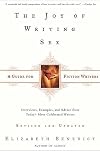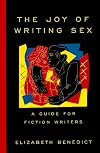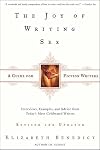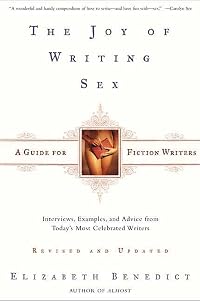
The Joy of Writing Sex: A Guide for Fiction Writers
by Elizabeth Benedict
On This Page
Description
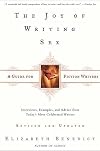
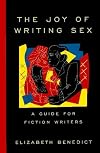
Elizabeth Benedict is here to help you craft compelling sex scenes that are just right for your fiction - whether your story calls for an encounter that sizzles or one that fizzles. Benedict has explored sensuality in her own novels with great success. So in The Joy of Writing Sex, she covers all the issues head-on - from how to handle creating fiction your grandparents might not approve of, to writing about sex in the age of AIDS. You'll learn to construct scenes that hinge not on the show more mechanics of sex, but on the freshness of characters, dialogue, mood, plot - all the ingredients of powerful fiction. Throughout, you'll benefit from the voices and experiences of some of today's most prestigious writers - among them, John Updike, Dorothy Allison, Russell Banks, Joyce Carol Oates, Carol Shields and Alan Hollinghurst. For absolute clarity, Benedict uses examples from the finest contemporary fiction to illustrate her points. She takes care to examine each excerpt in context of the whole piece, to help you develop the skills you need to objectively analyze your own work. In the final chapter, you'll find exercises to help you master elements such as dialogue, setting and tone. show lessTags
Recommendations



Member Reviews
What a surprise. I think the title (which is a play on the 1970s classic The Joy of Sex) is a bit misleading, because to me it sounds like a how-to guide for writers of erotica and romance fiction. And it is none of those things. Instead, I would describe it as a discussion on how sex functions to promote story and character in literary fiction. It's really about what makes great writing more than anything.
One of the book's strengths is how Benedict uses examples from contemporary literature to illustrate her points -- many from books I've read, or that are now on my wishlist. She also includes interviews with many writers, including Russell Banks, Edmund White, Alan Hollinghurst, Carol Sheilds, and John Updike, among many others. She show more includes a wide-range of approaches--safe-sex, AIDs, first time, adultery, married sex, illegal sex, recreational sex, gay, lesbian, masturbation--and covers them in a matter of fact way without embarrassment.
I have to admit that I'm one of those readers who often finds sex scenes in books to be quite boring and I tend to skip over them. After reading the Joy of Writing Sex, I think I'll look at them differently.
Recommended for: To quote one of the cover blurbs, this one from Elaine Showalter: "Elizabeth Benedict's advice for writers about the literary meaning of sex is also wonderful advice for readers. An important book for all serious teachers and students of contemporary fiction." show less
One of the book's strengths is how Benedict uses examples from contemporary literature to illustrate her points -- many from books I've read, or that are now on my wishlist. She also includes interviews with many writers, including Russell Banks, Edmund White, Alan Hollinghurst, Carol Sheilds, and John Updike, among many others. She show more includes a wide-range of approaches--safe-sex, AIDs, first time, adultery, married sex, illegal sex, recreational sex, gay, lesbian, masturbation--and covers them in a matter of fact way without embarrassment.
I have to admit that I'm one of those readers who often finds sex scenes in books to be quite boring and I tend to skip over them. After reading the Joy of Writing Sex, I think I'll look at them differently.
Recommended for: To quote one of the cover blurbs, this one from Elaine Showalter: "Elizabeth Benedict's advice for writers about the literary meaning of sex is also wonderful advice for readers. An important book for all serious teachers and students of contemporary fiction." show less
I found this book back in Barnes & Noble during the summer of 2005. I was thrilled to find it, because everyone and anyone has a theory of how sex should be handled in fiction, when in truth, the subject is far more complex than most people give it credit for, especially for fiction. And since I knew my own work would feature some kind of sexual overtones, if not the dirty deed itself, I figured I needed all the help I could get. :)
No need to get into a long-winded review: I think this is an excellent resource for writers of all genres, though I don’t know if romance writers will find it enlightening or old hat. But the book focuses on a variety of sexual relationships and the uniqueness of each. The book also stresses that sex should show more be more than gratuitous or entertainment (it’s heavy in the literary way of looking at this), it should serve to do something aside from hooking two characters up. There’s a lot of focus on character motivation and desires and how that should define sex scenes in novels, and there’s plenty of examples from various works of fiction.
I think it’s fortunate that we live in a society where sex is prominent in fiction, film, and television. We’re not so gun-shy anymore about talking about it or reading about it, so chances are, you’ve been exposed to a variety of sex scenes while reading without really being “aware” of it. I think that’s the author’s point: sex should be so integrated to the characters and story as a whole that it’s a natural thing to come out of the book. There’s also a focus on intimacy between people, which is equally important. I can easily recommend this book to any writer faced with the possibility of writing a sex scene. It might give you ideas, or at the very a least, a new way to look at a familiar subject. show less
No need to get into a long-winded review: I think this is an excellent resource for writers of all genres, though I don’t know if romance writers will find it enlightening or old hat. But the book focuses on a variety of sexual relationships and the uniqueness of each. The book also stresses that sex should show more be more than gratuitous or entertainment (it’s heavy in the literary way of looking at this), it should serve to do something aside from hooking two characters up. There’s a lot of focus on character motivation and desires and how that should define sex scenes in novels, and there’s plenty of examples from various works of fiction.
I think it’s fortunate that we live in a society where sex is prominent in fiction, film, and television. We’re not so gun-shy anymore about talking about it or reading about it, so chances are, you’ve been exposed to a variety of sex scenes while reading without really being “aware” of it. I think that’s the author’s point: sex should be so integrated to the characters and story as a whole that it’s a natural thing to come out of the book. There’s also a focus on intimacy between people, which is equally important. I can easily recommend this book to any writer faced with the possibility of writing a sex scene. It might give you ideas, or at the very a least, a new way to look at a familiar subject. show less
While this book offers useful hints and some good ideas, it is much too caught up in reprinting excerpts from writers that the author admires.
Heh. Not really.
Ratings
Members
- Recently Added By
Author Information

11+ Works 1,121 Members
Elizabeth Benedict is the author of four novels, including Slow Dancing, which was a finalist for the American Book Award. Her short story Feasting was chosen for Prize Stories: The O. Henry Awards. She has taught fiction writing at Princeton University, the University of Iowa Writers' Workshop, the New School for Social Research, and Swarthmore show more College. She lives in New York City. (Bowker Author Biography) show less
Classifications
- DDC/MDS
- 808.3 — Literature & rhetoric Literature, rhetoric & criticism Rhetoric and collections of literary texts from more than two literatures Rhetoric of fiction
- LCC
- PN3377.5 .E76 .B46 — Language and Literature Literature (General) Literature (General) Prose. Prose fiction Technique. Authorship
- BISAC
Statistics
- Members
- 325
- Popularity
- 97,776
- Reviews
- 4
- Rating
- (3.67)
- Languages
- English, German
- Media
- Paper, Ebook
- ISBNs
- 6
- ASINs
- 4