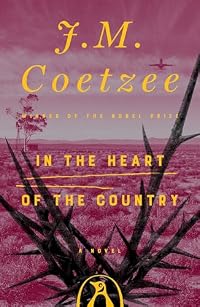
In the Heart of the Country: A Novel
by J. M. Coetzee
On This Page
Description
Stifled by the torpor of colonial South Africa and trapped in a web of reciprocal oppression, a lonely sheep farmer seeks comfort in the arms of a black concubine. But when his embittered spinster daughter Magda feels shamed, this lurch across the racial divide marks the end of a tenuous feudal peace. As she dreams madly of bloody revenge, Magda's consciousness starts to drift and the line between fact and the workings of her excited imagination becomes blurred. What follows is the fable of show more a woman's passionate, obsessed and violent response to an Africa that will not heed her. show lessTags
Recommendations









Member Reviews
The land is full of melancholy spinsters like me, lost to history, blue as roaches in our ancestral homes...."
"I do not think it was ever intended that people should live her. This is a lone made for insects who eat sand and lay eggs in each others corpses and have no voices with which to scream when they die."
This short novel is one of Coetzee's early works. It consists of 206 numbered passages, which are generally short, some merely a short paragraph long. Coetzee has said that in structuring the novel he was influenced by film and photographic methods. And despite being short, the chapters and the prose are frequently dense and require (at least for me) much concentration to read.
The narrator, Magda, lives on a sheep farm deep in the show more veldt with her widowed father. The story she tells is disturbing, and we sense from the beginning that Magda is/will be an unreliable narrator. We can never be sure whether Magda is telling the truth, or whether the events she described even actually happened. What we can be sure of is that the novel follows the descent and decline of Magda as she (probably) kills her father, and is slowly starving herself, as all around her the farm deteriorates.
Not an easy read, but very powerful.
4 stars show less
"I do not think it was ever intended that people should live her. This is a lone made for insects who eat sand and lay eggs in each others corpses and have no voices with which to scream when they die."
This short novel is one of Coetzee's early works. It consists of 206 numbered passages, which are generally short, some merely a short paragraph long. Coetzee has said that in structuring the novel he was influenced by film and photographic methods. And despite being short, the chapters and the prose are frequently dense and require (at least for me) much concentration to read.
The narrator, Magda, lives on a sheep farm deep in the show more veldt with her widowed father. The story she tells is disturbing, and we sense from the beginning that Magda is/will be an unreliable narrator. We can never be sure whether Magda is telling the truth, or whether the events she described even actually happened. What we can be sure of is that the novel follows the descent and decline of Magda as she (probably) kills her father, and is slowly starving herself, as all around her the farm deteriorates.
Not an easy read, but very powerful.
4 stars show less
Only the second book I've read from Coetzee, but much better than the Lives of Animals (not the best book to start with). In the Heart of the Country shows why Coetzee is so well-respected as a writer and why he's maybe not as popular as he should be.
It's artfully written - leaving no question that Coetzee is a master of his craft. However, the story itself while a riveting piece is dark and painful. I think Kafka would have approved based on his famous quote about literature.
Anyway, I'll definitely continue to read Coetzee, but I don't see myself returning to this particular story - there will be enough painful new stories to read I'm sure.
It's artfully written - leaving no question that Coetzee is a master of his craft. However, the story itself while a riveting piece is dark and painful. I think Kafka would have approved based on his famous quote about literature.
Anyway, I'll definitely continue to read Coetzee, but I don't see myself returning to this particular story - there will be enough painful new stories to read I'm sure.
It is a long time since I read any early Coetzee, and I had forgotten how intense and powerful his writing can be, for all the bleakness and despair of the situations he writes about. This one is full of violence and decay, but within a few pages it is clear that much, perhaps all, of the action takes place in the narrator's imagination. The narrator Magda, no longer a child, still lives with her widowed father on a remote farm, a life so dull and constrained that imagination is her only escape.
The book starts with her father arriving at the farm with a new wife, and almost immediately Magda describes murdering them in their beds with an axe, and wondering what to do with the bodies. The father soon reappears, and this time the woman show more being brought to the farm is the young bride of their farm worker Hendrick. The father shows more interest in this girl than in his daughter and soon seduces her. Another patricide follows, and for most of the rest of the book Magda explores the consequences, which eventually leave her alone on the farm descending further into madness.
The writing is intense and stylised, and this is far from being an easy read, but I suspect that it will prove a memorable one. show less
The book starts with her father arriving at the farm with a new wife, and almost immediately Magda describes murdering them in their beds with an axe, and wondering what to do with the bodies. The father soon reappears, and this time the woman show more being brought to the farm is the young bride of their farm worker Hendrick. The father shows more interest in this girl than in his daughter and soon seduces her. Another patricide follows, and for most of the rest of the book Magda explores the consequences, which eventually leave her alone on the farm descending further into madness.
The writing is intense and stylised, and this is far from being an easy read, but I suspect that it will prove a memorable one. show less
Intriguing, bold, staggering, revolting, horrible... these are some of the emotions I experienced, while reading this short book. The young spinster Magda is the daughter of a sturdy, but brutal farmer in a lost corner of South-Africa. Magda yearns for love and attention, especially that of her father. She gives us a very distorted view on reality, in endless repetitions and variations, not only very close to insanity but even far beyond.
This book is a true writing-experiment in the best of modernist tradition (it reminded me of Becket and of Faulkner). But it is also a relentless and gruesome exploration of the human psyché and condition. Coetzee is a worthy successor of Dostojewski.
Through the eyes and terrible acts of Magda we are show more confronted with the question of good and evil, but from a postmodernist perspective. And Coetzee's reflections upon the master-slave-relation (Magda and her father versus the black servant Jakob) give this book a real south-african flavour.
In my opinion this is one of the best and most interesting books of the last quarter of the XXth Century. show less
This book is a true writing-experiment in the best of modernist tradition (it reminded me of Becket and of Faulkner). But it is also a relentless and gruesome exploration of the human psyché and condition. Coetzee is a worthy successor of Dostojewski.
Through the eyes and terrible acts of Magda we are show more confronted with the question of good and evil, but from a postmodernist perspective. And Coetzee's reflections upon the master-slave-relation (Magda and her father versus the black servant Jakob) give this book a real south-african flavour.
In my opinion this is one of the best and most interesting books of the last quarter of the XXth Century. show less
Coetzee is turning into one of my favourite novelists. This guy didn’t win a Nobel Prize for nothing. I have, in the past, struggled with Nobel laureate writers: Pamuk, Hesse, Mann, García Márquez – all have written stuff that is mind-bogglingly dull and inaccessible. But with every novel I read of Coetzee’s, I find myself learning a different perspective on humanity. That’s got to be valuable.
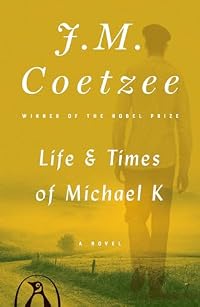
This is the earliest Coetzee I’ve read. I started (in fact my whole book blog started) with Disgrace, as many do, and last year also read The Life and Times of Michael K. Disgrace is dark, there’s no doubt about that. It has undertones of racism and violence that are disturbing. Michael K is ethereal, beautiful and moving. Heart of show more the Country is nowhere near Michael K. In fact, it’s way off to the left of Disgrace; it’s disturbing from the very first page and doesn’t let up for a minute.
For the entire length of the novel you’re locked into the mind of a girl/woman who lives on an extremely remote farm in South Africa. She has an extremely complex relationship with her father who has fathered many children who have died, left, been killed, vanished without a trace leaving her alone to live with him.
The novel is disturbing in many ways, not just in terms of the violence, insecurity and hatred emanating from the protagonist. For a start, you are never sure what is real and imagined. Events repeat themselves with different outcomes without warning. Secondly, you are never sure what time it is. Is the protagonist a child, is she a young woman, is she elderly, is she all three? Finally, each character (and there are precious few) moves through a variety of guises so that you are never sure what to make of them; are they friend or foe?
If Coetzee set out to help us understand how isolation, loneliness and emotional abuse can make someone mentally unstable, if he has tried to help us grapple with the complex realities of the racial legacies of South Africa, if he has attempted to portray the desperate helplessness of those who grow up prisoners within their own families then this is an extremely important novel. I believe his intention was to tackle all three and, for a second novel, he has achieved something quite remarkable.
Don’t get me wrong, this book is not easy, and it is difficult to understand. In so being, it demonstrates the unique medium of the novel to reflect our own difficult and unfathomable lives. show less
This is the earliest Coetzee I’ve read. I started (in fact my whole book blog started) with Disgrace, as many do, and last year also read The Life and Times of Michael K. Disgrace is dark, there’s no doubt about that. It has undertones of racism and violence that are disturbing. Michael K is ethereal, beautiful and moving. Heart of show more the Country is nowhere near Michael K. In fact, it’s way off to the left of Disgrace; it’s disturbing from the very first page and doesn’t let up for a minute.
For the entire length of the novel you’re locked into the mind of a girl/woman who lives on an extremely remote farm in South Africa. She has an extremely complex relationship with her father who has fathered many children who have died, left, been killed, vanished without a trace leaving her alone to live with him.
The novel is disturbing in many ways, not just in terms of the violence, insecurity and hatred emanating from the protagonist. For a start, you are never sure what is real and imagined. Events repeat themselves with different outcomes without warning. Secondly, you are never sure what time it is. Is the protagonist a child, is she a young woman, is she elderly, is she all three? Finally, each character (and there are precious few) moves through a variety of guises so that you are never sure what to make of them; are they friend or foe?
If Coetzee set out to help us understand how isolation, loneliness and emotional abuse can make someone mentally unstable, if he has tried to help us grapple with the complex realities of the racial legacies of South Africa, if he has attempted to portray the desperate helplessness of those who grow up prisoners within their own families then this is an extremely important novel. I believe his intention was to tackle all three and, for a second novel, he has achieved something quite remarkable.
Don’t get me wrong, this book is not easy, and it is difficult to understand. In so being, it demonstrates the unique medium of the novel to reflect our own difficult and unfathomable lives. show less
On a large, isolated farm in apartheid-era South Africa, the narrator lives with her harsh and cold father. In a stream-of-consciousness narration/diary format she describes her dreary life, alternating between past and present, and very early on it becomes clear that she is mentally unstable. Different versions of reality weave in and out of the story, and the reader is never sure what is true and what is false. The only truth that can be detected is that the narrator is consumed by a desperate loneliness and a definite lack of identity. She lives without the company of a mother or siblings, her father ignores her, and custom dictates that as a white South African, her relationships with the black farm workers must be of the show more master/servant variety. The latter appears to be a source of great pain for her, as she remembers playing with the farm workers’ children when she was a young girl and before her family explained to her that it is inappropriate. As usual, Coetzee does a wonderful job of illustrating how the apartheid system, and colonization in general, negatively affects everyone involved (in different ways and on a different scale, of course), with the oppressors slowly becoming rotten at the core. Great, of course, and highly recommended. I would put this right after Disgrace on my Coetzee favorites list. show less
Set in a barren part of South Africa and narrated by a spinster daughter, this tense tale will keep readers in suspense the entire book. The 5 stars are for the writing and conception of such a character, and the intelligence apparent throughout. It wasn't an easy read because the main character has mental issues, but it was powerful. The story is a study on extreme loneliness and isolation, devoid of love, touch, and caring, cut off from discourse with other people. The father in this story appears cold towards the daughter, at least from her perspective. It's hard to tell what reality is, and Magda, the daughter, plays out various scenarios in her mind. She's intelligent and introspective, reasonably well read, and yet knows little show more about normal life outside of the few people in her life and the vast land on which she lives. The book is a fascinating psychological essay. Brilliant, probably beyond my understanding. This slim volume is utterly unforgettable. The author has won two Booker Prizes and the Nobel Prize for Literature.
I'd recommend the book to people who like literary works. show less
I'd recommend the book to people who like literary works. show less
Members
- Recently Added By
Lists

1001 Books You Must Read Before You Die
1,448 works; 1,132 members

Top Five Books of 2013
1,562 works; 715 members

Mental health fiction
55 works; 18 members

1,001 BYMRBYD Concensus
723 works; 27 members

Alphabetical Books
211 works; 3 members

My TBR
371 works; 3 members
Author Information

111+ Works 42,092 Members
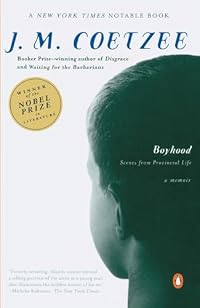
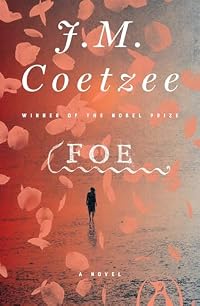
J.M. Coetzee's full name is John Michael Coetzee. Born in Cape Town, South Africa, in 1940, Coetzee is a writer and critic who uses the political situation in his homeland as a backdrop for many of his novels. Coetzee published his first work of fiction, Dusklands, in 1974. Another book, Boyhood, loosely chronicles an unhappy time in Coetzee's show more childhood when his family moved from Cape Town to the more remote and unenlightened city of Worcester. Other Coetzee novels are In the Heart of the Country and Waiting for the Barbarians. Coetzee's critical works include White Writing and Giving Offense: Essays on Censorship. Coetzee is a two-time recipient of the Booker Prize and in 2003, he won the Nobel Literature Award. (Bowker Author Biography) J. M. Coetzee's books include "Boyhood", "Dusklands", "In the Heart of the Country", "Waiting for the Barbarians", "Life & Times of Michael K", "Foe", & "The Master of Petersburg". A professor of general literature at the University of Cape Town, Coetzee has won many literary awards, including the CNA Prize (South Africa's premier literary award), the Booker Prize (twice), the Prix Etranger Femina, the Jerusalem Prize, the Lannan Literary Award, & The Irish Times International Fiction Prize. (Publisher Provided) show less
Some Editions
Awards and Honors
Series
Belongs to Publisher Series
Otavan kirjasto (43)
Rainbow pocketboeken (805)
Work Relationships
Is contained in
Has the adaptation
Common Knowledge
- Canonical title*
- In het hart van het land
- Original title
- In the heart of the country : a novel
- Alternate titles
- From the Heart of the Country (1st U.S.A. edition) (1st U.S.A. edition)
- Original publication date
- 1977
- People/Characters
- Magda; Hendrik; Anna
- Important places
- South Africa
- Related movies
- Dust (1985)
- First words
- 1. Today my father brought home his new bride.
- Last words
- (Click to show. Warning: May contain spoilers.)I have never felt myself to be another man's creature (here they come, how sweet the closing plangencies), I have uttered my life in my own voice throughout (what a consolation that is), I have chosen every moment my own destiny, which is to die here in the petrified garden, behind locked gates, near my father's bones, in a space echoing with hymns I could have written but did not because (I thought) it was too easy.
- Blurbers
- Grumbach, Doris
*Some information comes from Common Knowledge in other languages. Click "Edit" for more information.
Classifications
Statistics
- Members
- 1,012
- Popularity
- 25,593
- Reviews
- 17
- Rating
- (3.63)
- Languages
- 15 — Danish, Dutch, English, Finnish, French, German, Greek, Hungarian, Italian, Norwegian (Bokmål), Polish, Slovenian, Spanish, Swedish, Portuguese (Portugal)
- Media
- Paper, Ebook
- ISBNs
- 46
- ASINs
- 6