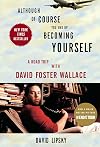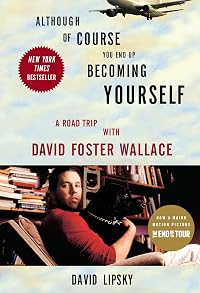
Although of Course You End Up Becoming Yourself
by David Lipsky 
On This Page
Description
NOW A MAJOR MOTION PICTURE, STARRING JASON SEGAL AND JESSE EISENBERG, DIRECTED BY JAMES PONSOLDTAn indelible portrait of David Foster Wallace, by turns funny and inspiring, based on a five-day trip with award-winning writer David Lipsky during Wallace’s Infinite Jest tour
In David Lipsky’s view, David Foster Wallace was the best young writer in America. Wallace’s pieces for Harper’s magazine in the ’90s were, according to Lipsky, “like hearing for the first time the brain show more voice of everybody I knew: Here was how we all talked, experienced, thought. It was like smelling the damp in the air, seeing the first flash from a storm a mile away. You knew something gigantic was coming.”
Then Rolling Stone sent Lipsky to join Wallace on the last leg of his book tour for Infinite Jest, the novel that made him internationally famous. They lose to each other at chess. They get iced-in at an airport. They dash to Chicago to catch a make-up flight. They endure a terrible reader’s escort in Minneapolis. Wallace does a reading, a signing, an NPR appearance. Wallace gives in and imbibes titanic amounts of hotel television (what he calls an “orgy of spectation”). They fly back to Illinois, drive home, walk Wallace’s dogs. Amid these everyday events, Wallace tells Lipsky remarkable things—everything he can about his life, how he feels, what he thinks, what terrifies and fascinates and confounds him—in the writing voice Lipsky had come to love. Lipsky took notes, stopped envying him, and came to feel about him—that grateful, awake feeling—the same way he felt about Infinite Jest. Then Lipsky heads to the airport, and Wallace goes to a dance at a Baptist church.
A biography in five days, Although Of Course You End Up Becoming Yourself is David Foster Wallace as few experienced this great American writer. Told in his own words, here is Wallace’s own story, and his astonishing, humane, alert way of looking at the world; here are stories of being a young writer—of being young generally—trying to knit together your ideas of who you should be and who other people expect you to be, and of being young in March of 1996. And of what it was like to be with and—as he tells it—what it was like to become David Foster Wallace.
"If you can think of times in your life that you’ve treated people with extraordinary decency and love, and pure uninterested concern, just because they were valuable as human beings. The ability to do that with ourselves. To treat ourselves the way we would treat a really good, precious friend. Or a tiny child of ours that we absolutely loved more than life itself. And I think it’s probably possible to achieve that. I think part of the job we’re here for is to learn how to do it. I know that sounds a little pious."
—David Foster Wallace
. show less
Tags
Recommendations



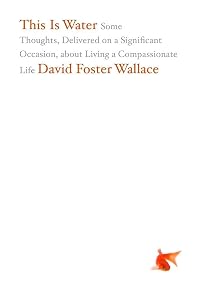
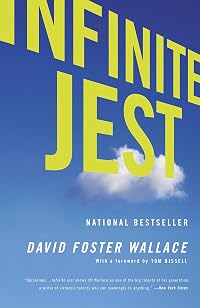






Member Recommendations
Member Reviews
[Infinite Jest] is one of those books – on the same shelf as, say [Ulysses], [Naked Lunch], [Gravity’s Rainbow], [Look Homeward, Angel] – in the literary, and popular, conscience without having been widely read, except for a rabid and vocal few. I count myself among the few who started and finished [Jest]. And while I’m not so rabid or vocal, I’m glad to have read it, and I’ve thought a lot about it since finishing the last page, and last footnote. When it was published in 1996, the 1000+ page beast met with the most extreme ballyhoo in maybe a century, and David Foster Wallace was at the center of that firestorm. One reviewer crowned him the winner of book awards before the book had even hit the shelves. DFW captured show more people’s imaginations in a way that almost no other author had in his contemporary society. What must that have been like?
Lipsky’s book is a window into the answer, as it chronicles a five day, grinding interview in March, 1996 at the end of DFW’s book tour publicizing the book. The interview was meant to support a Rolling Stone feature on DFW, though it was never written. Instead, Lipsky eventually transcribed the interview, layering in some commentary and bookending the interview with a background introduction and afterword. This isn’t a book for everyone. But it’s for more than just [Jest]ers. If you want to get inside a writer’s head during the whirlwind surrounding publication, or find out how much of fictional narratives are cobbled from biographical details, or learn about the process of editing, read this book.
There’s no twist at the end. At this point, everyone knows how the story ends, what Lipsky will dwell on in the afterword – the Titanic will not veer around the iceberg and pull into New York City with a mere scratch in the hull. But that is another reason to read the book – if you want a brief glimpse into the psychic pain that leads to suicide. Knowing how the story ends, the passages where DFW talks about how the simplest things can be exhaustively cycled through his brilliant mind until it’s an ego-breaking moment, well, those are monumentally painful.
There’s another reason to read it – as unreliable narrators, these guys are in a Herculean universe. Lipsky panders with one comment and skewers with the next, desperate for DFW’s regard. Wallace shucks and jives all the way through, dismissive of the attention but an open hand still levitating in the air because, after laying himself bare over the course of 1000 pages, he just as desperately wants validation. Sifting through all the subtle subterranean motives to find the truth is a terribly interesting, if sad, exercise.
There are things that don’t settle well. I mean, beyond knowing DFW’s fate; I mean, bookish things. Lipsky’s a terrible interviewer. Terrible. If you don’t almost toss the book across the room at some of his follow-ups or strings of questions, you probably shouldn’t be reading the books in the first place. And, while the bad questions are evidence of his underlying motivations and self-interest, it is still maddening. Ditto on some of his inserted commentary – he can get it so wrong sometimes. But, to be fair, he was in the room, the car, the diner, and I wasn’t. Also, though the book’s strength is that Lipsky mostly just transcribes the five days, I would have liked to see his commentary urges used to explain some of the breaks in the tape a few more times, or used to describe the scene a few more times.
On balance, if you’re not in any way interested in [Infinite Jest], if you’re not interested in reading and writing, or if you’re not interested in how a brilliant, tortured mind works, don’t read this book – but, then, if you’re a serious reader, shouldn’t you be interested in those things?
Bottom Line:DFW unplugged and live.
4 bones!!!!! show less
Lipsky’s book is a window into the answer, as it chronicles a five day, grinding interview in March, 1996 at the end of DFW’s book tour publicizing the book. The interview was meant to support a Rolling Stone feature on DFW, though it was never written. Instead, Lipsky eventually transcribed the interview, layering in some commentary and bookending the interview with a background introduction and afterword. This isn’t a book for everyone. But it’s for more than just [Jest]ers. If you want to get inside a writer’s head during the whirlwind surrounding publication, or find out how much of fictional narratives are cobbled from biographical details, or learn about the process of editing, read this book.
There’s no twist at the end. At this point, everyone knows how the story ends, what Lipsky will dwell on in the afterword – the Titanic will not veer around the iceberg and pull into New York City with a mere scratch in the hull. But that is another reason to read the book – if you want a brief glimpse into the psychic pain that leads to suicide. Knowing how the story ends, the passages where DFW talks about how the simplest things can be exhaustively cycled through his brilliant mind until it’s an ego-breaking moment, well, those are monumentally painful.
There’s another reason to read it – as unreliable narrators, these guys are in a Herculean universe. Lipsky panders with one comment and skewers with the next, desperate for DFW’s regard. Wallace shucks and jives all the way through, dismissive of the attention but an open hand still levitating in the air because, after laying himself bare over the course of 1000 pages, he just as desperately wants validation. Sifting through all the subtle subterranean motives to find the truth is a terribly interesting, if sad, exercise.
There are things that don’t settle well. I mean, beyond knowing DFW’s fate; I mean, bookish things. Lipsky’s a terrible interviewer. Terrible. If you don’t almost toss the book across the room at some of his follow-ups or strings of questions, you probably shouldn’t be reading the books in the first place. And, while the bad questions are evidence of his underlying motivations and self-interest, it is still maddening. Ditto on some of his inserted commentary – he can get it so wrong sometimes. But, to be fair, he was in the room, the car, the diner, and I wasn’t. Also, though the book’s strength is that Lipsky mostly just transcribes the five days, I would have liked to see his commentary urges used to explain some of the breaks in the tape a few more times, or used to describe the scene a few more times.
On balance, if you’re not in any way interested in [Infinite Jest], if you’re not interested in reading and writing, or if you’re not interested in how a brilliant, tortured mind works, don’t read this book – but, then, if you’re a serious reader, shouldn’t you be interested in those things?
Bottom Line:DFW unplugged and live.
4 bones!!!!! show less
DFW in the movie version of this book was played as insecure, ashamed of his success, but interesting to hang out with. After seeing the film, I started reading The Art Fair by David Lipsky. My father was an artist and I found the NYC art culture he describes familiar, but at a certain point, I abandoned reading it. I had previously abandoned Infinite Jest for the second time (the first time I'd felt like a failure) not that long ago. I'd made it through The Broom of the System a second time realizing I'd forgotten much of my first reading.
Books like these used to impress me. When they gave me problems, I'd felt it was my fault. I had a similar "relationship" with Pynchon. Somewhere along the line, I'd managed to work it out. Now, I show more can give these authors up guilt-free, deciding I just don't enjoy them as much as I'm supposed to.
But enough about me. No, a little more about me. I started reading Although of Course because the movie version excited me. The cleverness and the pace were part of this, but it was the suicide that intrigued me. People have said it was because of failed ambition or jealousy or competitiveness or feeling he was no longer able to write and the thing about this book is that he discusses all of these topics and others and has smart and insightful things to say about them. He says many of the things that would be exactly the insights that psychotherapy would claim should free him to live a healthy life. (I should add that he also says much worth hearing about the writing process itself, about the publishing experience, the celebrity experience, about entertainment vs. art, about addiction, etc.) So, why then, did these insights fail him when he needed them most?
My answer (yes, this is still about me--I get to say in my review whatever I want) is that he discovered he couldn't be who he'd decided he should be. He discovered that he often felt driven to be who he shouldn't be, a lustful, envious, anxious, blocked, superficial, flawed human and he hated this failure to transcend being that person. At one point he hints as much to David Lipsky, saying that the way to resolve the problem of being alive is to find a kind of self-love. I'm saying he didn't find it. I could defend this thesis if I were the kind of guy who needed to convince people but at the moment I'm more motivated to finish this review before I time out and am not permitted to save it.
David Lipsky admits at the end that he really wanted DFW to admit he was pleased by his success and that, despite attempts to get him to say so, DFW managed to evade confessing. I saw this as more Lipsky's issue than Wallace's. I didn't (as some other reviewers on Goodreads) hate Lipsky for his influence on the discussion. I thought he managed to get Wallace to reflect on topics on which he much to say. I did think that several of Lipsky's observations were downright wrong, or missing the point. For example, Wallace talks about making an effort to be normal and Lipsky adds (after the actual interview) that normal people don't engage in such an effort. I contend that they are doing this all the time, though often unconsciously or out of habit.
I find the Wallace of the book "truer" and more accessible than how he is portrayed in the movie. Of course I never met him and have read that those who knew him think both are false. To that I say we are all somewhat false and others see us distorted through their projections. Adding to this opinion of mine, Wallace points out that a good writer creates an illusion of intimacy with his readers and then disappoints them when he meets them and doesn't behave like their imagined close friend. It is observations like this that make the book an enjoyable read. show less
Books like these used to impress me. When they gave me problems, I'd felt it was my fault. I had a similar "relationship" with Pynchon. Somewhere along the line, I'd managed to work it out. Now, I show more can give these authors up guilt-free, deciding I just don't enjoy them as much as I'm supposed to.
But enough about me. No, a little more about me. I started reading Although of Course because the movie version excited me. The cleverness and the pace were part of this, but it was the suicide that intrigued me. People have said it was because of failed ambition or jealousy or competitiveness or feeling he was no longer able to write and the thing about this book is that he discusses all of these topics and others and has smart and insightful things to say about them. He says many of the things that would be exactly the insights that psychotherapy would claim should free him to live a healthy life. (I should add that he also says much worth hearing about the writing process itself, about the publishing experience, the celebrity experience, about entertainment vs. art, about addiction, etc.) So, why then, did these insights fail him when he needed them most?
My answer (yes, this is still about me--I get to say in my review whatever I want) is that he discovered he couldn't be who he'd decided he should be. He discovered that he often felt driven to be who he shouldn't be, a lustful, envious, anxious, blocked, superficial, flawed human and he hated this failure to transcend being that person. At one point he hints as much to David Lipsky, saying that the way to resolve the problem of being alive is to find a kind of self-love. I'm saying he didn't find it. I could defend this thesis if I were the kind of guy who needed to convince people but at the moment I'm more motivated to finish this review before I time out and am not permitted to save it.
David Lipsky admits at the end that he really wanted DFW to admit he was pleased by his success and that, despite attempts to get him to say so, DFW managed to evade confessing. I saw this as more Lipsky's issue than Wallace's. I didn't (as some other reviewers on Goodreads) hate Lipsky for his influence on the discussion. I thought he managed to get Wallace to reflect on topics on which he much to say. I did think that several of Lipsky's observations were downright wrong, or missing the point. For example, Wallace talks about making an effort to be normal and Lipsky adds (after the actual interview) that normal people don't engage in such an effort. I contend that they are doing this all the time, though often unconsciously or out of habit.
I find the Wallace of the book "truer" and more accessible than how he is portrayed in the movie. Of course I never met him and have read that those who knew him think both are false. To that I say we are all somewhat false and others see us distorted through their projections. Adding to this opinion of mine, Wallace points out that a good writer creates an illusion of intimacy with his readers and then disappoints them when he meets them and doesn't behave like their imagined close friend. It is observations like this that make the book an enjoyable read. show less
Objectivity is something that rarely rears its head when I’m dealing with much of anything concerning David Foster Wallace, as I’m a literary DFW groupie through-and-through. Many would see this book as something redundant, as I’ve already seen (several times) the film on the same events, The End of the Tour, starring Jesse Eisenberg as the interviewing author David Lipsky, and Jason Segel playing Wallace. Lipsky was on assignment for Rolling Stone magazine to try and capture the excitement of the author who seemed to own the publishing scene, and his fans who were walking on air as they met him during the last five days of the book tour for his monumental book, Infinite Jest. Lipsky was another adoring fan as well, seeing show more Wallace’s fame as something he lusted for himself, while it was something that DFW was not that comfortable with at all.
Wallace was also quite nervous that in the interviews he would come across as too much of … frankly, so many things. On the page, Wallace was used to constantly rewriting, editing, and perfecting his words, but he worried that a casual, off-the-cuff remark could make him look like an ass, a fool, ignorant, or countless other things. As a reader, I found myself fascinated by how this raw, first draft of a conversation allowed me to see just how his mind works on the fly. Sure, I heard him say the same things in the movie, but the printed word is my thing. Makes me think of how many years it took me to become comfortable reading fiction off a monitor, and not needing to print it out on paper to enjoy it.
No one should think that these interviews/conservations are going to always be deep and meaningful, with everything being so profound. Lipsky ends up sleeping in an extra bedroom at Wallace’s house when they’re in town, so he catalogs the books and the décor of the house, down to his Alanis Morissette poster and the Barney the Dinosaur towel covering a window. They do it all together: drive, eat, play with his two big dogs, and talk constantly about writing, fame, women, insanity, and what the two men want in their lives.
This is not a road trip/buddy movie, but there’s a lot of common ground, even if the two men are coming at things from very distinctively different positions. There are times when Lipsky asks a probing question about Wallace’s mental state, drug use (especially rumors about his heroin addiction), being institutionalized, ego, his friendships (Jonathan Franzen and more) and his opinions of other writers—and Wallace will show his discomfort, but most times he will put a response together in his head, and print out, give an answer. The way the two men relate is fascinating.
A quote from Lev Grossman in Time magazine was spot-on to me. “Lipsky’s transcript of their brilliant conversation reads like a two-man Tom Stoppard play or a four-handed duet scored for typewriter.”
I thoroughly enjoyed this book, even with (or maybe because of) all of its familiarity. These two authors speaking intelligently about writing and their lives is golden to readers like me. The book is also a treat to just pick up and read random sections of. It’s a book that works for some, and not at all for others [I’m thinking of Vicky here], but those that appreciate it are as happy as David Foster Wallace’s dogs were to get outside to play. show less
Wallace was also quite nervous that in the interviews he would come across as too much of … frankly, so many things. On the page, Wallace was used to constantly rewriting, editing, and perfecting his words, but he worried that a casual, off-the-cuff remark could make him look like an ass, a fool, ignorant, or countless other things. As a reader, I found myself fascinated by how this raw, first draft of a conversation allowed me to see just how his mind works on the fly. Sure, I heard him say the same things in the movie, but the printed word is my thing. Makes me think of how many years it took me to become comfortable reading fiction off a monitor, and not needing to print it out on paper to enjoy it.
No one should think that these interviews/conservations are going to always be deep and meaningful, with everything being so profound. Lipsky ends up sleeping in an extra bedroom at Wallace’s house when they’re in town, so he catalogs the books and the décor of the house, down to his Alanis Morissette poster and the Barney the Dinosaur towel covering a window. They do it all together: drive, eat, play with his two big dogs, and talk constantly about writing, fame, women, insanity, and what the two men want in their lives.
This is not a road trip/buddy movie, but there’s a lot of common ground, even if the two men are coming at things from very distinctively different positions. There are times when Lipsky asks a probing question about Wallace’s mental state, drug use (especially rumors about his heroin addiction), being institutionalized, ego, his friendships (Jonathan Franzen and more) and his opinions of other writers—and Wallace will show his discomfort, but most times he will put a response together in his head, and print out, give an answer. The way the two men relate is fascinating.
A quote from Lev Grossman in Time magazine was spot-on to me. “Lipsky’s transcript of their brilliant conversation reads like a two-man Tom Stoppard play or a four-handed duet scored for typewriter.”
I thoroughly enjoyed this book, even with (or maybe because of) all of its familiarity. These two authors speaking intelligently about writing and their lives is golden to readers like me. The book is also a treat to just pick up and read random sections of. It’s a book that works for some, and not at all for others [I’m thinking of Vicky here], but those that appreciate it are as happy as David Foster Wallace’s dogs were to get outside to play. show less
Although of Course You End Up Becoming Yourself: A Road Trip with David Foster Wallace
By David Lipsky
Broadway Books
Reviewed by Karl Wolff
DFW. David Foster Wallace. Like Pynchon and Joyce, the name conjures the very pinnacle of literary experimentalism. Combined with the hype surrounding Infinite Jest, his 1000-page magnum opus, and untimely death, David Foster Wallace's public persona evokes a literary figure one places on a very high pedestal. He stands above other luminaries like Jonathan Franzen, Bret Easton Ellis, and William T. Vollmann. When leaked images of Jason Segel dressed as DFW hit the Internet, you could set a watch to when the inevitable outrage would hit. I know, right? What next? The guy from 10 Things I Hate About You show more playing The Joker?
I haven't seen The End of the Tour yet, but I did have a chance to read Although of Course You End Up Becoming Yourself: A Road Trip with David Foster Wallace, by David Lipsky. I read it concurrently with The Selected Letters of Norman Mailer, edited by J. Michael Lennon. I mention the book of Norman Mailer letters because these types of books show us, the reading public, another side of the author. Lipsky, assigned to write a story by Rolling Stone, met David Foster Wallace and followed him on a Midwest book tour for Infinite Jest. Unlike the celebrity and literary icon known to most, Although of Course gives the reader a very different image of DFW. He comes across as funny, extremely smart, and deeply conflicted about fame.
In the book, we follow DFW and Lipsky as they converse on a long road trip. DFW possesses a quirky hybrid personality: part-jock, part-hipster intellectual, part-author. We learn about his early life, his troubles with substance abuse, and his fragile emotional state.
Make no mistake, this isn't a book of two guys passing the time. Lipsky and DFW co-exist in a mannered joust of an extended interview. Lipsky needs to pry as much information as he can for the magazine story. DFW works hard not to reveal too much or come across badly. Throughout the interviews, they converse about the publishing industry, politics, pleasure, university life, and numerous other topics. The conversations are framed by Lipsky's introduction, which details DFW's clinical depression and his struggles with the side-effects of Nardil. Unfortunately, our culture still sees mental health as a sign of weakness and personal failing. When I first read about DFW's suicide in 2008, I didn't know how to react. I also knew very little about his mental state and his battles with depression.
Although of Course also offers little details that help to humanize DFW. His folksy pronunciation of certain words (dudn't, wouldna, etc.) and his chronic spitting from the chew jammed in his mouth. We see him with his two dogs, Jeeves and Drone. While many books out there analyze and investigate what DFW meant to the American literary canon, it was refreshing to read about him as a human being. Lipsky prods him about his "ordinary guy" persona and his privileged background (both parents are university professors; he studied philosophy at Harvard, etc.). DFW has a tough time coming up with answers to Lipsky's challenges. On the other hand, DFW's problematic public persona enriches his writing. He wrote digressive, intellectually challenging fiction and essays, yet he constantly strove to understand the inner workings of the American psyche.
I'm rating this lower than usual, not because it lacks merit, but for the opposite reason. It is a highly valuable book, but for a specialized audience. Unless you are an Infinite Jest or DFW fan, there might not be enough here to attract you. The conversations about editors and cutting and writing conferences may come across as incredibly tedious. But to those who enjoy DFW, the book is like a "Making Of" featurette on Infinite Jest. And an added bonus of seeing a literary icon as flesh and blood, foibles and vulnerabilities. Sometimes, when we see those names on the dust jackets, we can be a little reverent. Although of Course provides a way of grounding the reader. DFW watched Broken Arrow and ate at Denny's just like us.
Out of 10/8.9, but higher for David Foster Wallace completists and those interested in the mechanics of the publishing industry.
http://www.cclapcenter.com/2015/12/book_review_although_of_course.html show less
By David Lipsky
Broadway Books
Reviewed by Karl Wolff
DFW. David Foster Wallace. Like Pynchon and Joyce, the name conjures the very pinnacle of literary experimentalism. Combined with the hype surrounding Infinite Jest, his 1000-page magnum opus, and untimely death, David Foster Wallace's public persona evokes a literary figure one places on a very high pedestal. He stands above other luminaries like Jonathan Franzen, Bret Easton Ellis, and William T. Vollmann. When leaked images of Jason Segel dressed as DFW hit the Internet, you could set a watch to when the inevitable outrage would hit. I know, right? What next? The guy from 10 Things I Hate About You show more playing The Joker?
I haven't seen The End of the Tour yet, but I did have a chance to read Although of Course You End Up Becoming Yourself: A Road Trip with David Foster Wallace, by David Lipsky. I read it concurrently with The Selected Letters of Norman Mailer, edited by J. Michael Lennon. I mention the book of Norman Mailer letters because these types of books show us, the reading public, another side of the author. Lipsky, assigned to write a story by Rolling Stone, met David Foster Wallace and followed him on a Midwest book tour for Infinite Jest. Unlike the celebrity and literary icon known to most, Although of Course gives the reader a very different image of DFW. He comes across as funny, extremely smart, and deeply conflicted about fame.
In the book, we follow DFW and Lipsky as they converse on a long road trip. DFW possesses a quirky hybrid personality: part-jock, part-hipster intellectual, part-author. We learn about his early life, his troubles with substance abuse, and his fragile emotional state.
Make no mistake, this isn't a book of two guys passing the time. Lipsky and DFW co-exist in a mannered joust of an extended interview. Lipsky needs to pry as much information as he can for the magazine story. DFW works hard not to reveal too much or come across badly. Throughout the interviews, they converse about the publishing industry, politics, pleasure, university life, and numerous other topics. The conversations are framed by Lipsky's introduction, which details DFW's clinical depression and his struggles with the side-effects of Nardil. Unfortunately, our culture still sees mental health as a sign of weakness and personal failing. When I first read about DFW's suicide in 2008, I didn't know how to react. I also knew very little about his mental state and his battles with depression.
Although of Course also offers little details that help to humanize DFW. His folksy pronunciation of certain words (dudn't, wouldna, etc.) and his chronic spitting from the chew jammed in his mouth. We see him with his two dogs, Jeeves and Drone. While many books out there analyze and investigate what DFW meant to the American literary canon, it was refreshing to read about him as a human being. Lipsky prods him about his "ordinary guy" persona and his privileged background (both parents are university professors; he studied philosophy at Harvard, etc.). DFW has a tough time coming up with answers to Lipsky's challenges. On the other hand, DFW's problematic public persona enriches his writing. He wrote digressive, intellectually challenging fiction and essays, yet he constantly strove to understand the inner workings of the American psyche.
I'm rating this lower than usual, not because it lacks merit, but for the opposite reason. It is a highly valuable book, but for a specialized audience. Unless you are an Infinite Jest or DFW fan, there might not be enough here to attract you. The conversations about editors and cutting and writing conferences may come across as incredibly tedious. But to those who enjoy DFW, the book is like a "Making Of" featurette on Infinite Jest. And an added bonus of seeing a literary icon as flesh and blood, foibles and vulnerabilities. Sometimes, when we see those names on the dust jackets, we can be a little reverent. Although of Course provides a way of grounding the reader. DFW watched Broken Arrow and ate at Denny's just like us.
Out of 10/8.9, but higher for David Foster Wallace completists and those interested in the mechanics of the publishing industry.
http://www.cclapcenter.com/2015/12/book_review_although_of_course.html show less
Quite simply, after watching "The End of the Tour" I wanted more. More David Foster Wallace. More of his ideas. More of the insight that came out of his interaction with David Lipsky. I wasn't sure the book would have that much more than the movie but I had to make sure. And it was definitely worth reading. Much like I felt while reading the Miles Davis autobiography "Miles," I felt while reading this that I was actually sitting next to and listening to DFW. Lipsky does a great job in capturing what I assume was Wallace's real vocal mannerisms, which only helps the reader to sink into his mindset. It felt invaluable to not only hear Wallace talk about "Infinite Jest" and some of the themes he was trying to convey, but also to hear his show more thoughts in general on topics ranging from fame, addiction, authenticity, loneliness, TV and the difficult yet necessary activity of living in the world without trying to escape experience through a variety of options offered to humanity in modern times. I feel like reading this extended interview added untold depths to his writings, and it has certainly prompted me to re-read his works and discover those I hadn't read yet. show less
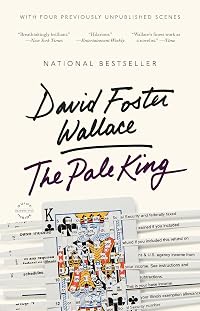
I have complicated feelings towards David Foster Wallace's writings. Wallace is the kind of writer that you have to work at to appreciate, and not everyone will get there, myself included in that statement. I first picked up "The Pale King" at a library not long after its' release, and was confusedly entranced as I waded through the pages upon pages about tax law and the sheer boredom of corporate life, yet fell in love with the gems of prose that I stumbled into along the way. "This is Water" is one of the best things I have ever read; I flailed through "Infinite Jest" and was confounded by "The Broom of the System." In this book, the very format (a transcript of a five day trip with a Rolling Stone reporter) makes for a rather rough, show more broken reading, but just as you start to wonder if it's worth continuing, a ridiculously profound paragraph will wander into the book, forcing you to go back and reread a few pages to see what exactly led up to it. As you read this one though, keep in mind what Wallace himself said, regarding the format of dialogue and transcription and quotes, "Writing down something that somebody says out loud is not a matter of transcribing. Because written stuff said out loud on the page doesn't look said out loud. It just looks crazy" (164). show less
This books reads like one of the best conversations you've ever had. You know what I mean - the nightlong philosophical meandering lovely humorous discourses on life, the universe, and Meaning, and all of those Big Concepts.
I admit freely that I adore DFW and would have been a stuttering mess had I tried to talk to him, like that one guy in the book signing scene, and eavesdropping on this conversation was a distinct pleasure for me. I could sit and listen to him just talk, about his bandannas, his dogs, the greater Purpose behind his Life and Work, and so forth.
I regret bitterly that I will never be able to talk to him, as I do with many authors. But their works and interviews and letters live on, as a surrogate and something show more better.
Even if the interviewer is a bit abrasive [e.g. interjecting with judgmental comments, fishing for controversy, writing down things that he says won't be recorded, tapping DFW's dogs on the nose(at least he apologized for that in the afterword!)], I still enjoyed this book. Recommended for fans. A road trip to remember. show less
I admit freely that I adore DFW and would have been a stuttering mess had I tried to talk to him, like that one guy in the book signing scene, and eavesdropping on this conversation was a distinct pleasure for me. I could sit and listen to him just talk, about his bandannas, his dogs, the greater Purpose behind his Life and Work, and so forth.
I regret bitterly that I will never be able to talk to him, as I do with many authors. But their works and interviews and letters live on, as a surrogate and something show more better.
Even if the interviewer is a bit abrasive [e.g. interjecting with judgmental comments, fishing for controversy, writing down things that he says won't be recorded, tapping DFW's dogs on the nose(at least he apologized for that in the afterword!)], I still enjoyed this book. Recommended for fans. A road trip to remember. show less
Members
- Recently Added By
Published Reviews
ThingScore 75
Lipsky mostly steps out of the way, and lets Wallace talk for himself, but the rapport that he and Wallace built during the course of the road trip is both endearing and fascinating. At the end, it feels like you've listened to two good friends talk about life, about literature, about all of their mutual loves. And while they were both young men in 1996, they seem wise beyond their years, yet show more still filled with a contagious, youthful enthusiasm. show less
added by zhejw
Wallace’s aliveness is the most compelling part of this book. His humor, his pathos, his brilliant delivery – his tendency to explore the experience of living even as he’s living it – make this book sing.
added by zhejw
"Although of Course" offers much more than just the quotidian charm of a famous man's private life. Lipsky had the good fortune to win Wallace's trust when, suddenly famous, he was forced to confront deep misgivings about commercial success and the specter of depression and suicide that had long lingered over him. Lipsky proves an adept interlocutor, and at their best these conversations give show more Wallace the chance to think out loud and personalize his great themes: addiction and celebrity and the isolation both could bring. show less
added by zhejw
Author Information

8+ Works 1,672 Members
David Lipsky was born in New York City on July 20, 1965. He received a B.A. from Brown University in 1987 and an M.A. in creative writing from Johns Hopkins University. He is a contributing editor at Rolling Stone Magazine. His work has also appeared in numerous publications including The New Yorker, Harper's Magazine, The Best American Short show more Stories, The Best American Magazine Writing, The New York Times, and The New York Times Book Review. He contributes as an essayist to NPR's All Things Considered and teaches creative writing at the M.F.A. program at New York University. His books include The Art Fair, Three Thousand Dollars, and Absolutely American. (Bowker Author Biography) show less
David Lipsky is a LibraryThing Author, an author who lists their personal library on LibraryThing.
Common Knowledge
- Canonical title
- Although of Course You End Up Becoming Yourself
- People/Characters
- David Foster Wallace; David Lipsky
- Related movies
- The End of the Tour (2015 | IMDb)
Classifications
Statistics
- Members
- 994
- Popularity
- 26,472
- Reviews
- 36
- Rating
- (3.73)
- Languages
- English, French, Italian, Spanish
- Media
- Paper, Audiobook, Ebook
- ISBNs
- 6
- ASINs
- 4