On This Page
Description
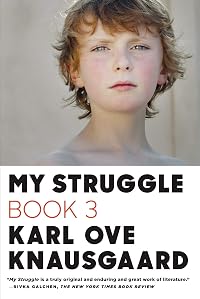
"The third volume--the book that made Knausgaard a phenomenon in the United States--in the addictive New York Times bestselling series A family of four--mother, father, and two boys--move to the south coast of Norway, to a new house on a newly developed site. It is the early 1970s and the family's trajectory is upwardly mobile: the future seems limitless. In painstaking, sometimes self-lacerating detail, Karl Ove Knausgaard paints a world familiar to anyone who can recall the intensity and show more novelty of childhood experience, one in which children and adults lead parallel lives that never meet. Perhaps the most Proustian in the series, My Struggle: Book 3 gives us Knausgaard's vivid, technicolor recollections of childhood, his emerging self-understanding, and the multilayered nature of time's passing, memory, and existence"-- show lessTags
Recommendations





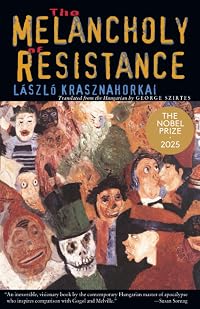
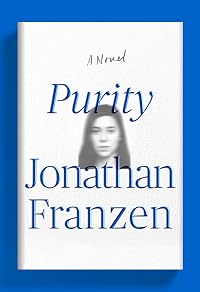
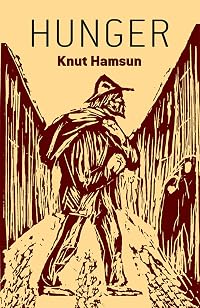
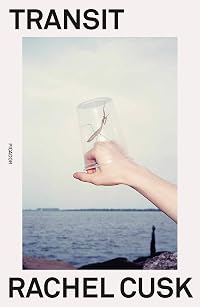
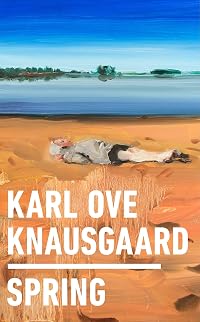
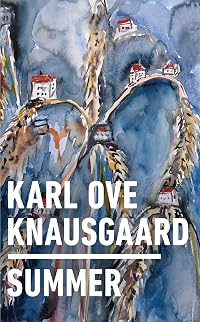

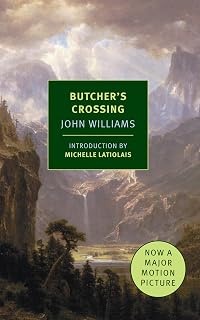
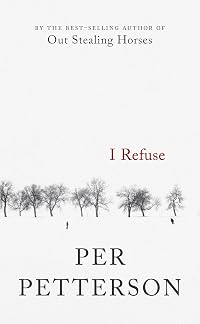






Member Recommendations
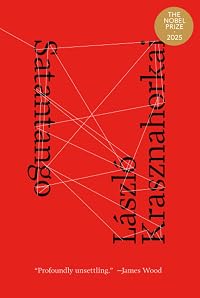
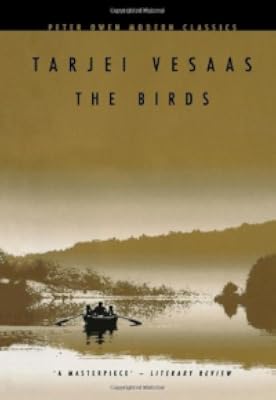
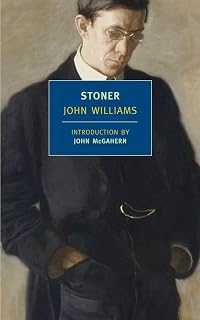
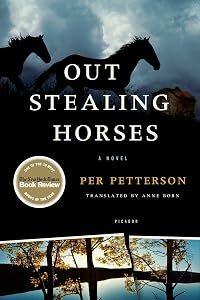
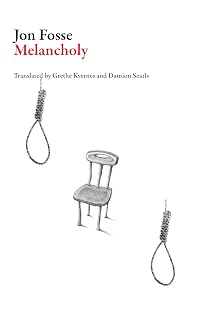
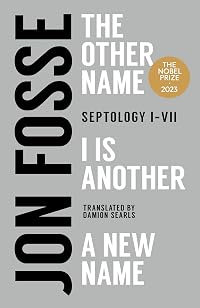
rrmmff2000 Utterly different in style, but both highly evocative accounts of the struggle towards adulthood in semi-rural Norway
petterw En annen glitrende oppvekstroman
Also recommended by julienne_preacher

JuliaMaria Sprachgewaltige Autobiografien zur Kindheit.
Member Reviews
The third book in the Knausgaard saga explores Karl Ove’s boyhood. The family moves to the largest island in southern Norway, Tromøy, where Karl Ove's father teaches Norwegian in high school and his mother works with families experiencing trauma. Finally we learn why Karl Ove was so terrified of his father. The older brother Yngve now becomes the shadowy enigma we only glimpse but cannot see. Yngve is the essence of the older brother—a little dismissive of his younger sibling, but generally supportive and friendly enough. I yearn to see more of him, but suspect Karl Ove’s penchant for self-revelation did not extend to his brother.
This is a remarkable piece of work. The more I read the more I want to read. Fiction or nonfiction? show more Of course it is both. In a series this long and detailed one cannot have but used elements of both. In order to ring true it must have recognizable motivations and actions, yet the detail feels new rather than remembered. I found myself mesmerized by the thirteen-year-old Karl Ove. The scene in which he takes “the prettiest girl” he’s met to the forest by bicycle to kiss is positively painful—and classic.
The difference between the personalities of Karl Ove’s parents is spelled out in a paragraph about driving styles:
This revealing paragraph shows us two critical portraitures and Knausgaard’s run-on style which impels the reader forward. We know immediately the difference in the two personalities, and in Karl Ove’s as well. On the day Karl Ove was reprimanded for embarrassing another boy, Edmund, for not being able to read, Karl Ove tells us “I both understood and I didn’t”—why his family was mean to him and kind to Edmund, whom they hardly knew. He was learning two sets of behaviors and being confused by which to adopt. By including this incident in his record we know that it became clearer to him at some later point.
There is no mention of Knausgaard’s overall direction with this third of the six books, though in the very last pages Karl Ove comes across a photograph in a history book of a naked woman starving to death. The next page of the history book contains images of a mass grave with many strewn corpses. Immediately readers' minds go to the Holocaust with no further prompting. The juxtaposition of the sunny warmth of impending summer and the stark brutality of the images jerks us from our reverie and places Karl Ove's boyhood in a larger context. The years are passing but there are a few holes in the picture of a forty-year old life. We’ve now had the beginning and the end, but early adulthood and a first marriage are still missing.
Is it literature? I think so. We have already “gone somewhere” though each volume leads only to another at this point. A person with contradiction and depth is given life in these pages. The detail is lush and ample and oh-so-readable, the story instructs us, and the context haunts us. I look forward to seeing what Knausgaard wants us to understand, but he has already given us something very special indeed. show less
This is a remarkable piece of work. The more I read the more I want to read. Fiction or nonfiction? show more Of course it is both. In a series this long and detailed one cannot have but used elements of both. In order to ring true it must have recognizable motivations and actions, yet the detail feels new rather than remembered. I found myself mesmerized by the thirteen-year-old Karl Ove. The scene in which he takes “the prettiest girl” he’s met to the forest by bicycle to kiss is positively painful—and classic.
The difference between the personalities of Karl Ove’s parents is spelled out in a paragraph about driving styles:
”Speed and anger went hand in hand. Mom drove carefully, was considerate, never minded if the car in front was slow, she was patient and followed. That was how she was at home as well. She never got angry, always had time to help, didn’t mind if things got broken, accidents happened, she liked to chat with us, she was interested in what we said, she often served food that was not absolutely necessary, such as waffles, buns, cocoa, and bread fresh out of the oven, while Dad on the other hand tried to purge our lives of anything that had no direct relevance to the situation in which we found ourselves: we ate food because it was a necessity, and the time we spent eating had no value in itself; when we watched TV we watched TV and were not allowed to talk or do anything else; when we were in the garden we had to stay on the flagstones, they had been laid for precisely that purpose, while the lawn, big and inviting though it was, was not for walking, running, or lying on...[Dad always drove much too fast.]”
This revealing paragraph shows us two critical portraitures and Knausgaard’s run-on style which impels the reader forward. We know immediately the difference in the two personalities, and in Karl Ove’s as well. On the day Karl Ove was reprimanded for embarrassing another boy, Edmund, for not being able to read, Karl Ove tells us “I both understood and I didn’t”—why his family was mean to him and kind to Edmund, whom they hardly knew. He was learning two sets of behaviors and being confused by which to adopt. By including this incident in his record we know that it became clearer to him at some later point.
There is no mention of Knausgaard’s overall direction with this third of the six books, though in the very last pages Karl Ove comes across a photograph in a history book of a naked woman starving to death. The next page of the history book contains images of a mass grave with many strewn corpses. Immediately readers' minds go to the Holocaust with no further prompting. The juxtaposition of the sunny warmth of impending summer and the stark brutality of the images jerks us from our reverie and places Karl Ove's boyhood in a larger context. The years are passing but there are a few holes in the picture of a forty-year old life. We’ve now had the beginning and the end, but early adulthood and a first marriage are still missing.
Is it literature? I think so. We have already “gone somewhere” though each volume leads only to another at this point. A person with contradiction and depth is given life in these pages. The detail is lush and ample and oh-so-readable, the story instructs us, and the context haunts us. I look forward to seeing what Knausgaard wants us to understand, but he has already given us something very special indeed. show less
Loved this, Knausgaard's early years up to about 13 and probably a good place to start the series for newcomers. It lacks some of the more philosophical introspection that is peppered throughout the preceding volumes owing to being from his perspective as a child, but it's extremely readable and for me at least, very relatable at points to my own childhood (although I was nowhere near as successful with girls as him sadly). Still nothing much happens but I found it every bit as compelling as the previous novels, albeit lacking anything matching the sustained brilliance of the 2nd half of the first novel.
I love how important the layout of the house is to the young Karl Ove, especially in relation to avoiding his tyrannical father e.g. show more knowing that if he leaves a room within a certain time from hearing a door close downstairs he can remain unseen. I can remember all that kind of stuff vividly from my own youth; being able to differentiate parent's from the heaviness of their steps - even if they were in a good or bad mood. There's stuff like that throughout, I was completely transported back.
This is the first of the series I've experienced as an audiobook and it's fantastic, the narrator Edoardo Ballerini enlivens the text and works perfectly with the heightened language Knausgaard uses. Looking forward to listening to the rest of the series. show less
I love how important the layout of the house is to the young Karl Ove, especially in relation to avoiding his tyrannical father e.g. show more knowing that if he leaves a room within a certain time from hearing a door close downstairs he can remain unseen. I can remember all that kind of stuff vividly from my own youth; being able to differentiate parent's from the heaviness of their steps - even if they were in a good or bad mood. There's stuff like that throughout, I was completely transported back.
This is the first of the series I've experienced as an audiobook and it's fantastic, the narrator Edoardo Ballerini enlivens the text and works perfectly with the heightened language Knausgaard uses. Looking forward to listening to the rest of the series. show less
In my view, this is the best and most compelling of the series so far. Karl Ove pushes relentlessly into a detailed account of childhood memories of a small community in the rural coastal region of southwest Norway. There are many bucolic scenes of the rugged shoreline and the idyllic forests which surround him and his family. He occasionally indulges in spirited pranks and acts of rebellion against the tight reins of social conformity. At the same time, his repressive and controlling father looms over him and sours his familial relationships. The young Karl Ove turns into an intelligent, articulate, extremely sensitive boy who creates some of his own problems with a number of poor decisions -- for which he often (but not always) show more suffers the consequences.
Some readers will no doubt be repelled by Karl Ove's character as it emerges here. Yes, there are clear signs of an incipient narcissism and a manipulative tendency which seeks to control those who surround him. (Young Knausgaard sure does cry a lot.) But this is an unsentimental, un-magical view of the way that many of us experience the formative years of life. It's not Wordsworthian. Most people do not have an Atticus Finch as our father. If the child is father to the man, it is important to avoid the temptation to romanticize childhood, necessary to avoid the impulse to soften the contours of the real pain and anguish that are experienced. And it should not surprise us that children who are abused psychologically often emerge scarred for the rest of their lives. I commend the author's honesty in presenting an encompassing view of the torments, tragedies, and turmoils of an unhappy boyhood. show less
Some readers will no doubt be repelled by Karl Ove's character as it emerges here. Yes, there are clear signs of an incipient narcissism and a manipulative tendency which seeks to control those who surround him. (Young Knausgaard sure does cry a lot.) But this is an unsentimental, un-magical view of the way that many of us experience the formative years of life. It's not Wordsworthian. Most people do not have an Atticus Finch as our father. If the child is father to the man, it is important to avoid the temptation to romanticize childhood, necessary to avoid the impulse to soften the contours of the real pain and anguish that are experienced. And it should not surprise us that children who are abused psychologically often emerge scarred for the rest of their lives. I commend the author's honesty in presenting an encompassing view of the torments, tragedies, and turmoils of an unhappy boyhood. show less
Another winner by Mr. Knausgaard. Like with Books 1 and 2, I found myself continually wondering why I was so hooked reading about the mundane ins and outs of a regular person's life (in this book, his childhood years), and the only answer I can come up with is that he tells it with such clarity and insight you are totally propelled into the story, to the extent where you feel the emotions of being that child.
This was an uncomfortable read in places - as a child he had a total abject fear of his father, and seemed to exist in a permanent state of heightened anxiety waiting for him to receive his wrath.
I had to remind myself at times that this is not an autobiography in its purest sense - no one has this level of detail about their show more childhood, and clearly there are more gaps filled in with fictional accounts than real memories. But still - to achieve this sense of reality of being back in his own head as a child is nothing short of astounding.
Probably not my favourite of the 3 books I've read so far, but a winner nonetheless.
4 stars - can this man do no writing wrong? show less
This was an uncomfortable read in places - as a child he had a total abject fear of his father, and seemed to exist in a permanent state of heightened anxiety waiting for him to receive his wrath.
I had to remind myself at times that this is not an autobiography in its purest sense - no one has this level of detail about their show more childhood, and clearly there are more gaps filled in with fictional accounts than real memories. But still - to achieve this sense of reality of being back in his own head as a child is nothing short of astounding.
Probably not my favourite of the 3 books I've read so far, but a winner nonetheless.
4 stars - can this man do no writing wrong? show less
My Struggle is a great title for this novel. Because while the main character Karl Ove is without a doubt, a big Momma's Boy, and an even bigger cry baby. He is just a little kid, and thanks to the brilliant writing of Karl Ove Knausgaard we get behind him right away. We all like to think of kids as sweet innocent little things; but let's face it, they can be really cruel to each other. If someone shows weakness, the other kids are usually ready, willing, and able to pounce on it. And pounce on it they do. But the biggest struggle little Karl Ove has to deal with is by far, his heartless domineering father. The most harrowing moments of the novel almost all involve the cruel punishments bestowed upon Karl Ove by his father. The novel show more deserves all the praise and accolades it has received and while Karl Ove's childhood is a struggle; there are also lots of happy moments that any typical Norwegian kid growing up in the 70ies would have experienced. A wonderful novel ! show less
It may seem strange to start with Book 3 of an autobiographical series but it didn't seem a problem as this volume apparently goes back in time from his previous ones and covers the time from his early childhood to his adolescence.
I'm still trying to figure out why I enjoyed it so much. My normal reaction would be to complain about a 500 page book about a fairly mundane middle class childhood in a not very interesting part of provincial Norway in which very little of note happens and which is overloaded with minute, often irrelevant detail and unnecessary descriptive passages. And yet, I found it quite compelling. Some of the reasons I really liked it are:
- It reminded me of my own childhood in a way that no previous evocation of show more childhood has done. The excitement of discovering new things. The meandering purposeless boredom. The frequent examples of self-consciousness and embarrassment. The discovery of the opposite sex and the desperate need to be liked by them.
- Central to the narrative is Karl Ove's relationship with, and fear of, his tyrannical father. However, although this fear is always present, it doesn't dominate the narrative and therefore is far more powerful and shocking when it is suddenly fore grounded. He could easily have shortened the book by concentrating on his father and turning into yet another 'misery memoir' but instead I felt that, by the end of the book, I had a far more complete picture, not just of Knausgard's childhood, but of childhood experience in general.
- It is a terrific evocation of the 1970s (particularly the music) and if you grew up then (I didn't), I'm sure you will identify with it.
- It recalls a time, now long gone, in which childhood was largely about an outdoor life (playing out with friends) whether it was in rural surroundings or on busy city streets. show less
I'm still trying to figure out why I enjoyed it so much. My normal reaction would be to complain about a 500 page book about a fairly mundane middle class childhood in a not very interesting part of provincial Norway in which very little of note happens and which is overloaded with minute, often irrelevant detail and unnecessary descriptive passages. And yet, I found it quite compelling. Some of the reasons I really liked it are:
- It reminded me of my own childhood in a way that no previous evocation of show more childhood has done. The excitement of discovering new things. The meandering purposeless boredom. The frequent examples of self-consciousness and embarrassment. The discovery of the opposite sex and the desperate need to be liked by them.
- Central to the narrative is Karl Ove's relationship with, and fear of, his tyrannical father. However, although this fear is always present, it doesn't dominate the narrative and therefore is far more powerful and shocking when it is suddenly fore grounded. He could easily have shortened the book by concentrating on his father and turning into yet another 'misery memoir' but instead I felt that, by the end of the book, I had a far more complete picture, not just of Knausgard's childhood, but of childhood experience in general.
- It is a terrific evocation of the 1970s (particularly the music) and if you grew up then (I didn't), I'm sure you will identify with it.
- It recalls a time, now long gone, in which childhood was largely about an outdoor life (playing out with friends) whether it was in rural surroundings or on busy city streets. show less
I had hoped to get in ahead of the backlash with a backlash to the backlash kind of thing, where I defend KOK against people who are tired of hearing about him. Well, too bad. Not only are the reviews of this volume uniformly positive (hence, no backlash yet), but I found it overwhelmingly boring. So, I am doubly stymied.
At the start of the book, KOK calls his childhood a ghetto-like state of incompleteness. He suggests that childhood is meaningfullish, but not really meaningful, because (yawn) memory distorts the past and anyway, the child is a developing self, not a self intact (well said). This is followed by 400 pages of anecdotes about being a pre-pubescent and pubescent boy who suffers greatly at home (his father, whom we already show more know to be a monster, is a monster here too) and at school (where his sufferings seem to be more of the 'everyone feels like they were unpopular in middle school' kind). He plays with his anus. He plays with his penis. He reads books. Dad gets angry. Repeat.
Only around page 250 do we get a glimpse of the narrator rather than the character. He laments the absence of his mother from his memories and, by extension, from this book. I lament it too. This lasts for a page and a half before we're back to reportage.
The key to this volume comes around a hundred pages later. A teacher neglects to read KOK's essay aloud, because you have to give the other young children time to exhibit. He decides to get his revenge. "Next time I would write as badly as I could." That is precisely what we have here. A book written about an 8-13 year old, in the head of an 8-13 year old, with the syntactical, linguistic and philosophical sophistication of an 8-13 year old. I know KOK's better than that; I know he's choosing to do this. He is choosing to write as badly as he can. It's pretty bad.
And then at the very end there's *one* moment of adult level art. After a hundred pages of young men playing with their willies and looking at porn (not judging, just describing), [spoiler alert], young KOK comes across a picture of a naked woman--a holocaust victim. Suddenly sex is thrown into question. Then he sees a teacher ogling a 13 year old girl just as young KOK, too, is ogling her. Again, sex is thrown into question. It's a reminder of what he can do when he's not busy pretending to be very young. show less
At the start of the book, KOK calls his childhood a ghetto-like state of incompleteness. He suggests that childhood is meaningfullish, but not really meaningful, because (yawn) memory distorts the past and anyway, the child is a developing self, not a self intact (well said). This is followed by 400 pages of anecdotes about being a pre-pubescent and pubescent boy who suffers greatly at home (his father, whom we already show more know to be a monster, is a monster here too) and at school (where his sufferings seem to be more of the 'everyone feels like they were unpopular in middle school' kind). He plays with his anus. He plays with his penis. He reads books. Dad gets angry. Repeat.
Only around page 250 do we get a glimpse of the narrator rather than the character. He laments the absence of his mother from his memories and, by extension, from this book. I lament it too. This lasts for a page and a half before we're back to reportage.
The key to this volume comes around a hundred pages later. A teacher neglects to read KOK's essay aloud, because you have to give the other young children time to exhibit. He decides to get his revenge. "Next time I would write as badly as I could." That is precisely what we have here. A book written about an 8-13 year old, in the head of an 8-13 year old, with the syntactical, linguistic and philosophical sophistication of an 8-13 year old. I know KOK's better than that; I know he's choosing to do this. He is choosing to write as badly as he can. It's pretty bad.
And then at the very end there's *one* moment of adult level art. After a hundred pages of young men playing with their willies and looking at porn (not judging, just describing), [spoiler alert], young KOK comes across a picture of a naked woman--a holocaust victim. Suddenly sex is thrown into question. Then he sees a teacher ogling a 13 year old girl just as young KOK, too, is ogling her. Again, sex is thrown into question. It's a reminder of what he can do when he's not busy pretending to be very young. show less
Members
- Recently Added By
Published Reviews
ThingScore 75
This is not boring in the way bad narrative is boring; it is boring in the way life is boring, and somehow, almost perversely, that is a surprising thing to see on the page. My Struggle (a slippery, self-ironising title) is composed of small incidents, some described at great length – 50 pages at a children's party, more about a teenage plan to hide some cans of beer one New Year's Eve. show more There are sections about more traumatic or intimate events – the harrowing job of cleaning up after his father's death, a drunken episode of self-cutting after a sexual rejection at a young writers' residential course – but Knausgaard appears to have shaped his narrative according to the "sly and artful" dictates of his memory. One has the sense that many significant things have been omitted, while seemingly insignificant things are being given undue or unlikely weight. In the first two volumes the narrative hops about between times and places, incorporating digressions about art and writing and the nature of remembering. The third is a more conventionally linear childhood memoir. What there isn't is a plot. The various events are allowed to take their own shape, without being forced into a conventional mould.
. . .
The experience of reading My Struggle is that of the world seeming to step forward from the world. It is not the world mirrored or photocopied; its relationship to reality is less direct, less innocent. The book is the record of someone trying and failing (failing better, as Beckett has it) to make an accurate representation of himself; the gap between the world and that representation, between the world and itself, is the space where all sorts of questions about truth and personal identity arise. show less
. . .
The experience of reading My Struggle is that of the world seeming to step forward from the world. It is not the world mirrored or photocopied; its relationship to reality is less direct, less innocent. The book is the record of someone trying and failing (failing better, as Beckett has it) to make an accurate representation of himself; the gap between the world and that representation, between the world and itself, is the space where all sorts of questions about truth and personal identity arise. show less
added by aileverte
Lists

Books Read in 2017
4,249 works; 130 members

Books Read in 2022
5,168 works; 114 members

Kirkus Reviews Best Fiction of 2014
100 works; 7 members

Books Read in 2019
4,052 works; 110 members
Author Information

66+ Works 12,617 Members
Karl Ove Knausgaard is a Norwegian author known for his six autobiographical novels called "My Struggle". His debut novel Out of This World won the Norwegian Critics Prize and his A Time for Everything was a finalist for the Nordic Council Prize. My Struggle: Book One was a New Yorker Book of the Year and Book Two was listed among the Wall Street show more Journal's 2013 Books of the Year. In 2014, Book Three was named a New York Times Notable Book of the Year. His new autobiographical quartet is based on the four seasons. Autumn was relased in August 2017. (Bowker Author Biography) show less
Some Editions
Awards and Honors
Series

Belongs to Publisher Series
Gallimard, Folio (6346)
Work Relationships
Is contained in
Common Knowledge
- Canonical title*
- Zoon : Mijn strijd 3
- Original title
- Min Kamp Tredje bok
- Alternate titles
- Boyhood Island
- Original publication date
- 2009; 2014 (English translation) (English translation)
- First words*
- Op een zachte, bewolkte dag in augustus 1969 reed een bus over een smalle weg op een eiland in Zuid-Noorwegen, tussen weilanden en rotsen, grasvelden en bosjes door, over lage heuvels en door krappe bochten, soms met bomen aa... (show all)n weerszijden, als een tunnel, soms vlak langs de zee.
- Last words*
- (Click to show. Warning: May contain spoilers.)Hoe kon ik bevroeden dat elk detail van dit landschap, en van elke persoon die erin woonde, voor altijd in mijn geheugen gegrift zou staan, nauwkeurig en precies, als in een soort absoluut gehoor van de herinnering.
- Blurbers
- Smith, Zadie; Cusk, Rachel
- Original language*
- Noors
*Some information comes from Common Knowledge in other languages. Click "Edit" for more information.
Classifications
- Genres
- Biography & Memoir, General Fiction, Fiction and Literature
- DDC/MDS
- 839.823 — Literature & rhetoric German & related literatures Other Germanic literatures Danish and Norwegian literatures Norwegian literature Norwegian Bokmål fiction
- LCC
- PT8951.21 .N38 .M5613 — Language and Literature German, Dutch and Scandinavian literatures Norwegian literature Individual authors or works 1961-2000
- BISAC
Statistics
- Members
- 1,150
- Popularity
- 21,894
- Reviews
- 29
- Rating
- (4.06)
- Languages
- 19 — Catalan, Czech, Danish, Dutch, English, Estonian, Finnish, French, German, Hungarian, Italian, Norwegian (Bokmål), Norwegian, Polish, Croatian, Spanish, Swedish, Turkish, Portuguese (Portugal)
- Media
- Paper, Audiobook, Ebook
- ISBNs
- 59
- UPCs
- 1
- ASINs
- 18