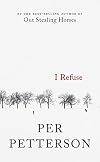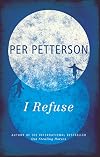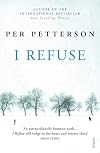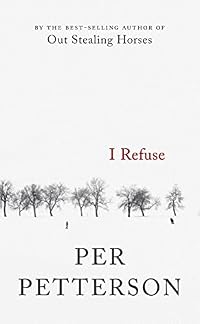
I Refuse
by Per Petterson
On This Page
Description
A chance encounter between two childhood friends, including one who escaped an abusive father, reveals how their fortunes have reversed. "[A] tale of two men whose accidental meeting one morning recalls their boyhood thirty-five years ago. Back then, Tommy was separated from his sisters after he stood up to their abusive father. Jim was by Tommy's side through it all. But one winter night, a chance event on a frozen lake forever changes the balance of their friendship. Now, Jim fishes alone show more on a bridge as Tommy drives by in a new Mercedes, and it's clear their fortunes have reversed. Over the course of the day, the lives of each man will be irrevocably altered"-- show lessTags
Recommendations
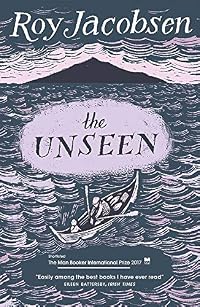



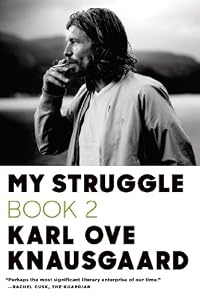
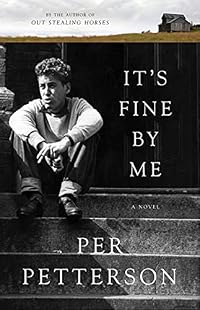




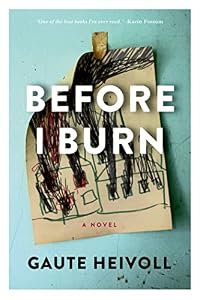




















Member Recommendations
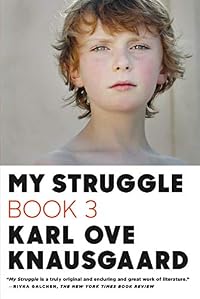
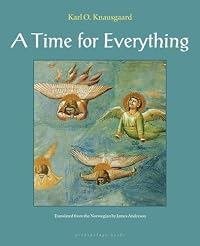
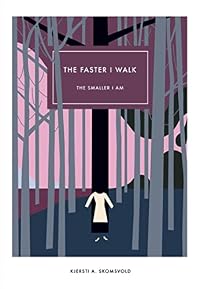
rrmmff2000 Utterly different in style, but both highly evocative accounts of the struggle towards adulthood in semi-rural Norway

Member Reviews
The novel opens in the early morning hours of a September day in 2006 with a chance meeting between childhood friends Jim and Tommy, now in their fifties. They last saw each other thirty-five years earlier. Jim has struggled with mental illness. He has been unable to find work after collecting benefits for a year. Tommy had a rough childhood. He and his siblings were abandoned by their mother and abused by their father. After dropping out of school, getting work in a mill, and parlaying his head for numbers into job with a financial firm in Oslo, he has become a successful investor. Both have experienced losses. Both are lonely. During the day they reconnect, each will confront a personal crisis and make an important decision.
The show more harshness of the Norwegian landscape is a perfect setting for this sad, quiet, reflective, and atmospheric work. The prose is spare and elegant. Chapters are told by Jim, Tommy, and Tommy’s sister, Siri. Though the present action takes place in a single day, the background of their lives is filled in via flashbacks. The later chapters are told in third person, leading up to the climactic scenes. Themes include absent parents, bonds of friendship, emotional wounds, the passage of time, and making one’s way in the world. It is beautifully told (compliments to the translator), with much left between the lines for the reader’s interpretation. I liked this one, but my favorite of Petterson’s work is Out Stealing Horses, which I highly recommend.
3.5 show less
The show more harshness of the Norwegian landscape is a perfect setting for this sad, quiet, reflective, and atmospheric work. The prose is spare and elegant. Chapters are told by Jim, Tommy, and Tommy’s sister, Siri. Though the present action takes place in a single day, the background of their lives is filled in via flashbacks. The later chapters are told in third person, leading up to the climactic scenes. Themes include absent parents, bonds of friendship, emotional wounds, the passage of time, and making one’s way in the world. It is beautifully told (compliments to the translator), with much left between the lines for the reader’s interpretation. I liked this one, but my favorite of Petterson’s work is Out Stealing Horses, which I highly recommend.
3.5 show less
This is the fifth novel of Petterson's that I've read, and it maintains the very high standard of his oeuvre, from my perspective. "I Refuse" deals with growing up, friendship and its loss, family breakdown, social change and the emptiness of materialism, among other matters. It's familiar territory for Petterson, perhaps, but he approaches it differently in this novel. Through multiple narratives and time shifts, he shines new light on his material and delivers fresh insights that caused this reader to reflect upon his own life.
You don't read Petterson for the laughs, though there is a dark humour at work here. His purpose isn't to provide the reader with distraction, but I found the fragmented narrative compelling. It's a starkly show more realist story of life's hardships and disappointments. There are no neat endings here. Parts are oblique and defy interpretation - much like life. The storytelling, characterisation and prose - at least, in Don Bartlett's translation - are all executed beautifully. Highly recommended for those who enjoy writing that reflects the formlessness of lived experience, its resistance to meaning. show less
You don't read Petterson for the laughs, though there is a dark humour at work here. His purpose isn't to provide the reader with distraction, but I found the fragmented narrative compelling. It's a starkly show more realist story of life's hardships and disappointments. There are no neat endings here. Parts are oblique and defy interpretation - much like life. The storytelling, characterisation and prose - at least, in Don Bartlett's translation - are all executed beautifully. Highly recommended for those who enjoy writing that reflects the formlessness of lived experience, its resistance to meaning. show less
This is the story of the friendship and un-friendship of two Norwegian men, their boyhood and manhood, told retrospectively as they meet by chance in 2006 on a bridge in early morning after many years apart.
Jim and Tommy are school friends, living in a small town outside Oslo. Both have difficult home lives. Jim lives with his single mother, a staunch Christian. Tommy’s mother disappears one night into the snow and as the eldest he copes with a violent father and three younger siblings. The two boys unite, until at 18 they are friends no more…
At that moment on the bridge, when the two men recognize each other, I wondered what had happened to separate them for 35 years. We learn the stories of their childhood and the hours before show more that meeting on the bridge, through their own flashbacks plus the voices of Tommy’s sister Siri, their mother Tya and his guardian Jonsen. Small incidents, unintended actions, everyday words, throwaway insults – the stuff of everyday life - all combine to affect the two boys in ways that last with them through adulthood. Things are said and unsaid.
Petterson’s style is distinctive, a long sentence followed by a short sharp sentence of five or six words used for emphasis. Occasionally I re-read a sentence and got more from it, Petterson’s perception of life is multi-layered and this is a novel which will reward re-reading. He has a way of putting his finger straight on the core point. In 2006 Jim is thinking of his own death, though at this point in the story the reader doesn’t know if he is actually ill or just contemplating mortality. “He knew that one day soon she would get over it and to everyone’s surprise, would have put it behind her, forgotten it already, or hidden it inside herself, the size of a shirt button.” Just as we don’t know if Jim is dying, we also don’t know who the ‘she’ refers to. “He dragged himself along on his knees, the cross was heavy and sharp against his shoulder. I’m so thirsty, he thought and they give me only vinegar to drink.”
The title ‘I Refuse’ refers to both boys who refuse to compromise, refuse to forgive, refuse to forget. When they are 18, Jim and Tommy talk about friendship, “… it will last if we want it to. It depends on us. We can be friends for as long as we want to.”
I have another new author to explore.
Read more of my book reviews at http://www.sandradanby.com/book-reviews-a-z/ show less
Jim and Tommy are school friends, living in a small town outside Oslo. Both have difficult home lives. Jim lives with his single mother, a staunch Christian. Tommy’s mother disappears one night into the snow and as the eldest he copes with a violent father and three younger siblings. The two boys unite, until at 18 they are friends no more…
At that moment on the bridge, when the two men recognize each other, I wondered what had happened to separate them for 35 years. We learn the stories of their childhood and the hours before show more that meeting on the bridge, through their own flashbacks plus the voices of Tommy’s sister Siri, their mother Tya and his guardian Jonsen. Small incidents, unintended actions, everyday words, throwaway insults – the stuff of everyday life - all combine to affect the two boys in ways that last with them through adulthood. Things are said and unsaid.
Petterson’s style is distinctive, a long sentence followed by a short sharp sentence of five or six words used for emphasis. Occasionally I re-read a sentence and got more from it, Petterson’s perception of life is multi-layered and this is a novel which will reward re-reading. He has a way of putting his finger straight on the core point. In 2006 Jim is thinking of his own death, though at this point in the story the reader doesn’t know if he is actually ill or just contemplating mortality. “He knew that one day soon she would get over it and to everyone’s surprise, would have put it behind her, forgotten it already, or hidden it inside herself, the size of a shirt button.” Just as we don’t know if Jim is dying, we also don’t know who the ‘she’ refers to. “He dragged himself along on his knees, the cross was heavy and sharp against his shoulder. I’m so thirsty, he thought and they give me only vinegar to drink.”
The title ‘I Refuse’ refers to both boys who refuse to compromise, refuse to forgive, refuse to forget. When they are 18, Jim and Tommy talk about friendship, “… it will last if we want it to. It depends on us. We can be friends for as long as we want to.”
I have another new author to explore.
Read more of my book reviews at http://www.sandradanby.com/book-reviews-a-z/ show less
I read and enjoyed Out Stealing Horses by the same author and so picked this up in a book store on a whim. In some ways it was similar in that the writing is sedate even through very dramatic events. There aren't any question marks (literally) used which makes for a sort of monotone reading of the book. Also, similarly to Out Stealing Horses, ramifications of traumatic childhood events are explored in the characters' adulthoods.
I liked this book, but I didn't quite know what to make of it. I was left with a lot of questions and didn't feel like things were wrapped up very well. Sometimes that works for me, but here it felt like an error. So I think fans of Out Stealing Horses, which I know several of you have read, will be interested show more to read this as well, but I would be curious to know if you feel as I did that its less successful. show less
I liked this book, but I didn't quite know what to make of it. I was left with a lot of questions and didn't feel like things were wrapped up very well. Sometimes that works for me, but here it felt like an error. So I think fans of Out Stealing Horses, which I know several of you have read, will be interested show more to read this as well, but I would be curious to know if you feel as I did that its less successful. show less
Here Petterson sets his account in our contemporary world, where the characters' encounters with service personnel at fast-food outlets and the gatekeepers of apparently endless steps through welfare bureaucracy bring generations into an intense but possibly imaginary intimacy of empathy and pathos. Dealing with contemporary urbanism experienced through the dislocation of its meaningless drives, fragmentary time and non-places, Petterson here is the literary Edward Hopper of contemporary, postindustrial life. His familiar themes of memory, family and loss are in this novel complicated by interweaving the lifelong attachments produced by childhood and adolescent friendships even where those are ruptured in the transition to adulthood, show more which provides the main thread, unifying the book through the sublime coincidences which link our lives in unexpected rhizomatic encounters even in the globalized world of transitory residences, careers, and relationships, reminding us that ultimately we do not escape our pasts because we carry them emebedded deep within ourselves, awaiting the moment in which they will suddenly assume an immediate, definitive relevance. we think something is long gone, when suddenly we are confronted with a memory of ourselves embedded in another. As usual, the brilliance of the book is enhanced by simple prose, even sometimes repetitious in its translated forms, but conveying through that form the fractured experience of the mundane reality of everyday life in our world. show less
Per Petterson's writing is rather like a photograph with words, it shows life as it is: beautiful and sad, funny and tragic. This is another excellent example of his remarkable talent.
I have to admit that an exploration of the psychological scars of two lonely middle aged Norwegian men does not strike me as the most promising starting point for a story, but I was prepared to give this a chance since I remembered enjoying Petterson's better known Out Stealing Horses. Petterson's writing draws you in masterfully, and this was a pleasure to read, for all of the darkness of the childhood memories the two men share. He shares a translator with Karl Ove Knausgaard, and at times they explore similar terrain, but if Knausgaard feels that narrative fiction is a dead form, his compatriot Petterson believes otherwise. For all of that the story feels quite elliptical, with much left unsaid.
Members
- Recently Added By
Lists

International IMPAC Dublin Literary Award
179 works; 6 members

Dublin Literary Award Longlist 2016
148 works; 4 members

Literature in Translation
113 works; 5 members

Kirkus Starred Fiction Reviews of Books Published in 2015
310 works; 6 members

Kirkus Reviews Best Fiction of 2015
98 works; 6 members
Author Information

18+ Works 7,573 Members
Per Petterson was born in Norway on July 18, 1952. He is a trained librarian and before becoming a full-time writer, he worked as a bookstore clerk, translator and literary critic. His first work, Aske i munnen, sand i skoa (Ash in His Mouth, Sand in His Shoe), a volume of short stories, was published in 1987. His other works include These are show more Ekkoland (1989), Det er greit for meg (1992), and To Siberia (1996). He has won numerous awards including the prestigious Norwegian literary prize Brageprisen for In the Wake (2000) and the Independent Foreign Fiction Prize in the UK, the Norwegian Booksellers' Prize, and the Norwegian Critics' Award for best novel for Out Stealing Horses (2003). (Bowker Author Biography) show less
Some Editions
Awards and Honors
Awards
Series
Belongs to Publisher Series
Common Knowledge
- Canonical title
- I Refuse
- Original title
- Jeg nekter
- Original publication date
- 2012
- Important places
- Norway
- Original language
- Norwegian
Classifications
- Genres
- Fiction and Literature, General Fiction
- DDC/MDS
- 839.8238 — Literature & rhetoric German & related literatures Other Germanic literatures Danish and Norwegian literatures Norwegian literature Norwegian Bokmål fiction 2000–
- LCC
- PT8951.26 .E88 .J4613 — Language and Literature German, Dutch and Scandinavian literatures Norwegian literature Individual authors or works 1961-2000
- BISAC
Statistics
- Members
- 466
- Popularity
- 65,033
- Reviews
- 26
- Rating
- (3.65)
- Languages
- 11 — Catalan, Danish, Dutch, English, Finnish, French, German, Hungarian, Norwegian (Bokmål), Norwegian, Turkish
- Media
- Paper, Audiobook, Ebook
- ISBNs
- 45
- ASINs
- 5