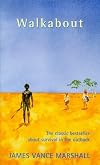
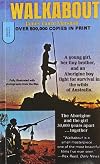
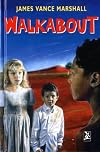
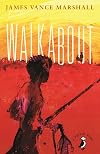
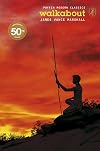
Walkabout
by James Vance Marshall
On This Page
Description
Fiction. Literature. HTML:A plane crashes in the vast Northern Territory of Australia, and the only survivors are two children from Charleston, South Carolina, on their way to visit their uncle in Adelaide. Mary and her younger brother, Peter, set out on foot, lost in the vast, hot Australian outback. They are saved by a chance meeting with an unnamed Aboriginal boy on walkabout. He looks after the two strange white children and shows them how to find food and water in the wilderness, and show more yet, for all that, Mary is filled with distrust.On the surface Walkabout is an adventure story, but darker themes lie beneath. Peter’s innocent friendship with the boy met in the desert throws into relief Mary’s half-adult anxieties, and the book as a whole raises questions about what is lost—and may be saved—when different worlds meet. And in reading Marshall’s extraordinary evocations of the beautiful yet forbidding landscape of the Australian desert, perhaps the most striking presence of all in this small, perfect book, we realize that this tale—a deep yet disturbing story in the spirit of Adalbert Stifter’s Rock Crystal and Richard Hughes’s A High Wind in Jamaica—is also a reckoning with the mysteriously regenerative powers of death. show less
Tags
Recommendations






Member Recommendations


Member Reviews
Walkabout, by James Vance Marshall has a fantasy like quality to it that took me by surprise. The story, which became the basis for the well-known cult film of the same name, concerns two children, a girl entering puberty and her younger brother. The two have survived a plane crash in the Australian outback and are trying to find their way back to civilization. Along the way, they meet an Aboriginal boy, also just entering puberty, on his Walkabout, a rite of passage Aboriginal boys must go through where they are left alone in the wilderness to survive on their own wits.
Mr. Marshall's novel becomes a story about two children lost in a magical land with a magical guide to help them along. While the two siblings should be worried for show more their lives, they spend so much of the novel having a wonderful adventure that their story becomes something like a trip to Wonderland. Much of this feeling comes from Mr. Marshall's description of the Australian landscape. Take, for example, this passage describing the land the children pass through as they leave the Eden like valley where they stayed with the Aboriginal boy.
At first the valley was well-shaded and softly-coloured: aglow with the gold of casuarina, the creamy white of bamberas and the pink of gums and eucalyptus. But as the children climbed higher, the vegetation gradually became more stunted and the colours harsher, cruder. By midday they were traversing a rocky barren terrain, its only trees the drooping mugga-woods, its only flowers the everlasting daisies; the flowers that never ide; that live on, even after their petals, leaves, stalks, and roots have crumbled and withered away. The children grew hotter, tireder, and hungrier. It was lucky that Mary had had the foresight to gather a cache of bauble nuts, and these they ate, soon after midday, in the shade of a slab of rock that overhung the stream.
Golden glowing casuarina plants, creamy white bamberas, pink gum trees, drooping mugga-woods, everlasting daisies--even the names used sound like things you'd find in Wonderland. Eating a 'cache of bauble nuts.' Reading Walkabout was like watching someone cast a spell on me. I knew what was happening; I knew when I was being manipulated so the author could make a particular point, I knew he was capitalizing on exotic place names that a reader whose never been to Australia would be enchanted by, but I didn't care. Mr. Marshall is a magician, good enough at his trade that he can make his audience enjoy the illusion, even though we know it's an illusion.
That is not to say that there isn't plenty of meat underneath all that sauce. Take the above passage. The two siblings are leaving what was a Garden of Eden. As they climb up out of the valley the landscape gets more and more hellish. If they're climbing up were they in heaven or in hell? They have to leave this Eden because of a fatal misunderstanding between Mary and the unnamed Aboriginal boy caused by Mary's awakening awareness of sexuality, which also ties in neatly with the image of Eden. The children are linked to the everlasting Daisies that live on in spite of how tired, hot and hungry they become. This reader can't help but see that as a possible projection for their passage through life and what happened to Adam and Eve once they left the Garden. The children will leave this paradise for civilization, but they'll often think of their time in Eden and wish they could go back to it. Okay, now that I've written that thought out it doesn't really sound all that deep. But while I was reading the book, while I was under its spell, I was pretty impressed.
Unfortunately, the novel is realistic enough to generate an uncomfortable feeling in modern readers due to the children's casual racism. The children in the novel are from the American South, and continually refer to the Aboriginal boy as 'the darkie.' This is entirely accurate to the novel's time period, but it makes for slightly uneasy reading today. But, that is how people talked in much of America in 1959. Even little kids. show less
Mr. Marshall's novel becomes a story about two children lost in a magical land with a magical guide to help them along. While the two siblings should be worried for show more their lives, they spend so much of the novel having a wonderful adventure that their story becomes something like a trip to Wonderland. Much of this feeling comes from Mr. Marshall's description of the Australian landscape. Take, for example, this passage describing the land the children pass through as they leave the Eden like valley where they stayed with the Aboriginal boy.
At first the valley was well-shaded and softly-coloured: aglow with the gold of casuarina, the creamy white of bamberas and the pink of gums and eucalyptus. But as the children climbed higher, the vegetation gradually became more stunted and the colours harsher, cruder. By midday they were traversing a rocky barren terrain, its only trees the drooping mugga-woods, its only flowers the everlasting daisies; the flowers that never ide; that live on, even after their petals, leaves, stalks, and roots have crumbled and withered away. The children grew hotter, tireder, and hungrier. It was lucky that Mary had had the foresight to gather a cache of bauble nuts, and these they ate, soon after midday, in the shade of a slab of rock that overhung the stream.
Golden glowing casuarina plants, creamy white bamberas, pink gum trees, drooping mugga-woods, everlasting daisies--even the names used sound like things you'd find in Wonderland. Eating a 'cache of bauble nuts.' Reading Walkabout was like watching someone cast a spell on me. I knew what was happening; I knew when I was being manipulated so the author could make a particular point, I knew he was capitalizing on exotic place names that a reader whose never been to Australia would be enchanted by, but I didn't care. Mr. Marshall is a magician, good enough at his trade that he can make his audience enjoy the illusion, even though we know it's an illusion.
That is not to say that there isn't plenty of meat underneath all that sauce. Take the above passage. The two siblings are leaving what was a Garden of Eden. As they climb up out of the valley the landscape gets more and more hellish. If they're climbing up were they in heaven or in hell? They have to leave this Eden because of a fatal misunderstanding between Mary and the unnamed Aboriginal boy caused by Mary's awakening awareness of sexuality, which also ties in neatly with the image of Eden. The children are linked to the everlasting Daisies that live on in spite of how tired, hot and hungry they become. This reader can't help but see that as a possible projection for their passage through life and what happened to Adam and Eve once they left the Garden. The children will leave this paradise for civilization, but they'll often think of their time in Eden and wish they could go back to it. Okay, now that I've written that thought out it doesn't really sound all that deep. But while I was reading the book, while I was under its spell, I was pretty impressed.
Unfortunately, the novel is realistic enough to generate an uncomfortable feeling in modern readers due to the children's casual racism. The children in the novel are from the American South, and continually refer to the Aboriginal boy as 'the darkie.' This is entirely accurate to the novel's time period, but it makes for slightly uneasy reading today. But, that is how people talked in much of America in 1959. Even little kids. show less
Walkabout was the very first book I was ever assigned for school. I remember very little of the discussions my class had about the book, but vividly recall almost every page of the book itself.
I'm surprised at people saying nothing happens in the book because in my mind, each plot point and each detail of Peter and Mary's interactions with the bush boy stand out clearly even 17-18 years after I read it: Mary clucking like a mother hen around Peter, the bush boy teaching the city kids to get water by sucking reeds, the bush boy trying to communicate with the city kids and vice versa, Mary giving the bush boy her underpants, the frenzied eerie ceremonial dance which is the precursor to tragedy, the bush boy realizing Mary is a girl and show more tossing her the heaviest load to carry, the kids eating a rock wallaby... It was all so well done and so very memorable.
I went in knowing absolutely nothing about Australia, this book was my introduction to words like "outback" and "wallaby". But I never felt lost while reading it, not even in the beginning, which is a testment to the clarity of the prose.
The only reason I'm not giving this book more stars is because it also scarred me a little. Mary, you see, is such a wet blanket. Decidedly the Uncool One, the one who clings to meaningless symbols of civilization at the expense of the more meaningful aspects of it, the one most in need of a lesson, the one who is systematically stripped of her power and self-esteem throughout the course of the book, both by the characters and by the narrative.
I didn't grow up seeing a lot of strong female characters in the media - I grew up in India in the 1980s, I had never seen or read a book with a female protagonist before. Walkabout's Mary was the FIRST real (i.e. independent) happily-female character (unlike George in Famous Five) I ever read about who was powerful and clearly a protagonist ... as it turned out, only in the beginning. Then the whole point of the story turned out to be to strip her of power and utterly destroy her.
I was immensely frustrated with Mary and immensely ashamed of myself by the end of her story. It didn't help that the boys in my class were totally gloating by the end, reading out loud their essays that talked about how this book showed them Mary being a "typical emotional weak girl" and how it fell to boys to show her the way to live and survive. To this day I can't think of Walkabout without that twinge of shame and depression.
Then there is the question of racism which is something I only see in the book in retrospect. The book employs the well-worn "noble savage" stereotype in its depiction of the bush boy, often in a direct authorial explanation rather than any "showing" incidents. The moment when the bush boy tosses a heavy load for Mary to carry is actually his most human moment, THE only one where he isn't acting the part of earth-mother native helping white folks. And then, even though the book is called "Walkabout" and it is the bush boy who is on this journey toward manhood, he dies and the journey to manhood becomes Peter's instead. It would have been so easy to avert it but of course the dark skinned helper must die to further the white heroes' journey. Really sad.
The book is at kids' reading level but because of the potentially sexist and racist message contained in it, I would NOT recommend it to any kids. So, two stars. show less
I'm surprised at people saying nothing happens in the book because in my mind, each plot point and each detail of Peter and Mary's interactions with the bush boy stand out clearly even 17-18 years after I read it: Mary clucking like a mother hen around Peter, the bush boy teaching the city kids to get water by sucking reeds, the bush boy trying to communicate with the city kids and vice versa, Mary giving the bush boy her underpants, the frenzied eerie ceremonial dance which is the precursor to tragedy, the bush boy realizing Mary is a girl and show more tossing her the heaviest load to carry, the kids eating a rock wallaby... It was all so well done and so very memorable.
I went in knowing absolutely nothing about Australia, this book was my introduction to words like "outback" and "wallaby". But I never felt lost while reading it, not even in the beginning, which is a testment to the clarity of the prose.
The only reason I'm not giving this book more stars is because it also scarred me a little. Mary, you see, is such a wet blanket. Decidedly the Uncool One, the one who clings to meaningless symbols of civilization at the expense of the more meaningful aspects of it, the one most in need of a lesson, the one who is systematically stripped of her power and self-esteem throughout the course of the book, both by the characters and by the narrative.
I didn't grow up seeing a lot of strong female characters in the media - I grew up in India in the 1980s, I had never seen or read a book with a female protagonist before. Walkabout's Mary was the FIRST real (i.e. independent) happily-female character (unlike George in Famous Five) I ever read about who was powerful and clearly a protagonist ... as it turned out, only in the beginning. Then the whole point of the story turned out to be to strip her of power and utterly destroy her.
I was immensely frustrated with Mary and immensely ashamed of myself by the end of her story. It didn't help that the boys in my class were totally gloating by the end, reading out loud their essays that talked about how this book showed them Mary being a "typical emotional weak girl" and how it fell to boys to show her the way to live and survive. To this day I can't think of Walkabout without that twinge of shame and depression.
Then there is the question of racism which is something I only see in the book in retrospect. The book employs the well-worn "noble savage" stereotype in its depiction of the bush boy, often in a direct authorial explanation rather than any "showing" incidents. The moment when the bush boy tosses a heavy load for Mary to carry is actually his most human moment, THE only one where he isn't acting the part of earth-mother native helping white folks. And then, even though the book is called "Walkabout" and it is the bush boy who is on this journey toward manhood, he dies and the journey to manhood becomes Peter's instead. It would have been so easy to avert it but of course the dark skinned helper must die to further the white heroes' journey. Really sad.
The book is at kids' reading level but because of the potentially sexist and racist message contained in it, I would NOT recommend it to any kids. So, two stars. show less
Older sister and younger brother Mary and Peter are the only survivors of a plane crash that goes down in the vast deserts that cover much of the interior of Australia. They were headed for their uncle's house in Adelaide, and completely unprepared for the harshness of the Australian wilderness, decide to walk there. They are young (13 and 8), and near to dying of hunger and thirst when they meet an Aboriginal person on walkabout, part of the manhood ritual of his tribe. He is naked and does not speak their language. He does have food, and knows where to find water, and he agrees to help the children travel towards other humans. Here in the Outback there are no white men.
This short book was fascinating. I was appalled by the colonialism show more implicit in Mary and Peter's speech. At the time it was written (1959), I doubt that this was a shocking book, but it is now. Peter refers to his new friend as "darkie". Mary is terrified that he will try to rape her. The children's hometown is Charleston, SC, and so they are used to black people doing their work, and they fall easily into this pattern.
It's a harsh book, with its daily foraging for food and water to keep death at bay for one more day. There are predators in the night. Peter, a willing student, soon learns to find water, to make a fire, to cook meat. Mary feels set apart from the boys as they do things and she just walks.
Any observant reader will enjoy this tale. I did, and I recommend it. show less
This short book was fascinating. I was appalled by the colonialism show more implicit in Mary and Peter's speech. At the time it was written (1959), I doubt that this was a shocking book, but it is now. Peter refers to his new friend as "darkie". Mary is terrified that he will try to rape her. The children's hometown is Charleston, SC, and so they are used to black people doing their work, and they fall easily into this pattern.
It's a harsh book, with its daily foraging for food and water to keep death at bay for one more day. There are predators in the night. Peter, a willing student, soon learns to find water, to make a fire, to cook meat. Mary feels set apart from the boys as they do things and she just walks.
Any observant reader will enjoy this tale. I did, and I recommend it. show less
Originally published in 1959, Walkabout by James Vance Marshall is the story of two children who survive a plane crash and find themselves lost in the Australian outback. They are American children who were on their way to visit their Australian uncle. They have no knowledge of the flora and fauna that they find themselves surrounded by and are very much in jeopardy. A young Aborigine finds them, and helps them learn how to survive and thus they begin their journey back to civilization.
An excellent story, but there are some very important moral questions raised. The white children just naturally seem to have a sense of superiority over the young black boy and call him “Darkie” or ‘Boy”. The young white girl, Mary, is actually show more very afraid of the black boy, thinking he may mean them harm when all he is doing is showing them how to find food and water. As the young boy looks at Mary and sees her fear, he believes it foreshadows his own death. I suspect the author was trying to highlight the difficulties that the Aborigines were facing as the freedom of their isolated, wandering lifestyle was coming to an end.
The author’s simple survival story is entwined with descriptions of the landscape of the Outback. His knowledge of plants and animals are excellent and these descriptions allow the reader to experience the story through the eyes of the children. Walkabout is a wonderfully haunting children’s story and one that deserves it’s place on the classic shelf. show less
An excellent story, but there are some very important moral questions raised. The white children just naturally seem to have a sense of superiority over the young black boy and call him “Darkie” or ‘Boy”. The young white girl, Mary, is actually show more very afraid of the black boy, thinking he may mean them harm when all he is doing is showing them how to find food and water. As the young boy looks at Mary and sees her fear, he believes it foreshadows his own death. I suspect the author was trying to highlight the difficulties that the Aborigines were facing as the freedom of their isolated, wandering lifestyle was coming to an end.
The author’s simple survival story is entwined with descriptions of the landscape of the Outback. His knowledge of plants and animals are excellent and these descriptions allow the reader to experience the story through the eyes of the children. Walkabout is a wonderfully haunting children’s story and one that deserves it’s place on the classic shelf. show less
This novel was written by Donald G. Payne by 1959, who used the pseudonym James Vance Marshall, in honor of a man who lived in the outback of Australia and collaborated with Payne in its creation. Walkabout did not receive much attention until 1971, after a movie based on the book, but not faithful to it, was released, to critical acclaim.
Eleven year old Mary and her eight year old brother Peter are residents of Charleston, South Carolina who find themselves stranded after their Adelaide-bound plane has crashed and exploded in the desert of the Northern Territory of Australia. They are only lightly injured, but the captain and navigating officer, the only other people on the plane, were killed. The two struggle to find water or food, show more until they encounter a naked Aborigine boy, who is performing a walkabout, a ritual essential for manhood in his tribe. The unnamed boy has never seen white people, and is fascinated by them. Peter almost immediately bonds with the Aborigine, despite their lack of a shared language; the older Mary, who is more familiar with the customs of the Jim Crow South, is repulsed by the strange black boy, but she realizes that he and her brother must rely on him in order to survive.
Peter and Mary follow the boy, who takes them under his wing and shows the "amazingly helpless" pair how to search for water, and hunt for and cook food. The boys become playmates and comrades, while the half-child half-adult Mary maintains her distance while harboring jealousy for her brother's attachment to the Aborigine, his lack of reliance upon her, and her desire to join them in their childish games. A simple misunderstanding between Mary and the Aborigine leads to a tragic consequence, which places all of their lives in jeopardy.
I found Walkabout to be a mildly enjoyable though repetitive and heavy-handed story about cultural misunderstandings and similarities, which can best be thought of as a dated young adult novel. The novel shines in its descriptions of the flora and fauna of the Australian outback, but the structure of the story and the portrayal of the three characters was overly simplified and ultimately disappointing. show less
Eleven year old Mary and her eight year old brother Peter are residents of Charleston, South Carolina who find themselves stranded after their Adelaide-bound plane has crashed and exploded in the desert of the Northern Territory of Australia. They are only lightly injured, but the captain and navigating officer, the only other people on the plane, were killed. The two struggle to find water or food, show more until they encounter a naked Aborigine boy, who is performing a walkabout, a ritual essential for manhood in his tribe. The unnamed boy has never seen white people, and is fascinated by them. Peter almost immediately bonds with the Aborigine, despite their lack of a shared language; the older Mary, who is more familiar with the customs of the Jim Crow South, is repulsed by the strange black boy, but she realizes that he and her brother must rely on him in order to survive.
Peter and Mary follow the boy, who takes them under his wing and shows the "amazingly helpless" pair how to search for water, and hunt for and cook food. The boys become playmates and comrades, while the half-child half-adult Mary maintains her distance while harboring jealousy for her brother's attachment to the Aborigine, his lack of reliance upon her, and her desire to join them in their childish games. A simple misunderstanding between Mary and the Aborigine leads to a tragic consequence, which places all of their lives in jeopardy.
I found Walkabout to be a mildly enjoyable though repetitive and heavy-handed story about cultural misunderstandings and similarities, which can best be thought of as a dated young adult novel. The novel shines in its descriptions of the flora and fauna of the Australian outback, but the structure of the story and the portrayal of the three characters was overly simplified and ultimately disappointing. show less
A lovely short book. Much detail on flora and fauna of the outback, although there is more packed in here than appears, including reflections on childhood and adulthood. I understood it to be a children's story (my copy being a Peacock Book) but absolutely worth of adult readership. The best children's books always have been, a description that could not be added to any contemporary children's books today. Children won't get to read it these days, of course, racial difference being one of its key themes, and the West it describes being closer now to the Third World. Fascinating to think how one might write something similar today, the story is probably archetypal, or was. When we were allowed stories.
I saw this in a selection of NYRB classic paperbacks while browsing at a little bookstore at Pike Place Market, and was interested. I am always looking to read more about Australia & especially its natives and fauna.
I am sad to say I was disappointed, and it is hard to understand why the editors thought this title was worthy of a reprint this century. Even with a publication date of 1959 the racism and bigoty standout, not mention the story is a simple, well-trod one.
I am sad to say I was disappointed, and it is hard to understand why the editors thought this title was worthy of a reprint this century. Even with a publication date of 1959 the racism and bigoty standout, not mention the story is a simple, well-trod one.
Members
- Recently Added By
Lists

Read the book and saw the movie
1,170 works; 192 members

1950s
340 works; 22 members

Books You Read During High School (For School)
301 works; 52 members

Books Set in Australia.
45 works; 9 members

Stories set on Australian Continent
67 works; 5 members

Main Character is aged 10-19
361 works; 6 members

Books Read in 2020
4,379 works; 124 members
Nifty Fifties
129 works; 14 members

Survival, plane crash -- children's/young adult fiction
112 works; 3 members

Best Survival Stories
97 works; 15 members

Books Read in 2001
194 works; 4 members
Survival, camping -- children's/young adult fiction
35 works; 3 members

School Made Us Read It
380 works; 196 members

Sonlight Books
1,487 works; 25 members
Author Information

66+ Works 1,898 Members
Awards and Honors
Series
Belongs to Publisher Series
Work Relationships
Common Knowledge
- Original title
- The Children
- Original publication date
- 1959
- Important places
- Australia
- Related movies
- Walkabout (1971 | IMDb)
- First words
- It was silent and dark, and the children were afraid.
- Last words
- (Click to show. Warning: May contain spoilers.)He led the way along the shore of the lake.
- Original language
- English
Classifications
Statistics
- Members
- 889
- Popularity
- 30,330
- Reviews
- 17
- Rating
- (3.30)
- Languages
- 6 — Dutch, English, French, German, Norwegian, Spanish
- Media
- Paper, Ebook
- ISBNs
- 39
- ASINs
- 15