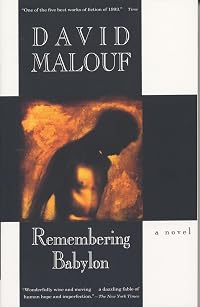
Remembering Babylon
by David Malouf
On This Page
Description
David Malouf's novel--shortlisted for the 1993 Booker Prize--is a masterpiece. In the mid-1840s, a thirteen year old boy is cast ashore in the far north of Australia and taken in by aborigines. Sixteen years later, when settlers reach the area, he moves back into the world of Europeans, men and women who are staking out their small patch of security in an alien, half-mythological land, hopeful yet terrified of what it might do to them.Tags
Recommendations















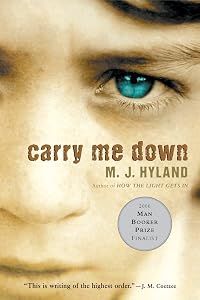

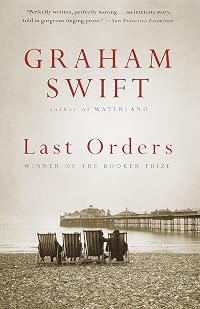
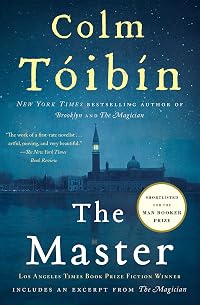

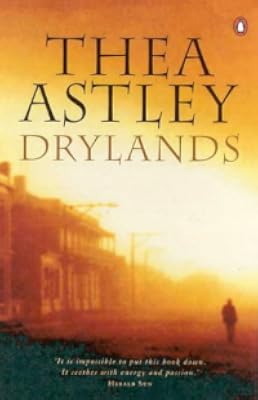




Member Recommendations


Member Reviews
REMEMBERING BABYLON, by David Malouf.
My second Malouf novel. I was very impressed with his THE GREAT WORLD, and this one, while not quite as ambitious, is nearly as good, with its depiction of 19th century Australia, up in the undeveloped 'sticks' above Brisbane, when that town was little more than a glorified 'village.' Malouf again creates some memorable characters and manages to weave a lesson of predjudice and fear into this tale set on the outer fringes of a tenuous civilization. Gemmy, an illiterate and much abused white British orphan, who spent sixteen years in a tribe of aborigines after being pitched overboard from his ship, rejoins a rough-edged white society, which turns out to be less tolerant than that of the so-called show more 'savages.' You get thumbnail lives of not just Gemmy, but of the brave white family that takes him in, as well as the local preacher, school teacher and others. And the fear, hate and loathing that follows Gemmy rears its ugly head again fifty years later as Australia enters WWII and turns on some German emigrant citizens. For a book of barely two hundred pages, Malouf's story packs a powerful punch. Highly recommended, especially if you enjoy Australian fiction. show less
My second Malouf novel. I was very impressed with his THE GREAT WORLD, and this one, while not quite as ambitious, is nearly as good, with its depiction of 19th century Australia, up in the undeveloped 'sticks' above Brisbane, when that town was little more than a glorified 'village.' Malouf again creates some memorable characters and manages to weave a lesson of predjudice and fear into this tale set on the outer fringes of a tenuous civilization. Gemmy, an illiterate and much abused white British orphan, who spent sixteen years in a tribe of aborigines after being pitched overboard from his ship, rejoins a rough-edged white society, which turns out to be less tolerant than that of the so-called show more 'savages.' You get thumbnail lives of not just Gemmy, but of the brave white family that takes him in, as well as the local preacher, school teacher and others. And the fear, hate and loathing that follows Gemmy rears its ugly head again fifty years later as Australia enters WWII and turns on some German emigrant citizens. For a book of barely two hundred pages, Malouf's story packs a powerful punch. Highly recommended, especially if you enjoy Australian fiction. show less
One of the most astonishing pieces of Australian writing I have ever read. It's no secret that Malouf is one of our national treasures, but Remembering Babylon is something else entirely. Written from a dozen or so perspectives, each absorbing in its accuracy, Malouf turns his eye in this short novel to the complexities of colonialism, specifically among white, rural Australians in the 1860s. Less than a century after the country was colonised, a small town (village?) of white people struggle with the introduction amongst them of a white man who has been living with Indigenous people for 16 years. Their concern about whether he has completely lost "it", their fear of the unknown - anything beyond view of their steeple - and that show more uncomfortable, uneasy relationship with their own colonialism, their sense of inferiority to the mother country, and the social and cultural clashes between neighbours that have made up every society since time immemorial... all captured in fewer than 200 pages.
Malouf smartly chooses not to write from the Indigenous perspective - he has rightly said that no white person in Australia can really do that - but gives us enough touches through Gemmy's point of view that we understand the true tragedy of colonialism, as symbolised through Janet's relationship with her bees. Being able to see them communicate but not quite understand how, and wondering if you knew it once, is a thought that has often haunted me, and remains haunting.
By 1860, my ancestors were well settled in Australia, their children becoming young adults and soon to have children of their own. My relationship with this land - as a white, rural-born, gay, intellectual, urbanite - is a complex one, and so is my relationship with the attempted genocide my ancestors perpetuated. Although the killing ended long ago, the cultural suppression continued well into the 1960s - the decade of my parents' birth - and we live with a lineage of divided privilege, culture, and sentiment. Compared to our neighbours "across the pond", New Zealand, who charted a very different 19th century, it is very telling.
To return to Malouf's work, his prose is tight, almost silhouetting the situations that occur, using the characters' summations of moments and often sidestepping detail, to leave us caught in the shadow between the people involved. It's a strange, sometimes surprisingly synopsis-like approach to writing, and yet it somehow produces a staggering effect. This is a quintessential Australian novel, one that examines our tortured history without unfairly chastising. The relationship between white and black is one key theme, but so is the relationship between home and away. Even now in 2018, the so-called "cultural cringe" remains strong in Australia. We have a fractious relationship with the UK, and within ourselves about the UK - the proximity to "the world", the lengthy history and culture, the feeling that we have been distanced from so much cultural understanding through the fault of our parents, grandparents, great-grandparents, and so on. We often discuss this in the context of Australia's newer migrant families, but I can attest it remains strong in an eighth-generation Australian like myself. To peer into the minds of people who themselves remember the mother country, or - even worse - have heard it from everyone around them but are themselves inexperienced, is a gift in the hands of Malouf.
Perhaps this is a work about questions, not about answers. The answers are for us to find - if, indeed, we ever can. show less
Malouf smartly chooses not to write from the Indigenous perspective - he has rightly said that no white person in Australia can really do that - but gives us enough touches through Gemmy's point of view that we understand the true tragedy of colonialism, as symbolised through Janet's relationship with her bees. Being able to see them communicate but not quite understand how, and wondering if you knew it once, is a thought that has often haunted me, and remains haunting.
By 1860, my ancestors were well settled in Australia, their children becoming young adults and soon to have children of their own. My relationship with this land - as a white, rural-born, gay, intellectual, urbanite - is a complex one, and so is my relationship with the attempted genocide my ancestors perpetuated. Although the killing ended long ago, the cultural suppression continued well into the 1960s - the decade of my parents' birth - and we live with a lineage of divided privilege, culture, and sentiment. Compared to our neighbours "across the pond", New Zealand, who charted a very different 19th century, it is very telling.
To return to Malouf's work, his prose is tight, almost silhouetting the situations that occur, using the characters' summations of moments and often sidestepping detail, to leave us caught in the shadow between the people involved. It's a strange, sometimes surprisingly synopsis-like approach to writing, and yet it somehow produces a staggering effect. This is a quintessential Australian novel, one that examines our tortured history without unfairly chastising. The relationship between white and black is one key theme, but so is the relationship between home and away. Even now in 2018, the so-called "cultural cringe" remains strong in Australia. We have a fractious relationship with the UK, and within ourselves about the UK - the proximity to "the world", the lengthy history and culture, the feeling that we have been distanced from so much cultural understanding through the fault of our parents, grandparents, great-grandparents, and so on. We often discuss this in the context of Australia's newer migrant families, but I can attest it remains strong in an eighth-generation Australian like myself. To peer into the minds of people who themselves remember the mother country, or - even worse - have heard it from everyone around them but are themselves inexperienced, is a gift in the hands of Malouf.
Perhaps this is a work about questions, not about answers. The answers are for us to find - if, indeed, we ever can. show less
Remembering Babylon is a powerful book. So much to think about. On the surface, this is a story of pioneer life in Australia. The time period is the 1840s, Gemmy Farley is cast off a boat on the far north of Australia. He is raised by aborigines until the Europeans arrive. He tries to join them. Gemmy doesn't fit anywhere. This is a story of isolation, language and communication.
I also saw Gemmy as a Christ like figure. Our first picture of him is a man balancing on the rail with his arms flung out and the book ends with that image repeated in memory and the the statement "their need to draw him into their lives--love, again love--overbalanced but not yet falling." Because of Gemmy, people started seeing things differently or became show more more aware of themselves. "Others felt it but did not know, and the less they knew the more openly hostile they grew; these were the ones you had to watch out for." Even the title of the book lets us know that there is a Biblical reference here.
There is also the theme of colonialism. When immigrants come to a new land they try to make it like the old land instead of learning to live on the land as it has been created. Gemmy is of the land. He has learned to live in this new land. "The land up there was his mother, the only one he had ever known. It belonged to him as he did to it; not by birth but by second birth, a gift..."
Then there is the bees. The bees with their power to communicate. This land is like the Biblical land? A land of milk and honey?
This book was short listed for the Booker Prize and won the inaugural IMPAC Award. Great book. show less
I also saw Gemmy as a Christ like figure. Our first picture of him is a man balancing on the rail with his arms flung out and the book ends with that image repeated in memory and the the statement "their need to draw him into their lives--love, again love--overbalanced but not yet falling." Because of Gemmy, people started seeing things differently or became show more more aware of themselves. "Others felt it but did not know, and the less they knew the more openly hostile they grew; these were the ones you had to watch out for." Even the title of the book lets us know that there is a Biblical reference here.
There is also the theme of colonialism. When immigrants come to a new land they try to make it like the old land instead of learning to live on the land as it has been created. Gemmy is of the land. He has learned to live in this new land. "The land up there was his mother, the only one he had ever known. It belonged to him as he did to it; not by birth but by second birth, a gift..."
Then there is the bees. The bees with their power to communicate. This land is like the Biblical land? A land of milk and honey?
This book was short listed for the Booker Prize and won the inaugural IMPAC Award. Great book. show less
Set in mid-19th century colonial Australia, Remembering Babylon explores issues of race and class through a young man named Gemmy Fairley. Gemmy turns up in a Queensland village, seemingly out of nowhere. He is white, but "appears" black and speaks the language of native people. He is most comfortable communicating with the three children who first discovered him, members of the McIvor family. Through various means of communication, Gemmy shares his background as a ragamuffin boy tossed from a ship, who lived with aboriginal people for 16 years. The McIvor family take him in, providing for his basic needs and giving him work to do around their property. Gemmy baffles the community:
He had started out white. No question. When he fell in show more with the blacks -- at thirteen, was it? -- he had been like any other child, one of their own for instance. (That was hard to swallow.) But had he remained white?
They looked at their children, even the smallest of them chattering away, entirely at home in their tongue, then heard the mere half-dozen words of English this fellow could cough up, and even those so mismanaged and distorted you could barely guess what he was on about, and you had to put to yourself the harder question. Could you lose it? Not just language, but it. It.
For the fact was, when you looked at him sometimes he was not white. His skin might be but not his features. The whole cast of his face gave him the look of one of Them. How was that, then? (p.40)
But Remembering Babylon isn't so much Gemmy's story as everyone else's. Janet, Meg, and Lachlan are forever changed after finding Gemmy. Several settlers actively work to oust Gemmy, showing their true selves and straining Jock and Ellen McIvor's relations with them. And just beyond the hubbub lives Mrs. Hutchence, an eccentric woman who offers love and kindness to everyone she meets. Malouf introduced every type of character imaginable: angry, bigoted settlers, a young schoolmaster, a preacher nearing the end of his career, etc. Most were not as well-developed as the McIvor family, and after a while I found the frequent new faces a distraction. The ending was also strange, jumping ahead in time while leaving a number of loose ends back in the 19th century. Still, this was a worthwhile read, an interesting study of human nature, set in a historic period I enjoy reading about. show less
He had started out white. No question. When he fell in show more with the blacks -- at thirteen, was it? -- he had been like any other child, one of their own for instance. (That was hard to swallow.) But had he remained white?
They looked at their children, even the smallest of them chattering away, entirely at home in their tongue, then heard the mere half-dozen words of English this fellow could cough up, and even those so mismanaged and distorted you could barely guess what he was on about, and you had to put to yourself the harder question. Could you lose it? Not just language, but it. It.
For the fact was, when you looked at him sometimes he was not white. His skin might be but not his features. The whole cast of his face gave him the look of one of Them. How was that, then? (p.40)
But Remembering Babylon isn't so much Gemmy's story as everyone else's. Janet, Meg, and Lachlan are forever changed after finding Gemmy. Several settlers actively work to oust Gemmy, showing their true selves and straining Jock and Ellen McIvor's relations with them. And just beyond the hubbub lives Mrs. Hutchence, an eccentric woman who offers love and kindness to everyone she meets. Malouf introduced every type of character imaginable: angry, bigoted settlers, a young schoolmaster, a preacher nearing the end of his career, etc. Most were not as well-developed as the McIvor family, and after a while I found the frequent new faces a distraction. The ending was also strange, jumping ahead in time while leaving a number of loose ends back in the 19th century. Still, this was a worthwhile read, an interesting study of human nature, set in a historic period I enjoy reading about. show less
I don’t think I’ve ever read a book that was set in Queensland although A Town Like Alice may have been close. Having been to a couple of places there and driven from Cairns to Cape Tribulation, I haven’t seen the wilderness that this book is set in but it certainly helped me imagine it. Malouf’s prose though does an excellent job at making the land come alive. It, along with his characters, are fully fleshed out in this short but powerful novel.
Like many works of literature (as opposed to stories) it isn’t what happens in this novel that is important so much as how it affects the characters. Thus a reading of the events of Remembering would be interesting but nowhere near as significant without this insight into the human show more psyche. Each and every character that is introduced, including the land itself, is returned to in ever richer exploration of thoughts and feelings. It’s this richness, and the disjointed way that the prose jumps from one character to another that makes this novel important.
That said, it made it more difficult to read than I expected and for me, didn’t go far enough to really be innovative. I do think that the device of a white boy who is raised by aborigines and returns to his white origins as a teen is a good vehicle but I’m not sure that it was used to greatest effect. Although Gemmy, as he’s named, is a fascinating character, the thing that gives him such presence in the novel is the life he’s shared with the aborigines. However, this is almost sidelined by a focus on the effect he has on the white community he reveals himself to and returns to his life before being abandoned at sea as a boy. There is virtually no exploration of the this most fascinating aspect of his character and, for me, the novel fails to satisfy for that reason.
Don’t get me wrong, Malouf is an excellent writer and causes us to consider many very important issues about a sense of belonging, race, community, men, etc. His prose is considered and crafted well and he is obviously a master constructor of literature. But for all his insights into the characters, to leave me wanting to know more about them disappoints me. However, definitely a good book to get some insight into the early period of white settlement in remote Australia and to explore issues of identity and cross-cultural relationships especially. show less
Like many works of literature (as opposed to stories) it isn’t what happens in this novel that is important so much as how it affects the characters. Thus a reading of the events of Remembering would be interesting but nowhere near as significant without this insight into the human show more psyche. Each and every character that is introduced, including the land itself, is returned to in ever richer exploration of thoughts and feelings. It’s this richness, and the disjointed way that the prose jumps from one character to another that makes this novel important.
That said, it made it more difficult to read than I expected and for me, didn’t go far enough to really be innovative. I do think that the device of a white boy who is raised by aborigines and returns to his white origins as a teen is a good vehicle but I’m not sure that it was used to greatest effect. Although Gemmy, as he’s named, is a fascinating character, the thing that gives him such presence in the novel is the life he’s shared with the aborigines. However, this is almost sidelined by a focus on the effect he has on the white community he reveals himself to and returns to his life before being abandoned at sea as a boy. There is virtually no exploration of the this most fascinating aspect of his character and, for me, the novel fails to satisfy for that reason.
Don’t get me wrong, Malouf is an excellent writer and causes us to consider many very important issues about a sense of belonging, race, community, men, etc. His prose is considered and crafted well and he is obviously a master constructor of literature. But for all his insights into the characters, to leave me wanting to know more about them disappoints me. However, definitely a good book to get some insight into the early period of white settlement in remote Australia and to explore issues of identity and cross-cultural relationships especially. show less
Gemmy Fairley lived a miserable life in Industrial Revolution England. As a child laborer his early life was spent crawling around on factory floors between heavy machines, picking up scraps. Later he became a rat-catcher’s assistant. Then, after getting work as a cabin boy he’s thrown off the ship, eventually washing up on a shore in Queensland.
The Aborigines who found him didn’t know what the white-skinned creature was, but they helped him up and let him go with them and be part of their life, though he was always an outsider. Over his years with the Aborigines Gemmy Fairley loses most of his original limited English language and learns that of the tribe. He internalizes their culture, their body-language, their ways of moving show more and standing, their way of life.
Like other whites in Australia’s earlycolonial history who lived for years with Aborigines, Gemmy Fairley is eventually drawn to people of his own culture when he hears white children playing.
Gemmy approaches and stands on the top rail of a farm’s fence, arms outstretched, a Christ-like figure silhouetted against the SF-like blue of the Australian sky, watching. Seeing this unusual man the children alert their parents. Gemmy is taken in by by their Scottish family, but kept outside the main family house, dwelling in a lean-to.
With nobody really understanding him because of his strange language and his inability to understand the words and dialects of the new settlers, he’s between cultures, living in a nowhere land.
Given the ignorance of the local whites and the time period – mid 19 century, there’s no need to outline Gemmy Fairley’s life with the whites. His life exists through white reactions of “Christian charity”, scientific interest and fear, the fear taking over.
Gemmy is seen by most of the local whites as the "White Blackfella”. He runs.
Sadly, the hatred has stayed on in modern Australian life. It’s the usual way with colonizers and their descendants. They cannot accept the guilt, and turn it into hate. But this is not the time to editorialise. All I can say is please read this book. show less
The Aborigines who found him didn’t know what the white-skinned creature was, but they helped him up and let him go with them and be part of their life, though he was always an outsider. Over his years with the Aborigines Gemmy Fairley loses most of his original limited English language and learns that of the tribe. He internalizes their culture, their body-language, their ways of moving show more and standing, their way of life.
Like other whites in Australia’s earlycolonial history who lived for years with Aborigines, Gemmy Fairley is eventually drawn to people of his own culture when he hears white children playing.
Gemmy approaches and stands on the top rail of a farm’s fence, arms outstretched, a Christ-like figure silhouetted against the SF-like blue of the Australian sky, watching. Seeing this unusual man the children alert their parents. Gemmy is taken in by by their Scottish family, but kept outside the main family house, dwelling in a lean-to.
With nobody really understanding him because of his strange language and his inability to understand the words and dialects of the new settlers, he’s between cultures, living in a nowhere land.
Given the ignorance of the local whites and the time period – mid 19 century, there’s no need to outline Gemmy Fairley’s life with the whites. His life exists through white reactions of “Christian charity”, scientific interest and fear, the fear taking over.
Gemmy is seen by most of the local whites as the "White Blackfella”. He runs.
Sadly, the hatred has stayed on in modern Australian life. It’s the usual way with colonizers and their descendants. They cannot accept the guilt, and turn it into hate. But this is not the time to editorialise. All I can say is please read this book. show less
I found this book to be enjoyable, interesting, and meaningful-- a trifecta! Malouf's writing style is straightforward and uncomplicated (except for the Scotch-Aussie dialect which was really fun to read.) The story itself is just perfect. Every character is tenderly rendered and so human, so vulnerable. The interactions between the characters, though subtle, reveal so much about interpersonal politics that is timeless and universal. It's so true it maddening.
The story of Gemmy is one of xenophobia, language and cultural barriers, Colonial mindset of natural superiority, and the loneliness of being an outsider. Some of my favorite passages:
"...yet when, as sometime happened, he fell back on the native word, the only one that could show more express it, their eyes went hard, as if the mere existence of a language they did not know was a provocation, a way of making them helpless."
"Slipping out into the dark he would track night-scented flowers in the summer woods, or with breathing suspended and his whole body alert, observe from a hide, in the soft night air and a liquid light with its own colours, the life of creatures that were abroad, as he was, while the human world slept. That was the joy of the thing. While the eyes of others were closed...to look in on a part of creation that is secret, but only because it lives in a different time zone from that of men."
I just found something to like or at least empathize with in every character (except Sir George perhaps). The ending was even pretty satisfying and the fence imagery from the beginning was perfectly woven through to the end. This is a fantastic book that can really open ones eyes to the ridiculousness of some darker aspects of human nature. Everyone should read this book. 5 stars show less
The story of Gemmy is one of xenophobia, language and cultural barriers, Colonial mindset of natural superiority, and the loneliness of being an outsider. Some of my favorite passages:
"...yet when, as sometime happened, he fell back on the native word, the only one that could show more express it, their eyes went hard, as if the mere existence of a language they did not know was a provocation, a way of making them helpless."
"Slipping out into the dark he would track night-scented flowers in the summer woods, or with breathing suspended and his whole body alert, observe from a hide, in the soft night air and a liquid light with its own colours, the life of creatures that were abroad, as he was, while the human world slept. That was the joy of the thing. While the eyes of others were closed...to look in on a part of creation that is secret, but only because it lives in a different time zone from that of men."
I just found something to like or at least empathize with in every character (except Sir George perhaps). The ending was even pretty satisfying and the fence imagery from the beginning was perfectly woven through to the end. This is a fantastic book that can really open ones eyes to the ridiculousness of some darker aspects of human nature. Everyone should read this book. 5 stars show less
Members
- Recently Added By
Lists

The Guardian's 1000 Novels Everyone Must Read
1,005 works; 547 members

Favourite Books
1,819 works; 316 members

Booker Prize
491 works; 62 members
Booker Prize Shortlist: Titles Read
103 works; 10 members

International IMPAC Dublin Literary Award
179 works; 6 members

Man Booker Prize Longlist 1993
6 works; 2 members

Five star books
1,755 works; 107 members

Clues about Australia
38 works; 1 member

Novels with a city or town in the title
61 works; 1 member
Talk Discussions
Past Discussions
Group Read, April 2018: Remembering Babylon in 1001 Books to read before you die (April 2018)
Author Information

69+ Works 5,946 Members
David Malouf was born in Brisbane, Australia on March 20, 1934. He received a B.A. with honours from the University of Queensland in 1954. He lived and worked in Europe from 1959 to 1968, then taught English at the University of Sydney until 1977. After 1977 he became a full-time poet and novelist. His collections of poetry include Bicycle and show more Other Poems, Neighbours in a Thicket, Wild Lemons, First Things Last, Typewriter Music, and An Open Book. He received the Kenneth Slessor Prize for Poetry for Earth Hour. His novels include Johnno, Ransom, An Imaginary Life, Child's Play, Fly Away Peter, Harland's Half Acre, Dream Stuff, Every Move You Make, and The Conversations at Curlow Creek. He received the Commonwealth Writers' Prize and the Prix Femina Etranger for The Great World and the IMPAC Dublin Literary Award for Remembering Babylon. His collections of short stories include Antipodes, Untold Tales, Dream Stuff, and Every Move You Make. His Collected Stories won the 2008 Australia-Asia Literary Award. His essays collections include A First Place and The Writing Life. He also wrote the libretto for Richard Meale's opera Voss. He won the 2016 Australia Council Award for Lifetime Achievement in Literature. (Bowker Author Biography) show less
Awards and Honors
Awards
Distinctions
Series
Belongs to Publisher Series
Common Knowledge
- Canonical title*
- Jenseits von Babylon
- Original title
- Remembering Babylon
- Original publication date
- 1993
- People/Characters
- Gemmy Fairley
- Important places
- Australia; Brisbane, Queensland, Australia; Queensland, Australia
- Epigraph
- Ob dies Jerusalem ist oder Babylon, wir wissen's nicht.
William Blake, The Four Zoas
Whether this is Jerusalem or Babylon we know not.
~ William Blake: The Four Zoas
Strange shapes and void afflict the soul
And shadow to the eye
A world on fire while smoke seas roll
And lightnings rend the sky
The moon shall be as blood the sun
Black as a thunder cloud
The stars s... (show all)hall turn to blue and dun
And heaven by darkness bowed
Shall make sun dark and give no day
When stars like skys shall be
When heaven and earth shall pass away
Wilt thou Remember me
~ John Clare - First words
- One day in the middle of the nineteenth century, when settlement in Queensland had advanced little more than halfway up the coast, three children were playing at the edge of a paddock when they saw something extraordinary.
- Last words
- (Click to show. Warning: May contain spoilers.)Das Meer leuchtet in seiner Fülle, bis die Flut am höchsten ist, während der Mond an unserer Welt zerrt und alles Wasser der Welt sich zu ihm drängt, in einer Linie aus rennendem Feuer erscheint der grosse Kontinent in seinen Konturen, verbunden jetzt mit seinem anderen Leben.
(Click to show. Warning: May contain spoilers.)It glows in fullness till the tide is high and the light almost, but not quite, unbearable, as the moon plucks at our world and all the waters of the earth ache towards it, and the light, running in fast now, reaches the edges of the shore, just so far in its order, and all the muddy margin of the bay is alive, and in a line of running fire all the outline of the vast continent appears, in touch now with its other life. - Original language
- English
*Some information comes from Common Knowledge in other languages. Click "Edit" for more information.
Classifications
Statistics
- Members
- 1,236
- Popularity
- 19,920
- Reviews
- 35
- Rating
- (3.70)
- Languages
- 10 — Czech, Dutch, English, Estonian, French, German, Greek, Italian, Norwegian, Portuguese
- Media
- Paper, Audiobook, Ebook
- ISBNs
- 34
- ASINs
- 11