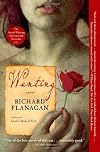
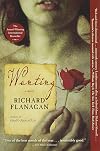
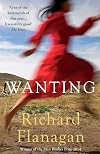
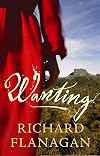
Wanting
by Richard Flanagan
On This Page
Description
"It is 1837. A young Aboriginal girl, Mathinna, is running through the long wet grass of an island at the end of the world to get help for her dying father, an Aboriginal chieftain. Twenty years later, on at island at the centre of the world, the most famous novelist of the day, Charles Dickens, realises he is about to abandon his wife, risk his name, and forever after be altered because of his inability any longer to control his intense wanting. Connecting the two events are the most show more celebrated explorer of the age, Sir John Franklin - then governor of Van Diemens Land - and his wife, Lady Jane, who adopt Mathinna, seen as one of the last of a dying race, as an experiment. Lady Jane believes the distance between savagery and civilisation is the learned capacity to control wanting. The experiment fails, the Franklins throw the child onto the streets and into a life of prostitution and alcoholism. A few years later Mathinna is found dead in a puddle. She is nineteen years old. By then Sir John too is dead, lost in the blue ice of the Arctic seeking the North West Passage. A decade later evidence emerges that in its final agony, Franklins expedition resorted to the level and practice of savages: cannibalism. Lady Jane enlists Dickens aid to put an end to such scandalous suggestions, and Dickens becomes ever more entranced in the story of men entombed in ice, recognising in its terrible image his own frozen inner life. He produces and stars in a play inspired by Franklins fate to give story to his central belief: that discipline and will can conquer desire. And yet the play will bring him to the point where he is finally no longer able to control his own wanting and the consequences it brings. Based on historic events, WANTING is a novel about art, love, and the way in which life is finally determined never by reason, but only ever by wanting"--Provided by publisher. show lessTags
Recommendations


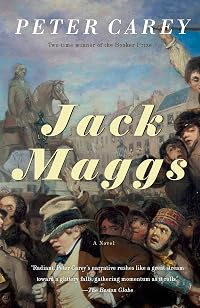


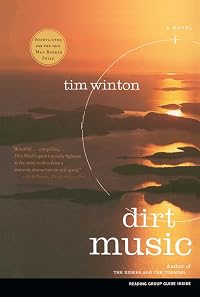


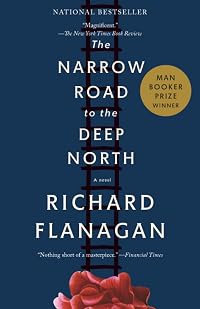
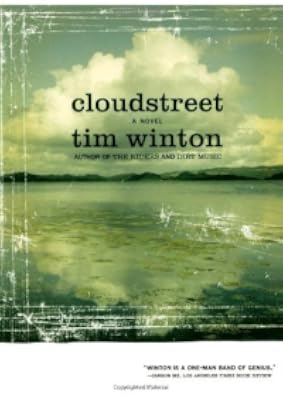












Member Recommendations

merry10 The Frozen Deep makes an appearance in Richard Flanagan's book Wanting.
2810michael Mostly because of the role of Charles Dickens in both books...
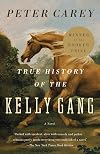
Vivl Fictionalisation of Australian history.
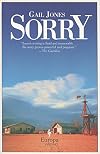
Sorry by Gail Jones
Cariola Also focused on the mistreatment and misunderstanding of aboriginal peoples, but set in a more recent time period.
Member Reviews
Not just a multi-narrative novel, but an examination of Victorian values of the British mid-nineteenth century. And while not as clear, yes, it does try to unveil, as the NY Times review says: "As its title suggests (and as Flanagan confirms in an author’s note), “Wanting” is among other things a meditation on desire". One viewpoint involves an 1840s English couple (he's an Arctic explorer who also becomes provisional governor of Van Diemen's Land -modern day Tasmania); another focuses on Mathinna, the Aborigine girl they attempt to raise, and another, that of Charles Dickens, of all people. While Flanagan's prose was wonderful to savor - really great writing- it felt a bit out of control by the end, and so grim: Sir John show more Franklin, after being alternately besotted with his foster "daughter", then repelled by her, also is rejected by the island society he has been appointed to rule. He heads out on an ill-fated Artic exploration, never to return. Lady Jane, in gradual agreement with her husband, takes Mathinna to an orphanage and abandons her to own fate. Dickens, despondent and almost manic in his need for true connection, love, throws himself into a play based on the Arctic expedition, and discovers through his passionate performance with a young actress that he really does need something more. Mathinna of course gets the worse fate, slowly declining into prostitution and drink, never really making a reasonable life for herself with the whites or the blacks - and dies on a muddy track outside of a frontier town- a mere young woman in her late teens. His scope and crystal prose reminds me of Donna Tartt show less
Review of: Wanting, by Richard Flanagan
by Stan Prager (5-14-19)
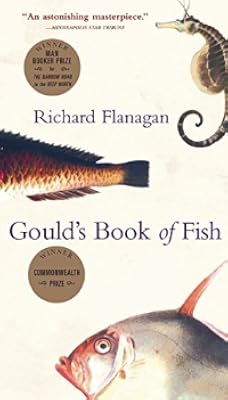
Tasmanian author Richard Flanagan has written seven novels, one of which—Gould’s Book of Fish—I would rank among the very finest of twenty-first century literature to date. I primarily read books of history, biography and science these days, but I do stray to the realm of fiction from time to time. When I happen upon a writer whose literary output not only consistently transcends the best published fiction of its day, but is so iconic that it comes to define its own genre—Cormac McCarthy and Haruki Murakami also come to mind—I latch on to that novelist and set out to read their full body of work. Wanting marks my completion of all of Flanagan’s novels, and it show more turns out that I saved one of the very best for the very last.
There is irony here because I have long resisted it, based upon its off-putting description on Flanagan’s Wikipedia page—“Wanting tells two parallel stories: about the novelist Charles Dickens in England, and Mathinna, an Aboriginal orphan adopted by Sir John Franklin, the colonial governor of Van Diemen's Land, and his wife, Lady Jane Franklin”—which struck me as a formula for fictional disaster! It turns out that I could not have been more wrong.
While several of Flanagan’s novels include characters from history, it would not be accurate to tag these as historical fiction, the way that category is generally understood. But then, the author’s work often defies classification. Flanagan is all about redefining genres—or creating new ones. Think Gabriel Garcia Marquez, John Irving, André Brink: Richard Flanagan truly belongs in that league.
The real Sir John Franklin did indeed serve as Lieutenant Governor of Van Diemen's Land (today’s Tasmania), but he is better remembered as the arctic explorer who made a tragic end in 1847 in a disastrous attempt to chart the Northwest Passage, when his ships became icebound, resulting in his death as well as that of his entire crew. The legend of the lost expedition he commanded, and the true fate of his crew, have been the subject of much speculation right down to the present day, and Franklin has often been lionized for his heroism. But the John Franklin of Wanting is not only less heroic, but rather instead a grotesque, self-absorbed, disturbing individual. Franklin and his equally narcissistic wife, Lady Jane—desperate for a child of her own—ignore prevailing taboos to adopt Mathinna, also a historic figure, one of the few full-blooded aborigines still remaining on the island after a sustained reign of terror by colonial settlers and a succession of pandemics had reduced their numbers to near extinction. What at first glance smacks of altruism masks more questionable desires by each of the Franklins—their brand of “wanting”—that Mathinna comes to fulfill, or fails to fulfill. The tragedy of Mathinna is brilliantly revealed through the nuance and complexity of a masterfully written narrative that subtly draws the reader in to expose a series of horrors hidden among the mundane that is ever chilling yet never stoops to the gratuitous.
As if these characters and themes were not sufficiently complicated for any work of fiction, the novel contains an equally compelling parallel tale, told in alternating chapters, of author Charles Dickens in London, some ten thousand miles away. The connection of the Franklins to Dickens was a visit by Lady Jane to the famed novelist, seeking his support. In the years after her husband was lost to the Arctic, Lady Jane devoted her life both to memorializing him and sponsoring expeditions to locate him, in the feeble hope that he survived. Then evidence emerged that Franklin was in fact dead, hinting that in their last gasps he and the crew resorted to cannibalism to survive. Franklin’s widow will have none of it, and she enlists the aid of England’s most celebrated figure to defend Franklin’s honor against such horrid innuendo. Dickens, a Victorian rags-to-riches miracle who is both brilliant and wildly successful while yet morose and dissatisfied, haunted by the death of a favored child and locked in a loveless marriage, is plagued by his own sort of “wanting.” The intersection of his unrequited deepening well of discontent and Lady Jane’s determination to restore her husband’s reputation serves as the linchpin of the novel, spawning new purpose in Dickens even as Lady Jane basks in anticipation of the martyred explorer’s vindication. Dickens is far more intelligent and far more accomplished than either of the hapless Franklins, but despite his genius and outsize public persona he shares a similar unmistakable shallowness in his nature. In Flanagan’s Wanting, Dickens struggles to exist outside of the characters in his novels, and then takes it upon himself to produce, direct and cast himself in a role on the stage that permits him to stand before an audience as the heroic, romantic figure he longed to be.
Fiction reviews should largely avoid spoilers so I will leave it here, but history buffs will certainly google the main characters to learn what really happened. It won’t be giving much away to note that six years after Wanting was published in 2008, the wreck of the HMS Erebus—one of Franklin’s ships—was discovered, and two years after that his second ship was found, the HMS Terror, said to be in pristine condition. Even prior to that, evidence that cannibalism was in fact part of the crew’s final days was substantiated, contradicting both Lady Jane and the ardent defense mounted by Dickens. I will withhold the fate of poor Mathinna, other than to note that her gripping story—in the novel and in real life—will likely shadow the reader long after the last page of this book is turned.
I believe that every fiction review should include a snippet of the author’s own pen for those unfamiliar with their style and talent. This bit concerns a minor character—if any of Flanagan’s characters can be said to be minor ones—an aging actress in Dickens’ London:
On the night she had received the news of Louisa’s death, leaving her the only surviving member of her family, Mrs Ternan had stifled her weeping with a pillow so her daughters would not hear her heart breaking and would never suspect what she now knew: that every death of those you love is the death also of so many shared memories and understanding, of a now irretrievable part of your own life; that every death is another irrevocable step in your own dying, and it ends not with the ovation of a full house, but the creak and crack and dust of the empty theatre. [p90]
That powerful excerpt is just a tiny sample of Flanagan’s superlative prose. Wanting ranks amongst his finest novels, which in addition to Gould’s Book of Fish should also include Death of a River Guide, and The Narrow Road to the Deep North, although there is not a bad one in the catalog. For the uninitiated who would like to experience Flanagan’s art, Wanting is a great place to start. Perhaps you may find yourself, like this reviewer, going on to read them all.
-------------------------------------------------------------------------------------
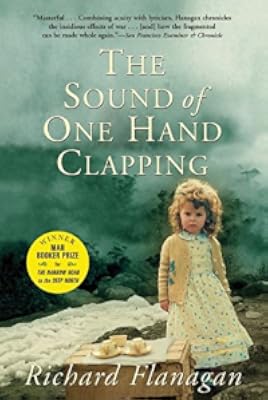
[I have reviewed several other novels by Richard Flanagan here : Death of a River Guide: https://regarp.com/2015/07/23/review-of-death-of-a-river-guide-by-richard-flanag...; The Sound of One Hand Clapping: https://regarp.com/2017/06/04/review-of-the-sound-of-one-hand-clapping-by-richar...; The Narrow Road to the Deep North: https://regarp.com/2015/02/02/review-of-the-narrow-road-to-the-deep-north-by-ric...; and, First Person: https://regarp.com/2018/09/02/review-of-first-person-a-novel-by-richard-flanagan...
Review of: Wanting, by Richard Flanagan https://regarp.com/2019/05/14/review-of-wanting-by-richard-flanagan/ show less
by Stan Prager (5-14-19)
Tasmanian author Richard Flanagan has written seven novels, one of which—Gould’s Book of Fish—I would rank among the very finest of twenty-first century literature to date. I primarily read books of history, biography and science these days, but I do stray to the realm of fiction from time to time. When I happen upon a writer whose literary output not only consistently transcends the best published fiction of its day, but is so iconic that it comes to define its own genre—Cormac McCarthy and Haruki Murakami also come to mind—I latch on to that novelist and set out to read their full body of work. Wanting marks my completion of all of Flanagan’s novels, and it show more turns out that I saved one of the very best for the very last.
There is irony here because I have long resisted it, based upon its off-putting description on Flanagan’s Wikipedia page—“Wanting tells two parallel stories: about the novelist Charles Dickens in England, and Mathinna, an Aboriginal orphan adopted by Sir John Franklin, the colonial governor of Van Diemen's Land, and his wife, Lady Jane Franklin”—which struck me as a formula for fictional disaster! It turns out that I could not have been more wrong.
While several of Flanagan’s novels include characters from history, it would not be accurate to tag these as historical fiction, the way that category is generally understood. But then, the author’s work often defies classification. Flanagan is all about redefining genres—or creating new ones. Think Gabriel Garcia Marquez, John Irving, André Brink: Richard Flanagan truly belongs in that league.
The real Sir John Franklin did indeed serve as Lieutenant Governor of Van Diemen's Land (today’s Tasmania), but he is better remembered as the arctic explorer who made a tragic end in 1847 in a disastrous attempt to chart the Northwest Passage, when his ships became icebound, resulting in his death as well as that of his entire crew. The legend of the lost expedition he commanded, and the true fate of his crew, have been the subject of much speculation right down to the present day, and Franklin has often been lionized for his heroism. But the John Franklin of Wanting is not only less heroic, but rather instead a grotesque, self-absorbed, disturbing individual. Franklin and his equally narcissistic wife, Lady Jane—desperate for a child of her own—ignore prevailing taboos to adopt Mathinna, also a historic figure, one of the few full-blooded aborigines still remaining on the island after a sustained reign of terror by colonial settlers and a succession of pandemics had reduced their numbers to near extinction. What at first glance smacks of altruism masks more questionable desires by each of the Franklins—their brand of “wanting”—that Mathinna comes to fulfill, or fails to fulfill. The tragedy of Mathinna is brilliantly revealed through the nuance and complexity of a masterfully written narrative that subtly draws the reader in to expose a series of horrors hidden among the mundane that is ever chilling yet never stoops to the gratuitous.
As if these characters and themes were not sufficiently complicated for any work of fiction, the novel contains an equally compelling parallel tale, told in alternating chapters, of author Charles Dickens in London, some ten thousand miles away. The connection of the Franklins to Dickens was a visit by Lady Jane to the famed novelist, seeking his support. In the years after her husband was lost to the Arctic, Lady Jane devoted her life both to memorializing him and sponsoring expeditions to locate him, in the feeble hope that he survived. Then evidence emerged that Franklin was in fact dead, hinting that in their last gasps he and the crew resorted to cannibalism to survive. Franklin’s widow will have none of it, and she enlists the aid of England’s most celebrated figure to defend Franklin’s honor against such horrid innuendo. Dickens, a Victorian rags-to-riches miracle who is both brilliant and wildly successful while yet morose and dissatisfied, haunted by the death of a favored child and locked in a loveless marriage, is plagued by his own sort of “wanting.” The intersection of his unrequited deepening well of discontent and Lady Jane’s determination to restore her husband’s reputation serves as the linchpin of the novel, spawning new purpose in Dickens even as Lady Jane basks in anticipation of the martyred explorer’s vindication. Dickens is far more intelligent and far more accomplished than either of the hapless Franklins, but despite his genius and outsize public persona he shares a similar unmistakable shallowness in his nature. In Flanagan’s Wanting, Dickens struggles to exist outside of the characters in his novels, and then takes it upon himself to produce, direct and cast himself in a role on the stage that permits him to stand before an audience as the heroic, romantic figure he longed to be.
Fiction reviews should largely avoid spoilers so I will leave it here, but history buffs will certainly google the main characters to learn what really happened. It won’t be giving much away to note that six years after Wanting was published in 2008, the wreck of the HMS Erebus—one of Franklin’s ships—was discovered, and two years after that his second ship was found, the HMS Terror, said to be in pristine condition. Even prior to that, evidence that cannibalism was in fact part of the crew’s final days was substantiated, contradicting both Lady Jane and the ardent defense mounted by Dickens. I will withhold the fate of poor Mathinna, other than to note that her gripping story—in the novel and in real life—will likely shadow the reader long after the last page of this book is turned.
I believe that every fiction review should include a snippet of the author’s own pen for those unfamiliar with their style and talent. This bit concerns a minor character—if any of Flanagan’s characters can be said to be minor ones—an aging actress in Dickens’ London:
On the night she had received the news of Louisa’s death, leaving her the only surviving member of her family, Mrs Ternan had stifled her weeping with a pillow so her daughters would not hear her heart breaking and would never suspect what she now knew: that every death of those you love is the death also of so many shared memories and understanding, of a now irretrievable part of your own life; that every death is another irrevocable step in your own dying, and it ends not with the ovation of a full house, but the creak and crack and dust of the empty theatre. [p90]
That powerful excerpt is just a tiny sample of Flanagan’s superlative prose. Wanting ranks amongst his finest novels, which in addition to Gould’s Book of Fish should also include Death of a River Guide, and The Narrow Road to the Deep North, although there is not a bad one in the catalog. For the uninitiated who would like to experience Flanagan’s art, Wanting is a great place to start. Perhaps you may find yourself, like this reviewer, going on to read them all.
-------------------------------------------------------------------------------------
[I have reviewed several other novels by Richard Flanagan here : Death of a River Guide: https://regarp.com/2015/07/23/review-of-death-of-a-river-guide-by-richard-flanag...; The Sound of One Hand Clapping: https://regarp.com/2017/06/04/review-of-the-sound-of-one-hand-clapping-by-richar...; The Narrow Road to the Deep North: https://regarp.com/2015/02/02/review-of-the-narrow-road-to-the-deep-north-by-ric...; and, First Person: https://regarp.com/2018/09/02/review-of-first-person-a-novel-by-richard-flanagan...
Review of: Wanting, by Richard Flanagan https://regarp.com/2019/05/14/review-of-wanting-by-richard-flanagan/ show less
What a remarkable book! Flanagan mingles two stories, both based on real persons, who meet in 1854. Charles Dickens is at the center of the first. He is despondent over the recent death of his daughter Dora, and his marriage is falling apart. There seems to be no joy in his life, and he has no idea how to get it back. Dickens is contacted by Lady Jane Franklin, who wants him to write a defense of her husband, Sir John Franklin, former governor of Tasmania, who disappeared on an arctic expedition. Although 10 years have passed, she still has hopes that her husband survives, and she is outraged by a recent article claiming that he cannibalized his crew. The English, according to Lady Jane, just don't do that kind of thing, and she wants show more Dickens to write a piece that will restore her husband's reputation. Inspired by the tale, Dickens also joins with his friend, Willkie Collins, to write and perform in a play, 'The Frozen Deep.'
Flanagan also takes us back in time to tell of the Franklins' life in Tasmania, where Lady Jane tries to instill English culture via imported statuary and paintings. She adopts a lively aboriginal girl, Mathinna, taking her from her family and doing her best to turn her into a proper English lady. For her, Mathinna is an experiment, but she also fulfills the "wanting" left by three miscarriages; for Sir John, she comes to represent another kind of "wanting"; and Mathinna herself is stuck between "wanting" the love of a new mother who believes that displays of affection are indecent and the freedom of the life she once knew.
A number of readers have complained that the two stories don't really connect, but I believe they do, on a number of levels. The book is, of course, in part a commentary on English colonization and its treatment of native peoples. It's also a statement on what is lost, both at home and abroad, in adhering to the rigid restrictions and morals of Victorian English society: not only Mahinna but Dickens and the Franklins suffer as well. Flanagan cleverly plays on the double meanings of the word "wanting" as both what one desires and what one lacks.
This book just shot to the top of my list of Best Books of 2016. It's brilliant, poignant, and beautifully written. I can't wait to get to the other two books I own by this author. show less
Flanagan also takes us back in time to tell of the Franklins' life in Tasmania, where Lady Jane tries to instill English culture via imported statuary and paintings. She adopts a lively aboriginal girl, Mathinna, taking her from her family and doing her best to turn her into a proper English lady. For her, Mathinna is an experiment, but she also fulfills the "wanting" left by three miscarriages; for Sir John, she comes to represent another kind of "wanting"; and Mathinna herself is stuck between "wanting" the love of a new mother who believes that displays of affection are indecent and the freedom of the life she once knew.
A number of readers have complained that the two stories don't really connect, but I believe they do, on a number of levels. The book is, of course, in part a commentary on English colonization and its treatment of native peoples. It's also a statement on what is lost, both at home and abroad, in adhering to the rigid restrictions and morals of Victorian English society: not only Mahinna but Dickens and the Franklins suffer as well. Flanagan cleverly plays on the double meanings of the word "wanting" as both what one desires and what one lacks.
This book just shot to the top of my list of Best Books of 2016. It's brilliant, poignant, and beautifully written. I can't wait to get to the other two books I own by this author. show less
This was read for my online book group. I'd read one previous book by Richard Flanagan, Gould's Book of Fish, and had enjoyed it immensely. But, from comments from other people around the biblioaddict world, it seems that Flanagan is a bit of an acquired taste.
This book has two timelines and stories that it cuts between: Tasmania in the 19th century, with the genocide of the Tasmanian aborigines (through active warfare, neglect, and disease). The Governor of Tasmania and his wife, Sir John Franklin and Lady Jane, have been unable to have children, and as a impulsive decision, Lady Jane chooses Mathinna, a young aboriginal girl to bring up as a white lady, almost as a scientific experiment, although one horribly contaminated by her lack show more of parenting skills, or even self-knowledge of what she really wants from this situation.
The second plot involves Lady Jane some years later. Sir John has returned to his first love, polar exploration, and is missing, presumed dead, and even more repugnant, presumed succumbed to cannibalism while lost searching for the Northwest passage. Lady Jane enlists Charles Dickens to help rehabilitate her husband. Dickens does this with a will, and becomes somewhat obsessed with the story himself, leading to him and his friend Wilkie Collins staging a play about Arctic exploration, and his subsequent obsession with one of the actresses (Ellen Ternan) in the play.
Both stories are linked by Lady Jane herself, as well as the theme of wanting: we all want what we cannot have. Mathinna wants to return to her childhood, Lady Jane wants a child, Dickens wants Ellen, etc. Unfortunately, I didn't feel the two stories mixed all that well. They are good standalone stories, but there didn't seem to be enough of a link between the two, I kept on expecting more of an "ahah!" moment when the two stories finally entwined completely. (Which they never really did.)
However, I do seem to be in the "love him" camp when it comes to Flanagan. I found each individual story fascinating, beautifully written, and quite compelling. I did prefer the Dickens story: it had arctic explorers, cannibalism, passion, unhappy marriages, and 19th century London. While the Tasmanian story was interesting as well, overall anything involving the Tasmanian aborigines leaves me profoundly depressed. You just know it's not going to end well.
Both stories also did what I love best about good literature: teach me more about the world. You know it's a good book, when after I finished reading I'm on Wikipedia researching more, and finding out further details. show less
This book has two timelines and stories that it cuts between: Tasmania in the 19th century, with the genocide of the Tasmanian aborigines (through active warfare, neglect, and disease). The Governor of Tasmania and his wife, Sir John Franklin and Lady Jane, have been unable to have children, and as a impulsive decision, Lady Jane chooses Mathinna, a young aboriginal girl to bring up as a white lady, almost as a scientific experiment, although one horribly contaminated by her lack show more of parenting skills, or even self-knowledge of what she really wants from this situation.
The second plot involves Lady Jane some years later. Sir John has returned to his first love, polar exploration, and is missing, presumed dead, and even more repugnant, presumed succumbed to cannibalism while lost searching for the Northwest passage. Lady Jane enlists Charles Dickens to help rehabilitate her husband. Dickens does this with a will, and becomes somewhat obsessed with the story himself, leading to him and his friend Wilkie Collins staging a play about Arctic exploration, and his subsequent obsession with one of the actresses (Ellen Ternan) in the play.
Both stories are linked by Lady Jane herself, as well as the theme of wanting: we all want what we cannot have. Mathinna wants to return to her childhood, Lady Jane wants a child, Dickens wants Ellen, etc. Unfortunately, I didn't feel the two stories mixed all that well. They are good standalone stories, but there didn't seem to be enough of a link between the two, I kept on expecting more of an "ahah!" moment when the two stories finally entwined completely. (Which they never really did.)
However, I do seem to be in the "love him" camp when it comes to Flanagan. I found each individual story fascinating, beautifully written, and quite compelling. I did prefer the Dickens story: it had arctic explorers, cannibalism, passion, unhappy marriages, and 19th century London. While the Tasmanian story was interesting as well, overall anything involving the Tasmanian aborigines leaves me profoundly depressed. You just know it's not going to end well.
Both stories also did what I love best about good literature: teach me more about the world. You know it's a good book, when after I finished reading I'm on Wikipedia researching more, and finding out further details. show less
A rumination on desire and repression, Victorian earnestness and hypocrisy, colonialism and racism and the disaster of "good" intentions. Flanagan has appropriated the lives of historical figures for his study--not just Dickins but arctic explorer Sir John Franklin and his wife Lady Jane and their tragic experiment, the Tasmanian Aboriginal girl Mathinna, found dead face down in a puddle at the age of 17 in her native land. Dickins and the Franklins were historically connected when Lady Jane called upon Dickins to write a denial/defence of accusations of cannibalism leveled at Sir John's final expedition, which Dickins did.
The "plot," such as it is. Lady Jane chooses adorable little Mathinna to be her educational experiment. She will show more be dressed in Victorian finery, she will be educated with Benthamite rigor by private tutors, and she will prove--or not--that the savage can be tamed. Tiny Mathinna offers love first and is rejected. The experiment is a disaster and Mathinna is sent away to be educated/abused by nuns. Eventually she ends up back home, toothless, ill, prostituting herself for booze, a misfit everywhere. In Flanagan's telling, Sir John is undone by a private obsession with Mathinna and rapes her when she's still a child (pushes the boundaries of what's okay or not when using an actual historical personage, I think)--as with Mathinna, desire won't be tamed, but it can be damaged/distorted.
The parallel story finds Dickins when his marriage is coming apart. His wife resents that he has created their family like one of his moralizing stories. But there she is--to real for him. He's become infatuated with a young actress (the mysterious Ellen Ternan of his biography--what was the extent of their relationship?) and found himself betrayed by his own desires. show less
The "plot," such as it is. Lady Jane chooses adorable little Mathinna to be her educational experiment. She will show more be dressed in Victorian finery, she will be educated with Benthamite rigor by private tutors, and she will prove--or not--that the savage can be tamed. Tiny Mathinna offers love first and is rejected. The experiment is a disaster and Mathinna is sent away to be educated/abused by nuns. Eventually she ends up back home, toothless, ill, prostituting herself for booze, a misfit everywhere. In Flanagan's telling, Sir John is undone by a private obsession with Mathinna and rapes her when she's still a child (pushes the boundaries of what's okay or not when using an actual historical personage, I think)--as with Mathinna, desire won't be tamed, but it can be damaged/distorted.
The parallel story finds Dickins when his marriage is coming apart. His wife resents that he has created their family like one of his moralizing stories. But there she is--to real for him. He's become infatuated with a young actress (the mysterious Ellen Ternan of his biography--what was the extent of their relationship?) and found himself betrayed by his own desires. show less
Wanting
Posted on August 15, 2011 by olduvai| Leave a comment
“‘She is exasperation,’ said Lady Jane.
‘It is beyond explanation,’ replied Sir John.”
“A small girl ran fit to burst through wallaby grass almost as high as her. How she loved the sensation of the soft threads of fine grass feathering beads of water onto her calves, and the feel of the earth beneath her bare feet, wet and mushy in winter, dry and dusty. She was seven years old, the earth was still new and extraordinary in its delights, the earth still ran up through her feet to her head into the sun, and it was as possible to be exhilarated by running as it was to be terrified by the reason she had to run and not stop running.”
Is it too obvious to say that show more Richard Flanagan is a writer? I mean, he can write. As in, write words, sentences, paragraphs, pages, that I want to reread. Are all his books like that? Or did I happen to chance on a good one? Because Wanting is a pretty damn good one. It has its feet in real life, in history, in Lady Jane and Sir John Franklin, polar explorer and governor of Van Diemen’s Land (aka Tasmania), in Mathinna, the aboriginal girl they adopt and attempt to raise as a sort of experiment, in Charles Dickens and his friend Wilkie Collins (they were friends? See one can learn from novels too).
Here’s the end of chapter one:
“It was 1839. The first photograph of a man was taken, Abd al-Qadir declared a jihad against the French, and Charles Dickens was rising to greater fame with a novel called Oliver Twist. It was, through the Protector, as he closed the ledger after another post mortem report and returned to preparing notes for his pneumatics lecture, inexplicable.”
And the end of chapter two:
“It was 1851. London’s Great Exhibition celebrated the triumph of reason in a glass pavilion mocked by the writer Douglas Jerrold as a crystal palace; a novel about finding a fabled white whale was published in New York to failure; while in the iron-grey port of Stomness, Orkney, Lady Jane Franklin farewelled into whiteness the second of what were to be numerous failed expeditions in search of a fable that had once been her husband.”
You know how celebrity appearances on talk shows can sometimes change your mind about them (or maybe you don’t care, I dunno, but it does sometimes for me. Like I never really minded Cameron Diaz or Lea Michele till I saw them on UK’s Top Gear and Conan O’Brien respectively, and then decidedly didn’t like them at all)? Well, in this case, I want to know more about Wilkie Collins and Charles Dickens – and read more of their work (I have to admit that I have yet to finish anything by Collins. Then again, the only one I’ve attempted is The Moonstone, and I think I was attempting to read it on my iPod Touch. I know you guys would probably recommend The Woman in White, and hopefully I’ll get to it soon!). But back to my point. I want to read more from the guy who is described as such:
“Wilkie Collins had a very large head that teetered on a particularly small body, and the oddity of his looks was accentuated by a bulging left temple and a depressed right temple, so that viewed from one side he seemed a rather different man than viewed from the other.”
Heh. I quite like that one. But I think this is one of my favourite passages (and I’m going to leave you with a few more, which I copied out and typed out and pretty much exhausted my 20 minutes’ worth of baby napping time this morning, I reckon):
“We have in our lives only a few moments. A moment of joy or wonder with another. Some might say beauty or transcendence. Some might say all those things. Then you reach an age… and you realise that moment, or, if you are very lucky, a handful of those moments, was your life. That those moments are all, and that they are everything. And yet we persist in thinking that such moments will only have worth if we can make them go on forever. We should live for moments, yet we are so fraught in pursuing everything else, with the future, with the anchors that pull us down, so busy that we sometimes don’t even see the moments for what they are. We leave a sick child in order to make a speech.”
“In his final agony, Sir John’s thoughts were only of catching birds with a small dark girl who still laughed at him, and his head momentarily filled with the improbable smell of a world that he now recalled as Eden after rain.”
“She traveled the world now, her vengeance on her husband’s obstinacy applauded as noble grief, her part as loyal widow having emancipated her from mean and allowing her freedoms few other women could imagine. Her life, as a studied melancholy, she savored. To admit to happiness would have been inappropriate, but as her cursing driver sought a way around, she believed herself to be fulfilled." show less
Posted on August 15, 2011 by olduvai| Leave a comment
“‘She is exasperation,’ said Lady Jane.
‘It is beyond explanation,’ replied Sir John.”
“A small girl ran fit to burst through wallaby grass almost as high as her. How she loved the sensation of the soft threads of fine grass feathering beads of water onto her calves, and the feel of the earth beneath her bare feet, wet and mushy in winter, dry and dusty. She was seven years old, the earth was still new and extraordinary in its delights, the earth still ran up through her feet to her head into the sun, and it was as possible to be exhilarated by running as it was to be terrified by the reason she had to run and not stop running.”
Is it too obvious to say that show more Richard Flanagan is a writer? I mean, he can write. As in, write words, sentences, paragraphs, pages, that I want to reread. Are all his books like that? Or did I happen to chance on a good one? Because Wanting is a pretty damn good one. It has its feet in real life, in history, in Lady Jane and Sir John Franklin, polar explorer and governor of Van Diemen’s Land (aka Tasmania), in Mathinna, the aboriginal girl they adopt and attempt to raise as a sort of experiment, in Charles Dickens and his friend Wilkie Collins (they were friends? See one can learn from novels too).
Here’s the end of chapter one:
“It was 1839. The first photograph of a man was taken, Abd al-Qadir declared a jihad against the French, and Charles Dickens was rising to greater fame with a novel called Oliver Twist. It was, through the Protector, as he closed the ledger after another post mortem report and returned to preparing notes for his pneumatics lecture, inexplicable.”
And the end of chapter two:
“It was 1851. London’s Great Exhibition celebrated the triumph of reason in a glass pavilion mocked by the writer Douglas Jerrold as a crystal palace; a novel about finding a fabled white whale was published in New York to failure; while in the iron-grey port of Stomness, Orkney, Lady Jane Franklin farewelled into whiteness the second of what were to be numerous failed expeditions in search of a fable that had once been her husband.”
You know how celebrity appearances on talk shows can sometimes change your mind about them (or maybe you don’t care, I dunno, but it does sometimes for me. Like I never really minded Cameron Diaz or Lea Michele till I saw them on UK’s Top Gear and Conan O’Brien respectively, and then decidedly didn’t like them at all)? Well, in this case, I want to know more about Wilkie Collins and Charles Dickens – and read more of their work (I have to admit that I have yet to finish anything by Collins. Then again, the only one I’ve attempted is The Moonstone, and I think I was attempting to read it on my iPod Touch. I know you guys would probably recommend The Woman in White, and hopefully I’ll get to it soon!). But back to my point. I want to read more from the guy who is described as such:
“Wilkie Collins had a very large head that teetered on a particularly small body, and the oddity of his looks was accentuated by a bulging left temple and a depressed right temple, so that viewed from one side he seemed a rather different man than viewed from the other.”
Heh. I quite like that one. But I think this is one of my favourite passages (and I’m going to leave you with a few more, which I copied out and typed out and pretty much exhausted my 20 minutes’ worth of baby napping time this morning, I reckon):
“We have in our lives only a few moments. A moment of joy or wonder with another. Some might say beauty or transcendence. Some might say all those things. Then you reach an age… and you realise that moment, or, if you are very lucky, a handful of those moments, was your life. That those moments are all, and that they are everything. And yet we persist in thinking that such moments will only have worth if we can make them go on forever. We should live for moments, yet we are so fraught in pursuing everything else, with the future, with the anchors that pull us down, so busy that we sometimes don’t even see the moments for what they are. We leave a sick child in order to make a speech.”
“In his final agony, Sir John’s thoughts were only of catching birds with a small dark girl who still laughed at him, and his head momentarily filled with the improbable smell of a world that he now recalled as Eden after rain.”
“She traveled the world now, her vengeance on her husband’s obstinacy applauded as noble grief, her part as loyal widow having emancipated her from mean and allowing her freedoms few other women could imagine. Her life, as a studied melancholy, she savored. To admit to happiness would have been inappropriate, but as her cursing driver sought a way around, she believed herself to be fulfilled." show less
Set in 1839, real-life Arctic explorer Sir John Franklin has arrived for a governor's position for the penal colony of Van Diemen's Land. There, he and his wife, Lady Jane, fall in love with a spunky live-wire of a native Aboriginal child they call Mathinna. To the Franklins, Methinna is a grand experiment: to see if they can "civilize" the girl through Christianity. Viewed as a savage without reason, they want to tame her into their kind of submission. Leapfrogging ahead in time, Sir John Franklin and his crew have disappeared in the Arctic. Tales of cannibalism embarrass Lady Jane enough for her to approach Charles Dickens to tell a different story.
Through both timelines the emotion of wanting is explored. Sir John Franklin wanted to show more tame Mathinna. Later, he wanted to tame the Northwest Passage. Lady Jane wanted Methinna as the child she could not have herself and later, when her husband disappeared, she wanted to clear his name of the rumored savagery. How ironic. Dickens, in competition with other writers of the day like Thackeray, reveled in Franklin's story and wanted a recognition he has never had before. show less
Through both timelines the emotion of wanting is explored. Sir John Franklin wanted to show more tame Mathinna. Later, he wanted to tame the Northwest Passage. Lady Jane wanted Methinna as the child she could not have herself and later, when her husband disappeared, she wanted to clear his name of the rumored savagery. How ironic. Dickens, in competition with other writers of the day like Thackeray, reveled in Franklin's story and wanted a recognition he has never had before. show less
Members
- Recently Added By
Published Reviews
added by lucyknows
Lists

Recommend the 20 best books you've read in the last five years
2,168 works; 606 members

Top Five Books of 2016
795 works; 228 members

Top Five Books of 2015
811 works; 241 members

Books Read in 2016
4,666 works; 197 members
Talk Discussions
Past Discussions
ANZAC Challenge January 2015- Richard Flanagan and Fiona Kidman in 75 Books Challenge for 2015 (January 2015)
Author Information

21+ Works 9,947 Members
Richard Flanagan was born in Longford, Tasmania, in 1961. He received a Master of Letters degree from Oxford University. His first novel, Death of a River Guide, won Australia's National Fiction Award. His works include The Sound of One Hand Clapping, The Unknown Terrorist, and four history books. He has received numerous awards including the show more Commonwealth Writers Prize for Gould's Book of Fish, the 2011 Tasmania Book Prize for Wanting, and the 2014 Man Booker Prize for The Narrow Road to the Deep North. He directed a feature film version of The Sound of One Hand Clapping. He was also shortlisted for the UK Indie Booksellers Award with The Narrow Road to the Deep North. This same title was won the Margaret Scott Prize for best book by a Tasmanian writer 2015. In 2018, The Narrow Road to the Deep North will be made into an international television series. The University of Melbourne has appointed him as the Boisbouvier Founding Chair in Australian Literature at the University of Melbourne, a new professorship to 'advance the teaching, understanding and public appreciation of Australian literature'. (Bowker Author Biography) show less
Some Editions
Awards and Honors
Awards
Common Knowledge
- Canonical title*
- Désirer
- Original title
- Wanting
- Original publication date
- 2008
- People/Characters
- Mathinna; Sir John Franklin; Lady Jane Franklin; Charles Dickens; Wilkie Collins; Ellen Ternan
- Important places
- Australia; Flinders Island, Tasmania, Australia; Lancashire, England, UK; Manchester, England, UK; Tasmania, Australia; Wybalenna, Flinders Island, Tasmania, Australia
- Epigraph
- You see, reason, gentlemen, is a fine thing, that is unquestionable, but reason is only reason and satisfies only man's reasoning capacity, while wanting is a manifestation of the whole of life.
-- from Notes from Und... (show all)erground by Fyodor Dostoevsky.
That which is wanting cannot be numbered.
-- Ecclesiastes - Dedication
- For Kevin Perkins
- First words
- The war had ended as wars sometimes do, unexpectedly.
- Last words
- (Click to show. Warning: May contain spoilers.)With the stringybarked back of a hand, the sawyer wiped a dead and milky eye, then stroked the ox on the muzzle and asked it to help him carry the poor child home, her dirty feet jolting over the sled's back as the ox took up its burden, their light-coloured soles disappearing into the longest night.
*Some information comes from Common Knowledge in other languages. Click "Edit" for more information.
Classifications
- Genres
- General Fiction, Fiction and Literature, Historical Fiction
- DDC/MDS
- 823.914 — Literature & rhetoric English & Old English literatures English fiction 1900- 1901-1999 1945-1999
- LCC
- PR9619.3 .F525 .W36 — Language and Literature English English Literature English literature: Provincial, local, etc.
- BISAC
Statistics
- Members
- 604
- Popularity
- 48,341
- Reviews
- 42
- Rating
- (3.74)
- Languages
- 10 — Catalan, Danish, Dutch, English, French, German, Italian, Polish, Romanian, Spanish
- Media
- Paper, Audiobook, Ebook
- ISBNs
- 44
- ASINs
- 11