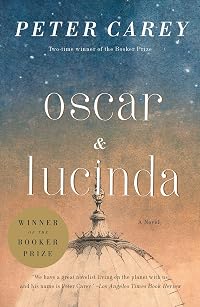
Oscar and Lucinda
by Peter Carey
On This Page
Description
A rebellious Anglican priest and a teenaged heiress who buys a glass factory in Australia pursue an unlikely romance.Tags
Recommendations

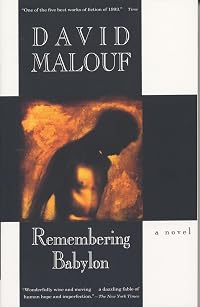
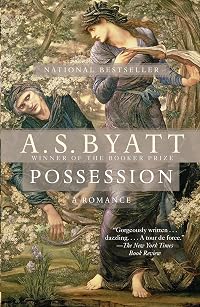
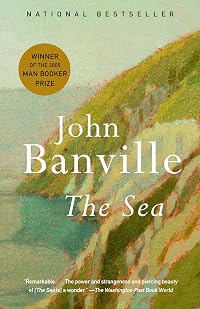
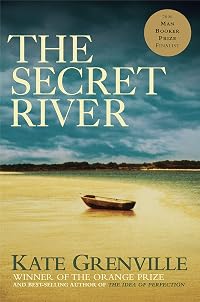











Member Recommendations


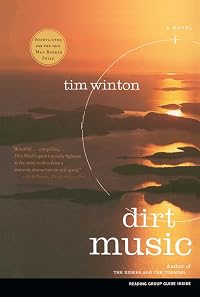
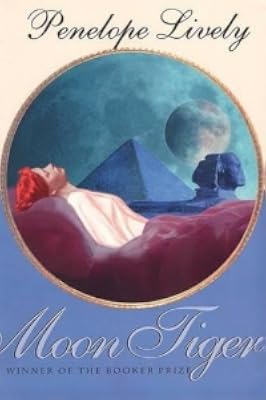
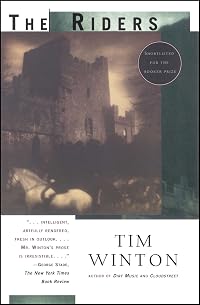
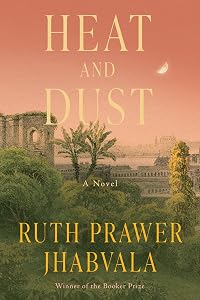
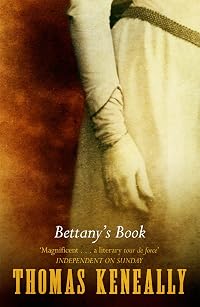
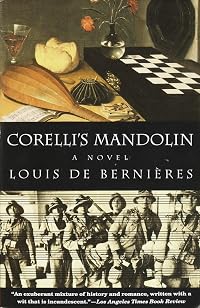
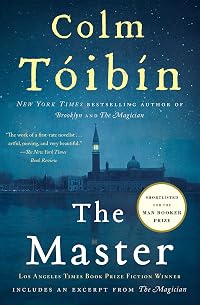
wonderlake Similar (literally) 'builing a new life' story on the other side of the world. Roderick Blackstone (The Colour) has a gambling "System"/debts

Member Reviews
Oscar Hopkins is a high-strung preacher's kid with hydrophobia and noisy knees. Lucinda Leplastrier is an heiress who impulsively buys a glass factory with the inheritance forced on her by a well-intentioned adviser. When the two finally meet, on board a ship bound for New South Wales, they are bound by their affinity for risk, they both are addicted to gambling, their loneliness, and their awkwardly blossoming (but unexpressed) mutual affection. Their final high-stakes bet--whether a glass church can be transported and constructed "by Easter Sunday" for the benefit of an out-of-the-way congregation and its minister --strains plausibility, and events turn ghastly as Oscar plays out his bid for Lucinda's heart. But the object is not the show more final results, it is the journey. The stories of Oscar and Lucinda’s lives are filled with poignant detail. Each episode strikes a chord. Through their trials and small triumphs, Oscar and Lucinda come of age to plan their great achievement.
Although love proves to be the ultimate gamble for Oscar and Lucinda, the story never strays too far from the terrible possibility that even the most thunderstruck lovers can remain isolated in parallel lives. show less
Although love proves to be the ultimate gamble for Oscar and Lucinda, the story never strays too far from the terrible possibility that even the most thunderstruck lovers can remain isolated in parallel lives. show less
This was a wonderful book from start to finish. Carey writes with great insight into the vivid characters he has created and his use of metaphor is always insightful. While very beautifully evoking the themes of love and society, this is also a story of something I’m very familiar with: the struggle to overcome our fallen nature while trusting in a God who accepts that we cannot.
Set in the mid 19th-century, Oscar is born to a fundamentalist minister in rural Cornwall, England, Lucinda to immigrant parents in Australia. Both lose parents at a young age and both find themselves unacceptable to their surrounding societies. Although this hardship has quite a different effect on moulding the two of their characters, they both struggle with show more a passion which they carry as a dark secret: gambling.
For Oscar, this is at once the basis for faith and yet its crisis. He gambles, he believes, because God has instructed him to so that he can fulfil God’s plan. Lucinda gambles because she has the money to burn and because she finds it evokes preternatural tendencies she can barely resist. When the two eventually meet, it is gambling which cements their friendship and the greatest bet of all which is the consummation of their love.
This book is not short and yet Carey writes with an astonishing level of detail. The detail isn’t, as with Tolstoy or Hardy, in verbose descriptions of scenes or the human soul. The detail comes from metaphor. It’s everywhere and makes the novel worthy of a second, more patient, reading. Inanimate objects become alive: houses, buildings, modes of transport, whole countries – all of these are characters in the story. The humans themselves are also exceptionally well-crafted. Each of them is complex and you are never sure whether they are good guys or bad ones. And this is how it should be. Which one of us is, after all, wholly evil or wholly good? We are as varied a mixture of the two as you can imagine, and Peter Carey can imagine a whole lot more than most writers.
There are Booker Prize winners and Booker Prize winners. This one is up there with Midnight’s Children and The Siege of Krishnapur in my top three I think. Would it appear in yours? show less
Set in the mid 19th-century, Oscar is born to a fundamentalist minister in rural Cornwall, England, Lucinda to immigrant parents in Australia. Both lose parents at a young age and both find themselves unacceptable to their surrounding societies. Although this hardship has quite a different effect on moulding the two of their characters, they both struggle with show more a passion which they carry as a dark secret: gambling.
For Oscar, this is at once the basis for faith and yet its crisis. He gambles, he believes, because God has instructed him to so that he can fulfil God’s plan. Lucinda gambles because she has the money to burn and because she finds it evokes preternatural tendencies she can barely resist. When the two eventually meet, it is gambling which cements their friendship and the greatest bet of all which is the consummation of their love.
This book is not short and yet Carey writes with an astonishing level of detail. The detail isn’t, as with Tolstoy or Hardy, in verbose descriptions of scenes or the human soul. The detail comes from metaphor. It’s everywhere and makes the novel worthy of a second, more patient, reading. Inanimate objects become alive: houses, buildings, modes of transport, whole countries – all of these are characters in the story. The humans themselves are also exceptionally well-crafted. Each of them is complex and you are never sure whether they are good guys or bad ones. And this is how it should be. Which one of us is, after all, wholly evil or wholly good? We are as varied a mixture of the two as you can imagine, and Peter Carey can imagine a whole lot more than most writers.
There are Booker Prize winners and Booker Prize winners. This one is up there with Midnight’s Children and The Siege of Krishnapur in my top three I think. Would it appear in yours? show less
Confessional: I felt no affinity for the timid boy with flaming red hair who was afraid of everything. I felt no affinity for the wealthy heiress with the gambling problem. To be honest, I felt no affinity for Oscar and Lucinda the couple or the novel. It dragged on and on. For the most part, I found it was a tirade about the human condition.
As an aside, there are strange details all throughout Oscar and Lucinda. Even though I was bored most of the time, I still am curious about the significance and role of cauliflower to Lucinda when she was on the boat.
As an aside, there are strange details all throughout Oscar and Lucinda. Even though I was bored most of the time, I still am curious about the significance and role of cauliflower to Lucinda when she was on the boat.
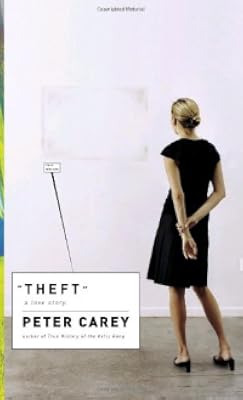
Peter Carey is an author that I generally like rather than love. He is, of course, a very clever author, but a lot of the time I find him a bit too cold and intellectual for my tastes. Much of the time I am able to overlook this problem in his work - I enjoyed Theft, for instance, as well as his modified retellings of other works such as Jack Maggs (Great Expectations) and Parrot and Olivier in America (Tocqueville's Democracy in America). There is one work of Carey's, however, that I am able to state without reservation that I love, and that is Oscar and Lucinda.
It's not hard to explain why this is such a great novel. Its primary strength lies in its two main characters, Oscar Hopkins and Lucinda Leplastrier, who are simply two of the show more best, most complex characters ever dreamed up in literary history.
Oscar is the son of a stern minister, a quixotic true believer whose beliefs, instead of leading him into orthodoxy, take him straight into the sinful world of gambling. That's not how Oscar sees it, of course: drawing heavily on Pascal and Spinoza, Carey represents Oscar's version of theodicy as a wager as absolutely genuine. Naturally, Oscar is a constant outsider - at Oxford he gains the nickname "Odd Bod" - who never fits in, but whose authenticity and sincerity draws the reader's sympathy.
Lucinda, meanwhile, is the daughter of an ardent feminist, a forceful personality who nonetheless feels guilt about the large fortune she inherits following the death of her parents. Torn between this guilt and fiscal responsibility, she gambles compulsively, hoping that her losses can "purify" her from the stain of her money. One particularly large gamble she makes is to buy a glass factory with her new inheritance, a business that she picks at random.
Carey narrates the story of Oscar and Lucinda's convergent fortunes from the perspective of their great-grandson, who reflects repeatedly on the various contingencies that had to fall into place in order to make possible his birth. Indeed, it is this notion of contingency, of the randomness of the universe and the human response to it, that forms the central theme of this ambitious novel. It is no surprise, then, that its two central protagonists are both ardent gamblers, with styles that complement each other: Oscar gambles to win, but never for his own personal gain; Lucinda gambles to lose, with her emotions as her underlying motive.
It was such a pleasure to return to Oscar and Lucinda after so many years - I last read it when I was an undergraduate - and rediscover just how enjoyable and wise a novel it is. show less
It's not hard to explain why this is such a great novel. Its primary strength lies in its two main characters, Oscar Hopkins and Lucinda Leplastrier, who are simply two of the show more best, most complex characters ever dreamed up in literary history.
Oscar is the son of a stern minister, a quixotic true believer whose beliefs, instead of leading him into orthodoxy, take him straight into the sinful world of gambling. That's not how Oscar sees it, of course: drawing heavily on Pascal and Spinoza, Carey represents Oscar's version of theodicy as a wager as absolutely genuine. Naturally, Oscar is a constant outsider - at Oxford he gains the nickname "Odd Bod" - who never fits in, but whose authenticity and sincerity draws the reader's sympathy.
Lucinda, meanwhile, is the daughter of an ardent feminist, a forceful personality who nonetheless feels guilt about the large fortune she inherits following the death of her parents. Torn between this guilt and fiscal responsibility, she gambles compulsively, hoping that her losses can "purify" her from the stain of her money. One particularly large gamble she makes is to buy a glass factory with her new inheritance, a business that she picks at random.
Carey narrates the story of Oscar and Lucinda's convergent fortunes from the perspective of their great-grandson, who reflects repeatedly on the various contingencies that had to fall into place in order to make possible his birth. Indeed, it is this notion of contingency, of the randomness of the universe and the human response to it, that forms the central theme of this ambitious novel. It is no surprise, then, that its two central protagonists are both ardent gamblers, with styles that complement each other: Oscar gambles to win, but never for his own personal gain; Lucinda gambles to lose, with her emotions as her underlying motive.
It was such a pleasure to return to Oscar and Lucinda after so many years - I last read it when I was an undergraduate - and rediscover just how enjoyable and wise a novel it is. show less
I'm totally shocked to see all these negative reviews as I completely loved this book, cried buckets and so on. It is like a dense, character-rich 19th-c. novel, but more complex in terms of what the characters have to risk, how far outside their ken they have to move according to the baroque circumstances of the plot. I am American so I could be quite wrong but I imagine Australia with its bizarre past as a natural setting for bizarre happenings. Give it a try! Here is one reader at least who found the book so moving that I couldn't bear to see the movie, lest it mess with my internal visualization. Plus Ralph Fiennes seems so totally all wrong for Oscar Hopkins whom I found to be truly one of the most touching characters in literature show more of the last 20 years or so. show less
Deep dive into life in 19th century England and Australia, through the very adult "romance" of Oscar and Lucinda. Oscar's mother died, and he was raised by his Father, a devoted Plymouth Brethren preacher and marine biologist in Devon. The struggles between faith and science are lifted from what stares all of us in the face, this fecund world (and from Edmund Gosse's autobiographical 'Father and Son', published 1907). Lucinda was Australian born of English colonists. Her parents died of accident and disease, leaving Lucinda an orphan but with land wealth.
The mix of religion, wealth, and science in the 19th century Empire is a heaving cothurnus of temptation, doubt, opportunity and guilt. Oscar and Lucinda meet by chance--literally show more attracted like the Hosts of Heaven in Book of Job, to a side bet. Carey's descriptions of people and countryside are delicious and satisfying. And verb tenses be damned--to wit:
Dennis was "a mostly happy man. And he soon became nostalgic for the time he could sit reading alone in his study, or feel his long, athletic form being admired as he stretched across the pleasant slippery chintz surfaces of Mrs Wilson's armchairs. And even if there were moments--like this one--when he could sit alone in his study, it was not the same as hitherto." [176]
The author spins the tale from an improbable and thread-bare plot--two awkwardly socialized "orphans" meet and fall in love on a steamship. Fascinating lore and history are layered into this scheme and overlaid with orthogontic tensions of ugly sexism racism classism, and the sincerely held beliefs that hypocrites imagine they must cling to. Carrie breaks up the density of metaphors with short chaptering--110 chapters often labelled with Biblical allusions: "Job and Judas", "The Messiah", "Magdalen", and a cunningly contextual quote from Book of Job, "Who can Open the Doors of his Face?" [Book of Job 41:15]
I just realized an eponymous film was made, loosely based. Starring the selective Cate Blanchette and Ralph Fiennes. show less
The mix of religion, wealth, and science in the 19th century Empire is a heaving cothurnus of temptation, doubt, opportunity and guilt. Oscar and Lucinda meet by chance--literally show more attracted like the Hosts of Heaven in Book of Job, to a side bet. Carey's descriptions of people and countryside are delicious and satisfying. And verb tenses be damned--to wit:
Dennis was "a mostly happy man. And he soon became nostalgic for the time he could sit reading alone in his study, or feel his long, athletic form being admired as he stretched across the pleasant slippery chintz surfaces of Mrs Wilson's armchairs. And even if there were moments--like this one--when he could sit alone in his study, it was not the same as hitherto." [176]
The author spins the tale from an improbable and thread-bare plot--two awkwardly socialized "orphans" meet and fall in love on a steamship. Fascinating lore and history are layered into this scheme and overlaid with orthogontic tensions of ugly sexism racism classism, and the sincerely held beliefs that hypocrites imagine they must cling to. Carrie breaks up the density of metaphors with short chaptering--110 chapters often labelled with Biblical allusions: "Job and Judas", "The Messiah", "Magdalen", and a cunningly contextual quote from Book of Job, "Who can Open the Doors of his Face?" [Book of Job 41:15]
I just realized an eponymous film was made, loosely based. Starring the selective Cate Blanchette and Ralph Fiennes. show less
When I read this book I was more depressed than I've ever been. I was on the verge of quitting the Peace Corps and loathing myself for it. Then I read Oscar and Lucinda and ended up completing my service and feeling great! Just kidding.
Even though it didn't improve my circumstances or self-esteem, this book was like a gift. It's a beautifully told, terribly sad story. I'm afraid to read it again because I don't think I'll ever feel as strongly about it as I did in Namibia.
Even though it didn't improve my circumstances or self-esteem, this book was like a gift. It's a beautifully told, terribly sad story. I'm afraid to read it again because I don't think I'll ever feel as strongly about it as I did in Namibia.
Members
- Recently Added By
Lists

The Guardian's 1000 Novels Everyone Must Read
1,005 works; 547 members

1001 Books You Must Read Before You Die
1,448 works; 1,134 members
501 Must-Read Books
529 works; 72 members

Recommend the 20 best books you've read in the last five years
2,168 works; 602 members

Best of World Literature
432 works; 51 members
20th Century Literature
1,161 works; 54 members

Booker Prize
491 works; 62 members

The Guardian's 100 greatest novels of all time
100 works; 16 members

Unread books
1,063 works; 84 members

Folio Society
831 works; 48 members
Favourite Books
1,819 works; 310 members

Books I've Read More Than Once
602 works; 49 members

Harold Bloom - The Western Canon: D. The Chaotic Age
833 works; 24 members

Australia, New Zealand and Oceania
88 works; 20 members

A Novel Cure
742 works; 23 members
TML 200 Best Books 1950-1999
202 works; 10 members

Books Set in Australia.
45 works; 9 members
1,001 BYMRBYD Concensus
723 works; 27 members

Fiction with Women's Names in the Title
378 works; 15 members
My list of 100 books to read next
100 works; 4 members

Man Booker Prize Longlist 1988
6 works; 1 member
Shaking a Leg
111 works; 3 members

Stories set on Australian Continent
67 works; 5 members

Most Popular Books Tagged Australia
35 works; 5 members

Victorian Period
113 works; 10 members

Books Set in Australia
41 works; 9 members

Books Read in 2022
5,166 works; 112 members
Five star books
1,755 works; 107 members

My E-Book Collection - Opinions Welcome
92 works; 10 members

A's favorite novels
100 works; 3 members

Booker Prize Shortlist: Titles Not Yet Read
161 works; 4 members

The Modern Library (The Two Hundred Best Novels....
202 works; 1 member

Clues about Australia
38 works; 1 member
Canon de la narrativa universal del s. XX (cicutadry)
499 works; 3 members

Fiction with Men's Given Names in the Title
302 works; 11 members

BBC World Book Club
265 works; 5 members

My TBR
371 works; 3 members
Bridge over the Drina
1 work; 1 member

Books You Couldn't Finish
202 works; 32 members

Books Read in 2019
4,052 works; 108 members

World Book Club (BBC World Service)
53 works; 1 member
Author Information

42+ Works 24,726 Members
Peter Carey was born on May 7, 1943 in Bacchus Marsh, Victoria, Australia. His first two books, The Fat Man in History (1974) and War Crimes (1979), were short story collections. His first novel, Bliss, was published in 1982. At the time he was balancing his writing career with the operation of an advertising agency in Sydney, and his books were show more not generally known outside of Australia. He began to receive international attention when Illywhacker was published in 1985. He won the Booker Prize in 1988 for Oscar and Lucinda and in 2001 for True History of the Kelly Gang. His other works include The Tax Inspector, Parrot and Olivier in America, and The Chemistry of Tears. He also won the Miles Franklin Award three times. In 2015 he made the Australian Book Designers Association Award shortlist for his title Amnesia. This title also made the 2015 Prime Minister's Literary Awards shortlist. (Bowker Author Biography) show less
Some Editions
Awards and Honors
Awards
Notable Lists
Series
Belongs to Publisher Series
Keltainen kirjasto (230)
Work Relationships
Is contained in
Has the adaptation
Has as a commentary on the text
Common Knowledge
- Canonical title
- Oscar and Lucinda
- Original title
- Oscar and Lucinda
- Original publication date
- 1988
- People/Characters
- Oscar Hopkins; Lucinda Leplastrier; Ian Wardley-Fish; Chas Ahearn; Bargus; Kumbaingiri Bill (show all 55); Mr Borrodaile; Mildred Burrows; Mrs Carson; Johnny Chadwick; Miriam Chadwick; Clarkson; Clemence; Melody Clutterbuck; Mrs Cousins; Cyrus Croucher; Peter Croucher; Timothy Croucher; Tommy Croucher; Jimmy d'Abbs; Henny d'Abbs; Bishop Dancer; George Eliot; Marian Evans; Harvey Fig; Mrs Froud; Dennis Hasset; Theophilus Hopkins; Mr Jeffris; Abel Leplastrier; Elizabeth Leplastrier; Maguire; Miss Malcolm; Miss Masterson; H. M. McCracken; Lucy Millar; Elizabeth Mullens; Sol Myer; Odalberee; Arthur Phelps; Letty Savage; Irene Shaddock; Captain Simmons; Smiggins; Mrs Smith; Percy Smith [Australia]; Alfred Spinks; Betty Stratton; Hugh Stratton; Mr Tomasetti; Mrs Trevis; Frazer; West; Mr Judd; Mrs Judd
- Important places
- Sydney, New South Wales, Australia; New South Wales, Australia; Australia; London, England, UK; Devon, England, UK
- Related movies
- Oscar and Lucinda (1997 | IMDb)
- Dedication
- for Alison Summers with all my love
- First words
- If there was a bishop, my mother would have him to tea.
- Quotations
- You will preach what you do not believe to men who do not care.
She understood as women often do more easily than men, that the declared meaning of a spoken sentence is only its overcoat, and the real meaning lies underneath its scarves and buttons.
She knew the lovely contradictory nature of glass ... that glass is a thing in disguise, an actor, is not solid at all, but a liquid, that an old sheet of glass will not only take on a royal and purplish tinge but will reveal... (show all) its true liquid nature by having grown fatter at the bottom and thinner at the top, and that even while it is as frail as the ice on a Parramatta puddle, it is stronger under compression than Sydney sandstone, that it is invisible, solid, in short, a joyous and paradoxical thing, as good a material as any to build a life from. - Last words
- (Click to show. Warning: May contain spoilers.)And when the long-awaited white fingers of water tapped and lapped on Oscar's lips, he welcomed them as he always had, with a scream, like a small boy caught in the sheet-folds of a nightmare.
- Blurbers
- Carter, Angela; Porter, Peter; Dunn, Douglas; King, Francis
- Original language
- English
Classifications
Statistics
- Members
- 4,492
- Popularity
- 3,269
- Reviews
- 73
- Rating
- (3.75)
- Languages
- 16 — Czech, Danish, Dutch, English, Estonian, Finnish, French, German, Greek, Italian, Lithuanian, Polish, Portuguese, Slovenian, Spanish, Swedish
- Media
- Paper, Audiobook, Ebook
- ISBNs
- 75
- ASINs
- 21