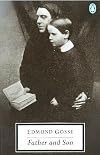
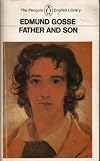
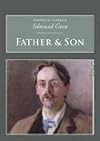
Father and Son: A Study of Two Temperaments
by Edmund Gosse
On This Page
Description
Edmund Gosse wrote of his account of his life, "This book is the record of a struggle between two temperaments, two consciences and almost two epochs." Father and Son remains one of English literature's seminal autobiographies. In it, Edmund Gosse recounts, with humor and pathos, his childhood as a member of a Victorian Protestant sect and his struggles to forge his own identity despite the loving control of his father. His work is a key document of the crisis of faith and doubt and a show more penetrating exploration of the impact of evolutionary science. An astute, well-observed, and moving portrait of the tensions of family life, Father and Son remains a classic of twentieth-century literature.. show less
Tags
Recommendations


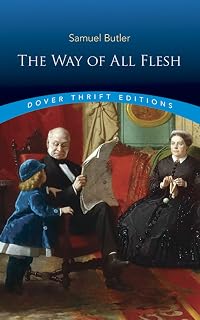


















Member Recommendations

nessreader Both raging rants about victorian sanctimonious hypocrocy : gosse is a memoir with fictional flourishes and butler is a novel paying off old scores against his family. Both published in the backlash against victorianism in early 20th century

nessreader Gllimpses/Wonderful is about the father in Father&Son, and is a more detached (not being written by Son) and more encompassing (covering his life before Son existed to comment on it) book. F&S is a must-read if only as the most hilariously extended teen rant re: "noone understands me" but Glimpses enhanced my comprehension of their story and was a fascinating biography of a victorian scientist and his world.
Member Reviews
Not a Victorian scientist novel... but a novel about a Victorian scientist. Well, a memoir told novelistically at any rate. You may know Edmund Gosse's father as Philip Henry Gosse, the man who did not say that God put the fossils there to test our faith, but whom everyone thought said that. Father and Son is a great read, but it had less to say about science and seeing scientifically than I had expected. If anything makes Philip Gosse a terrible dad (and he sure is, at least as Edmund tells it) it was his religious piety, which Edmund said left only "what is harsh and void and negative" (248). Philip was a self-denying emotionless man, but because he thought that was spiritually correct, not because of scientific training. A far cry show more from the mix of Christianity and science employed by Philip's friend Charles Kingsley. show less
Edmund Gosse was born in London in 1849. His parents, Philip Henry Gosse and Emily Bowes, were evangelical Christians, members of the strict Plymouth Brethren sect, and from the outset their religious faith overpowered any other considerations in the upbringing of their only son. Even in the much more religious atmosphere of Victorian Britain, the Gosse family was extreme in its views, and their religion permeated their every activity, and those of their son. Associations with people outside their strict sect were discouraged, and the young Edmund grew up with virtually no companions outside his immediate family.
Much of the pleasure from reading this book comes from the reactions of the infant Edmund to the situation in which he found show more himself, which although clearly a loving home, was an unusual and sometimes harsh environment for a young child:
But equally interesting is the author's attempt to understand the mind of his father, his mother dying when he was quite young. Philip Henry Gosse was a well known naturalist who had published many books on natural history. He knew and corresponded with many of the scientists of the day, such as Darwin, Hooker and Lyell. But he was unable to reconcile Darwin's theory of evolution with his own religious faith, suffering a further blow when his book Omphalos, offered to suggest an explanation for the apparent age of the earth and the appearance of fossils, was soundly rejected:
This memoir was written in 1907 by which time Edmund Gosse had completely rejected his father's beliefs. From an upbringing in which all fiction was completely forbidden, he had become a poet, a lecturer in English Literature at Cambridge, a celebrated art critic and the person most responsible for introducing Ibsen's work to England.
Overall, this is an interesting book looking at the consequences of two very different 'temperaments' between father and son, as well as the upheavals in belief caused by the theory of evolution in the middle of the nineteenth century. show less
Much of the pleasure from reading this book comes from the reactions of the infant Edmund to the situation in which he found show more himself, which although clearly a loving home, was an unusual and sometimes harsh environment for a young child:
My parents said: 'Whatever you need, tell Him and He will grant it, if it is His will. 'Very well; I had need of a large painted humming-top which I had seen in a shop window in the Caledonian Road. Accordingly, I introduced a supplication for this object into my evening prayer, carefully adding the words: 'If it is Thy will'. This, I recollect, placed my Mother in a dilemma, and she consulted my Father. Taken, I suppose, at a disadvantage, my Father told me I must not pray for 'things like that'. To which I answered by another query, 'Why?' And I added that he said we ought to pray for things we'd needed, and that I needed the humming-top a great deal more than I did the conversion of the heathen or the restitution of Jerusalem to the Jews, two objects of my nightly supplication which left me very cold.
But equally interesting is the author's attempt to understand the mind of his father, his mother dying when he was quite young. Philip Henry Gosse was a well known naturalist who had published many books on natural history. He knew and corresponded with many of the scientists of the day, such as Darwin, Hooker and Lyell. But he was unable to reconcile Darwin's theory of evolution with his own religious faith, suffering a further blow when his book Omphalos, offered to suggest an explanation for the apparent age of the earth and the appearance of fossils, was soundly rejected:
'Never was a book cast upon the waters with greater anticipation of success than was this curious, this obstinate, this fanatical volume ... He offered it with a glowing gesture to atheists and Christians alike. This was to be a universal panacea; this the system of intellectual therapeutics which could not but heal all the maladies of the age. But alas, atheists and Christians alike looked at it and laughed, and threw it away'
This memoir was written in 1907 by which time Edmund Gosse had completely rejected his father's beliefs. From an upbringing in which all fiction was completely forbidden, he had become a poet, a lecturer in English Literature at Cambridge, a celebrated art critic and the person most responsible for introducing Ibsen's work to England.
Overall, this is an interesting book looking at the consequences of two very different 'temperaments' between father and son, as well as the upheavals in belief caused by the theory of evolution in the middle of the nineteenth century. show less
At the risk of showing my biases here, I can't help but see this as a quiet and deeply sad chronicle of the ways religious faith and the expectations it engenders in parents for their children can drive wedges between them and hollow people out. Or primarily that; it's also a record of the practices of a particular fundamentalist sect, the Plymouth Brethren; a historical document of one corner of the evolution controversy (the thing where humans and dinosaurs lived on earth at the same time and the geological evidence was put on earth by God to trick us was not actually attributable to Philip Henry Gosse; it was a nasty caricature of his Omphalos by the press--funny how now it's considered fair comment and worthy of respect in some show more quarters); an examination of the furtive imaginations and priggish unpleasance of the stifled and melancholy child. But mostly it's the wedge-driving thing. Love your kids anyway--and that "anyway" should cover everything. show less
This memoir broke ground in the early 20th century by presenting generational conflict in an apparently frank, dispassionate, indeed "scientific" way. In its restrained way, it helped lead Gosse's countrymen from the piety of the Victorian vision of family life to Philip Larkin's definitive statement: "They fuck you up, your mum and dad. / They may not mean to, but they do. / They fill you with the faults they had / And add some extra, just for you." The truly fascinating part of reading this book is in the inexorable build up of the tension in the central relationship, a tension that is not fully realized until the extraordinary "Epilogue." It is also touching to witness the long-term effects of the father's indefatigable judgmentalism show more on the son's ingrained self-criticism. I am now going to provide an extended quote that will chill the blood of anyone possessed of an abundant super-ego in the form of an insistent voice of a strong parent figure. The fact that the author himself is not aware of life-blighting process that is just now beginning makes it all the more poignant: "But of all the thoughts which rushed upon my savage and undeveloped little brain at this crisis, the most curious was that I had found a companion and a confidant in myself. There was a secret in this world and it belonged to me and to a somebody who lived in the same body with me. There were two of us, and we could talk with one another. It is difficult to define impressions so rudimentary, but it is certain that it was in this dual form that the sense of my individuality now suddenly descended on me, and it is equally certain that it was a great solace to me to find a sympathizer in my own breast." That this "sympathizer" will mature into the child's most intolerant critic and implacable enemy is never recognized. "Ah, the pity of it Iago." show less
This was recommended, in a newspaper article on Father’s Day, as a classic of the growing generational differences between a father and his son. This is true, and worthy of reading and contemplating for its universal message, but this was no ordinary family: Gosse the father was a zoologist of some repute, but he was also a man of severe, fundamental religious principles; his attempt to bridge the gap between faith and growing evidence for evolution was a failure and sidelined him from what might have been a brighter career as a scientist, as a cataloguer, as a proselytizer of science at the time when there was a growing hunger for exposure to such ideas in the general population. But his uncompromising religious faith provided the show more prism through which each and every action in life was to be measured or assessed and, all too often, found wanting. Nevertheless, as Gosse says in the opening lines of the book:
“This book is the record of a struggle between two temperaments, two consciences and almost two epochs. It ended, as was inevitable, in disruption. Of the two human beings here described, on was born to fly backward, the other could not help being carried forward. There came a time when neither spoke the same language as the other, or encompassed the same hopes or was fortified by the same desires. But, at least, it is some consolation to the survivor, that neither, to the very last hour, ceased to respect the other, or to regard him with a sad indulgence.”
Gosse junior led a very sheltered, restricted life as a child, one conditioned solely and completely by his father and his father’s expectation that Edmund would pursue some sort of life in the church. Edmund’s mother died when he was only seven, but she would probably not have been much of a mitigating influence as she shared her husband’s uncompromising view that all of life was to consecrated to the glory of God in preparation for life after death or for the imminent second coming. As a child, Edmund had no idea that his was a very different sort of upbringing as he had very little contact with children his own, or any other age; he was, in things religious, mature beyond his years and seen as something of a prodigy. But, he began to move apart as he grew into his teen years, as he became exposed to the wider worlds of literature and art and society, as he came to see even within the confines of the religious strictures of his life, that his father was not infallible and that God was likely neither omniscient nor omnipotent.
While maintaining his respect, and love, for his father, Gosse can see the limitations imposed on his father’s life: “My Father’s inconsistencies of perception seem to me to have been the result of a curious irregularity of equipment. Taking for granted, as he always did, the absolute integrity of the Scriptures, and applying to them his trained scientific spirit, he contrived to stifle, with a deplorable success, alike the function of the imagination, the sense of moral justice, and his own deep and instinctive tenderness of heart.”
Gosse’s final word on the pernicious effects of unblinkered fervor is still pertinent today:
“After my long experience, after my patience and forbearance, I have surely the right to protest against the untruth (would that I could apply to it any other word!) that evangelical religion, or any religion in a violent form, is a wholesome or valuable or desirable adjunct to human life. It divides heart from heart. It sets up a vain, chimerical ideal, in the barren pursuit of which all the tender, indulgent affections, all the genial play of life, all the exquisite pleasures and soft resignations of the body, all that enlarges and calms the soul, are exchanged for what is harsh and void and negative. It encourages a stern and ignorant spirit of condemnation; it throws altogether out of gear the healthy movement of the conscience; it invents virtues which are sterile and cruel; it invents sins which are no sins at all, but which darken the heaven of innocent joy with futile clouds of remorse. There is something horrible, if we will bring ourselves to face it, in the fanaticism that can do nothing with the pathetic and fugitive existence of ours but treat it as if it were the uncomfortable ante-chamber to a palace which no one has explored and of the plan of which we know absolutely nothing.”
This is also a book about a time and places that have long disappeared: life in small English villages in the second half of the 1800s, when government provided no social supports, when life was direct and often poor and often hard, when people were strongly influenced by class, by superstition, by beliefs, and when they found their pleasures without all the paraphernalia that characterize our world today.
This book is also a considerable pleasure to read. It is beautifully written, in a style of grammatical correctness and mellifluous expression that are, alas, also something of the past. show less
“This book is the record of a struggle between two temperaments, two consciences and almost two epochs. It ended, as was inevitable, in disruption. Of the two human beings here described, on was born to fly backward, the other could not help being carried forward. There came a time when neither spoke the same language as the other, or encompassed the same hopes or was fortified by the same desires. But, at least, it is some consolation to the survivor, that neither, to the very last hour, ceased to respect the other, or to regard him with a sad indulgence.”
Gosse junior led a very sheltered, restricted life as a child, one conditioned solely and completely by his father and his father’s expectation that Edmund would pursue some sort of life in the church. Edmund’s mother died when he was only seven, but she would probably not have been much of a mitigating influence as she shared her husband’s uncompromising view that all of life was to consecrated to the glory of God in preparation for life after death or for the imminent second coming. As a child, Edmund had no idea that his was a very different sort of upbringing as he had very little contact with children his own, or any other age; he was, in things religious, mature beyond his years and seen as something of a prodigy. But, he began to move apart as he grew into his teen years, as he became exposed to the wider worlds of literature and art and society, as he came to see even within the confines of the religious strictures of his life, that his father was not infallible and that God was likely neither omniscient nor omnipotent.
While maintaining his respect, and love, for his father, Gosse can see the limitations imposed on his father’s life: “My Father’s inconsistencies of perception seem to me to have been the result of a curious irregularity of equipment. Taking for granted, as he always did, the absolute integrity of the Scriptures, and applying to them his trained scientific spirit, he contrived to stifle, with a deplorable success, alike the function of the imagination, the sense of moral justice, and his own deep and instinctive tenderness of heart.”
Gosse’s final word on the pernicious effects of unblinkered fervor is still pertinent today:
“After my long experience, after my patience and forbearance, I have surely the right to protest against the untruth (would that I could apply to it any other word!) that evangelical religion, or any religion in a violent form, is a wholesome or valuable or desirable adjunct to human life. It divides heart from heart. It sets up a vain, chimerical ideal, in the barren pursuit of which all the tender, indulgent affections, all the genial play of life, all the exquisite pleasures and soft resignations of the body, all that enlarges and calms the soul, are exchanged for what is harsh and void and negative. It encourages a stern and ignorant spirit of condemnation; it throws altogether out of gear the healthy movement of the conscience; it invents virtues which are sterile and cruel; it invents sins which are no sins at all, but which darken the heaven of innocent joy with futile clouds of remorse. There is something horrible, if we will bring ourselves to face it, in the fanaticism that can do nothing with the pathetic and fugitive existence of ours but treat it as if it were the uncomfortable ante-chamber to a palace which no one has explored and of the plan of which we know absolutely nothing.”
This is also a book about a time and places that have long disappeared: life in small English villages in the second half of the 1800s, when government provided no social supports, when life was direct and often poor and often hard, when people were strongly influenced by class, by superstition, by beliefs, and when they found their pleasures without all the paraphernalia that characterize our world today.
This book is also a considerable pleasure to read. It is beautifully written, in a style of grammatical correctness and mellifluous expression that are, alas, also something of the past. show less
Beautifully written, and a wonderful document about the late nineteenth century clash between 'religion' and 'science.' Also, Gosse goes out of his way to present his father as a decent human being, not something that can be said about the other books in this tradition.
Brilliant book. Anyone who has ever questioned religious doctrine or chafed at the confines of organised religion will find a nugget of gold in this memoir of childhood by Edmund Gosse.
Members
- Recently Added By
Lists

Best Autobiographies and Memoirs
370 works; 67 members

Best family memoirs
28 works; 11 members

Non-fiction
55 works; 1 member

Hot Gossip from Another Century
25 works; 3 members

historical biographies : great lives, well told
64 works; 4 members

Trinity College Booklist (1951): Class Six, Biography
119 works; 4 members

501 Must-Read Books
508 works; 72 members

Backlisted Podcast
65 works; 3 members
Backlisted
109 works; 9 members
Author Information

85+ Works 1,134 Members
Some Editions
Awards and Honors
Series
Belongs to Publisher Series
Common Knowledge
- Canonical title
- Father and Son: A Study of Two Temperaments
- Alternate titles
- Father And Son
- Original publication date
- 1907; 1ª ed. it. 1965
- People/Characters
- Edmund Gosse; Philip Henry Gosse; Emily Bowes Gosse; Eliza Brightwen Gosse
- Important places
- Plymouth, Devon, England, UK; London, England, UK
- Epigraph
- Der Glaube ist wie die Liebe; er lasst sich nicht erzwingen
—Schopenhauer.
(Faith is like love; it cannot be imposed) - First words
- This book is a record of a struggle between two temperaments, two consciences and almost two epochs.
In un'epoca come la nostra, in cui la narrativa assume forme così fantafsose e tuttavia plausibili, è forse necessario avvertire che la seguente narrazione - almeno per quanto ha potuto la meticolosa cura dell'autore - è i... (show all)n tutte le sue parti scrupolosamente veritiera.
PREFAZIONE
Questo libro narra la lotta tra due temperamenti, tra due coscienze, si può quasi dire tra due epoche. Finì, come era inevitabile, con una rottura. Dei due esseri umani qui descritti, l'uno era per natura volto all'indietro... (show all), l'altro non poteva fare a meno di guardare avanti. Giunse il momento in cui essi non parlarono più la stessa lingua, non furono più uniti dalle stesse speranze né da desideri comuni. Ma, unica consolazione per chi sopravvisse, èricordare che nessuno dei due, sino all'ora estrema, cessò di rispettare l'altro, o di considerarlo con una triste indulgenza. - Quotations
- There is little sympathy felt in this world of rhetoric for the silent sufferings of the genteel poor, yet there is no class that deserves a more charitable commiseration.
Sembra quasi un'offesa alla memoria delle loro opinioni il fatto che le sole parole che mi vengano in mente, e che mi sembrino adatte a descrivere l'atteggiamento dei miei genitori, siano state scritte da un uomo che, nella l... (show all)oro mancanza di comprensione intuitiva, essi avevano considerato un reprobo. Ma John Henry Newman avrebbe potuto essere di ritorno dall'aver contemplato mia Madre sul suo letto di morte, quando scrisse: "Tutto il dolore che il mondo ci infligge e che la carne può soffrire - pene, dispiaceri, affanni, lutti - non può turbare la tranquillità e l'intensità con la quale la fede contempla la Maestà Divina". Era "tranquillità", non rapimento mistico. Nell'ora estrema della sua vita, sollecitata a confessare la sua "letizia" nel Signore, mia Madre, rigidamente onesta, scrupolosa come sempre nella sua introspezione, replicò: "Ho pace ma non letizia, non sarebbe onesto passare nell'eternità dicendo una bugia".
Mio Padre, dopo lunga riflessione, elaborò una sua propria teoria, ch'egli sperava destinata a togliere vento alle vele di Lyell, e a giustificare la geologia agli occhi dei pii lettori della Genesi. Secondo questa teoria no... (show all)n c'erano state modificazioni graduali nella superficie della terra né lento sviluppo di forme organiche, ma, quando l'atto catastrofico della creazione ebbe luogo, il mondo presentò istantaneamente l'aspetto strutturale di un pianeta su cui la vita esisteva da lungo tempo.
Con grande indignazione di mio Padre, ecco come una stampa frettolosa definì, piuttosto grossolanamente, questa teoria: "Dio nascose i fossili nelle rocce per tentare i geologi all'eresia". In verità, accettando alla lettera la dottrina di un atto di creazione improvviso, questa conclusione logica era inevitabile; non faceva che sottolineare il fatto che da un tale punto di vista ogni mutamento nel corso circolare della natura si dovrebbe interpretare solo ammettendo che l'oggetto creato dia falsa testimonianza di passati processi in realtà mai avvenuti. Per esempio, Adamo possedeva capelli, denti e ossa, tali da richiedere molti anni di formazione, e invece è stato creato bell'e fatto tutto in un colpo. Anch'egli, certamente, benché Sir Thomas Browne lo negasse, aveva un
Fino allora, come abbiamo visto, egli si era sempre illuso che scienza e rivelazione potessero giustificarsi reciprocamente, che un qualche compromesso fosse possibile. Le sue ricerche gli avevano sempre più chiaramente dimo... (show all)strato che in tutti i rami della natura organica si trovano le tracce evidenti di una lenta modificazione delle forme, di uno sviluppo del tipo originario sotto la pressione e e l'azione del tempo. Aveva combattuto quesa convinzione finché essa non era diventata assolutamente indiscutibile. Quale era il suo posto, allora, come onesto e scrupoloso osservatore? Evidentemente era con i pionieri della nuova verità, con Darwin, Wallace e Hooker. Ma forse che il secondo capitolo della Genesi non diceva che i cieli e la terra erano stati creati in sei giorni, con tutti i loro ospiti, e che il settimo giorno Dio aveva terminato il suo lavoro?
Questo era il dilemma! La geologia senza dubbio sembrava vera, ma la Bibbia, che era la parola di Dio, era vera. Se la Bibbia diceva che tutte le cose in Cielo e in Terra erano state create in sei giorni, non poteva esserci dubbio che fossero state create in sei giorni: letteralmente in sei giorni di ventiquattro ore ciascuno. Le prove di uno spontaneo mutamento avvenuto attraverso un immenso spazio di tempo, nella forma delle strutture organiche in continua trasformazione, sembravano di un'evidenza schiacciante, ma questo mutamento, o lo si limitava nello spazio dei sei giorni che Dio aveva dedicato alla fatica della creazione, oppure non si doveva ammetterlo. Ho già accennato come mio Padre avesse escogitato l'ingegnosa teoria dell'Omphalos per giustificarsi come osservatore rigidamente scientifico e umile schiavo della rivelazione nel tempo stesso. Ma l'antica convinzione e la nuova ribellione non ammettevano un simile compromesso.
Per uno spirito così acuto e insieme così ristretto, logico e positivo senza larghezza, senza elasticità né immaginazione, come quello di mio Padre, subire uno scacco di tal genere è un vero tormento. Non ha il sollievo di certe nature più ristrette che si contentano di qualche formula vaga per aggirare l'ostacolo; né la risolutezza di una natura più larga che trova le ali per superarlo. Mio Padre, benché mezzo soffocato dall'emozione nel sentirsi sollevare dall'onda immane della grande scoperta scientifica, non si sognava nemmeno di allentare la presa con cui si teneva aggrappato all'antica tradizione: sbattuto, travagliato, vi rimase aggrappato più che mai. È straordinario che egli - "onesto amanuense della scienza" come Huxley una volta ebbe a chiamarlo - non volesse adattarsi a che altri, di vedute più ampie delle sue, perseguissero quelle ricerche squisitamente speculative per le quali egli non aveva nessuna attitudine. Come raccoglitore di fatti e registratore di osservazioni non aveva rivali a quel tempo, e la sua assoluta mancanza di immaginazione gli era d'aiuto in questo lavoro. Ma era più un avvocato che un filosofo e gli mancava quella sublime umiltà che è la corona del genio. Poiché questa sua ostinata persuasione di essere il solo a conoscere i fini celesti e di sapere interpretare i disegni del Creatore, da che cosa poteva risultare se non dalla congenita nancanza di quella nobile modestia che risponde "non so" anche a quelle domande cui la Fede, con dito minaccioso, insiste d'aver dato la più recisa risposta?
The rage for what is called 'originality' is pushed to such a length these days that even children are not considered promising unless they attempt things preposterous and unparalleled.
The ring of living beauty drawn about our shores was a
very thin and fragile one. It had existed all those centuries solely in consequence of the indifference, the blissful ignorance of man. These rock-basins, fringed by c... (show all)orallines, filled with still water almost as pellucid as the upper air itself, thronged with beautiful sensitive forms of life - they exist no longer, they are all profaned, and emptied, and vulgarized. An army of 'collectors' has passed over them, and ravaged every corner of them. The fairy paradise has been violated, the exquisite product of centuries of natural selection has been crushed under the rough paw of well-meaning idle-minded curiosity. - Last words
- (Click to show. Warning: May contain spoilers.)No compromise, it is seen, was offered; no proposal of a truce would have been acceptable. It was a case of 'Everything or Nothing'; and thus desperately challenged, the young man's conscience threw off once for all the yoke of his 'dedication', and, as respectfully as he could, without parade or remonstrance, he took a human being's privilege to fashion his inner life for himself.
(Click to show. Warning: May contain spoilers.)V'era uno straordinario miscuglio di comico e di tragico, nella situazione qui descritta, ma a coloro che saranno colpiti dal suo pathos non sarà necessario spiegare che il comico era superficiale e il tragico essenziale.
PREFAZIONE
(Click to show. Warning: May contain spoilers.)Era un caso di "o tutto o nulla"; e così disperatamente sfidato il giovane ripudiò un volta per sempre il giogo della sua "consacrazione" e, più rispettosamente che potè, senza colpi di scena né rimostranze, affermò il diritto d'ogni essere umano a foggiare da se stesso la propria vita interiore.
Classifications
Statistics
- Members
- 793
- Popularity
- 34,944
- Reviews
- 12
- Rating
- (4.09)
- Languages
- 6 — Dutch, English, French, German, Italian, Spanish
- Media
- Paper, Audiobook, Ebook
- ISBNs
- 54
- ASINs
- 20