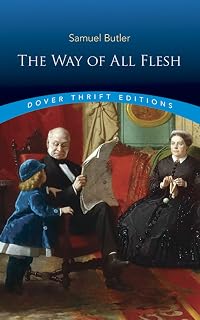
The Way of All Flesh
by Samuel Butler
On This Page
Description
Samuel Butler's The Way of All Flesh follows four generations of the Pontifex family. The novel is semi-autobiographical and attacks the hypocrisy that was characteristic in the Victorian era. It was written between 1873 and 1884, but Butler didn't risk publishing it in his life - it was instead finally released a year after Butler's death, in 1903..
Tags
Recommendations


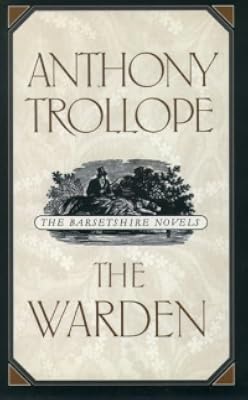
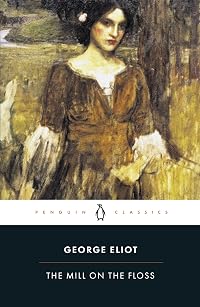


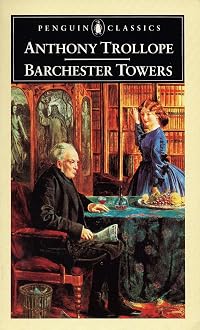

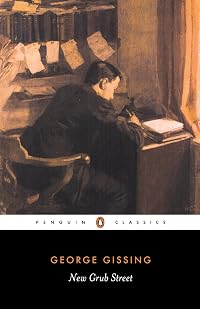









Member Recommendations

nessreader Way of all flesh is a novel about monster victorian sanctimonious paterfamilias; Life of Mary Benson is about a real one, her husband the archbishop of canterbury. Both books are hilarity-propelled rants that are in the end touching.
quartzite Similar tale
quartzite Young man gets involved with the wrong woman.
Member Reviews
When I was reading this book for my Ph.D. exams in a coffee shop, a guy came up to me and asked, "Who's forcing you to read Samuel Butler?" "Uh, I guess I am," I replied, because no one suggested I put The Way of All Flesh on my exam list... except myself! He told me he pitied me. That's actually the main thing I remember about The Way of All Flesh, to be honest, other than a vague sense that it's sort of a less good rip-off of Edmund Gosse's Father and Son (even though Way of All Flesh came first).
Even though it was published only two years after the Victorian era ended, it seems very modernist in its take on reason/logic, but also an extension of George Eliot's ideas in some ways. The book points out that we think we live in a show more world defined by reason, but we resolutely do not, despite the trappings of it: "They [reasonable people] settle smaller matters by the exercise of their own deliberation. More important ones, such as the cure of their own bodies and the bodies of those whom they love, the investment of their money, the extrication of their affairs from any serious mess – these things they generally entrust to others of whose capacity they know little save from general report; they act therefore on the strength of faith, not of knowledge" (306). The book ends up concluding that it is impossible to separate the subjective from the objective, the inner from the outer, the fact from the feeling:
The trouble is that in the end we shall be driven to admit the unity of the universe so completely as to be compelled to deny that there is either an external or an internal, but must see everything both as external and internal at one and the same time, subject and object – external and internal – being unified as much as everything else. This will knock our whole system over, but then every system has got to be knocked over by something.
Much the best way out of this difficulty is to go in for separation between internal and external – subject and object – when we find this convenient, and unity between the same when we find unity convenient. This is illogical, but [...] all philosophies that I have ever seen lead ultimately either to some gross absurdity, or else to the conclusion already more than once insisted on in these pages, that the just shall live by faith, that is to say that sensible people will get through life by rule of thumb as they may interpret it most conveniently without asking too many questions for conscience sake. Take any fact, and reason upon it to the bitter end, and it will ere long lead to this as the only refuge from some palpable folly. (327-8)
Forget modernist, this seems downright postmodernist: the Grand Narratives have failed us, so all you can really do is muddle through with the stories you've got, and they'll help you as much as they do, and not only is that okay, but maybe even it's for the best?
I vaguely remember the philosophy of the book, as thankfully I took notes, but do not at all remember the actual events of the book, even upon rereading those notes, so take that as you will. I seem to recall it belongs to that genre of post-Victorian takes on the Victorian era that still seems a little too Victorian for its own good (like Rachel Ferguson's Alas, Poor Lady). That is to say, it's trying to push a new philosophy, but it's married to the most tedious aspects of the old plotting. The modernists would do this kind of thing much better. show less
Even though it was published only two years after the Victorian era ended, it seems very modernist in its take on reason/logic, but also an extension of George Eliot's ideas in some ways. The book points out that we think we live in a show more world defined by reason, but we resolutely do not, despite the trappings of it: "They [reasonable people] settle smaller matters by the exercise of their own deliberation. More important ones, such as the cure of their own bodies and the bodies of those whom they love, the investment of their money, the extrication of their affairs from any serious mess – these things they generally entrust to others of whose capacity they know little save from general report; they act therefore on the strength of faith, not of knowledge" (306). The book ends up concluding that it is impossible to separate the subjective from the objective, the inner from the outer, the fact from the feeling:
The trouble is that in the end we shall be driven to admit the unity of the universe so completely as to be compelled to deny that there is either an external or an internal, but must see everything both as external and internal at one and the same time, subject and object – external and internal – being unified as much as everything else. This will knock our whole system over, but then every system has got to be knocked over by something.
Much the best way out of this difficulty is to go in for separation between internal and external – subject and object – when we find this convenient, and unity between the same when we find unity convenient. This is illogical, but [...] all philosophies that I have ever seen lead ultimately either to some gross absurdity, or else to the conclusion already more than once insisted on in these pages, that the just shall live by faith, that is to say that sensible people will get through life by rule of thumb as they may interpret it most conveniently without asking too many questions for conscience sake. Take any fact, and reason upon it to the bitter end, and it will ere long lead to this as the only refuge from some palpable folly. (327-8)
Forget modernist, this seems downright postmodernist: the Grand Narratives have failed us, so all you can really do is muddle through with the stories you've got, and they'll help you as much as they do, and not only is that okay, but maybe even it's for the best?
I vaguely remember the philosophy of the book, as thankfully I took notes, but do not at all remember the actual events of the book, even upon rereading those notes, so take that as you will. I seem to recall it belongs to that genre of post-Victorian takes on the Victorian era that still seems a little too Victorian for its own good (like Rachel Ferguson's Alas, Poor Lady). That is to say, it's trying to push a new philosophy, but it's married to the most tedious aspects of the old plotting. The modernists would do this kind of thing much better. show less
Love it. Remarkable that a man can make such cold, heartless observations and still create characters that one loves and misses when they are gone. There is one image from the beginning of this book that will stay with me for the rest of my life. I even sat and read passages aloud to Megan so that someone else could enjoy them as much as I did.
Wasn’t really sure what to expect as I started this after having read Butler’s Erewhon but I was surprised to find not only that I liked it but that I also wanted to keep reading at night when I should have been letting my body get back the vast amounts of energy it had expended cycling around on the Tonda Survey.
It’s the story of two generations of a family that, for the most part, you just want to corner in a narrow space and kick around so infuriating are the actions of the father and son who are the central characters here. The book starts off with the grandfather raising the father and, about a third of the way in, moves on to focus more on the life of the son as he grows up under clergic tyranny.
I really liked it. It was show more written so tongue in cheek. It was one of the most subtle satires I’ve ever read and had a huge amount to say about families and relationships and how we cope with life without once shouting its message from the rooftops. I really liked it.
As the son grows, you see the increasing hypocrisy of a father who preaches love but hasn’t the faintest idea what it means in practice. You wonder at how the son takes this but Butler paints him so sympathetically (the POV is the son’s godfather as narrator) that you can’t help but side with him even though he makes some ridiculous decisions.
It was a book that I think you could simply enjoy as a story of someone growing up and disentangling themselves from the apron strings. In this regard it had elements of Great Expectations or The Corrections in it, a kind of comic bildungsroman. But aside from this, I think what makes the book much more significant is that, underneath, it has to be a critique of the types in society that the father and son represent. Butler was no friend of organised religion and the father, a parish priest, gets absolutely no sympathy from him. The son seems to represent what is dysfunctional about the educated middle-classes.
So, as I said, I really liked it. show less
It’s the story of two generations of a family that, for the most part, you just want to corner in a narrow space and kick around so infuriating are the actions of the father and son who are the central characters here. The book starts off with the grandfather raising the father and, about a third of the way in, moves on to focus more on the life of the son as he grows up under clergic tyranny.
I really liked it. It was show more written so tongue in cheek. It was one of the most subtle satires I’ve ever read and had a huge amount to say about families and relationships and how we cope with life without once shouting its message from the rooftops. I really liked it.
As the son grows, you see the increasing hypocrisy of a father who preaches love but hasn’t the faintest idea what it means in practice. You wonder at how the son takes this but Butler paints him so sympathetically (the POV is the son’s godfather as narrator) that you can’t help but side with him even though he makes some ridiculous decisions.
It was a book that I think you could simply enjoy as a story of someone growing up and disentangling themselves from the apron strings. In this regard it had elements of Great Expectations or The Corrections in it, a kind of comic bildungsroman. But aside from this, I think what makes the book much more significant is that, underneath, it has to be a critique of the types in society that the father and son represent. Butler was no friend of organised religion and the father, a parish priest, gets absolutely no sympathy from him. The son seems to represent what is dysfunctional about the educated middle-classes.
So, as I said, I really liked it. show less
This is a peculiar and partly autobiographical book. Butler explicitly drew on his own family and childhood experiences in this tale of the Pontifex family and, in particular, the passage of young Ernest Pontifex to adulthood. It tackles what Butler saw as the hypocricies of the church and society - moral, sexual, educational and personal - and puts young Ernest through a testing workout of tribulations before (spoiler) ending in a state of equilibrium and contentment. Parts of the novel are sharp and comic - Butler is harsh but comically fair on Ernest's parents, showing the social constraints that lead to heavy-handed Victorian paternalism, while making the parent-child relationship both harrowing (Ernest's oppressed childhood) and show more comic (his mother's rich fantasy life, as one example). The book has a rather peculiar first person narrator, who acts as a sort of patron to Ernest, but a misanthropic and manipulative one at that.
Perhaps the most contentious aspect of the book - certainly when it was written - is the negative portrayal of religion. Again we get sharp satire of all the different types and manifestations of Christianity in Victorian England - the parson who seeks only interest; Puseyite hypocrites, evangelical fervour and Ernest's own brand of inept vacillation, before breaking with the church and resigning from holy orders.
Overall, it's a very interesting read; the structure is rambling and the characterisation broad brush, but it is teeming with ideas and satire being thrown out on to the page at a great rate. Worth a read for anyone with an interest in C19th culture and literature. show less
Perhaps the most contentious aspect of the book - certainly when it was written - is the negative portrayal of religion. Again we get sharp satire of all the different types and manifestations of Christianity in Victorian England - the parson who seeks only interest; Puseyite hypocrites, evangelical fervour and Ernest's own brand of inept vacillation, before breaking with the church and resigning from holy orders.
Overall, it's a very interesting read; the structure is rambling and the characterisation broad brush, but it is teeming with ideas and satire being thrown out on to the page at a great rate. Worth a read for anyone with an interest in C19th culture and literature. show less
The story follows several generations of the Pontifex family but eventually settles on the young Ernest Pontifex. Ernest is dominated by parents we would today call "passive aggressive", using a pious and seemingly loving demeanor to bend the young man to their will, which seems to be a determination to ensure their first-born son never knows a moment of happiness in his life. He is manipulated into becoming an Anglican priest, like his father, and much of the novel follows his struggles to adapt himself to the Church or adapt the Church to himself. The disasters that befall his rebellions provide Butler much opportunity to express dissent about both the Church and religious beliefs in general.
There has never been more vehement show more indictment of parental stupidity than that of Samuel Butler in his novel The Way of All Flesh. That much of the material is drawn from Butler's own life, especially his relationship with his father, we know from his statement about his father to his biographer, Henry Festing Jones:
He never liked me, nor I him; from my earliest recollection I can call to mind no time when I did not fear him and dislike him . . . the fact remains that for years and years I have never passed a day without thinking of him many times over as the man who was sure to be against me, and who would be sure to see the bad side rather than the good of everything I said and did.
The Way of All Flesh is perhaps the most devastating and relentless literary assault by a son upon a father ever written. The father, Thomas Butler in life and Theobald Pontifex in the book, stands accused (and of course convicted) of many odious sins. A vicar, he is a complete sententious humbug, utterly selfish, snobbish, mean, and avaricious, unfeeling about anyone except himself, a philistine who delights in cruelty to his own children in the name of supposedly necessary character-formation. He is an unctuous, sadistic, bullying hypocrite, all of whose learning is mere pedantry, and all of whose opinions are handed down to him by his ancestors and predecessors, which he was too lazy and self-interested ever to examine for their truth or otherwise. The slightest opposition or disagreement over anything is insupportable to him, and interpreted by him much as a general interprets a failure of soldiers to obey his orders.
Theobald’s wife, Christina—modeled on Butler’s mother—is a much weaker character, not without natural kindness, who nevertheless becomes cruel and hypocritical because of her subordination to her husband. Ernest’s two siblings, his brother and sister, are odious sycophants of Theobald, pure toadies, though they hate him just as much as Ernest does. Ernest so comes to dislike his sister that he finds it physically nauseating even to give her a peck on the cheek when he meets her again after a long interval. Theobald’s vile character poisons and embitters the atmosphere of the whole household and all who have ever lived in it.
This book is an encyclopedia of virtually all the social pathology that is to be seen in a clinical setting. show less
There has never been more vehement show more indictment of parental stupidity than that of Samuel Butler in his novel The Way of All Flesh. That much of the material is drawn from Butler's own life, especially his relationship with his father, we know from his statement about his father to his biographer, Henry Festing Jones:
He never liked me, nor I him; from my earliest recollection I can call to mind no time when I did not fear him and dislike him . . . the fact remains that for years and years I have never passed a day without thinking of him many times over as the man who was sure to be against me, and who would be sure to see the bad side rather than the good of everything I said and did.
The Way of All Flesh is perhaps the most devastating and relentless literary assault by a son upon a father ever written. The father, Thomas Butler in life and Theobald Pontifex in the book, stands accused (and of course convicted) of many odious sins. A vicar, he is a complete sententious humbug, utterly selfish, snobbish, mean, and avaricious, unfeeling about anyone except himself, a philistine who delights in cruelty to his own children in the name of supposedly necessary character-formation. He is an unctuous, sadistic, bullying hypocrite, all of whose learning is mere pedantry, and all of whose opinions are handed down to him by his ancestors and predecessors, which he was too lazy and self-interested ever to examine for their truth or otherwise. The slightest opposition or disagreement over anything is insupportable to him, and interpreted by him much as a general interprets a failure of soldiers to obey his orders.
Theobald’s wife, Christina—modeled on Butler’s mother—is a much weaker character, not without natural kindness, who nevertheless becomes cruel and hypocritical because of her subordination to her husband. Ernest’s two siblings, his brother and sister, are odious sycophants of Theobald, pure toadies, though they hate him just as much as Ernest does. Ernest so comes to dislike his sister that he finds it physically nauseating even to give her a peck on the cheek when he meets her again after a long interval. Theobald’s vile character poisons and embitters the atmosphere of the whole household and all who have ever lived in it.
This book is an encyclopedia of virtually all the social pathology that is to be seen in a clinical setting. show less
Have I ever read a more tedious novel? I seriously doubt it. So my second question is, how did the book end up on the Modern Library List of 100 greatest novels of all time and where do I begin to critique?
The fact that the novel was published in 1903 and the story takes place in the early to mid 1800s should not have affected the presentation. Many pieces of classic literature from that time are still very entertaining and captivating. If you don’t believe me just look at novels written by Leo Tolstoy, Fyodor Dostoyevsky, Emile Zola, Thomas Hardy and Anthony Trollope.
Although the plot covers 5 generations of the Pontifex family, Our hero Ernest Pontifex, is the main focus of the entire drama. Ernest ends up in prison for some show more unspeakable action. We just have to use our imagination trying to figure out what despicable behavior could have caused this harsh punishment. Ernest was young, naive, gentle, polite, and didn’t have a tendency towards bad behavior, but nonetheless, he appeared to have done something terribly wrong in offending a woman. Samuel Butler intentionally only gave vague and obscure descriptions to anything that slightly approached the subject of sex and promiscuity.
Ernest’s father Theobald Pontifex is a highly respected clergyman. He pushed Ernest into the same profession. Only a select few people realize Theobald is extremely authoritative to the point of being abusive with his children.
The stereotypical parody of clergymen in "The Way of All Flesh" was offensive. And the title of the book implies that all humans have the same tendencies - thus, clergymen pursue the religious profession more for status, money, and power than for true belief in the Bible and devotion to God. In the case of Ernest’s father, his righteous indignation resulted in an elitist attitude. Theobald detested the poor. He had no sympathy or compassion for anyone beneath himself in stature. So you can imagine Theobald’s reaction when his son ends up in prison and upon Ernest’s release six months later his decision to live in a boarding house in a poor neighborhood, discontinue his Theological training, and take a “menial” job to support himself.
The plot moves slowly, the descriptions are dry and dispassionate, the characters are difficult to relate to. The cultural climate was vastly different than standards of today. However, the theme is still relevant - the relationship between parents and children. It is just a shame the story could not have been written with a little more intensity - creating emotional sympathy for Samuel Butler’s characters and more interest for the reader in the outcome of this weary tale.
Rated 2.5 Stars February 2026 show less
The fact that the novel was published in 1903 and the story takes place in the early to mid 1800s should not have affected the presentation. Many pieces of classic literature from that time are still very entertaining and captivating. If you don’t believe me just look at novels written by Leo Tolstoy, Fyodor Dostoyevsky, Emile Zola, Thomas Hardy and Anthony Trollope.
Although the plot covers 5 generations of the Pontifex family, Our hero Ernest Pontifex, is the main focus of the entire drama. Ernest ends up in prison for some show more unspeakable action. We just have to use our imagination trying to figure out what despicable behavior could have caused this harsh punishment. Ernest was young, naive, gentle, polite, and didn’t have a tendency towards bad behavior, but nonetheless, he appeared to have done something terribly wrong in offending a woman. Samuel Butler intentionally only gave vague and obscure descriptions to anything that slightly approached the subject of sex and promiscuity.
Ernest’s father Theobald Pontifex is a highly respected clergyman. He pushed Ernest into the same profession. Only a select few people realize Theobald is extremely authoritative to the point of being abusive with his children.
The stereotypical parody of clergymen in "The Way of All Flesh" was offensive. And the title of the book implies that all humans have the same tendencies - thus, clergymen pursue the religious profession more for status, money, and power than for true belief in the Bible and devotion to God. In the case of Ernest’s father, his righteous indignation resulted in an elitist attitude. Theobald detested the poor. He had no sympathy or compassion for anyone beneath himself in stature. So you can imagine Theobald’s reaction when his son ends up in prison and upon Ernest’s release six months later his decision to live in a boarding house in a poor neighborhood, discontinue his Theological training, and take a “menial” job to support himself.
The plot moves slowly, the descriptions are dry and dispassionate, the characters are difficult to relate to. The cultural climate was vastly different than standards of today. However, the theme is still relevant - the relationship between parents and children. It is just a shame the story could not have been written with a little more intensity - creating emotional sympathy for Samuel Butler’s characters and more interest for the reader in the outcome of this weary tale.
Rated 2.5 Stars February 2026 show less
I don't know what I thought this book would be about from the title; I thought it could have been about the will being weaker than the flesh. It's not about that --it's about a boy whose father was a clergyman in England, and who of course shoved all his hypocritical beliefs down his throat, along with his mother. The boy, because of a family friend and his aunt Alethea, ends up having his eyes opened to reality as to his father and mother, and to the teachings of his religion. I loved that Butler shows the Bible's story of Jesus' resurrection to be malarkey. if you are like me and was brainwashed by the (Catholic) Church, you know what a battle it is to unbrainwashed yourself and open your eyes. I could have used well this book years show more ago, but maybe it will do it's good work to other minds that need enlightening. show less
Members
- Recently Added By
Lists

1001 Books You Must Read Before You Die
1,448 works; 1,134 members

The Guardian's 1000 Novels Everyone Must Read
1,005 works; 550 members

Unread books
1,063 works; 82 members

The Top Ten: Writers Pick Their Favorite Books
240 works; 31 members

Books featuring alcoholics
103 works; 18 members

Best 20th Century Books as of 1924
100 works; 6 members

Harold Bloom - The Western Canon: C. The Democratic Age
336 works; 15 members
The Modern Library's 100 Best Novels: The Board's List
85 works; 6 members

seedy victorian novels
16 works; 4 members

Trinity College Booklist (1951): Class Ten, English Literature
358 works; 5 members

W. S. Maugham's Reading Suggestions for Spiritual Enrichment: British
24 works; 3 members

CCE 1000 Good Books List
1,033 works; 12 members
Books referenced in A Very Great Profession: The Woman's Novel 1914-39
199 works; 6 members

My TBR
371 works; 3 members

Classic British Humor
41 works; 8 members

Greatest Books, allegedly
484 works; 9 members

Mustich's 1000 Books to Read Before You Die: A Life Changing List
1,001 works; 19 members

Recommended Reading : 600 Classics Reviewed, Editors of Salem Press, 2015
634 works; 6 members

DigitalDreamDoor top 300
300 works; 4 members

Modern Library's 100 Best Novels
100 works; 2 members

100 Books to Read in a Lifetime (That Are Older Than 200 Years)
415 works; 174 members
Author Information

62+ Works 7,238 Members
The son of a clergyman and grandson of an Anglican bishop, Samuel Butler seemed destined for a life in the church. After graduating from Cambridge, however, he spent some time in New Zealand as a sheep-rancher. When he returned to England, he settled down as a journalist and writer. He engaged in many controversies over Darwinism. Butler is best show more known by two satirical novels, Erewhon (1872) and The Way of All Flesh (1903). Erewhon, an anagram for "nowhere," attacked contemporary attitudes in science, religion, and social mores. The Way of All Flesh was a study of the Pontifex family in a surprisingly modern tone. Erewhon Revisited (1901) continues his attack on religion. Another work, The Fair Haven (1873), is another subtle attack on religion, presented in the guise of a defense of the Gospels, though it actually undermines them. The Family Letters is a selection from the correspondence of Butler and his father, with several letters to and from his mother and sisters and one or two other relatives. Those between Butler and his father show how close the early part of The Way of All Flesh was to the events in the son's life. A brilliant, versatile writer, Butler was one of the most searching critics of his time. Butler died in 1902. (Bowker Author Biography) show less
Some Editions
Awards and Honors
Notable Lists
Series
Belongs to Publisher Series
Pocket Books (8)
Doubleday Dolphin (C16)
Riverside Editions (B50)
Limited Editions Club (S:7.04)
Florin Books (28)
Penguin English Library, 2012 series (2012-05)
Gli struzzi [Einaudi] (221)
Le livre de poche (0204-0205)
Airmont Classics (90)
Penguin Books (511)
The World's Classics (438)
Modern Library (13)
Everyman's Library (895)
Work Relationships
Is contained in
Is abridged in
Is expanded in
Has as a reference guide/companion
Has as a study
Common Knowledge
- Canonical title*
- Così muore la carne
- Original title
- The Way of All Flesh
- Alternate titles*
- El camino de la carne
- Original publication date
- 1903
- People/Characters
- Mr. Overton; John Pontifex; Ruth Pontifex; George Pontifex; Alethea Pontifex; Theobald Pontifex (show all 9); Christina Allaby Pontifex; Ernest Pontifex; Ellen Pontifex
- Important places
- Palem, England, UK; London, England, UK
- Epigraph
- We know that all things work together for good to them that love God.
—Rom. viii.28 - First words
- When I was a small boy at the beginning of the century I remember an old man who wore knee-breeches and worsted stockings, and who used to hobble about the street of our village with the help of a stick. He must have been get... (show all)ting on for eighty in the year 1807, earlier than which date I suppose I can hardly remember him, for I was born in 1802.
- Quotations
- It is better to have loved and lost than never to have lost at all.
it seems to me that youth is like spring, an overpraised season - delightful if it happen to be a favourable one, but in practice rarely favoured and more remarkable, as a general rule, for biting east winds than genial breez... (show all)es. Autumn is the mellower season, and what we lose in flowers, we more than gain in fruits. (Chapter VI)
A pair of lovers are like sunset and sunrise: there are such things every day but we very seldom see them. (Chapter XI)
The devil, in fact, when he dresses himself in angel's clothes, can only be detected by experts of exceptional skill, and so often does he adopt this disguise that it is hardly safe to be seen talking to an angel at all. (Cha... (show all)pter XIX)
those who are happy in this world are better and more lovable people than those who are not (Chapter XXVI)
Having, then, once introduced an element of inconsistency into his system, he was far too consistent not to be inconsistent consistently... (Chapter LXVIII)
For a long time, as I said, his choice of subjects continued to be such as I could not approve. He was continually studying scientific and metaphysical writers, in the hope of either finding or making for himself a phi... (show all)losopher's stone in the shape of a system which should go on all fours under all circumstances, instead of being liable to be upset at every touch and turn, as every system yet promulgated has turned out to be. [...] having found out that no system based on absolute certainty was possible, he was contented. (Chapter LXXIII)
For my own part, I reckon being ill as one of the great pleasures of life, provided on is not too ill and is not obliged to work till one is better. (Chapter LXXX)
It is in the uncompromisingness with which dogma is held and not in the dogma or want of dogma that the danger lies. (Chapter LXVIII) - Last words
- (Click to show. Warning: May contain spoilers.)His father and grandfather could probably no more understand his state of mind than they could understand Chinese, but those who know him intimately do not know that they wish him greatly different from what he actually is.
- Original language
- English
*Some information comes from Common Knowledge in other languages. Click "Edit" for more information.
Classifications
Statistics
- Members
- 4,058
- Popularity
- 3,823
- Reviews
- 45
- Rating
- (3.59)
- Languages
- 7 — Dutch, English, French, German, Greek, Italian, Spanish
- Media
- Paper, Audiobook, Ebook
- ISBNs
- 171
- UPCs
- 4
- ASINs
- 213