
Richard Hoggart (1918–2014)
Author of The Uses of Literacy
About the Author
Richard Hoggart was educated at Leeds University. Later as professor of modern English literature at Birmingham University, he founded the Centre for Contemporary Cultural Studies. (Publisher Provided) Richard Hoggart was born in Leeds, England on September 24, 1918. He studied at Leeds University. show more During World War II, he served as an anti-aircraft gunner in the Royal Artillery. After the war, he worked as an extramural tutor at Hull University for 13 years. In 1951, he published his first book, a full-length study of WH Auden's poetry. His other works include The Uses of Literacy, An Idea and Its Servants, and Townscape with Figures. He taught at several universities including the University of Leicester, the University of Birmingham, and Goldsmiths College in London. He was a decisive witness in the 1960 Lady Chatterley trial, which liberalised British pornography laws and was instrumental in creating BBC2 as a quality television channel. He died on April 10, 2014 at the age of 95. (Bowker Author Biography) show less
Works by Richard Hoggart
T. S. Eliot, W. H. Auden, Dylan Thomas (British Writers And Their Work Number 5) (1965) — Author — 9 copies
Your Sunday paper 4 copies
Associated Works
Tagged
Common Knowledge
- Legal name
- Hoggart, Richard Herbert
- Birthdate
- 1918-09-24
- Date of death
- 2014-04-10
- Gender
- male
- Education
- Cockburn Grammar School
University of Leeds - Occupations
- university professor
- Organizations
- Birmingham University
UNESCO
Goldsmith's College - Awards and honors
- BBC Reith Lecturer (1971)
- Relationships
- Hoggart, Simon (son)
Hoggart, Paul (son)
Hoggart, Amy (grand-daughter) - Nationality
- UK
- Birthplace
- Leeds, Yorkshire, England, UK
- Place of death
- London, England, UK
- Associated Place (for map)
- England, UK
Members
Reviews
The uses of literacy: Aspects of working-class life, with special reference to publications and entertainments by Richard Hoggart

This book was first published in 1957 and was the earliest, and most effective, attempt to understand changes in British culture caused by “massification”. In it Hoggart argues that the appeals made by what he calls “the mass publicists” were made “more insistently, effectively and in a more comprehensive and centralised form today than they were earlier; that we are moving towards the creation of a mass culture, that the remnants of what was at least in part an urban culture “of show more the people” are being destroyed”. He examined cheap novels and magazines, popular newspapers and post war cinema and detected drift in all areas. The old, close, tightly knit working class culture was breaking up. In its place was emerging a mass culture composed of tabloid newspapers, the ascendency of media Barons such as Rupert Murdoch, advertising, and Hollywood. These forces colonised localities and robbed them of any distictiveness, being external to that which they dominated. His critique is not of popular culture, but of mass culture, which he distinguishes from popular culture as something that is imposed on the population from above. The value of “popular culture” is that it is self-created and so has a fundamental integrity, it is broadly sui generis, evolving according to its own laws and dictates rather than at the promptings of the mass media.
We must wonder whether, in this definition, there is any popular culture left, eliminated by the mass culture that has replaced it. In fact, all that Hoggart predicted has happened with speed and depravity. We live in an identikit world defined by the sameness of our high streets, the values we import from the media, and our patterns of behaviour and relating. As mass culture develops, propelled by new technologies, the profit ethic and the push for market share, and the manipulated tastes of individuals, we must wonder where it will take us next. show less
We must wonder whether, in this definition, there is any popular culture left, eliminated by the mass culture that has replaced it. In fact, all that Hoggart predicted has happened with speed and depravity. We live in an identikit world defined by the sameness of our high streets, the values we import from the media, and our patterns of behaviour and relating. As mass culture develops, propelled by new technologies, the profit ethic and the push for market share, and the manipulated tastes of individuals, we must wonder where it will take us next. show less
Modern Classics the Uses of Literacy: Aspects Of Working-lass Life (Penguin Modern Classics) by Richard Hoggart
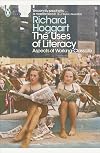
This is a book I've meant to read for years. It's a bit of an icon, because when it was published it was something genuinely new; an attempt to pin down the culture of the northern working classes and assess how general social changes have influenced it. As such, it was a pioneer of that much-derided and misunderstood area of academia, Media Studies.
It was first published more than fifty years ago, and we would expect that society has moved on a great deal since then and its relevance might show more be diluted. What seems surprising, however, is how much of this world of the dour, post-WW2 fifties is still recognisable in our own time. Step back fifty years from its publication and we are in Edwardian England; a world of horse-drawn carriages and gas-lights, of domestic servitude and deference. Step forward fifty years and there's still the motor-car and electricity, sensational tabloids, pop music and cinema. The government then as now embroiled in the Middle East, the teenagers much like our teenagers, and their young queen is now our elderly queen, but the same queen for all that. There is one big difference as a consequence of that similarity; when today's young people look back on the lives of their grandparents they (if they are honest) see themselves in similar conditions. In 1957, older people still had roots in that older world of deference and a more rural society with its distinctive regional culture and dialects. The mass media of the fifties changed all that, creating a more homogenised society. Was this a good thing? In some ways yes, but perhaps with its candy-floss ways it's a shallower one.
The Uses of Literacy is a classic and fully deserves to be so. What makes it especially valuable is that it is a serious academic work by a serious academic which is yet complete accessible to the lay reader. That is not something that can often be said these days. My copy is an original Pelican edition; it says a lot, which Professor Hoggart would no doubt have had something to say about, that there are no more Pelicans and the lay reader is now treated with less respect; today's equivalent would be presented by a celebrity in the way that those old learned television documentary series by Jacob Bronowski and Kenneth Clark have been displaced by excitable comedians. I'm not sure that this doesn't reinforce what the book has to say. show less
It was first published more than fifty years ago, and we would expect that society has moved on a great deal since then and its relevance might show more be diluted. What seems surprising, however, is how much of this world of the dour, post-WW2 fifties is still recognisable in our own time. Step back fifty years from its publication and we are in Edwardian England; a world of horse-drawn carriages and gas-lights, of domestic servitude and deference. Step forward fifty years and there's still the motor-car and electricity, sensational tabloids, pop music and cinema. The government then as now embroiled in the Middle East, the teenagers much like our teenagers, and their young queen is now our elderly queen, but the same queen for all that. There is one big difference as a consequence of that similarity; when today's young people look back on the lives of their grandparents they (if they are honest) see themselves in similar conditions. In 1957, older people still had roots in that older world of deference and a more rural society with its distinctive regional culture and dialects. The mass media of the fifties changed all that, creating a more homogenised society. Was this a good thing? In some ways yes, but perhaps with its candy-floss ways it's a shallower one.
The Uses of Literacy is a classic and fully deserves to be so. What makes it especially valuable is that it is a serious academic work by a serious academic which is yet complete accessible to the lay reader. That is not something that can often be said these days. My copy is an original Pelican edition; it says a lot, which Professor Hoggart would no doubt have had something to say about, that there are no more Pelicans and the lay reader is now treated with less respect; today's equivalent would be presented by a celebrity in the way that those old learned television documentary series by Jacob Bronowski and Kenneth Clark have been displaced by excitable comedians. I'm not sure that this doesn't reinforce what the book has to say. show less
Modern Classics the Uses of Literacy: Aspects Of Working-lass Life (Penguin Modern Classics) by Richard Hoggart
This is a book I've meant to read for years. It's a bit of an icon, because when it was published it was something genuinely new; an attempt to pin down the culture of the northern working classes and assess how general social changes have influenced it. As such, it was a pioneer of that much-derided and misunderstood area of academia, Media Studies.
It was first published more than fifty years ago, and we would expect that society has moved on a great deal since then and its relevance might show more be diluted. What seems surprising, however, is how much of this world of the dour, post-WW2 fifties is still recognisable in our own time. Step back fifty years from its publication and we are in Edwardian England; a world of horse-drawn carriages and gas-lights, of domestic servitude and deference. Step forward fifty years and there's still the motor-car and electricity, sensational tabloids, pop music and cinema. The government then as now embroiled in the Middle East, the teenagers much like our teenagers, and their young queen is now our elderly queen, but the same queen for all that. There is one big difference as a consequence of that similarity; when today's young people look back on the lives of their grandparents they (if they are honest) see themselves in similar conditions. In 1957, older people still had roots in that older world of deference and a more rural society with its distinctive regional culture and dialects. The mass media of the fifties changed all that, creating a more homogenised society. Was this a good thing? In some ways yes, but perhaps with its candy-floss ways it's a shallower one.
The Uses of Literacy is a classic and fully deserves to be so. What makes it especially valuable is that it is a serious academic work by a serious academic which is yet complete accessible to the lay reader. That is not something that can often be said these days. My copy is an original Pelican edition; it says a lot, which Professor Hoggart would no doubt have had something to say about, that there are no more Pelicans and the lay reader is now treated with less respect; today's equivalent would be presented by a celebrity in the way that those old learned television documentary series by Jacob Bronowski and Kenneth Clark have been displaced by excitable comedians. I'm not sure that this doesn't reinforce what the book has to say. show less
It was first published more than fifty years ago, and we would expect that society has moved on a great deal since then and its relevance might show more be diluted. What seems surprising, however, is how much of this world of the dour, post-WW2 fifties is still recognisable in our own time. Step back fifty years from its publication and we are in Edwardian England; a world of horse-drawn carriages and gas-lights, of domestic servitude and deference. Step forward fifty years and there's still the motor-car and electricity, sensational tabloids, pop music and cinema. The government then as now embroiled in the Middle East, the teenagers much like our teenagers, and their young queen is now our elderly queen, but the same queen for all that. There is one big difference as a consequence of that similarity; when today's young people look back on the lives of their grandparents they (if they are honest) see themselves in similar conditions. In 1957, older people still had roots in that older world of deference and a more rural society with its distinctive regional culture and dialects. The mass media of the fifties changed all that, creating a more homogenised society. Was this a good thing? In some ways yes, but perhaps with its candy-floss ways it's a shallower one.
The Uses of Literacy is a classic and fully deserves to be so. What makes it especially valuable is that it is a serious academic work by a serious academic which is yet complete accessible to the lay reader. That is not something that can often be said these days. My copy is an original Pelican edition; it says a lot, which Professor Hoggart would no doubt have had something to say about, that there are no more Pelicans and the lay reader is now treated with less respect; today's equivalent would be presented by a celebrity in the way that those old learned television documentary series by Jacob Bronowski and Kenneth Clark have been displaced by excitable comedians. I'm not sure that this doesn't reinforce what the book has to say. show less
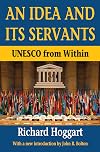
I'm a fan of Hoggart's writing. His pen-portrait of Bonamy Dobree, his mentor at Leeds University, which appears in an earlier work of his called "Speaking To Each Other : On Literature", is a delightful appreciation of that man.
So it's a pleasure to discover this, the second, volume of Hoggart's autobiography, having missed it the first time around. (It was originally published in 1978; full marks to Transaction Publishers for re-issuing it in 2011).
You would have to go a long way to get show more under the skin of an international organisation as well as Hoggart has done here with UNESCO. He uncovers the inner workings of the constituencies which make up the United Nations Educational Cultural and Scientific Organisation, and the directorates and the secretariat which support it. It's a masterful dissection, leavened with examples and stories which illustrate the skill and tenacity of the best people who have worked there.
Nor is Hoggart sparing of the failings of the organisation, and this, in particular, appears to be the reason that the work was re-published, for it is accompanied by an introduction from John R. Bolton, former U.S. ambassador to the United Nations, who uses it to disagree with Hoggart's conclusion that, basically, UNESCO is a force for good. Bolton holds a contrary view, and states clearly his reasons for doing so.
That the book has been re-published, with its two opposing conclusions, is a challenge to the reader : whose world view do you agree with? The arguments for both are well-put and, in my opinion, finely balanced.
The real joy, however, is in the writing, and particularly Hoggart's. I wouldn't be surprised if this book appears on the reading lists of would-be diplomats and international civil servants across a broad range of anglophone and francophone countries. show less
So it's a pleasure to discover this, the second, volume of Hoggart's autobiography, having missed it the first time around. (It was originally published in 1978; full marks to Transaction Publishers for re-issuing it in 2011).
You would have to go a long way to get show more under the skin of an international organisation as well as Hoggart has done here with UNESCO. He uncovers the inner workings of the constituencies which make up the United Nations Educational Cultural and Scientific Organisation, and the directorates and the secretariat which support it. It's a masterful dissection, leavened with examples and stories which illustrate the skill and tenacity of the best people who have worked there.
Nor is Hoggart sparing of the failings of the organisation, and this, in particular, appears to be the reason that the work was re-published, for it is accompanied by an introduction from John R. Bolton, former U.S. ambassador to the United Nations, who uses it to disagree with Hoggart's conclusion that, basically, UNESCO is a force for good. Bolton holds a contrary view, and states clearly his reasons for doing so.
That the book has been re-published, with its two opposing conclusions, is a challenge to the reader : whose world view do you agree with? The arguments for both are well-put and, in my opinion, finely balanced.
The real joy, however, is in the writing, and particularly Hoggart's. I wouldn't be surprised if this book appears on the reading lists of would-be diplomats and international civil servants across a broad range of anglophone and francophone countries. show less
Awards


You May Also Like


Associated Authors
Statistics
- Works
- 45
- Also by
- 6
- Members
- 1,009
- Popularity
- #25,560
- Rating
- 3.6
- Reviews
- 16
- ISBNs
- 84
- Languages
- 4