
Misreadings
by Umberto Eco
On This Page
Description
"Satirical essays in which Eco pokes fun at the oversophisticated, the overacademic, and the overintellectual and makes penetrating comments about our modern mass culture and the elitist avant-garde."--Publisher's description.Tags
Recommendations
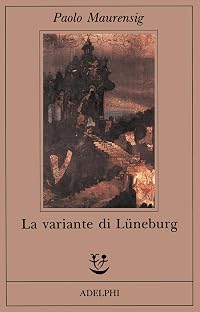
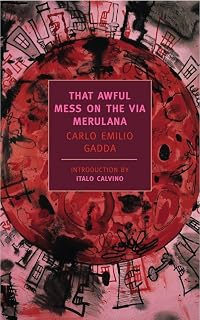
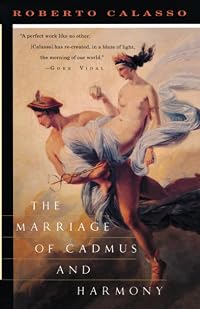
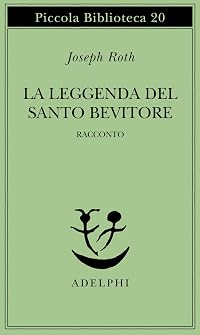






Member Recommendations
Member Reviews
Nagyon szerettem. Olvasás közben felkerült a kívánságlistámra, Eco pedig a kedvenc szerzők közé (tudom, hogy mostanában a második, de tényleg nem osztogatom könnyen ezt a címet). Élvezet volt olvasni, a szövegek rövidsége miatt több átszállásos tömegközlekedésre is kiválóan alkalmas, ha az embert nem zavarja, hogy nyilvános helyen nagyon vigyorog, esetleg hangosan felnevet. Ismét legszívesebben kiidéztem volna az egészet, az álcázott könyvek játéka pedig annyira népszerűnek bizonyult, hogy borzasztóan addiktív zóna is született belőle. Ezúton kérek elnézést a lekésett határidők, lassan haladó munka miatt (pont az év végi hajrában). Timár Krisztina is megmondta: Eco tehet róla!
Nagyon szerettem. Olvasás közben felkerült a kívánságlistámra, Eco pedig a kedvenc szerzők közé (tudom, hogy mostanában a második, de tényleg nem osztogatom könnyen ezt a címet). Élvezet volt olvasni, a szövegek rövidsége miatt több átszállásos tömegközlekedésre is kiválóan alkalmas, ha az embert nem zavarja, hogy nyilvános helyen nagyon vigyorog, esetleg hangosan felnevet. Ismét legszívesebben kiidéztem volna az egészet, az álcázott könyvek játéka pedig annyira népszerűnek bizonyult, hogy borzasztóan addiktív zóna is született belőle. Ezúton kérek elnézést a lekésett határidők, lassan haladó munka miatt (pont az év végi hajrában). Timár Krisztina is megmondta: Eco tehet róla!
Virtuose de l'humour et de l'intelligence, Umberto Eco déploie dans ce livre toute la gamme de son immense talent. Extravagant et véridique, ce recueil se situe à mi-chemin entre les Exercices de style de Raymond Queneau et les Mythologies de Roland Barthes. Amicalement sacrilège, délicatement satirique, l'auteur passe en revue les modes et les moeurs de ses contemporains. Nos codes et nos rites fournissent la matière de ses apologues. On découvrira Nonita, récit inspiré de Nabokov où le jeune héros brûle d'amour pour une octogénaire décatie. On fera aussi ses délices d'une version inédite de l'Ancien Testament et on se délectera de la retransmission en direct de la découverte de l'Amérique par Colomb, commentée en show more duplex par Luther et Léonard de Vinci. show less
This is a collection of short stories which are most definitely satire for the intelligentsia. Eco's mind is a database of cultural references, linguistic foolery and razor-sharp wit.
The stories include "Granita," a retelling of Nabokov's famous tale with a geriatric object of desire and "The Discovery of America" which chronicles Columbus' 1492 landing on terra firma via the newscasting techniques used for man's first walk on the moon.
Eco's creativity knows no bounds. As with his other works, an understanding of topics as diverse as Adorno's theories and a Who's Who in the Greek pantheon of classical philsophers is definitely helpful, but not required. Even if the reader does not recognize all the references, she will undoubtedly show more recognize the talents of one of the greatest authors of our time. If you like to think and read at the same time, try some Eco. show less
The stories include "Granita," a retelling of Nabokov's famous tale with a geriatric object of desire and "The Discovery of America" which chronicles Columbus' 1492 landing on terra firma via the newscasting techniques used for man's first walk on the moon.
Eco's creativity knows no bounds. As with his other works, an understanding of topics as diverse as Adorno's theories and a Who's Who in the Greek pantheon of classical philsophers is definitely helpful, but not required. Even if the reader does not recognize all the references, she will undoubtedly show more recognize the talents of one of the greatest authors of our time. If you like to think and read at the same time, try some Eco. show less
Culled from Eco's work for a literary magazine in the late 50s and early 60s, Misreadings is largely a series of lampoons and satire, exploiting the trends of the time. Much appears dated. The mass man of the Mad Men is approached by structuralist means. Kinsey meets Ho Chi Minh.
That said, there a few jewels, notably Letter to My Son penned in 1964 for his infant son Stefano, such is a meditation on military toys and a need for nurturing a sense of history. Make Your Own Movie is a digression on semiotics and cinema, one so rich as to give notice to those trawlers of Derrida and DFW.
That said, there a few jewels, notably Letter to My Son penned in 1964 for his infant son Stefano, such is a meditation on military toys and a need for nurturing a sense of history. Make Your Own Movie is a digression on semiotics and cinema, one so rich as to give notice to those trawlers of Derrida and DFW.
A collection of short essays by Umberto Eco from the 1960s and 1970s. Sardonic, intellectual, humorous. Many of the essays are stories we know told from an unusual vantage point where history sounds like a current event, or our current lives (at least in the 1960s) sound like something from the history books. My favorite essay is "the thing", telling the tale of when a powerful weapon was discovered.
Io ammiro il modo di scrivere di Umberto Eco e la sua infinita cultura. Ho letto con piacere diversi suoi romanzi. Qui però mi ha un pochino annoiato. Il libro è una raccolta di divertissement di alta qualità (false recensioni, imitazioni di articoli dotti ma su argomenti non di studio... oppure scritti colti fatti mescolando le regole temporali e gli autori: Manzoni e Joyce per esempio, scambiati l'un per l'altro da un professorone del futuro...). Sono tutti scritti degli anni '60 e sono ripetitivi, a volte lunghi. Leggi con piacere i primi, poi una volta che hai capito la sottile ironia, sinceramente stufano. O almeno hanno stufato me. Che pure ripeto sono una sua estimatrice. Forse il difetto è proprio che per ironizzare su certa show more ampollosità gli scritti, fatti per parodia, risultano particolarmente complessi e quindi estremi. Carino, ma tornassi indietro non lo rileggerei. show less
Members
- Recently Added By
Lists

Italian Literature
556 works; 41 members
Author Information

Umberto Eco was born in Alessandria, Italy on January 5, 1932. He received a doctorate of philosophy from the University of Turin in 1954. His first book, Il Problema Estetico in San Tommaso, was an extension of his doctoral thesis on St. Thomas Aquinas and was published in 1956. His first novel, The Name of the Rose, was published in 1980 and won show more the Premio Strega and the Premio Anghiar awards in 1981. In 1986, it was adapted into a movie starring Sean Connery. His other works include Foucault's Pendulum, The Island of the Day Before, Baudolino, The Prague Cemetery, and Numero Zero. He also wrote children's books and more than 20 nonfiction books including Serendipities: Language and Lunacy. He taught philosophy and then semiotics at the University of Bologna. He also wrote weekly columns on popular culture and politics for L'Espresso. He died from cancer on February 19, 2016 at the age of 84. (Bowker Author Biography) show less
Some Editions
Series
Belongs to Publisher Series
Work Relationships
Common Knowledge
- Canonical title
- Misreadings
- Original title
- Diario minimo
- Original publication date
- 1963 (original Italian) (original Italian); 1993 (English translation) (English translation)
- Important places*
- Piemonte, Italië; Italië
- Epigraph
- Music-hall, not poetry, is a criticism of life. - James Joyce
- First words
- The present manuscript was given to me by the warden of the local jail in a small town in Piedmont.
- Last words
- (Click to show. Warning: May contain spoilers.)Why then spend four complex words -- dolce colore d'oriental zaffiro -- where it would have been so much more immediate and comprehensible to use the corresponding Chinese ideogram?" 1962
*Some information comes from Common Knowledge in other languages. Click "Edit" for more information.
Classifications
- Genres
- Nonfiction, Literature Studies and Criticism
- DDC/MDS
- 854.914 — Literature & rhetoric Italian, Romanian & related literatures Italian essays 1900- 20th Century 1945-1999
- LCC
- PQ4865 .C6 .D513 — Language and Literature French, Italian, Spanish and Portuguese literatures Italian literature Individual authors, 1961-2000
- BISAC
Statistics
- Members
- 1,450
- Popularity
- 16,099
- Reviews
- 13
- Rating
- (3.77)
- Languages
- 17 — Catalan, Danish, Dutch, English, Estonian, French, German, Greek, Hungarian, Italian, Japanese, Norwegian, Portuguese, Slovak, Spanish, Swedish, Turkish
- Media
- Paper, Ebook
- ISBNs
- 46
- ASINs
- 10