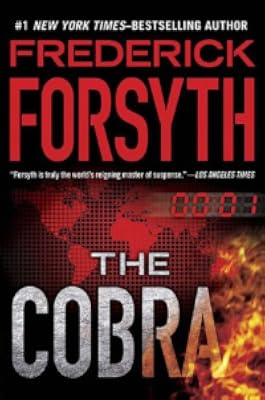
The Cobra
by Frederick Forsyth
On This Page
Description
Deveraux used to run Special Ops for the CIA, before they retired him for being too ruthless. Now the President has asked the man they call the Cobra to do anything he requires to destroy the cocaine industry. No rules, no questions asked. Just do it...Tags
Recommendations
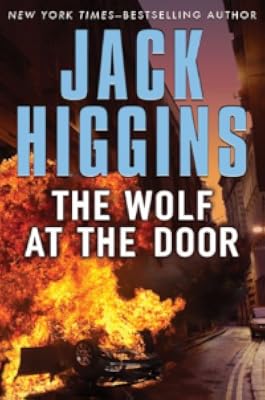
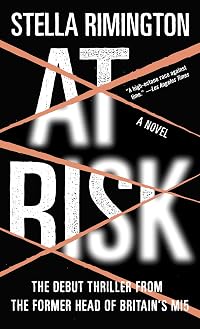
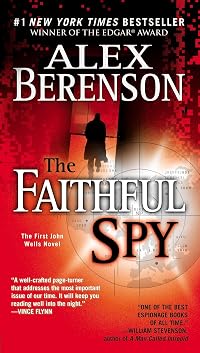

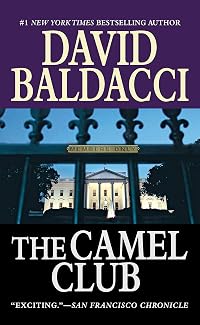
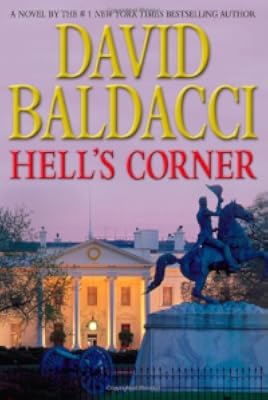
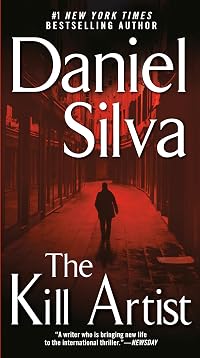
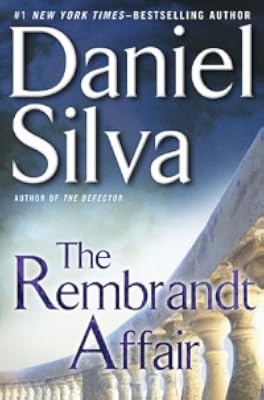
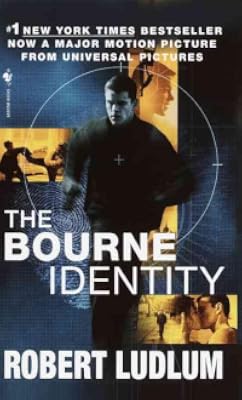


Member Reviews
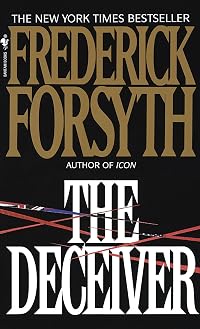
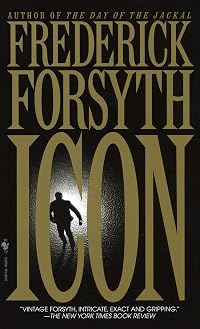
At his best, Forsyth blends fact and fiction so effortlessly you can end up wondering whether what you are reading really did happen. Alas, this isn't his best novel {although it's not his worst). The basic storyline is a tad implausible, even utopian for the hard-headed Forsyth: when the president of the United States decides to play hardball with drug traffickers and kill the cocaine business, two characters from his previous novel, Avenger, who were adversaries, unite to fulfill the mission.As in any Forsyth novel, there's more attention paid to the mechanics of how this is done -- to the back story, the details, the procedures -- than to characters or dialogue, etc. Usually the Forsyth books are compelling enough that I find that show more approach works; in this case, it's not as effective, and I found myself bogging down. Many of Forsyth's better novels have focused on events of the recent past -- the first Gulf War -- or complex situations based on reality, like the rise of a populist anti-Semitic new force in Russian politics. In this story, which is based on an unlikely scenario and one that can't be tied as readily to real events, the narrative loses some of its punch. Even the "twist" in the story isn't really that surprising, if the reader thinks through what MIGHT happen should the powers that be decide to really pull no punches in killing off the cocaine trade. And the fact that Forsyth is concerning himself with a moral issue rather than the usual shades-of-grey political/military conflict also makes it tricky. There are the heroes, and the villains, and both do nasty things. Only recommended to Forsyth fans; if you haven't discovered his books yet, I can strongly recommend The Deceiver and Icon as well as classics like The Odessa File, or even Avenger. They would all get ratings of 4 stars or greater. This was a 3.5 star book for me, and a bit of a disappointment. show less
 This review was written for LibraryThing Early Reviewers.
Forsyth could have gone for a fairy tale ending but he didn't. The battle against the cocaine cartel was ultimately lost to political realities. Sad, but real. This is the most well-done part of Forsyth's book whose whirlwind plot can lose you sometimes.
A entertaining read, not necessarily near the author's best. I spent a lot of time researching the geography identified in this book. I have never heard of many of the locations. I Also thought the author should have left his political affiliation out of the story. A spy drone, named Michelle , after the president's wife is a little tacky. With Frederick Forsyth, I expected a better novel.
This review was written for LibraryThing Early Reviewers.The Cobra was a bit of a disappointment for me, especially since I love Forsyth and most of his works. The premise is pretty simple. The president, who is clearly meant to be Obama, decides to take on the cocaine cartels and wants them wiped out. To do this, he turns to an ex-CIA man code named "The Cobra," who assures him that with appropriate time and resources, he can do it. He then recruits an ex-soldier named Cal Dexter to be his second in command. And thus begin my complaints with the book.
After this initial introduction to The Cobra, we almost never see him again until the very end of the book. How odd is that? Instead, Dexter is everywhere -- all over the world -- coordinating the logistics for putting together cocaine show more hunter/killer special ops groups who are going to take on the cartels by air and sea. Additionally, friendly governments are recruited to help, the British by sending their special forces, others by ramping up security. And halfway through the book, after tons of planning, the operation begins. And goes on and on. And the good guys -- who are real god -- and the bad guys -- who are real bad -- go at it, with the good guys winning virtually 100% of the time, so incredibly easily that you have to wonder if the government actually followed this novel as a planning guide, could it eradicate the drug trade? Forsyth makes it look so damn easy. And that's not remotely realistic.
There's a twist at the end that brings The Cobra back into the story and also involves Dexter. By now, the cartels have figured out what's going on to a certain degree, but seem powerless to stop it. Amazing. What happens at the very end was a bit of a surprise to me, and a welcome one, actually, but it couldn't save the book. Why name the book "The Cobra" when it actually should have been named "Cal Dexter?" It doesn't make sense. Why write a book that makes winning the war on drugs -- which America has stunningly lost to a shocking degree -- look so incredibly easy when we know it's not? It's not remotely realistic. Some people complain of boredom due to the incredible detail and planning that went on during the first half of the book. Well, that's basically Forsyth's way, so I personally don't have a problem with that. But it's got to lead somewhere. And this led nowhere. Another complaint -- there's no sense of suspense or real danger to the good guys in this book. You get that in the Odessa File, the Jackal, the Fourth Protocol, etc., but not here. It's just non-stop intercepting and destroying drug shipments left and right. The only danger is to the bad guys. Not much of a thriller.
Normally I highly recommend Forsyth books, but I'm afraid this time I can't. I'm not even sure why I'm giving it three stars instead of two. I guess out of respect for the author. Not recommended. show less
After this initial introduction to The Cobra, we almost never see him again until the very end of the book. How odd is that? Instead, Dexter is everywhere -- all over the world -- coordinating the logistics for putting together cocaine show more hunter/killer special ops groups who are going to take on the cartels by air and sea. Additionally, friendly governments are recruited to help, the British by sending their special forces, others by ramping up security. And halfway through the book, after tons of planning, the operation begins. And goes on and on. And the good guys -- who are real god -- and the bad guys -- who are real bad -- go at it, with the good guys winning virtually 100% of the time, so incredibly easily that you have to wonder if the government actually followed this novel as a planning guide, could it eradicate the drug trade? Forsyth makes it look so damn easy. And that's not remotely realistic.
There's a twist at the end that brings The Cobra back into the story and also involves Dexter. By now, the cartels have figured out what's going on to a certain degree, but seem powerless to stop it. Amazing. What happens at the very end was a bit of a surprise to me, and a welcome one, actually, but it couldn't save the book. Why name the book "The Cobra" when it actually should have been named "Cal Dexter?" It doesn't make sense. Why write a book that makes winning the war on drugs -- which America has stunningly lost to a shocking degree -- look so incredibly easy when we know it's not? It's not remotely realistic. Some people complain of boredom due to the incredible detail and planning that went on during the first half of the book. Well, that's basically Forsyth's way, so I personally don't have a problem with that. But it's got to lead somewhere. And this led nowhere. Another complaint -- there's no sense of suspense or real danger to the good guys in this book. You get that in the Odessa File, the Jackal, the Fourth Protocol, etc., but not here. It's just non-stop intercepting and destroying drug shipments left and right. The only danger is to the bad guys. Not much of a thriller.
Normally I highly recommend Forsyth books, but I'm afraid this time I can't. I'm not even sure why I'm giving it three stars instead of two. I guess out of respect for the author. Not recommended. show less
Frederick Forsyth still has it. He seems to excel in that combination of fact and fiction backed by much research into whatever the background of the particular novel. In the Cobra, an American president, undoubtedly Barack Obama, for his wife is named Michelle, is moved to take drastic action against the Colombian drug cartel that controls the worldwide distribution of cocaine. An elderly, black White House waitress collapses in tears at a state dinner. Her grandson has just died of as cocaine overdose. She had been raising him and trying to save him from the streets.
She pours out her story to the First Lady who later relates it to POTUS. This is the catalyst for the President to recruit an ex-CIA official, the Cobra, Paul Devereaux show more to head a quasi-military organization dedicated to eradicating the Colombian cartel jnown as Hermanidad. Devereaux has been given carte blanche by POTUS to do whatever it takes to solve the problem. Cocaine trafficking has quietly been changed to an offense equal to terrorism and the British have bought into the scheme.
Devereaux demands a string of conditions and a year's lead time before any overt action will be taken against Hermanidad. He spends that year organizing, recruiting and planning. He has two ships outfitted to interdict ships carrying cocaine, but this time there will be no seizures with great fanfare. The ships will be boarded after all communications are temporarily blocked. The crew will be taken to Diego Garcia for detention and the ships will be sunk.
Using unmanned drones, planes are indentified taking off from remote areas in Brazil bound for West Africa. The planes Cobra is looking for would normally not have enough range to complete the trip. Any plane attempting the trip must therefore have added gas tanks and be a cartel plane. They are simply shot down. Cobra's strategy is to seize or destroy the cocaine while it is still in the cartel's hands. Once handed, off the various gangs who are taking delivery of the product are liable for its loss.
Does the book strain credulity? Of course. The idea of Barck Obama sanctioning an extra legal war against the cartel is laughable. Perhaps the book may have worked better with a fictional President. There is a Rahm Emmanuel type chief of staff who must deal with the Cobra. In the end the President gets cold feet. The Cobra has succeeded too well. He has sown disinformation that has the cartel and distributing gangs at each other's throats. Wholesale gang warfare has broken out and civilians have been killed and injured in the crossfire.
This is the least satisfying part of the book. You had the feeling that it would all end badly. Devereaux is summoned to the White House and told to stand down and end his activities. He has stockpiled 150 tons of cocaine and uses it to bargain with the head of the cartel to ensure his personal safety now that the operation is over. The Cobra is found murdered in his house by his second in command. This doesn't seem to square with the Cobra's values and how he was portrayed in the balance of the book.
Overall I enjoyed the book, especially the first 80%. The planning, strategy, and tactics of Cobra were very entertaining. I'm glad Forsyth is still writing. show less
She pours out her story to the First Lady who later relates it to POTUS. This is the catalyst for the President to recruit an ex-CIA official, the Cobra, Paul Devereaux show more to head a quasi-military organization dedicated to eradicating the Colombian cartel jnown as Hermanidad. Devereaux has been given carte blanche by POTUS to do whatever it takes to solve the problem. Cocaine trafficking has quietly been changed to an offense equal to terrorism and the British have bought into the scheme.
Devereaux demands a string of conditions and a year's lead time before any overt action will be taken against Hermanidad. He spends that year organizing, recruiting and planning. He has two ships outfitted to interdict ships carrying cocaine, but this time there will be no seizures with great fanfare. The ships will be boarded after all communications are temporarily blocked. The crew will be taken to Diego Garcia for detention and the ships will be sunk.
Using unmanned drones, planes are indentified taking off from remote areas in Brazil bound for West Africa. The planes Cobra is looking for would normally not have enough range to complete the trip. Any plane attempting the trip must therefore have added gas tanks and be a cartel plane. They are simply shot down. Cobra's strategy is to seize or destroy the cocaine while it is still in the cartel's hands. Once handed, off the various gangs who are taking delivery of the product are liable for its loss.
Does the book strain credulity? Of course. The idea of Barck Obama sanctioning an extra legal war against the cartel is laughable. Perhaps the book may have worked better with a fictional President. There is a Rahm Emmanuel type chief of staff who must deal with the Cobra. In the end the President gets cold feet. The Cobra has succeeded too well. He has sown disinformation that has the cartel and distributing gangs at each other's throats. Wholesale gang warfare has broken out and civilians have been killed and injured in the crossfire.
This is the least satisfying part of the book. You had the feeling that it would all end badly. Devereaux is summoned to the White House and told to stand down and end his activities. He has stockpiled 150 tons of cocaine and uses it to bargain with the head of the cartel to ensure his personal safety now that the operation is over. The Cobra is found murdered in his house by his second in command. This doesn't seem to square with the Cobra's values and how he was portrayed in the balance of the book.
Overall I enjoyed the book, especially the first 80%. The planning, strategy, and tactics of Cobra were very entertaining. I'm glad Forsyth is still writing. show less
This review was written for LibraryThing Early Reviewers.Perhaps if I had read the book and not listened to it in the audio version, I would have liked it better. I found it hard to give it my full attention and often drifted away, lost in my own thoughts. With 11 CD's devoting a significant portion of the disc to explanation, it became overwhelming and difficult to remain engaged. I found it tedious, at times, since it had too much detail and explanation, as it attempted to describe every aspect of the drug cartel and its methods and every minute detail of the effort to destroy it. It lacked in action because it was steeped in detail.
The book begins in Washington DC. The President and the First Lady are hosting a small dinner reception and one waitress is reduced to tears while working; Is show more is soon learned that her grandson has just died and his death is related to cocaine. When the President learns this he becomes disturbed and decides to begin an investigation into drug trafficking in an attempt to stop it, once and for all. Consequently, he requests a report on the cocaine industry and hires John Devereaux, the Cobra, to conduct a clandestine, top secret effort to destroy the industry.
(The President is a man of color which leads one to believe it is based on Obama; also, one of the code names is Michelle and his adviser is a man closely resembling Rahm Emanuel, in personality)
When riots erupt, as the effort nears a successful fruition and drugs disappear from the streets, the White House decides to end it despite its success, and the agent is highly disappointed. He believes his government, that he had devoted his life to, risked his lift to protect, had now betrayed him. There is somewhat of a surprise ending which may or may not disappoint the readers, depending on how involved they become with the novel. For me, the end could not come too soon. show less
The book begins in Washington DC. The President and the First Lady are hosting a small dinner reception and one waitress is reduced to tears while working; Is show more is soon learned that her grandson has just died and his death is related to cocaine. When the President learns this he becomes disturbed and decides to begin an investigation into drug trafficking in an attempt to stop it, once and for all. Consequently, he requests a report on the cocaine industry and hires John Devereaux, the Cobra, to conduct a clandestine, top secret effort to destroy the industry.
(The President is a man of color which leads one to believe it is based on Obama; also, one of the code names is Michelle and his adviser is a man closely resembling Rahm Emanuel, in personality)
When riots erupt, as the effort nears a successful fruition and drugs disappear from the streets, the White House decides to end it despite its success, and the agent is highly disappointed. He believes his government, that he had devoted his life to, risked his lift to protect, had now betrayed him. There is somewhat of a surprise ending which may or may not disappoint the readers, depending on how involved they become with the novel. For me, the end could not come too soon. show less
I always enjoy Frederick Forsyth's books and when I read one I find myself asking why he isn't one of the authors for whom I rush to the store to buy a new book. However, The Cobra did not live up to Forsyth's usual standard. Unfortunately, the book read less like a novel and more like a journalistic history piece chronicling certain events. The characters were mere pieces on a chessboard to be shuffled; they were never people and certainly not people about whom the reader cared. I learned quite a bit about the cocaine business (Forsythe is known for impressive research and, as always, he makes the reader believe that Forsythe knows of what he writes), but there needed to be more story to back up the reams of information. In some ways, show more I felt as if Forsyth was trying to recapture the detail and complexity that made Icon so good, but that book had terrific characters who faced dangers and challenges. The Cobra was simply not up to Forsyth's standards, but I guess that even the masters are entitled to a "swing and miss" now and then. show less
This review was written for LibraryThing Early Reviewers.Members
- Recently Added By
Author Information

114+ Works 34,885 Members
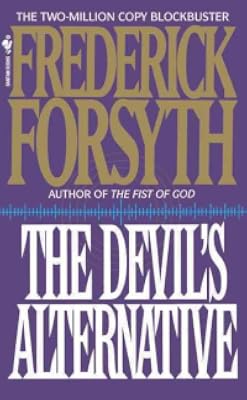
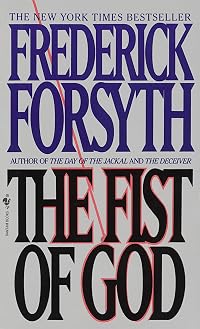
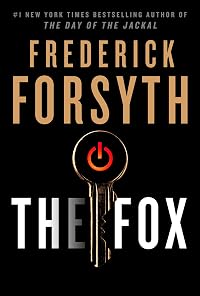
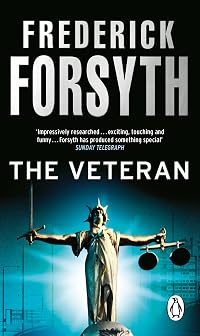
Frederick Forsyth was born in Ashford, England on August 25, 1938. At age seventeen, he decided he was ready to start experiencing life for himself, so he left school and traveled to Spain. While there he briefly attended the University of Granada before returning to England and joining the Royal Air Force. He served with the RAF from 1956 to show more 1958, earning his wings when he was just nineteen years old. He left the RAF to become a reporter for the Eastern Daily Press, Reuters News Agency, and the British Broadcasting Corporation (BBC). While with the BBC, he was sent to Nigeria to cover an uprising in the Biafra region. As he learned more about the conflict, he became sympathetic to the rebel cause. He was pulled from Nigeria and reassigned to London when he reported this viewpoint. Furious, he resigned and returned to Nigeria as a freelance reporter, eventually writing The Biafra Story and later, Emeka, a biography of the rebel leader Chukwuemeka Odumegwu-Ojukwu. Upon his return to England in 1970, Forsyth began writing fiction. His first novel, The Day of the Jackal, won an Edgar Allan Poe award from the Mystery Writers of America. His other works include The Odessa File, The Dogs of War, The Fourth Protocol, Devil's Alternative, The Negotiator, The Deceiver, The Fist of God, Icon, The Veteran, Avenger, The Afghan, The Cobra and The Fox. (Bowker Author Biography) show less
Some Editions
Awards and Honors
Distinctions
Series
Belongs to Publisher Series
Common Knowledge
- Canonical title
- The Cobra
- Original title
- The Cobra
- Original publication date
- 2010-08-17
- People/Characters
- Paul Devereaux; Calvin Dexter
- Important places*
- Kolumbien
- Dedication
- For Justin and all the young agents, British and American, who, at great risk, are deep undercover in the struggle against narcotic drugs.
- First words
- The teenage boy was dying alone.
- Last words
- (Click to show. Warning: May contain spoilers.)But you just cannot treat the Don that way.
*Some information comes from Common Knowledge in other languages. Click "Edit" for more information.
Classifications
Statistics
- Members
- 1,217
- Popularity
- 20,450
- Reviews
- 53
- Rating
- (3.48)
- Languages
- 17 — Czech, Danish, Dutch, English, Estonian, Finnish, French, German, Italian, Lithuanian, Norwegian (Bokmål), Polish, Portuguese, Russian, Spanish, Swedish, Turkish
- Media
- Paper, Audiobook, Ebook
- ISBNs
- 72
- ASINs
- 14
