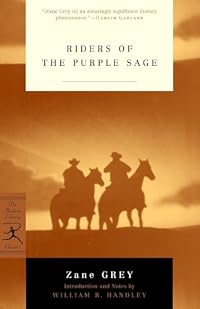
Riders of the Purple Sage
by Zane Grey
On This Page
Description
Zane Grey's best-known novel, Riders of the Purple Sage, was first published in 1912. One of the earliest Western novels, it tells the story of Jane Withersteen's struggle to overcome persecution within her Mormon church. With the help of her friends, she overcomes adversity to find herself, a child who needs her and her true love in the process..
Tags
Recommendations


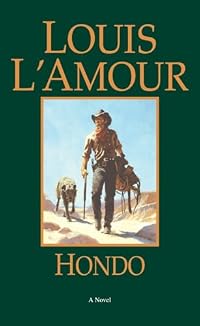


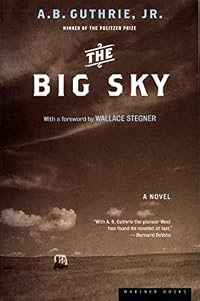
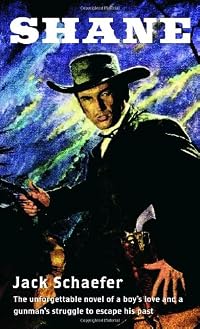






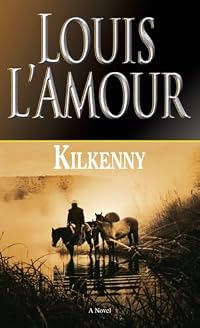
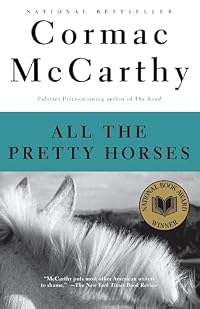

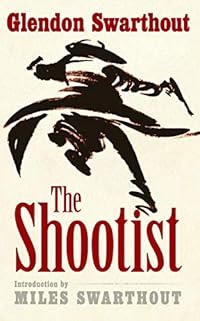
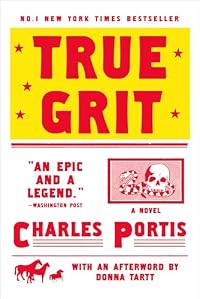




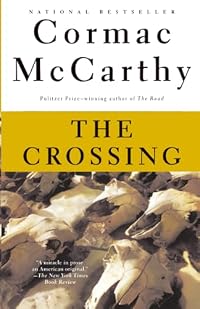


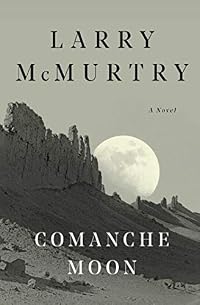
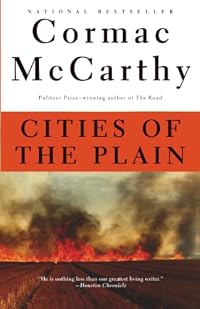
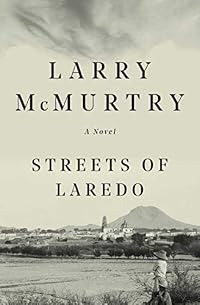


Member Recommendations
TineOliver Both books deal with views on Mormonism by outsiders at the beginning of the 20th Century. This recommendation is only for those who are interested in this aspect as the novels cover different genres.
Member Reviews
Every year I challenge myself to read something outside of my preferred genres. This year’s pick was Zane Grey’s Riders of the Purple Sage – harking back to my teen years, when the local bookstore where I clerked stocked Zane Greys and Louis L’Amours the way ballfields stock Cracker Jack – though their popularity was already waning, plenty of customers still preserved a nostalgic fondness for the genre.
Some have called this “Riders of the Purple Prose,” and I get where they're coming from! If you’re looking for a breathless adventure full of saloon brawls, train robberies, and gunfights, this definitely ain’t it. This was originally published as a serial – 19 parts - – so Grey had all the time in the world to tell show more his story, and he was clearly in no particular rush. Scenes of conflict and drama are separated by long passages that are perhaps best described as paeans to the beauty of the American West – the brilliantly colored arches soaring into the air, the play of sunlight through rugged canyons, the vast expenses of purple sage – described through the eyes of a painter or naturalist. These are easily skipped if they aren’t your cup of tea, but I felt like they provided important context for the story, helping to explain how people could come to fall in love a place, and a lifestyle, that could otherwise be quite brutal.
The story takes place in the fictional town of Cottonwoods, Utah, around 1870. Jane Withersteen, the wealthy daughter of Mormon aristocracy, is strong in faith but not unaware of the unsavory underbelly of her faith, especially the license taken by some men of her faith to abuse & exploit women. This internal conflict comes to a head when she develops a fondness for a “gentile,” Bern Venters, thus earning the animosity of Elder Tull (who has plans to add Jane to his harem) and Bishop Dyer, her spiritual leader. They initiate a plan to break her will by gradually destroying her wealth and way of life – scaring off her riders, rustling her cattle, stealing her gold, turning her Mormon staff into spies working against her … until a savior arrives in the form of Lassiter, the weathered, revenge-driven gunman with (of course) a heart of gold who’s come to Cottonwood looking for the Mormon men who kidnapped and subjugated his sister to their faith.
Cue all the western tropes that readers expect – because what’s Cracker Jack without peanuts and a prize? – including loyal riders, stout horses, thieving rustlers, damsels in distress, drives, shootouts, pursuits, gold, budding romance, a cute kid, and an ominous “masked rider” who ends up being something entirely unexpected. Grey’s strength is the verve and authenticity that he brings to these otherwise overused tropes. Unfortunately, however, the author struggles with what one might call the “softer” elements of writing, especially characterization. His efforts to describe the internal motivations and roiling conflicts of his characters too often come off as more purple (overwrought and hyperbolic) than the sage he so lovingly depicts … and don’t even get me started on his clumsy attempts to depict “strong” female characters. Wince-inducing!
Would argue, however, this this is still a worthwhile read – if not for the prose or the characterization, then for the snapshot the novel provides into the very different lives, perspectives, and priorities of a lost age. There’s always a sense that one is living in “the worst of times” – if nothing else, this is a chance to reflect upon a time when life was brutal and cheap, injustice rampant, hardship unavoidable … and yet people demonstrated depths of resiliency and determination that continue to inspire even after so much elapsed time and history. show less
Some have called this “Riders of the Purple Prose,” and I get where they're coming from! If you’re looking for a breathless adventure full of saloon brawls, train robberies, and gunfights, this definitely ain’t it. This was originally published as a serial – 19 parts - – so Grey had all the time in the world to tell show more his story, and he was clearly in no particular rush. Scenes of conflict and drama are separated by long passages that are perhaps best described as paeans to the beauty of the American West – the brilliantly colored arches soaring into the air, the play of sunlight through rugged canyons, the vast expenses of purple sage – described through the eyes of a painter or naturalist. These are easily skipped if they aren’t your cup of tea, but I felt like they provided important context for the story, helping to explain how people could come to fall in love a place, and a lifestyle, that could otherwise be quite brutal.
The story takes place in the fictional town of Cottonwoods, Utah, around 1870. Jane Withersteen, the wealthy daughter of Mormon aristocracy, is strong in faith but not unaware of the unsavory underbelly of her faith, especially the license taken by some men of her faith to abuse & exploit women. This internal conflict comes to a head when she develops a fondness for a “gentile,” Bern Venters, thus earning the animosity of Elder Tull (who has plans to add Jane to his harem) and Bishop Dyer, her spiritual leader. They initiate a plan to break her will by gradually destroying her wealth and way of life – scaring off her riders, rustling her cattle, stealing her gold, turning her Mormon staff into spies working against her … until a savior arrives in the form of Lassiter, the weathered, revenge-driven gunman with (of course) a heart of gold who’s come to Cottonwood looking for the Mormon men who kidnapped and subjugated his sister to their faith.
Cue all the western tropes that readers expect – because what’s Cracker Jack without peanuts and a prize? – including loyal riders, stout horses, thieving rustlers, damsels in distress, drives, shootouts, pursuits, gold, budding romance, a cute kid, and an ominous “masked rider” who ends up being something entirely unexpected. Grey’s strength is the verve and authenticity that he brings to these otherwise overused tropes. Unfortunately, however, the author struggles with what one might call the “softer” elements of writing, especially characterization. His efforts to describe the internal motivations and roiling conflicts of his characters too often come off as more purple (overwrought and hyperbolic) than the sage he so lovingly depicts … and don’t even get me started on his clumsy attempts to depict “strong” female characters. Wince-inducing!
Would argue, however, this this is still a worthwhile read – if not for the prose or the characterization, then for the snapshot the novel provides into the very different lives, perspectives, and priorities of a lost age. There’s always a sense that one is living in “the worst of times” – if nothing else, this is a chance to reflect upon a time when life was brutal and cheap, injustice rampant, hardship unavoidable … and yet people demonstrated depths of resiliency and determination that continue to inspire even after so much elapsed time and history. show less
Digital audiobook read by John Bolen.
From the book jacket: Cottonwoods, Utah, 1871. A woman stands accused. A man, sentenced to whipping. In … rides … Lassiter, a notorious gunman who’s come to avenge his sister’s death. It doesn’t take Lassiter long to see that this once-peaceful Mormon community is controlled by the corrupt Deacon Tull – a powerful elder who’s trying to take the woman’s land by forcing her to marry him, branding her foreman a dangerous “outsider.” Lassiter vows to help them. But when the ranch is attacked by horse thieves, cattle rustlers, and a mysterious Masked Rider, he realizes they’re up against something bigger, and more brutal, than the land itself…
My reactions
I hardly know what to write show more about this classic of the Western genre. It’s full of adventure, violence, strong men and women, tenderness, brutality and an abiding sense of justice. And, of course, there is the landscape, which Grey paints so vividly it is practically a character.
Yes, the storyline and dialogue are a bit melodramatic. But Grey’s story still captured this reader’s imagination with its sense of drama, almost non-stop action, and bold characters. I was reminded of the many western movies I watched with my Daddy in the ‘50s and ‘60s. They were exciting and the good guys always won. Clearly those movies (and other books of the genre) had Grey’s strong foundation on which to build. I’m glad I finally read it.
The digital audio available through my library’s Overdrive system was read by John Bolen. I was not a great fan of his delivery, which seemed overly dramatic to me. I might have enjoyed this better had I read the text.
UPDATE on second reading, January 17, 2020: I chose to read the text in preparation for my F2F book club discussion. If anything, the chase scenes were even more thrilling. And the descriptions of the landscape! The melodramatic - "bodice-heaving" - dialogue was also more evident and I found myself laughing at the ridiculousness of some of the "love" scenes. Still, now that I know there is a sequel ... well I may just have to read it. show less
From the book jacket: Cottonwoods, Utah, 1871. A woman stands accused. A man, sentenced to whipping. In … rides … Lassiter, a notorious gunman who’s come to avenge his sister’s death. It doesn’t take Lassiter long to see that this once-peaceful Mormon community is controlled by the corrupt Deacon Tull – a powerful elder who’s trying to take the woman’s land by forcing her to marry him, branding her foreman a dangerous “outsider.” Lassiter vows to help them. But when the ranch is attacked by horse thieves, cattle rustlers, and a mysterious Masked Rider, he realizes they’re up against something bigger, and more brutal, than the land itself…
My reactions
I hardly know what to write show more about this classic of the Western genre. It’s full of adventure, violence, strong men and women, tenderness, brutality and an abiding sense of justice. And, of course, there is the landscape, which Grey paints so vividly it is practically a character.
Yes, the storyline and dialogue are a bit melodramatic. But Grey’s story still captured this reader’s imagination with its sense of drama, almost non-stop action, and bold characters. I was reminded of the many western movies I watched with my Daddy in the ‘50s and ‘60s. They were exciting and the good guys always won. Clearly those movies (and other books of the genre) had Grey’s strong foundation on which to build. I’m glad I finally read it.
The digital audio available through my library’s Overdrive system was read by John Bolen. I was not a great fan of his delivery, which seemed overly dramatic to me. I might have enjoyed this better had I read the text.
UPDATE on second reading, January 17, 2020: I chose to read the text in preparation for my F2F book club discussion. If anything, the chase scenes were even more thrilling. And the descriptions of the landscape! The melodramatic - "bodice-heaving" - dialogue was also more evident and I found myself laughing at the ridiculousness of some of the "love" scenes. Still, now that I know there is a sequel ... well I may just have to read it. show less
Full of purple prose but more than a mere Western, Riders of the Purple Sage often reflects a popular understanding of Social Darwinism (the vanished people of the past in the secret valley who didn't "deserve" to live on). And amidst all the action, you can't help but notice the Freudian imagery in Lassiter's big guns. The novel was written on the cusp of a major change in America and the world, the Great War but a few years away. And it is awash in many of the social and political assumptions that would find entry into that catastrophe all the more easy because the ground was plowed with the ideas planted in Riders.
None of this should detract, although it may enhance, the reading of the book for enjoyment. The rides and chases across show more the landscapes still stand out as something monumental and and entrancing. And as genre fiction goes, there is something of a payoff at the end. Hasn't everyone dreamed of a paradise where they close themselves off from the worries of the world and find true contentment? show less
None of this should detract, although it may enhance, the reading of the book for enjoyment. The rides and chases across show more the landscapes still stand out as something monumental and and entrancing. And as genre fiction goes, there is something of a payoff at the end. Hasn't everyone dreamed of a paradise where they close themselves off from the worries of the world and find true contentment? show less
A strange book, but maybe I'm just showing my ignorance of westerns. A lot more romance than I was expecting, which isn't a bad thing particularly, just unexpected. Much more odd and off-putting was the fact that the villain (or "antagonist") is kind of Mormonism as a whole, which is depicted as a kind of home-grown fascism in the bud. It's the same sort of depiction as in the long middle section of "Study in Scarlet" (which is often left out or skipped) - Mormons are secretive, conniving, dastardly, unprincipled, &c. Very much like the way the "Da Vinci Code" depicts the Catholic Church. I'm not in any way associated with LDS, nor do I have much patience for their theology, but this seems way over the top and, frankly, weird.
Strangest show more of all, though, is that almost all the actijon scenes in the book, particularly the gun fights, take place off stage. What a weird choice for a western. It's just possible that this is a deliberate choice, since the book is really about its heroine, Jane Withersteen, and from her perspective all these things sort of happen off somewhere else and then she hears about them after the fact. It's possible, but I doubt it, and deliberate choice or not it gives the book a strange feel.
Grey is such a titan of western genre fiction that I feel obligated to try at least one more. We shall see. show less
Strangest show more of all, though, is that almost all the actijon scenes in the book, particularly the gun fights, take place off stage. What a weird choice for a western. It's just possible that this is a deliberate choice, since the book is really about its heroine, Jane Withersteen, and from her perspective all these things sort of happen off somewhere else and then she hears about them after the fact. It's possible, but I doubt it, and deliberate choice or not it gives the book a strange feel.
Grey is such a titan of western genre fiction that I feel obligated to try at least one more. We shall see. show less
A while ago I received a copy of the Oxford World’s Classics catalogue inviting me to ask for any books I’d like to review on my blog. Where to start! I could have chosen hundreds, but one in particular leapt out at me from a genre I’d never read before.
The evocative title has a lot to do with it (and there’s a band called New Riders of the Purple Sage). I grew up with Westerns – The Virginian, Alias Smith & Jones and The High Chapparal on TV, John Wayne and Clint Eastwood on film. Having worked in a library for my Saturday job in the late 1970s, I had heard of Zane Grey, Louis Lamour, JT Edson and others – they were quite popular then, so the author’s distinctive name did ring a bell. Indeed, I’ve enjoyed modern novels show more in a similar vein too – Cormac McCarthy’s Border Trilogy was superb. Could this book, one of the originals in the genre, hold its own against all the above?
Pearl Zane Grey (his real name) was born in Ohio in 1872. He won a baseball scholarship to Penn where he studied dentistry – but he always wanted to become a writer. He was a bit of a lad too, and would often disappear off hunting, fishing or visiting old girlfriends! However, with his wife’s help, he developed his writing career. Inspired by another classic western novel The Virginian by Owen Wister, Riders as I’ll call it for short, was Grey’s greatest novel; published in 1912 it was fairly early in his long career which made him a millionaire.
The first few paragraphs set the scene beautifully…
"A sharp clip-clop of iron-shod hoofs deadened and died away, and clouds of yellow dust drifted from under the cottonwoods out over the sage.
Jane Withersteen gazed down the wide purple slope with dreamy and troubled eyes. A rider had just left her and it was his message that held her thoughtful and almost sad, awaiting the churchmen who were coming to resent and attack her right to befriend a Gentile.
She wondered if the unrest and strife that had lately come to Cottonwoods was to involve her. And then she sighed, remembering that her father had founded this remotest border settlement of southern Utah and that he had left it to her. She owned all the ground and many of the cottages. Withersteen House was hers, and the great ranch, with its thousands of cattle, and swiftest horses of the sage. To her belonged Amber Spring, the water which gave verdure and beauty to the village and made living possible on that wild purple upland waste. She could not escape being involved by whatever befell Cottonwoods."
That was enough to totally transport me into this frontier world – after a mere few pages I was totally hooked. You can see the landscape with its sagebrush, and coppery red canyons in the distance. What was particularly surprising, is that the main character is a woman – a strong one at that; but also that even in the frontier villages of the wild west there is intolerance – here between the Mormons and the Gentiles.
Jane, being an heiress, is under immense pressure to wed the Mormon preacher, and he and his men don’t like the friendship she has with Bern Venters. They drive Venters out of town so to speak, but Jane is saved from enforced marriage by the arrival of the gunman Lassiter who stays to help, and has a quest of his own. The Mormons plan a war of attrition on Jane – their women spy on her, their men stop working for her, and one of her herds of cattle is rustled. Jane struggles with her religion, finding it hard to see evil, and always wanting to look after her folk, but it’s not until she adopts an orphan child of one of her tenants that her eyes are opened and she lets herself find true love. Meanwhile Venters who is hiding in the canyons, discovers the rustlers base of operations, and shoots one of them known as the Masked Rider – the identity of whom is another story.
I won’t tell you any more of the plot to save spoiling it, but this novel has a bit of everything you could expect from a Western – cowboys, horses, rustlers, preachers, girls, ranches, cattle, gunfights, horse chases, kidnapping, and more, plus that beautiful landscape. If my initial surprise was over the shock of religion playing such a crucial part, a more pleasant one was due to the degree of romance in what was traditionally a ‘man’s novel’ – well every cowboy needs his girl, (at least until Brokeback Mountain - another truly fine Western movie). The characterisation was strong throughout and particularly interesting was that we got to see the inner life of Jane, Lassiter and Venter – their thoughts, their hopes, fears and desires. It’s not action all the way through, there’s also an appreciation of a civilised life lived on the edge.
I think you can tell I was rather besotted by this book – loved it! show less
The evocative title has a lot to do with it (and there’s a band called New Riders of the Purple Sage). I grew up with Westerns – The Virginian, Alias Smith & Jones and The High Chapparal on TV, John Wayne and Clint Eastwood on film. Having worked in a library for my Saturday job in the late 1970s, I had heard of Zane Grey, Louis Lamour, JT Edson and others – they were quite popular then, so the author’s distinctive name did ring a bell. Indeed, I’ve enjoyed modern novels show more in a similar vein too – Cormac McCarthy’s Border Trilogy was superb. Could this book, one of the originals in the genre, hold its own against all the above?
Pearl Zane Grey (his real name) was born in Ohio in 1872. He won a baseball scholarship to Penn where he studied dentistry – but he always wanted to become a writer. He was a bit of a lad too, and would often disappear off hunting, fishing or visiting old girlfriends! However, with his wife’s help, he developed his writing career. Inspired by another classic western novel The Virginian by Owen Wister, Riders as I’ll call it for short, was Grey’s greatest novel; published in 1912 it was fairly early in his long career which made him a millionaire.
The first few paragraphs set the scene beautifully…
"A sharp clip-clop of iron-shod hoofs deadened and died away, and clouds of yellow dust drifted from under the cottonwoods out over the sage.
Jane Withersteen gazed down the wide purple slope with dreamy and troubled eyes. A rider had just left her and it was his message that held her thoughtful and almost sad, awaiting the churchmen who were coming to resent and attack her right to befriend a Gentile.
She wondered if the unrest and strife that had lately come to Cottonwoods was to involve her. And then she sighed, remembering that her father had founded this remotest border settlement of southern Utah and that he had left it to her. She owned all the ground and many of the cottages. Withersteen House was hers, and the great ranch, with its thousands of cattle, and swiftest horses of the sage. To her belonged Amber Spring, the water which gave verdure and beauty to the village and made living possible on that wild purple upland waste. She could not escape being involved by whatever befell Cottonwoods."
That was enough to totally transport me into this frontier world – after a mere few pages I was totally hooked. You can see the landscape with its sagebrush, and coppery red canyons in the distance. What was particularly surprising, is that the main character is a woman – a strong one at that; but also that even in the frontier villages of the wild west there is intolerance – here between the Mormons and the Gentiles.
Jane, being an heiress, is under immense pressure to wed the Mormon preacher, and he and his men don’t like the friendship she has with Bern Venters. They drive Venters out of town so to speak, but Jane is saved from enforced marriage by the arrival of the gunman Lassiter who stays to help, and has a quest of his own. The Mormons plan a war of attrition on Jane – their women spy on her, their men stop working for her, and one of her herds of cattle is rustled. Jane struggles with her religion, finding it hard to see evil, and always wanting to look after her folk, but it’s not until she adopts an orphan child of one of her tenants that her eyes are opened and she lets herself find true love. Meanwhile Venters who is hiding in the canyons, discovers the rustlers base of operations, and shoots one of them known as the Masked Rider – the identity of whom is another story.
I won’t tell you any more of the plot to save spoiling it, but this novel has a bit of everything you could expect from a Western – cowboys, horses, rustlers, preachers, girls, ranches, cattle, gunfights, horse chases, kidnapping, and more, plus that beautiful landscape. If my initial surprise was over the shock of religion playing such a crucial part, a more pleasant one was due to the degree of romance in what was traditionally a ‘man’s novel’ – well every cowboy needs his girl, (at least until Brokeback Mountain - another truly fine Western movie). The characterisation was strong throughout and particularly interesting was that we got to see the inner life of Jane, Lassiter and Venter – their thoughts, their hopes, fears and desires. It’s not action all the way through, there’s also an appreciation of a civilised life lived on the edge.
I think you can tell I was rather besotted by this book – loved it! show less
Whew! Mostly a slog. There is a fabulous horse chase, and a fair amount of adventure staples, but the dialogue is brutally awkward and almost all the set up patently absurd. Horses that can go over 50 miles a day! And the horrifying specter of cute little girl Fay, had me gagging with the manipulative exploitation of her and her use in the plot.
Riders of the Purple Sage is a book I might have enjoyed when I was a less mature reader, both in years and in taste. Living up to the jacket blurb claiming that "Zane Grey epitomized the mythical West that should have been", it is filled with cliched characters and a standard plot of good against evil, with good triumphant. A virtuous woman torn between the requirements of her Mormon faith and her goodwill towards her unwashed fellow man. A rich man determined to bring her to heel by putting her where a woman of the 1800s belongs. A ranch hand hounded by the townspeople because he dares to befriend the woman despite not being a member of their faith. A hardened gunfighter seeking revenge for the death of the woman he loved. A show more mysterious outlaw, the Masked Rider, who terrorizes all who interfere with his cattle rustling. All crossing paths in a small town in Utah where law comes from the barrel of a smoking gun.
Riders of the Purple Sage, Zane Grey's best known novel, is an easy, predictable read that provides a satisfying story if read strictly as entertainment. show less
Riders of the Purple Sage, Zane Grey's best known novel, is an easy, predictable read that provides a satisfying story if read strictly as entertainment. show less
Members
- Recently Added By
Lists

New York Public Library's Books of the Century
120 works; 19 members

Best Westerns
20 works; 6 members

Pleasant Surprises: Books That Exceeded Our Expectations
418 works; 143 members

20th Century Literature
1,161 works; 55 members

Books Read in 2023
5,547 works; 145 members

Books Read in 2015
3,298 works; 129 members

Books Read in 2020
4,379 works; 124 members

A Rainbow of Books: Colors in the Title
570 works; 24 members

Art of Reading
188 works; 5 members

New York Public Library's Books of the Century - All
170 works; 14 members

25 Best Western Novels (Western Writers of America)
25 works; 1 member
Author Information

438+ Works 20,825 Members
Zane Grey was born Pearl Zane Gray in 1872, in Zanesville, Ohio. He studied dentistry at the University of Pennsylvania, married Lina Elise Roth in 1905, then moved his family west where he began to write novels. The author of 86 books, he is today considered the father of the Western genre, with its heady romances and mysterious outlaws. Riders show more of the Purple Sage (1912) brought Grey his greatest popular acclaim. Other notable titles include The Light of Western Stars (1914) and The Vanishing American (1925). An extremely prolific writer, he often completed three novels a year, while his publisher would issue only one at a time. Twenty-five of his novels were published posthumously. His last, The Reef Girl, was published in 1977. Zane Grey died of heart failure on October 23 in Altadena, California, in 1939. (Bowker Author Biography) show less
Some Editions
Awards and Honors
Awards
Notable Lists
Series
Belongs to Publisher Series
Work Relationships
Is contained in
Five Complete Novels: Riders of the Purple Sage, To the Last Man, The Thundering Herd, The Hash Knife Outfit, and West of the Pecos by Zane Grey
The Best of Zane Grey: Riders of the Purple Sage / The Trail Driver / Rangers of the Lone Star by Zane Grey
Common Knowledge
- Canonical title
- Riders of the Purple Sage
- Original publication date
- 1912
- People/Characters
- Lassiter; Jane Withersteen; Fay Larkin; Elder Tull; Bern Venters; Oldring (show all 8); Elizabeth Erne; Bishop Dyer
- Important places
- Utah, USA
- Related movies
- Riders of the Purple Sage (1996 | IMDb); The Riders of the Purple Sage (1941 | IMDb); Riders of the Purple Sage (1931 | IMDb); Riders of the Purple Sage (1925 | IMDb); Riders of the Purple Sage (1918 | IMDb)
- First words
- A sharp clip-clop of iron-shod hoofs deadened and died away, and clouds of yellow dust drifted from under the cottonwoods out over the sage.
- Last words
- (Click to show. Warning: May contain spoilers.)The outlet to Deception Pass closed forever.
Classifications
- Genres
- Fiction and Literature, General Fiction, Historical Fiction
- DDC/MDS
- 813.52 — Literature & rhetoric American literature in English American fiction in English 1900-1999 1900-1945
- LCC
- PS3513 .R6545 .R5 — Language and Literature American literature American literature Individual authors 1900-1960
- BISAC
Statistics
- Members
- 2,076
- Popularity
- 9,885
- Reviews
- 66
- Rating
- (3.41)
- Languages
- 8 — Czech, English, Finnish, French, German, Croatian, Slovak, Spanish
- Media
- Paper, Audiobook, Ebook
- ISBNs
- 254
- UPCs
- 3
- ASINs
- 67