On This Page
Description
The monstrous power of one of Shakespeare's most memorable characters, Richard Plantagenet, emerges in Henry VI, Part 3, a portent of things to come. The Yorkists have been temporarily victorious and the Duke of York has assumed the throne, but the Lancastrians, led by Queen Margaret, counter-attack. As the fortunes of war shift, both the innocent and the guilty are swept up in the maelstrom. And increasingly dominant amid the chaos is the sinister figure of the crook-backed Richard, Duke of show more Gloucester. David Tennant plays Henry VI, and Kelly Hunter plays Queen Margaret. Clive Merrison is the Duke of York, Stephen Boxer is Edward IV, and John Bowe is Warwick. Richard of Gloucester is played by David Troughton. show lessTags
Recommendations




Member Reviews
The first two parts of the Henry VI triad were surprisingly unengaging for me (being mired in political minutia and an overly abundant cast), but Shakespeare brought his historical A-game back into play to wrap up the set. After seeing the York’s make their claim to the throne previously, we see all of the players take the field as the battle for the crown (literally) heats up. York the Elder and his fiery sons are a force to be reckoned with, but pitted against them is the equally virulent Queen Margaret. She was given a few moments to show her teeth previously as she played political games with the Duke of Somerset and cemented her power beside King Henry, but she rises to the role of warrior queen with powerful speeches and daring show more escapades that show she is the true power behind the (weak) crown of her King. Margaret may be fighting fiercely for her title (and that of her son, a quiet but seemingly staunch player who is just coming of age), but even her stand out performance is swept away by Shakespeare’s surprise favourite, Richard of York (the younger, later Richard III). Okay, maybe not favourite, since he’s clearly a villain of highest regard, but Shakespeare gives him some of the most penchant lines of the play and brings his personality to life in a way that overshadows the arguably more important political players (Warwick, Edward of York, and even Henry VI). We, of course, know that Richard played his cards right and was eventually crowned king, and it is clear that Shakespeare is playing up on his audience’s foreknowledge of historical events and writing a character that will keep them rapt to the current action on stage and later sell tickets to Richard’s singular play. Whether Richard (or any of these historical personages) is written and played accurately by Shakespeare is any historian’s guess, but that’s what made (and continues to make) historical fiction such an endearing genre of storytelling. show less
Mildness.
Peace.
Prayer.
I’ll be coming back to these words. First, some background.
The Play
<In what follows, some events in the play are revealed>
Is England’s Henry VI the most clueless king ever? I don’t know, but in Shakespeare’s Henry VI, Part III he tries to be.
After his enemy, the Duke of York, takes possession of Henry’s throne, Henry begs that he be allowed to retain his kingship for life even though armed hostility continues still. York agrees, requiring only that Henry confirm the crown will go to York and his heirs after Henry dies. Not surprisingly, the men who in battle had defended Henry’s crown at risk of life are enraged. Westmoreland sums it up:
Farewell, faint-hearted and degenerate king,
In whose cold blood no show more spark of honour bides.
Henry asks also that York take an oath to cease the civil war, honor Henry as his sovereign, and commit no treason. York so swears.
Come on, Henry. Has negotiation from a position of defeated weakness ever been so easy, so successful? What are you thinking? None of this ensures no violent effort to put down your figurehead crown. The conditions mean only that York himself, if honorable, won’t do it. And that your own son cannot be heir. And that even if you remain enthroned you’ll have no power to cause the civil war to cease. What “honour” shall you then have as king and sovereign?
One can’t help but wonder what a kingship is in Henry’s mind. Why does he want it?
In contrast, Henry’s spirited Queen Margaret is her usual savage self. Here she delights in taunting York about Clifford’s killing of York’s youthful son:
Look, York: I stain’d this napkin with the blood
That valiant Clifford with his rapier’s point
Made issue from the bosom of the boy;
And if thine eyes can water for his death,
I give thee this to dry thy cheeks withal.
. . . .
I prithee grieve, to make me merry, York.
Brutal. I mean, there are drug lords with more pity.
Queen Margaret and Lord Clifford then join in stabbing the life out of York. He dies and the Queen instructs:
Off with his head, and set it on York gates;
So York may overlook the town of York.
A vision, I wager, that does indeed make her merry.
But the play is not just beheadings and replays of Henry’s warrior deficits, though there’s plenty of that. It raises the question of what must the qualities of a leader be in a dangerous world. Henry is better fit for the role of a caring man in a kinder community. Warwick states it well:
Were he as famous, and as bold in war
As he is fam’d for mildness, peace, and prayer.
Those words: Mildness. Peace. Prayer.
In the devilish conflicts of late medieval England these qualities, at least as displayed by Henry, are such as can arouse impatient scorn among his nobles and his queen. Is that fair? Is that proper?
Consider: The violent defense of rights here claimed by the contending parties led to the Battle of Towton, during which 28,000 men were killed in ten hours. Ten hours. Not much less than one man killed each second. And that in 1461, an era without modern weaponry, the hand grenades and bombs and machine guns and all. Yet men died one after another pretty nearly every single second, for ten long hours. Think about that.
It was damn near atomic, this medieval combat.
Shakespeare makes clear no one is thrilled with King Henry. York’s partisans claim Richard II’s overthrow by Henry IV was illegitimate and their grievance is one they’re determined to keep. Henry’s adherents wish for a warrior king so that their opponents would fear to contest the throne. And Henry, for all his begging of York for the crown, is really not much inclined to be a king.
Could not one argue that if Henry had been more like his war-glorying (war-gory-ing) Queen, this would have offered the better path to having maintained peace and avoided Towtons? The offices of power which Henry held were poorly and not peaceably sustained by anything resembling fidelity to ideals of mildness, peace, and prayer. So, is the disappointment here to be with the power of these ideals? Or, is it Henry’s lack of greatness that disappoints the ideals? How and when can such ideals ever prevail in struggles for power?
Peace having been sacrificed, the play then becomes, a bit dully, one battle after another until finally (finally!) someone wins. The contests are enlivened some by bad behavior, fluctuating loyalties, and Richard’s shadowing ambitions (you kind of look forward to meeting this sociopath again in Richard III). If you are uncertain which side to cheer, King Edward, York’s eldest son, does what he can to forfeit the reader’s support. It is Act III, scene ii, and this Edward has decided Lady Grey is very much to his taste.
What verdict, then, for Henry? Much as he is moved by grief for others, it seems his principal grief is his own situation. He sentimentalizes how much better another life must be and he seems without an understanding that any kind of a life can pose stern and ugly demands. He does not possess a heroic “mildness, peace, and prayer” that could make that other life better than an escape.
Henry had not the stuff to stay a king. Had he the stuff to be fully someone else? The play seems to answer “No.”
Coda, on Sentimentalism
Late in Act II, we see King Henry posted to another battlefield as no more than bystander and witness, alone, sensitive to suffering, and driven to wishes for another destiny, or death. (II.v.):
This battle fares like to the morning’s war,
When dying clouds contend with growing light,
What time the shepherd, blowing of his nails,
Can neither call it perfect day nor night.
Now sways it this way, like a mighty sea
Forc’d by the tide to combat with the wind;
Now sways it that way, like the self-same sea
Forc’d to retire by fury of the wind;
Sometime the flood prevails, and then the wind;
Now one the better, then another best;
Both tugging to be victors, breast to breast,
Yet neither conqueror nor conquered:
So is the equal poise of this fell war.
Here on this molehill will I sit me down.
To whom God will, there be the victory!
For Margaret my queen, and Clifford too,
Have chid me from the battle; swearing both
They prosper best of all when I am thence.
Would I were dead!
Henry now sees a son who on the battlefield has unknowingly killed his father, and then Henry witnesses the son’s discovery of this fact. Henry cries out:
O piteous spectacle! O bloody times!
Whiles lions war and battle for their dens,
Poor harmless lambs abide their enmity.
Weep, wretched man, I’ll shed thee tear for tear;
And let our hearts and eyes, like civil war,
Be blind with tears, and break o’ercharg’d with grief.
A father, who has unknowingly killed his son, now appears and also makes his terrible discovery. Another blow to Henry’s emotions:
Woe above woe! grief more than common grief!
O! that my death would stay these ruthful deeds.
Henry has his death, by play’s end.
But by that death no ruthful deed is stayed. show less
Peace.
Prayer.
I’ll be coming back to these words. First, some background.
The Play
<In what follows, some events in the play are revealed>
Is England’s Henry VI the most clueless king ever? I don’t know, but in Shakespeare’s Henry VI, Part III he tries to be.
After his enemy, the Duke of York, takes possession of Henry’s throne, Henry begs that he be allowed to retain his kingship for life even though armed hostility continues still. York agrees, requiring only that Henry confirm the crown will go to York and his heirs after Henry dies. Not surprisingly, the men who in battle had defended Henry’s crown at risk of life are enraged. Westmoreland sums it up:
Farewell, faint-hearted and degenerate king,
In whose cold blood no show more spark of honour bides.
Henry asks also that York take an oath to cease the civil war, honor Henry as his sovereign, and commit no treason. York so swears.
Come on, Henry. Has negotiation from a position of defeated weakness ever been so easy, so successful? What are you thinking? None of this ensures no violent effort to put down your figurehead crown. The conditions mean only that York himself, if honorable, won’t do it. And that your own son cannot be heir. And that even if you remain enthroned you’ll have no power to cause the civil war to cease. What “honour” shall you then have as king and sovereign?
One can’t help but wonder what a kingship is in Henry’s mind. Why does he want it?
In contrast, Henry’s spirited Queen Margaret is her usual savage self. Here she delights in taunting York about Clifford’s killing of York’s youthful son:
Look, York: I stain’d this napkin with the blood
That valiant Clifford with his rapier’s point
Made issue from the bosom of the boy;
And if thine eyes can water for his death,
I give thee this to dry thy cheeks withal.
. . . .
I prithee grieve, to make me merry, York.
Brutal. I mean, there are drug lords with more pity.
Queen Margaret and Lord Clifford then join in stabbing the life out of York. He dies and the Queen instructs:
Off with his head, and set it on York gates;
So York may overlook the town of York.
A vision, I wager, that does indeed make her merry.
But the play is not just beheadings and replays of Henry’s warrior deficits, though there’s plenty of that. It raises the question of what must the qualities of a leader be in a dangerous world. Henry is better fit for the role of a caring man in a kinder community. Warwick states it well:
Were he as famous, and as bold in war
As he is fam’d for mildness, peace, and prayer.
Those words: Mildness. Peace. Prayer.
In the devilish conflicts of late medieval England these qualities, at least as displayed by Henry, are such as can arouse impatient scorn among his nobles and his queen. Is that fair? Is that proper?
Consider: The violent defense of rights here claimed by the contending parties led to the Battle of Towton, during which 28,000 men were killed in ten hours. Ten hours. Not much less than one man killed each second. And that in 1461, an era without modern weaponry, the hand grenades and bombs and machine guns and all. Yet men died one after another pretty nearly every single second, for ten long hours. Think about that.
It was damn near atomic, this medieval combat.
Shakespeare makes clear no one is thrilled with King Henry. York’s partisans claim Richard II’s overthrow by Henry IV was illegitimate and their grievance is one they’re determined to keep. Henry’s adherents wish for a warrior king so that their opponents would fear to contest the throne. And Henry, for all his begging of York for the crown, is really not much inclined to be a king.
Could not one argue that if Henry had been more like his war-glorying (war-gory-ing) Queen, this would have offered the better path to having maintained peace and avoided Towtons? The offices of power which Henry held were poorly and not peaceably sustained by anything resembling fidelity to ideals of mildness, peace, and prayer. So, is the disappointment here to be with the power of these ideals? Or, is it Henry’s lack of greatness that disappoints the ideals? How and when can such ideals ever prevail in struggles for power?
Peace having been sacrificed, the play then becomes, a bit dully, one battle after another until finally (finally!) someone wins. The contests are enlivened some by bad behavior, fluctuating loyalties, and Richard’s shadowing ambitions (you kind of look forward to meeting this sociopath again in Richard III). If you are uncertain which side to cheer, King Edward, York’s eldest son, does what he can to forfeit the reader’s support. It is Act III, scene ii, and this Edward has decided Lady Grey is very much to his taste.
What verdict, then, for Henry? Much as he is moved by grief for others, it seems his principal grief is his own situation. He sentimentalizes how much better another life must be and he seems without an understanding that any kind of a life can pose stern and ugly demands. He does not possess a heroic “mildness, peace, and prayer” that could make that other life better than an escape.
Henry had not the stuff to stay a king. Had he the stuff to be fully someone else? The play seems to answer “No.”
Coda, on Sentimentalism
Late in Act II, we see King Henry posted to another battlefield as no more than bystander and witness, alone, sensitive to suffering, and driven to wishes for another destiny, or death. (II.v.):
This battle fares like to the morning’s war,
When dying clouds contend with growing light,
What time the shepherd, blowing of his nails,
Can neither call it perfect day nor night.
Now sways it this way, like a mighty sea
Forc’d by the tide to combat with the wind;
Now sways it that way, like the self-same sea
Forc’d to retire by fury of the wind;
Sometime the flood prevails, and then the wind;
Now one the better, then another best;
Both tugging to be victors, breast to breast,
Yet neither conqueror nor conquered:
So is the equal poise of this fell war.
Here on this molehill will I sit me down.
To whom God will, there be the victory!
For Margaret my queen, and Clifford too,
Have chid me from the battle; swearing both
They prosper best of all when I am thence.
Would I were dead!
Henry now sees a son who on the battlefield has unknowingly killed his father, and then Henry witnesses the son’s discovery of this fact. Henry cries out:
O piteous spectacle! O bloody times!
Whiles lions war and battle for their dens,
Poor harmless lambs abide their enmity.
Weep, wretched man, I’ll shed thee tear for tear;
And let our hearts and eyes, like civil war,
Be blind with tears, and break o’ercharg’d with grief.
A father, who has unknowingly killed his son, now appears and also makes his terrible discovery. Another blow to Henry’s emotions:
Woe above woe! grief more than common grief!
O! that my death would stay these ruthful deeds.
Henry has his death, by play’s end.
But by that death no ruthful deed is stayed. show less
Shakespeare’s histories have always felt less accessible to me than his other work. But I realized the other day that it’s probably because I’m not that familiar with the people involved. What is the musical “Hamilton” if not our version of Shakespeare's histories? It’s a theatrical show based on our own country’s history. Shakespeare's histories are not as easy for us to understand because we they are covering a time period that we don’t always learn about. But during Shakespeare's time everyone knew who those dukes and kings were, just as we know names like George Washington and Abraham Lincoln.
Anyway, all of that to say that these three plays worked much better for me than some of the other histories of his I've show more tackled and I think it’s because I finally made that connection. It was also incredibly helpful to me to watch the Hollow Crown series before reading the plays. It covers all three of these plays although it's called Henry VI Part one and two, it's really a combination of parts 1, 2 and 3.They are so well done and watching those first helped me picture a face with a name while reading the place, which helped me keep all the characters straight.
These plays are part of the eight plays that make up the War of the Roses. Henry VI Part 1 includes the original scene where the characters pick a white or red rose to declare their allegiance. From there it’s a constant stream of battle and betrayal as they all fight for the thrown. Poor King Henry VI is thrust into his role as monarch when he’s only a baby. The death of his father meant a life time watching others attempt to steal his throne. Almost everyone in the plays comes to a bloody end by the final curtain.
A few thoughts:
Margaret was such a bad ass. She was conniving, but she was strong where her husband, King Henry VI, was weak. I have to admire her and she certainly has some of the best lines.
We meet the infamous Richard in these plays. I'd read and seen Richard III before, so reading these gave me a better understanding of his character's background. He’s a delicious villain and one that I loved getting to know.
“Why, I can smile and murder whiles I smile,
And cry 'content' to that which grieves my heart,
And wet my cheeks with artificial tears,
And frame my face for all occasions”
BOTTOM LINE: I ended up loving them. I was surprised by how hooked I got on the War of the Roses drama, but it’s like a soap opera. It’s amazing to see how power seems to corrupt all the touch it. Even those who are not driven with a desire for power are often the easiest to steal power from, because they aren’t as vicious as others. I would definitely read part 1, 2, and 3 back-to-back because they work better as one continuous story. I also highly recommend watching the Hollow Crown series first, but just dive into the plays and enjoy them!
“Suspicion always haunts the guilty mind.”
“For where thou art, there is the world itself,
With every several pleasure in the world,
And where thou art not, desolation.”
“Unbidden guests are often welcomest when they are gone.” show less
Anyway, all of that to say that these three plays worked much better for me than some of the other histories of his I've show more tackled and I think it’s because I finally made that connection. It was also incredibly helpful to me to watch the Hollow Crown series before reading the plays. It covers all three of these plays although it's called Henry VI Part one and two, it's really a combination of parts 1, 2 and 3.They are so well done and watching those first helped me picture a face with a name while reading the place, which helped me keep all the characters straight.
These plays are part of the eight plays that make up the War of the Roses. Henry VI Part 1 includes the original scene where the characters pick a white or red rose to declare their allegiance. From there it’s a constant stream of battle and betrayal as they all fight for the thrown. Poor King Henry VI is thrust into his role as monarch when he’s only a baby. The death of his father meant a life time watching others attempt to steal his throne. Almost everyone in the plays comes to a bloody end by the final curtain.
A few thoughts:
Margaret was such a bad ass. She was conniving, but she was strong where her husband, King Henry VI, was weak. I have to admire her and she certainly has some of the best lines.
We meet the infamous Richard in these plays. I'd read and seen Richard III before, so reading these gave me a better understanding of his character's background. He’s a delicious villain and one that I loved getting to know.
“Why, I can smile and murder whiles I smile,
And cry 'content' to that which grieves my heart,
And wet my cheeks with artificial tears,
And frame my face for all occasions”
BOTTOM LINE: I ended up loving them. I was surprised by how hooked I got on the War of the Roses drama, but it’s like a soap opera. It’s amazing to see how power seems to corrupt all the touch it. Even those who are not driven with a desire for power are often the easiest to steal power from, because they aren’t as vicious as others. I would definitely read part 1, 2, and 3 back-to-back because they work better as one continuous story. I also highly recommend watching the Hollow Crown series first, but just dive into the plays and enjoy them!
“Suspicion always haunts the guilty mind.”
“For where thou art, there is the world itself,
With every several pleasure in the world,
And where thou art not, desolation.”
“Unbidden guests are often welcomest when they are gone.” show less
I'm very happy with this play. It's easily up to the standards we're used to in Shakespeare, proper, lifting us out of his early and unsure works into something very entertaining. Some people might disagree, but here's the fact: history was this fucked up.
Some liberties are made to make the play much more streamlined and dramatic, of course, but that's only to be expected when we're putting 30 years into the space of 3 plays. By this point in the action, though, we're steeped in nothing but action and strife. We have the benefit of characters we've grown to know and love on both sides of the fence, too, full of all these past enmities and woe, rising to a complete clusterfuck of civil war from nearly equally matched foes that JUST WON'T show more END.
There's talk of Water versus Wind, and that's not a bad analogy at all for this war.
Hell, this play is about a hot potato in the shape of a crown.
You might as well use sports metaphors, too. They pass the crown across the rink so many times, with so many players being knocked down or injured or screamed at or outright killed, it just reminds me of a friendly game of hockey.
I loved Warwick, the kingmaker. I REALLY loved Margaret, the Queen. She's always been a fantastically strong character, but in this play, she's a merciless hell-beast of valor. Clarence was a dream of vengeance, all the York, especially young Richard who becomes Richard III, is displayed just as much as the iconoclastic villain from his later play and just as interesting here as there.
The conflicts are both emotional and sooo bloody. The only source of peace anywhere in the play comes only from Henry VI, himself, while being generally an valor-less pansy, always sticks to his guns as a peacemaker and conciliator, even when Richard stabs him in the Tower at the end. He never changes. He never grows wrathful, merely depressed and resigned, which I think I understand and sympathize with, entirely.
I was enraged with each new twist and horror in the play, though, so perhaps Henry gets lost in the fray... perhaps except for readers who are more than willing to rest his or her bruised mind and wonder at the sheer insanity of this hell-sport, wishing rather the world would come to rest and peace rather than even one more second of this horror. Just see how he is when he learns that his son is dead.
It, at least, raises him up in my eyes as someone just as strong as all the rest, just different and even a bit alien to the spirit of either the times or even what people would assume might be natural. BUT, he is always in tune with the spirit of Christ, in always forgiving his enemies no matter the wrongs they do him, and even when we drop our jaws at all the wrongs that have been done to him, he holds to his ideals.
No real pansy could pull that off.
Truly, this play was pretty damn powerful. show less
Some liberties are made to make the play much more streamlined and dramatic, of course, but that's only to be expected when we're putting 30 years into the space of 3 plays. By this point in the action, though, we're steeped in nothing but action and strife. We have the benefit of characters we've grown to know and love on both sides of the fence, too, full of all these past enmities and woe, rising to a complete clusterfuck of civil war from nearly equally matched foes that JUST WON'T show more END.
There's talk of Water versus Wind, and that's not a bad analogy at all for this war.
Hell, this play is about a hot potato in the shape of a crown.
You might as well use sports metaphors, too. They pass the crown across the rink so many times, with so many players being knocked down or injured or screamed at or outright killed, it just reminds me of a friendly game of hockey.
I loved Warwick, the kingmaker. I REALLY loved Margaret, the Queen. She's always been a fantastically strong character, but in this play, she's a merciless hell-beast of valor. Clarence was a dream of vengeance, all the York, especially young Richard who becomes Richard III, is displayed just as much as the iconoclastic villain from his later play and just as interesting here as there.
The conflicts are both emotional and sooo bloody. The only source of peace anywhere in the play comes only from Henry VI, himself, while being generally an valor-less pansy, always sticks to his guns as a peacemaker and conciliator, even when Richard stabs him in the Tower at the end. He never changes. He never grows wrathful, merely depressed and resigned, which I think I understand and sympathize with, entirely.
I was enraged with each new twist and horror in the play, though, so perhaps Henry gets lost in the fray... perhaps except for readers who are more than willing to rest his or her bruised mind and wonder at the sheer insanity of this hell-sport, wishing rather the world would come to rest and peace rather than even one more second of this horror. Just see how he is when he learns that his son is dead.
It, at least, raises him up in my eyes as someone just as strong as all the rest, just different and even a bit alien to the spirit of either the times or even what people would assume might be natural. BUT, he is always in tune with the spirit of Christ, in always forgiving his enemies no matter the wrongs they do him, and even when we drop our jaws at all the wrongs that have been done to him, he holds to his ideals.
No real pansy could pull that off.
Truly, this play was pretty damn powerful. show less
I wrote a whole other review and then Goodreads ate it.... oh well. The basics are: surprisingly good play, makes Richard III into an even better play, wish it had a different title so people would actually perform it.
Seriously, though, I’ve always been a bit dissatisfied by Richard’s character arc in Richard III, and I’ve now realized it’s because that play starts part of the way through his story. Henry VI Part 3, in addition to a lot of other good stuff, goes a long way towards making Richard seem more like a real person figuring out where he fits into the world, and it does that mostly by giving more time to the relationship between the three sons of York. Not that it makes him sympathetic, lol. But it explains him more.
Lots show more of good stuff as always from King Henry (the molehill speech and death prophecy) and Margaret (just her whole vibe). Four battles, which is maybe a bit much. Lots of people changing allegiance on a dime. Probably Shakespeare’s biggest play for on-screen child murder. show less
Seriously, though, I’ve always been a bit dissatisfied by Richard’s character arc in Richard III, and I’ve now realized it’s because that play starts part of the way through his story. Henry VI Part 3, in addition to a lot of other good stuff, goes a long way towards making Richard seem more like a real person figuring out where he fits into the world, and it does that mostly by giving more time to the relationship between the three sons of York. Not that it makes him sympathetic, lol. But it explains him more.
Lots show more of good stuff as always from King Henry (the molehill speech and death prophecy) and Margaret (just her whole vibe). Four battles, which is maybe a bit much. Lots of people changing allegiance on a dime. Probably Shakespeare’s biggest play for on-screen child murder. show less
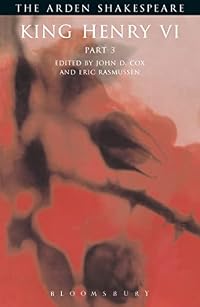
Shakespeare - [King Henry VI part 3 (Arden Shakespeare)]
BBC television Shakespeare directed by Jane Howell 1982
The Wars of the Roses in 15th century England saw the end of chivalry. It was a prolonged, bitter and nasty war among the nobility who were intent in securing the kingship of the country. With the crown came power. prestige and the wherewithal to enrich their families. In the century before particularly in the wars with France it was the ordinary foot soldiers who paid the price with their lives: the nobility could reasonably be assured that capture on the battlefield would mean the payment of a ransom and return to their family. This was not the case during the reign of Henry VI where the prize was the elimination of all show more family representatives, the foot soldiers still paid with their lives but now the nobility could expect no mercy from the victors, they would be sought out and murdered perhaps with their decapitated heads displayed on the city gates. Shakespeare in his play Henry VI part 3 captures the savagery and intensity of perhaps the most barbaric struggle for power in Englands history.
The play opens on the battlefield with the House of York the victors at the battle of St Albans. The Duke of York and his three sons Edward, George and Richard rush to the throne room in London and the Duke lays claim to the crown supported by the kingmaker the Earl of Warwick and his soldiers. King Henry VI (house of Lancaster) enters and is forced to accept that he can only keep his crown during his lifetime as it will then pass to the House of York. The kings wife Margaret of Anjou is incensed by the agreement that will disinherit her son and gives her husband the full invective:
Enforc't thee? Art thou King, and wilt be forc't?
I shame to heare thee speake: ah timorous Wretch,
Thou hast undone thy selfe, thy Sonne, and me,...........
What is it, but to make thy Sepulcher,
And creepe into it farre before thy time?.................
And seeing thou do'st, I here divorce my selfe,
Both from thy Table Henry, and thy Bed,.............
Margaret takes charge of the King's soldiers and declares war on the House of York supported by Clifford who is out for revenge for the death of his father. Margaret Attacks York's castle and Clifford murders Yorks 12 year old son Rutland. York is captured and Margaret mocks him about the murder of his son before she and Clifford both stab York to death and display his head above the city gates. The house of Lancaster are triumphant and Henry VI is restored as king. The three York brothers regroup and with Warwicks support take on the Lancastrians at the battle of Towton. The savagery continues Clifford is found by the York brothers on the battlefield and he is dying from his wounds, they mock his dead body and will display his head on the city gates. The Yorkists are victorious and Edward is crowned king, but brother Richard is already scheming to murder all those people ahead of him in his path to the throne
And yet I know not how to get the Crowne,
For many Lives stand betweene me and home:
And I, like one lost in a Thornie Wood,
That rents the Thornes, and is rent with the Thornes,
Seeking a way, and straying from the way,
Not knowing how to finde the open Ayre,
But toyling desperately to finde it out,
Torment my selfe, to catch the English Crowne:
And from that torment I will free my selfe,
Or hew my way out with a bloody Axe.
Why I can smile, and murther whiles I smile,
And cry, Content, to that which grieves my Heart,
And wet my Cheekes with artificiall Teares,
And frame my Face to all occasions.
Warwick suggests that Edward should seal his crown by an alliance with Lewis King of France and goes to France to to make a match with Lewis's sister Lady Bona. However the lustful Edward has married Lady Jane Grey in the meantime and Warwick feels dishonoured as the news comes while he is negotiating with the king of France. He changes sides and supports Margaret who is trying to raise another army, and Edwards second brother George also swops sides. Warwick with french reinforcements captures King Edward, however he later escapes and when his brother George changes sides again the York brothers are victorious. Margaret is brought before the brothers and after her teenage son goads the brothers they all stab him in turn in front of his mother. Richard slips away to confront and finally kill Henry so putting in place his scheme to be king.
Shakespeare conflates the history and the many battles of the wars of the Roses to make his play work as one continuous narrative. In doing this he creates an all action performance on stage with hardly a breathe between one battle starting and another finishing, however he does make some contrasting quieter interludes with the saint-like king Henry trying to act as a peacemaker and then just wanting to be left in peace himself. There is no time for much comedy.
The play is notable for Shakespeares creation of two contrasting male characters the mild peacemaker King Henry VI and the Machiavellian crooked backed Richard who is hacking his way to become King Richard III. Both make fine speeches throughout, but both are in danger of being eclipsed by the warlike female character of Queen Margaret. In this play all the female characters are strong: Lady Jane Grey negotiates with the haughty King Edward the price of her marriage bed will be no less than being made Queen and Lady Bona is suitably dismissive when she realises she has been jilted by Edward.
Themes explored by Shakespeare are undoubtably revenge and power. Clifford is the epitome of a man out for revenge at any cost, his barbarism is made to look like it ups the anti on all the action that follows. His cold blooded murder of Rutland despite the boy pleading for his life means that there is no longer any chance of a reconciliation between the two houses.
Clifford:
The sight of any of the House of Yorke,
Is as a furie to torment my Soule:
And till I root out their accursed Line,
And leave not one alive, I live in Hell.
The language is full of hate and Margarets cruel taunting of the wounded Duke of York brings from him a speech that typifies the animal imagery in use throughout the play
Shee-Wolfe of France,
But worse then Wolves of France,
Whose Tongue more poysons then the Adders Tooth:
How ill-beseeming is it in thy Sex,
To triumph like an Amazonian Trull,
Vpon their Woes, whom Fortune captivates?
But that thy Face is Vizard-like, unchanging,
Made impudent with use of evill deedes.
I would assay, prowd Queene, to make thee blush.
To tell thee whence thou cam'st, of whom deriv'd,
Were shame enough, to shame thee,
Wert thou not shamelesse.,
Family loyalty is another theme, but it is under threat in this play. Richard's scheming, George's changing sides and then back again. Margaret's strong denouncement of her husband king and finally wind-changing Warwick who dies in the mayhem along with his brother who he has recruited for the wars. Another feature of the play is the power of words and the power of speech making. Characters are allowed to rail against each other, but it can end in their death, for example the goading of the York brothers by young prince Edward. However there are instances in the play where characters are not allowed to speak, not allowed to plea for mercy and in Henry's case not allowed to make a case for peace.
The BBC television production directed by Howell is excellent in bringing out the narrative drive of the story. She uses the same actors as in part 2 and this helps to show their development through the story. King Henry is still the same mild mannered slightly effeminate king, but in part 3 there is not the same religious fervour as the earlier play. Margaret of course comes into her own as the warrior queen and Edward becomes the haughty monarch and Richard the malevolent schemer. The production also brings out other aspects of the play; the drama in the French court when Margaret and Warwick are pleading for support and then the tables are turned by a messenger who arrives with the news of Edwards marriage. Also the court of the newly crowned King Edward that looks like a rough tavern where the brothers celebrate their victory and the arrival of Lady Jane Grey who enters the loins den and leaves as a queen.
An early play by Shakespeare that I thoroughly enjoyed. Full of admiration of the way he picked out a narrative from the confusion of the events and battle scenes that were the Wars of the Roses that he found in his source documents. The play also features perhaps his strongest and certainly his most war-like female character in Margaret. It has a different atmosphere to the preceding part two which was full of magic and dark scheming; in part 3 it is naked aggression, the survival of the fittest and the descent into barbarism. 5 stars. show less
BBC television Shakespeare directed by Jane Howell 1982
The Wars of the Roses in 15th century England saw the end of chivalry. It was a prolonged, bitter and nasty war among the nobility who were intent in securing the kingship of the country. With the crown came power. prestige and the wherewithal to enrich their families. In the century before particularly in the wars with France it was the ordinary foot soldiers who paid the price with their lives: the nobility could reasonably be assured that capture on the battlefield would mean the payment of a ransom and return to their family. This was not the case during the reign of Henry VI where the prize was the elimination of all show more family representatives, the foot soldiers still paid with their lives but now the nobility could expect no mercy from the victors, they would be sought out and murdered perhaps with their decapitated heads displayed on the city gates. Shakespeare in his play Henry VI part 3 captures the savagery and intensity of perhaps the most barbaric struggle for power in Englands history.
The play opens on the battlefield with the House of York the victors at the battle of St Albans. The Duke of York and his three sons Edward, George and Richard rush to the throne room in London and the Duke lays claim to the crown supported by the kingmaker the Earl of Warwick and his soldiers. King Henry VI (house of Lancaster) enters and is forced to accept that he can only keep his crown during his lifetime as it will then pass to the House of York. The kings wife Margaret of Anjou is incensed by the agreement that will disinherit her son and gives her husband the full invective:
Enforc't thee? Art thou King, and wilt be forc't?
I shame to heare thee speake: ah timorous Wretch,
Thou hast undone thy selfe, thy Sonne, and me,...........
What is it, but to make thy Sepulcher,
And creepe into it farre before thy time?.................
And seeing thou do'st, I here divorce my selfe,
Both from thy Table Henry, and thy Bed,.............
Margaret takes charge of the King's soldiers and declares war on the House of York supported by Clifford who is out for revenge for the death of his father. Margaret Attacks York's castle and Clifford murders Yorks 12 year old son Rutland. York is captured and Margaret mocks him about the murder of his son before she and Clifford both stab York to death and display his head above the city gates. The house of Lancaster are triumphant and Henry VI is restored as king. The three York brothers regroup and with Warwicks support take on the Lancastrians at the battle of Towton. The savagery continues Clifford is found by the York brothers on the battlefield and he is dying from his wounds, they mock his dead body and will display his head on the city gates. The Yorkists are victorious and Edward is crowned king, but brother Richard is already scheming to murder all those people ahead of him in his path to the throne
And yet I know not how to get the Crowne,
For many Lives stand betweene me and home:
And I, like one lost in a Thornie Wood,
That rents the Thornes, and is rent with the Thornes,
Seeking a way, and straying from the way,
Not knowing how to finde the open Ayre,
But toyling desperately to finde it out,
Torment my selfe, to catch the English Crowne:
And from that torment I will free my selfe,
Or hew my way out with a bloody Axe.
Why I can smile, and murther whiles I smile,
And cry, Content, to that which grieves my Heart,
And wet my Cheekes with artificiall Teares,
And frame my Face to all occasions.
Warwick suggests that Edward should seal his crown by an alliance with Lewis King of France and goes to France to to make a match with Lewis's sister Lady Bona. However the lustful Edward has married Lady Jane Grey in the meantime and Warwick feels dishonoured as the news comes while he is negotiating with the king of France. He changes sides and supports Margaret who is trying to raise another army, and Edwards second brother George also swops sides. Warwick with french reinforcements captures King Edward, however he later escapes and when his brother George changes sides again the York brothers are victorious. Margaret is brought before the brothers and after her teenage son goads the brothers they all stab him in turn in front of his mother. Richard slips away to confront and finally kill Henry so putting in place his scheme to be king.
Shakespeare conflates the history and the many battles of the wars of the Roses to make his play work as one continuous narrative. In doing this he creates an all action performance on stage with hardly a breathe between one battle starting and another finishing, however he does make some contrasting quieter interludes with the saint-like king Henry trying to act as a peacemaker and then just wanting to be left in peace himself. There is no time for much comedy.
The play is notable for Shakespeares creation of two contrasting male characters the mild peacemaker King Henry VI and the Machiavellian crooked backed Richard who is hacking his way to become King Richard III. Both make fine speeches throughout, but both are in danger of being eclipsed by the warlike female character of Queen Margaret. In this play all the female characters are strong: Lady Jane Grey negotiates with the haughty King Edward the price of her marriage bed will be no less than being made Queen and Lady Bona is suitably dismissive when she realises she has been jilted by Edward.
Themes explored by Shakespeare are undoubtably revenge and power. Clifford is the epitome of a man out for revenge at any cost, his barbarism is made to look like it ups the anti on all the action that follows. His cold blooded murder of Rutland despite the boy pleading for his life means that there is no longer any chance of a reconciliation between the two houses.
Clifford:
The sight of any of the House of Yorke,
Is as a furie to torment my Soule:
And till I root out their accursed Line,
And leave not one alive, I live in Hell.
The language is full of hate and Margarets cruel taunting of the wounded Duke of York brings from him a speech that typifies the animal imagery in use throughout the play
Shee-Wolfe of France,
But worse then Wolves of France,
Whose Tongue more poysons then the Adders Tooth:
How ill-beseeming is it in thy Sex,
To triumph like an Amazonian Trull,
Vpon their Woes, whom Fortune captivates?
But that thy Face is Vizard-like, unchanging,
Made impudent with use of evill deedes.
I would assay, prowd Queene, to make thee blush.
To tell thee whence thou cam'st, of whom deriv'd,
Were shame enough, to shame thee,
Wert thou not shamelesse.,
Family loyalty is another theme, but it is under threat in this play. Richard's scheming, George's changing sides and then back again. Margaret's strong denouncement of her husband king and finally wind-changing Warwick who dies in the mayhem along with his brother who he has recruited for the wars. Another feature of the play is the power of words and the power of speech making. Characters are allowed to rail against each other, but it can end in their death, for example the goading of the York brothers by young prince Edward. However there are instances in the play where characters are not allowed to speak, not allowed to plea for mercy and in Henry's case not allowed to make a case for peace.
The BBC television production directed by Howell is excellent in bringing out the narrative drive of the story. She uses the same actors as in part 2 and this helps to show their development through the story. King Henry is still the same mild mannered slightly effeminate king, but in part 3 there is not the same religious fervour as the earlier play. Margaret of course comes into her own as the warrior queen and Edward becomes the haughty monarch and Richard the malevolent schemer. The production also brings out other aspects of the play; the drama in the French court when Margaret and Warwick are pleading for support and then the tables are turned by a messenger who arrives with the news of Edwards marriage. Also the court of the newly crowned King Edward that looks like a rough tavern where the brothers celebrate their victory and the arrival of Lady Jane Grey who enters the loins den and leaves as a queen.
An early play by Shakespeare that I thoroughly enjoyed. Full of admiration of the way he picked out a narrative from the confusion of the events and battle scenes that were the Wars of the Roses that he found in his source documents. The play also features perhaps his strongest and certainly his most war-like female character in Margaret. It has a different atmosphere to the preceding part two which was full of magic and dark scheming; in part 3 it is naked aggression, the survival of the fittest and the descent into barbarism. 5 stars. show less
A truly brilliant bit of writing, particularly for Shakespeare's earlier years. Parts I and II were almost worth sitting through to get to it. Now York's sons are players -- Edward, Rutland, George and the poor maligned Richard. Margaret of Anjou is a poisonous presence, Henry VI fades into the woodwork and treachery and murder abound. York's death speech, complete with paper crown, is brilliant. Warwick and George are constantly changing loyalties and Richard begins the scheming that will blossom into out-and-out villainy in his own play.
Members
- Recently Added By
Lists

Favorite Shakespeare plays?
37 works; 44 members

Vivat Rex
13 works; 1 member

Plays I Like
230 works; 31 members
Stage Plays/Screenplays/Dialogues/Anything Dialogue-Storytelling Related
81 works; 2 members

Greatest Books, allegedly
484 works; 9 members
Essential/Recognized Stage Plays
115 works; 4 members

'Books You Can't Live Without: The Top 100', The Guardian, 2007
156 works; 7 members
Author Information

5,908+ Works 439,670 Members
William Shakespeare, 1564 - 1616 Although there are many myths and mysteries surrounding William Shakespeare, a great deal is actually known about his life. He was born in Stratford-Upon-Avon, son of John Shakespeare, a prosperous merchant and local politician and Mary Arden, who had the wealth to send their oldest son to Stratford Grammar School. show more At 18, Shakespeare married Anne Hathaway, the 27-year-old daughter of a local farmer, and they had their first daughter six months later. He probably developed an interest in theatre by watching plays performed by traveling players in Stratford while still in his youth. Some time before 1592, he left his family to take up residence in London, where he began acting and writing plays and poetry. By 1594 Shakespeare had become a member and part owner of an acting company called The Lord Chamberlain's Men, where he soon became the company's principal playwright. His plays enjoyed great popularity and high critical acclaim in the newly built Globe Theatre. It was through his popularity that the troupe gained the attention of the new king, James I, who appointed them the King's Players in 1603. Before retiring to Stratford in 1613, after the Globe burned down, he wrote more than three dozen plays (that we are sure of) and more than 150 sonnets. He was celebrated by Ben Jonson, one of the leading playwrights of the day, as a writer who would be "not for an age, but for all time," a prediction that has proved to be true. Today, Shakespeare towers over all other English writers and has few rivals in any language. His genius and creativity continue to astound scholars, and his plays continue to delight audiences. Many have served as the basis for operas, ballets, musical compositions, and films. While Jonson and other writers labored over their plays, Shakespeare seems to have had the ability to turn out work of exceptionally high caliber at an amazing speed. At the height of his career, he wrote an average of two plays a year as well as dozens of poems, songs, and possibly even verses for tombstones and heraldic shields, all while he continued to act in the plays performed by the Lord Chamberlain's Men. This staggering output is even more impressive when one considers its variety. Except for the English history plays, he never wrote the same kind of play twice. He seems to have had a good deal of fun in trying his hand at every kind of play. Shakespeare wrote 154 sonnets, all published on 1609, most of which were dedicated to his patron Henry Wriothsley, The Earl of Southhampton. He also wrote 13 comedies, 13 histories, 6 tragedies, and 4 tragecomedies. He died at Stratford-upon-Avon April 23, 1616, and was buried two days later on the grounds of Holy Trinity Church in Stratford. His cause of death was unknown, but it is surmised that he knew he was dying. (Bowker Author Biography) show less
Some Editions
Series


Belongs to Publisher Series
Work Relationships
Is contained in
The complete works of William Shakespeare : reprinted from the First Folio (volume 8 of 13) by William Shakespeare
Has the adaptation
Was inspired by
Has as a supplement
Has as a student's study guide
Common Knowledge
- Canonical title
- Henry VI, Part 3
- Original title
- The Third Part of Henry the Sixth
- Original publication date
- 1594 (Octavo) (Octavo)
- People/Characters
- Henry VI, King of England; Edward, Prince of Wales, son of Henry VI; Margaret of Anjou; Elizabeth Woodville, Queen Consort of England; Bona of Savoy; Louis XI, King of France (show all 30); Edmund Beaufort, Duke of Somerset; Henry Holland, Duke of Exeter; John de Vere, 13th Earl of Oxford; Henry Percy, 3rd earl of Northumberland; Ralph Neville, 1st Earl of Westmoreland; Lord Clifford; Richard Plantagenet, 3rd Duke of York; Edward IV, King of England; Edmund, Earl of Rutland; George, Duke of Clarence; Richard III, King of England; John Mowbray, Duke of Norfolk; John Neville, Marquis of Montague; Richard Neville, 16th Earl of Warwick (Warwick the Kingmaker); William Herbert, 3rd Earl of Pembroke; William, Lord Hastings; Lord Stafford; Anthony Woodville, Earl Rivers; Sir Hugh Mortimer; Sir John Mortimer; Henry VII, King of England (earl of Richmond); Sir William Stanley; Sir John Montgomery; Sir John Somerville
- Important events
- Wars of the Roses (1455 | 1485); 15th century; Middle Ages
- First words
- I wonder how the king escaped our hands.
- Last words
- (Click to show. Warning: May contain spoilers.)Sound drums and trumpets! farewell sour annoy!
For here, I hope, begins our lasting joy. - Original language
- English
Classifications
Statistics
- Members
- 1,029
- Popularity
- 25,010
- Reviews
- 23
- Rating
- (3.69)
- Languages
- 15 — Catalan, English, English (Middle), Finnish, French, German, Hungarian, Italian, Norwegian (Bokmål), Norwegian, Polish, Portuguese, Spanish, Swedish, Turkish
- Media
- Paper, Audiobook, Ebook
- ISBNs
- 102
- UPCs
- 3
- ASINs
- 45