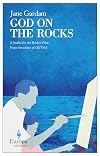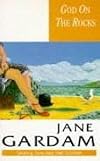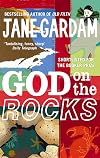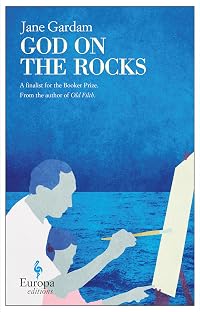
God on the Rocks
by Jane Gardam
On This Page
Description
Originally published in Great Britain in 1978, the novel describes Margaret Marsh's coming of age one summer between the world wars. Caught in the backwash of a fervently religious father, a mother bitterly nostalgic for what might have been, the tea and sympathy of some thoroughly secular neighbors and the bawdy jokes of her nanny Lydia, Margaret's world hurtles towards a shattering moment of truth. Drama, tragedy and a touch of farce lend themselves to Gardam's typically eloquent prose. show more With subtlety and precision, God on the Rocks provides an intimate portrait of the tensions that divide men and women, present and past, and the love and sorrow that lingers throughout. --From publisher description. show lessTags
Recommendations

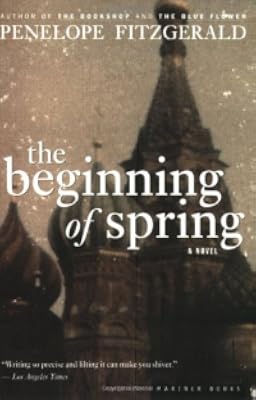
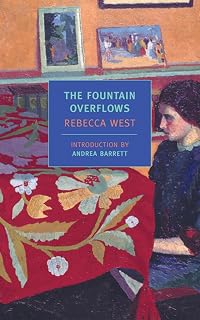
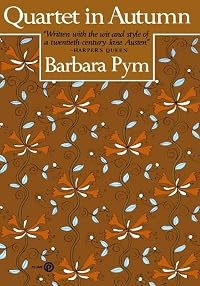
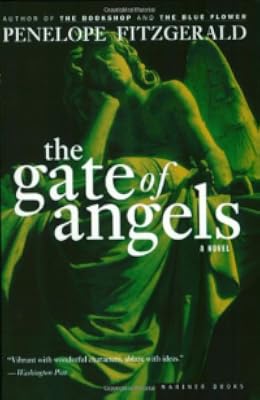












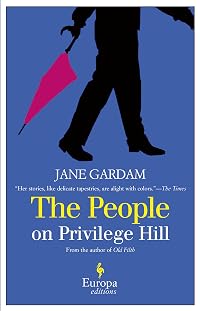
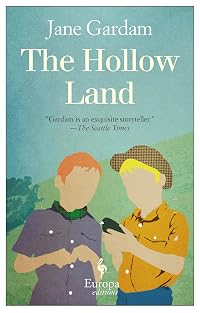

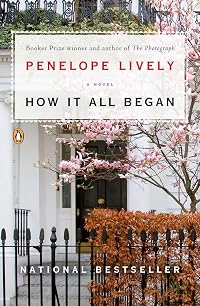

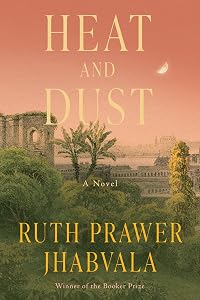







Member Recommendations
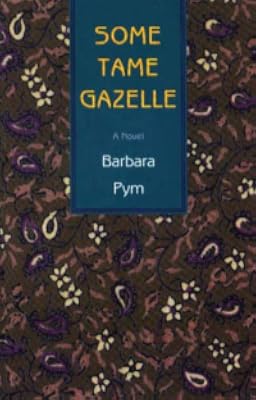
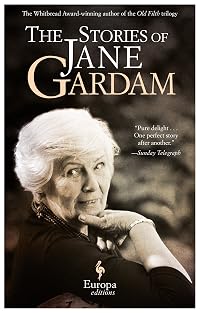
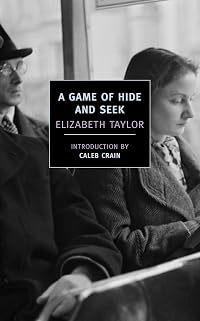
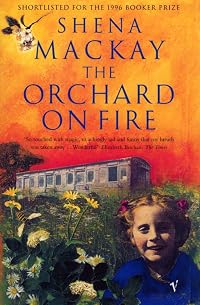
lahochstetler Two books set in the English countryside, both about the bizarre side of human behavior.
Member Reviews
First line: Because the baby had come, special attention had to be given to Margaret, who was eight.
Precocious, wise, and innocent, Margaret is allowed to go out on Wednesday afternoons with the maid, Lydia. Her forays into the wider world, away from her severely religious father and acquiescent mother, mark the beginning of the end of her childhood. Over the course of the summer, Margaret sees things she doesn't understand, but which she knows are not right. As she struggles to make sense of this baffling adult world, she impacts those around her in unintended ways.
Like Gardam's novel Crusoe's Daughter, God on the Rocks deals with themes of loss, lonely children, women chaffing at narrow, prescribed lives, the role of religion in show more controlling women, and the sea as both solace and danger. Gardam's writing is honest and unflinching with as little frivolity as the world she depicts. Although rarely happy, her characters feel fully formed and real. Meticulous in her descriptions, each detail adds to the larger image, as a brushstroke in a painting. Nothing is superfluous. I love opening a Gardam book and knowing exactly the sort of reading experience I have ahead of me. show less
Precocious, wise, and innocent, Margaret is allowed to go out on Wednesday afternoons with the maid, Lydia. Her forays into the wider world, away from her severely religious father and acquiescent mother, mark the beginning of the end of her childhood. Over the course of the summer, Margaret sees things she doesn't understand, but which she knows are not right. As she struggles to make sense of this baffling adult world, she impacts those around her in unintended ways.
Like Gardam's novel Crusoe's Daughter, God on the Rocks deals with themes of loss, lonely children, women chaffing at narrow, prescribed lives, the role of religion in show more controlling women, and the sea as both solace and danger. Gardam's writing is honest and unflinching with as little frivolity as the world she depicts. Although rarely happy, her characters feel fully formed and real. Meticulous in her descriptions, each detail adds to the larger image, as a brushstroke in a painting. Nothing is superfluous. I love opening a Gardam book and knowing exactly the sort of reading experience I have ahead of me. show less
Strange but quite compelling read, set in a 1930s seaside town, where eight-year old Margaret, child of Primal Saints parents, is taken out by the unsuitable maid, Lydia. She sees a different world, with Lydia's liaisons with a man; meanwhile her mother imagines the path her life could have taken with an old flame (who has just returned to town), and her father is starting to see Lydia as more than just a soul to be saved...
The writing is extremely funny at times: "It was brawn and shape for tea." but also has a sadness at the way life turns out. Put me somehow in mind of Beryl Bainbridge's writing.
The writing is extremely funny at times: "It was brawn and shape for tea." but also has a sadness at the way life turns out. Put me somehow in mind of Beryl Bainbridge's writing.
Margaret, a precocious 8-year-old with an adventurous spirit, lives with her odd, fundamentalist Christian parents in a sleepy, seaside English town. A series of events occur around Margaret – including the sudden appearance of her mother’s childhood friends - that bring together a web of people who share a complicated and painful past.
Part comedy, with a bit of tragedy thrown in, the novel examines the toxic effects of longing, stubbornness, and regret, and how people are kept apart and made miserable for the silliest of reasons. It also explores the stock situation of rich-boy-not-allowed-to-marry-his poor-love-due-to-evil-mother without coming across as tired or cliché.
I have absolutely no idea why it’s never occurred to me show more to read a Jane Gardam novel until this week. Good grief. This is warm, witty, quirky, touching, and wonderful. The writing is excellent and the characters are vivid and rich. It’s ridiculously delightful. I love it. show less
Part comedy, with a bit of tragedy thrown in, the novel examines the toxic effects of longing, stubbornness, and regret, and how people are kept apart and made miserable for the silliest of reasons. It also explores the stock situation of rich-boy-not-allowed-to-marry-his poor-love-due-to-evil-mother without coming across as tired or cliché.
I have absolutely no idea why it’s never occurred to me show more to read a Jane Gardam novel until this week. Good grief. This is warm, witty, quirky, touching, and wonderful. The writing is excellent and the characters are vivid and rich. It’s ridiculously delightful. I love it. show less
The qualities that I love about Gardam's books, particularly her earlier ones are those I associate with my favourite early twentieth century writers such as Barbara Pym or Elizabeth Taylor. She can appear to do (deceptively) light and comical whilst also revealing emotion and depth of character.
God on the Rocks had a particularly vintage feel as it is set in the 1930s although it was first published in 1978. Maybe because of her affinity with 1930s writers, the period feel is utterly convincing. The characters eat brawn and shape for high tea ("the brawn was glossy and the shape was matt. Otherwise there was little between them and they were both pale brown"). Only towards the end when things became a little farcical with a married show more woman accidently losing her clothes in the house of a childhood sweetheart, did I think, maybe we are in the 1970s after all!
We are introduced to the story through intelligent, eight year old Margaret who has been brought up a strictly religious father and a mild, accomodating mother. When her mother has a new baby, Lydia the vivacious maid is encouraged to take Margaret for afternoons out. This leads to new characters entering her world such as as painter Drinkwater and Cambridge graduates Binky and Charles. Margaret starts to see the world as something different but can't quite make sense of the new things she hears and the odd relationships between those around her.
As the book develops, the reader learns more about these characters who tend to be delightfully unpredictable yet wholly believable. Events are eventually resolved in a satisfying ending which is almost an epilogue where we find out what ultimately happened to whom! show less
God on the Rocks had a particularly vintage feel as it is set in the 1930s although it was first published in 1978. Maybe because of her affinity with 1930s writers, the period feel is utterly convincing. The characters eat brawn and shape for high tea ("the brawn was glossy and the shape was matt. Otherwise there was little between them and they were both pale brown"). Only towards the end when things became a little farcical with a married show more woman accidently losing her clothes in the house of a childhood sweetheart, did I think, maybe we are in the 1970s after all!
We are introduced to the story through intelligent, eight year old Margaret who has been brought up a strictly religious father and a mild, accomodating mother. When her mother has a new baby, Lydia the vivacious maid is encouraged to take Margaret for afternoons out. This leads to new characters entering her world such as as painter Drinkwater and Cambridge graduates Binky and Charles. Margaret starts to see the world as something different but can't quite make sense of the new things she hears and the odd relationships between those around her.
As the book develops, the reader learns more about these characters who tend to be delightfully unpredictable yet wholly believable. Events are eventually resolved in a satisfying ending which is almost an epilogue where we find out what ultimately happened to whom! show less
Written in the 1970s but set forty years earlier, this is one of those quiet, revelatory novels of family secrets and childhood understanding whose sensitivity to melancholy seems so well-suited to that period in Britain between the wars.
It's a lovely novel. Though no passages of writing leapt out at me, I'm left with a strong jumble of impressions of English seaside towns, men picking through the surf with trouser-legs rolled up and knotted handkerchiefs on their head, a heavy sense of memory and lost opportunities, a productive opposition between dogmatic religious fervour and a joyous, fleshy sexuality.
Except for the charming and serious eight-year-old, Margaret, most of the people in here are obsessed with choices they made years show more before, looking back variously to spoiled romances, to the first War, to when they still had money, to before dementia set in. This sense of looking back is reinforced by an epilogue set after 1945, and the effect is to make all the characters seem clear but also somehow indistinct, impressionistically blurred by memory. They are not unlike figures in a Renoir painting, one of which – perhaps this one – plays a small, pivotal role in the story. Gardam seems like a wise and generous storyteller and I will definitely read more of her. show less
It's a lovely novel. Though no passages of writing leapt out at me, I'm left with a strong jumble of impressions of English seaside towns, men picking through the surf with trouser-legs rolled up and knotted handkerchiefs on their head, a heavy sense of memory and lost opportunities, a productive opposition between dogmatic religious fervour and a joyous, fleshy sexuality.
Except for the charming and serious eight-year-old, Margaret, most of the people in here are obsessed with choices they made years show more before, looking back variously to spoiled romances, to the first War, to when they still had money, to before dementia set in. This sense of looking back is reinforced by an epilogue set after 1945, and the effect is to make all the characters seem clear but also somehow indistinct, impressionistically blurred by memory. They are not unlike figures in a Renoir painting, one of which – perhaps this one – plays a small, pivotal role in the story. Gardam seems like a wise and generous storyteller and I will definitely read more of her. show less
Not quite as good as "Old Filth," which is the only other book by Gardam I've read to date (although I will surely read the rest). But then again, "Old Filth" is a very hard act to follow and "God on the Rocks", for all it was shortlisted for the Booker back in 1978, was (I think) Gardam's first.
In this novel, Gardam's humor is by turns scathing and sweet and surprising. Her characters are marvels of three-dimensional creation. Here, between the two World Wars, we have quiet, self-contained, old-before-her-years Margaret, growing up in an alarmingly religious household with her mother Ellie, who has just had another child, and her father, Kenneth, Pastor of an evangelical church. Enter stage left -- Lydia, a somewhat blowsy, vulgar and show more undeniably alluring 'maid'. Lydia and Margaret go on day trips, where the world becomes far more complicated than Margaret had imagined up until this point: they visit a lunatic asylum, wherein lives an old lady with many secrets and a painter who paints, among other things, quite a lot of snakes.
Lydia evokes all sorts of emotions, not least of them from pious Kenneth. Ellie, in turn, revives a friendship with a long-lost love, the estranged son of the lady in the asylum. In other words, everyone's life gets a good shaking up, resulting in a rocky cliff of disillusion, which echoes the title -- God on the Rocks.
Gardam uses a complicated omniscient point of view in this work -- multiple voices and multiple time frames, and if she doesn't quite pull it off on every page, she comes close enough for it not to matter. You have to pay attention when you read Gardam, so as not to miss anything, and the effort is well rewarded. Highly recommended. show less
In this novel, Gardam's humor is by turns scathing and sweet and surprising. Her characters are marvels of three-dimensional creation. Here, between the two World Wars, we have quiet, self-contained, old-before-her-years Margaret, growing up in an alarmingly religious household with her mother Ellie, who has just had another child, and her father, Kenneth, Pastor of an evangelical church. Enter stage left -- Lydia, a somewhat blowsy, vulgar and show more undeniably alluring 'maid'. Lydia and Margaret go on day trips, where the world becomes far more complicated than Margaret had imagined up until this point: they visit a lunatic asylum, wherein lives an old lady with many secrets and a painter who paints, among other things, quite a lot of snakes.
Lydia evokes all sorts of emotions, not least of them from pious Kenneth. Ellie, in turn, revives a friendship with a long-lost love, the estranged son of the lady in the asylum. In other words, everyone's life gets a good shaking up, resulting in a rocky cliff of disillusion, which echoes the title -- God on the Rocks.
Gardam uses a complicated omniscient point of view in this work -- multiple voices and multiple time frames, and if she doesn't quite pull it off on every page, she comes close enough for it not to matter. You have to pay attention when you read Gardam, so as not to miss anything, and the effort is well rewarded. Highly recommended. show less
In God on the Rocks bit by vague bit the reader slowly learns more about the relationships, especially between the members of two families within a English seaside town, until it all becomes clear in the end, with a few surprises thrown in for delectable measure. Gardam's prose is limpid, never fussy or overwrought. The dialogue is at times maddeningly, tantalizingly evasive and vague.
Most of the this summer world is viewed through the lens of an eight year old girl, Margaret, whose father insists on a rigidly religious household. Margaret's mother, a fanciful woman, tries to maintain the proprieties expected of the her banker-cum-charismatic-preacher husband, while Margaret at once chaffs at her father's teachings and proselytizes of show more her own accord. She is certainly a child who often "gets beyond herself" in her vexation with the seemingly queer ideas of adults. However, our omniscient narrator will sometimes shift her focus to other characters such as Margaret's mother Elinor. With these shifts much of that which has only been half understood begins to become clearer.
With the introduction of a voluptuous maid, a new baby in the household, and the return of Elinor's childhood friends to the area, family bonds are stretched to a breaking point.
God on the Rocks is a well paced book full of odd types and underlying mysteries of love, acceptance and change. show less
Most of the this summer world is viewed through the lens of an eight year old girl, Margaret, whose father insists on a rigidly religious household. Margaret's mother, a fanciful woman, tries to maintain the proprieties expected of the her banker-cum-charismatic-preacher husband, while Margaret at once chaffs at her father's teachings and proselytizes of show more her own accord. She is certainly a child who often "gets beyond herself" in her vexation with the seemingly queer ideas of adults. However, our omniscient narrator will sometimes shift her focus to other characters such as Margaret's mother Elinor. With these shifts much of that which has only been half understood begins to become clearer.
With the introduction of a voluptuous maid, a new baby in the household, and the return of Elinor's childhood friends to the area, family bonds are stretched to a breaking point.
God on the Rocks is a well paced book full of odd types and underlying mysteries of love, acceptance and change. show less
Members
- Recently Added By
Lists

Favourite Booker Prize contenders
73 works; 21 members
Booker Prize
491 works; 62 members

Europa, Europa!
13 works; 3 members

Best books read in 2011
200 works; 51 members

Man Booker Prize Longlist 1978
6 works; 2 members

Booker Prize Shortlist: Titles Not Yet Read
161 works; 4 members

Spiritual: Fiction
13 works; 1 member
Author Information

36+ Works 8,919 Members
Jane Gardam was born in North Yorkshire, England in 1928. She is the author of many children's novels that include "A Long Way from Verona" (1971). She has also written novels and collections of stories for adults that include "God on the Rocks" (1978), "Bilgewater and the Pangs of Love and Other Stories" (1983) and "The Summer After the Funeral." show more Her book "Groundlings" was taken from "Showing the Flag and Other Stories" (1989). Gardam's novels and stories have received many literary prizes. (Bowker Author Biography) show less
Some Editions
Awards and Honors
Awards
Common Knowledge
- Canonical title*
- Dieu par dessus bord
- Original title
- God on the Rocks
- Original publication date
- 1978
- People/Characters
- Margaret Marsh; Elinor Marsh; Mr Marsh; Charles Frayling; Binkie Frayling; Lydia
- Important places
- England, UK
- Dedication
- For Paul Scott, in grateful memory
- First words
- Because the baby had come, special attention had to be given to Margaret, who was eight.
- Quotations
- Still and quiet and almost looking flimsily aged at ten years old she had loved him and he had the blessing of having someone it was quite safe to hurt.
- Last words
- (Click to show. Warning: May contain spoilers.)"Oh, our Margaret, but I have," said Lydia, "I were bloody daft them days."
- Original language
- English
*Some information comes from Common Knowledge in other languages. Click "Edit" for more information.
Classifications
Statistics
- Members
- 478
- Popularity
- 63,598
- Reviews
- 28
- Rating
- (3.72)
- Languages
- 5 — Dutch, English, French, German, Greek
- Media
- Paper, Audiobook, Ebook
- ISBNs
- 16
- ASINs
- 8