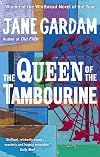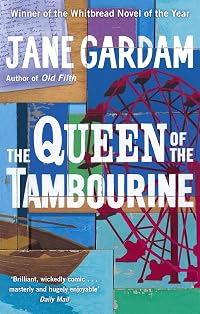
The Queen of the Tambourine
by Jane Gardam
On This Page
Description
With prose that is vibrant and witty, The Queen of the Tambourine traces the emotional breakdown-and eventual restoration-of Eliza Peabody, a smart and wildly imaginative woman who has become unbearably isolated in her prosperous London neighborhood. The letters Eliza writes to her neighbor, a woman whom she hardly knows, reveal her self-propelled descent into madness. Eliza must reach the depths of her downward spiral before she can once again find health and serenity. This story of a show more woman's confrontation with the realities of sanity will delight readers who enjoy the works of Anita Brookner, Sybille Bedford, Muriel Spark, and Sylvia Plath. show lessTags
Recommendations













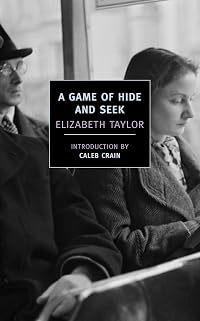
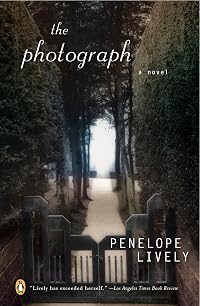

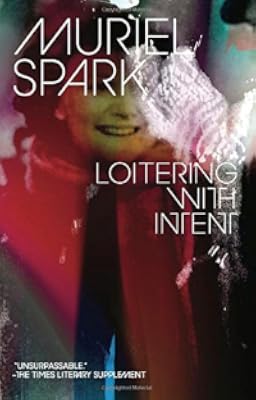
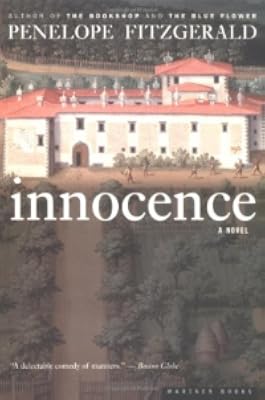



Member Recommendations

Member Reviews
The Queen of the Tambourine --- Jane Gardam
Jane Gardam is a writer whose prose will spoil you for lesser writers. No words are gratuitous, everything that is said is there for a reason, whether to create an immediate and specific effect or to plant a seed which, if the reader is closely attentive, will bear fruit at some point in the novel. I discovered Gardam’s award-winning book for children, The Hollow Land, in a graduate children’s literature seminar and have looked for her books in second hand and new shops ever since. In the wonderful Powell’s in Portland last March I found a copy of The Summer of the Maidens, the story of three British young women in 1945 England as they have graduated from school and are ready for their show more adult lives. While one must surmise that Gardam identifies most closely with the academic Letty, all three are fully drawn characters of their time.
In The Queen of the Tambourine Gardam creates a complex picture of a retired diplomatic wife facing middle age and the loss of meaning from her life. Through a series of notes and then letters ostensibly written to a neighbor in their comfortable London neighborhood the reader experiences Elizabeth’s struggle with existential meaninglessness and a descent into near madness as she explores her past and comes to grips with her present. This is a moving and sometimes very funny portrait of a very real and intelligent woman in the middle of her life, trying to create meaning and purpose as circumstances change. show less
Jane Gardam is a writer whose prose will spoil you for lesser writers. No words are gratuitous, everything that is said is there for a reason, whether to create an immediate and specific effect or to plant a seed which, if the reader is closely attentive, will bear fruit at some point in the novel. I discovered Gardam’s award-winning book for children, The Hollow Land, in a graduate children’s literature seminar and have looked for her books in second hand and new shops ever since. In the wonderful Powell’s in Portland last March I found a copy of The Summer of the Maidens, the story of three British young women in 1945 England as they have graduated from school and are ready for their show more adult lives. While one must surmise that Gardam identifies most closely with the academic Letty, all three are fully drawn characters of their time.
In The Queen of the Tambourine Gardam creates a complex picture of a retired diplomatic wife facing middle age and the loss of meaning from her life. Through a series of notes and then letters ostensibly written to a neighbor in their comfortable London neighborhood the reader experiences Elizabeth’s struggle with existential meaninglessness and a descent into near madness as she explores her past and comes to grips with her present. This is a moving and sometimes very funny portrait of a very real and intelligent woman in the middle of her life, trying to create meaning and purpose as circumstances change. show less
I am a fan of epistolary novels, especially the ones that take the form of self-revelation (cue We Need to Talk About Kevin). One typically doesn’t expect a story about a “self-propelled descent into madness” to sparkle with sharp observation and sardonic witticism of the type typically found in stories by another favorite British author, Muriel Spark, but Gardam has done just that. Eliza is an interesting subject. A 50-something woman, married to a senior Foreign Office official, living in an affluent South London suburb who fills her otherwise empty days volunteering at the local hospice and walking the family dog on the Commons. Eliza’s letters to Joan – who readers learn has flown the family marriage home for global show more experiences – start out as simple inquiries. As the letters continue, they become more detailed, and increasingly introspective in nature, revealing Eliza’s marriage troubles, her opinions of her neighbours and rather disturbing glimpses into Eliza’s growing erratic personality. Eliza’s heart, for the most part, is in the right place but her mind is proving to be a bit more challenging. The fact that Eliza is an unreliable narrator quickly becomes apparent and it is that unreliability that helps propel this story forward to its suspenseful, poignant conclusion. I can see why this won the 1991 Whitbread Award.
Overall, a fabulous portrait of one woman’s downward spiral of instability. This story is sure to appeal to Muriel Spark fans. show less
Overall, a fabulous portrait of one woman’s downward spiral of instability. This story is sure to appeal to Muriel Spark fans. show less
Jane Gardam takes us inside Eliza's head and into Eliza's world, a world where nothing you read can be taken on face value. At the end I had to re-assess everything I had read in the light of the information in the last few pages. Often painful and sometimes funny, the novel has the right random and wandering quality to convey what Eliza is going through.
A wonderful, wonderful read -- smart, wincing, a surprisingly large scope. Sentence to sentence, one of the best writers I've read. In her artistry and skill reflecting her characters' emotions, on the level of [a:Hillary Mantel|8294944|Hillary Mantel|https://s.gr-assets.com/assets/nophoto/user/u_50x66-a7c55399ea455530473b9f9e4da94c40.png]. This is also fabulous for anyone who loves reading -- or aspires to write -- an epistolary novel. Through her increasingly crazed letters to Joan, Eliza comes out a fascinating, disturbed, hilarious and very, very funny person.
The reviewer before me called this a "modern twist on The Yellow Wallpaper." I see where that came from, but that doesn't describe the book I read. Yes, our dear Eliza has hallucinations, but she isn't trapped anymore than she chooses to be. Perhaps she's mad, but perhaps as one of her neighbors suggest, she has the most annoying type of madness, deliberately chosen madness.
Although I would never want to be Eliza's neighbor, friend, and definitely not her charge, I thoroughly enjoyed seeing the world criticized through her "naive" eyes. She's only as naive as one of Shakespeare's fools. Eliza has traveled the world as a Foreign Service Officer's wife, she's seen political upheaval and poverty, she's done her round of ladies clubs and show more ladies charities, yet she's living in an upscale suburb of England where the world's problems, in theory, don't exist.
Eliza knows better. Her madness tears a little hole in her sheltered road that she lives on, her community called "The Road," so gentrified that it deserves capital letters. As for the people around her? Maybe they need a bit of her madness. show less
Although I would never want to be Eliza's neighbor, friend, and definitely not her charge, I thoroughly enjoyed seeing the world criticized through her "naive" eyes. She's only as naive as one of Shakespeare's fools. Eliza has traveled the world as a Foreign Service Officer's wife, she's seen political upheaval and poverty, she's done her round of ladies clubs and show more ladies charities, yet she's living in an upscale suburb of England where the world's problems, in theory, don't exist.
Eliza knows better. Her madness tears a little hole in her sheltered road that she lives on, her community called "The Road," so gentrified that it deserves capital letters. As for the people around her? Maybe they need a bit of her madness. show less
I hate to give this sparkling novel only three stars, but Gardam loses focus, in my opinion, mirroring the protagonist's scatterbrained state of mind too closely. Gardam's treatment of Eliza's mental illness is gently yet piquantly humorous, completely unsentimental, and often illuminating, but from a third of the way through, many of the letters start to seem random and pointless. The neatly packaged ending is antithetical to the rest of the book which cleverly permits its readers to pick their way through the fog of emotional pathology for themselves.
I can't remember when I last read something that was so funny and so sad at the same time, and not sad in a sentimental way or funny in a slapstick way. A very bittersweet novel, with the emphasis, pleasingly, on the sweet. And deeply compassionate while at the same time managing to poke fun at everyone. Quite a surprise, and now I'm looking forward to the rest of my Gardam reading.
Members
- Recently Added By
Lists

Unreliable Narrators
170 works; 43 members

Books Read in 2023
5,638 works; 147 members

Books Read in 2024
4,727 works; 125 members
Author Information

36+ Works 8,956 Members
Jane Gardam was born in North Yorkshire, England in 1928. She is the author of many children's novels that include "A Long Way from Verona" (1971). She has also written novels and collections of stories for adults that include "God on the Rocks" (1978), "Bilgewater and the Pangs of Love and Other Stories" (1983) and "The Summer After the Funeral." show more Her book "Groundlings" was taken from "Showing the Flag and Other Stories" (1989). Gardam's novels and stories have received many literary prizes. (Bowker Author Biography) show less
Awards and Honors
Awards
Common Knowledge
- Canonical title
- The Queen of the Tambourine
- Original title
- The Queen of the Tambourine
- Original publication date
- 1991
- People/Characters
- Eliza Peabody; Henry Peabody; Joan; Charles; Sarah; Simon
- Important places
- London, England, UK
- Epigraph
- For she's the Queen
Of the Tambourine
The Cymbals and the Bones.
Music Hall Song - Dedication
- For Rhododendria
- First words
- Dear Joan,
I do hope I know you well enough to say this. - Quotations
- Why should I spend hours all by myself in a room writing books just to amuse some people I've never met for a few hours on an aeroplane before they get pulped? I mean the books get pulped. They have a shelf-life of six week... (show all)s most of them and a good thing, too. They're like package puddings. It was in the Guardian. There are dozens of novels spewed forth, most of them tripe and all the poor authors think they've started out on an immortal career. Might as well masturbate.
The old women of the tribe have almost always been the wiser. If they keep their marbles long enough. Old men forget - or tend to reminisce, and reminisce falsely and sententiously as a rule. We are often very sill in our ... (show all)middle years but we tend to improve - as our marriages often do. Women who survive, survive better than men. It's because our lives - our physical lives - are more dramatic. - Last words
- (Click to show. Warning: May contain spoilers.)God bless you for it.
Sincerely yours,
Elizabeth Peabody - Blurbers
- Brookner, Anita
- Original language
- English
Classifications
Statistics
- Members
- 673
- Popularity
- 42,891
- Reviews
- 24
- Rating
- (3.46)
- Languages
- 5 — Dutch, English, French, German, Spanish
- Media
- Paper, Audiobook, Ebook
- ISBNs
- 19
- ASINs
- 10