On This Page
Tags
Recommendations























Member Reviews
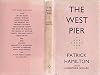
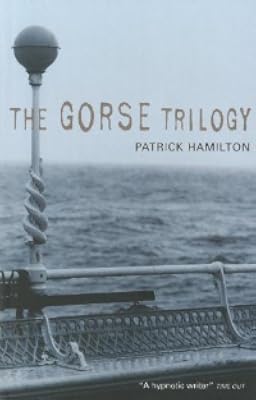
Patrick Hamilton achieved fame as a British inter war years writer and playwright. The West Pier published in 1951 was the first part of a trilogy now known as the Gorse Trilogy: the final part and Hamilton's last novel was published in 1955. His novels are not much read these days especially his later ones and after reading The West Pier I can't quite understand why this should be so.
The West Pier is set in the town of Brighton on the South coast of England. The novel starts by introducing us two three school friends. Ernest Ralph Gorse who is one of those boys that nobody really likes, a cold, selfish individual who gets by through clever manipulation of others; Ryan a handsome boy with a warm heart and finally Bell who tries to make show more up for his unattractiveness, by his knowledge of literature and art and his affected ways. The boys meet up in Brighton as 17 year olds and hang out together. Gorse has by this time become more street-wise than the other two and when they meet a couple of girls on the West Pier, the beautiful Esther Downes and her plain friend Gertrude Perks, it is Gorse who makes all the arrangements and Ryan who falls in love with Esther.
The novel now settles down over a three weeks time scale to chart the progress of the relationship between Esther and Gorse and Ryan. Much of the book from this point on takes the form of dialogue between the three main characters and Hamilton brings all his skills as a playwright to capture quite brilliantly the gauche, uncomfortable and sometimes gushing conversations. In England, at that time particularly, class prejudice was all important; Esther thinks the three boys are gentleman; a class above her and tries hard to be considered worthy, but at the same time conscious of the fact that she knows more about life in working class Brighton. Hamilton captures these nuances of what the three protagonists considered proper in their behaviour through their conversations. The youths spend their evenings walking between the piers and the large Sea front hotel admiring the view, playing the slot machines and some of them trying to pair up. The boys are on holiday they are at leisure, living in rented rooms and being looked after by maids. The girls are already working for a living, going home to crowded rented flats choked full of family members.
Gorse dominated the proceedings; trying out his skills in manipulating others, showing all the traits of a psychopath. This makes the novel a depressing read, there can be no happy ending, the youthful bounce of Esther and to some extent Ryan is overcome by coming in contact with Gorse who brings disillusionment and perhaps even danger. The novel never becomes sleazy or or down at heel, but in its portrayal of Brighton and its population it is not uplifting. Attitudes towards women and class belong to the inter war years, but it is not surprising to find them in post war Brighton.
It is Hamiltons lively dialogue and flashes of black humour that gives this novel an edge and I rate it at 4 stars. show less
The West Pier is set in the town of Brighton on the South coast of England. The novel starts by introducing us two three school friends. Ernest Ralph Gorse who is one of those boys that nobody really likes, a cold, selfish individual who gets by through clever manipulation of others; Ryan a handsome boy with a warm heart and finally Bell who tries to make show more up for his unattractiveness, by his knowledge of literature and art and his affected ways. The boys meet up in Brighton as 17 year olds and hang out together. Gorse has by this time become more street-wise than the other two and when they meet a couple of girls on the West Pier, the beautiful Esther Downes and her plain friend Gertrude Perks, it is Gorse who makes all the arrangements and Ryan who falls in love with Esther.
The novel now settles down over a three weeks time scale to chart the progress of the relationship between Esther and Gorse and Ryan. Much of the book from this point on takes the form of dialogue between the three main characters and Hamilton brings all his skills as a playwright to capture quite brilliantly the gauche, uncomfortable and sometimes gushing conversations. In England, at that time particularly, class prejudice was all important; Esther thinks the three boys are gentleman; a class above her and tries hard to be considered worthy, but at the same time conscious of the fact that she knows more about life in working class Brighton. Hamilton captures these nuances of what the three protagonists considered proper in their behaviour through their conversations. The youths spend their evenings walking between the piers and the large Sea front hotel admiring the view, playing the slot machines and some of them trying to pair up. The boys are on holiday they are at leisure, living in rented rooms and being looked after by maids. The girls are already working for a living, going home to crowded rented flats choked full of family members.
Gorse dominated the proceedings; trying out his skills in manipulating others, showing all the traits of a psychopath. This makes the novel a depressing read, there can be no happy ending, the youthful bounce of Esther and to some extent Ryan is overcome by coming in contact with Gorse who brings disillusionment and perhaps even danger. The novel never becomes sleazy or or down at heel, but in its portrayal of Brighton and its population it is not uplifting. Attitudes towards women and class belong to the inter war years, but it is not surprising to find them in post war Brighton.
It is Hamiltons lively dialogue and flashes of black humour that gives this novel an edge and I rate it at 4 stars. show less
For some reason, the critical consensus seems to have judged Hamilton's later works (the "Gorse Trilogy") as inferior to "Hangover Square" or "20,000 Streets Beneath The Sky". Each to their own: I personally found "Hangover Square" the nearest thing to a bore, but was riveted by this noir-ish account of a ruthless hollow young sociopath and how he moves on his intended victim, an innocent young girl, against the tawdry lights of Brighton seafront. The action moves slowly and with serpentine grace to a horrible finale.
Ratings
Members
- Recently Added By
Lists

TML 200 Best Books 1950-1999
202 works; 10 members

Books Read in 2019
4,052 works; 110 members

The Modern Library (The Two Hundred Best Novels....
202 works; 1 member
Author Information

21+ Works 3,385 Members
Awards and Honors
Series

Belongs to Publisher Series
Work Relationships
Is contained in
Common Knowledge
- Canonical title
- The West Pier
- Original publication date
- 1952
- People/Characters
- Ernest Ralph Gorse; Peter Ryan; Bell; Esther Downes; Gertrude Perks
- Important places
- Brighton, East Sussex, England, UK
- First words
- There is a sort of man - usually a lance-corporal or corporal and coming from the submerged classes - who, returning to England from military service in distant parts of the earth, does not announce his arrival to his relatio... (show all)ns.
- Last words
- (Click to show. Warning: May contain spoilers.)There was, therefore, a set, ugly, hard, more than ever satanic expression upon the face of Ernest Ralph Gorse as he sped ahead - sped ahead to London, and to his very curious destination in life.
Classifications
Statistics
- Members
- 71
- Popularity
- 443,307
- Reviews
- 2
- Rating
- (4.08)
- Languages
- English
- Media
- Paper
- ISBNs
- 3
- ASINs
- 1