On This Page
Description
Fiction. Mystery. Historical Fiction. Detective Inspector Oskar Reinhardt finds that young women are being slain in an unnerving—and ingenious—manner, with a small, almost undetectable, hat pin. For Dr. Max Liebermann, the killer is unique in the annals of psychopathology, one who murders in the midst of consensual love. Is the culprit a patient, one who swears he has a double, a shadow figure that is far more forward (in fact, indecent) with women? As danger mounts, Liebermann must find show more the answer while struggling with his own forbidden desire for a female patient. show lessTags
Recommendations









































Member Reviews
This one made me a little nuts. I admit that this is partially because of my own prejudices.
The action takes place in the early 1900s. The portly Detective Inspector Oskar Reinhardt and his sidekick, the younger and fitter Dr Max Leibermann, investigate killings of young women involving hat pins. The use of the small hat pins is most unusual, and suggests to Liebermann a particular type of criminal.
The investigation takes the two to the home of a painter of young girls in the nude, the homes of other women, young and old, and various witnesses. Meanwhile, Liebermann struggles with his attraction to a former patient who is now a type of colleague in crime fighting (through her use of the microscope). Given their former relationship, show more Liebermann feels it is not seemly to confess his feelings for her, yet it is difficult to suppress them.
Liebermann is also treating a man who has been seeing double. But in a most odd way, a way that suggests Freudian fixations to Liebermann. However, it seems like Liebermann is the one with the Freud fixation. He trots out theories based on Freud's work about oedipal complexes especially, developing them into quite the elaborate scheme. How Reinhardt keeps a straight face is beyond me. He seems, instead. to consider Liebermann's scholarly constructions the work of a true scientist.
Which he is not. Even today psychoanalysis is far from a science, and it's doubtful it ever will truly be scientific, regardless of the efforts of its practitioners. I found this aspect of the case distasteful. I also found the book to be a little too long. I generally have no problem with length but this time it seemed to take so much expostulating and calculating to get to a resolution of the puzzles facing the two.
Oh, and I wondered about the size of the hat pin on the cover. My impression from the book was that they were smaller and thinner. Else I don't know how they would be hidden the way they were. show less
The action takes place in the early 1900s. The portly Detective Inspector Oskar Reinhardt and his sidekick, the younger and fitter Dr Max Leibermann, investigate killings of young women involving hat pins. The use of the small hat pins is most unusual, and suggests to Liebermann a particular type of criminal.
The investigation takes the two to the home of a painter of young girls in the nude, the homes of other women, young and old, and various witnesses. Meanwhile, Liebermann struggles with his attraction to a former patient who is now a type of colleague in crime fighting (through her use of the microscope). Given their former relationship, show more Liebermann feels it is not seemly to confess his feelings for her, yet it is difficult to suppress them.
Liebermann is also treating a man who has been seeing double. But in a most odd way, a way that suggests Freudian fixations to Liebermann. However, it seems like Liebermann is the one with the Freud fixation. He trots out theories based on Freud's work about oedipal complexes especially, developing them into quite the elaborate scheme. How Reinhardt keeps a straight face is beyond me. He seems, instead. to consider Liebermann's scholarly constructions the work of a true scientist.
Which he is not. Even today psychoanalysis is far from a science, and it's doubtful it ever will truly be scientific, regardless of the efforts of its practitioners. I found this aspect of the case distasteful. I also found the book to be a little too long. I generally have no problem with length but this time it seemed to take so much expostulating and calculating to get to a resolution of the puzzles facing the two.
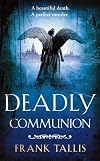
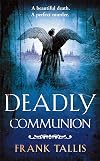
Oh, and I wondered about the size of the hat pin on the cover. My impression from the book was that they were smaller and thinner. Else I don't know how they would be hidden the way they were. show less
Someone in 1903 Vienna is murdering young women in a most bizarre fashion: during the act of love, the lady is dispatched with the use of an almost undetectable hat pin. Psychiatrist Max Liebermann and police detective inspector Oskar Reinhardt pursue different paths to discover the identity of the mad man, Liebermann by trying to determine, through psychoanalytic ideas, what type of individual would do such a thing and Reinhardt by slow, steady and steadfast police work, with the occasional flash of insight. But time is running out; the royal household has learned of this situation and is threatening to bring in the big guns to solve the mystery if our heroes don’t move fast…. "Vienna Twilight" is the fifth volume of Frank show more Tallis’s “The Liebermann Papers,” which are all set in this fascinating city at a fascinating time; Freud himself is among the characters to appear now and then, and concepts such as “reform dresses” (free-flowing dresses for women which free them from the constraints of corsets) are being hotly debated in the streets. Meanwhile, the friendship between Max and Oskar continues to deepen; in previous reviews, I failed to mention that despite coming from completely different backgrounds, they become friends because of their shared love of music, Max in playing the piano and Oskar in singing the rich lieder of the times. But however they came together, the combination of these two individuals creates one of the most interesting, and intriguing partnerships in modern mystery writing; recommended, but read the previous four books before tackling this one! show less
Max and Oskar solve a series of murders--not all by the same person, but several with an ingenious weapon: a hatpin inserted at the base of the brain. Interesting how the author wove together the various strands of the plot through his mixture of police work and psychology in this complex story and how all strands came together. Sometimes the psychoanalytical angle was a bit above me though.
Weakest entry yet in this heretofore intriguing and interesting series. Tallis appears to be trying too hard, and the story unwinds more like a pilot for TV show, Law and Psychiatry Vienna. His previous novels are much better. I really wouldn't bother with this one, though the earlier books were fascinating.
Detective Inspector Oskar Rheinhardt is looking for a murderer. The first known victim is a young blonde with a less than perfect reputation. His method of murder is unknown until it is accidently stumbled upon in the autopsy…she was killed with a hatpin! When they find the seller of the hatpin, they know it is only a matter of time before another victim is found.
Max Liebermann, a psychoanalyst and good friend of Rheinhardt is of the opinion the murderer is a sexual predator who gets his release from death. As the female victims had been ‘used’ just before death, Rheinhardt is in agreement. Not only is Liebermann aiding the Inspector, but one of his patients may just be the key to the entire puzzle.
Through the investigation, show more Rheinhardt and Liebermann meet some interesting characters. A painter with the clientele for paintings of nude young girls in provocative positions, an accountant certain that he is the victim’s only ‘client’ and a father who readily let his daughter be ‘used’ in various ways so the family could survive.
Threads of other stories are cleverly woven in to the main story, but how it all comes together is a masterpiece. You will stay on your toes with this mystery!
Reviewed by Ashley Wintters for Suspense Magazine show less
Max Liebermann, a psychoanalyst and good friend of Rheinhardt is of the opinion the murderer is a sexual predator who gets his release from death. As the female victims had been ‘used’ just before death, Rheinhardt is in agreement. Not only is Liebermann aiding the Inspector, but one of his patients may just be the key to the entire puzzle.
Through the investigation, show more Rheinhardt and Liebermann meet some interesting characters. A painter with the clientele for paintings of nude young girls in provocative positions, an accountant certain that he is the victim’s only ‘client’ and a father who readily let his daughter be ‘used’ in various ways so the family could survive.
Threads of other stories are cleverly woven in to the main story, but how it all comes together is a masterpiece. You will stay on your toes with this mystery!
Reviewed by Ashley Wintters for Suspense Magazine show less
This is the first Tallis book that I have read featuring Liebermann so I was a little surprised by the other review here. I have to say I rather enjoyed the story and liked the idea that it was just not the one case that was being solved but several. I also thought the idea of having the unknown murder confess his past at various points in the book was clever and unique. It has certainly made me want to read the previous books in the series at any rate.
Enjoy these mysteries set in Vienna in the early 1900's, the beginnings of psychoanalysis and the hey dey of Freud. Interesting characters and historical data about women's fashions and their beginnings into the medical fields. The description of the pastries are out of this world.
Members
- Recently Added By
Author Information

32+ Works 2,850 Members
Frank Tallis is a writer and practicing clinical psychologist, who has taught clinical psychology and neuroscience at the Institute of Psychiatry and Kings College in London. Dr. Tallis has published six nonfiction books, including Changing Minds, a history of psychotherapy, and many academic articles in international journals. He has also written show more two novels, for which he received a 1999 Writer's Award from the Arts Council of Great Britain and a 2000 New London Writer's Award from the London Arts Board. show less
Awards and Honors
Awards
Series

Common Knowledge
- Canonical title
- Vienna Twilight
- Original title
- Deadly Communion
- Alternate titles
- Vienna Twilight; Rendezvous mit dem Tod
- Original publication date
- 2010
- People/Characters
- Max Liebermann
- First words
- Liebermann was seated on a wooden chair at the head of the rest bed.
- Last words
- (Click to show. Warning: May contain spoilers.)The spell was broken.
Classifications
Statistics
- Members
- 214
- Popularity
- 150,394
- Reviews
- 9
- Rating
- (3.65)
- Languages
- English, French, German, Polish
- Media
- Paper, Audiobook, Ebook
- ISBNs
- 16
- ASINs
- 6