On This Page
Description
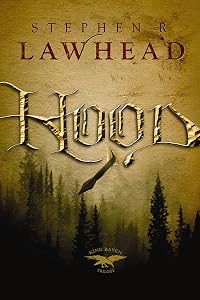
Robin Hood: The Legend Begins Anew For centuries, the legend of Robin Hood and his band of thieves has captivated the imagination. Now the familiar tale takes on new life, fresh meaning, and an unexpected setting. Hunted like an animal by Norman invaders, Bran ap Brychan, heir to the throne of Elfael, has abandoned his father's kingdom and fled to the greenwood. There, in a primeval forest of the Welsh borders, danger surrounds him-for this woodland is a living, breathing entity with show more mysterious powers and secrets, and Bran must find a way to make it his own if he is to survive. Steeped in Celtic mythology and the political intrigue of medieval Britain, Stephen R. Lawhead conjures up an ancient past and holds a mirror to contemporary realities. Prepare yourself for an epic tale that dares to shatter everything you thought you knew about Robin Hood. show lessTags
Recommendations






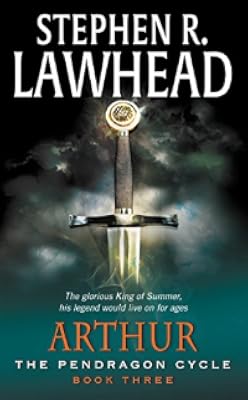
Member Recommendations
Member Reviews
Finally, a Lawhead book that lives up to his reputation. In Hood, the first book in the King Raven trilogy, Robin Hood is reimagined as Bran, a prince of one of the Welsh districts whose father was just killed by the Normans. He has been driven from his castle and the adventure begins. Lawhead mixes character filled with Religious complexity seeking to question how do we skirt the line between following our faith and the law. Where do we obey and where do we have to stand our ground and disobey the law? Tough questions with no easy answers, which is why I'm grateful Lawhead displays Bran with good and bad traits out in the open.
Bran ap Brychan is the heir to the throne of Elfael, a small kingdom in Wales. Unfortunately, it’s a time in history when the Ffreincs are expanding their territories, defeating and dividing new lands among barons who have proclaimed fealty to the king, Red William. Bran’s father held out against the authority of William for a time, but it became clear that there was no alternative. The king and his best men travel to Lundein to offer their fealty when they are attacked on the road by a Ffreinc battalion. Fortunately for Bran and the people of Elfael, he had been delayed from departing with the king and therefore the heir to the throne survives the massacre.
Bran and a couple of close friends travel to Lundein to express their show more outrage at the attack and demand their lands are returned. Unfortunately, the greedy Ffreincs will not help them, and Bran is forced to return home empty handed. Upon returning home, Bran is forced into hiding after Falkes de Braose, the leader of the invasion, discovers that he is the heir. While in hiding, Bran gains a mentor in the storyteller Angharad, who helps develop him into the leader that his defeated people need. The land and people of Elfael, under Ffreinc rule, are being brutally mistreated, left to starve and work as slave labor for the Ffreincs. Bran finds a small band of people who had retreated to the woods for protection from the Ffreincs, and together they begin planning the liberation of Elfael.
Hood is the first part in a trilogy based on the legends of Robin Hood. Personally, I enjoyed the different perspective on the story. Lawhead pulls you out of Sherwood Forest and Nottingham, and places you in what is likely the more accurate origin of the tale. Historically, no one has ever been able to identify the true Robin Hood or where the story began. It was a tale told by wandering minstrels, evolving and changing into today’s popular rendition as the story spread over time. At first the change in scenery seems unusual and almost offensive (who is Robin Hood without the Sheriff of Nottingham??), however he is kind enough to give his reasoning for the change in time and location at the end of the book. When one reads the evidence he provides, it is clear that his version may in fact be more historically accurate.
This story will take you deep within the forests of the Marches of Wales, and introduce you to various characters, some new and some old (Guy of Gysburne, Friar Tuck, and Little John). The characters were interesting and well developed. I look forward to learning more about them and seeing how they develop in the next two books. I think Lawhead takes an interesting perspective on Bran, who unlike Robin Hood, is not immediately keen on the idea of leading a small rebellion against the oppressive government. It is only after a great deal of persuasion that he decides he needs to help free his people.
One thing I really enjoyed about this book was the use of multiple points of view. You gain the perspectives of almost every character, including Marion, de Braose, Tuck, Angharad, and more! The various accounts of events allow the reader to experience many events that are occurring simultaneously such as Bran’s time in hiding and de Broase’s enslavement of the people of Elfael. It helps to kept the story rolling at points where it would otherwise drag on for a bit.
That being said, the writing is rather lengthy, and at times almost too detailed. You spend many chapters simply sitting in a cave with an injured Bran, being nursed back to health by Angharad. Granted, Angharad spends that time telling stories and trying to convince Bran to save his people, but it still starts to drag on after a bit. There were a few points where I had trouble staying engaged with the story because it became overly focused on details, but all in all I still feel that it was a good book. I enjoyed reading the classic tale of Robin Hood from a different perspective, and will definitely finish the trilogy. show less
Bran and a couple of close friends travel to Lundein to express their show more outrage at the attack and demand their lands are returned. Unfortunately, the greedy Ffreincs will not help them, and Bran is forced to return home empty handed. Upon returning home, Bran is forced into hiding after Falkes de Braose, the leader of the invasion, discovers that he is the heir. While in hiding, Bran gains a mentor in the storyteller Angharad, who helps develop him into the leader that his defeated people need. The land and people of Elfael, under Ffreinc rule, are being brutally mistreated, left to starve and work as slave labor for the Ffreincs. Bran finds a small band of people who had retreated to the woods for protection from the Ffreincs, and together they begin planning the liberation of Elfael.
Hood is the first part in a trilogy based on the legends of Robin Hood. Personally, I enjoyed the different perspective on the story. Lawhead pulls you out of Sherwood Forest and Nottingham, and places you in what is likely the more accurate origin of the tale. Historically, no one has ever been able to identify the true Robin Hood or where the story began. It was a tale told by wandering minstrels, evolving and changing into today’s popular rendition as the story spread over time. At first the change in scenery seems unusual and almost offensive (who is Robin Hood without the Sheriff of Nottingham??), however he is kind enough to give his reasoning for the change in time and location at the end of the book. When one reads the evidence he provides, it is clear that his version may in fact be more historically accurate.
This story will take you deep within the forests of the Marches of Wales, and introduce you to various characters, some new and some old (Guy of Gysburne, Friar Tuck, and Little John). The characters were interesting and well developed. I look forward to learning more about them and seeing how they develop in the next two books. I think Lawhead takes an interesting perspective on Bran, who unlike Robin Hood, is not immediately keen on the idea of leading a small rebellion against the oppressive government. It is only after a great deal of persuasion that he decides he needs to help free his people.
One thing I really enjoyed about this book was the use of multiple points of view. You gain the perspectives of almost every character, including Marion, de Braose, Tuck, Angharad, and more! The various accounts of events allow the reader to experience many events that are occurring simultaneously such as Bran’s time in hiding and de Broase’s enslavement of the people of Elfael. It helps to kept the story rolling at points where it would otherwise drag on for a bit.
That being said, the writing is rather lengthy, and at times almost too detailed. You spend many chapters simply sitting in a cave with an injured Bran, being nursed back to health by Angharad. Granted, Angharad spends that time telling stories and trying to convince Bran to save his people, but it still starts to drag on after a bit. There were a few points where I had trouble staying engaged with the story because it became overly focused on details, but all in all I still feel that it was a good book. I enjoyed reading the classic tale of Robin Hood from a different perspective, and will definitely finish the trilogy. show less
This was the first in Lawhead's new trilogy about Robin Hood, but it was far from being the 'traditional' tale as we know it today. Lawhead did an extensive amount of research concerning the beginnings of the 'Robin Hood' folklore (the first appearance of the legendary thief was in the 1200s!), and wove this tale from what he believes was the beginning of the Robin Hood myth. Thus, we have a hero whose story is set in Wales, away from Sherwood Forest, and a little more gritty and realistic than simply a tale of 'merry men'. It's set in the historical past, with real and fictional characters interwoven - similar to what Lawhead did with his Pendragon Cycle - so that you can truly begin to believe that this was something that literally show more occurred in history, but perhaps wasn't retained as part of the period's 'official' historical record.
I thought it was exceedingly well done, and I'm very much looking forward to the next book, Scarlet, where Will Scarlet - who else? - makes his first appearance. show less
I thought it was exceedingly well done, and I'm very much looking forward to the next book, Scarlet, where Will Scarlet - who else? - makes his first appearance. show less
We all know the familiar legend of Robin Hood who hangs out in Sherwood forest and steals from the rich to give to the poor. But what if the legends of Robin Hood were really based on a Welsh king who was deposed from his throne by the Norman conquest in the early 1100's? That's the premise behind Hood, and the author's ability to capture the time period and its myth and lore make this adaptation outstanding.
Our hero doesn't start out as such--Bran ap Brychan is a son of royalty who hates his father and isn't interested in the responsiblities of being king. Even the cruel death of his father at the hand of the Normans doesn't convince him that he should stay and fight for his people. Bran's gradual--almost too gradual at times-- show more transformation into what we know as Robin Hood is a pleasure to read. It's one of those stories where suddenly you recognize a familiar character and think, "Ah, this must be Friar Tuck". Yes, most all of the familiar Robin Hood characters are here, including Maid Marian, but in this different setting and time period they might not be quite the people we are used to, which is was all part of the enjoyment to me. Lawhead creates vivid characters, for example through the musings of the "villians" we see how the doctrine of "divine right" is used to justify their brutal conquests--but not always without some misgivings. For me this was the almost perfect blend of heart racing suspense, intriguing characters, and thought provoking prose. It also ends somewhat abrubtly with a doozy of cliffhanger, and of course we now have to wait for the second book of the trilogy to come out. It can't get here soon enough. show less
Our hero doesn't start out as such--Bran ap Brychan is a son of royalty who hates his father and isn't interested in the responsiblities of being king. Even the cruel death of his father at the hand of the Normans doesn't convince him that he should stay and fight for his people. Bran's gradual--almost too gradual at times-- show more transformation into what we know as Robin Hood is a pleasure to read. It's one of those stories where suddenly you recognize a familiar character and think, "Ah, this must be Friar Tuck". Yes, most all of the familiar Robin Hood characters are here, including Maid Marian, but in this different setting and time period they might not be quite the people we are used to, which is was all part of the enjoyment to me. Lawhead creates vivid characters, for example through the musings of the "villians" we see how the doctrine of "divine right" is used to justify their brutal conquests--but not always without some misgivings. For me this was the almost perfect blend of heart racing suspense, intriguing characters, and thought provoking prose. It also ends somewhat abrubtly with a doozy of cliffhanger, and of course we now have to wait for the second book of the trilogy to come out. It can't get here soon enough. show less
ORIGINALLY POSTED AT Fantasy Literature.
Hood is the first novel in Stephen Lawhead's latest series, the King Raven Trilogy, which is a historical fantasy based on the Robin Hood legend. Lawhead places his story in Wales after the conquest of Britain by the Normans and during the reign of William the Red. (If that sounds a bit odd, Mr. Lawhead gives several convincing reasons for this at the end of the book -- you might want to read that first.)
The Normans are encroaching into Wales, confiscating land, and generally mistreating the Welsh. Bran, a prince of one of the Welsh districts whose father was just killed by the Normans, has been driven from his castle. His people think him dead and have no hope for regaining their former way of show more life. Not that Bran, an irresponsible womanizing rogue, would have been considered a potential savior anyway, but after the Normans injure him severely, Bran is rescued and nursed back to health by a strange spiritual leader who recognizes his potential. Bran comes a long way (without losing his personality), but things are still unsettled at the end of the book.
Stephen Lawhead's writing and story-telling abilities have steadily improved over the years. I found his Pendragon series tough to stick with (although that was partly due to having read too much Arthurian legend, perhaps), but the Albion series was quite good. This latest book, however, shows that Mr. Lawhead has been steadily honing his story-telling skills to perfection. The writing was perfectly clear and lively, the descriptions aptly set the scenes, the plot was quick and entertaining, and the dialogue was rich and realistic. Lawhead is well-known for performing extensive research before he writes, and it shows in this novel. I really felt like I was back in 11th century Wales!
I've always enjoyed Lawhead's complex characters. In Hood, Bran is the "reluctant hero," but somehow he doesn't come across as a stereotype -- perhaps because we clearly see his flaws as he flies into rages, remorselessly kills people who get in his way, and forgets to pine over the woman he said he loves. Some of the most intriguing characters are the several religious leaders who represent the Catholic Church. Some are devout, some are corrupt, and Lawhead deftly uses their points of view to show us that being religious does not make a person good. There are good religious people, and there are bad people who use religious institutions to bring glory (and riches) to themselves instead of to God. Furthermore, through the points of view of the religious people, we see that there are many gray moral areas. For example, God loves truth, but is it right to tell a lie when the truth would cause innocent people to be harmed? God loves justice and mercy, so should we obey or disobey an unjust ruler? Lawhead never asks us these questions directly, and he certainly never answers them for us, but they are there for the discerning reader to contemplate.
I listened to Hood in audiobook format. Despite some unconvincing accents and a few mispronunciations, the reading was good. The reader was enthusiastic, well-paced, and had a generally pleasant voice. This was a good format for this novel, and I recommend it.
Read more Stephen Lawhead book reviews at Fantasy literature. show less
Hood is the first novel in Stephen Lawhead's latest series, the King Raven Trilogy, which is a historical fantasy based on the Robin Hood legend. Lawhead places his story in Wales after the conquest of Britain by the Normans and during the reign of William the Red. (If that sounds a bit odd, Mr. Lawhead gives several convincing reasons for this at the end of the book -- you might want to read that first.)
The Normans are encroaching into Wales, confiscating land, and generally mistreating the Welsh. Bran, a prince of one of the Welsh districts whose father was just killed by the Normans, has been driven from his castle. His people think him dead and have no hope for regaining their former way of show more life. Not that Bran, an irresponsible womanizing rogue, would have been considered a potential savior anyway, but after the Normans injure him severely, Bran is rescued and nursed back to health by a strange spiritual leader who recognizes his potential. Bran comes a long way (without losing his personality), but things are still unsettled at the end of the book.
Stephen Lawhead's writing and story-telling abilities have steadily improved over the years. I found his Pendragon series tough to stick with (although that was partly due to having read too much Arthurian legend, perhaps), but the Albion series was quite good. This latest book, however, shows that Mr. Lawhead has been steadily honing his story-telling skills to perfection. The writing was perfectly clear and lively, the descriptions aptly set the scenes, the plot was quick and entertaining, and the dialogue was rich and realistic. Lawhead is well-known for performing extensive research before he writes, and it shows in this novel. I really felt like I was back in 11th century Wales!
I've always enjoyed Lawhead's complex characters. In Hood, Bran is the "reluctant hero," but somehow he doesn't come across as a stereotype -- perhaps because we clearly see his flaws as he flies into rages, remorselessly kills people who get in his way, and forgets to pine over the woman he said he loves. Some of the most intriguing characters are the several religious leaders who represent the Catholic Church. Some are devout, some are corrupt, and Lawhead deftly uses their points of view to show us that being religious does not make a person good. There are good religious people, and there are bad people who use religious institutions to bring glory (and riches) to themselves instead of to God. Furthermore, through the points of view of the religious people, we see that there are many gray moral areas. For example, God loves truth, but is it right to tell a lie when the truth would cause innocent people to be harmed? God loves justice and mercy, so should we obey or disobey an unjust ruler? Lawhead never asks us these questions directly, and he certainly never answers them for us, but they are there for the discerning reader to contemplate.
I listened to Hood in audiobook format. Despite some unconvincing accents and a few mispronunciations, the reading was good. The reader was enthusiastic, well-paced, and had a generally pleasant voice. This was a good format for this novel, and I recommend it.
Read more Stephen Lawhead book reviews at Fantasy literature. show less
I don't know what it is, but I have never been able to enjoy Stephen Lawhead's books. And I really want to. He writes fantasy and historical fiction, two of my favorite genres. I'm fairly certain he professes to be a Christian. He is a commercially successful author whose works are enjoyed by readers with tastes similar to mine. Why can't I like his novels?
I tried. I really tried. I read 87 pages of Hood before the writing got me. I noticed a woodenness to Lawhead's style years ago and was turned off enough to not pursue any more of his books. But I always wondered if I was a bit hasty in that judgment. I've been on a Robin Hood kick lately, so I thought I would use that momentum to give Lawhead another try. With a cool cover and show more interesting premise (Robin Hood, Welshified), it would surely be an improvement on former titles. Unfortunately, no.
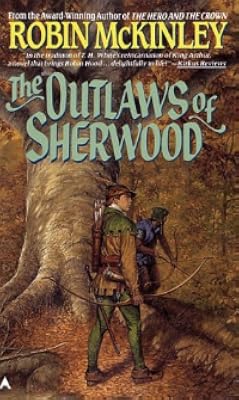
What really decided me was the contrast between Hood and the last book I finished, Robin McKinley's superb and utterly believable Outlaws of Sherwood. By comparison, Lawhead's characters are boring and his narrative tells rather than shows. And I couldn't get over the feeling that my precious reading time could be much better spent. I'm glad others can enjoy Lawhead's novels, but apparently they aren't for me. show less
I tried. I really tried. I read 87 pages of Hood before the writing got me. I noticed a woodenness to Lawhead's style years ago and was turned off enough to not pursue any more of his books. But I always wondered if I was a bit hasty in that judgment. I've been on a Robin Hood kick lately, so I thought I would use that momentum to give Lawhead another try. With a cool cover and show more interesting premise (Robin Hood, Welshified), it would surely be an improvement on former titles. Unfortunately, no.
What really decided me was the contrast between Hood and the last book I finished, Robin McKinley's superb and utterly believable Outlaws of Sherwood. By comparison, Lawhead's characters are boring and his narrative tells rather than shows. And I couldn't get over the feeling that my precious reading time could be much better spent. I'm glad others can enjoy Lawhead's novels, but apparently they aren't for me. show less
After two years of picking this book up off of bookstore shelves, declaring that I really, really wanted this, and then unexplainably replacing the book on the shelf, I broke down and ordered it from Amazon. Upon receiving this lovely book, I promptly devoured it in two days.
I almost gave it up in the first eighty pages. I'll speak the truth. It just didn't catch my attention like I'd hoped it would. However, upon hitting page ninety, I forgot to look up until it was nearly midnight and I'd turned to page 250. It was that absorbing and wonderful.
It's a lovely book, and much like Lawhead's Albion Trilogy, it gave me lovely visuals of deep, dark woods where much is of the unknown.
The themes are obvious: human greed with enough never show more being enough. It also puts into question the debacle of history's kings, namely William II of England in this novel, all spouting on Divine Right. How is it Divine Right when there is so much human cruelty and bloodshed that goes with the territory? How does God approve of that when before the notion of Divine Right the people of Wales worked the lands and tithed properly and kept away from much of the trouble in the neighboring country of England?
That in itself is what I got out of the book. You may just see it as a dashing tale full of action and suspense. It's a good book, a wonderful, stupendous, phenomonal book, and I'd suggest it to anyone who wants their love of history and fantasy especially to meld together in one great story. show less
I almost gave it up in the first eighty pages. I'll speak the truth. It just didn't catch my attention like I'd hoped it would. However, upon hitting page ninety, I forgot to look up until it was nearly midnight and I'd turned to page 250. It was that absorbing and wonderful.
It's a lovely book, and much like Lawhead's Albion Trilogy, it gave me lovely visuals of deep, dark woods where much is of the unknown.
The themes are obvious: human greed with enough never show more being enough. It also puts into question the debacle of history's kings, namely William II of England in this novel, all spouting on Divine Right. How is it Divine Right when there is so much human cruelty and bloodshed that goes with the territory? How does God approve of that when before the notion of Divine Right the people of Wales worked the lands and tithed properly and kept away from much of the trouble in the neighboring country of England?
That in itself is what I got out of the book. You may just see it as a dashing tale full of action and suspense. It's a good book, a wonderful, stupendous, phenomonal book, and I'd suggest it to anyone who wants their love of history and fantasy especially to meld together in one great story. show less
Members
- Recently Added By
Lists

Same Title
115 works; 3 members
Author Information

104 Works 33,982 Members
Novelist Stephen R. Lawhead was born in July 2, 1950 in Kearney, Nebraska. He graduated from Kearney State College. He wrote his first novel, In the Hall of the Dragon King (1982) to try to support his family. This launched his literary career. Many of Lawhead's works are based on Celtic history and Arthurian legend. He has also written children's show more books, adapting many of them from stories he told his children. Lawhead's various series include Bright Empires, The Pendragon Cycle, and the King Raven Trilogy. The second book in the King Raven Trilogy, Scarlet, won a Christy Award in the category of Visionary Fiction. (Bowker Author Biography) show less
Some Editions
Series

Work Relationships
Is contained in
Common Knowledge
- Canonical title
- Hood
- Original title
- Hood
- Original publication date
- 2006
- People/Characters
- Bran ap Brychan, Prince of Elfael; Aethelfrith, Tuck; Queen Rhian; Merian; Iwan; Count Falkes de Braose (show all 9); Baron Neufmarche; Angharad; Bishop Asaph
- Important places
- Wales, UK; Elfael
- Dedication
- This book is dedicated to the Schloss Mittersill Community with heartfelt thanks and gratitude for their understanding, encouragement and support.
- First words
- Prologue: The pig was young and wary, a yearling boar timidly testing the wind for strange scents as it ventured out into the honey-coloured light of a fast-fading day.
Chapter I: "Bran!" The shout rattled through the stone-flagged yard. - Last words
- (Click to show. Warning: May contain spoilers.)"And if it please you, heavenly Father," he whispered privately as the prayers of the monks swirled around him on clouds of incense, "may I live to see the day a true king takes the throne in Elfael once more."
- Canonical DDC/MDS
- 813.54
- Canonical LCC
- PS3562.A865
Classifications
- Genres
- Fiction and Literature, Fantasy, Christian Fiction, Historical Fiction, General Fiction
- DDC/MDS
- 813.54 — Literature & rhetoric American literature in English American fiction in English 1900-1999 1945-1999
- LCC
- PS3562 .A865 — Language and Literature American literature American literature Individual authors 1961-
- BISAC
Statistics
- Members
- 2,447
- Popularity
- 7,992
- Reviews
- 69
- Rating
- (3.80)
- Languages
- 5 — English, Finnish, French, German, Spanish
- Media
- Paper, Audiobook, Ebook
- ISBNs
- 24
- UPCs
- 3
- ASINs
- 12