On This Page
Description
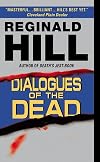
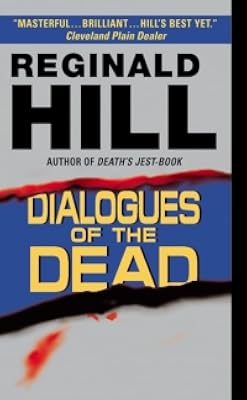
Normally, there would be nothing sinister about a death by drowning and a motorcycle fatality -- had these tragic occurrences not been predicted before the fact in a pair of macabre "Dialogues" submitted to a Yorkshire short story competition. Yet the local police department is slow to act -- until the arrival of a third Dialogue ... and another corpse. A darkness is settling over a terrorized community, brought on by a genius fiend who hides clues to his horrific acts in complex riddles and show more brilliant wordplay. Now two seasoned CID investigators, Peter Pascoe and "Fat Andy" Dalziel, are racing against a clock whose every tick signals more blood and outrage, caught in the twisted game of a diabolical killer who is turning their jurisdiction into a slaughterhouse. show lessTags
Recommendations





Member Reviews
what a romp. seems like Hill just keeps getting more innovative with this series. can he really be forty years in? and it's kinda infectious when he's so clearly having fun. so here: have you heard, the bird is the word, no wait, the word is the bird... the whole thing's a word game from start to finish. paronomania: word-play + MANIA - and as it turns out, the writer can even sell the dictionary. so naturally there are two completely different solutions to the mystery offered up too in the end(s), which seems a fine offering in the spirit of/meaning of dialogue. in which case, who dies, eh? eh?*g*
Recently my reading group tried some books by Reginald Hill. I did not think the book I read was especially gripping or well-written but I knew that in 1995 Hill had won the Crime Writers' Association Cartier Diamond Dagger for Lifetime Achievement and thought that I should give the author another try. I decided to read one of the novels from the author’s long-running series focusing on crimes investigated by detectives Dalziel and Pascoe. This is the series that Hill is best known for and, when he died early in 2012, many fans were saddened that he would not be able to continue writing it. Having never seen the TV adaptations, I settled down to read with no preconceptions.
The premise
Two entries to a local writing competition catch show more the attention of the judges for their uncanny similarity to recent deaths reported in the local paper. At first they seem to be simply jokes in bad taste. After all, the two reported deaths were accidents: a drowning and a motorcycle crash. Except that, according to the stories, both deaths were caused by the writer, who now recognises their purpose in life, which seems to be linked to killing innocent people. Crucially, it seems the stories were written before the newspaper published either article…
Hat Bowler, the detective given initial charge of the ‘case’ doesn’t take it very seriously – although he pretends to, as he quite fancies one of the librarians – but when a third death occurs, which is definitely a murder, more senior detectives Dalziel and Pascoe are forced to get involved. After this, death follows death and story follows story. Will they ever work out the identity of the mysterious writer?
My thoughts
The premise sounded interesting, especially the idea that the writer was claiming responsibility for deaths that had been ruled accidental. I was intrigued to know why somebody would want to do that, especially as by confessing in written form they were creating a record to convict themself with.
Before chapter 1 there are three ‘quotations’, from the OED and two from writers who are referenced later in the book. These are all rather literary and set the tone for much of the book, which is about Hill’s love of language at least as much as it is about a series of murders. As a keen reader and a teacher, I am used to thinking of myself as being reasonably literate, but in this word-focused murder mystery Hill used a number of words that I had to look up in a dictionary. On the one hand, I found this quite a pleasant challenge – especially as some of the words turned out to be invented by the characters! – but it did also make me feel a little like I was working too hard at reading what I had expected to be a gripping crime story. Some readers might find the word-play off-putting, in which case they would definitely be advised to avoid this book.
The first chapter is the first story from the murderer, which they call a ‘dialogue’. This instantly begs the question: who are they trying to communicate with? The conversational tone made me feel a little bit uncomfortable as the story developed and it became clear that the speaker trying to gain my confidence was, in fact, quite mad. I think that this opening prepares readers well for the rest of the book, which contains a number of these dialogues and sustained analysis of them by detectives and language experts. If the opening doesn’t interest you, you might be tempted to put the book down there and then but I think it is worth sticking with it. Personally, I didn’t find the dialogues interesting, and actually found myself skimming the later ones. (I can appreciate that a character is mad without needing to bathe in the evidence of their madness.) Fortunately, I found the other chapters more appealing. The dialogues are relevant and necessary as they provide many of the clues the detectives investigate, but I wasn’t really interested enough in the writer’s use of language to enjoy reading them.
This is quite a lengthy book. It is not until page 100 that the third death – the first real murder – takes place, and the book has 558 pages all told, although the chapters are relatively short which makes this easy to read. I don’t object to the length of it, but it does mean that the pace can feel quite slow, even though there are a number of deaths. In particular, I found the first 100 pages or so quite ‘quiet’ as the librarians discuss the dialogues and the police consider other matters. Some readers may prefer a quicker pace and feel that everything is moving rather too slowly. In fact, discussion really takes up the heart of the book. There is very little ‘crime solving’ in the sense of forensics or even interviewing of suspects. Most of the discussion with suspects happens in public and through veiled barbs in conversation. This is what I found sustained my reading: I quite liked the interactions between the characters, especially between Dalziel and anyone else. I chuckled out loud on a number of occasions. If it wasn’t for the quality of the interactions, I think I would have found the story itself quite dull.
This is especially true as the victims seem to be selected at random. (They aren’t, but I defy you to spot the connection before it’s revealed.) This meant that I couldn’t predict who would die next (with the exception of the third victim who essentially offers herself to the killer) or even begin to construct a motive. This is normally part of the enjoyment I find in reading a crime novel, so I was disappointed that this element was absent.
Worse, there is a twist at the end which I found completely ridiculous. The entire final chapter is a revelation of the killer’s motivations and actions, which I found to be completely ludicrous and, worse, which I did not feel fit completely comfortably with what had gone before. That said, I am sure many readers would find it plausible and therefore enjoyable, but I felt that everything was twisted in an often incredible way to try and make a square peg fit in a round hole. This also allows Hill to create a huge cliff-hanger that tries to force the reader to buy his next book (which I believe you would need to read this one in order to understand). I never like when authors do this as I feel they should rely on the reader’s level of enjoyment to ensure that they come back for more, rather than needing to hook them with a dramatic final curtain. I was very disappointed with the ending, though I recognise that some readers might think it is quite clever.
I read this as a standalone book and felt that it worked reasonably well that way. When background information was needed it was given concisely and without detracting from the plot. I did not feel that I needed to know more about any of the characters or their histories. Obviously, readers who are familiar with the characters would probably get more enjoyment from this book as they see the detectives’ personal lives developing. Personally, I was relieved that there was not a strong focus on them and also that they all seemed to be reasonably happy with their lot. The jaded, alcoholic detective is nowhere to be seen here, though there is an interesting subplot about a detective about to retire whose past is coming back to haunt him. Pascoe has a fixation on one of the characters, Franny Roote, which I imagine would please fans of the series as this clearly develops from a previous storyline. Again, as a newcomer, I felt sufficiently informed to be able to follow events without having read the previous books.
Conclusions
At 558 pages the book certainly feels worth the £6.99 RRP, but I think that this could have been a little pacier. Hill seems to be quite indulgent here: he likes words and he is determined to play with them. If you also like words, this could appeal very strongly to you. I did find this aspect of the story interesting, though not as fascinating as the killer or many of the other characters did! I liked that this worked as a standalone book as well as being part of a well-established series and I enjoyed the interactions between the characters, especially any scene involving Dalziel. I thought the ending was very disappointing and that the motivation of the killer was bizarre, although it was certainly fitting for their character, so perhaps I am being too harsh here. Overall I found this mildly enjoyable to read, but rather more literary than I had anticipated and certainly not gripping as the events all felt a little too random. I would read another book in the series, but I won’t be rushing to find one.
Read this if:
• You are already a Dalziel and Pascoe fan.
• You are very interested in words and wordplay.
• You enjoy crime fiction that focuses on conversation and thought rather than action and drama.
• You like endings where everything is explained and you have to read back over bits of the book to see that it all fits in.
Avoid this if:
• You have previously not enjoyed books featuring these detectives.
• You want a gripping crime story that focuses on forensics and other solvable clues.
• You like crime stories which are action packed and full of dastardly villains.
• You dislike endings with twists that make you read back over bits of the book to double check what happened. show less
The premise
Two entries to a local writing competition catch show more the attention of the judges for their uncanny similarity to recent deaths reported in the local paper. At first they seem to be simply jokes in bad taste. After all, the two reported deaths were accidents: a drowning and a motorcycle crash. Except that, according to the stories, both deaths were caused by the writer, who now recognises their purpose in life, which seems to be linked to killing innocent people. Crucially, it seems the stories were written before the newspaper published either article…
Hat Bowler, the detective given initial charge of the ‘case’ doesn’t take it very seriously – although he pretends to, as he quite fancies one of the librarians – but when a third death occurs, which is definitely a murder, more senior detectives Dalziel and Pascoe are forced to get involved. After this, death follows death and story follows story. Will they ever work out the identity of the mysterious writer?
My thoughts
The premise sounded interesting, especially the idea that the writer was claiming responsibility for deaths that had been ruled accidental. I was intrigued to know why somebody would want to do that, especially as by confessing in written form they were creating a record to convict themself with.
Before chapter 1 there are three ‘quotations’, from the OED and two from writers who are referenced later in the book. These are all rather literary and set the tone for much of the book, which is about Hill’s love of language at least as much as it is about a series of murders. As a keen reader and a teacher, I am used to thinking of myself as being reasonably literate, but in this word-focused murder mystery Hill used a number of words that I had to look up in a dictionary. On the one hand, I found this quite a pleasant challenge – especially as some of the words turned out to be invented by the characters! – but it did also make me feel a little like I was working too hard at reading what I had expected to be a gripping crime story. Some readers might find the word-play off-putting, in which case they would definitely be advised to avoid this book.
The first chapter is the first story from the murderer, which they call a ‘dialogue’. This instantly begs the question: who are they trying to communicate with? The conversational tone made me feel a little bit uncomfortable as the story developed and it became clear that the speaker trying to gain my confidence was, in fact, quite mad. I think that this opening prepares readers well for the rest of the book, which contains a number of these dialogues and sustained analysis of them by detectives and language experts. If the opening doesn’t interest you, you might be tempted to put the book down there and then but I think it is worth sticking with it. Personally, I didn’t find the dialogues interesting, and actually found myself skimming the later ones. (I can appreciate that a character is mad without needing to bathe in the evidence of their madness.) Fortunately, I found the other chapters more appealing. The dialogues are relevant and necessary as they provide many of the clues the detectives investigate, but I wasn’t really interested enough in the writer’s use of language to enjoy reading them.
This is quite a lengthy book. It is not until page 100 that the third death – the first real murder – takes place, and the book has 558 pages all told, although the chapters are relatively short which makes this easy to read. I don’t object to the length of it, but it does mean that the pace can feel quite slow, even though there are a number of deaths. In particular, I found the first 100 pages or so quite ‘quiet’ as the librarians discuss the dialogues and the police consider other matters. Some readers may prefer a quicker pace and feel that everything is moving rather too slowly. In fact, discussion really takes up the heart of the book. There is very little ‘crime solving’ in the sense of forensics or even interviewing of suspects. Most of the discussion with suspects happens in public and through veiled barbs in conversation. This is what I found sustained my reading: I quite liked the interactions between the characters, especially between Dalziel and anyone else. I chuckled out loud on a number of occasions. If it wasn’t for the quality of the interactions, I think I would have found the story itself quite dull.
This is especially true as the victims seem to be selected at random. (They aren’t, but I defy you to spot the connection before it’s revealed.) This meant that I couldn’t predict who would die next (with the exception of the third victim who essentially offers herself to the killer) or even begin to construct a motive. This is normally part of the enjoyment I find in reading a crime novel, so I was disappointed that this element was absent.
Worse, there is a twist at the end which I found completely ridiculous. The entire final chapter is a revelation of the killer’s motivations and actions, which I found to be completely ludicrous and, worse, which I did not feel fit completely comfortably with what had gone before. That said, I am sure many readers would find it plausible and therefore enjoyable, but I felt that everything was twisted in an often incredible way to try and make a square peg fit in a round hole. This also allows Hill to create a huge cliff-hanger that tries to force the reader to buy his next book (which I believe you would need to read this one in order to understand). I never like when authors do this as I feel they should rely on the reader’s level of enjoyment to ensure that they come back for more, rather than needing to hook them with a dramatic final curtain. I was very disappointed with the ending, though I recognise that some readers might think it is quite clever.
I read this as a standalone book and felt that it worked reasonably well that way. When background information was needed it was given concisely and without detracting from the plot. I did not feel that I needed to know more about any of the characters or their histories. Obviously, readers who are familiar with the characters would probably get more enjoyment from this book as they see the detectives’ personal lives developing. Personally, I was relieved that there was not a strong focus on them and also that they all seemed to be reasonably happy with their lot. The jaded, alcoholic detective is nowhere to be seen here, though there is an interesting subplot about a detective about to retire whose past is coming back to haunt him. Pascoe has a fixation on one of the characters, Franny Roote, which I imagine would please fans of the series as this clearly develops from a previous storyline. Again, as a newcomer, I felt sufficiently informed to be able to follow events without having read the previous books.
Conclusions
At 558 pages the book certainly feels worth the £6.99 RRP, but I think that this could have been a little pacier. Hill seems to be quite indulgent here: he likes words and he is determined to play with them. If you also like words, this could appeal very strongly to you. I did find this aspect of the story interesting, though not as fascinating as the killer or many of the other characters did! I liked that this worked as a standalone book as well as being part of a well-established series and I enjoyed the interactions between the characters, especially any scene involving Dalziel. I thought the ending was very disappointing and that the motivation of the killer was bizarre, although it was certainly fitting for their character, so perhaps I am being too harsh here. Overall I found this mildly enjoyable to read, but rather more literary than I had anticipated and certainly not gripping as the events all felt a little too random. I would read another book in the series, but I won’t be rushing to find one.
Read this if:
• You are already a Dalziel and Pascoe fan.
• You are very interested in words and wordplay.
• You enjoy crime fiction that focuses on conversation and thought rather than action and drama.
• You like endings where everything is explained and you have to read back over bits of the book to see that it all fits in.
Avoid this if:
• You have previously not enjoyed books featuring these detectives.
• You want a gripping crime story that focuses on forensics and other solvable clues.
• You like crime stories which are action packed and full of dastardly villains.
• You dislike endings with twists that make you read back over bits of the book to double check what happened. show less
This is the most exuberant and complicated of the D&P novels so far — it probably goes a bit too far for many readers in its riot of wordplay and literary allusions, but if you like this sort of thing (and I do) then this is certainly the sort of thing you will like. As others have said, it perhaps wouldn't do to look too closely at the detail of the various crimes here: this isn't intended as a realistic police procedural. For me, the only real weakness was the introduction of DC "Hat" Bowler as the main viewpoint character. He doesn't make a convincing policeman, and isn't interesting enough as a character to carry a whole novel. Dalziel, Wield and the Pascoes, who are, get pushed into the background too much as a result.
Someone is murdering people at random and then leaving a detailed “dialogue” about each murder at the local library. Dubbed “the Wordman,” this mysterious individual leads Dalziel, Pascoe and their colleagues on a chase throughout their Yorkshire patch, becoming more elusive even while leaving more and more erudite clues….This is, I think, the 18th or 19th book in the long-running Dalziel and Pascoe series, and to my mind it’s one of the best, not only because of the richness of the characters and their lives, but for the richness of the language, which Mr. Hill uses to devastating effect this time around. As it happens, this is one of the rare occasions when I figured out “who did it” well before the detectives did, show more which is always a satisfying extra when reading detective fiction. Recommended! show less
Detective Constable Bowler, who, in a fit of paranomasia (wordplay, punning) has been nicknamed, "Hat," would like to date Ray (Raina) Pamona, the local reference librarian. She and her boss, Dee, have been assigned the onerous task of judging submissions to the local fiction story contest. Dee and Ray notice that two of the entries from the same writer bear striking resemblance to two recent unexplained deaths, and they wonder how the writer could have obtained such intimate details. They turn the stories over to Hat. Enter Superintendent Dalziel (pronounced "Dee-él" ) and DCI Pascoe. Dalziel is his usual fat, curmudgeonly self who mutters things like, " 'Don't want them blowflies from the media around till we know there's dead meat show more and it's not us,' " and " 'One thing you've got to say about George [another inspector], he's been real conscientious helping to break in his replacement. ' 'Thought we weren't getting a replacement, sir' [said Sergeant Wield]. 'That's what I mean,' " replied Dalziel. Andy Dalziel loves hiding his rapier-sharp mind behind crude talk and behavior, and he loves to deflate pompous egos, pretending to misunderstand their pedantries. When one expert adviser presents what he calls an "interesting" theory, Dalziel responds, "If you're waiting for a bus and a giraffe walks down the street, that's interesting. But it doesn't get you anywhere."
DCI Peter Pascoe remains the perfect foil. Well-educated and refined, he's conscientious to a fault and impeccably polite even if he does have a snit on about an ex-convict he thinks might be the killer.
The detectives are soon in the midst of numerous investigations, as the "Wordman" so-named embarks on a killing spree, tantilizing the public and police by sending literate descriptive passages describing how the murders were accomplished.
All of Hill's books revel in paranomania ( a clinical obsession with word games), but in this one he has outdone himself. Virtually every page has some kind of pun, and it turns out the murderer was using the beginning and ending word entries of volumes of the OED to define his/her (believe me, you'll thank me for not revealing the gender of the murderer) next victim.
Hill is so erudite it can take your breath away, and how he can come up with phrases like the following defy my imagination: ...
The ending will astonish and surprise you. show less
DCI Peter Pascoe remains the perfect foil. Well-educated and refined, he's conscientious to a fault and impeccably polite even if he does have a snit on about an ex-convict he thinks might be the killer.
The detectives are soon in the midst of numerous investigations, as the "Wordman" so-named embarks on a killing spree, tantilizing the public and police by sending literate descriptive passages describing how the murders were accomplished.
All of Hill's books revel in paranomania ( a clinical obsession with word games), but in this one he has outdone himself. Virtually every page has some kind of pun, and it turns out the murderer was using the beginning and ending word entries of volumes of the OED to define his/her (believe me, you'll thank me for not revealing the gender of the murderer) next victim.
Hill is so erudite it can take your breath away, and how he can come up with phrases like the following defy my imagination: ...
The ending will astonish and surprise you. show less
My first Dalziel and Pascoe mystery. Though this is the 19th of 24 in the series, it was pretty easy to pick up the rough shape of the backstory. The series of murders in the book stretches our credulity nearly to the breaking point, but not quite. Hill seems to like to play--while he doesn't turn his back on reality or realism, there is a sense in which he recognizes the novel as a sort of game and in which he asks us to realize this as well. In spite of having lived with this series for a very long time (more than 30 years at the time this one was published), Hill seems genuinely fond of the characters he has created, and they are quite likable. I can't say I'll read them all, but I will certainly be looking for some of the high show more points in this long series for later enjoyment. show less
Even the best detectives get it wrong sometimes and in this play with words, Dalziel and Pascoe are out thought from the beginning.
Like the imaginary word game, Paronomania, this book abounds with clues (literally from the title page on). If you read it and pick up upon them, you'll know the solution before the last few pages but, I confess that Reg Hill weaves such a web of obfuscation that I was left repeating,"Oh,yes!" as the final paragraphs explained the obvious, but unattained solution.
In some ways, this is the most conventional whodunnit in the impressive series and yet, it too is a word gsme to rival the infamous times crossword puzzle.
I suspect that, if one looks too closely, there may be plot faults. A second reading may show more leave one questioning how the perpetrator could have committed some of the crimes but, I have not checked because a Reg Hill book is greater than the sum of its parts: this is a wonderful read and stretches ones intellect so, if they exist, a few plot flaws are as nothing. show less
Like the imaginary word game, Paronomania, this book abounds with clues (literally from the title page on). If you read it and pick up upon them, you'll know the solution before the last few pages but, I confess that Reg Hill weaves such a web of obfuscation that I was left repeating,"Oh,yes!" as the final paragraphs explained the obvious, but unattained solution.
In some ways, this is the most conventional whodunnit in the impressive series and yet, it too is a word gsme to rival the infamous times crossword puzzle.
I suspect that, if one looks too closely, there may be plot faults. A second reading may show more leave one questioning how the perpetrator could have committed some of the crimes but, I have not checked because a Reg Hill book is greater than the sum of its parts: this is a wonderful read and stretches ones intellect so, if they exist, a few plot flaws are as nothing. show less
Members
- Recently Added By
Lists

...read all, pay nowt (Books set in Yorkshire)
86 works; 14 members

Books Read in 2018
4,360 works; 110 members

Must Read Detective Stories (Nick Fuller)
278 works; 2 members
Author Information

Reginald Hill has received Britain's most coveted mystery writers award, the Cartier Diamond Dagger Award, as well as the Golden Dagger, for his Dalziel/Pascoe series. (Publisher Provided) Reginald Hill was born in Hartlepool, England on April 3, 1936. He received an English degree from St. Catherine's College, Oxford University and worked as a show more teacher until 1980, when he retired to become a full-time writer. His first novel, A Clubbable Woman, was published in 1970. During his lifetime, he wrote over 50 books that range from historical novels to science fiction including Fell of Dark, No Man's Land, The Spy's Wife, and The Woodcutter. He was best known for the Dalziel and Pascoe series and the Joe Sixsmith series. He also wrote under the pseudonyms of Patrick Ruell, Dick Morland, and Charles Underhill. He received the 1990 Golden Dagger Award for Best Crime Novel of the Year for Bones and Silence and the 1995 Cartier Diamond Dagger Award for lifetime achievement. He died from a brain tumor on January 12, 2012 at the age of 75. (Bowker Author Biography) show less
Some Editions
Awards and Honors
Awards
Notable Lists
Series

Common Knowledge
- Canonical title
- Dialogues of the Dead
- Original title
- Dialogues of the Dead
- Original publication date
- 2001
- People/Characters
- Peter Pascoe; Andrew Dalziel; Edgar Wield; Hat Bowler; Rye Pomona; Dick Dee (show all 9); Charley Penn; Sam Johnson; Franny Roote
- Important places
- Yorkshire, England, UK
- Related movies
- Dalziel and Pascoe (1996 | IMDb)
- First words
- Hi there. How´re you doing?
- Last words
- (Click to show. Warning: May contain spoilers.)Or is it simply The End?
- Original language*
- Englisch
*Some information comes from Common Knowledge in other languages. Click "Edit" for more information.
Classifications
Statistics
- Members
- 774
- Popularity
- 36,181
- Reviews
- 15
- Rating
- (3.87)
- Languages
- 7 — Danish, Dutch, English, French, German, Spanish, Swedish
- Media
- Paper, Audiobook, Ebook
- ISBNs
- 32
- ASINs
- 13