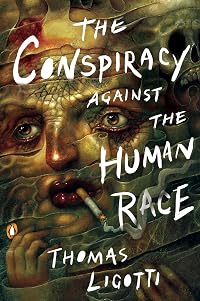
The Conspiracy against the Human Race: A Contrivance of Horror
by Thomas Ligotti
On This Page
Description
"There is a signature motif discernible in both works of philosophical pessimism and supernatural horror. It may be stated thus: Behind the scenes of life lurks something pernicious that makes a nightmare of our world." His fiction is known to be some of the most terrifying in the genre of supernatural horror, but Thomas Ligotti's first nonfiction book may be even scarier. Drawing on philosophy, literature, neuroscience, and other fields of study, Ligotti takes the penetrating lens of his show more imagination and turns it on his audience, causing them to grapple with the brutal reality that they are living a meaningless nightmare, and anyone who feels otherwise is simply acting out an optimistic fallacy. At once a guidebook to pessimistic thought and a relentless critique of humanity's employment of self-deception to cope with the pervasive suffering of their existence, The Conspiracy against the Human Race may just convince listeners that there is more than a measure of truth in the despairing yet unexpectedly liberating negativity that is widely considered a hallmark of Ligotti's work. show lessTags
Recommendations





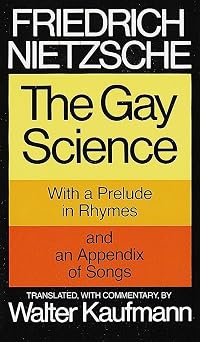
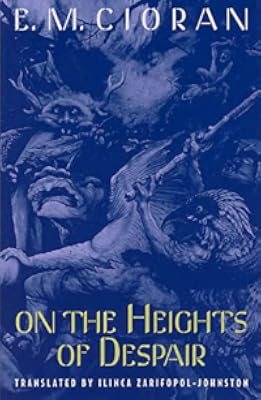
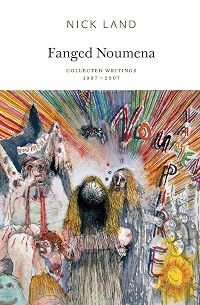





Member Recommendations

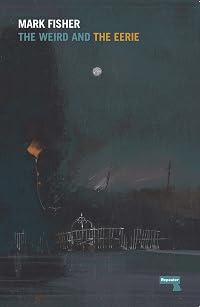
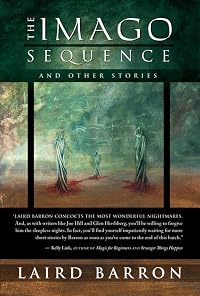
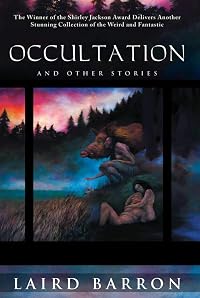
arnzen Collapse IV (a ltd. edition literary journal) includes an early excerpt from Ligotti's book "The Conspiracy Against the Human Race" alongside articles of a similar philosophical nature. The essay in Collapse is intercut with an artistic photogallery of dead monkeys, which adds to the reading experience in a stunning way (and I wish they would have used one of these on the cover of the Hippocampus book...which otherwise is excellent).
20
cmc The Ego Trick and The Conspiracy Against the Human Race overlap a great deal, although Baggini has a rather more positive view of human consciousness than the one Ligotti lays out. (Honestly, I think that Ligotti is mostly kidding: he’s right in many ways, but since everything is meaningless, what does it matter if we stick around to see what happens? Might as well.)
Member Reviews
This is one of those books that makes me feel dumb. And I mean that in the best way.
Thomas Ligotti is a deep thinker, and he's very good at pulling together disparate strings of thought into one incredibly cohesive whole. His fiction is unlike anyone else I've ever read, and it's something I come back to time and again, because it's just that good.
There's authors out there that I enjoy. There's authors out there I revere. And then, there's a very, very small group of authors out there that I wish I could write like, but know I'll never be able to. Ligotti is pretty much at the top of that list.
In this tour de force essay, Ligotti lays out his argument against humanity continuing, why life is a futile endeavour, and why consciousness is show more both indefinable and a scourge to humanity.
It's bleak as hell, and compelling as hell. I've always enjoyed a bleak point of view, I find it fascinating. I'm a pessimist, and I'm far too cynical for my own good, but Ligotti makes me look like...I don't know, the love child of Tony Robbins and Richard Simmons, maybe?
I listened to the audiobook of this, but halfway through, I ordered a hard copy of it, because I know it's something I'm going to want to come back and study in more depth.
Because I know I didn't pick up even half of what Ligotti is laying down.
Because this is one of those books that makes me feel dumb. show less
Thomas Ligotti is a deep thinker, and he's very good at pulling together disparate strings of thought into one incredibly cohesive whole. His fiction is unlike anyone else I've ever read, and it's something I come back to time and again, because it's just that good.
There's authors out there that I enjoy. There's authors out there I revere. And then, there's a very, very small group of authors out there that I wish I could write like, but know I'll never be able to. Ligotti is pretty much at the top of that list.
In this tour de force essay, Ligotti lays out his argument against humanity continuing, why life is a futile endeavour, and why consciousness is show more both indefinable and a scourge to humanity.
It's bleak as hell, and compelling as hell. I've always enjoyed a bleak point of view, I find it fascinating. I'm a pessimist, and I'm far too cynical for my own good, but Ligotti makes me look like...I don't know, the love child of Tony Robbins and Richard Simmons, maybe?
I listened to the audiobook of this, but halfway through, I ordered a hard copy of it, because I know it's something I'm going to want to come back and study in more depth.
Because I know I didn't pick up even half of what Ligotti is laying down.
Because this is one of those books that makes me feel dumb. show less
Ligotti's first story in his first collection is "The Frolic," features a serial killer who seems to have supernatural abilities. Yet, in contrast to most psychopaths, real-world and fictional, he has no sense of grandiosity but an awareness of his own insignificance. Conspiracy reminds me of that story, in that Ligotti sets out to slay every illusion that one might hold about life, about mankind, about the universe, yet seems to realize the futility of this mission. A fascinating work of disillusionment.
A disappointment but perhaps not an unexpected one. Thomas Ligotti happens to be one of the greatest exponents of uncanny fiction, equal to his earlier masters Poe and Lovecraft - but in small doses.
We have already reviewed some of his short stories which are magnificently disturbing and thought-provoking but have also noted that he has difficulty in developing them to novella length.
His art is that of the short story. This foray into non-fiction is little more than an opinionated, often repetitive, often very dull, literary rant, bad philosophy and weak literary criticism.
But perhaps it serves a purpose because it takes existential pessimism to such absolute extremes that, if even the argument is not accepted, it manages to demolish show more all lesser forms of the death instinct on the way.
The nearest analogy I can find is a book that appeared on the shelves briefly some years ago - a pseudo-existentialist rant by a child murderer, Ian Brady, one of the two notorious Moors Murders.
According to the Daily Mail of January 21st, Mr. Brady (77) wished he had taken his own life many years ago (poor bunny!) and the same negativity about life infects this philosophical pot boiler.
The quality of thinking is exemplified by the amount of time taken up by literary figures and by an obscure Norwegian post-Schopenhauerian merchant of gloom, one Peter Wessel Zapffe.
The writing is uninspiring and the 'narrative' incoherent - others have liked it less even than I have done. There is too much repetition of both themes and language ('vehicular misadventure'!).
At times, it appears to swerve away from the major theme to be a disjointed essay on supernatural fiction and on his favourite short story theme of the uncanny puppet.
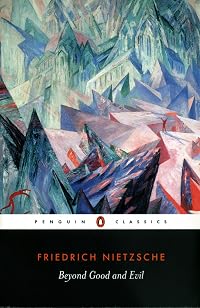
Nietzsche, the ignorant excuse for the crimes of Brady and the Nazis but actually a force for Life and defiance of the death instinct, gets a few dismissive paragraphs. The major existentialists ... nothing!
Zapffe was the depressive exponent of something called antinatalism which assigned a negative valuation to the very fact of being born. The implication is that the human race should eventually genocide itself through non-procreation.
This is a mentality that can be found amongst a certain class of life-negative conservative thinkers whose political heirs are the deep green planet lovers who think of us humans are mere scum on their Gaia.
But Ligotti goes further than this - future specicide, implicit in his callous and unemotional view of the world, is presented as a rational claim that should have the security state checking out anyone found marking the margins of a copy in green ink.
Let us be frank. The human condition is one of considerable variation and it is no surpise that, within that variation, there should be highly articulate and literary extreme self-hating pessimists.
This is their book - and that of adolescents going through a temporary Goth phase, those sinking into black and irreversible clinical depression and those facing a death they cannot come to terms with.
If this book gives them 'comfort' (and does not result in some dim-witted nut trying to bring forward human extinction by a few millennia), then it is simply (ironically) part of life's rich pattern.
And the book has its uses even to us who think its thesis to be absurd and silly - just another literary confection by someone trying to fight above their intellectual weight.
The sheer extremity of the analysis - which contains a legitimate position on the meaninglessness of existence which even us optimists can share - usefully smashes to pieces lesser pessimisms.
The knife job done on Buddhism - the most life negative of religions - is decisive: no sane person could be a Buddhist after this and confirmation that Pope John Paul II could get at least one thing right.
Similarly, Ligotti is prepared to face off the nature of evolved human consciousness and be 'logical' about it. He pins down that point where choices between Life and Death are made.
On the one hand, we have apparently suffered horribly because we can think yet (it would seem) thinking suggests that we can end that suffering with suicide in the short and specicide in the long term.
It has to be said that his arguments for euthanasia stand up in this context. For those who really are this clinically depressed, then perhaps a voluntary removal is fair to them and the gene pool.
On the other, his is still merely a stance based on chance and biochemistry. He has no right to impute negative value to meaninglessness if someone can accept lack of meaning and live well.
For him and Zapffe, self awareness, the Self itself and consciousness are horrors that make life unbearable. He accuses the rest of us who do not share this view of evasion and delusion.
This is part of that fashionable philosophical negativity that insists on ego death as a good, that there is no Self really and that we have no self determination - a fashionable petit-bourgeois stance.
This is the province of a certain type of over-thinking continental philosopher, new age users of 'mind-expanding' (ho, hum!) drugs and people who crave non-duality as substitute for reality.
To be fair, he gives short shrift to such fools which makes his position at least one of some integrity but the same seed of denial of our evolved nature is there but as Reason murdered by Reason.
But, as he admits, he cannot prove his point any more than we optimists can prove ours. The stance of being depressed about meaninglessness is merely that - a stance, a temperamental sentiment.
He has his unjustified normative stand against the alleged evasions of the masses yet seems not to consider it possible that a person can accept the fact of meaninglessness and still choose Life.
The problem strikes me as this. Given the condition of things on which we both agree, there is no reason to choose radical pessimism if a positive optimism is equally valid with the same shared facts.
The only difference between us is that my life and that of optimists is happy while it can be happy and he and his pessimists is carried out in a blue funk until extinction. You choose, matey!
My world takes life as it is - with all its chance and necessity - and makes the best of it, far nearer to his praised animal state than he can manage. But he seems to want a final Ragnarok, the destruction of creation itself.
Here, tolerance is in danger of collapsing as much as it does with Ian Brady. If he is serious, then he is my enemy or at least his followers may be, so perhaps, all things being equal, Ligotti delenda est
I would not go so far as this because his efforts are for armchair depressives whose greatest act is to reach for the whisky bottle yet this book should be on the reading list of our security services.
Why? Because, as we have seen in the case of Breivik (another gloomy Norwegian), the death instinct is a material factor in the near-infinite variation to be found within the species and it can act.
To understand where this death instinct might go in the hands of less literary hands, this book should be studied much as one would study the work of Ian Brady for the underpinnings of child murder.
After all, a cursory reading of some of the very Deep Green lunacy on the internet or the radical reaches of occult fascism indicate levels of pessimism that make Schopenhauer look like Pollyanna.
This is not ever to say that Mr. Ligotti means in any way to do bad things in the world - he is probably far too pessimistic to do anything actively. He is a litterateur. Such types do nothing.
But that there are radical pessimists who present themselves in these terms, far beyond all previous forms of radical pessimism, unleavened by Buddhist evasions or literary tropes, should be watched.
The book has its purpose as part of the radical liberal literature of extremity. It will continue to be read not by philosophers but by those interested in the psychology of weird fiction.
It is a necessary excrescence on the decadent corpse of late liberal capitalist culture, that point where everything must be said and freedom insisted upon to permit all to be said.
I am tempted to upset liberal sensibilities by burning this book. show less
We have already reviewed some of his short stories which are magnificently disturbing and thought-provoking but have also noted that he has difficulty in developing them to novella length.
His art is that of the short story. This foray into non-fiction is little more than an opinionated, often repetitive, often very dull, literary rant, bad philosophy and weak literary criticism.
But perhaps it serves a purpose because it takes existential pessimism to such absolute extremes that, if even the argument is not accepted, it manages to demolish show more all lesser forms of the death instinct on the way.
The nearest analogy I can find is a book that appeared on the shelves briefly some years ago - a pseudo-existentialist rant by a child murderer, Ian Brady, one of the two notorious Moors Murders.
According to the Daily Mail of January 21st, Mr. Brady (77) wished he had taken his own life many years ago (poor bunny!) and the same negativity about life infects this philosophical pot boiler.
The quality of thinking is exemplified by the amount of time taken up by literary figures and by an obscure Norwegian post-Schopenhauerian merchant of gloom, one Peter Wessel Zapffe.
The writing is uninspiring and the 'narrative' incoherent - others have liked it less even than I have done. There is too much repetition of both themes and language ('vehicular misadventure'!).
At times, it appears to swerve away from the major theme to be a disjointed essay on supernatural fiction and on his favourite short story theme of the uncanny puppet.
Nietzsche, the ignorant excuse for the crimes of Brady and the Nazis but actually a force for Life and defiance of the death instinct, gets a few dismissive paragraphs. The major existentialists ... nothing!
Zapffe was the depressive exponent of something called antinatalism which assigned a negative valuation to the very fact of being born. The implication is that the human race should eventually genocide itself through non-procreation.
This is a mentality that can be found amongst a certain class of life-negative conservative thinkers whose political heirs are the deep green planet lovers who think of us humans are mere scum on their Gaia.
But Ligotti goes further than this - future specicide, implicit in his callous and unemotional view of the world, is presented as a rational claim that should have the security state checking out anyone found marking the margins of a copy in green ink.
Let us be frank. The human condition is one of considerable variation and it is no surpise that, within that variation, there should be highly articulate and literary extreme self-hating pessimists.
This is their book - and that of adolescents going through a temporary Goth phase, those sinking into black and irreversible clinical depression and those facing a death they cannot come to terms with.
If this book gives them 'comfort' (and does not result in some dim-witted nut trying to bring forward human extinction by a few millennia), then it is simply (ironically) part of life's rich pattern.
And the book has its uses even to us who think its thesis to be absurd and silly - just another literary confection by someone trying to fight above their intellectual weight.
The sheer extremity of the analysis - which contains a legitimate position on the meaninglessness of existence which even us optimists can share - usefully smashes to pieces lesser pessimisms.
The knife job done on Buddhism - the most life negative of religions - is decisive: no sane person could be a Buddhist after this and confirmation that Pope John Paul II could get at least one thing right.
Similarly, Ligotti is prepared to face off the nature of evolved human consciousness and be 'logical' about it. He pins down that point where choices between Life and Death are made.
On the one hand, we have apparently suffered horribly because we can think yet (it would seem) thinking suggests that we can end that suffering with suicide in the short and specicide in the long term.
It has to be said that his arguments for euthanasia stand up in this context. For those who really are this clinically depressed, then perhaps a voluntary removal is fair to them and the gene pool.
On the other, his is still merely a stance based on chance and biochemistry. He has no right to impute negative value to meaninglessness if someone can accept lack of meaning and live well.
For him and Zapffe, self awareness, the Self itself and consciousness are horrors that make life unbearable. He accuses the rest of us who do not share this view of evasion and delusion.
This is part of that fashionable philosophical negativity that insists on ego death as a good, that there is no Self really and that we have no self determination - a fashionable petit-bourgeois stance.
This is the province of a certain type of over-thinking continental philosopher, new age users of 'mind-expanding' (ho, hum!) drugs and people who crave non-duality as substitute for reality.
To be fair, he gives short shrift to such fools which makes his position at least one of some integrity but the same seed of denial of our evolved nature is there but as Reason murdered by Reason.
But, as he admits, he cannot prove his point any more than we optimists can prove ours. The stance of being depressed about meaninglessness is merely that - a stance, a temperamental sentiment.
He has his unjustified normative stand against the alleged evasions of the masses yet seems not to consider it possible that a person can accept the fact of meaninglessness and still choose Life.
The problem strikes me as this. Given the condition of things on which we both agree, there is no reason to choose radical pessimism if a positive optimism is equally valid with the same shared facts.
The only difference between us is that my life and that of optimists is happy while it can be happy and he and his pessimists is carried out in a blue funk until extinction. You choose, matey!
My world takes life as it is - with all its chance and necessity - and makes the best of it, far nearer to his praised animal state than he can manage. But he seems to want a final Ragnarok, the destruction of creation itself.
Here, tolerance is in danger of collapsing as much as it does with Ian Brady. If he is serious, then he is my enemy or at least his followers may be, so perhaps, all things being equal, Ligotti delenda est
I would not go so far as this because his efforts are for armchair depressives whose greatest act is to reach for the whisky bottle yet this book should be on the reading list of our security services.
Why? Because, as we have seen in the case of Breivik (another gloomy Norwegian), the death instinct is a material factor in the near-infinite variation to be found within the species and it can act.
To understand where this death instinct might go in the hands of less literary hands, this book should be studied much as one would study the work of Ian Brady for the underpinnings of child murder.
After all, a cursory reading of some of the very Deep Green lunacy on the internet or the radical reaches of occult fascism indicate levels of pessimism that make Schopenhauer look like Pollyanna.
This is not ever to say that Mr. Ligotti means in any way to do bad things in the world - he is probably far too pessimistic to do anything actively. He is a litterateur. Such types do nothing.
But that there are radical pessimists who present themselves in these terms, far beyond all previous forms of radical pessimism, unleavened by Buddhist evasions or literary tropes, should be watched.
The book has its purpose as part of the radical liberal literature of extremity. It will continue to be read not by philosophers but by those interested in the psychology of weird fiction.
It is a necessary excrescence on the decadent corpse of late liberal capitalist culture, that point where everything must be said and freedom insisted upon to permit all to be said.
I am tempted to upset liberal sensibilities by burning this book. show less
I know it’s corny but I felt really seen by this book in a way I don’t by almost any media. It is sheer pessimism, without chaser. It doesn’t shy away from labeling life as “MALIGNANTLY USELESS” and consciousness as a mistake of evolution; our minds as Schopenhauer’s Will’s horrible overextension. Do you know how hard it is to make the optimist believe that the problem is not MY life, but life itself? The pessimists and nihilists are unpopular and powerless, but really, who cares?
The ending is a real horror rhetoric whirlwind in the tradition of the best, Poe and Lovecraft and Ellis, and leaves the reader sickened and secure.
(Also please don’t read this if you are struggling to be one who loves or likes or enjoys life. show more Sorry I know that sounds edgy but it might honestly be dangerous to your safety/wellbeing if you are already in a bad place because it is a really hopeless book. I could see why someone would ask, “Why put this out there?” I guess there is no other reason than selfish authorial intents and maybe, generously, comforting those who wish to see what is at the bottom of the well.) show less
The ending is a real horror rhetoric whirlwind in the tradition of the best, Poe and Lovecraft and Ellis, and leaves the reader sickened and secure.
(Also please don’t read this if you are struggling to be one who loves or likes or enjoys life. show more Sorry I know that sounds edgy but it might honestly be dangerous to your safety/wellbeing if you are already in a bad place because it is a really hopeless book. I could see why someone would ask, “Why put this out there?” I guess there is no other reason than selfish authorial intents and maybe, generously, comforting those who wish to see what is at the bottom of the well.) show less
How do you rate a book like this? A brilliant exposition of Ligotti's philosophy and the most credible description of what the uncanny and horror are about. But I reject the ultimate life-view in the end and Ligotti would ridicule me for it. So be it. The difference between the optimist and the pessimist. I couldn't go on living if I embraced his philosophy. It would be illogical. Maybe I am a coward. So be it. Ultimately I embrace my short journey here as a worthwhile endeavor as far as my self is concerned even as I realize it most likely has little or no lasting meaning for this universe.
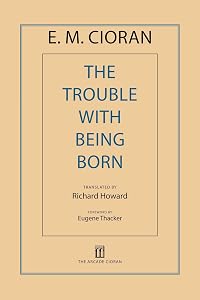
Snarky discussion of extreme pessimism as exemplified by Lovecraft, Unamuno, Cioran, and others. Amusingly slouchy in bitching that pessimism (human consciousness is a mistake that should be addressed simply by saying no to more children) isn't more popular than it is. Amusingly snide about optimists, whom he caricatures as simpering Dale Carnegies. Less amusing later on when he undertakes to explain horror. How it works is irrelevant: horror worthy of the name defies and overwhelms anything but the experience itself. It is measured in hairs standing on end.
Finally a book that speaks directly to my heart! As a matter of fact, it's so good that it almost feels like a betrayal writing this review. But I guess the author would understand, even if he wouldn't necessarily agree.
"Does intellectual honesty, when taken to its logical conclusion, necessarily lead to ontological despair?" That's not exactly the question the book is after, but rather depicted as one of the core elements of a particular type of horror fiction. And the book isn't about fiction in the general sense. It is about fiction to the extent the studies examining the phenomenon of consciousness are. This is why it is terrifying and confirming at the same time.
Two things I haven't seen coming were serious references to Thomas show more Metzinger's work, and unbelievable dark humor that went beyond entertaining. And I think this is what makes this book lovely: it's all about the style, because it's impossible to be original content-wise when it comes to the most important, yet the simplest question we face, the only original and deepest horror of our existence.
This fine piece of literature deserves its place in every bored person's library, as an indication of the cosmic problem that needs not to be solved, but more like a needlessly prolonged tension that needs to be resolved. show less
"Does intellectual honesty, when taken to its logical conclusion, necessarily lead to ontological despair?" That's not exactly the question the book is after, but rather depicted as one of the core elements of a particular type of horror fiction. And the book isn't about fiction in the general sense. It is about fiction to the extent the studies examining the phenomenon of consciousness are. This is why it is terrifying and confirming at the same time.
Two things I haven't seen coming were serious references to Thomas show more Metzinger's work, and unbelievable dark humor that went beyond entertaining. And I think this is what makes this book lovely: it's all about the style, because it's impossible to be original content-wise when it comes to the most important, yet the simplest question we face, the only original and deepest horror of our existence.
This fine piece of literature deserves its place in every bored person's library, as an indication of the cosmic problem that needs not to be solved, but more like a needlessly prolonged tension that needs to be resolved. show less
Members
- Recently Added By
Lists

Top Five Books of 2015
811 works; 241 members
Author Information

82+ Works 6,292 Members
Some Editions
Awards and Honors
Series
Belongs to Publisher Series
Hippocampus Press (77)
Work Relationships
Has as a reference guide/companion
Common Knowledge
- Original publication date
- 2010
Classifications
- Genres
- Philosophy, Literature Studies and Criticism
- DDC/MDS
- 809.9164 — Literature & rhetoric Literature, rhetoric & criticism History, description, critical appraisal of more than two literatures Literature displaying specific features, miscellaneous writings Literature displaying specific qualities of style, mood, viewpoint Horror And Tragedy Horror
- LCC
- PN56 .H6 .L54 — Language and Literature Literature (General) Literature (General) Theory. Philosophy. Esthetics
- BISAC
Statistics
- Members
- 1,117
- Popularity
- 22,743
- Reviews
- 24
- Rating
- (3.89)
- Languages
- English, Italian, Polish, Spanish
- Media
- Paper, Audiobook, Ebook
- ISBNs
- 12
- ASINs
- 7