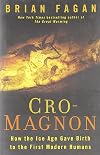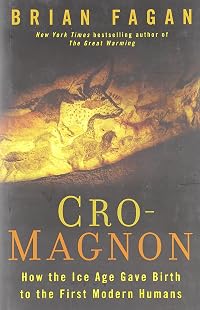
Cro-Magnon: How the Ice Age Gave Birth to the First Modern Humans
by Brian Fagan
On This Page
Description
Bestselling author Brian Fagan brings early humans out of the deep freeze with his trademark mix of erudition, cutting-edge science, and vivid storytelling. Cro-Magnon reveals human society in its infancy, facing enormous environmental challenges-including a rival species of humans, the Neanderthals. For ten millennia, Cro-Magnons lived side by side with Neanderthals, an encounter that Fagan fills with drama. Using their superior intellects and tools, these ingenious problem solvers survived show more harsh conditions that eventually extinguished their Neanderthal cousins.Cro-Magnon captures the indomitable adaptability that has made Homo sapiens an unmatched success as a species. Living on a frozen continent with only the most basic tools, Ice Age humans survived and thrived. show lessTags
Recommendations

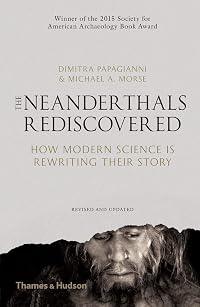
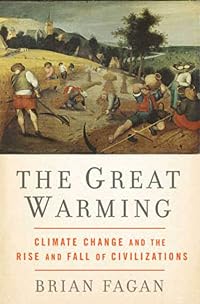

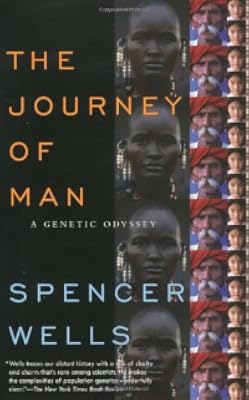
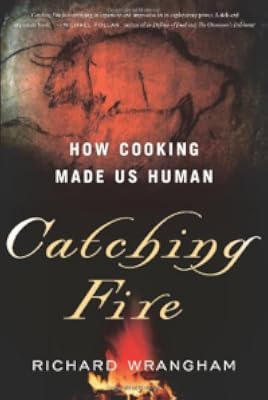


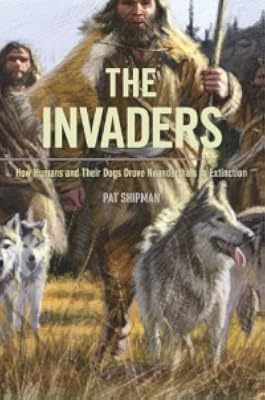











Member Recommendations
Member Reviews
Cro-Magnon tells the story of the first anatomically modern humans in Europe and (to a lesser extent) that of the Neanderthals they replaced. Fagan aims to give a layman's overview of the subject, without too much technical detail. I'd say his success at this is variable. Many passages were dry, with perhaps a bit more specific information than I really wanted. And these are interspersed with speculative imagined scenes of Cro-Magnon life, which I often found somewhat unsatisfying, in that it wasn't always clear how much was based on actual archeological knowledge and how much was sheer assumption. Fagan's writing also tends to be a bit rambly and repetitive; he likes to make the same basic points over and over, often in exactly the show more same words.
However, although I would have preferred it if the writing were a bit livelier and more concise, I did find this worth reading. The subject is interesting, and Fagan does offer interesting information about it. If nothing else, he successfully dispels some popular misconceptions, such as the stereotype of Neanderthals as ugly, clumsily brutish cavemen, and the notion of the Ice Age as one long, unbroken, icy winter. He also repeatedly invites the reader to imagine what it might have been like to live in those distant times and to walk among these vanished people. I found that mental exercise both exciting and rewarding, and it's Fagan's ability to evoke that response that is the book's real strength. show less
However, although I would have preferred it if the writing were a bit livelier and more concise, I did find this worth reading. The subject is interesting, and Fagan does offer interesting information about it. If nothing else, he successfully dispels some popular misconceptions, such as the stereotype of Neanderthals as ugly, clumsily brutish cavemen, and the notion of the Ice Age as one long, unbroken, icy winter. He also repeatedly invites the reader to imagine what it might have been like to live in those distant times and to walk among these vanished people. I found that mental exercise both exciting and rewarding, and it's Fagan's ability to evoke that response that is the book's real strength. show less
 This review was written for LibraryThing Early Reviewers.
Fagan starts his book with the description of an imagined encounter between a family of Cro-Magnons (the first anatomically modern humans to settle in Europe) and a Neanderthal, 40,000 years ago during the Ice Age. Next he spends a chapter discussing the world of the Cro-Magnons and the possible interactions between the two types of humans.
He then moves to the African savanna, 2.5 million year, to examine the earlier human evolution which led to both. Homo habilis, homo ergaster, homo erectus and homo heidelbergensis bring us -- by way of brief discussions of their fossils, weapons, and probable diet -- to the Europe and Asia of 600,00 years ago, and eventually, sometime between then and 100,000 years ago, to the first true show more Neanderthals. Along the way they acquired fire, a facility for making stone tools and wooden spears, and a primitive hunting and gathering culture.
Two chapters on the Neanderthals and their world follows, with occasional side trips into the history of archaeology and climatology. Fagan paints vivid portraits of the Neanderthals themselves, who were much more agile and clever than the popular stereotype, making good use of their challenging and varied habitats.
Fagan then drops back to Africa about 150,000 years ago, as interpreted by mitochondrial DNA studies, and the origins of anatomically modern homo sapiens. Some of these people moved north and east to the Middle East and Southeast Asia, where they and most of their stay-at-home African relatives were almost wiped out by the eruption of Mount Toba 73,500 years ago -- the greatest volcanic event of the last 23 million years. Perhaps as few as 10,000 people worldwide survived the ash clouds and the ensuing climatic effects. Some time during the next 20,000 years their descendants evolved the cooperative and cognitive skills which we have today, probably including articulate speech; moved back into the Near East, Eurasia, and Europe; and became the Cro-Magnons.
Fagan follows these people as they move up from Africa and into Europe, working his way slowly through the various cultural and archeological stages. The Campanian ash fall event of 39,000 years ago forms a useful reference horizon relative to the scattered remains of the settlements. The narration is sometimes somewhat repetitive, enlivened only by brief but well-drawn scenes of daily life in the different periods. Ice ages come and go, art and artifacts evolve, and the Neanderthal neighbors fade away. Finally the ice withdraws, and with the discovery and spread of agriculture the Cro-Magnons' hunting culture disappears, but their genetic lineages are still here in most modern Europeans.
This book took me a while to read; I laid it down in the middle and had difficulty returning to it. I have an undergraduate minor in anthropology and a life-long interest in archeaology, so the material was interesting to me, and Fagan does a good job of blending modern cultural studies with physical remains to bring the past to life. His knowledge is encyclopedic, and his enthusiasm for his subject is contagious, but the layout of the book -- mostly text with some occasional sidebar material; a scattering of line drawings, maps, and black and white illustrations; and eight pages of small but stunningly beautiful color illustrations in the middle -- lets him down. A more graphic presentation in a larger format could had made this a wonderful book. As it is, despite the author's expertise, it misses the mark for me. show less
He then moves to the African savanna, 2.5 million year, to examine the earlier human evolution which led to both. Homo habilis, homo ergaster, homo erectus and homo heidelbergensis bring us -- by way of brief discussions of their fossils, weapons, and probable diet -- to the Europe and Asia of 600,00 years ago, and eventually, sometime between then and 100,000 years ago, to the first true show more Neanderthals. Along the way they acquired fire, a facility for making stone tools and wooden spears, and a primitive hunting and gathering culture.
Two chapters on the Neanderthals and their world follows, with occasional side trips into the history of archaeology and climatology. Fagan paints vivid portraits of the Neanderthals themselves, who were much more agile and clever than the popular stereotype, making good use of their challenging and varied habitats.
Fagan then drops back to Africa about 150,000 years ago, as interpreted by mitochondrial DNA studies, and the origins of anatomically modern homo sapiens. Some of these people moved north and east to the Middle East and Southeast Asia, where they and most of their stay-at-home African relatives were almost wiped out by the eruption of Mount Toba 73,500 years ago -- the greatest volcanic event of the last 23 million years. Perhaps as few as 10,000 people worldwide survived the ash clouds and the ensuing climatic effects. Some time during the next 20,000 years their descendants evolved the cooperative and cognitive skills which we have today, probably including articulate speech; moved back into the Near East, Eurasia, and Europe; and became the Cro-Magnons.
Fagan follows these people as they move up from Africa and into Europe, working his way slowly through the various cultural and archeological stages. The Campanian ash fall event of 39,000 years ago forms a useful reference horizon relative to the scattered remains of the settlements. The narration is sometimes somewhat repetitive, enlivened only by brief but well-drawn scenes of daily life in the different periods. Ice ages come and go, art and artifacts evolve, and the Neanderthal neighbors fade away. Finally the ice withdraws, and with the discovery and spread of agriculture the Cro-Magnons' hunting culture disappears, but their genetic lineages are still here in most modern Europeans.
This book took me a while to read; I laid it down in the middle and had difficulty returning to it. I have an undergraduate minor in anthropology and a life-long interest in archeaology, so the material was interesting to me, and Fagan does a good job of blending modern cultural studies with physical remains to bring the past to life. His knowledge is encyclopedic, and his enthusiasm for his subject is contagious, but the layout of the book -- mostly text with some occasional sidebar material; a scattering of line drawings, maps, and black and white illustrations; and eight pages of small but stunningly beautiful color illustrations in the middle -- lets him down. A more graphic presentation in a larger format could had made this a wonderful book. As it is, despite the author's expertise, it misses the mark for me. show less
This review was written for LibraryThing Early Reviewers.If you come to think of it, it’s hard to really appreciate how much we have inherited in terms of our past, and by past I mean actual, physical, past, if you don’t have a way to relate to what our ancestors did, what they had to face, and how brutal and unwelcoming was their natural environment.
What this book offer us is not the tired old run-of-the-mill glimpse into that distant past. Through the lenses of Brian M. Fagan’s theoretical telescope built upon his wealth of archeological knowledge, we get a different picture, one that is more like a window, even if a small one, to whom those peoples were and how they evolved.
Even if you’re not particularly interested in this field of study, even if you think there’s little to be show more learned here for it matters little to what your life is for, if you give this book a try you’ll find it to be very engaging. Fagan’s narrative is compelling, even thrilling at times, but does not sacrifice accuracy for the sake of readability.
In the end, by peeking into Fagan’s telescope onto that distant and very much forgotten Cro-Magnon past, we end up not only valuing more our much fought and suffered bodily past, but also hear the faint echoes of their lives and troubles, deepening our sense of awe for their artistic and technical remains. In this sense, in spite of aligning or not with your immediate interests, this book is very much worth the time spent reading it. show less
What this book offer us is not the tired old run-of-the-mill glimpse into that distant past. Through the lenses of Brian M. Fagan’s theoretical telescope built upon his wealth of archeological knowledge, we get a different picture, one that is more like a window, even if a small one, to whom those peoples were and how they evolved.
Even if you’re not particularly interested in this field of study, even if you think there’s little to be show more learned here for it matters little to what your life is for, if you give this book a try you’ll find it to be very engaging. Fagan’s narrative is compelling, even thrilling at times, but does not sacrifice accuracy for the sake of readability.
In the end, by peeking into Fagan’s telescope onto that distant and very much forgotten Cro-Magnon past, we end up not only valuing more our much fought and suffered bodily past, but also hear the faint echoes of their lives and troubles, deepening our sense of awe for their artistic and technical remains. In this sense, in spite of aligning or not with your immediate interests, this book is very much worth the time spent reading it. show less
I've long hoped that we can dispel the false image in pop culture of the 'caveman' wielding a rough club and dragging a woman along by her hair. I think we have an obligation to seriously address that image, which is used to justify so much faulty reasoning and research. Unfortunately, that's not going to happen here.
I really wanted to like this book, but found it very difficult to finish; I got more and more irritated the further I got.
The book covers the origins of Cro-Magnons in Europe, and aspects of their way of life up to the Last Glacial Maximum (about 21000 years BCE). The origin and extinction of Neanderthals are also covered. Some of the material is now out of date (e.g. does not take account of the recent discovery via mitochondrial DNA that there was interbreeding between Cro-Magnons and Neanderthals); nevertheless there is interesting content here.
The things that really rubbed me the wrong way were
- the insistence on 'story-telling', including a kind of 'text-fade' ellipsis to imagined scenarios in Cro-Magnon life (disproportionately show more involving men hunting). I found these scenarios intrusive, irritating, fanciful, not useful as illustration, and thematically repetitive (did I mention the HUNTING?). They also depended a lot on Fagan's obviously unquestioned assumptions about, especially, gender roles and spiritual beliefs. There are also numerous self-indulgent anecdotes about his field work experience (once he was caught in a storm on an inland sea! This is relevant to... exactly nothing).
- the tendency to go FAR beyond the available evidence. To be fair, much of the time Fagan at least lets us know this is what he is doing (e.g. saying he 'makes no apology' for extrapolating Cro-Magnon behaviours from those of the Inuit), but sometimes he doesn't even seem to realise that is what he is doing, and even when he is aware the evidence is equivocal, he notes this and then proceeds to treat his preferred view as fact. He frequently talks about the Cro-Magnons' spiritual beliefs (e.g. in relation to cave paintings) not only in terms of there being a spiritual motivation for behaviours/artifacts, but also in terms of the content of those beliefs. He refers throughout to women (and only women) sewing the clothes. He talks a lot about how the men had to do a lot of physical work outside, referring to hunting - and assumes the women all stayed at home, sewing the clothes and doing other stereotypical women's work (although they went out to trap small animals). One thing I wondered, and which doesn't seem to be on Fagan's radar at all, is: how did they get water to their camps? They would have needed this for drinking, washing, and also to soak bone and wood before further processing. If we are extrapolating from present-day communities, this is a hard physical task which is almost exclusively performed by women. Likewise, how did the firewood or other material for fires get to the camp?
For all we know, Fagan's assumptions may be correct. My point is that we don't know this - the evidence does not exist to tell us that only women ever did the sewing, or that Cro-Magnons believed that putting a handprint on a cave wall allowed them to derive strength from the rock. Fagan is fond of saying that there are only so many ways people can survive in these environments. But this doesn't cover either gender roles or spirituality. Moreover, the reason for insisting on evidence is that we all wear cultural blinders - something that seems to us obvious, or natural, or necessarily universal, may be none of these things.
- the sheer repetitiveness of much of the material. Some things just seem to come up again and again and again (the aforementioned spiritual beliefs, the need to know a lot about the animals you hunted, etc etc). Because of this, and also because of the padding due to the fictional scenarios and the time spent talking about what (he assumes) must have been true (even though there is no evidence), the actual amount of information in this book is quite small.
I would still like to find a reliable, evidence based, book on the origins of modern homo sapiens which doesn't continually swerve off into self-indulgent irrelevancies. show less
The book covers the origins of Cro-Magnons in Europe, and aspects of their way of life up to the Last Glacial Maximum (about 21000 years BCE). The origin and extinction of Neanderthals are also covered. Some of the material is now out of date (e.g. does not take account of the recent discovery via mitochondrial DNA that there was interbreeding between Cro-Magnons and Neanderthals); nevertheless there is interesting content here.
The things that really rubbed me the wrong way were
- the insistence on 'story-telling', including a kind of 'text-fade' ellipsis to imagined scenarios in Cro-Magnon life (disproportionately show more involving men hunting). I found these scenarios intrusive, irritating, fanciful, not useful as illustration, and thematically repetitive (did I mention the HUNTING?). They also depended a lot on Fagan's obviously unquestioned assumptions about, especially, gender roles and spiritual beliefs. There are also numerous self-indulgent anecdotes about his field work experience (once he was caught in a storm on an inland sea! This is relevant to... exactly nothing).
- the tendency to go FAR beyond the available evidence. To be fair, much of the time Fagan at least lets us know this is what he is doing (e.g. saying he 'makes no apology' for extrapolating Cro-Magnon behaviours from those of the Inuit), but sometimes he doesn't even seem to realise that is what he is doing, and even when he is aware the evidence is equivocal, he notes this and then proceeds to treat his preferred view as fact. He frequently talks about the Cro-Magnons' spiritual beliefs (e.g. in relation to cave paintings) not only in terms of there being a spiritual motivation for behaviours/artifacts, but also in terms of the content of those beliefs. He refers throughout to women (and only women) sewing the clothes. He talks a lot about how the men had to do a lot of physical work outside, referring to hunting - and assumes the women all stayed at home, sewing the clothes and doing other stereotypical women's work (although they went out to trap small animals). One thing I wondered, and which doesn't seem to be on Fagan's radar at all, is: how did they get water to their camps? They would have needed this for drinking, washing, and also to soak bone and wood before further processing. If we are extrapolating from present-day communities, this is a hard physical task which is almost exclusively performed by women. Likewise, how did the firewood or other material for fires get to the camp?
For all we know, Fagan's assumptions may be correct. My point is that we don't know this - the evidence does not exist to tell us that only women ever did the sewing, or that Cro-Magnons believed that putting a handprint on a cave wall allowed them to derive strength from the rock. Fagan is fond of saying that there are only so many ways people can survive in these environments. But this doesn't cover either gender roles or spirituality. Moreover, the reason for insisting on evidence is that we all wear cultural blinders - something that seems to us obvious, or natural, or necessarily universal, may be none of these things.
- the sheer repetitiveness of much of the material. Some things just seem to come up again and again and again (the aforementioned spiritual beliefs, the need to know a lot about the animals you hunted, etc etc). Because of this, and also because of the padding due to the fictional scenarios and the time spent talking about what (he assumes) must have been true (even though there is no evidence), the actual amount of information in this book is quite small.
I would still like to find a reliable, evidence based, book on the origins of modern homo sapiens which doesn't continually swerve off into self-indulgent irrelevancies. show less
Veteran anthropologist Brian Fagan has provided a truly fascinating account of the development and spread of early modern humans into Europe, and their potential interactions with the Neandertal humans. Fagan draws on a wealth of evidence that includes geology, archaeology, anthropology, and genetics to reconstruct what is arguably the most fascinating element of human prehistory. While his reconstruction is heavily based in fact, he also uses "stories" or scenarios to give his readers a picture of how events may have transpired. Fagan considers it highly significant that cave art and use of jewlery and decoration were characteristic of the European "Cro-Magnons" but not the Neandertals, and speculates that the latter therefore lacked show more capacities for imagination and for recognition of a supernatural realm. Here his perspective grows conjectural. However, we know vastly more about both Neandertals and early modern H. sapiens than even 20 years ago, and scenarios such as Fagan's can be thought of as hypotheses available for future testing. I found this book thoroughly fascinating, and filled it with underlinings and marginal comments. While I cannot accept all of its conclusions, I recommend this book highly. show less
Well, I read a couple of Fagan's books and they seemed rather on the up and up. Unfortunately, this one doesn't seem so.
A few people commented about the sexism (agreed) and odd assumptions about how Cro-magnons interacted with Neanderthals (also agree). But what really bugged me was his assumption about the intellectual abilities of Neanderthals. Pure speculation tauted as knowledge.
I know that closer to the beginning of the book, he acknowledged his speculations - but after a couple chapters, that fact MUST be repeated many times to ensure the reader doesn't forget. Even still, his speculation is based on nothing except that Neanderthals went extinct.
We don't *know* if Neanderthals had imagination and/or how they used it. There are show more populations of modern humans who don't have much of an imagination... how does a scholar ignore the diversity of modern human intelligence to speculate on a species extinct for thirty some thousand years?
Ugh!
Another commenter mentioned Yuval Noah Harari and I can't agree more that his views are much more open and unbiased. Harari is among my favorite authors on this and adjacent subjects. show less
A few people commented about the sexism (agreed) and odd assumptions about how Cro-magnons interacted with Neanderthals (also agree). But what really bugged me was his assumption about the intellectual abilities of Neanderthals. Pure speculation tauted as knowledge.
I know that closer to the beginning of the book, he acknowledged his speculations - but after a couple chapters, that fact MUST be repeated many times to ensure the reader doesn't forget. Even still, his speculation is based on nothing except that Neanderthals went extinct.
We don't *know* if Neanderthals had imagination and/or how they used it. There are show more populations of modern humans who don't have much of an imagination... how does a scholar ignore the diversity of modern human intelligence to speculate on a species extinct for thirty some thousand years?
Ugh!
Another commenter mentioned Yuval Noah Harari and I can't agree more that his views are much more open and unbiased. Harari is among my favorite authors on this and adjacent subjects. show less
Members
- Recently Added By
Published Reviews
ThingScore 75
added by danielx
Author Information

119+ Works 9,596 Members
Brian Fagan is emeritus professor of anthropology at the University of California, Santa Barbara. A former Guggenheim fellow, he has written many internationally acclaimed, popular books about archaeology, including The Little Ice Age, The Great Warming, and The Lang Summer. He lives in Santa Barbara, California.
Common Knowledge
- Alternate titles
- Cro-Magnon
- Original publication date
- 2010-03-02
- Epigraph
- A sudden intense winter, that was also to last for ages, fell upon our globe.
Louis Agassiz, Geological Sketches (1866) - Dedication
- To Francis and Maisie Pryor
Archaeologists, gardeners, and sheep farmers,
with affection and respect and with thanks for many good laughs.
After all, they have turtles named after them... - First words
- They call him Löwenmensch, "the Lion Man."
- Last words
- (Click to show. Warning: May contain spoilers.)My DNA tells me that genetically I'm one of them, and I'm proud of it.
- Blurbers
- Grimes, William; Rabb, Theodore K.; Diamond, Jared; Cantor, Norman F.
Classifications
- Genres
- Anthropology, Science & Nature, Nonfiction, General Nonfiction, History
- DDC/MDS
- 569.98 — Natural sciences & mathematics Fossils & Dinosaurs Fossil Mammalia Hominidae Neanderthals
- LCC
- GN286.3 .F34 — Geography, Anthropology and Recreation Anthropology Anthropology Physical anthropology. Somatology Human evolution Fossil man. Human paleontology
- BISAC
Statistics
- Members
- 372
- Popularity
- 84,598
- Reviews
- 32
- Rating
- (3.52)
- Languages
- English, German, Spanish
- Media
- Paper, Audiobook, Ebook
- ISBNs
- 14
- ASINs
- 3